Have you ever scrolled through social media and seen it? That impossibly cute, slightly goofy photo of a dog with just the tip of its tongue peeking out. That, my friends, is the legendary ‘blep.’ While it often happens naturally when a dog is relaxed or sleepy, what if you could capture that adorable moment on command? Well, you can!
Teaching your dog to ‘blep’ on cue isn’t just about getting the perfect photo for Instagram (though that’s a fantastic perk!). It’s a wonderful mental enrichment exercise that strengthens your communication and deepens your bond. Using positive reinforcement, you can turn this quirky little behavior into a fun trick that will delight everyone you meet. In this guide, we’ll walk you through everything you need, from the initial setup to the final, triumphant blep. Let’s get ready to turn up the cuteness factor!
Getting Started: What You’ll Need for Blep Training
Getting Started: What You’ll Need for Blep Training
Before you and your furry student embark on Operation Blep, it’s best to get all your tools in order. The right setup can make the difference between a frustrating session and a fun, successful one. Think of it as gathering your ingredients before you start cooking; preparation is key! Luckily, you don’t need much to get started.
Essential Supplies
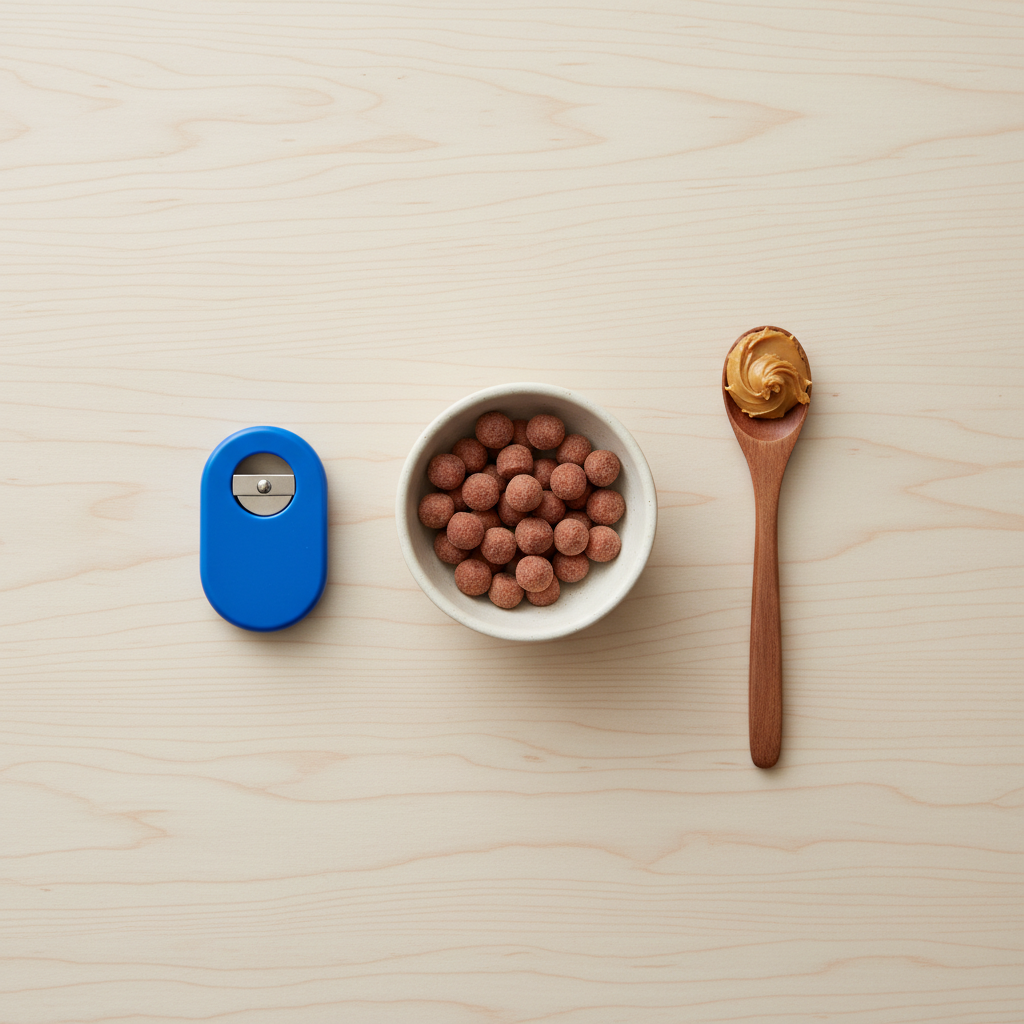
- High-Value Treats: We’re not talking about your dog’s everyday kibble. For a new and specific trick like this, you need to bring out the good stuff! Think tiny, pea-sized pieces of boiled chicken, cheese, hot dogs, or their favorite soft commercial treats. The treat should be delicious enough to keep them motivated and small enough that you can give them many rewards without filling them up too quickly.
- A Clicker (Optional but Recommended): A clicker is a fantastic tool for marking the exact moment your dog does the right thing. This precise communication helps your dog understand what behavior earned them the reward. If you’re not using a clicker, you can use a verbal marker like a short, sharp “Yes!”. Just be consistent!
- A Quiet Training Space: Choose a location with minimal distractions. Your living room, a quiet hallway, or a fenced backyard are all great options. You want your dog’s focus to be on you and the tasty treats, not the squirrel outside the window or the kids running around.
- A Dab of ‘Lure’ (Optional): For some dogs, a tiny, safe dab of something lick-able can help get the tongue moving. A bit of xylitol-free peanut butter, cream cheese, or plain yogurt on a spoon can work wonders. Make sure whatever you use is safe for your dog!
The Right Mindset
Your attitude is just as important as any physical tool. Remember these key principles:
Keep it Short & Sweet: Training sessions should last no more than 5-10 minutes at a time. It’s far more effective to have a few short sessions throughout the day than one long, grueling one. Always end on a positive note, even if it means asking for a simple ‘sit’ they already know, so they finish feeling successful.
Patience is Everything: Your dog has no idea what ‘blep’ means. They aren’t being stubborn; they’re learning a new language. Be patient, celebrate the small wins (even a tiny tongue flick!), and never use punishment. This is all about having fun together.
The Four-Step Method to a Perfect Blep
The Four-Step Method to a Perfect Blep
Alright, you’ve got your treats and your positive attitude is ready to go! Now for the fun part: the actual training. We’ll break this down into four manageable steps. The key is to move at your dog’s pace. If they’re struggling with a step, just go back to the previous one for a bit before trying again.
Step 1: Capture the Natural Behavior
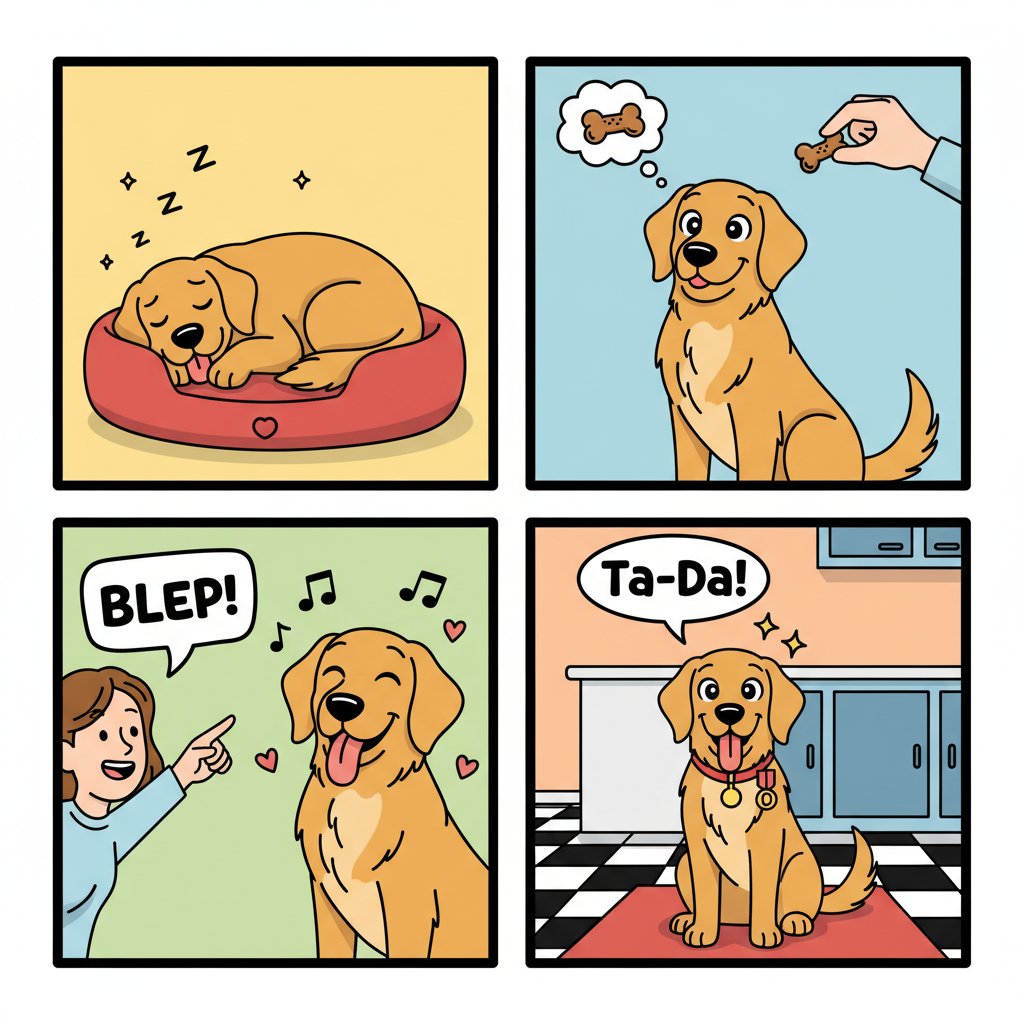
The easiest way to teach a new trick is to ‘capture’ it when it happens naturally. This means you’ll need to become a bit of a blep detective. Watch your dog closely when they are relaxed, tired, or have just finished a good play session. Many dogs will let their tongue peek out when they’re sleepy or after licking their nose. The instant you see even the tiniest tip of their tongue, do two things immediately:
- Mark the behavior: Click your clicker or say “Yes!”.
- Reward: Immediately give them a high-value treat.
At this stage, you’re not saying any cue word. You’re simply teaching your dog: ‘Hey, when my tongue does that thing, I get a treat! How cool is that?’ Repeat this process every single time you see a natural blep. After a few sessions, you might notice your dog starting to offer the behavior intentionally to see if it earns them a reward. That’s when you know you’re ready for the next step!
Step 2: Add the Verbal Cue
Once your dog is reliably offering a little tongue-out motion to get a treat, it’s time to put a name to the action. Choose a short, fun cue word. ‘Blep,’ ‘Tongue,’ or ‘Silly’ are popular choices. Now, you’ll add the cue just before the behavior happens.
As you see your dog about to stick their tongue out, say your chosen cue word (e.g., “Blep!”) in a clear, happy voice. The moment they do it, mark and reward as usual. The sequence is: Cue -> Behavior -> Mark -> Reward. Timing is crucial here. You want to link your word directly to the action in your dog’s mind. After many repetitions, your dog will start to understand that the word ‘Blep’ is the invitation to perform the action.
Step 3: Fading the Lure (If You Used One)
What if your dog isn’t a natural blepper? No problem! You can use a ‘lure.’ Take a tiny dab of peanut butter or cream cheese and place it on their nose. They will naturally lick it off. Mark and reward the moment their tongue comes out. After a few successful licks, pretend to put the lure on their nose but don’t actually leave any food there. Your dog will likely lick their nose out of habit. Mark and reward this! This is called ‘fading the lure.’ Gradually, you can transition from the fake-lure motion to just your verbal cue.
Step 4: Practice and Proofing
Your dog is now blepping on cue in the living room! Success! But what about in the kitchen? Or the backyard? This final step is about ‘proofing’ the behavior, which means teaching your dog to do it in different environments and with mild distractions.
- Start practicing in different rooms of the house.
- Once that’s reliable, try it in your quiet backyard.
- Ask for the blep before a meal or during a calm moment on a walk.
This process solidifies the trick in your dog’s mind, making it a reliable command you can show off anywhere. Keep practice sessions short and upbeat to maintain the fun!
Troubleshooting: When Your Dog’s Tongue Stays In
Troubleshooting: When Your Dog’s Tongue Stays In
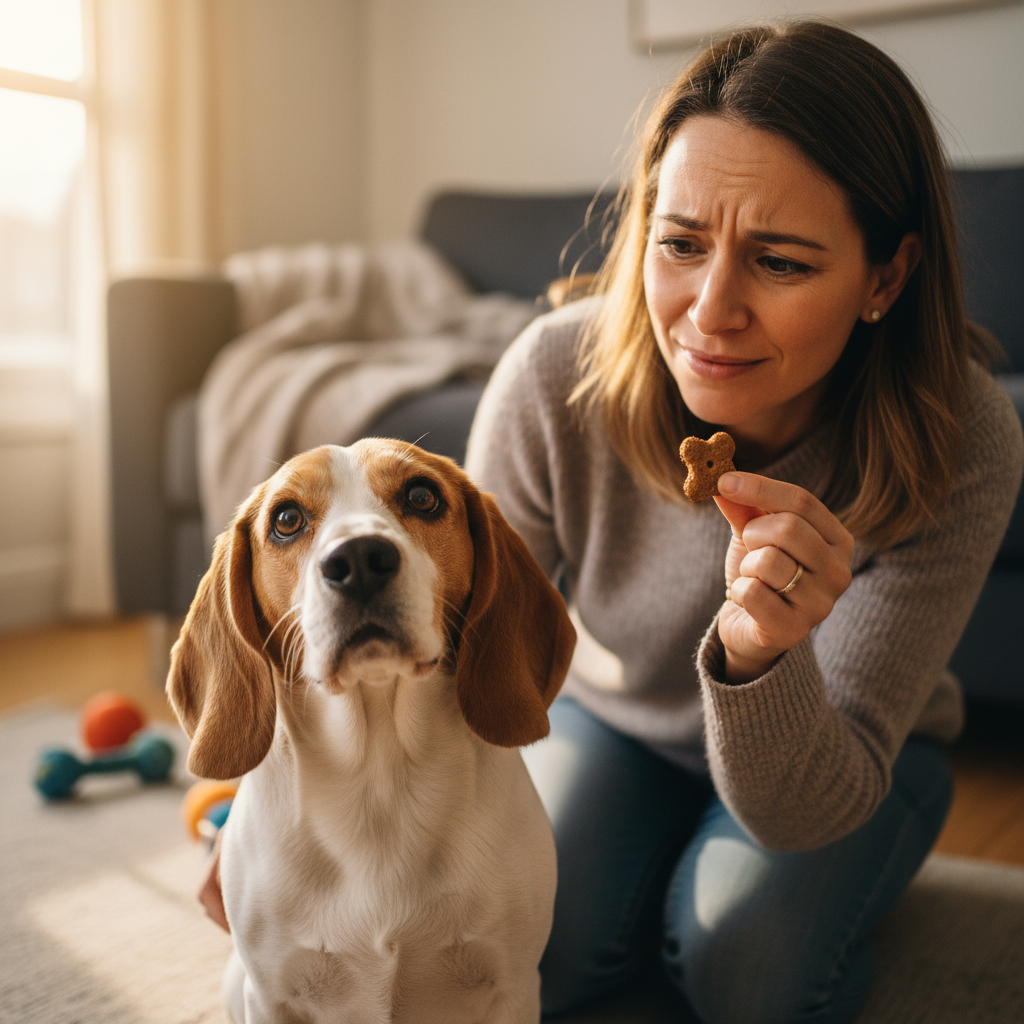
Sometimes, training doesn’t go exactly as planned, and that’s completely normal! Every dog learns differently. If you’ve hit a roadblock on your journey to the perfect blep, don’t worry. Here are some common challenges and how to navigate them.
“My dog never bleps on their own!”
Some dogs are just less prone to this behavior. If waiting to capture it feels like waiting for a solar eclipse, it’s time to be more proactive. This is the perfect scenario for using a lure, as described in Step 3 of our guide. A tiny bit of dog-safe peanut butter or yogurt on the nose will almost always produce a lick. You can then shape this lick into a blep by rewarding smaller and smaller licks until just the tip of the tongue is showing. You can also try capturing the tongue motion right after they take a drink of water or yawn.
“The blep only lasts for a split second!”
This is a very common issue. Your dog flashes their tongue, and by the time you click, it’s gone. To build duration, you need to slightly delay your mark and reward. At first, mark the instant the tongue appears. Then, wait just a fraction of a second before you click. If the tongue stays out for that split second, click and give a ‘jackpot’ reward (multiple treats!). Gradually increase this delay, from a millisecond to a full second, and then two. This teaches your dog that keeping the tongue out for longer leads to a better reward.
Expert Tip: When building duration, don’t make it harder every single time. Vary the difficulty. Ask for a 2-second hold, then a 1-second hold, then a 3-second hold. This keeps your dog engaged and prevents them from getting frustrated.
“My dog seems confused or frustrated.”
Frustration is the enemy of a good training session. If you see your dog yawning (a stress signal), whining, barking, or disengaging, it’s a clear sign to stop. Their brain is full! End the session on a positive note by asking for a simple trick they know well, like ‘sit’ or ‘paw.’ Reward them enthusiastically for that, and then end the session with some pets or a game of tug. You can always try again later or the next day. Pushing a frustrated dog will only create a negative association with training.
“The cue word isn’t working.”
If you’re saying “Blep!” and getting nothing but a blank stare, it’s likely the connection between the word and the action hasn’t been fully formed yet. Go back to Step 2. Make sure you are saying the cue just as they start the action, not after it’s already happened. You may need to do dozens of repetitions before the association clicks. Be patient and precise with your timing, and your dog will get there!
Showtime! Fun Ways to Use the ‘Blep’ Cue
Showtime! Fun Ways to Use the ‘Blep’ Cue
Congratulations, you did it! Your dog can now stick their tongue out on command. You’ve not only taught them an adorable trick but also spent quality time strengthening your bond and boosting their confidence. Now, it’s time to enjoy the fruits of your labor. Here are some fun ways to incorporate this new skill into your daily life.
Become a Pet Photography Pro
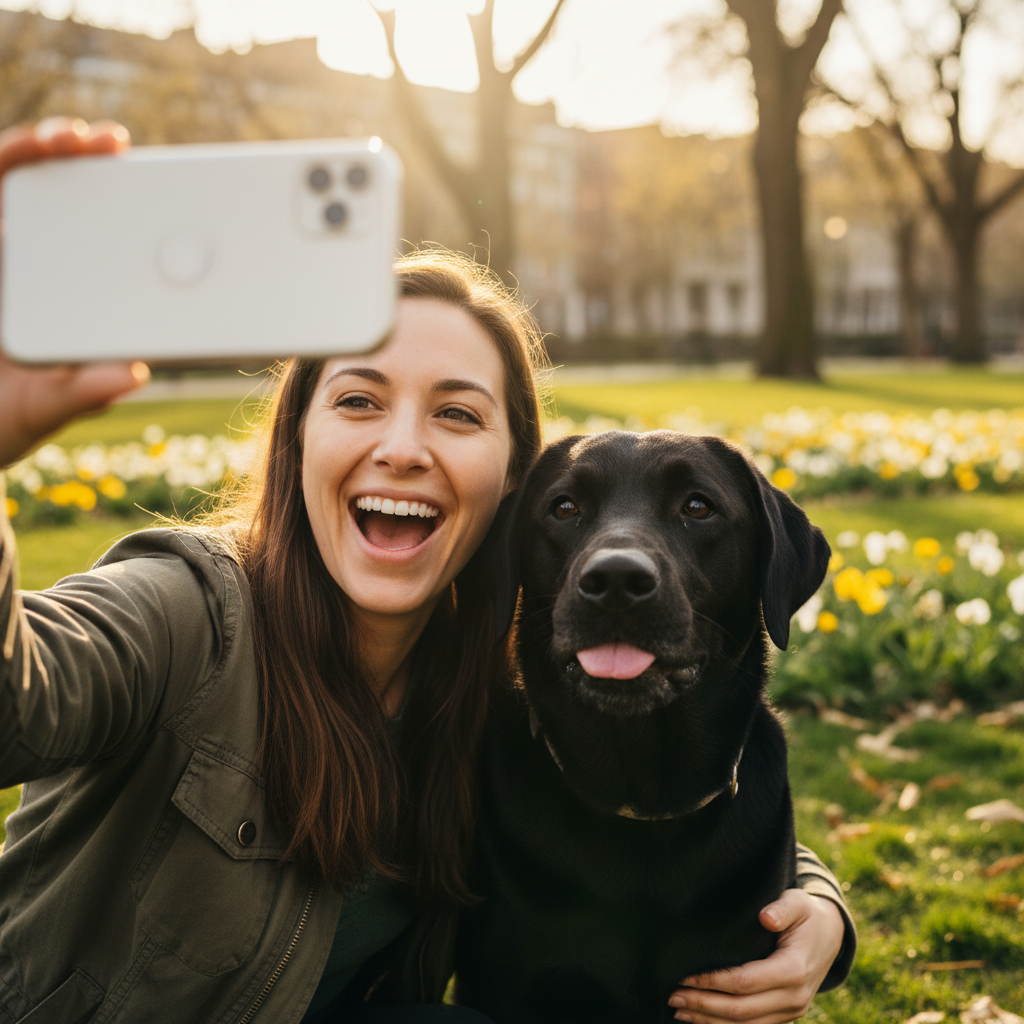
Let’s be honest, this was probably a big motivator! The ‘blep’ cue is your secret weapon for capturing the most heart-meltingly cute photos of your dog.
- Posed Portraits: Get your dog to sit or lie down, wait for them to look at the camera, and give the cue. You’ll be able to snap that perfect, quirky portrait every time.
- Action Shots: Try asking for a blep while they’re sitting in a pile of autumn leaves or wearing a cute bandana. It adds a touch of personality to any photo.
- Family Photos: Imagine your next holiday card featuring the whole family, with your dog front and center, showing off their signature blep. It’s guaranteed to make everyone smile.
The Ultimate Party Trick
Move over, ‘shake paw.’ The ‘blep’ is the new must-see party trick. When you have guests over, asking your dog to perform their special trick is a fantastic icebreaker and a source of instant joy. It’s unique, unexpected, and showcases what a smart and well-trained companion you have. Prepare for a chorus of “Awws!”
Advanced Trick Training Combos
For the truly ambitious trainers, the blep can be a building block in a more complex routine. You can chain commands together for a fun performance. For example, you could teach a sequence like: Sit -> Paw -> Lie Down -> Blep! This kind of complex training is incredible mental stimulation for intelligent dogs, keeping their minds sharp and preventing boredom.
Remember, the biggest benefit of trick training isn’t the trick itself. It’s the process. The time you spend communicating, problem-solving, and celebrating with your dog is what truly matters.
So go ahead, show off that hard-earned blep. You and your clever canine have earned it!
Conclusion
From a fleeting, natural quirk to a reliable, on-demand command, you now have all the tools you need to teach your dog the adorable ‘blep.’ By following the steps of capturing, cueing, and practicing, you’ve done more than just teach a trick; you’ve engaged your dog’s mind and invested in your relationship. Remember that every training session is a conversation, so always listen to your dog, keep things positive, and know when to call it a day.
Patience and consistency are your best friends on this journey. Now, grab your camera, cue the tongue, and get ready to capture some truly unforgettable moments. We’d love to see your success! Share your dog’s best blep photos online and celebrate the incredible bond you share with your furry best friend.