Hey there, fellow pet parent! Have you ever scrolled through social media and seen those impossibly cute photos of dogs licking their noses, looking all sweet and silly? It’s a shot that’s packed with personality and charm. You might think those photographers just got lucky, but what if I told you that you could teach your dog to do that on cue? That’s right! The “lick lips” behavior is a fantastic and surprisingly easy trick to train. It not only results in adorable photos but also becomes a fun bonding activity for you and your pup.
This isn’t about forcing your dog to do anything unnatural; it’s about capturing a behavior they already do and putting it on a verbal cue. Whether you’re an aspiring pet photographer or just want to up your Instagram game, this guide will break down everything you need to know. We’ll cover the tools you’ll need, a step-by-step training plan, and pro tips for nailing that perfect shot. Let’s get ready to turn your pup into a photogenic superstar!
First, Why Do Dogs Lick Their Lips?
Before we jump into training, it’s helpful to understand why our dogs lick their lips in the first place. This isn’t just a random cute quirk; it’s a form of communication and a natural response. Understanding the ‘why’ helps us be more empathetic and effective trainers.
Anticipation of Something Yummy
This is the most obvious one! Just like we might salivate before a delicious meal, dogs often lick their lips when they’re anticipating food. The drool starts flowing, and a quick lick helps them manage it. This is the very instinct we’ll tap into for our training!
A Calming or Appeasement Signal
In the language of dogs, a lip lick can be a subtle signal used to de-escalate a situation. When a dog feels anxious, stressed, or uncomfortable (like when a stranger looms over them), they might offer a quick tongue flick. It’s their way of saying, “I’m no threat, let’s keep things peaceful.” It’s crucial to be aware of this so you don’t misinterpret their signals during training or daily life. If your dog is lip-licking along with other stress signals like yawning, whale eye (showing the whites of their eyes), or a tucked tail, it’s time to give them some space.
Information Gathering
A dog’s sense of smell is legendary, and their tongue plays a part in it. Licking their nose helps trap scent particles, which are then transferred to the Jacobson’s organ on the roof of their mouth. This gives them a more detailed ‘scent picture’ of their environment. So sometimes, a lip lick is just your dog doing some serious detective work!
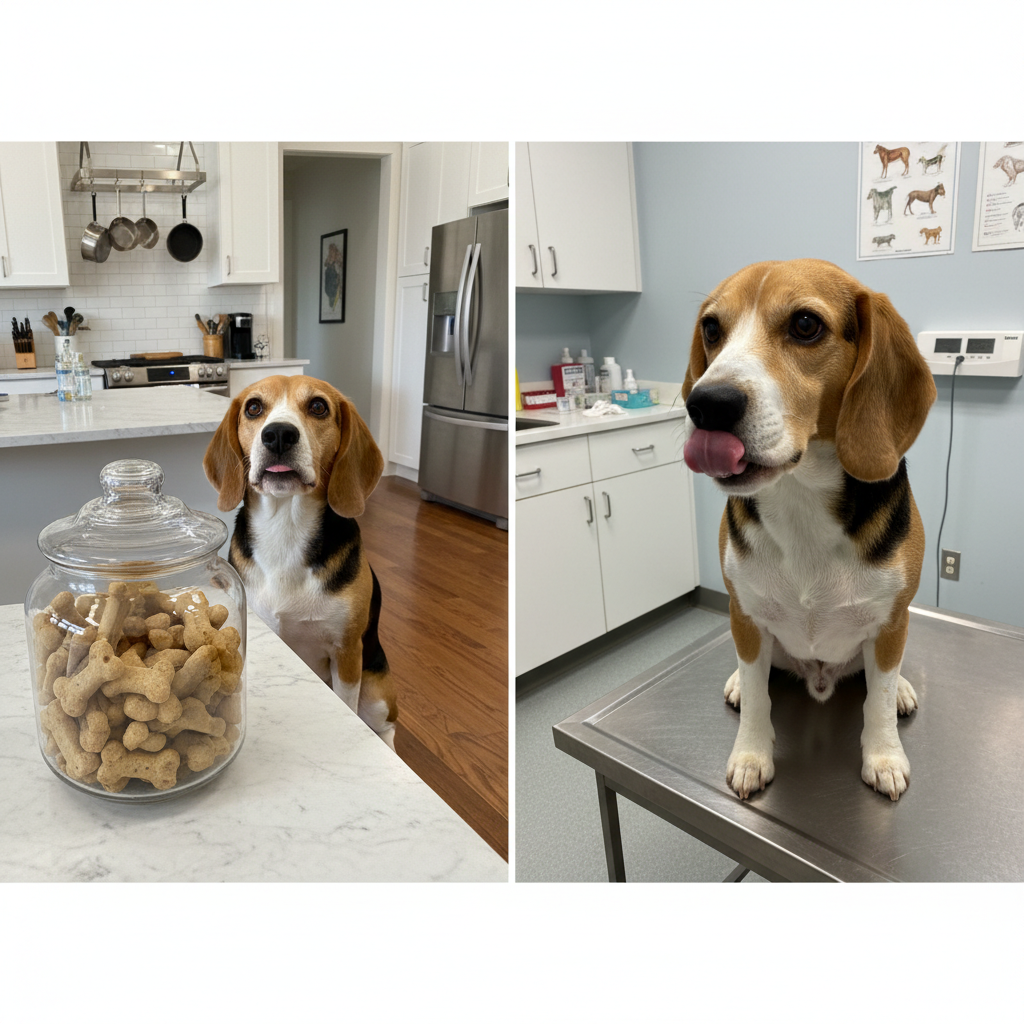
Expert Tip: Pay attention to the context. A lip lick in the kitchen when you’re opening the treat jar is very different from a lip lick at the vet’s office. Knowing the difference makes you a better advocate for your dog’s comfort.
Gearing Up for Success: What You’ll Need
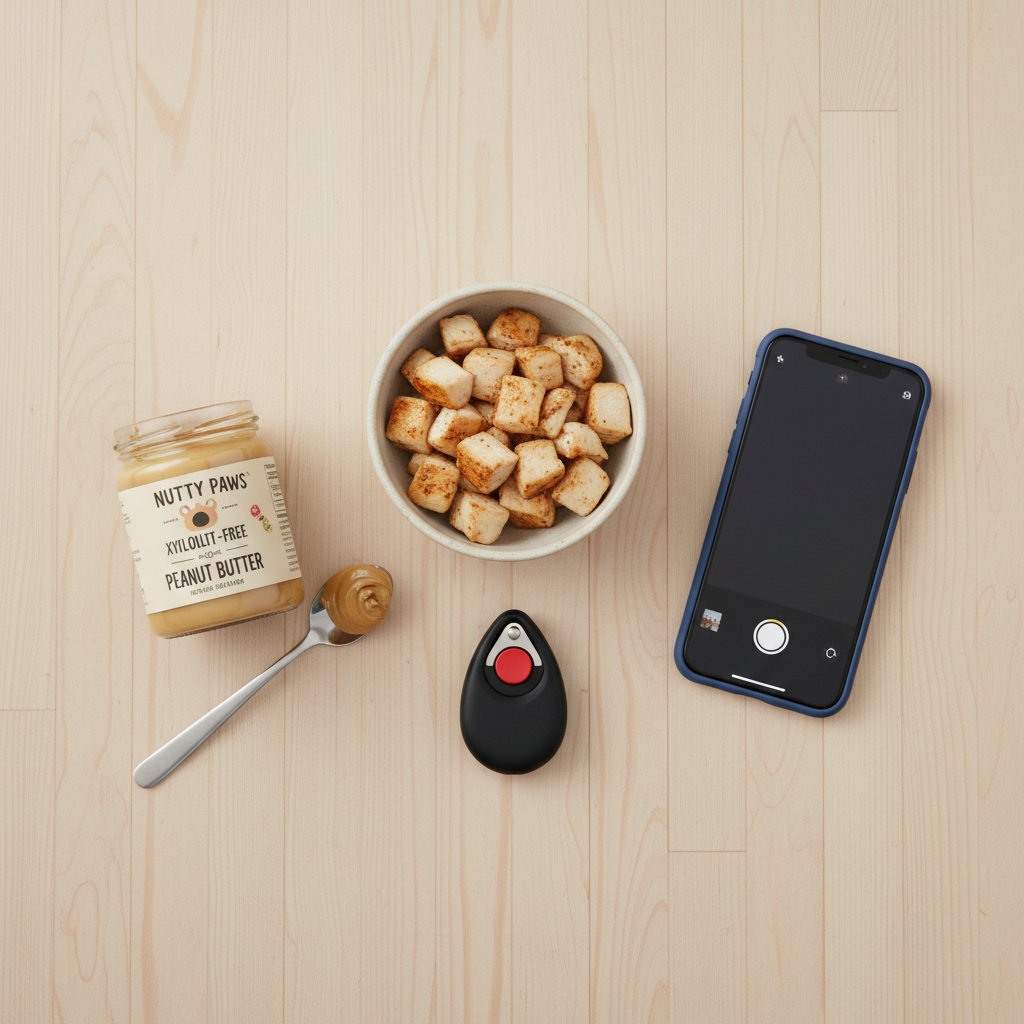
The best part about this trick is that you don’t need a lot of fancy equipment. You probably have everything you need right at home! Setting up your space and having your tools ready will make the training sessions smooth and fun.
- High-Value Treats: This is non-negotiable! We need something your dog absolutely loves and finds irresistible. Standard kibble probably won’t cut it. Think small pieces of cooked chicken, cheese, or commercial soft treats.
- A Lickable Lure: To get the behavior started, we need something safe that you can dab on your dog’s nose. A tiny bit of peanut butter (ensure it’s xylitol-free!), cream cheese, or plain yogurt works perfectly. It should be just enough to entice a lick, not a whole meal.
- A Clicker (Optional but Recommended): A clicker is a fantastic tool for marking the exact moment your dog does the right thing. This precision helps your dog learn much faster. If you don’t have one, a consistent verbal marker like a sharp “Yes!” or “Good!” works too.
- Your Camera or Smartphone: The end goal is a great photo, so have your camera ready! In the beginning, you’ll focus on the training, but it’s good to get your dog used to the camera being around.
- A Quiet, Distraction-Free Space: Choose a comfortable room where your dog feels safe and won’t be distracted by other pets, people, or squirrels outside the window.
The Step-by-Step Training Guide: From Lick to Click!
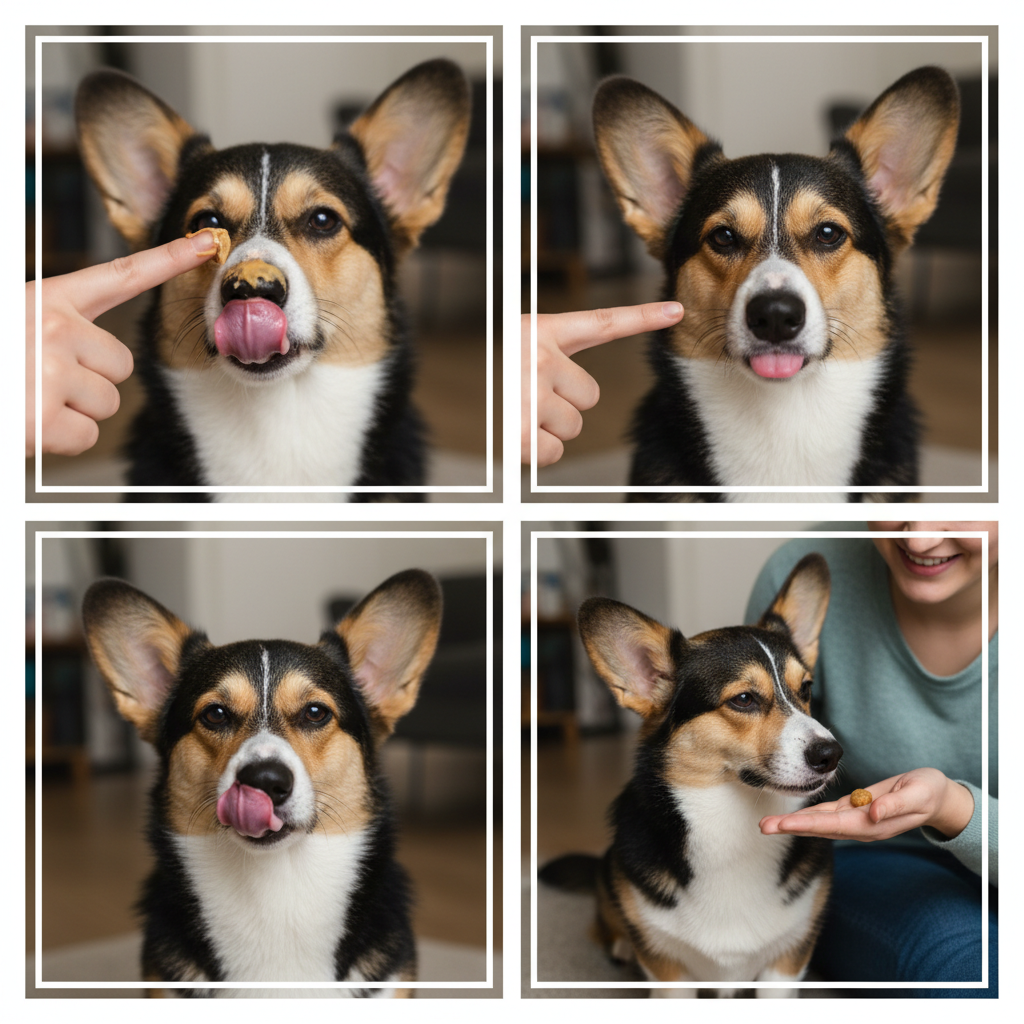
Alright, let’s get to the fun part! Remember, keep your training sessions short and sweet—just 3-5 minutes at a time is perfect. We want to end on a high note while your dog is still engaged and excited. Patience and positivity are your superpowers here!
- Step 1: Capture the Behavior with a Lure.
Take a tiny dab of your lickable lure (like peanut butter) and place it right on your dog’s nose. What will they do? They’ll lick it off, of course! The very instant their tongue comes out to lick, mark the behavior with your clicker or verbal “Yes!” and immediately give them a high-value treat from your other hand. The treat doesn’t come from their nose; it comes from you. This is key! Repeat this 5-6 times. - Step 2: Fade the Lure.
Now we want to see if your dog is starting to get the idea. This time, bring the spoon or your finger with the lure towards their nose, but don’t actually touch it. As they see it coming, they will likely lick their lips in anticipation. The moment they do, click/”Yes!” and treat. You’re now rewarding them for the lick itself, not for licking food off their nose. Practice this, gradually increasing the distance of the lure from their nose. - Step 3: Transition to a Hand Signal.
Once your dog is reliably licking when you bring the lure near their nose, you can switch to an empty hand. Use the same motion you did with the lure—bring your finger towards their nose. When they lick, click/”Yes!” and reward lavishly! You’ve almost phased out the food lure completely. This hand signal can become your visual cue for the trick. - Step 4: Introduce the Verbal Cue.
Now it’s time to put a name to the action. Just before you give your hand signal, say your chosen verbal cue clearly. A short, fun word works best. You could use “Lick,” “Smile,” or “Cheese!” Say your cue (“Smile!”), then give the hand signal. When they lick, click/”Yes!” and treat. After many repetitions, your dog will start to associate the word with the action. - Step 5: Test the Verbal Cue and Practice!
The moment of truth! Say your verbal cue without giving the hand signal. If your dog licks their lips, throw a party! Give them lots of praise and a jackpot of treats. If they don’t get it, that’s okay! Just take a step back and do a few more reps with the verbal cue and hand signal together. Once they’ve got it, practice in short bursts in different rooms of the house to help them generalize the behavior.
Picture Perfect: Tips for the Photoshoot
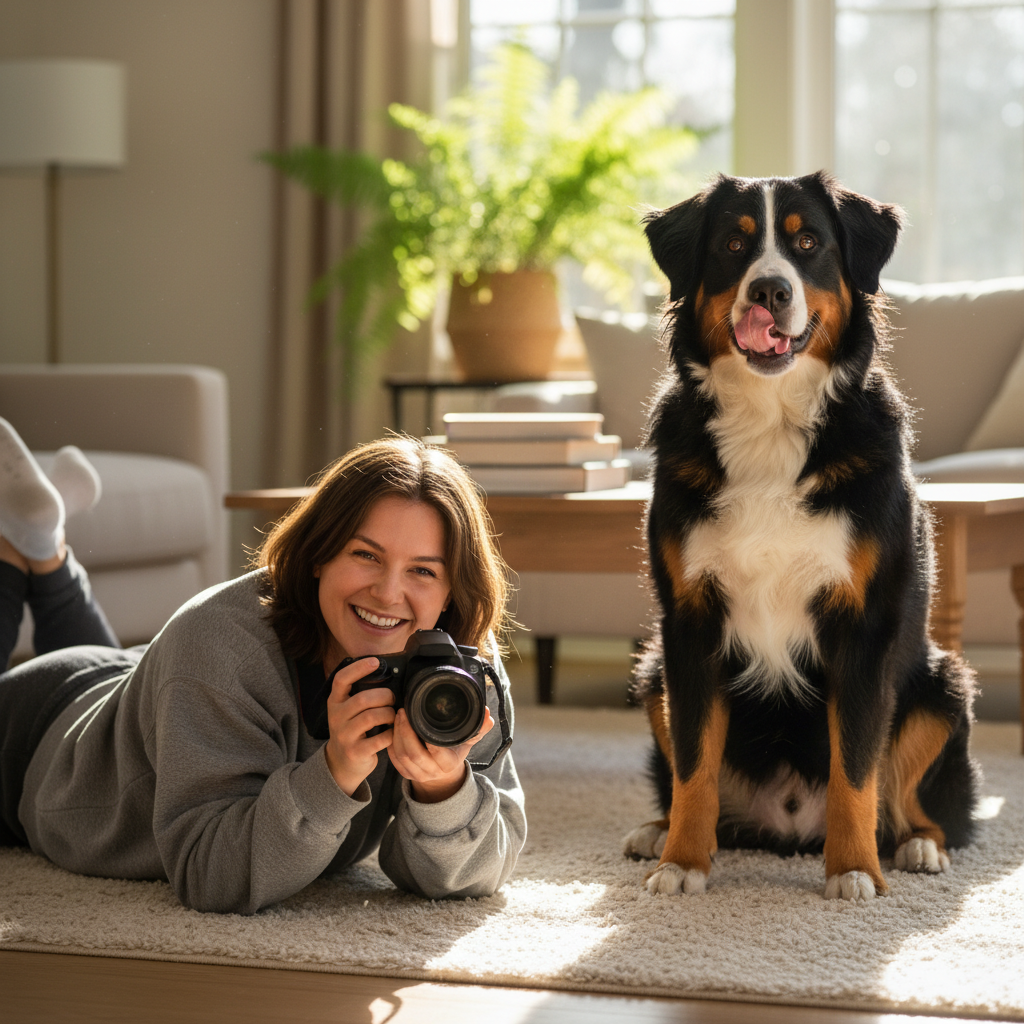
You’ve done the training, and your pup is a lip-licking pro. Now, let’s capture that magic! A successful photoshoot is about more than just the trick; it’s about creating a fun, relaxed environment.
Lighting is Everything
Good lighting is the secret to stunning photos. Natural light is your best friend. Position your dog near a large window or head outside during the “golden hours” (early morning or late afternoon). Avoid harsh, direct midday sun which can create unflattering shadows. Never use a direct flash, as it can startle your dog and create red-eye.
Get on Their Level
The best pet photos are taken from the animal’s perspective. Don’t be afraid to lie on the floor to get eye-level with your dog. This creates a much more intimate and engaging portrait. It makes them the star of the show, not just a small subject in a big room.
Camera Settings for Success
If you’re using a smartphone, the ‘Portrait’ mode can be great for creating a blurred background (bokeh) that makes your dog pop. If you’re using a DSLR or mirrorless camera, you’ll want to use a fast shutter speed (like 1/250s or faster) to freeze the motion of the lick. A wide aperture (like f/2.8 or f/4) will also help blur the background. Set your camera to burst mode to take a rapid series of shots—this increases your chances of catching that one perfect moment.
Keep it Fun and Fast
A photoshoot should feel like a game, not a chore. Keep the session short, maybe 10-15 minutes max. Ask for the “lick lips” cue, take a few shots, and then reward them with a toy or some praise. Mix it up with other tricks they know. If you see any signs of stress (like the appeasement lip licks we talked about earlier), it’s time to call it a day. The goal is a happy dog and a great photo, in that order!
Pro Tip: Try holding a favorite squeaky toy right above your camera lens to get your dog’s attention and a beautiful, direct gaze right before you ask for the lip lick cue.
Troubleshooting Common Hiccups
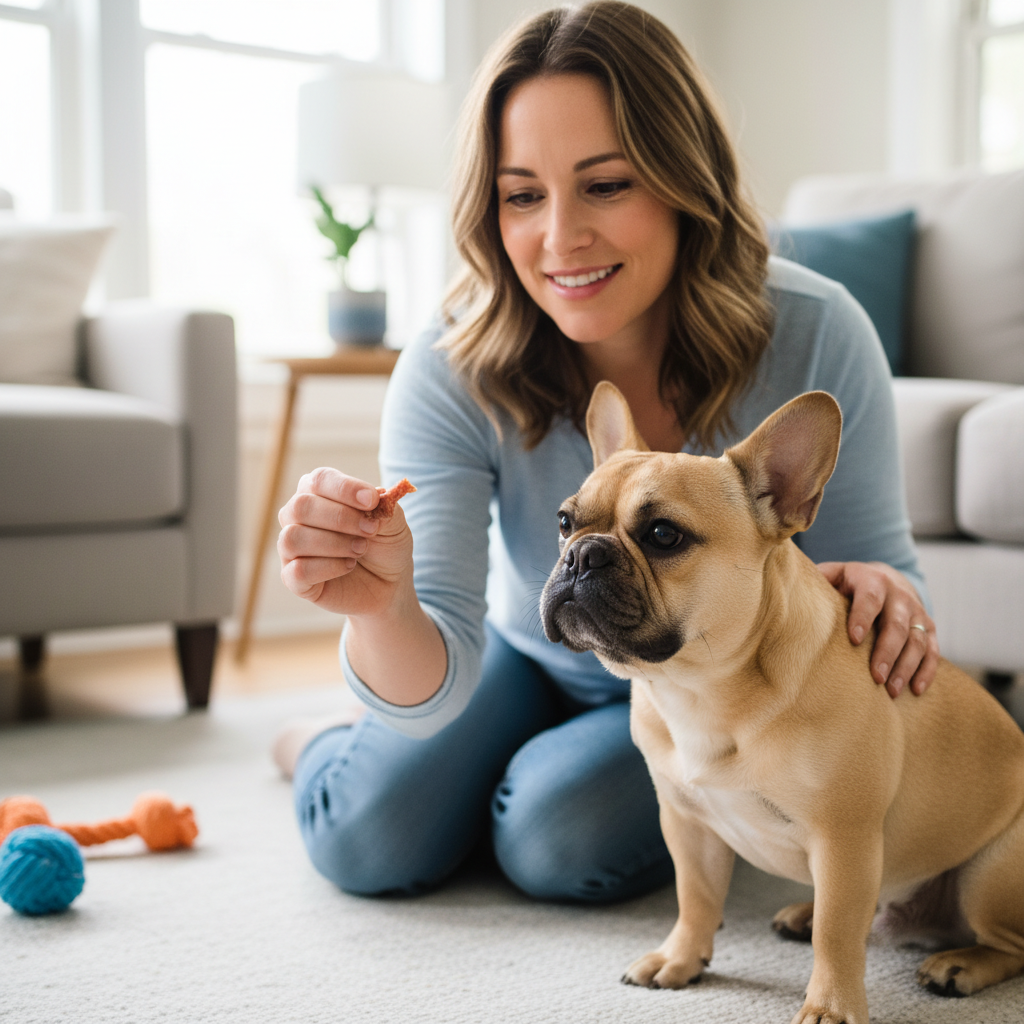
Training is never a straight line, and it’s totally normal to hit a few bumps in the road. Don’t get discouraged! Here are some common challenges and how to navigate them.
“My dog just stares at me and won’t lick.”
This usually means the lure isn’t enticing enough or they don’t understand the first step. Try a higher-value lickable lure—if you used yogurt, maybe try peanut butter. Make sure you’re placing it directly on their nose so their instinct to lick it off is immediate. Go back to Step 1 and do many repetitions of just capturing the behavior before moving on.
“My dog gets the lick but seems stressed or anxious.”
This is a crucial one. Remember that lip licking is also a stress signal. If your dog’s body language is tense (tail tucked, ears back, yawning), the training session itself might be the stressor. Are you asking for too much, too fast? Are the sessions too long? Take a break. When you return, make the sessions much shorter (even just 1-2 minutes) and use tons of praise and easy wins to build their confidence. Ensure the environment is calm and you’re relaxed and happy.
“My timing with the clicker is off.”
Timing is everything in marker training. You want to ‘click’ the very instant the tongue comes out. If you’re late, you might be marking the tongue going back in. Practice your timing without your dog! Hold your clicker and watch TV. Every time a specific character appears, click. This sounds silly, but it builds muscle memory and improves your reaction time.
“My dog will only do it with the hand signal, not the verbal cue.”
This is very common! Dogs are much more fluent in body language than verbal language. It simply means you haven’t built a strong enough association with the word yet. Go back to pairing the two: say the word right before you give the hand signal. Do this over and over. Then, try fading the hand signal—make it smaller and less obvious. Eventually, the verbal cue will be enough to trigger the behavior.
Conclusion
And there you have it! You’re now equipped with the knowledge and steps to teach your dog one of the most endearing tricks in the book. Capturing the “lick lips” behavior is more than just a means to a great photo; it’s a wonderful way to enhance your communication, strengthen your bond, and spend quality time with your best friend. Remember that the journey is just as important as the result. Celebrate the small successes, laugh at the goofy attempts, and always, always keep it positive. Now grab your treats, your camera, and your four-legged model, and go create some beautiful memories. Happy snapping!