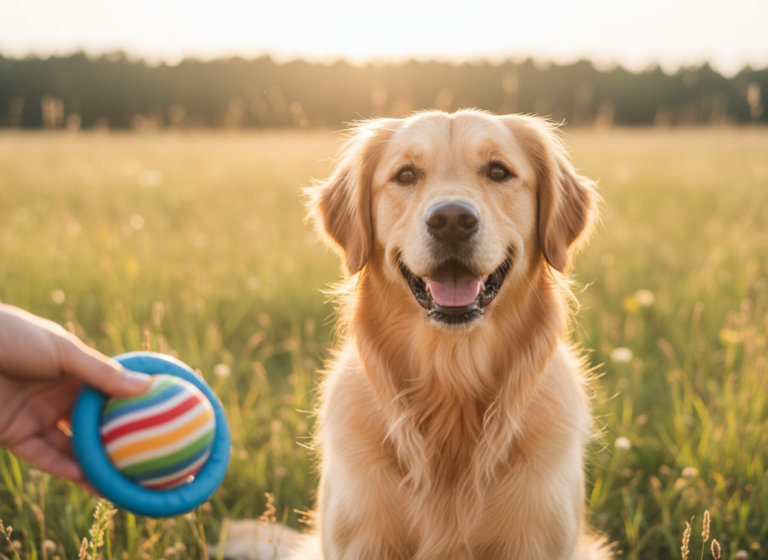
Let’s be honest, our camera rolls are already 90% pictures of our dogs. From their goofy sleeping positions to their majestic poses in the park, we’re obsessed with capturing every moment. But what if you could take those photos to a whole new level of cuteness and creativity? What if your dog could, quite literally, take their own selfie? Welcome to the ultimate guide for teaching your furry friend one of the most unique and photo-worthy tricks around: holding a selfie stick!
Before you start picturing your pup with a fully extended pole, let’s clarify. This trick is all about teaching your dog to gently hold a lightweight, prop-sized selfie stick for a few seconds—just long enough to snap an unforgettable picture. It’s a fantastic bonding activity that combines mental stimulation with positive reinforcement, strengthening your connection while you work towards that viral-worthy shot. This guide will break down the entire process into simple, fun, and safe steps. So grab your treats, call your canine companion, and get ready to create some photo magic together!
Gearing Up for Selfie Success: What You’ll Need
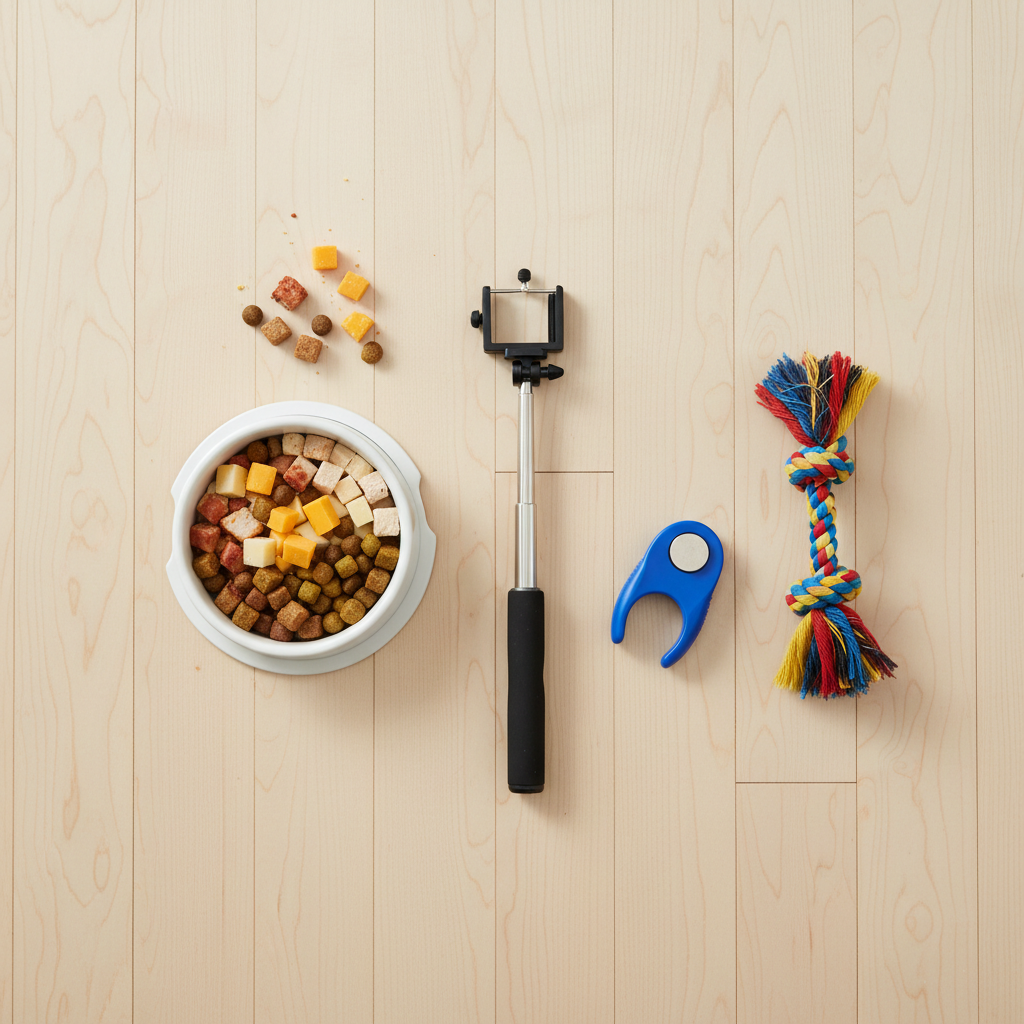
Before you jump into training, it’s essential to gather the right tools. Setting yourself up for success makes the process smoother and more enjoyable for both you and your pup. Think of this as preparing your artist’s palette before creating a masterpiece! You don’t need a lot of fancy equipment, but the right items will make a world of difference.
Essential Training Toolkit:
- A Dog-Safe Selfie Stick: This is the star of the show, but safety is paramount. Choose a stick that is extremely lightweight. A simple, non-extendable, or very short model is best. Avoid heavy, metal sticks. You can even create a prop using a lightweight wooden dowel or a sturdy cardboard tube to start. The goal is the look, not the function.
- High-Value Treats: We’re talking top-tier goodies here! Think small, pea-sized pieces of cooked chicken, cheese, hot dogs, or their absolute favorite store-bought training treats. The reward needs to be exciting enough to motivate your dog to try this new, unusual task.
- A Clicker (Optional but Recommended): A clicker is a fantastic tool for marking the exact moment your dog does something right. This precise communication helps your dog learn faster. If you’re not using a clicker, a consistent verbal marker like a sharp “Yes!” works just as well.
- Patience and a Positive Attitude: This is the most crucial tool in your kit! Training should always be a fun and positive experience. Every dog learns at a different pace, so celebrate small victories, keep sessions short (5-10 minutes max), and always end on a high note.
Expert Tip: When choosing your prop selfie stick, try tapping it against your own chin. If it feels too heavy or hard for you, it’s definitely too much for your dog’s mouth. Lighter is always better!
Once you have your supplies ready, find a quiet, comfortable space with minimal distractions. This will help your dog focus on you and the fun game you’re about to play. Now, let’s build the foundation for this amazing trick!
The Foundation: Mastering the ‘Hold’ Command
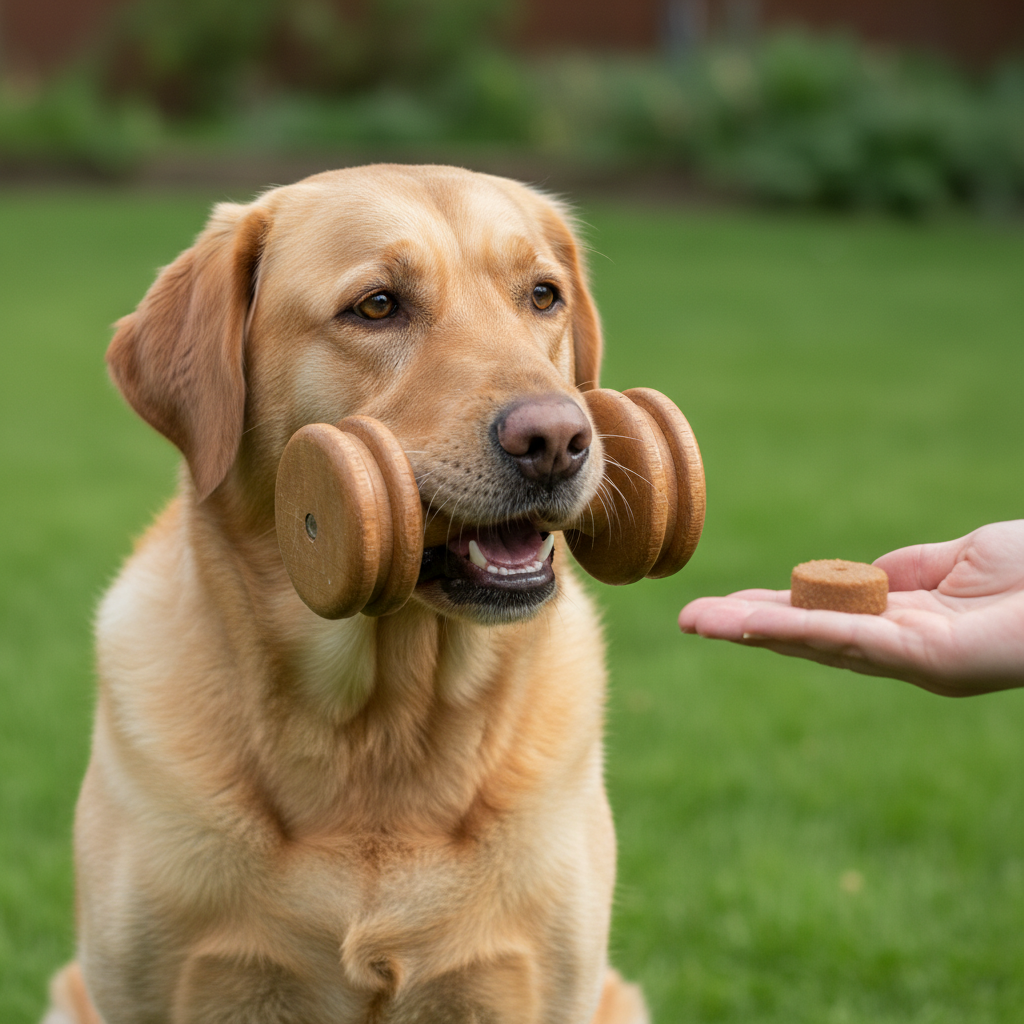
Before we can ask our dog to hold a selfie stick, we need to teach them the basic concept of holding an object in their mouth gently. This is the bedrock of the trick. Rushing this step is like trying to build a house without a foundation—it just won’t work. The ‘Hold’ command is a useful skill in itself and teaches your dog to have a ‘soft mouth’.
Step 1: Introduce a Neutral Object
Start with something simple and unexciting, like a wooden dowel, a training dumbbell, or a plain plastic toy. You don’t want them to think it’s a chew toy or a tug-of-war rope. Hold the object out towards your dog.
Step 2: Mark and Reward Curiosity
The moment your dog shows any interest—sniffing, nudging, or touching the object with their nose—click (or say “Yes!”) and give them a treat. Repeat this several times. We are building a positive association with the object.
Step 3: Encourage Mouth Interaction
Now, wait for your dog to interact with the object using their mouth. Even the slightest touch of a tooth or lip on the object gets a click and a treat. Be patient! This might take a few tries. You’re shaping the behavior, rewarding small steps toward the final goal.
Step 4: Shaping the ‘Take It’
Once your dog is consistently touching the object with their mouth, briefly withhold the click until they open their mouth and attempt to grab it. The instant their mouth closes around the object, even for a split second, click and reward with a jackpot of treats! This is a breakthrough moment!
Step 5: Adding the ‘Hold’ and Duration
As your dog gets the hang of taking the object, start building duration. Delay the click by one second after they take it. Then two seconds, then three. Keep it short and successful. If they drop it, that’s okay! Just go back a step to where they were successful. Once they can hold it for a few seconds consistently, you can add the verbal cue. Say “Hold” just as they are about to take the object, then click and treat for the successful hold.
Remember: The goal is a gentle, relaxed hold. If your dog is biting or chewing the object, use a less exciting object or go back a step and reward only gentle mouth touches. End the session if they seem frustrated.
Step-by-Step Guide: From ‘Hold’ to Selfie Pro
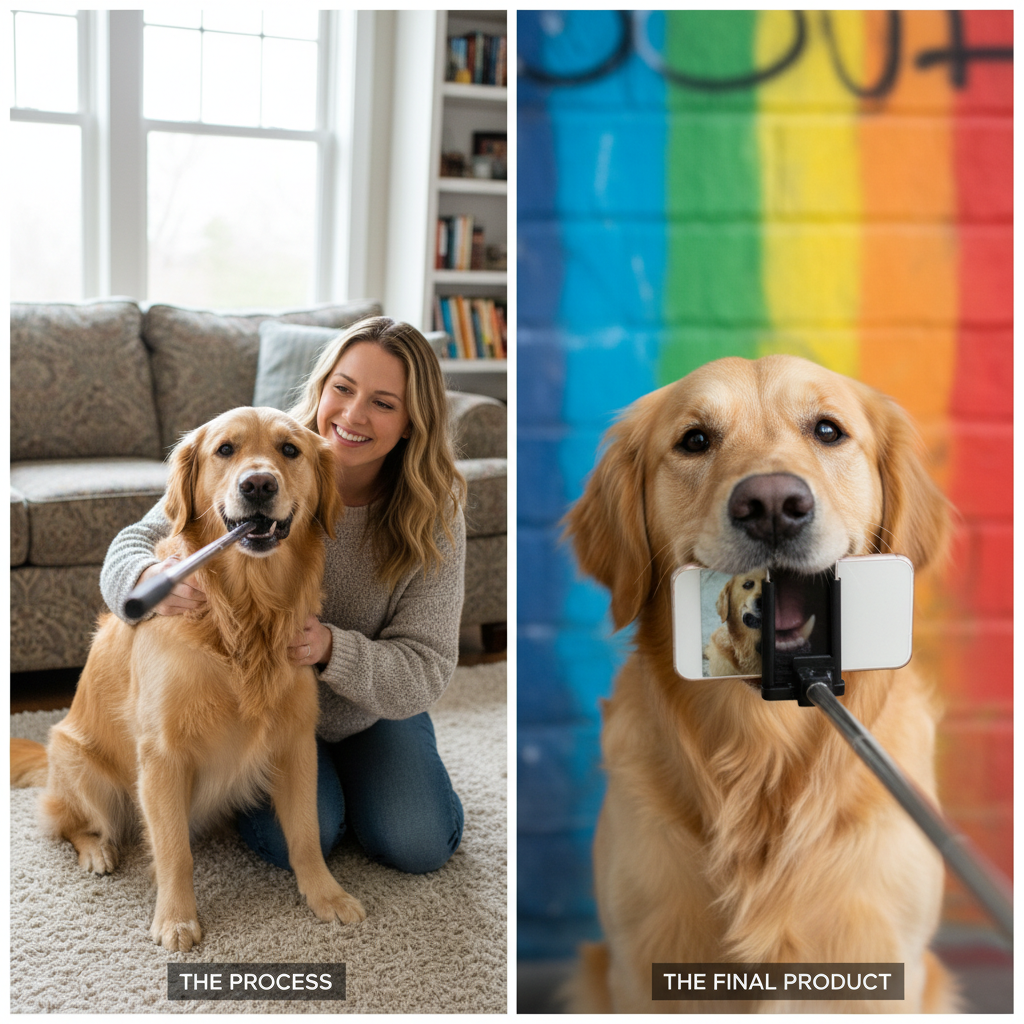
With a solid ‘Hold’ command in your back pocket, it’s time to introduce the selfie stick! Remember to keep the energy light and fun. This is a game, not a chore. We’ll transfer the skill your dog just learned onto our specific prop.
- Step 1: Introduce the Selfie Stick. Let your dog sniff and investigate the lightweight selfie stick. Just like before, click and treat for any calm interaction, like sniffing or nudging it. We want them to see it as a fun new object, not something scary.
- Step 2: Transfer the ‘Hold’ Command. Hold the selfie stick out in the same way you held the training object. Ask your dog to ‘Hold’. Since they already know the command, they will likely be more confident. The moment their mouth touches the stick, click and reward enthusiastically. We’re focusing on the handle or a designated ‘mouthpiece’ area. You can even wrap this part in vet tape for a better grip.
- Step 3: Build Duration Slowly. Just as you did with the training object, start building the duration of the hold. Ask for one second, then two, then five. Keep sessions short and successful. If your dog holds it for 3 seconds and then drops it, that’s a win! End the session there or go back to a 2-second hold. Always reward the release, too. Teach a ‘Drop It’ or ‘Give’ cue so they learn to release the stick into your hand gently.
- Step 4: Practice in Different Positions. Once your dog is comfortable holding the stick while sitting in front of you, start generalizing the behavior. Ask them to hold it while sitting next to you, or while you kneel beside them. This prepares them for the actual ‘selfie’ pose.
- Step 5: The ‘Selfie’ Pose. Now for the grand finale! Position your dog in a sit. Kneel or sit beside them, out of the camera’s eventual frame. Give them the stick and say ‘Hold’. Use your other hand to hold your phone and get ready to snap the picture. You might need a second person to help at first—one to manage the dog and one to take the photo.
- Step 6: Capture the Moment! Use a fast shutter speed on your camera or phone to catch the perfect, non-blurry shot. Use praise and treats generously after each successful photo attempt. Your dog has no idea what a ‘selfie’ is; they just know they’re doing a fun job and getting rewarded for it. That’s all that matters!
Troubleshooting: When Your Pup Says ‘No Thanks’
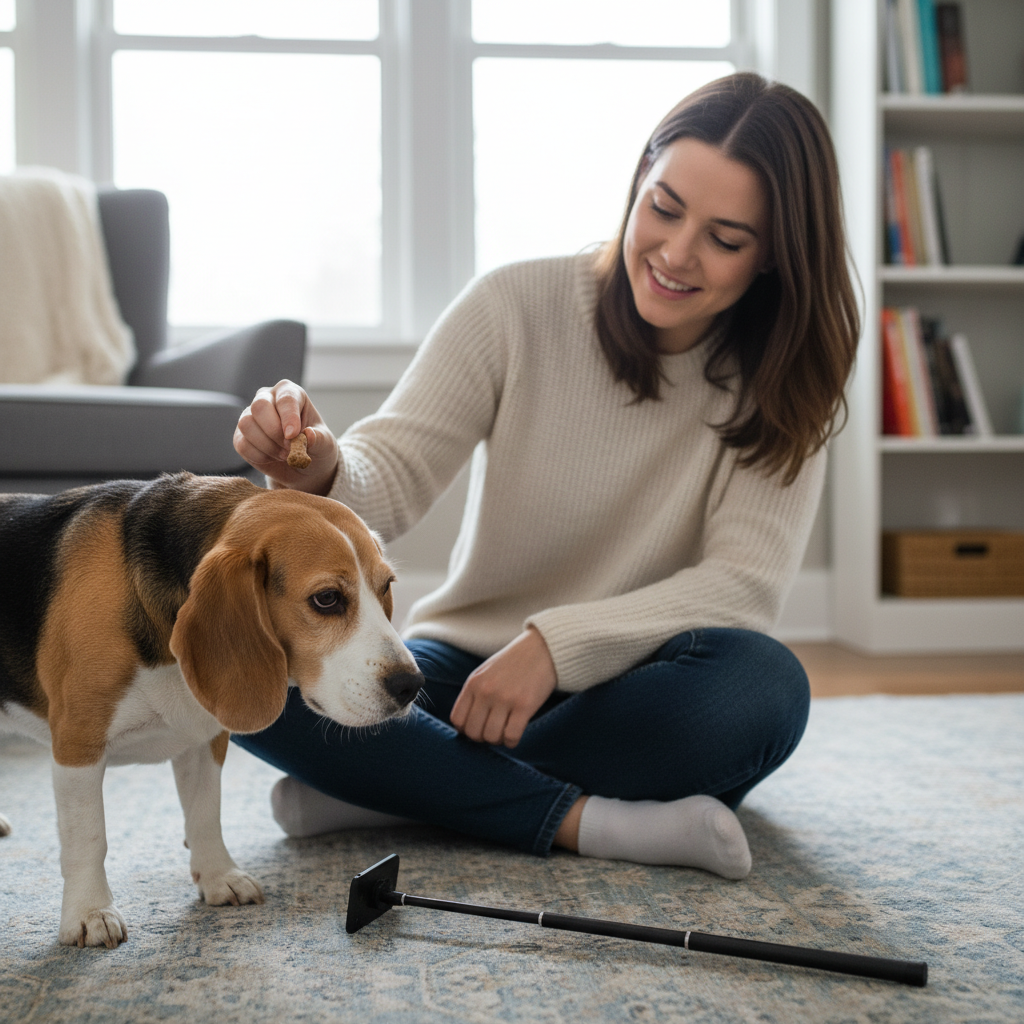
Even with the best plan, you might hit a few snags. That’s completely normal in dog training! The key is to stay patient and figure out what the roadblock is. Here are some common challenges and how to work through them.
Problem: My dog won’t put the stick in their mouth.
Solution: Go back to the very beginning of shaping. Make the object irresistible. You can smear a tiny bit of peanut butter or cream cheese on the part you want them to hold. Reward even the tiniest lick or touch, and slowly build back up to them putting their mouth on it. The selfie stick might also be too intimidating. Go back to the neutral object (dowel, etc.) and master the ‘Hold’ there before re-introducing the stick.
Problem: My dog chews or bites the selfie stick.
Solution: This usually means the dog is over-excited or thinks it’s a chew toy. If this happens, calmly take the stick away and end the training session for a minute or two to let them calm down. When you restart, focus on rewarding only gentle, still holds. If they start to chew, say “Oops!” and take the stick. They’ll learn that chewing makes the fun game stop, while a gentle hold brings the treats.
Problem: My dog is scared of the selfie stick.
Solution: We never want to force our dogs to do something that frightens them. If your dog is showing signs of fear (tucked tail, ears back, avoiding the object), put the stick on the floor and let them approach it on their own terms. Click and treat for just looking at it, then for sniffing it, then for touching it with their nose. This process of desensitization and counter-conditioning builds positive associations and shows them it’s not a threat. This may take several sessions before you even ask for a ‘Hold’.
Problem: My dog holds it for a second and then immediately drops it.
Solution: You might be asking for too much duration too soon. Go back to basics. If they drop it at 2 seconds, practice and heavily reward holds that are only 1 second long. Make it ridiculously easy for them to succeed. Once they are rock-solid at 1 second, move to 1.5 seconds, then 2. Celebrate every tiny bit of progress! It’s a marathon, not a sprint.
Safety First! Pawsitive Posing Pointers
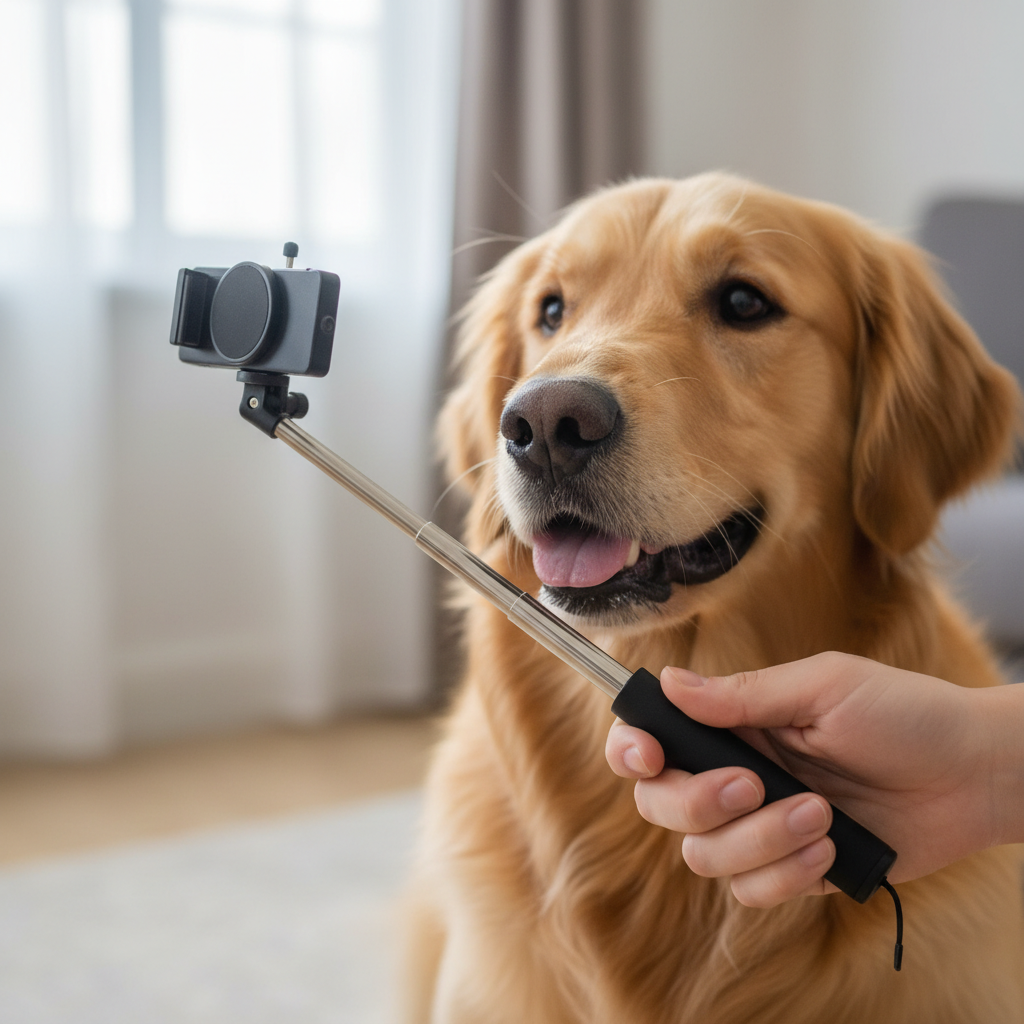
Teaching a fun trick is wonderful, but your dog’s safety and well-being should always be the number one priority. This trick is a novelty for a photo opportunity, not a long-duration activity. Please keep these crucial safety points in mind at all times.
Key Safety Rules for Selfie Stick Training:
- Supervision is Non-Negotiable: Never, ever leave your dog unattended with the selfie stick or any other prop. It could easily become a chew toy and a choking hazard.
- Weight Matters: We can’t stress this enough. Use an extremely lightweight prop. A heavy object can strain your dog’s jaw and neck muscles. If you wouldn’t feel comfortable holding it in your own mouth, don’t ask your dog to.
- Never Extend the Stick: The trick is for your dog to hold the collapsed handle. Never ask your dog to hold a fully extended selfie stick. The weight distribution would be dangerous and could easily injure their neck or mouth if they turned their head suddenly.
- Keep Sessions Short and Sweet: A training session should only be 5-10 minutes long. Dogs, especially puppies, have short attention spans. Pushing them for too long can lead to frustration and a negative association with training. Always end on a successful repetition so they feel happy and confident.
- Watch for Stress Signals: Pay close attention to your dog’s body language. Yawning, lip licking, and showing the whites of their eyes (whale eye) can all be signs of stress. If you see these, it’s time to take a break and play a simple game they love instead.
- It’s Just for Fun: Remember, this is a silly, cute trick. If your dog genuinely dislikes it or seems uncomfortable, don’t force it. There are a million other ways to take adorable photos of your best friend. Your bond is more important than any picture.
Final Thought: The goal of dog training isn’t just to teach commands; it’s to build a language of communication and trust between you and your dog. This trick, when taught with patience and positivity, is just another fun conversation you can have with your furry companion.
Conclusion
Congratulations! You now have all the tools and techniques to teach your dog one of the most charming and unique tricks on the block. By following these steps, focusing on positive reinforcement, and prioritizing your dog’s safety and comfort, you’re not just working towards a viral photo—you’re investing in your relationship. The patience, communication, and teamwork required for this trick will strengthen your bond in ways you might not expect.
Remember to celebrate every small step of progress, from the first nose-nudge to the final, picture-perfect hold. Every dog learns differently, so enjoy the journey and tailor the training to your pup’s unique personality. Once you capture that perfect shot, be sure to share it with pride! But more importantly, cherish the fun moments, the silly outtakes, and the incredible connection you’ve built along the way. Now go have some fun and get ready to make some memories!