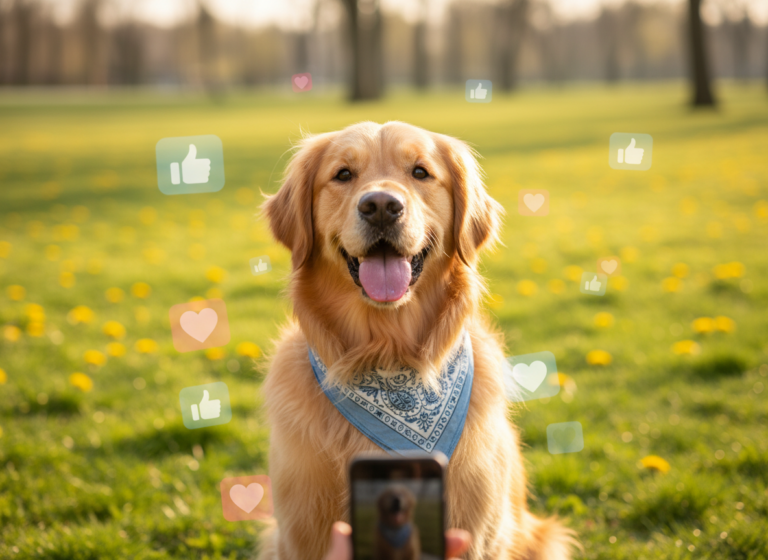
Have you ever scrolled through social media and seen one of those impossibly cute photos of a dog seemingly taking its own selfie? It’s a trend that melts hearts and racks up likes for a reason! It’s adorable, funny, and captures a unique bond between a pet and their person. You might think it requires complex photo editing or a dog with a genius-level IQ, but what if I told you it’s actually a trainable trick? And a surprisingly simple one at that!
That’s right! With a little patience, a handful of tasty treats, and the power of positive reinforcement, you can teach your furry friend to pose for their own close-ups. This isn’t just about getting a viral photo; it’s a fantastic mental enrichment activity that strengthens your communication and bond with your dog. So, grab your smartphone and your dog’s favorite snacks. Let’s dive into the simple hack that will turn your pup into a selfie superstar!
Setting the Stage for Selfie Success: What You’ll Need
Setting the Stage for Selfie Success: What You’ll Need
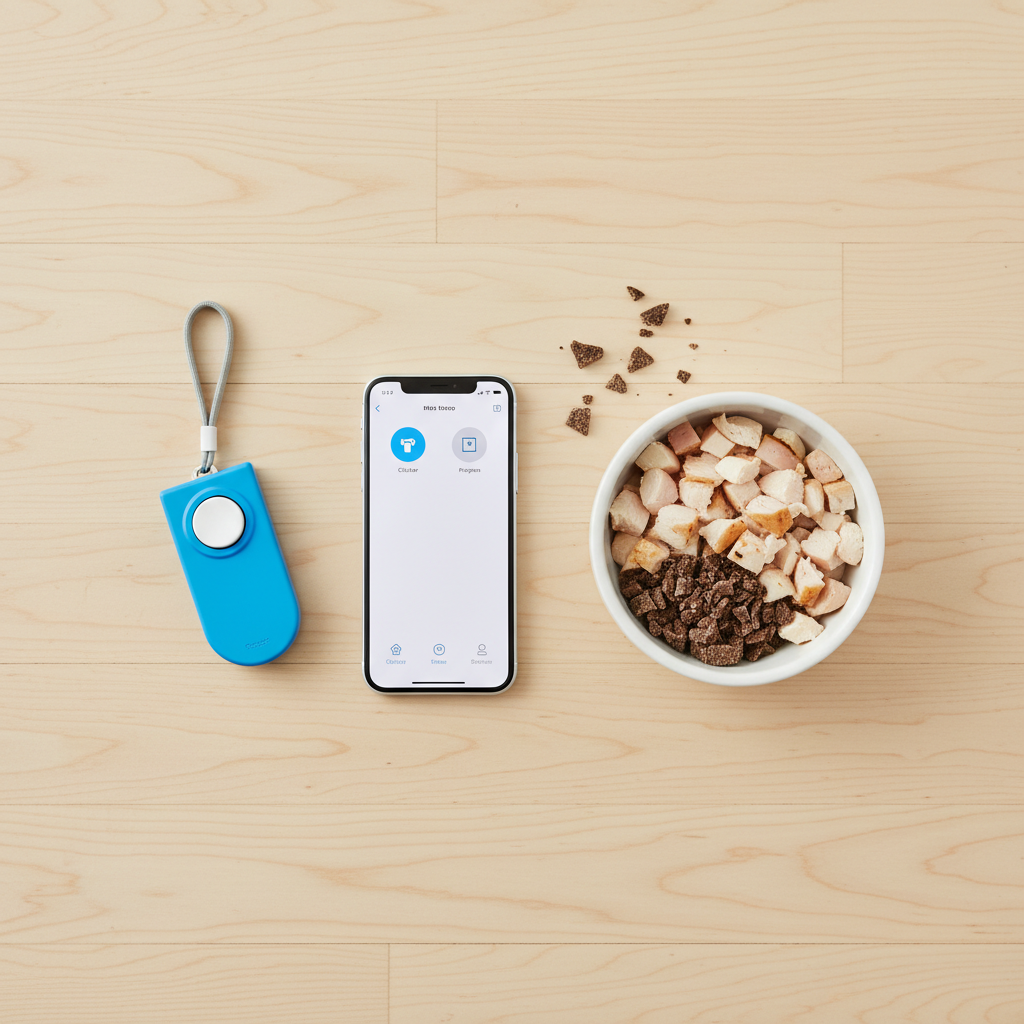
Before you and your canine companion embark on this photographic adventure, let’s gather a few essential tools. The key to any successful training session is being prepared. Having everything ready means you can focus all your attention on your dog, keeping the session fun, fast-paced, and positive. You probably have most of these items at home already!
The Training Toolkit:
- A Smartphone: This one is obvious! You’ll need a phone with a front-facing camera. Make sure it’s charged and ready to go. It’s also helpful to clean the lens for crystal-clear shots.
- High-Value Treats: We’re not talking about your dog’s regular kibble. For a new and exciting trick like this, you need to bring out the good stuff! Think small, pea-sized pieces of boiled chicken, cheese, hot dogs, or their absolute favorite store-bought training treats. They should be soft and easy to swallow quickly so you don’t break the flow of the training.
- A Clicker (Optional but Recommended): A clicker is a fantastic tool for marking the exact moment your dog does the right thing. This precision communication can speed up the learning process significantly. If you’ve never used one, don’t worry! We’ll explain how. If you don’t have a clicker, you can use a consistent verbal marker word like “Yes!” or “Good!” said in an upbeat tone.
- A Quiet, Distraction-Free Space: Choose a familiar room in your house where your dog feels comfortable. The first few sessions should be free from the distractions of other pets, family members, or the mail carrier walking by. A calm environment helps your dog focus on you and the task at hand.
- Patience and a Positive Attitude: This is the most important tool in your kit! Every dog learns at a different pace. Keep sessions short (5-10 minutes is perfect) and always end on a positive note. Your energy is contagious, so if you’re having fun, your dog will too!
Expert Tip: ‘Charge’ your clicker before you start. This simply means clicking and immediately giving your dog a treat, without asking them to do anything. Repeat this 10-15 times. Your dog will quickly learn that the ‘click’ sound means a reward is coming, turning the clicker into a powerful training tool.
Step 1: The Foundation – Mastering the ‘Touch’ Command
Step 1: The Foundation – Mastering the ‘Touch’ Command
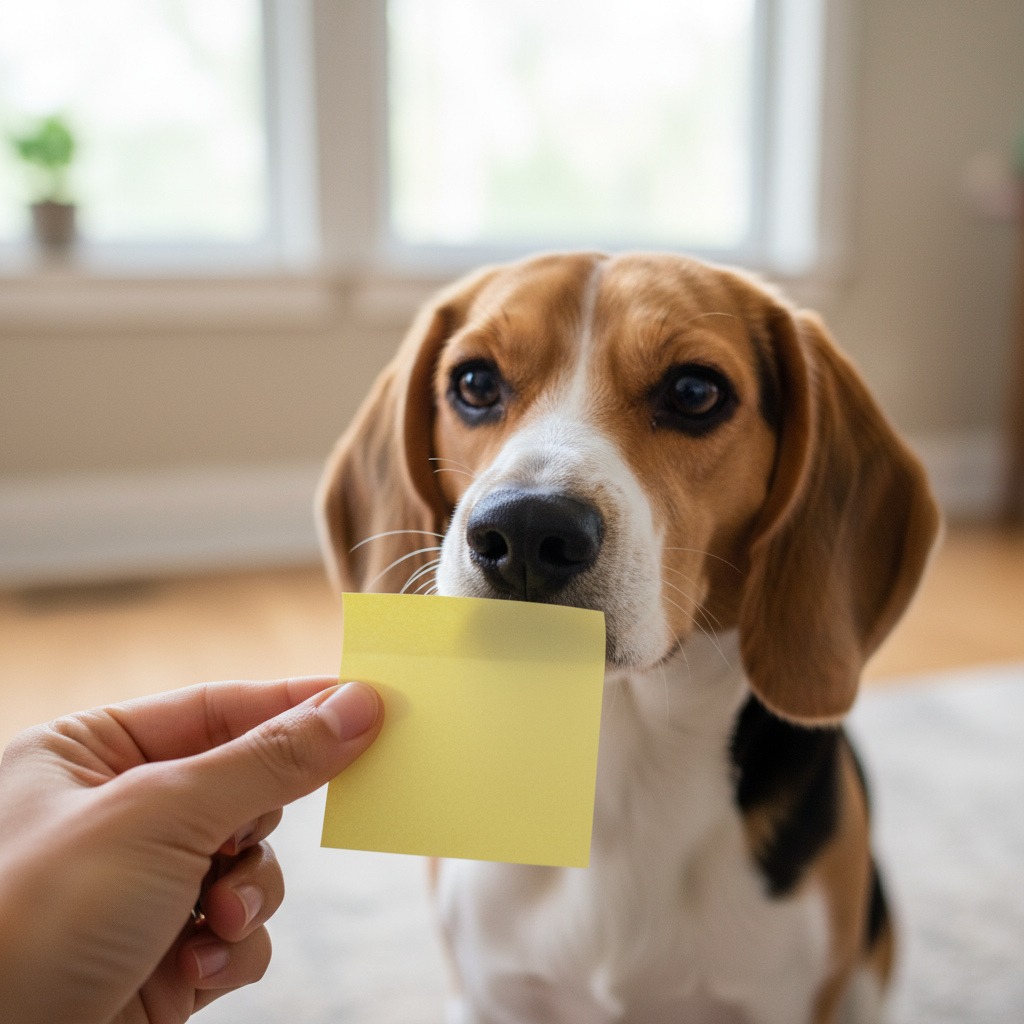
The secret to the ‘selfie’ trick isn’t teaching your dog to operate a camera; it’s teaching them a simple targeting behavior. We’re going to teach them to touch a specific object with their nose on cue. This command, often called ‘Touch’ or ‘Target,’ is the fundamental building block for the final trick. It’s also incredibly useful for other training scenarios, like teaching a dog to close a door or ring a bell.
How to Teach ‘Touch’:
- Introduce the Target: Start with your hand. Hold your hand out, palm open and flat, a few inches from your dog’s nose. Your dog, being naturally curious, will likely move to sniff your hand.
- Mark and Reward: The instant their nose makes contact with your palm, click your clicker (or say your marker word, “Yes!”) and immediately give them a treat from your other hand. Timing is everything here! You want to mark the exact moment of contact.
- Reset and Repeat: Pull your hand away, let your dog eat the treat, and then present your hand again. Repeat the process. At this stage, you’re just rewarding their natural curiosity. Do this in short bursts of 5-10 repetitions.
- Add the Verbal Cue: Once your dog is reliably booping your hand with their nose as soon as you present it, you can add the verbal cue. Just before you hold out your hand, say the word “Touch” in a clear, happy voice. Then, present your hand, mark, and reward the nose-to-hand contact.
- Generalize the Behavior: Now, start practicing with different objects! Try getting them to ‘Touch’ a sticky note, a coaster, or a book. This helps them understand that ‘Touch’ means to touch whatever object you indicate, not just your hand. This step is crucial for transitioning to the phone.
Keep your sessions short and upbeat. If your dog seems confused or loses interest, take a break and try again later. Mastering this foundational step will make the rest of the process a breeze!
Step 2: From ‘Touch’ to ‘Selfie’ – Making the Tech Connection
Step 2: From ‘Touch’ to ‘Selfie’ – Making the Tech Connection
Okay, your dog is now a ‘Touch’ champion! They’ll happily boop your hand or a sticky note on command. Now it’s time to introduce the star of the show: your smartphone. This transition requires a little finesse because a phone is different from a sticky note—it makes sounds, lights up, and might smell strange to your dog. We need to make sure they have a positive association with it from the very beginning.
Introducing the Phone:
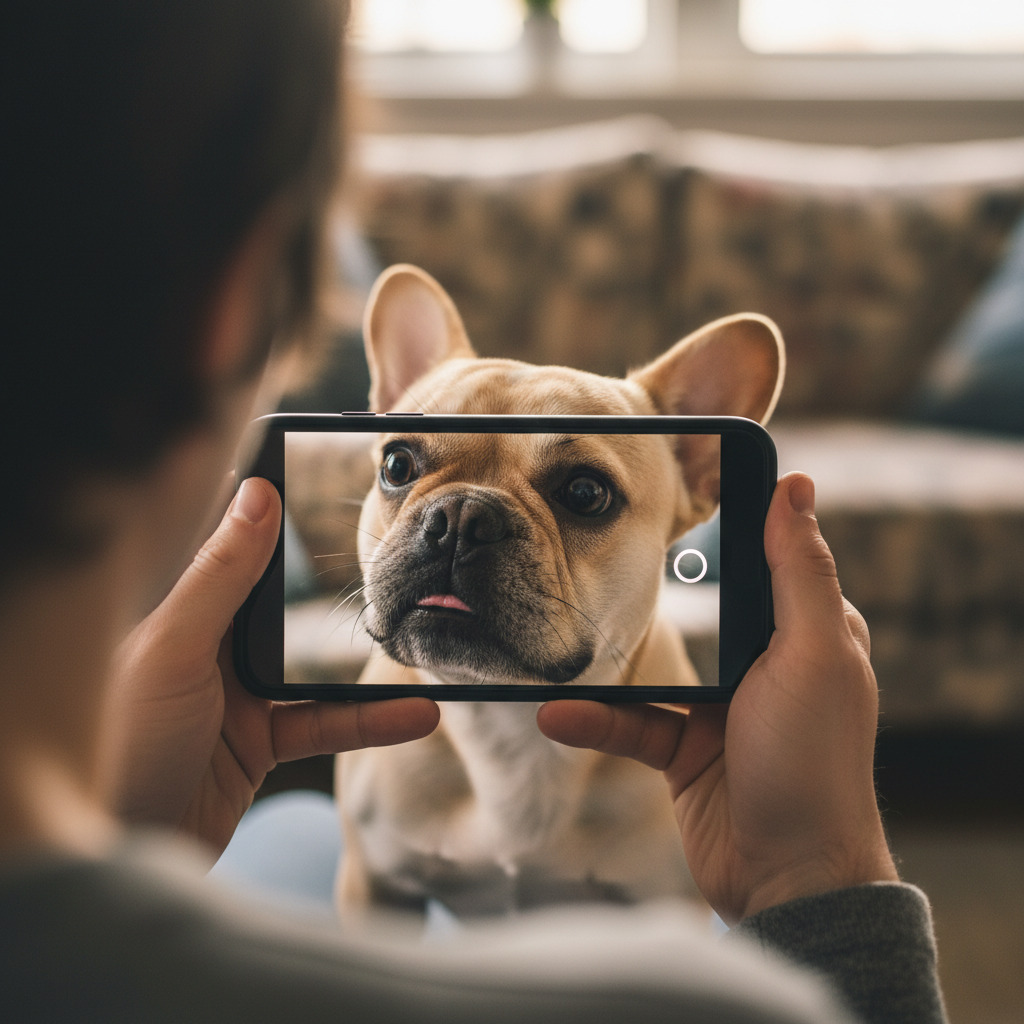
- Phone as the Target: First, turn your phone off or put it in airplane mode to avoid distracting notifications. Hold the phone in your palm (the back of the phone facing your dog) and present it just as you did with your hand. Use your ‘Touch’ cue. When their nose touches the back of the phone, mark and reward enthusiastically. Repeat this until they are confidently touching the phone.
- Focus on the Lens: Now for the magic. We need to get them to target the tiny front-facing camera lens. You can make this spot more obvious by placing a tiny piece of a sticky note or a non-toxic, pet-safe sticker right next to the lens.
- Refine the Target: Hold the phone with the screen facing your dog. Point to the sticker near the lens and give your ‘Touch’ cue. At first, reward any touch on the screen. Gradually, start rewarding only the touches that are closer and closer to the sticker and the lens. This process is called ‘shaping’ the behavior. Be patient! It might take a few short sessions for them to understand the new, smaller target.
- Fade the Lure: Once your dog is consistently targeting the area around the camera lens, you can remove the sticker. Continue to practice, rewarding them for touching the correct spot on the phone screen.
Expert Tip: If your dog is hesitant to touch the phone, place it on the floor and put a treat on the back of it. Let them eat the treat off the phone. Do this a few times to build a positive association before you even ask for a ‘Touch’.
The goal is to have your dog confidently and gently boop the front-facing camera area with their nose on cue. This is the pose that creates the illusion of them taking their own picture!
Step 3: Capturing the Perfect Shot – Timing, Angles, and Attitude
Step 3: Capturing the Perfect Shot – Timing, Angles, and Attitude
You’ve done the hard work, and your dog understands the assignment. Now it’s time to put it all together and become your dog’s personal ‘paw-parazzi’. This final step is all about camera work, timing, and getting that perfect, personality-filled expression.
The Selfie Photoshoot Checklist:
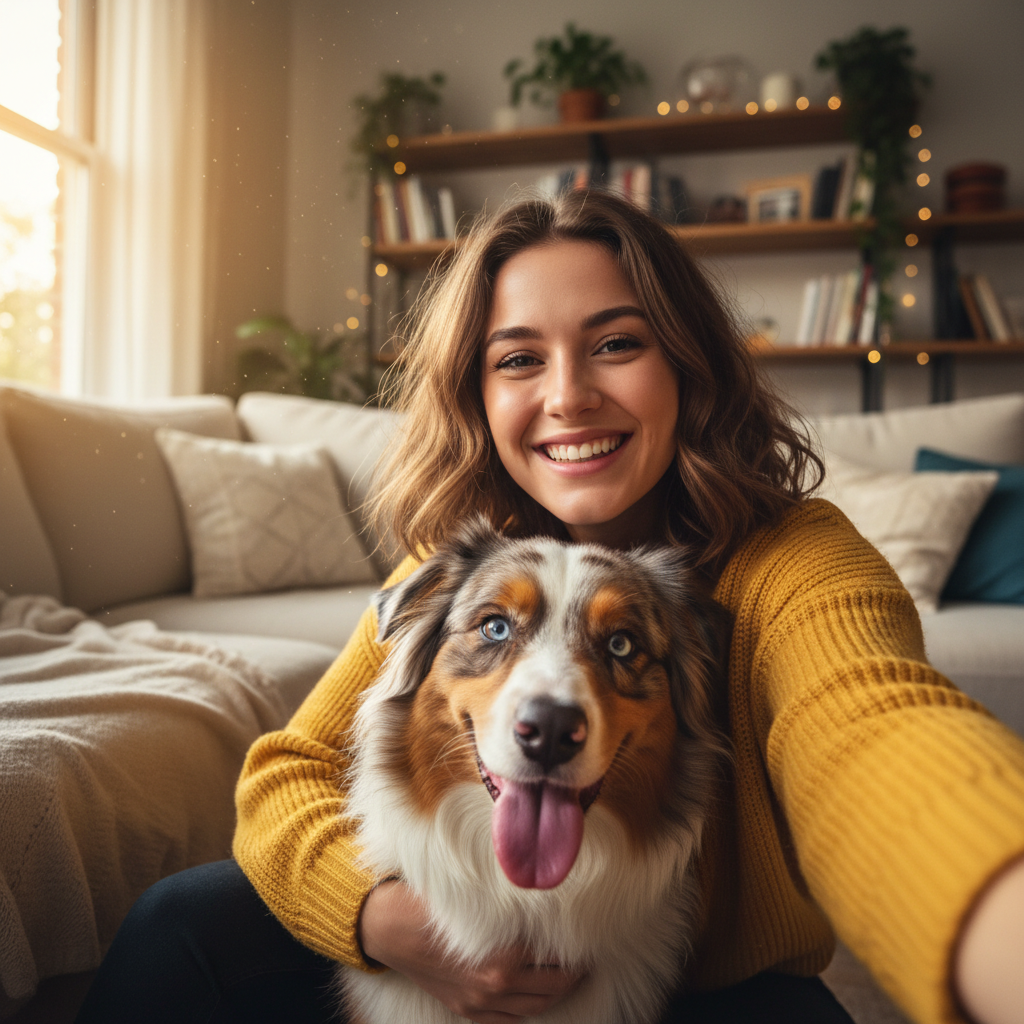
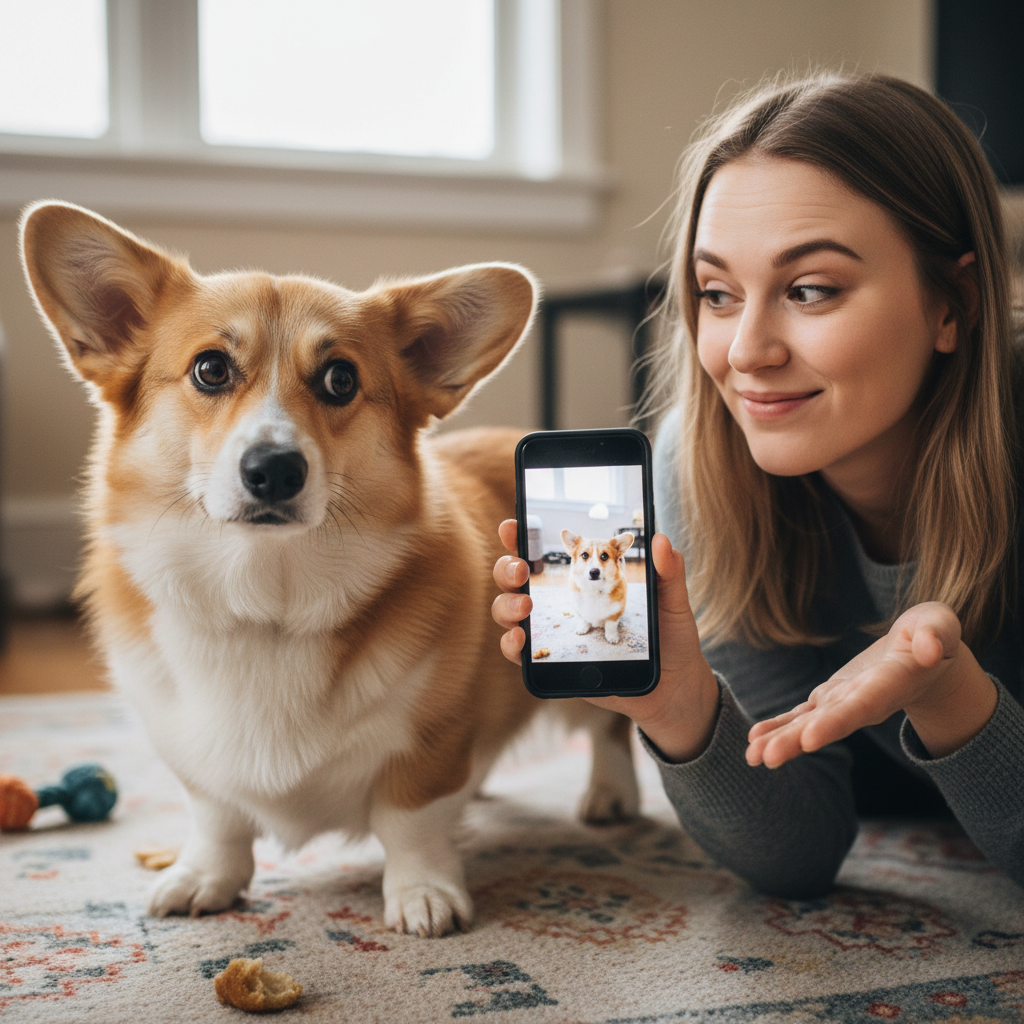
- Get in Position: Sit on the floor or couch next to your dog. You want to be comfortable and at their level. Hold the phone in selfie mode, with your thumb ready to press the shutter button.
- Cue the Action: Hold the phone about six to twelve inches from your dog’s face. Give your ‘Touch’ cue in an excited voice. As your dog leans in to boop the camera lens, get ready to snap the photo!
- Master the Timing: The perfect moment to take the picture is the split second just before their nose actually touches the screen, or right as it makes gentle contact. This will give you a clear shot of their adorable face looking right at the camera. Using your phone’s ‘burst mode’ (taking many photos in quick succession) can be a lifesaver here! You can sort through them later to find the gem.
- Experiment with Angles: Don’t be afraid to move the phone around. A slightly higher angle can be very flattering, while a low angle can be goofy and fun. See what works best for your dog’s unique features.
- Elicit Great Expressions: Want that happy, tongue-out look? Try a quick, fun play session right before your photo shoot. For a curious head-tilt, try making a new and interesting sound right before you give the ‘Touch’ cue. Your energy will dictate their expression, so keep it light and fun!
Adding Yourself to the Picture:
Once your dog is a pro at solo selfies, it’s time for a duet! Position yourself next to your dog, hold the phone out as you would for a normal selfie, and then give the ‘Touch’ cue. Your dog will lean into the frame to boop the phone, creating a perfect ‘us-ie’. This is where the real viral gold is made!
Remember to give lots of praise and a jackpot reward (a handful of treats!) when you get a particularly great shot. This reinforces the fun and makes them eager for the next photoshoot.
Troubleshooting Common Selfie Snags
Troubleshooting Common Selfie Snags
Even with the best plan, you might hit a few bumps in the road. Training is never a straight line! Don’t get discouraged if your dog isn’t an instant Instagram model. Here are some common challenges and how to work through them with a positive approach.
| The Problem | The Solution |
|---|---|
| My dog is scared of the phone. | This is common! The phone is a weird object. Start with counter-conditioning. Place the phone on the ground (turned off) and sprinkle high-value treats around it and on it. Don’t ask for any behavior. Just let your dog approach and eat the treats, associating the phone with amazing things. Do this for a few days before re-introducing the ‘Touch’ game with the phone. |
| My dog is too rough and headbutts the phone! | This pup is just a little too enthusiastic! The key here is to only reward gentle touches. If they headbutt the phone, say nothing, pull the phone away for a few seconds, and then represent it. When they offer a softer nose boop, give a huge reward. They will quickly learn that gentleness, not force, earns the treat. |
| They keep licking the phone instead of booping it. | A lick is not a boop! If your dog licks the screen, don’t mark or reward it. Simply wipe the screen and try again. It might help to go back to touching your hand for a few repetitions to remind them of the desired nose-touch behavior before trying the phone again. Be precise with your click/marker word—only mark the nose touch! |
| Their attention span is super short. | This is completely normal for dogs. It’s why short, frequent training sessions are more effective than one long one. Keep your selfie sessions to just 3-5 minutes at a time, a couple of times a day. Always end on a successful repetition so they finish feeling confident and eager for the next session. |
| We’ve mastered it, but now they won’t do it. | Sometimes dogs stop offering a learned behavior if the rewards become too predictable or infrequent. Make sure you’re still rewarding them well for their selfie skills! You can also mix it up by asking for other easy tricks they know (like ‘Sit’ or ‘Paw’) in between ‘Touch’ cues to keep them engaged and guessing. |
The most important thing is to listen to your dog’s body language. If they are turning away, yawning, or showing other signs of stress, it’s time for a break. Training should always be a fun and voluntary game, never a chore.
Conclusion
And there you have it! You are now fully equipped to teach your dog one of the most charming and photo-worthy tricks on the internet. More than just a cute photo op, teaching your dog to ‘take a selfie’ is a testament to your bond and the power of positive, game-based training. It provides mental stimulation for your dog, strengthens your communication, and, let’s be honest, gives you some truly amazing content to share with friends and family.
Remember to be patient, keep it positive, and celebrate the small victories along the way. Every dog is an individual and will learn at their own pace. The most important part of this entire process is the quality time you spend together, strengthening your incredible friendship. Now, go grab your pup and your phone, and start making some memories. We can’t wait to see your dog’s selfie debut!