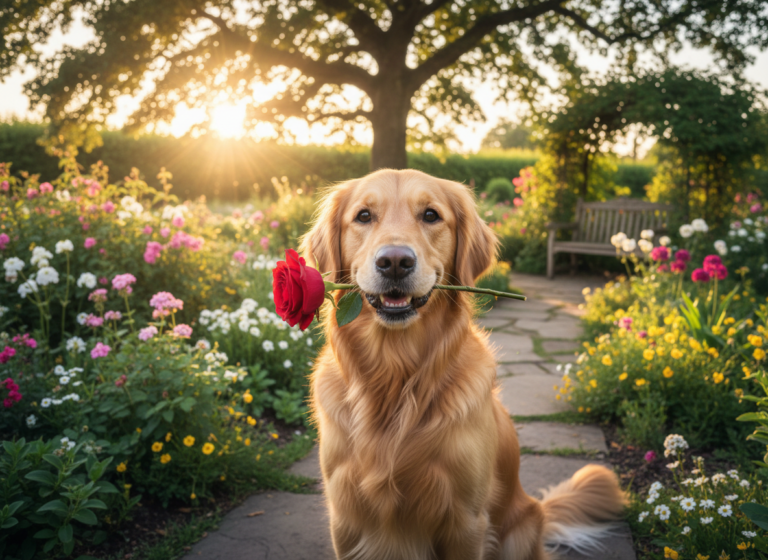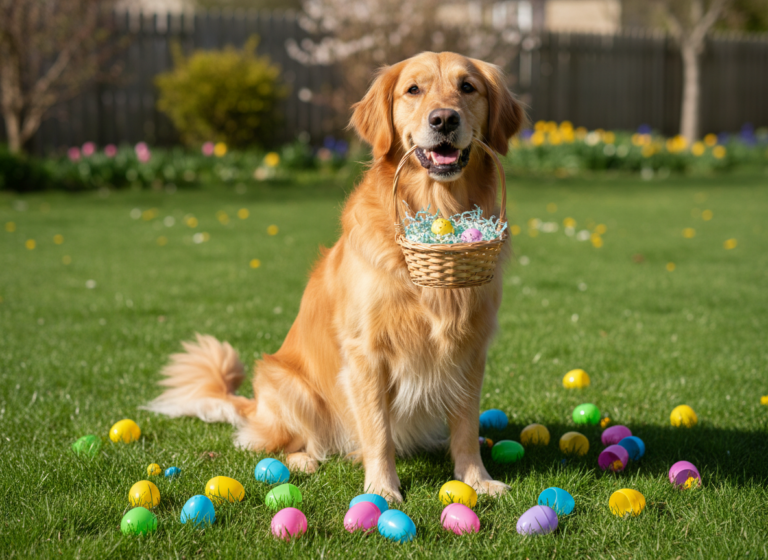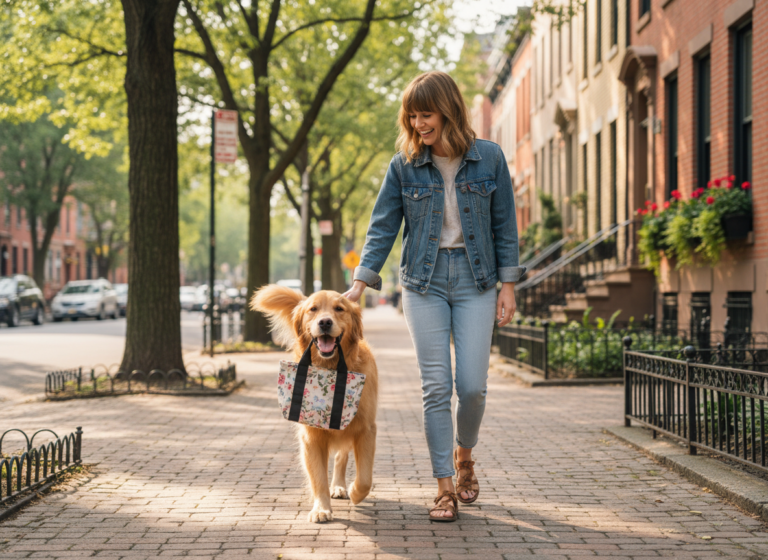
Hey there, fellow pet parents! Has your social media feed been blooming with adorable dogs posing in fields of flowers? Do you dream of capturing that perfect, whimsical spring photo with your own furry companion holding a cute basket of blossoms? It’s a heartwarming image, but it might seem like a trick reserved for professional movie dogs. Well, I’m here to tell you that with a little patience, a handful of tasty treats, and a whole lot of fun, you can teach your dog this amazing skill too!
This guide is about more than just getting a great picture. It’s about spending quality time with your dog, strengthening your bond, and engaging their clever mind. We’re going to break down the training process into simple, manageable steps using positive reinforcement. Forget about force or frustration; we’re all about making this a fun game for both of you. So, grab your camera and your pup’s favorite snacks, and let’s get ready to create some beautiful memories together!
Gathering Your Photoshoot & Training Props
First Things First: Setting Yourselves Up for Success
Before we jump into the training, let’s get all our ducks (or, in this case, dog treats) in a row. Having the right tools on hand makes the entire process smoother and more enjoyable for your canine student. Think of it as preparing your artist’s palette before creating a masterpiece!
The Essentials List:
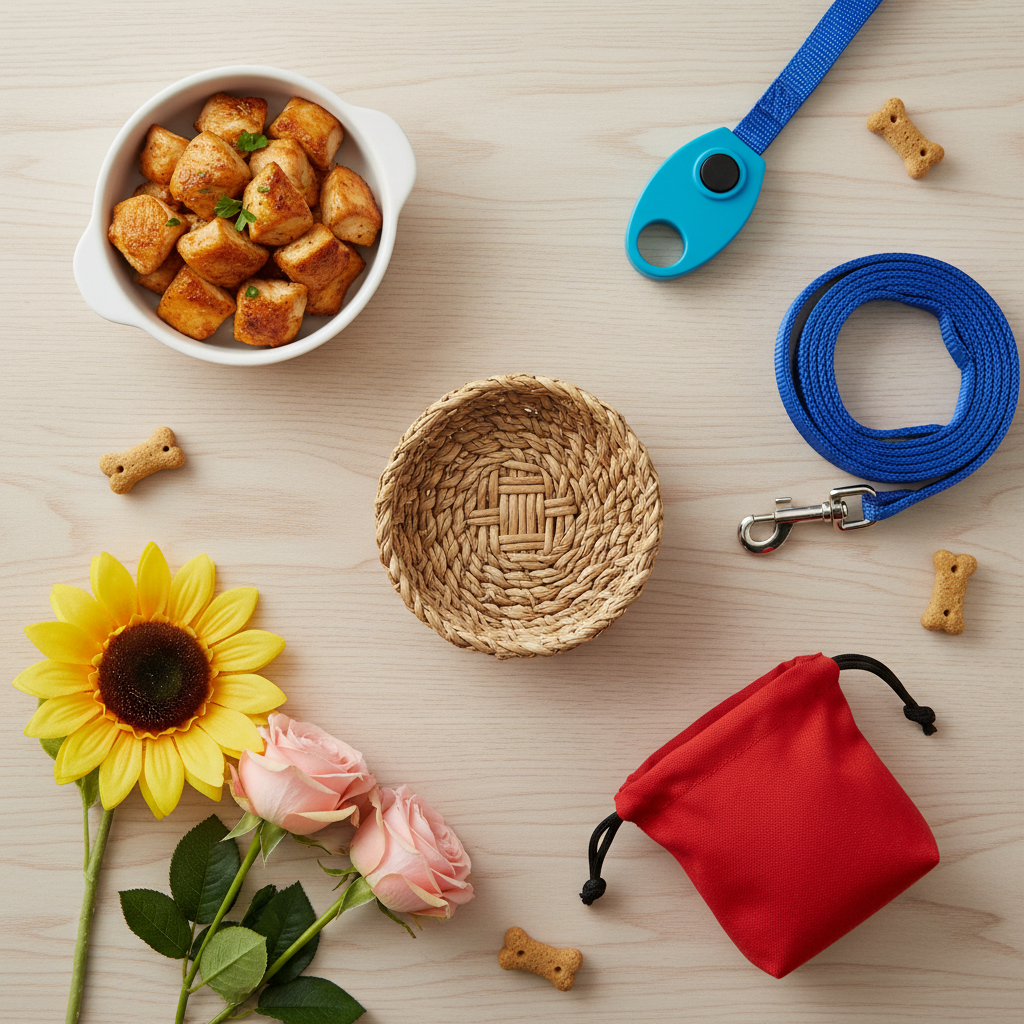
- High-Value Treats: We’re not talking about their everyday kibble. For a special trick like this, you need the good stuff! Think small, pea-sized pieces of boiled chicken, cheese, hot dogs, or their absolute favorite store-bought training treats. The goal is to make the reward so irresistible that your dog is super motivated to work for it.
- A Clicker (Optional but Recommended): A clicker is a fantastic tool for marking the exact moment your dog does something correctly. This precise communication can speed up the learning process. If you’ve never used one, don’t worry! You can also use a verbal marker, like a sharp, happy “Yes!” The key is consistency.
- The Perfect Basket: Start with a basket that is lightweight and has a handle that’s easy for your dog to hold. A small wicker or woven basket is often perfect. Avoid anything too heavy, bulky, or made of hard plastic that could be uncomfortable on their teeth. The goal is a gentle hold, not a weightlifting competition!
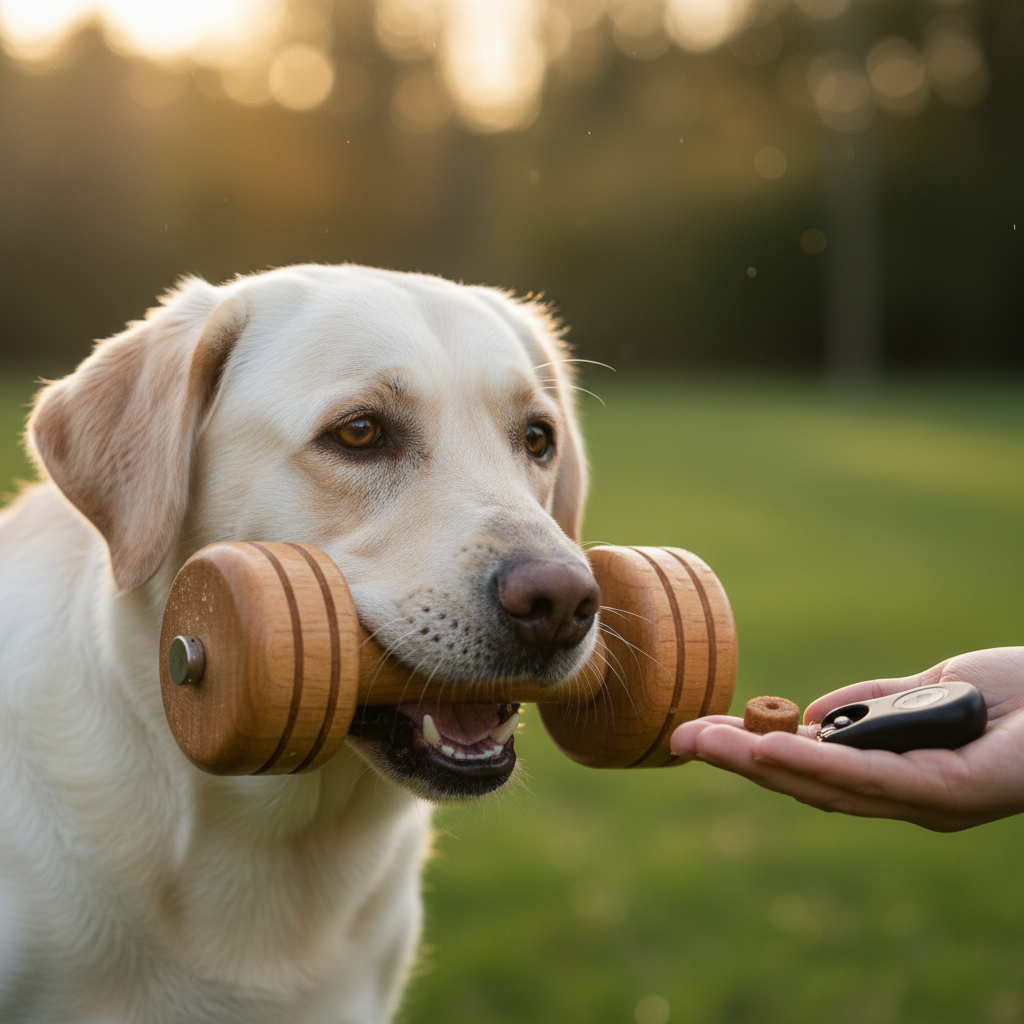
- A ‘Practice’ Object: Don’t start with the basket! Find a neutral object for the initial training steps. A wooden dowel, a sturdy canvas dog toy, or a dog-specific training dumbbell works great. This helps your dog learn the ‘hold’ concept without getting distracted by the new, exciting basket.
- Dog-Safe Flowers: This is critically important. Many common spring flowers are toxic to dogs. When you get to the final stage, you must use flowers that are safe for your pet. We’ll cover a list of these later on, but always double-check before putting anything near your pup’s mouth.
Expert Tip: Keep your training sessions short and sweet! A dog’s attention span, especially when learning something new, is limited. Aim for multiple 5-10 minute sessions throughout the day rather than one long, frustrating one. Always end on a positive note when your dog has successfully completed a step, even a small one!
The Foundation: Mastering ‘Take It’ and ‘Hold’
Building Blocks of the Behavior
This is where the magic begins! We’re going to teach your dog the two core commands that make this trick possible: ‘Take It’ and ‘Hold’. Remember, patience is your best friend here. Every dog learns at a different pace, so celebrate the small wins and keep it positive.
Step 1: Introducing ‘Take It’
- Start with your practice object (the dowel or toy). Hold it out towards your dog’s mouth.
- The moment your dog’s mouth touches the object, click your clicker (or say “Yes!”) and immediately give them a high-value treat. Don’t even worry about them holding it yet. We are just rewarding any interaction.
- Repeat this several times. Your dog will quickly learn that touching the object with their mouth makes a treat appear.
- Once they are consistently touching it, wait for them to put their mouth around it slightly. The instant they do, click/”Yes!” and treat.
- Gradually, you’ll shape this behavior into the dog willingly taking the object into their mouth when you present it. Once they are reliably doing this, you can add the verbal cue. Say “Take It” just as you present the object, then click/treat when they do.
Step 2: Building Duration with ‘Hold’
- Now that your dog will ‘Take It’, we want them to hold on for a bit. Ask them to ‘Take It’. The moment they have it, get your treat ready.
- Let them hold it for just one second, then say “Drop It” (or another release cue) and present the treat to them. They will have to drop the object to eat the treat. This part is important!
- Click/”Yes!” the moment they drop it on cue. You’re rewarding both the hold and the gentle release.
- Slowly, and I mean slowly, increase the duration of the hold. Go from one second to two seconds. Then to three. If your dog drops the object before you ask, that’s okay! Don’t scold them. Simply reset and try again with a shorter duration to ensure they succeed.
- Once they can hold the object for a few seconds reliably, you can add the ‘Hold’ cue. Say “Take It,” and as they are holding it, softly say “Hold… hold… good hold!” before you ask them to “Drop It.”
Remember: The goal is a relaxed, gentle hold. Watch your dog’s body language. If they seem stressed, are biting down hard, or trying to chew the object, take a break. Keep it light and fun, like a game you’re playing together.
Level Up: Introducing the Flower Basket
From Practice Toy to Photoshoot Prop
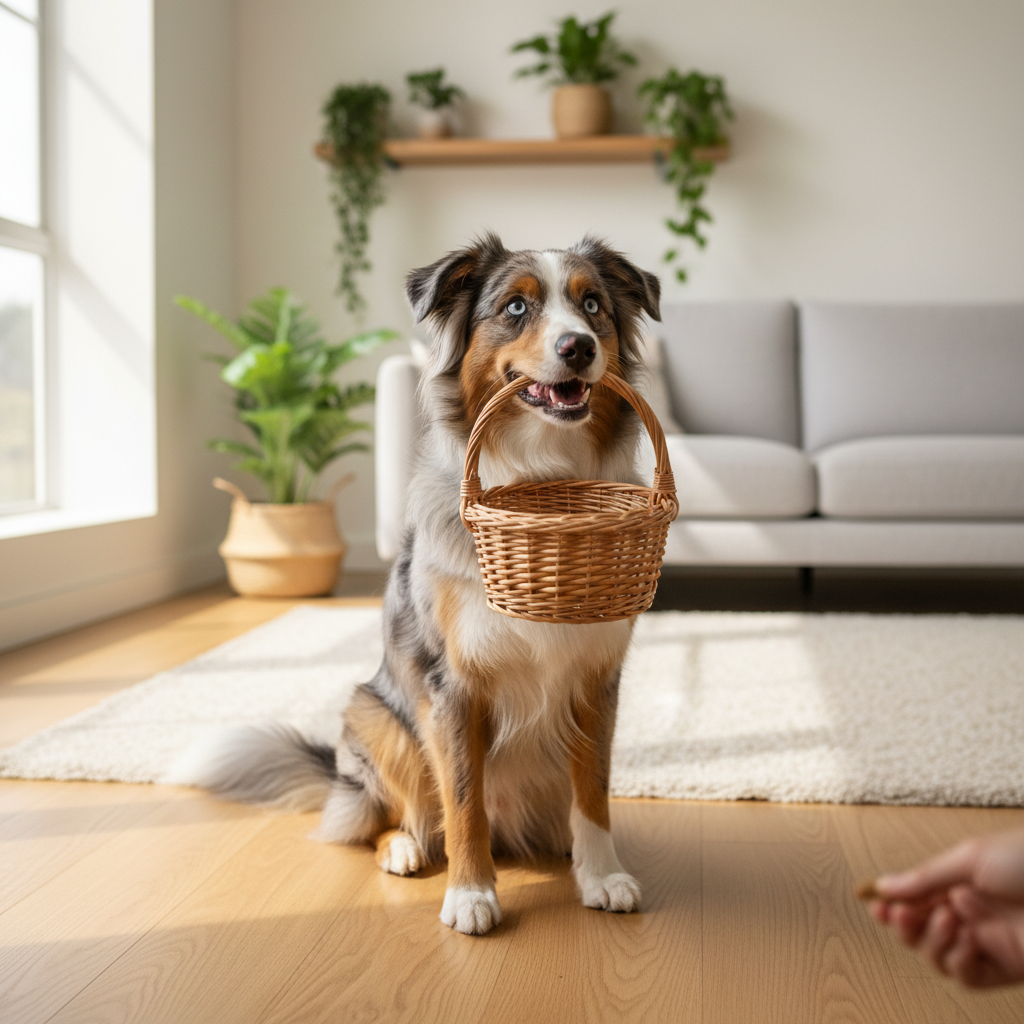
Your dog is now a ‘Hold’ champion with their practice toy! It’s time to transition that amazing skill to the actual prop: the basket. This step can be tricky because the basket is a different shape, texture, and smell. We’ll take it slow to build their confidence.
Step 1: The Basket is Your New ‘Toy’
Start with the basket completely empty. We don’t want to add weight or the distraction of flowers just yet. The goal is to make the basket as un-intimidating and fun as the original practice object.
- Hold the handle of the basket out to your dog, just as you did with the dowel.
- Use your ‘Take It’ cue. Since this is a new object, go back to basics. Click/treat for any interaction at first—a sniff, a lick, a nose bump.
- Gradually encourage them to put their mouth around the handle. Reward any attempt, no matter how clumsy! The basket handle will feel different, so be patient.
- Once they are comfortable taking the handle, re-introduce the ‘Hold’ cue. Start back at just one second and slowly build the duration again. They learned the concept already, so this progression should be much faster than the first time.
Step 2: Adding a Little Weight
An empty basket is one thing, but a basket with flowers will have some heft. We need to prepare your dog for this change.
- Once your dog can comfortably hold the empty basket for 5-10 seconds, add a very small amount of weight. You can put a single, non-noisy toy inside or even a rolled-up pair of socks.
- Ask them to ‘Hold’ it again. They might be surprised by the new weight and drop it. That’s perfectly normal! Just encourage them and try again.
- Gradually increase the weight inside the basket over several training sessions until it roughly matches the weight of the flowers you plan to use. This desensitization prevents them from being startled during the actual photoshoot.
Troubleshooting Tip: Is your dog trying to chew the wicker basket? It’s a common issue! If this happens, immediately use your ‘Drop It’ cue. Reward them for releasing it, and then try again for a shorter duration. Make the ‘Hold’ so much more rewarding than the ‘Chew’ that they choose the correct behavior. Never let them sit and chew on the basket like a toy.
The Final Touches: Adding Flowers & Perfecting the Pose
It’s Showtime! Putting It All Together
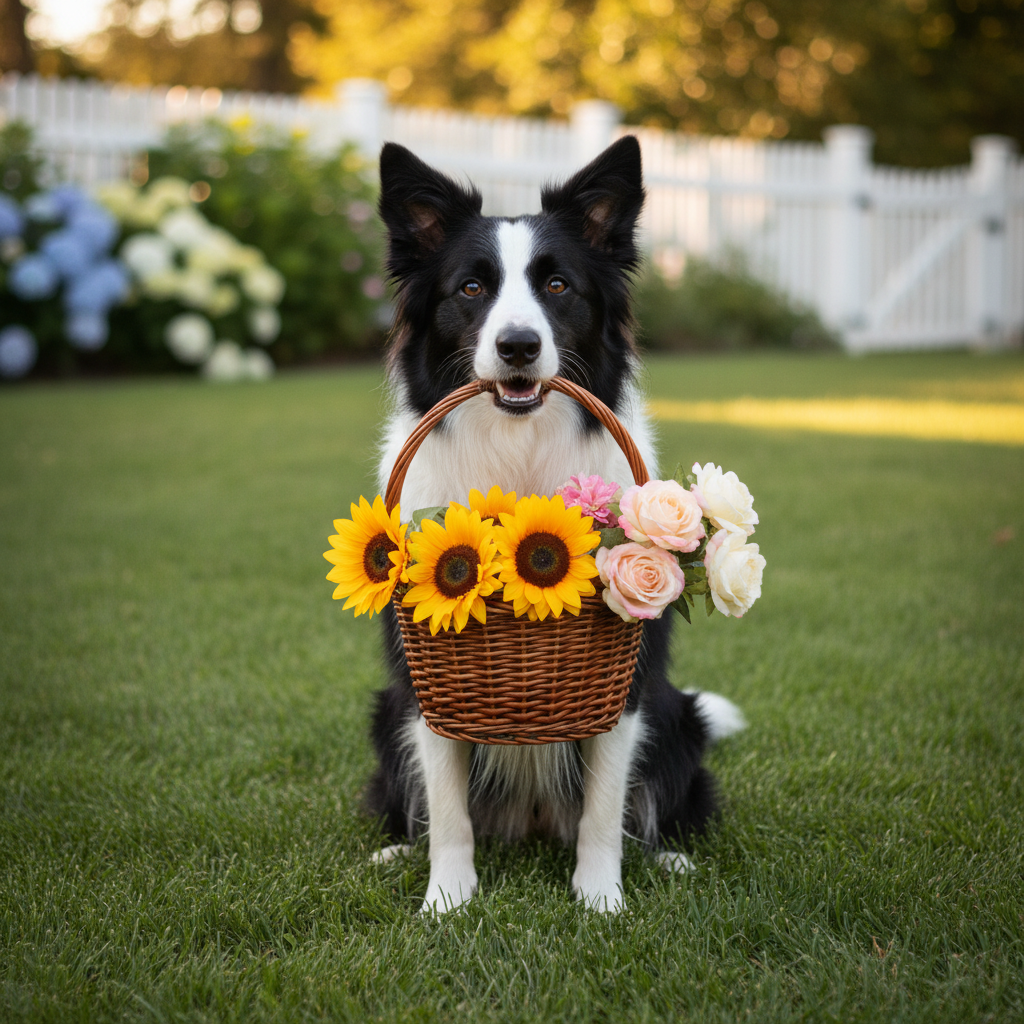
This is the moment we’ve been working towards! Your dog is confidently holding the weighted basket, and now it’s time for the grand finale: adding the flowers and setting up the perfect shot. Safety first, always!
Choosing Dog-Safe Flowers
Before you even think about the photo, you MUST ensure your floral arrangement is 100% safe for your dog. Many popular spring flowers like tulips, daffodils, and lilies are highly toxic. Stick to a known safe list.
Some beautiful and dog-safe options include:
- Sunflowers
- Roses (thorns removed)
- Snapdragons
- Zinnias
- Asters
- Celosia
- Petunias
If you’re ever unsure, consult the ASPCA’s toxic and non-toxic plant list or ask your veterinarian. It’s always better to be safe than sorry.
Practice Makes Perfect
- Arrange the safe flowers in your basket. Show the basket to your dog and let them sniff it. Reward them for calm curiosity.
- Now, ask for the ‘Hold’. This is the final test! They have the skills, so just be calm and encouraging. Give them lots of praise for holding the finished prop.
- Combine the ‘Hold’ with other commands your dog knows well, like ‘Sit’ or ‘Stay’. This is how you’ll capture that perfect, posed shot. Practice a ‘Sit-Stay’ while holding the basket for a few seconds.
- Get your camera ready and keep the session fun. Take lots of pictures! Use a fast shutter speed to capture clear shots, especially if your dog is a little wiggly. Have a helper if possible—one person to handle the dog and one to be the photographer.
Pro Photoshoot Tip: To get that lovely expression where your dog is looking at the camera, have your helper stand right behind you and make a silly, high-pitched noise or hold up a favorite squeaky toy just as you’re ready to snap the picture. You’ll get that adorable head-tilt and alert ears in an instant!
Conclusion
You Did It! Paws, Props, and Pictures!
Look at what you and your amazing dog have accomplished! You’ve not only taught a complex and adorable trick, but you’ve also spent invaluable time bonding and communicating with your best friend. The beautiful photos you captured are just the icing on the cake—a wonderful reminder of the trust and teamwork you share.
Remember that every dog is an individual. If your photoshoot didn’t go perfectly, or if your pup decided holding a basket wasn’t their favorite game today, that’s completely okay. The real prize is the journey you took together. The patience, the laughter, and the countless treats are what truly build a beautiful relationship.
So give your talented pup a big hug and an extra treat from us. We’d love to see your beautiful spring photos—feel free to share them with us online! Happy training, and even happier memory-making.