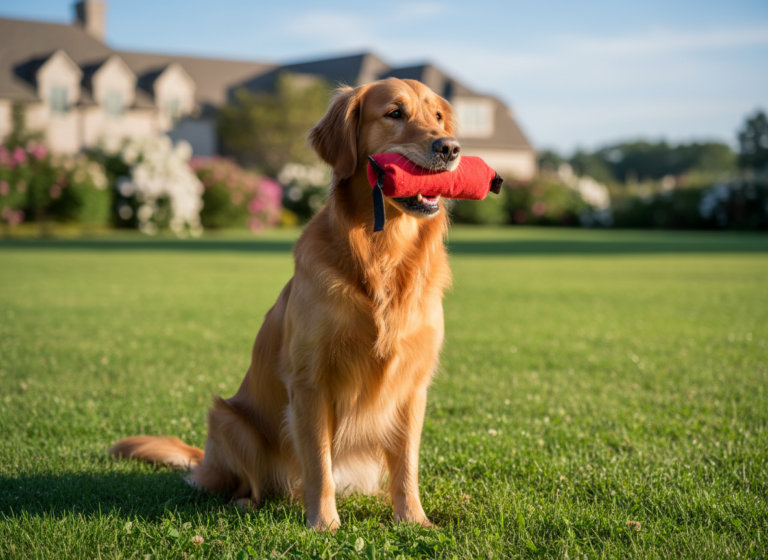
Have you ever watched your dog and thought, ‘I wish you could make yourself useful’? Well, you’re in for a treat! While they might not be ready to do the dishes, teaching your dog to carry a bucket is a fantastic, achievable, and incredibly rewarding task. It’s more than just a cute party trick; it’s a brilliant form of mental stimulation that fights boredom, a confidence-booster, and a wonderful way to deepen the bond you share.
Imagine your dog helping you carry small tools in the garden, tidying up their own toys into a bucket, or simply showing off their cool skills to friends and family. This task, often seen in assistance dog work, is accessible to most dogs with a bit of patience and a whole lot of positive reinforcement. In this guide, we’re going to walk you through the entire process, from gathering your supplies to troubleshooting common hiccups. Get ready to unlock a new level of partnership with your canine companion!
Setting Up for Success: Gathering Your Tools and Mindset

Before you jump into training, a little preparation goes a long way. Setting the stage properly ensures your dog feels comfortable, confident, and ready to learn. Think of it as creating the perfect classroom for your furry student. The right tools and the right attitude are your secret ingredients for a fun and successful training journey.
What You’ll Need
You don’t need a lot of fancy equipment, but having these items on hand will make the process much smoother:
- A Lightweight Bucket: Start with something small, light, and easy for your dog to handle. A child’s plastic beach pail or a small plastic utility bucket is perfect. Avoid heavy metal buckets initially, as they can be noisy and intimidating if dropped, and cold on the teeth. Ensure the handle is a comfortable shape for your dog to hold.
- High-Value Treats: This is the time to break out the good stuff! We’re talking small, soft, extra-tasty treats that your dog absolutely loves. Think tiny pieces of cooked chicken, cheese, or commercial training treats that get their tail wagging. The goal is to make this the best game ever.
- A Clicker (Optional, but Recommended): A clicker is a fantastic tool for marking the exact moment your dog does something right. This precision helps your dog understand precisely what behavior earned them a reward, speeding up the learning process. If you’re not using a clicker, a consistent verbal marker like a sharp “Yes!” works too.
- A Quiet Training Space: Choose a familiar, comfortable area with minimal distractions. Your living room or a quiet backyard is ideal. You want your dog’s full attention on you and the fun new game you’re about to play.
Pre-Training Prep Work
While not strictly necessary, having a couple of foundation skills can give you a head start. If your dog already has a basic “take it” and “hold” command, you’re golden! If not, don’t worry. We’ll be building those concepts into the steps below. The most important prerequisite is a positive attitude. Keep your training sessions short (5-10 minutes is plenty), upbeat, and always end on a successful, happy note. Your energy is contagious, so if you’re having fun, your dog will too!
The Step-by-Step Guide to Bucket Carrying

Alright, team, this is where the magic happens! Remember, patience is key. Every dog learns at a different pace, so celebrate the small wins and enjoy the process. We’re going to break this down into tiny, easy-to-digest steps. This method is called ‘shaping,’ where we reward successive approximations of the final behavior.
- Step 1: Introduce the Bucket as a Friend. Place the bucket on the floor in your training space. Don’t ask your dog to do anything yet. Just let them exist with it. The moment your dog shows any curiosity—sniffing it, looking at it, nudging it—click (or say “Yes!”) and give them a treat. We want to build a super positive association with this new object. It’s not a chore; it’s a treat dispenser!
- Step 2: Target the Handle. Now, we want to draw attention to the most important part. Hold a treat near the handle or tap the handle to encourage your dog to touch it with their nose. The instant their nose makes contact with the handle, click and treat. Repeat this until your dog is confidently booping the handle on their own.
- Step 3: From Nose to Mouth. This step can take some time. Withhold the click/treat for a nose touch and wait. Your dog might get creative and try pawing it or, eventually, nudging it with their open mouth. The very first time their teeth or lips touch the handle, even for a split second, have a jackpot of treats and praise ready! You’re rewarding their problem-solving. You can help them by holding the handle very steady and putting a treat right on the other side to encourage them to ‘mouth’ it to get the reward.
- Step 4: Build the ‘Hold’. Once your dog is willingly putting their mouth on the handle, we’ll ask for a little duration. Ask them to mouth the handle, and for that split second they do, click and treat. Gradually, delay the click by one second, then two. As you do this, introduce your verbal cue, such as “Hold.” Say the word just as they are taking the handle. Keep it short and sweet. If they drop it, that’s okay! Just reset and try for a shorter duration next time.
- Step 5: The First Lift. This is a milestone! Once your dog can hold the handle for a few seconds while it’s resting on the floor, encourage them to lift it ever so slightly. You can do this by slowly lowering the bucket from your hand or simply rewarding any small head-lift motion they make while holding. The first time that bucket comes off the ground, even by a millimeter, it’s time for another party with lots of treats and praise!
- Step 6: Let’s Get Moving. With your dog successfully holding and lifting the bucket, take one small step backward and encourage them to come with you. Use a cue like “Bring it” or “With me.” Click and treat for that single step. You’re now combining the ‘hold’ with movement.
- Step 7: Go the Distance. The final step is simply to build on what you’ve achieved. Gradually increase the number of steps you ask your dog to take while carrying the bucket. Start with two steps, then across the room, then maybe from one room to another. Keep it exciting and rewarding, and soon you’ll have a bona fide bucket-carrying helper!
Oops! Troubleshooting Common Bucket-Carrying Challenges

Even with the best plan, you might hit a few bumps in the road. That’s a completely normal part of dog training! The key is not to get frustrated but to see it as a puzzle to solve together. Here are some of the most common challenges and how to work through them.
My dog keeps dropping the bucket immediately.
This is super common! It usually means we’ve tried to ask for too much duration too soon. Go back a step to where your dog was successful. If they can mouth the handle, go back to rewarding that. Then, build the ‘hold’ again, but this time in micro-seconds. Ask for a half-second hold, then a full second. Make it ridiculously easy for them to succeed, and then build from there. Also, make sure your treats are high-value enough to make the effort worthwhile!
My dog is chewing or biting the handle too hard.
If your helper is more of a chomper, we need to teach them a ‘soft mouth.’ When they hold the handle gently, reward them. If they start chewing, you can use a negative marker like “Oops” or “Try again,” and briefly remove the bucket. Present it again and reward heavily for a softer grip. You can also practice the ‘hold’ with more delicate items to teach the concept of being gentle. Some dogs also prefer different textures, so you could try wrapping the handle in vet wrap or a soft cloth.
Expert Tip: Smearing a tiny bit of peanut butter (xylitol-free!) or cream cheese on the handle can encourage licking and a softer mouth, rather than biting. Reward them when they transition from licking to a gentle hold.
My dog seems scared of the bucket.
This can happen if the bucket made a loud noise when dropped or if the dog is naturally cautious. The solution is to rebuild their confidence. Put the bucket away for a day or two. Then, reintroduce it in a low-pressure way. Place it in the corner of the room and drop treats near it, getting closer and closer as your dog gets more comfortable. Don’t ask them to interact with it at all. Let them rebuild a positive association at their own pace. This is all about making the bucket a predictor of wonderful things (treats!).
We seem to be stuck on one step and aren’t making progress.
Hitting a plateau is normal. Often, it’s a sign that the step we’re asking for is too big. Your job as the trainer is to be a ‘splitter,’ not a ‘lumper.’ Break the problem step down into even tinier micro-steps. For example, if your dog won’t lift the bucket, are they shifting their weight? Reward that. Are they tensing their neck muscles as if to lift? Reward that! By rewarding these tiny ‘tries,’ you build their confidence and help them figure out the puzzle. And remember, if you or your dog are getting frustrated, it’s always better to end the session with an easy win and try again later.
Beyond the Basics: Advancing Your Dog’s Helper Skills

Congratulations, you’ve taught your dog to carry a bucket! That’s a huge accomplishment. But why stop there? Now that your dog understands the core concept, you can expand on this skill to make it more reliable, versatile, and even more useful in your daily life. This is where you generalize the behavior and turn it into a truly impressive and practical skill.
Proofing the Behavior: Making It Reliable Anywhere
Your dog might be a pro at carrying the bucket in the living room, but what about the backyard? Or when a friend is over? ‘Proofing’ is the process of teaching your dog to perform a cue under different conditions. Practice in every room of the house. Then, move to your quiet backyard. Introduce mild distractions, like another person being in the room. By gradually increasing the difficulty, you teach your dog that “Bring it” means the same thing no matter where you are.
Adding Weight and Items
Once the empty bucket is a piece of cake, you can start asking your dog to carry things in it. Start ridiculously light. A single sock, a crumpled piece of paper, or a couple of cotton balls are perfect. You want the change in weight to be almost unnoticeable at first. Gradually add more light items or slightly heavier ones, like a tennis ball or a small garden trowel. This teaches your dog to adjust their balance and grip for different loads.
| Progression Stage | Example Items to Add | Key Goal |
|---|---|---|
| Stage 1: Featherweight | Cotton balls, a single sock, a dog toy leash | Get used to any change in weight or sound. |
| Stage 2: Lightweight | Tennis ball, garden gloves, mail (letters) | Build confidence with noticeable but easy loads. |
| Stage 3: Moderate Weight | Small hand tools, a water bottle (empty then partially full) | Develop strength and adapt to shifting weight. |
Chaining Behaviors for Complex Tasks
Now you can get really fancy! ‘Chaining’ is linking multiple simple behaviors together to create a complex sequence. For example, you could teach your dog to:
- Go to the toy box.
- Pick up a specific toy and place it in the bucket.
- Carry the bucket to you.
This is an advanced skill that provides incredible mental enrichment. You would teach each part of the chain separately and then link them together, starting with the last behavior first (a technique called back-chaining).
Real-World Applications
Think about your daily routine. How could your bucket-carrier help? They could carry in the mail (placed in the bucket from the mailbox), help you with gardening by carrying a tool or seed packets, or the ultimate chore: help tidy up their own toys at the end of the day! By integrating this skill into your life, it becomes more than a trick; it becomes a joyful point of connection and teamwork between you and your amazing dog.
Conclusion
You did it! You’ve embarked on a journey that goes far beyond a simple command. Teaching your dog to carry a bucket is a testament to your patience, your dog’s intelligence, and the incredible partnership you share. You’ve provided your pup with a stimulating ‘job’ that enriches their mind, builds their confidence, and gives them a wonderful sense of purpose.
Remember to celebrate every little step of progress, from the first nose-nudge on the handle to the first proud trot across the room. Every training session is a deposit in your relationship bank. So, keep practicing, keep it fun, and enjoy the countless ways your new helper will bring smiles to your face. Whether they’re helping with chores or just showing off for guests, you’ve unlocked a new and wonderful way to communicate and work together.