Have you ever seen a dog expertly perched on a tiny platform, looking like a circus superstar? That’s often called the ‘Elephant Trick,’ and it’s not just an adorable party trick—it’s a powerhouse of a skill for your canine companion. Teaching your dog to perch on a step stool, or any small, stable object, is a fantastic exercise in what trainers call ‘proprioception,’ or your dog’s awareness of their own body in space. It’s like doggy yoga!
This single trick can help build your dog’s confidence, improve their balance, and strengthen their core muscles, which is beneficial for dogs of all ages, from playful puppies to senior dogs needing low-impact exercise. Plus, the process of learning it together is an incredible bonding experience. Forget boring obedience drills; this is where the real fun begins! In this guide, we’ll walk you through every step, from picking the right stool to troubleshooting common hiccups, so you and your furry friend can master this impressive feat together. Ready to get started?
Gearing Up for Success: Tools of the Trade
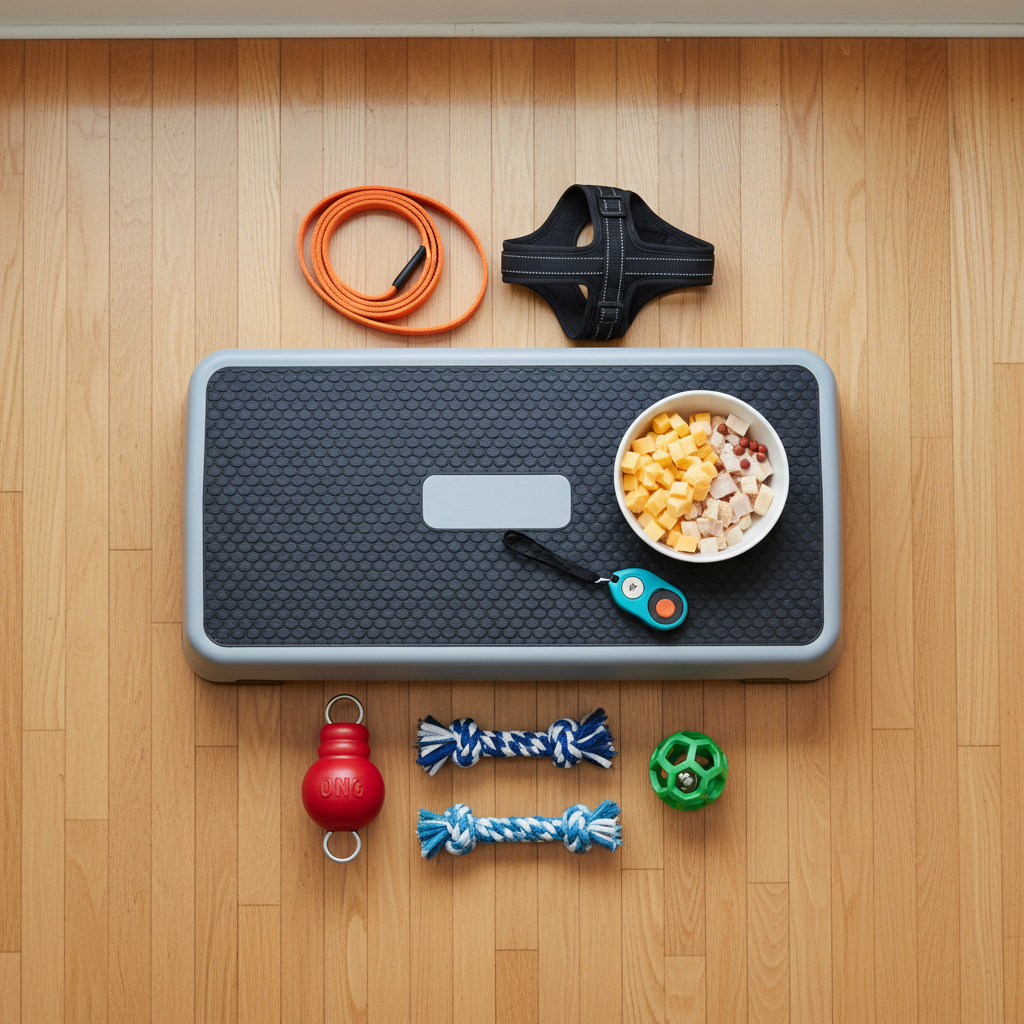
Before you and your pup jump into training, let’s gather a few simple tools. Having the right equipment makes the process safer, easier, and much more fun for everyone involved. Think of this as setting the stage for a stellar performance!
What You’ll Need:
- A Sturdy, Non-Slip Perch: This is the most critical piece of equipment. Start with something low, wide, and super stable. An aerobic step, a low footstool with a rubber top, or even a couple of thick, heavy books taped together can work. The surface must be non-slip to prevent your dog from losing their footing and confidence. Avoid wobbly plastic stools or anything that might slide on your floor. Safety first, always!
- High-Value Treats: We’re talking top-shelf stuff here! Regular kibble might not be motivating enough for this new challenge. Think small, pea-sized pieces of boiled chicken, cheese, hot dogs, or your dog’s absolute favorite soft training treats. You’ll want something they can swallow quickly so you can keep the training session moving.
- A Clicker (Optional, but Recommended): If you’ve used a clicker before, you know how powerful it is for marking the exact moment your dog does something right. For the perch trick, it allows you to ‘click’ the instant all four paws hit the stool, communicating with perfect clarity. If you don’t use a clicker, a consistent verbal marker like a sharp “Yes!” works just as well.
- A Positive Attitude: Your dog feeds off your energy. Keep your training sessions short (just 5-10 minutes at a time), upbeat, and full of encouragement. If you or your dog get frustrated, it’s time to take a break and end on a positive note with an easy win, like a simple ‘sit’.
Expert Tip: The ideal starting perch is only an inch or two high and wider than your dog’s stance. You can always move to smaller, taller objects later, but starting big builds the confidence needed for success.
Step 1: Making the Stool a Happy Place
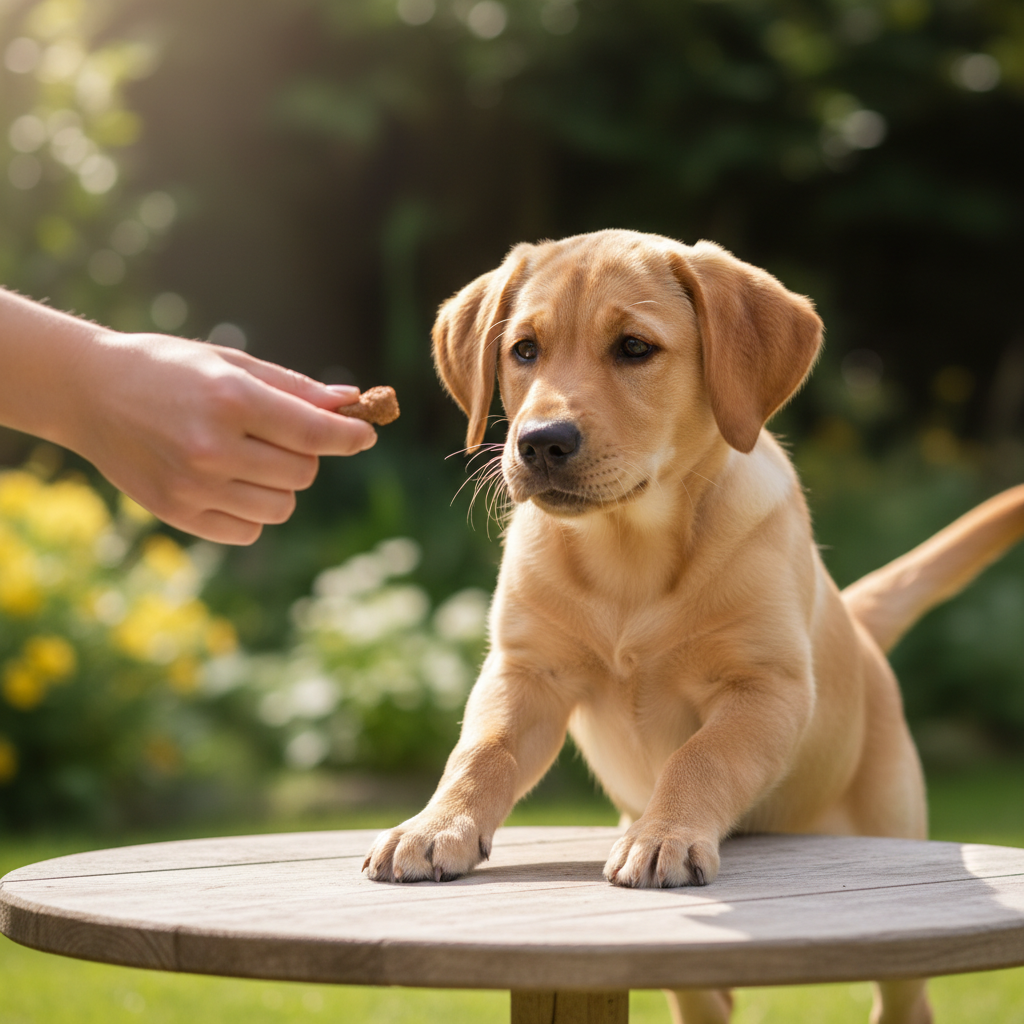
The first step has nothing to do with perching and everything to do with perception. We need to convince your dog that this new object in the living room is the best thing since squeaky toys. We’ll use a technique called ‘shaping,’ which involves rewarding small steps toward the final goal.
- Introduce the Object: Place the stool on the floor and just let your dog check it out. Don’t ask for anything. Let them sniff it, walk around it, and get comfortable with its presence. If they ignore it, that’s okay too!
- Reward Interaction: The moment your dog shows any interest—a glance, a sniff, a nose bump—click (or say “Yes!”) and toss a treat away from the stool. Tossing the treat ‘resets’ the dog, allowing them to approach the stool again and offer another behavior. Repeat this 5-6 times.
- Encourage Paw Contact: Now, we up the criteria. Wait for your dog to touch the stool with a paw. The very second that paw makes contact, click and deliver a jackpot of treats, one after another, right on the stool itself. This builds a powerful positive association.
- Lure One Paw, Then Two: Hold a treat in your hand and use it as a magnet. Lower your hand to the surface of the stool. Your dog will likely follow the treat and place one paw, then maybe a second, onto the stool to get it. Click and treat for two paws on the stool. Practice this until your dog is confidently placing their front feet on the platform without hesitation.
Remember to keep these initial sessions super short and fun. We’re building a foundation of confidence. If your dog seems hesitant at any point, simply go back to the previous step where they were successful.
Step 2: All Aboard! The Full Perch
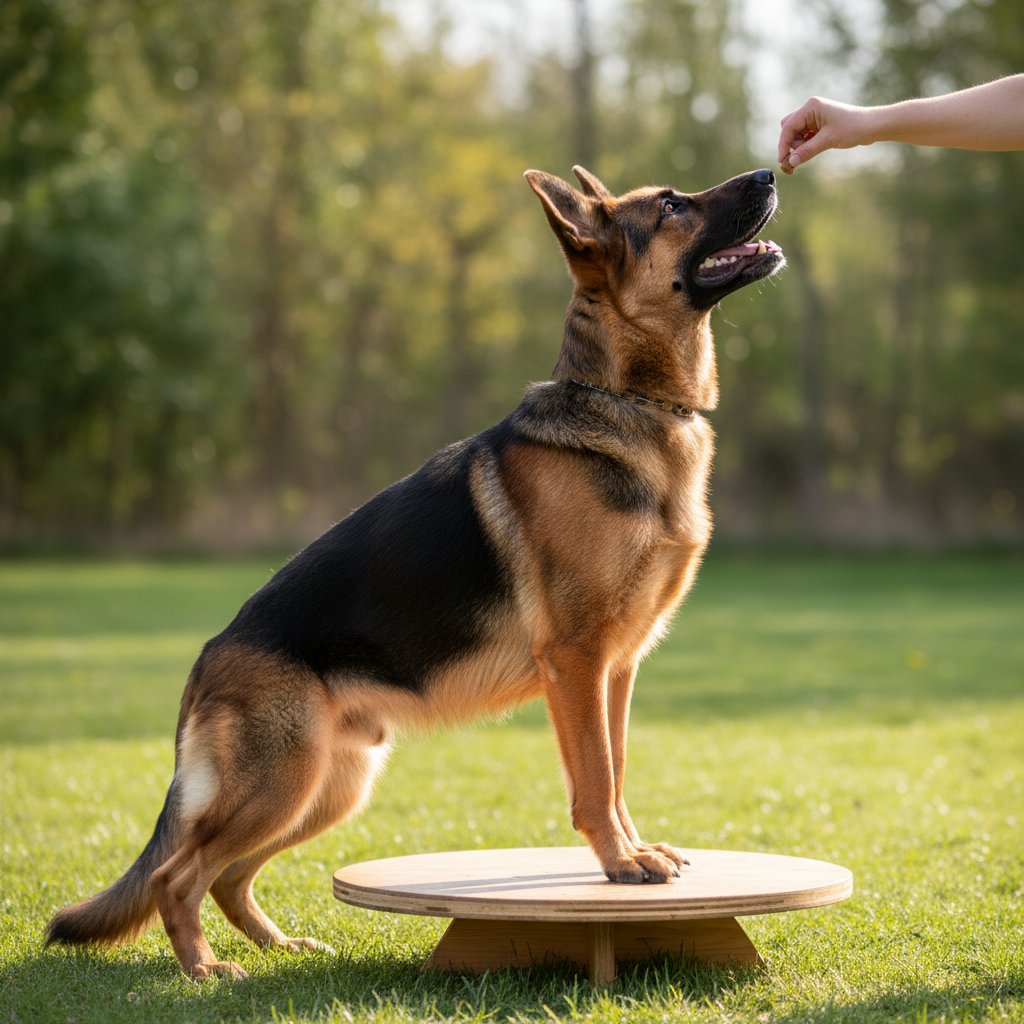
With a solid two-paw foundation, it’s time to aim for the main event: all four paws on deck! This is where your luring skills and timing really come into play. It might take a few tries, but the ‘aha!’ moment is incredibly rewarding.
- Luring the Back Paws: With your dog’s front paws already on the stool, hold a treat close to their nose. Slowly move the lure backward, toward their chest and between their front legs. This motion encourages them to shift their weight backward and, in order to keep their balance and follow the treat, they’ll need to step their back feet up onto the stool.
- Mark the Moment: The instant their last back paw touches the surface, click/”Yes!” and give them a shower of praise and treats. This is a huge milestone! Don’t worry if they step off immediately after; the key is to mark the successful action of getting all four paws on.
- Build Duration: Once your dog is getting all four paws on the stool reliably, start building a little duration. After you click, feed them a few treats in a row while they remain on the stool. This teaches them that staying on the perch is what earns the reward. Start with just a second or two and gradually increase the time.
- Add the Verbal Cue: When you’re confident your dog understands the behavior and can offer it consistently, you can add a verbal cue. Right as you begin to lure them up, say your chosen word, like “Elephant!”, “Perch!”, or “Up!”. After several repetitions, they will begin to associate the word with the action.
- Fade the Lure: The final step is to fade the hand lure. Start making your hand motion smaller and smaller, until you can simply point to the stool and give your verbal cue. This is the ultimate goal: your dog performing the trick on a verbal command alone.
Oops & Uh-Ohs: Troubleshooting Common Challenges
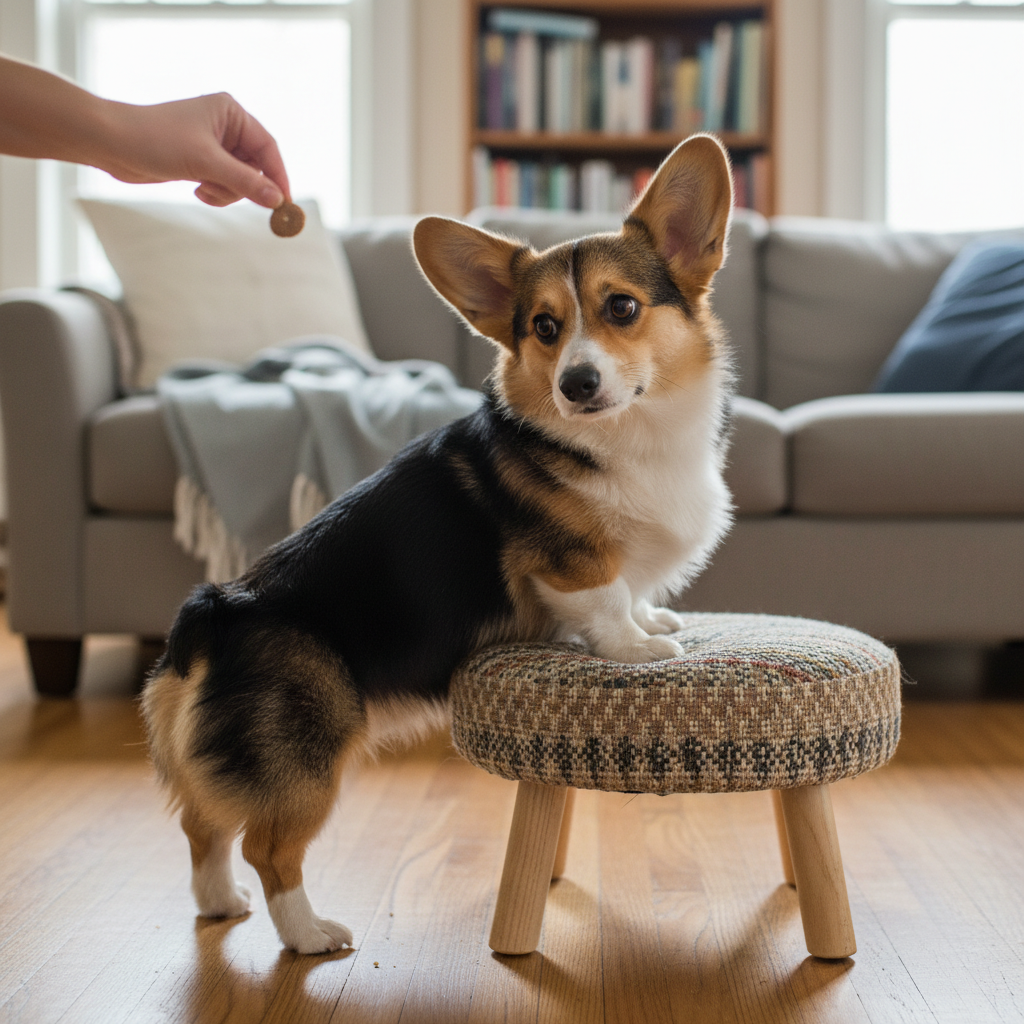
Training is never a straight line, and it’s perfectly normal to hit a few bumps in the road. Don’t get discouraged! Most common problems have simple solutions. Let’s break down a few of the most frequent challenges you might encounter.
My Dog is Scared of the Stool
Fear or hesitation is common with new objects. The key is to go slow and build positive associations. Never force your dog onto the stool.
- Go Back to Basics: Return to Step 1 and spend more time just rewarding your dog for looking at or sniffing the object from a distance.
- Make it a Dinner Plate: Feed your dog their entire meal next to, and then eventually on, the perch (if it’s large enough). This creates a powerful positive association.
- Try a Different Object: The stool you chose might be too tall, too wobbly, or have a strange texture. Try something much lower and wider, like a folded-up yoga mat or a cushion.
My Dog Only Puts Their Front Paws On
This is the most common plateau in training the perch trick! It’s a natural behavior for dogs to ‘prop up’ on things, so we need to teach them to commit their back end, too.
- Refine Your Lure: The issue is almost always the lure. Make sure you are luring the treat back towards your dog’s chest, not up and away. This backward motion is what shifts their weight and makes them lift their back feet.
- Reward Weight Shifts: Pay close attention to your dog’s back feet. If you see them rock their weight back or even lift a back paw for a split second, click and reward that! You are shaping the behavior in tiny increments.
My Dog Jumps Off Immediately
If your dog gets all four paws on but instantly hops off, it’s usually a confidence or clarity issue.
- Check the Surface: Is the stool slippery? Add a bath mat or some grip tape to make it feel more secure for your dog.
- Rapid-Fire Rewards: The moment they get on, deliver 3-5 treats in quick succession right to their mouth. This teaches them that staying on the stool is highly profitable.
- Reduce the ‘Wow’ Factor: Keep your praise calm and quiet initially. Sometimes our excited ‘Good dog!’ can actually startle them and cause them to jump off. A calm click and treat can be more effective at the start.
Level Up: Advancing the Elephant Trick
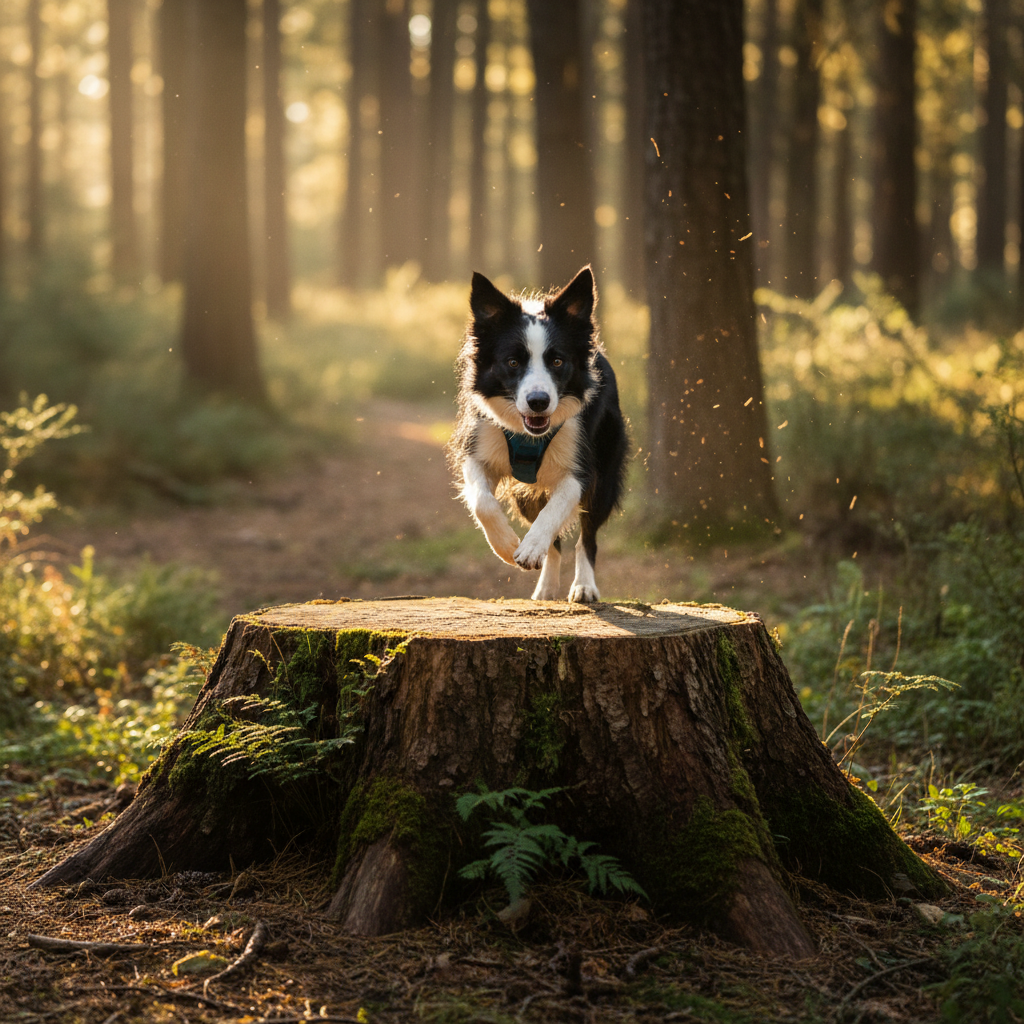
Once your dog has mastered the basic perch on their favorite stool, why stop there? The Elephant Trick is a fantastic foundation skill that opens the door to a world of other fun and challenging behaviors. Advancing the trick keeps your dog’s mind engaged and continues to build their physical and mental fitness.
Generalize the Behavior
The goal is for your dog to understand that the cue “Perch!” means to put all four paws on any object you designate, not just the original stool.
- Introduce New Objects: Start practicing on different items. Try a sturdy book, a wide pot turned upside down, a firm cushion, or a park bench. Start each new object from the beginning (luring) to ensure your dog is confident.
- Vary the Surfaces: Practice on different textures. This further builds your dog’s confidence and body awareness.
Increase the Difficulty
Once your dog is a perching pro, you can add new layers of complexity.
| Challenge | How to Train It | Benefit |
|---|---|---|
| Duration | Gradually increase the time your dog stays on the perch before you release them. Use a release cue like “Okay!” or “Free!”. | Builds impulse control and focus. |
| Distance | Start sending your dog to the perch from a few feet away. Point to the object and give your cue. Gradually increase the distance. | Improves command response from a distance. |
| Distractions | Practice in new environments, like the backyard or a quiet park. This ‘proofs’ the behavior, making it reliable anywhere. | Creates a rock-solid, reliable trick. |
Incorporate it into Trick Routines
The perch can be a fantastic start or end point for a sequence of tricks. For example, you could ask your dog to perch, then ‘spin’ on the object, or transition from a perch into a ‘bow.’ This kind of advanced training is incredibly stimulating for smart dogs and is a joy to watch.
Conclusion
Congratulations! You and your canine partner have embarked on a journey to learn one of the most beneficial and impressive tricks around. Teaching the Elephant Trick is so much more than just a fun way to pass the time. It’s a conversation between you and your dog, built on trust, clear communication, and positive reinforcement. Every small success—from a simple nose touch to that final, stable perch—is a testament to the incredible bond you share.
Remember to celebrate every tiny step forward and to always keep your training sessions light and joyful. By teaching this trick, you’ve given your dog a wonderful mental and physical workout, boosted their self-confidence, and sharpened their ability to learn. Now go on, show off that amazing new skill, and be proud of the amazing teamwork that got you there!