Will you accept this rose? If you’re a fan of charming reality TV and adorable dog tricks, you’ve come to the right place! Teaching your dog to gently hold a rose is more than just a cute party trick; it’s a fantastic way to bond with your furry friend, build their confidence, and provide some much-needed mental stimulation. Plus, just imagine the incredible photos you’ll get!
This trick builds on foundational commands and reinforces a soft mouth, which is useful in many other areas of training. Whether you’re planning a special Valentine’s Day photoshoot, a hilarious parody, or just want to add a new skill to your pup’s repertoire, this guide will walk you through every step. Get your treats ready—it’s time for the most adorable rose ceremony yet!
Gathering Your ‘Rose Ceremony’ Supplies
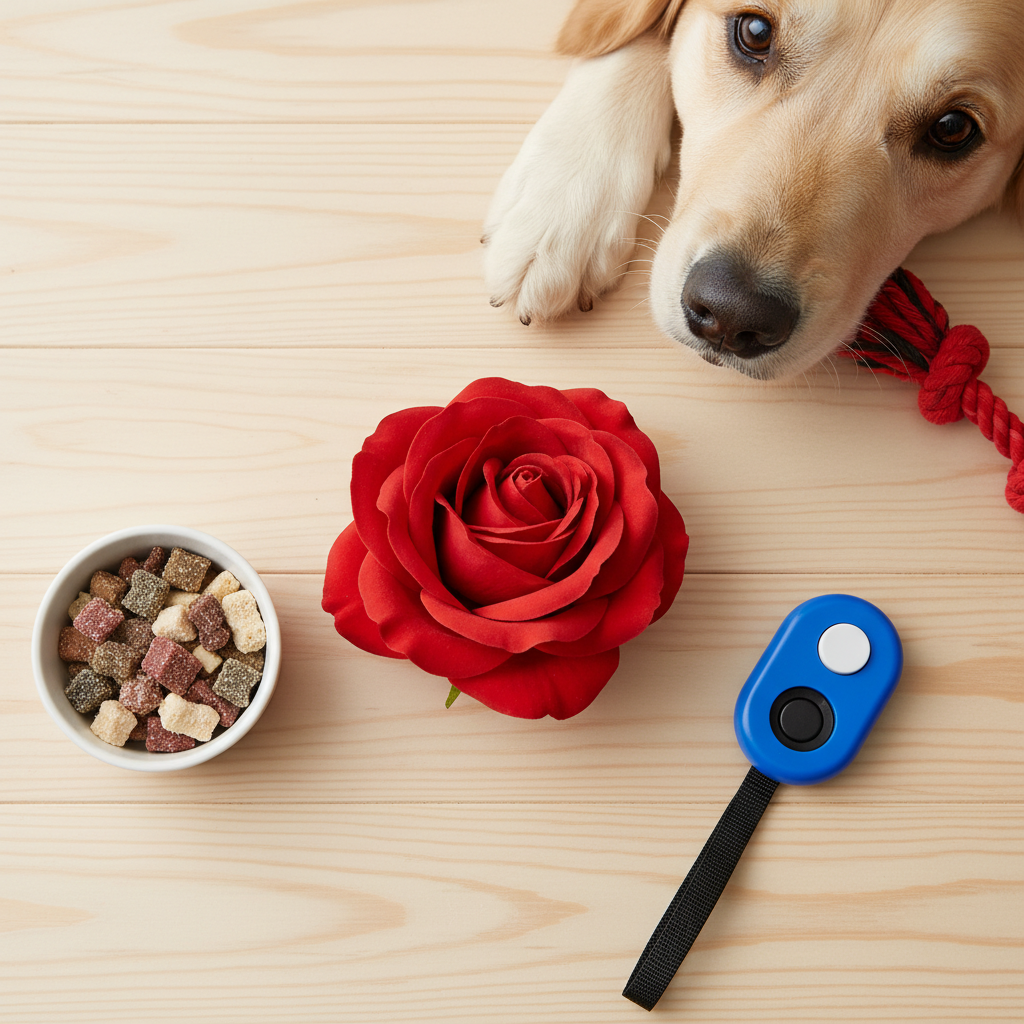
Prepping for the Perfect Proposal
Before you start training, it’s essential to gather a few key items. Having everything ready will make the process smoother and more enjoyable for both you and your canine contestant. You don’t need much, but the right tools will set you up for success.
What You’ll Need:
- A Dog-Safe ‘Rose’: This is the most important prop! Do not use a real rose. The thorns are dangerous, and many plants are toxic to dogs. Opt for a silk or plastic flower from a craft store. Make sure there are no small, chewable parts that could break off and become a choking hazard. You might even consider a dog-specific flower toy.
- High-Value Treats: This trick requires focus, so you’ll want treats that your dog absolutely loves. Think small, soft, and smelly—pieces of plain cooked chicken, cheese, or special training treats work wonders. The goal is to make the reward more exciting than the prop.
- A Clicker (Optional): If you use clicker training, have your clicker handy. It’s a fantastic tool for precisely marking the exact moment your dog does the right thing, which can speed up the learning process significantly.
- A Quiet Training Space: Choose a familiar, comfortable area with minimal distractions. A quiet living room or backyard is perfect. Avoid busy areas where other people or pets might interrupt your session.
Expert Tip: Keep your training sessions short and sweet! Aim for 5-10 minute sessions a couple of times a day. This prevents your dog from getting frustrated or bored and keeps the experience positive and fun.
The Foundation: Mastering ‘Take It’ and ‘Hold’
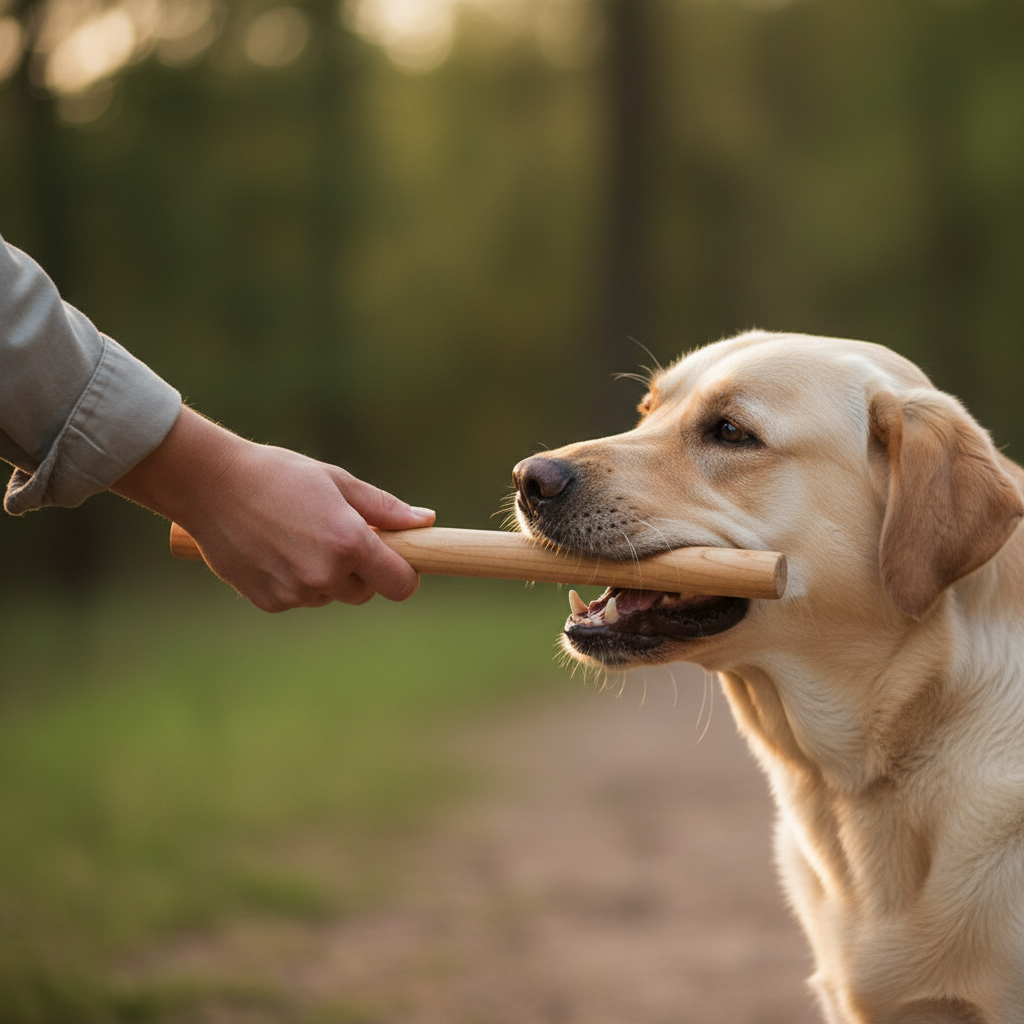
Building Blocks for a Gentle Hold
Before we can ask our dog to hold a delicate rose, we need to teach them the basic mechanics of taking an object and holding it in their mouth. These foundational cues, ‘Take It’ and ‘Hold,’ are the building blocks of our trick. Patience here will pay off big time later!
Step 1: Teaching ‘Take It’
The goal of ‘Take It’ is to have your dog willingly put an object in their mouth on cue.
- Start with a neutral object your dog isn’t overly excited about, like a wooden dowel or a simple, sturdy toy.
- Hold the object out towards your dog’s mouth. The moment their nose or mouth touches it, say “Yes!” (or click) and give them a treat. Repeat this several times until they are confidently touching the object.
- Next, wait for them to open their mouth slightly to investigate the object. The instant they do, mark the behavior with “Yes!” and reward them.
- Gradually, you’ll shape this into them closing their mouth around the object. Hold the object out and say “Take It.” When they put their mouth on it, even for a split second, mark and reward.
Step 2: Introducing the ‘Hold’ Cue
Once your dog reliably takes the object, we can add duration. This is the ‘Hold’ part.
- Ask your dog to ‘Take It.’ As soon as they have the object in their mouth, place your hand gently under their chin to help them keep their mouth closed.
- Say “Hold” and count to one second. Then, say your release word (like “Drop It” or “Okay”), take the object, and give them a treat.
- Slowly increase the duration. Go from one second to two, then three, and so on. Only increase the time when they are successfully holding it for the current duration.
- If they drop the object before you say the release word, that’s okay! Don’t scold them. Just pick it up and try again with a shorter duration.
Remember: The key is positive reinforcement. We want the dog to associate holding an object with wonderful things (treats and praise!), not pressure. Keep it light and fun!
The Main Event: A Step-by-Step Guide to Holding the Rose
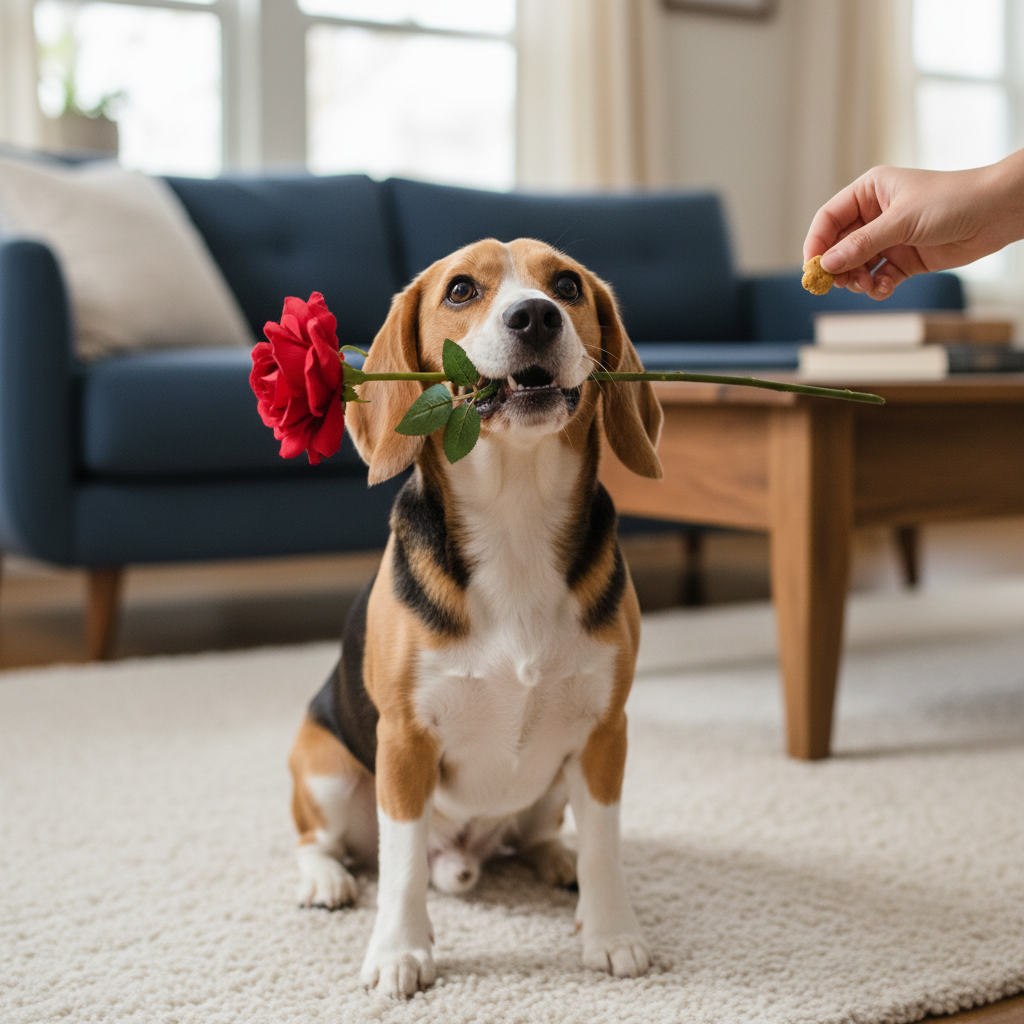
Time for the Final Rose!
With the foundational cues in place, your dog is ready to be the star of the show. We’ll now transition from the practice object to the rose. Remember to move at your dog’s pace and celebrate every small success!
- Step 1: Introduce the Rose: Let your dog sniff and investigate the fake rose. Reward any calm curiosity. We want them to see it as just another neutral object, not something scary or something to be shredded. Rub a treat on the stem to make it more appealing.
- Step 2: Transfer ‘Take It’: Hold the stem of the rose out to your dog, just like you did with the dowel. Say “Take It.” The moment their mouth touches the stem, mark and reward enthusiastically. Repeat until they are confidently taking the stem.
- Step 3: Build the ‘Hold’: Now, combine the cues. Say “Take It,” and once they have the stem, say “Hold.” Start with just one second, supporting their chin if needed, then release and reward. Your goal is to get them comfortable with the shape and texture of the stem.
- Step 4: Fade Your Hand Support: As they get better at holding the rose for a few seconds, start to slowly fade your hand support from under their chin. Go from a full support to just a couple of fingers, then to hovering your hand nearby, and finally, to no hand at all. This teaches them to hold the object independently.
- Step 5: Add the ‘Gentle’ Cue (Optional): If your dog is a bit mouthy or tends to bite down too hard, you can introduce a ‘Gentle’ cue. As you offer the rose, say “Gentle.” Reward them only for soft mouth pressure. If they bite too hard, say “Oops!” and briefly take the rose away before trying again. They’ll quickly learn that a soft mouth gets the reward.
Practice, patience, and positivity are your best friends throughout this process. Before you know it, your pup will be ready for their close-up!
Troubleshooting Common ‘Thorns’ in Your Training
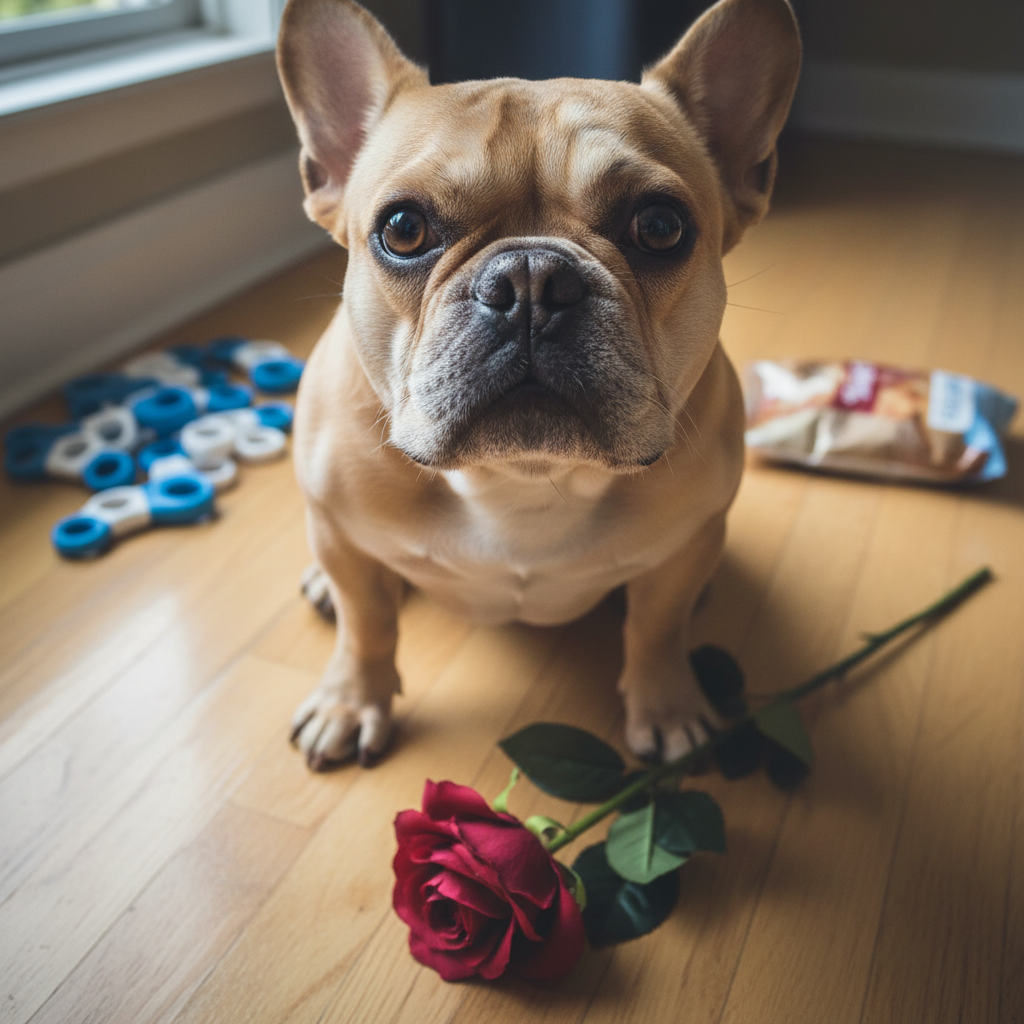
Navigating the Prickly Parts
Sometimes, even with the best plan, you run into a few snags. Don’t worry, it’s a normal part of the training process! Here are some common challenges and how to work through them.
| The Problem | The Solution |
|---|---|
| My dog keeps chewing the rose! | This usually means the rose is more interesting than the reward. Use higher-value treats! Also, keep training sessions short to prevent boredom chewing. Make sure you are rewarding for a still, calm hold, not for chewing. |
| My dog drops the rose immediately. | You’ve likely increased the duration too quickly. Go back to a shorter ‘hold’ time where they can be successful (even if it’s just one second) and build up much more slowly. Ensure you are using a clear release cue like “Drop It” so they learn to wait for it. |
| My dog is scared of the rose. | Don’t force it. Go back to simple desensitization. Leave the rose on the floor and reward your dog for looking at it, sniffing it, or interacting with it in any calm way. This is called counter-conditioning and helps build a positive association. |
| My dog won’t even touch the rose. | Make it more appealing! Rub a bit of peanut butter (xylitol-free) or cream cheese on the stem. You can also try a different prop first—maybe the rose’s texture is weird for them. Try a different toy or object and then re-introduce the rose later. |
A Trainer’s Golden Rule: Always end on a high note! Finish each training session with a success, even if it’s a super easy one. This keeps your dog’s confidence up and makes them excited for the next session.
Beyond the Rose: Advancing and Generalizing the Trick
What’s Next for Your Talented Pup?
Congratulations! Your dog can now hold a rose like a true romantic lead. But why stop there? The ‘Hold’ command is incredibly versatile and can be expanded to all sorts of fun and useful applications.
Generalizing the ‘Hold’ Command
Generalizing means teaching your dog that the ‘Hold’ cue applies to more than just the rose in your living room. Practice in different locations and with different objects.
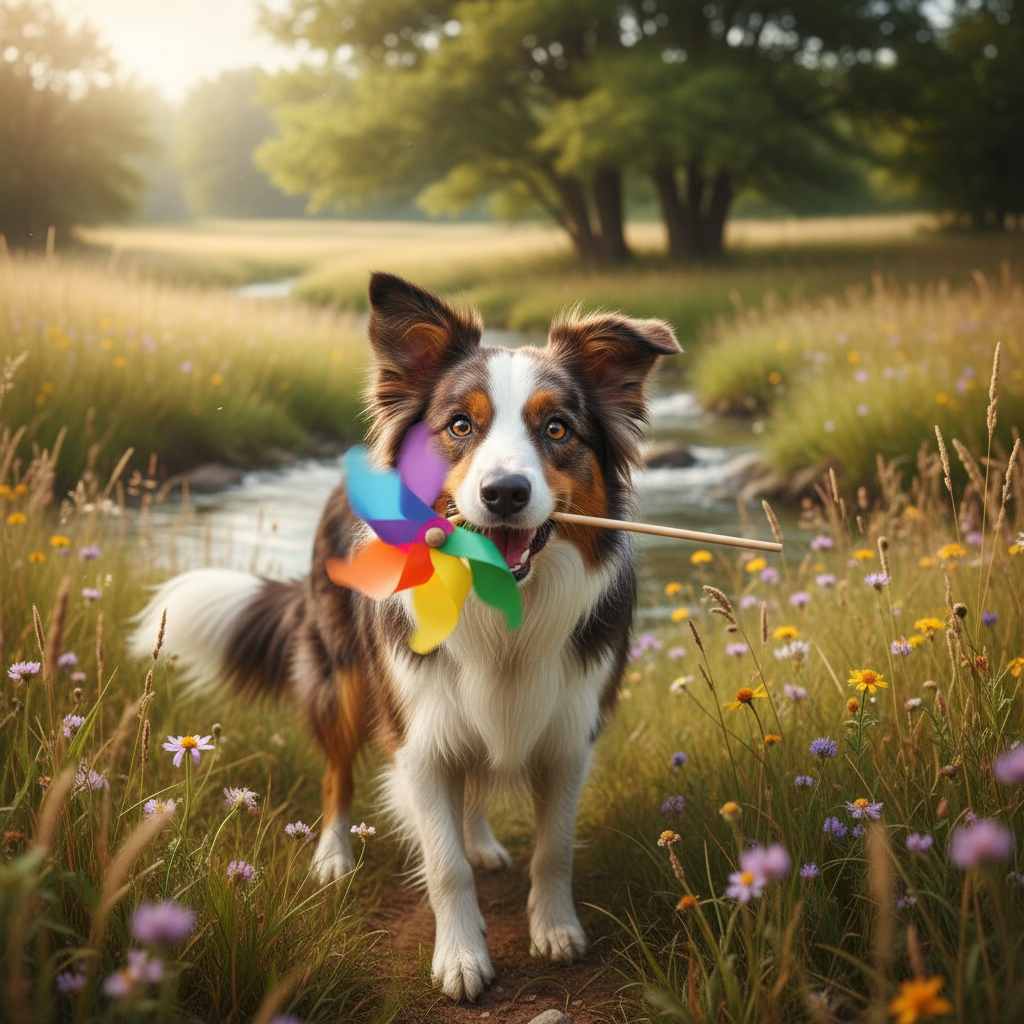
- New Objects: Try teaching them to hold other safe items. Start with things similar in shape to the rose stem, like a pen (with the cap on!) or a retrieve bumper, and then move to different shapes. How about a small, rolled-up newspaper for that classic ‘dog brings the paper’ look?
- New Locations: Practice the trick in the backyard, at a friend’s house (with permission!), or in a quiet park. This helps your dog learn to focus on you even with new sights and smells around.
- Adding Complexity: Once the ‘Hold’ is solid, you can add other behaviors. Can your dog ‘Sit Pretty’ while holding the rose? Can they walk a few steps with it? This is a great way to build more complex trick sequences.
Photo and Video Tips
You’ve worked hard, so it’s time to capture the moment!
- Use great lighting: Natural light is always best. Try taking photos near a window or outdoors during the ‘golden hour’ (just after sunrise or before sunset).
- Get on their level: Crouch down so your camera is at your dog’s eye level. This creates a much more engaging and personal portrait.
- Use a fast shutter speed: Dogs can be wiggly! A fast shutter speed will help you get a sharp, clear photo without any motion blur.
- Keep it fun: Have a helper get your dog’s attention with a squeaky toy or their name to get those perfect head tilts and expressions. Reward them generously after the photoshoot!
Conclusion
You did it! You and your pup have successfully navigated the dramatic world of trick training and emerged with a skill that’s bound to make everyone smile. Teaching your dog to hold a rose is a testament to your patience and your bond. It’s more than just a trick; it’s a shared language built on trust, fun, and plenty of tasty treats.
Remember to keep practicing and always celebrate your dog’s efforts. Now go on, capture those heart-melting moments and share them with the world. Your Bachelor Dog is officially ready for their close-up—and they’ve definitely earned that final rose.