When the summer sun is blazing, there’s nothing better than finding fun ways to cool down with your four-legged best friend. You might see adorable videos of dogs gleefully chomping at water from a hose and think, ‘I want to do that!’ It’s a fantastic way to hydrate and play simultaneously, but there’s a right way and a wrong way to introduce this activity. It’s not just about turning on the spigot and pointing it at your pup.
Teaching your dog to drink from a hose safely is a process that involves the right equipment, a bit of patience, and a whole lot of positive reinforcement. Done correctly, it can be a wonderful bonding experience and a reliable way to keep your dog cool and hydrated during those hot ‘dog days’ of summer. Done incorrectly, it can create fear or even pose safety risks.
In this guide, we’ll walk you through everything you need to know. We’ll cover how to choose a dog-safe hose, a step-by-step training plan to make the experience positive, crucial safety precautions to keep in mind, and what to do if your pup is a little hesitant. Let’s get ready to make a splash!
Getting Started: The Right Gear and a Safe Setup
Before You Turn on the Water
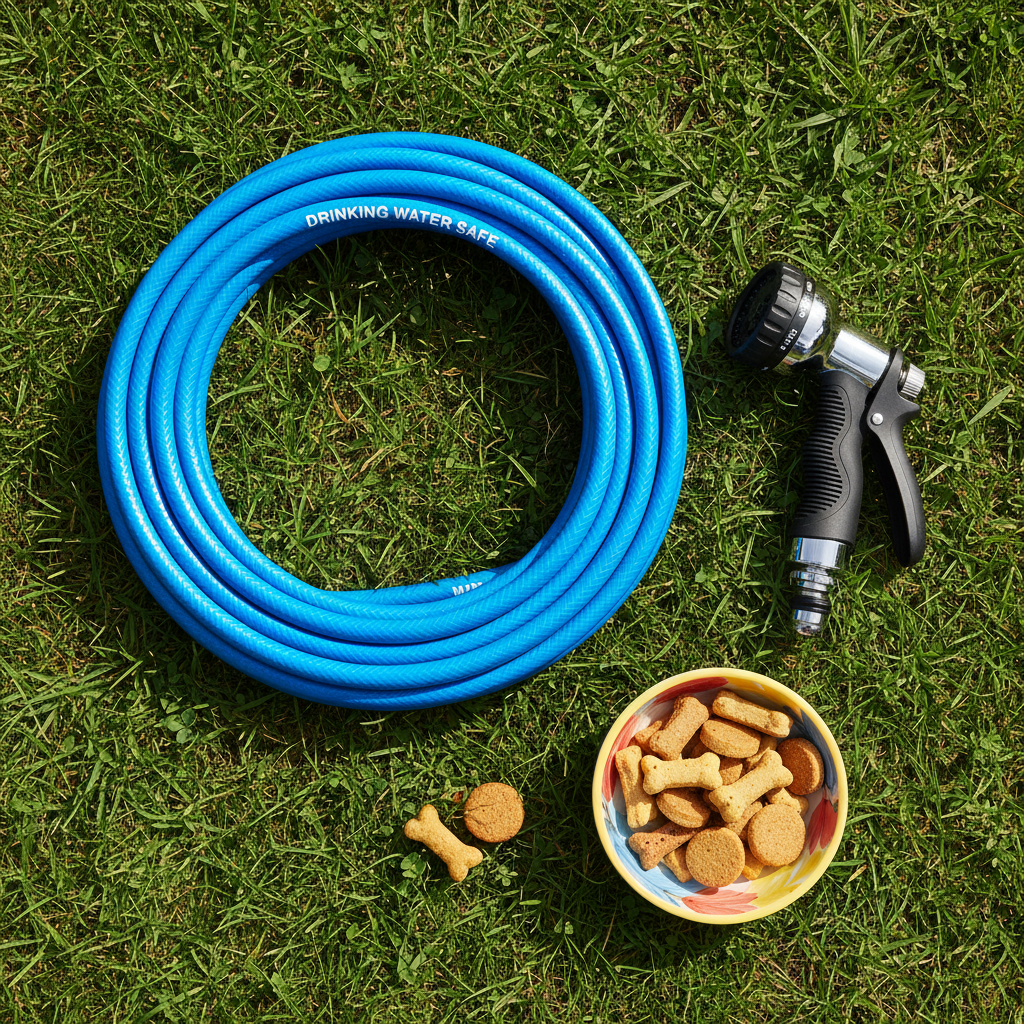
Success in hose training starts before a single drop of water comes out. Setting the stage with the right equipment and a safe environment is non-negotiable. Think of it as your safety checklist for fun.
Choose a Dog-Safe Hose
This is the most critical first step. Many standard garden hoses are made with materials that are not safe for consumption. They can contain lead, phthalates, and BPA, which can leach into the water, especially when the hose has been sitting in the sun. You wouldn’t drink from it, so your dog shouldn’t either.
- Look for ‘Drinking Water Safe’ or ‘Potable’ Labels: These hoses are typically made from polyurethane or other FDA-approved materials. They are often sold for RV or marine use.
- Avoid Brass Fittings: Opt for nickel-plated or stainless steel fittings, as brass can contain lead.
- Check for NSF Certification: This is a public health and safety organization that certifies products, providing an extra layer of assurance.
Select a Gentle Nozzle
The goal is a gentle, inviting stream, not a high-pressure jet. A powerful blast can be frightening, painful, and even dangerous, potentially forcing water into your dog’s lungs. Look for a nozzle with multiple settings and choose one that mimics a soft shower or a gentle fountain.
Expert Tip: The ‘Shower,’ ‘Mist,’ or ‘Gentle Cone’ settings are usually perfect for this activity. Always test the pressure on your own hand first. If it’s uncomfortable for you, it’s definitely too strong for your dog.
Prepare Your Training Area
- Location, Location, Location: Pick a spot in your yard where your dog already feels comfortable and happy.
- Mind the Mud: Choose a grassy area with good drainage to prevent turning your yard into a mud pit.
- Flush the Hose: Water that’s been sitting in a hose on a hot day can get scaldingly hot. Let the water run for a minute or two to flush out the hot water and any stagnant buildup before you ever point it near your dog.
Step-by-Step: Turning the Hose into a Fun Hydration Station
The Training Game Plan
Patience and positivity are your best tools here. This process should feel like a fun game, not a chore. Keep sessions short (5-10 minutes) to maintain your dog’s enthusiasm. Let’s break it down into easy, manageable steps.
- Step 1: The Dry Introduction. Before the water is even a factor, let your dog get acquainted with the hose itself. Lay the (turned off) hose and nozzle on the ground. When your dog approaches it, sniffs it, or shows any calm curiosity, praise them enthusiastically and give them a treat. You’re building a positive association from the very start: Hose = Good Things Happen!
- Step 2: Introduce the Sound. For some dogs, the sound of the water turning on can be startling. Move a short distance away from your dog and turn the water on to a very low trickle, pointing it away from them. As soon as the water is flowing, toss a few treats to your dog. Let them get used to the hissing sound while enjoying a snack. Turn it off, and the treats stop. Turn it on, treats appear. They’ll quickly learn the sound predicts something wonderful.
- Step 3: Water on the Ground. With the water still on a low trickle, let it pool on the patio or grass. Encourage your dog to investigate. If they lick the water from the ground, shower them with praise. You can even place a treat right at the edge of the puddle to entice them.
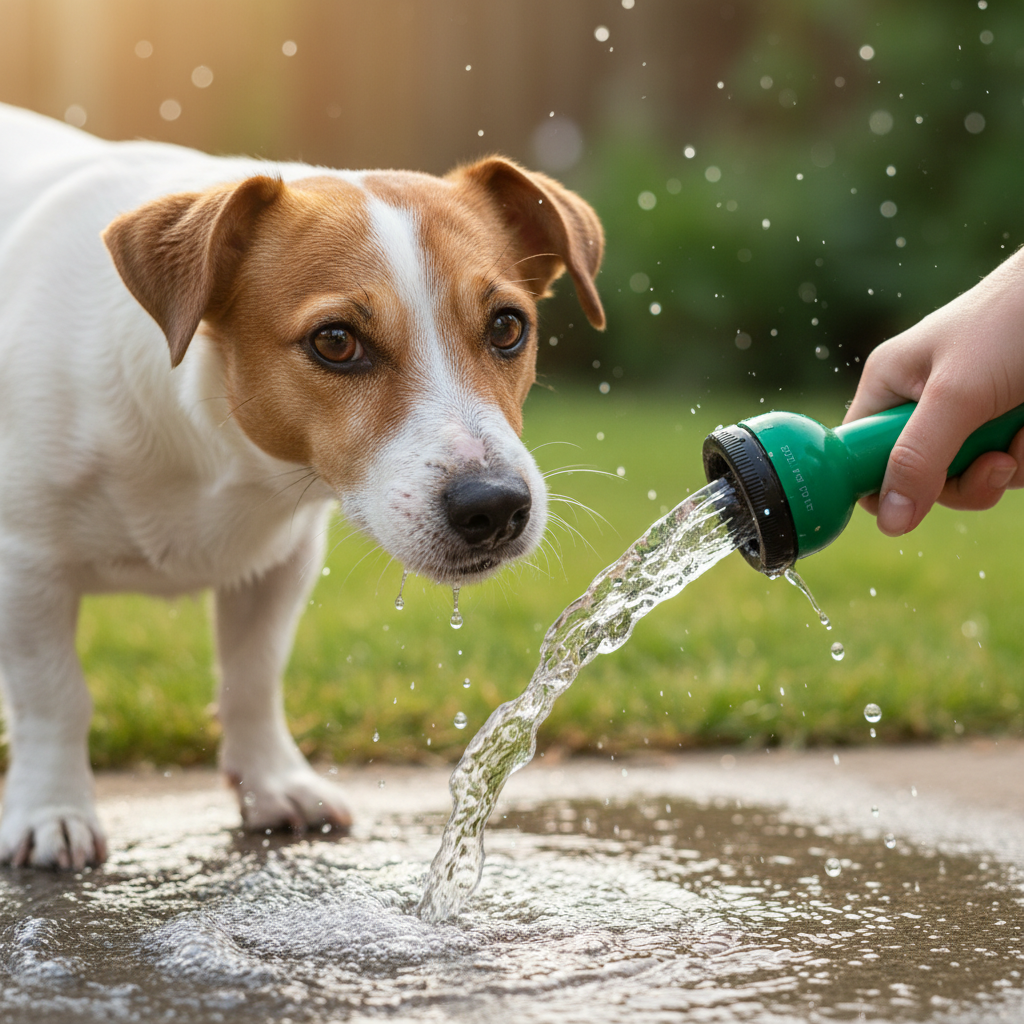
- Step 4: The Gentle Stream. Now for the main event. Kneel down to your dog’s level and hold the nozzle low to the ground. Create a gentle, low, arcing stream of water. Don’t point it at your dog. Instead, move the stream back and forth on the ground like a fun toy. Use an excited voice, ‘What’s this?! Get the water!’
- Step 5: Lure Them In. Use a treat to lure your dog’s mouth toward the stream. Hold the treat just above the water stream so they might accidentally get a bit of water while trying to get the treat. Praise any interaction, no matter how small. Many dogs will start to ‘bite’ at the stream playfully. This is exactly what you want!
- Step 6: Keep it Fun and End on a High Note. As your dog gets more comfortable, you can slowly make the stream a little livelier, but always keep it gentle and low. The moment they successfully catch some water or show real enjoyment, have a mini-celebration! Then, end the session. Leaving them wanting more is a powerful training tool for the next time.
Safety First: Crucial ‘Don’ts’ of Hose Play
The Golden Rules for Safe Hose Fun
While hose play is a blast, safety must always be your top priority. Ignoring these rules can turn a fun game into a dangerous situation or create a lifelong fear of water for your dog. Here are the absolute ‘don’ts’ of hose training.
DON’T Force Your Dog
This is the number one rule. If your dog is showing signs of fear—tucked tail, flattened ears, backing away, whale eye (showing the whites of their eyes)—stop immediately. Forcing them will only solidify their fear. Go back a few steps in the training process and work at their pace.
DON’T Use High Pressure
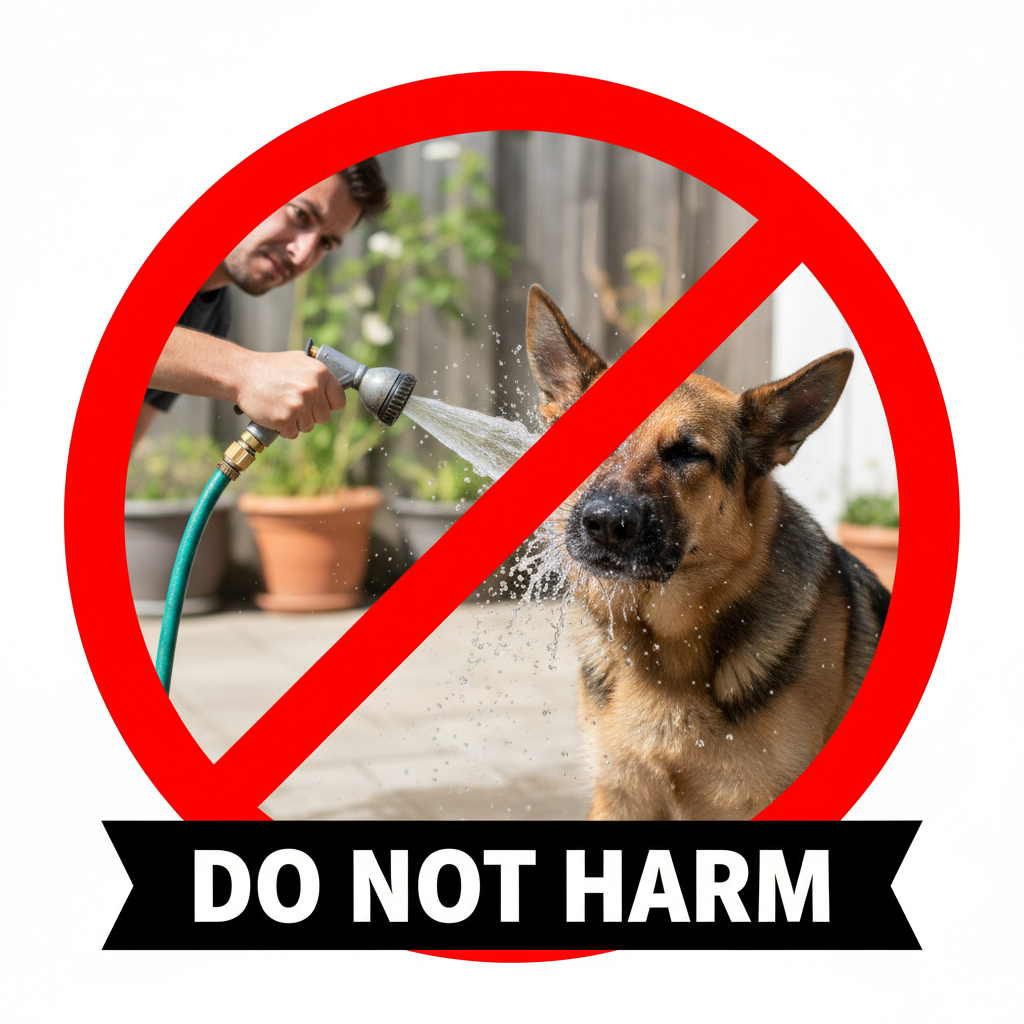
Never, ever use a high-pressure jet stream. This is incredibly dangerous. It can cause:
- Water Aspiration: Water can be forced down the throat and into the lungs, which can lead to pneumonia or a serious condition known as ‘dry drowning’ or secondary drowning.
- Pain and Injury: A high-pressure stream can injure your dog’s delicate eyes, nose, or ears.
- Negative Association: It’s a surefire way to make your dog hate and fear the hose forever.
DON’T Aim for the Face
Avoid spraying water directly into your dog’s face, especially their nose and ears. Water forced up the nose is unpleasant and can lead to aspiration. Water in the ears can lead to painful and persistent ear infections. Let your dog initiate contact with the stream and aim for their mouth or the area around it.
DON’T Forget About Water Intoxication
While rare, it’s a serious condition to be aware of. Water intoxication, or hyponatremia, occurs when a dog ingests a massive amount of water in a short period, dangerously diluting their body’s sodium levels. This is more common in dogs who will obsessively bite and swallow water for long periods. Symptoms include lethargy, bloating, vomiting, stumbling, and pale gums. Keep play sessions to a reasonable length (10-15 minutes at a time) and ensure your dog takes breaks.
A Vet’s Perspective: Always supervise hose play. It’s a fun activity, not a replacement for a water bowl. If your dog seems ‘off’ after a long play session, it’s always best to contact your veterinarian immediately.
My Dog’s Not Interested! Troubleshooting & Fun Alternatives
When the Game Isn’t a Hit
So you’ve followed all the steps, but your dog is giving you a look that says, ‘You’re nuts, I’m going back inside.’ Don’t worry! Not every dog is destined to be a hose enthusiast, and that’s perfectly okay. Here’s how to troubleshoot and some fantastic alternative ways to play with water.
Troubleshooting Common Issues
- My dog is scared of the hose: Go all the way back to step one. Spend several days just rewarding your dog for being near the hose while it’s off. You can even feed them their dinner next to it. The goal is to change their entire perception of the object before water is even involved.
- My dog is obsessed and won’t stop: For the water-crazy canines, the challenge is teaching them when to stop. Introduce a clear ‘All Done!’ cue. Say the phrase, turn off the water, and immediately toss a high-value treat away from the hose area. This teaches them that stopping the game also leads to a reward.
Awesome Alternatives to Hose Play
If the hose is a no-go, there are plenty of other ways to make a splash and stay cool. In fact, diversifying your water games is a great idea for any dog!
Here’s a quick comparison of some popular options:
| Activity | Pros | Cons |
|---|---|---|
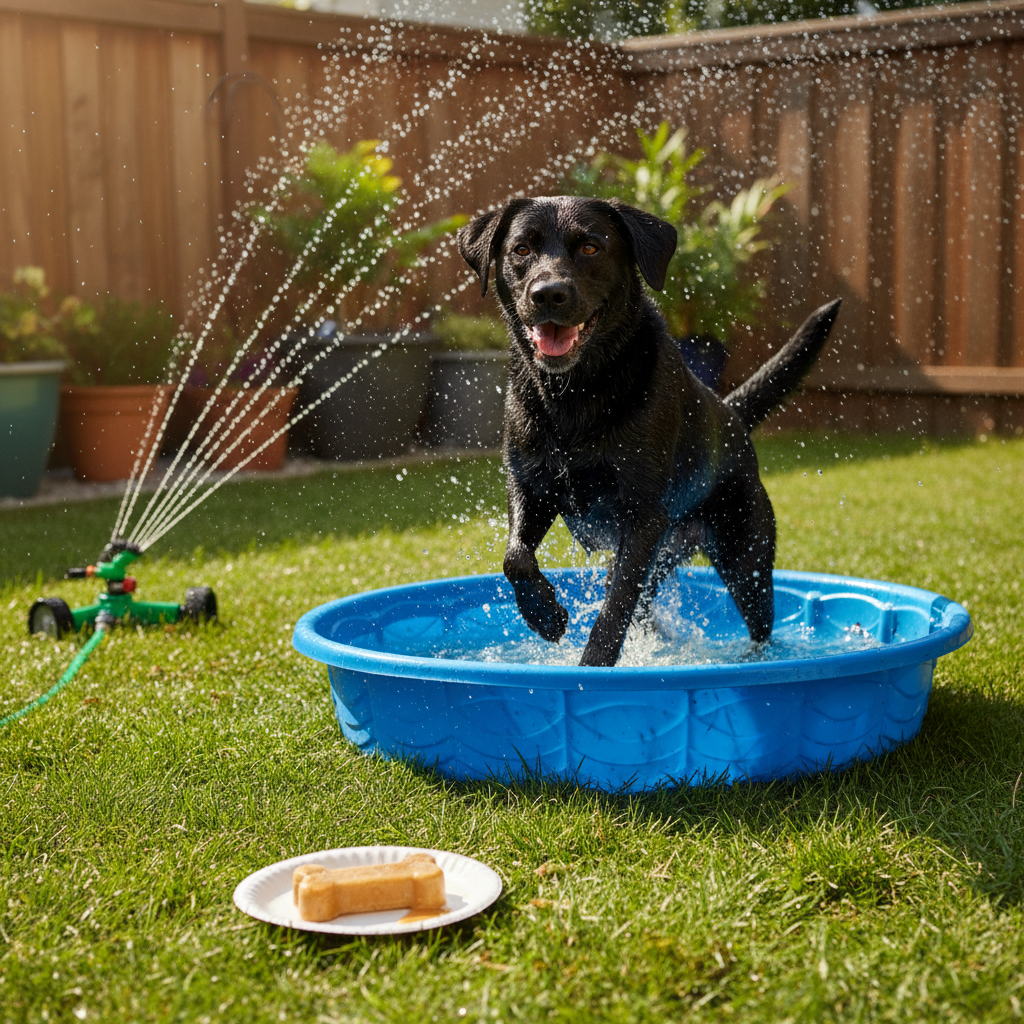
| Kiddie Pool | Great for soaking and lounging; very safe for self-directed play. | Can get dirty quickly; takes up yard space. |
| Lawn Sprinkler | Encourages running and jumping; covers a large area for play. | Uses a lot of water; some dogs may be scared of the movement. |
| Frozen Treats / ‘Pupsicles’ | Excellent for hydration and mental stimulation; easy to make at home. | Can be messy as they melt; not as interactive. |
| Water-Wobbler Toys | Interactive toys that attach to a hose for unpredictable spray patterns. | Requires a hose; some dogs may find the toy intimidating. |
Mixing these activities can keep your dog engaged and prevent boredom. A kiddie pool is great for a low-energy cool-down, while a sprinkler can be a high-energy romp. Experiment to find your dog’s favorite way to beat the heat!
Conclusion
Teaching your dog to drink from a hose can be more than just a party trick; it’s a fantastic way to bond, play, and keep them safely hydrated on hot summer days. Remember, the journey is just as important as the destination. By prioritizing safety with the right gear, using patient and positive training steps, and always being mindful of the crucial ‘don’ts,’ you can set your dog up for a lifetime of happy, splashy fun.
And if your dog decides they’d rather lounge in a kiddie pool or chase a sprinkler, that’s a win too! The ultimate goal is to enjoy the sunny season together, safely and joyfully. So grab that dog-safe hose, pocket some treats, and get ready to make some wonderful, water-filled memories with your best friend.