Is there anything better than a spirited game of fetch with your furry best friend? The wind in their fur, the happy panting, the enthusiastic return… right up until they deliver a slobber-covered, crunched-up version of what used to be their favorite ball. If this sounds familiar, you’re in the right place! While it can be frustrating, a ‘hard mouth’ isn’t a sign of a bad dog; it’s simply a behavior that hasn’t been shaped yet.
Many dogs, especially those with certain breed instincts or a whole lot of enthusiasm, naturally bite down hard on objects. They don’t inherently know we’d prefer a gentle, delicate hold. The good news is that teaching a ‘soft mouth’ is entirely possible with a bit of patience and the right techniques. This skill isn’t just for fancy gun dogs retrieving birds; it’s a wonderful skill for any companion dog. It makes playtime more enjoyable, protects your toys (and your hands!), and builds a fantastic level of communication and trust between you and your pup.
In this guide, we’re going to break down the entire process, from understanding why your dog crunches in the first place to a clear, step-by-step plan using positive reinforcement. Get ready to transform your game of fetch into a beautiful display of teamwork!
Why the Crunch? Unpacking the Reasons Behind a Hard Mouth
Before we dive into the ‘how,’ it’s helpful to understand the ‘why.’ Knowing the root cause of your dog’s crunching can help you be a more patient and effective trainer. It’s rarely a single reason, but often a combination of factors.
Genetics and Breed Instincts
For centuries, we’ve bred dogs for specific jobs, and many of those jobs involved their mouths. This hard-wiring doesn’t just disappear because they’re now a family pet.
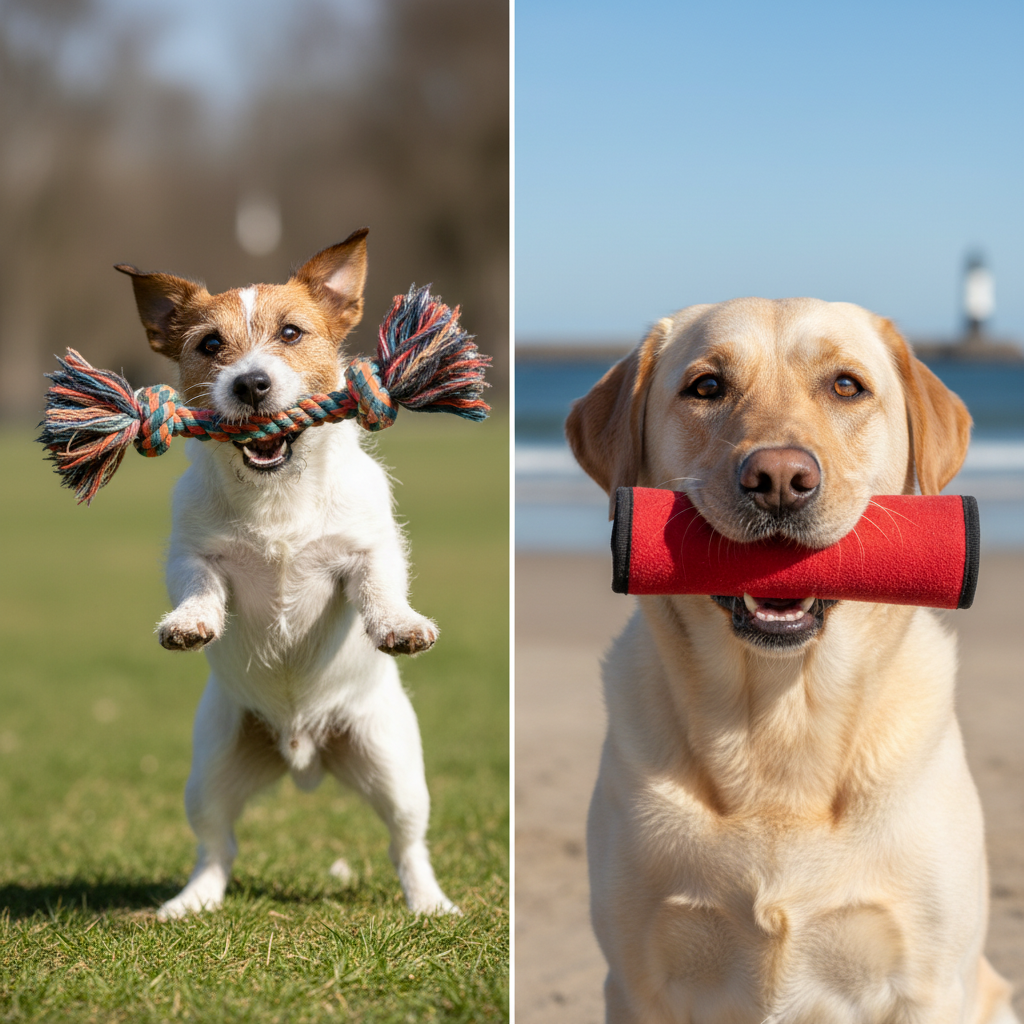
- Retrievers (Labradors, Goldens, etc.): These breeds were specifically developed to pick up and carry game without damaging it. They tend to have a naturally ‘softer’ mouth, but even they can get overexcited and bite down too hard without training.
- Terriers (Jack Russells, Airedales, etc.): Terriers were bred to hunt and dispatch vermin. Their instinct is to grab, shake, and kill. This can translate to a very hard, chompy mouth during play.
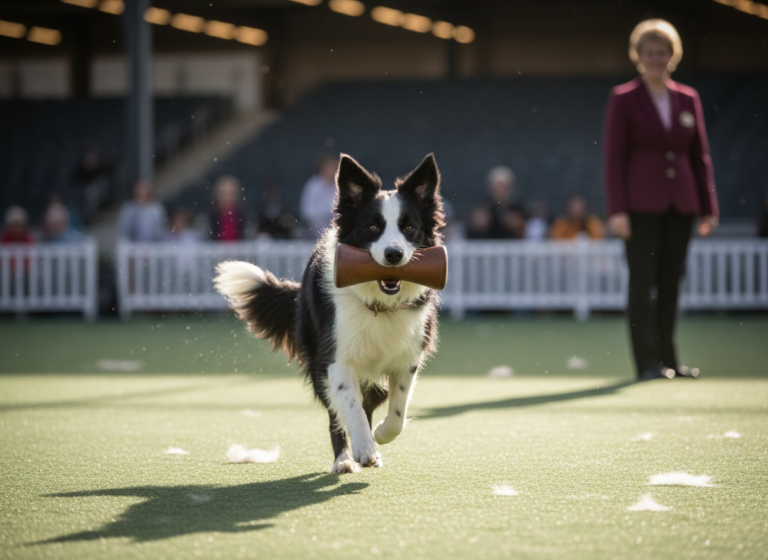
- Herding Breeds (Border Collies, Australian Shepherds, etc.): These dogs often use their mouths to ‘nip’ and control the movement of livestock, which can sometimes carry over into their toy interactions.
Overexcitement and High Arousal
Think about a toddler who gets really excited and starts flailing their arms and squealing. Dogs do the same, but they express that explosive energy through their bodies, including their jaws. When a game of fetch gets super exciting, a dog’s arousal level skyrockets. In this state, they lose a lot of their fine motor control and self-awareness, leading to them chomping down with full force without even realizing it. The crunch isn’t malicious; it’s a symptom of being overwhelmed with pure joy and adrenaline!
Teething and Oral Fixation in Puppies
Puppies explore the world with their mouths. It’s their primary tool for learning about textures, shapes, and what’s edible. During the teething phase (typically from 3 to 6 months), their gums are sore, and chewing provides relief. If a puppy learns that biting down hard on toys feels good, that habit can easily carry into adulthood if not gently guided towards a softer alternative.
Remember, a dog crunching on a toy is not trying to be destructive or defiant. They are usually acting on instinct, excitement, or a learned habit. Our job as their owner is to patiently teach them a new, better way to interact with objects.
Setting the Stage: Your Soft-Mouth Training Toolkit
Great training starts with great preparation. Before you begin your first session, gathering a few key items will make the process smoother and more effective. You don’t need a lot of fancy equipment, just the right tools for the job.
The Right Training Objects
The object you start with matters immensely. You want something that is durable and not overly tempting to chew or squeak, as that can encourage the very behavior we’re trying to avoid. Think of it as a ‘toy ladder’—we start with the ‘boring’ stuff and work our way up.
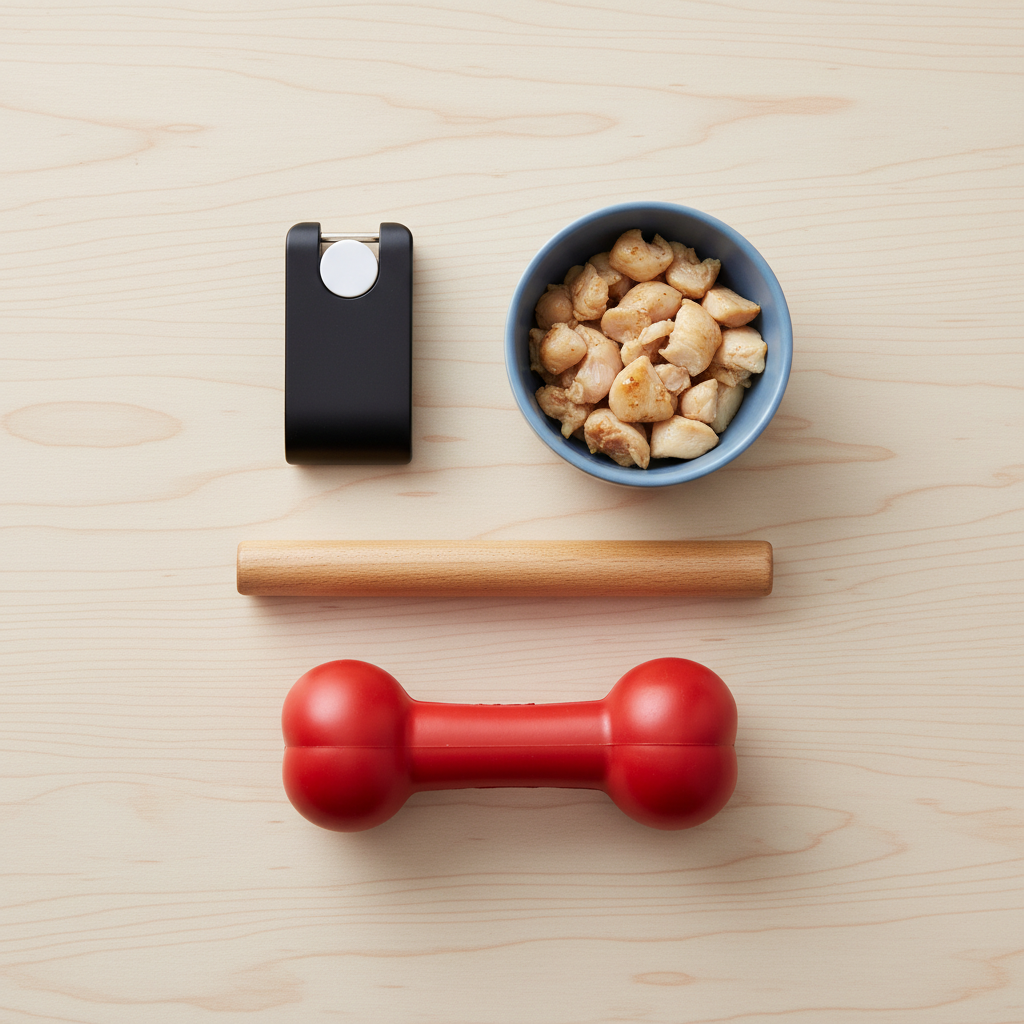
- Wooden Dowels or Spoons: A simple, smooth wooden dowel or the handle of a wooden spoon is a fantastic starting point. It’s not very satisfying to chomp on.
- Hard Plastic or Rubber Dummies: These are specifically designed for retrieve training. They are durable and their shape makes them easy to hold.
- Canvas Bumpers: Another classic retrieve-training tool, these are tough and less likely to be shredded than a soft plush toy.
- Avoid at First: Steer clear of squeaky toys, soft plushies, or anything that your dog already has a habit of destroying. We will introduce those later, once the ‘soft mouth’ skill is established.
High-Value Reinforcements
Since we’re asking our dog to perform a behavior that might not be natural for them (holding still instead of chewing), we need to pay them well for their effort! Your everyday kibble probably won’t cut it.
- Treats: Think small, soft, and extra yummy. Pieces of boiled chicken, cheese, or high-quality training treats work wonders. They should be tiny so you can give many rewards without filling your dog up too quickly.
- Verbal Praise: Your happy, encouraging voice is a powerful tool! Use phrases like ‘Yes!’ or ‘Good hold!’ in a calm, positive tone.
Other Essential Gear
- A Clicker (Optional but Recommended): A clicker is a tool that makes a distinct ‘click’ sound. It’s used in training to ‘mark’ the exact moment your dog does something correctly. This precision can speed up learning significantly. If you’re not using a clicker, a consistent verbal marker like a sharp ‘Yes!’ works too.
- A Quiet Training Space: Start your training in a low-distraction area, like your living room or a quiet backyard. Minimizing distractions allows your dog to focus entirely on you and the task at hand.
The Gentle Hold: Your 5-Step Training Plan
Alright, you’ve got your tools and you understand the ‘why.’ Now it’s time for the fun part: the training! Remember to keep your sessions short (just 2-5 minutes at a time) and always end on a positive note. Patience is your superpower here.
The core of this process is called ‘shaping.’ We’re not expecting a perfect 30-second hold on day one. Instead, we’ll reward small, successive approximations of the final behavior.
-
Step 1: The ‘Take It’ – Rewarding Gentle Contact
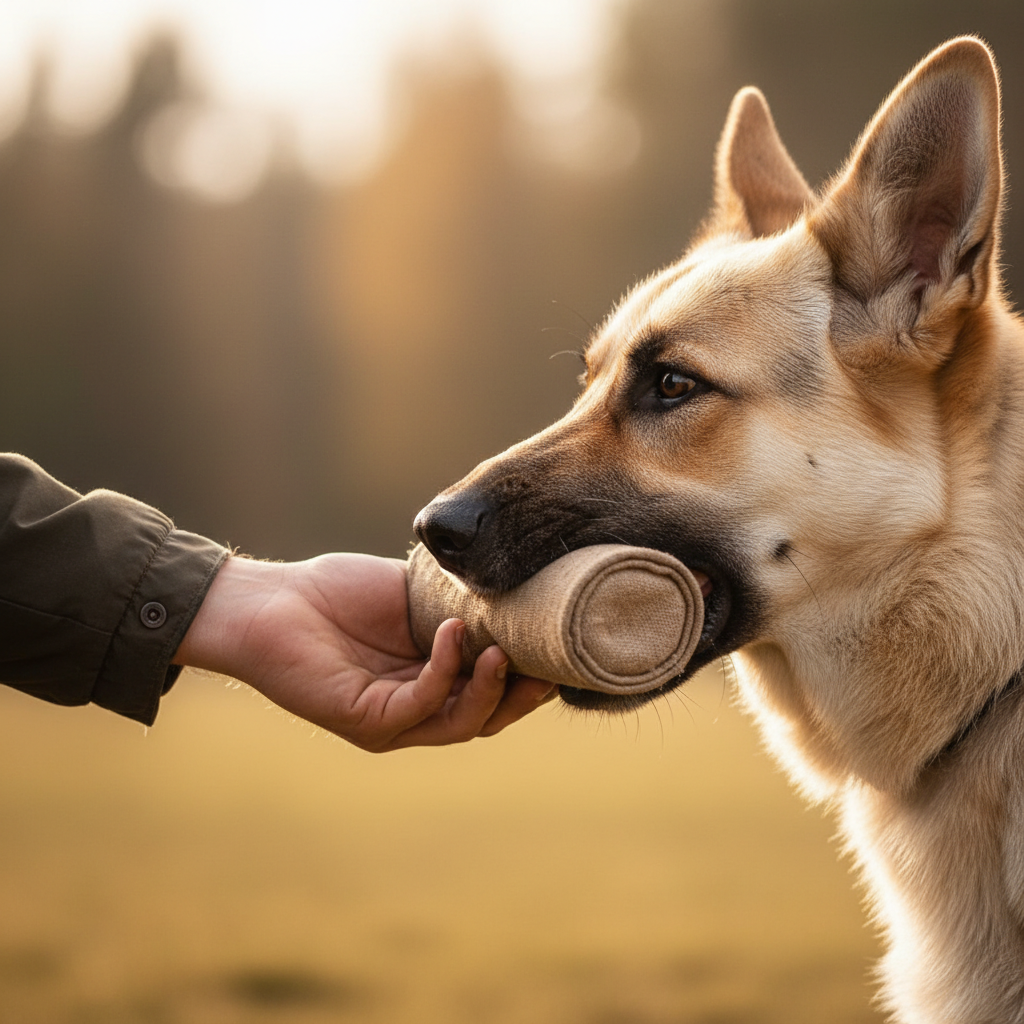
The first goal is simply to teach your dog to interact with the object gently. Hold your chosen object (like the wooden dowel) in your hand. Present it to your dog, about level with their nose. The moment their mouth touches it, even for a split second without chomping, click (or say ‘Yes!’) and give them a treat from your other hand. Don’t even ask for a ‘hold’ yet. We are just rewarding a gentle touch. Repeat this 5-10 times.
-
Step 2: The ‘Hold’ – Building Duration
Once your dog is reliably touching the object with their mouth, we’ll ask for a tiny bit more. Present the object. When they put their mouth on it, wait just one second before you click/reward. Slowly, over many repetitions and sessions, increase the duration. Go from one second to two, then three, and so on. If your dog crunches or drops the object, you’ve likely asked for too much too soon. Just go back to a shorter duration where they were successful. Introduce a release cue like ‘Give’ or ‘Drop it’ right before you give the treat, teaching them to release the object into your hand.
-
Step 3: Fading Your Support
Initially, you’ll be holding the object firmly. As your dog gets better at holding it, start to loosen your grip, letting them take more of the weight. The goal is to gradually move your hand away until they are holding the object all on their own. This needs to be a slow process. If you move your hand and they immediately drop it, just go back to providing more support in the next repetition. Your hand is like training wheels on a bike.
-
Step 4: Adding a Little Movement
A stationary hold is one thing, but the real world involves movement. Once your dog can hold the object independently for 5-10 seconds, ask for a ‘hold’ and then take one small step to the side. If they hold on, click and reward! Gradually build this up. Ask them to walk one step with you, then two. Eventually, you can work towards them holding the object while coming to you from a short distance.
-
Step 5: Generalizing the Skill
Now it’s time to prove how smart your dog is! Once they have mastered a gentle hold with the initial ‘boring’ object, start practicing with different items from your toolkit. Move to the canvas bumper, then a hard rubber toy. Each time you introduce a new object, you may need to go back a step or two in the training process. You’ll also want to start practicing in different locations, like the backyard or a quiet park, to help them understand that ‘soft mouth’ applies everywhere, not just in the living room.
Expert Tip: The release is just as important as the hold! Always trade the object for a high-value treat. This prevents your dog from thinking they have to guard the object and encourages a happy, willing release every time.
Oops! Navigating Common Training Hurdles
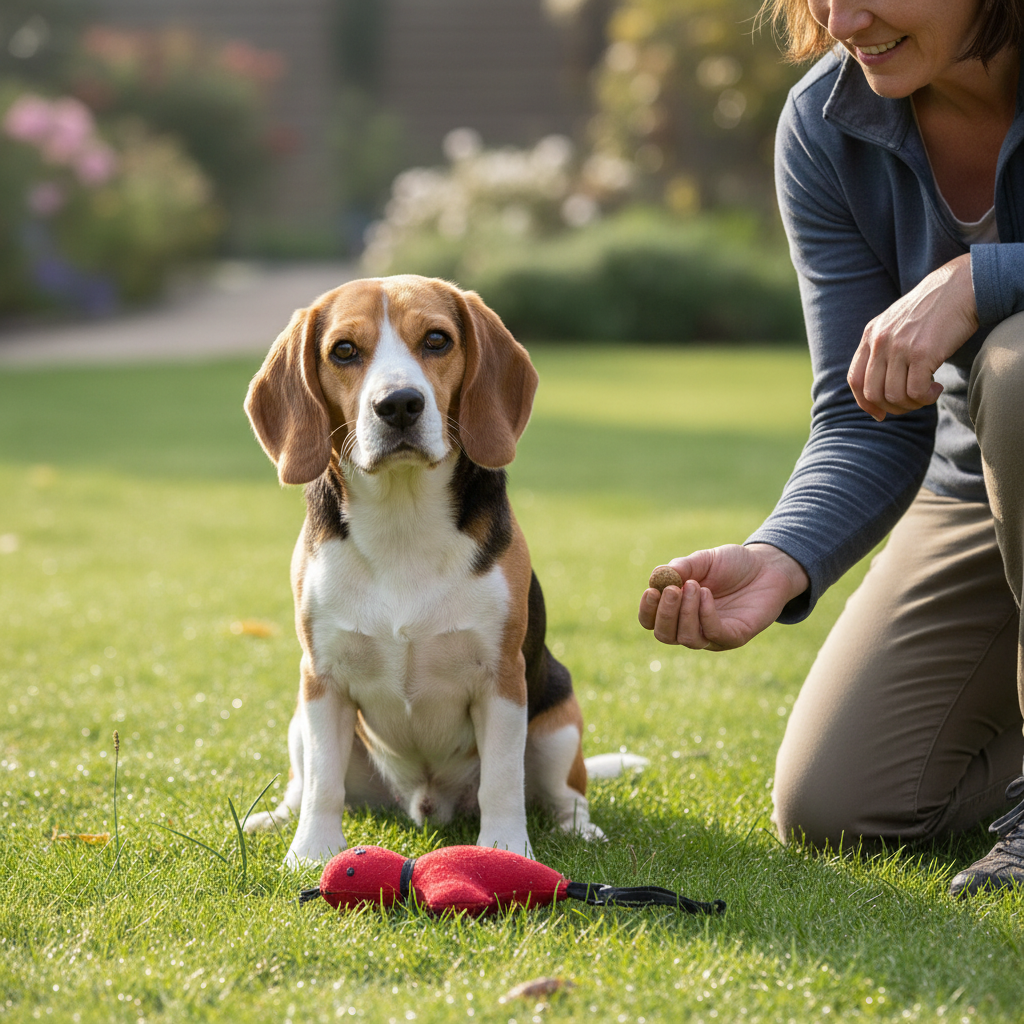
Even with the best plan, training is never a perfectly straight line. You’re bound to hit a few bumps in the road. Don’t worry, it’s completely normal! The key is to recognize the problem and know how to adjust your approach. Here are some of the most common challenges and how to solve them.
Think of these issues not as failures, but as your dog giving you valuable feedback. They’re telling you that the current step is a little too hard, and you just need to adjust the difficulty.
| The Problem | The Solution |
|---|---|
| My dog immediately starts chewing or mouthing the object. | This is the most common issue! It means the object is too tempting or the ‘hold’ duration is too long. Solution: Go back to a less exciting object (like the wooden dowel). Shorten the hold time back to a split second. Click and reward ONLY for a still, quiet mouth. Any chewing means no reward. |
| My dog drops the object instantly. | This usually means the reward isn’t happening fast enough, or they don’t fully understand the ‘hold’ criteria yet. Solution: Improve your timing! Use a clicker for precision. Go back to Step 3 and provide more hand support for the object. Ensure you are using super high-value treats to make it worth their while. |
| My dog won’t even put their mouth on the object. | The object might be uninteresting or even a little scary to them. Solution: Make it more appealing! You can rub a tiny bit of peanut butter or a smelly treat on it. Reward any interaction at first: a sniff, a nose bump, a lick. Gradually shape this towards mouth contact. Keep it low-pressure and fun. |
| My dog is great inside, but a chomping monster outside! | This is a classic problem with generalization. The excitement and distractions of the outdoors are overwhelming their new skill. Solution: Lower your expectations significantly when you change environments. Go all the way back to Step 1 (gentle mouth contact) in the new location. The skill is there, you just have to reconnect the wires in their brain amidst the distractions. |
The golden rule of troubleshooting is: When in doubt, go back to the last point of success. If your dog was successfully holding for 3 seconds but fails at 5, go back to 3 seconds for a few reps to build their confidence back up before trying to push forward again. Stay positive and patient, and you’ll get there!
Conclusion
Congratulations! You now have a complete roadmap to teaching your dog one of the most useful and impressive skills they can learn: a gentle, soft mouth. It’s a journey that replaces frustration with teamwork and turns a destructive habit into a point of pride. Remember, the core principles are simple but powerful: be patient, stay positive, and break the behavior down into tiny, achievable steps. Your dog doesn’t crunch toys to annoy you; they just need you to be their clear and consistent teacher.
By investing this time, you’re not just saving your fetch toys from an early demise. You’re building a deeper line of communication, strengthening your bond, and unlocking a new level of trust and understanding with your canine companion. So grab your treats, pick your most ‘boring’ training object, and take that first small step. Before you know it, you’ll be enjoying a perfect, gentle retrieve every single time.