
Spring is in the air! The sun is warmer, the days are longer, and colorful flowers are bursting into bloom. As pet owners, we’re always looking for that perfect, Instagram-worthy shot of our furry best friends enjoying the season. Imagine it: your beautiful pup, nose-to-petal with a gorgeous bloom, capturing a moment of pure, gentle curiosity. It’s the stuff of pet-parent dreams!
But getting that shot isn’t always as simple as putting a flower in front of your dog’s face. More often, it results in a chewed-up petal or a complete lack of interest. That’s where a little bit of fun training comes in! Teaching your dog to “sniff a flower” is more than just a cute party trick; it’s a fantastic bonding exercise, a great form of mental stimulation, and a way to practice impulse control in a positive, rewarding way. Using simple, force-free techniques, you can teach your dog to interact gently with nature, giving you the perfect opportunity to capture those breathtaking spring memories. So grab some treats, find a sunny spot, and let’s get ready to turn your pup into a flower-sniffing model!
Setting the Scene: Tools for a Blooming Success
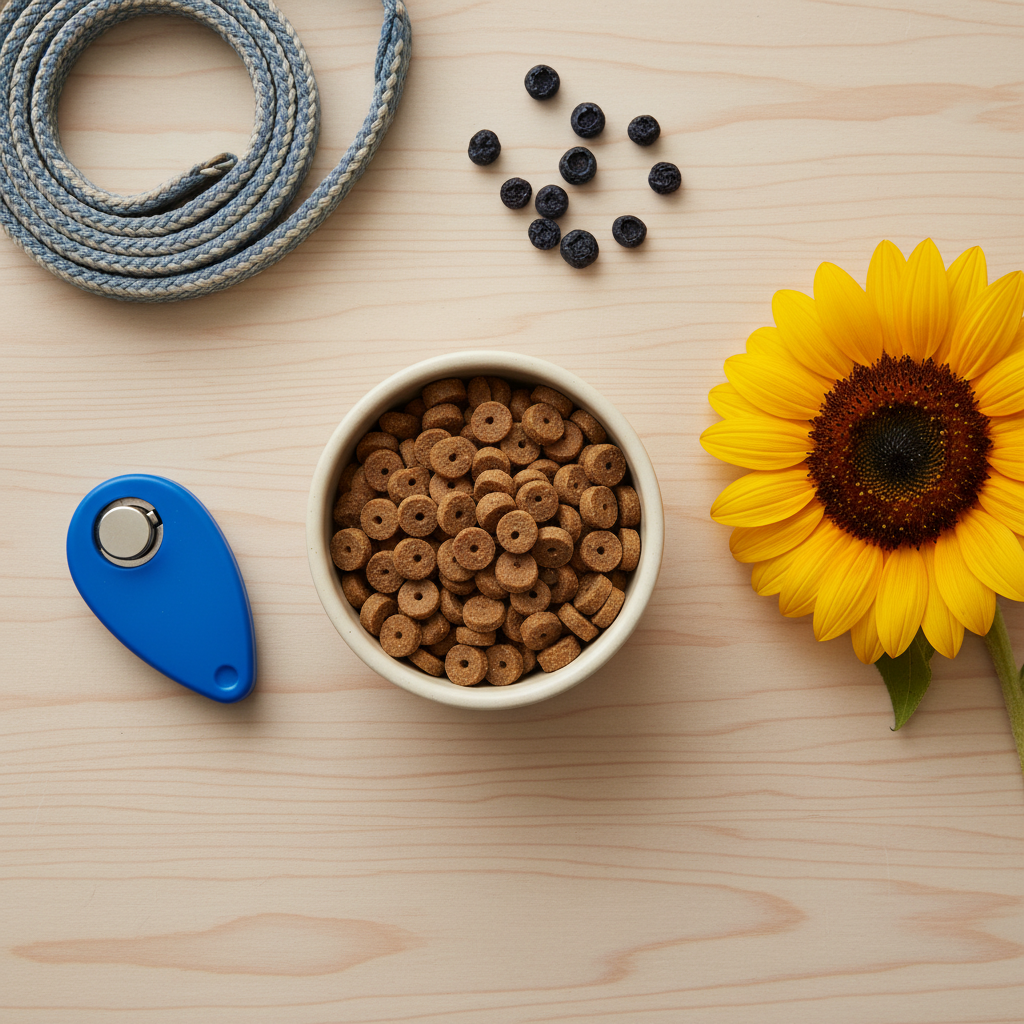
Setting the Scene: Tools for a Blooming Success
Before you and your pup can start your journey to becoming floral connoisseurs, it’s important to gather a few simple tools. Setting yourself up for success makes the training process smoother, safer, and much more fun for everyone involved. Think of it as preparing your artist’s palette before creating a masterpiece!
What You’ll Need:
- High-Value Treats: We’re talking top-tier goodies here! Think small, soft, and extra smelly treats that your dog absolutely loves. Pieces of cooked chicken, cheese, or their favorite commercial training treats will work wonders to keep them motivated.
- A Clicker (Optional): If you’re familiar with clicker training, this is a perfect time to use it. A clicker helps you mark the exact moment your dog does the right thing (like moving their nose toward the flower), making your communication crystal clear. If you don’t use a clicker, a simple, consistent verbal marker like a sharp “Yes!” works just as well.
- Dog-Safe Flowers: This is the most critical part of your toolkit. Many common flowers are toxic to dogs. Always ensure the flowers you use for training are non-toxic. You can start with a silk flower if you’re worried about your dog trying to eat it, but eventually, you’ll want to move to the real thing for that authentic photo.
| Safe Flowers for Sniffing | Toxic Flowers to AVOID |
|---|---|
| Roses (thorns removed) | Lilies (all varieties are extremely toxic) |
| Sunflowers | Tulips |
| Zinnias | Daffodils |
| Snapdragons | Azaleas & Rhododendrons |
| Pansies | Oleander |
Expert Tip: When in doubt, always check the ASPCA’s toxic and non-toxic plant list online before introducing any new flower or plant to your dog. Safety first, always!
From ‘Sit’ to ‘Sniff’: Your Step-by-Step Training Guide
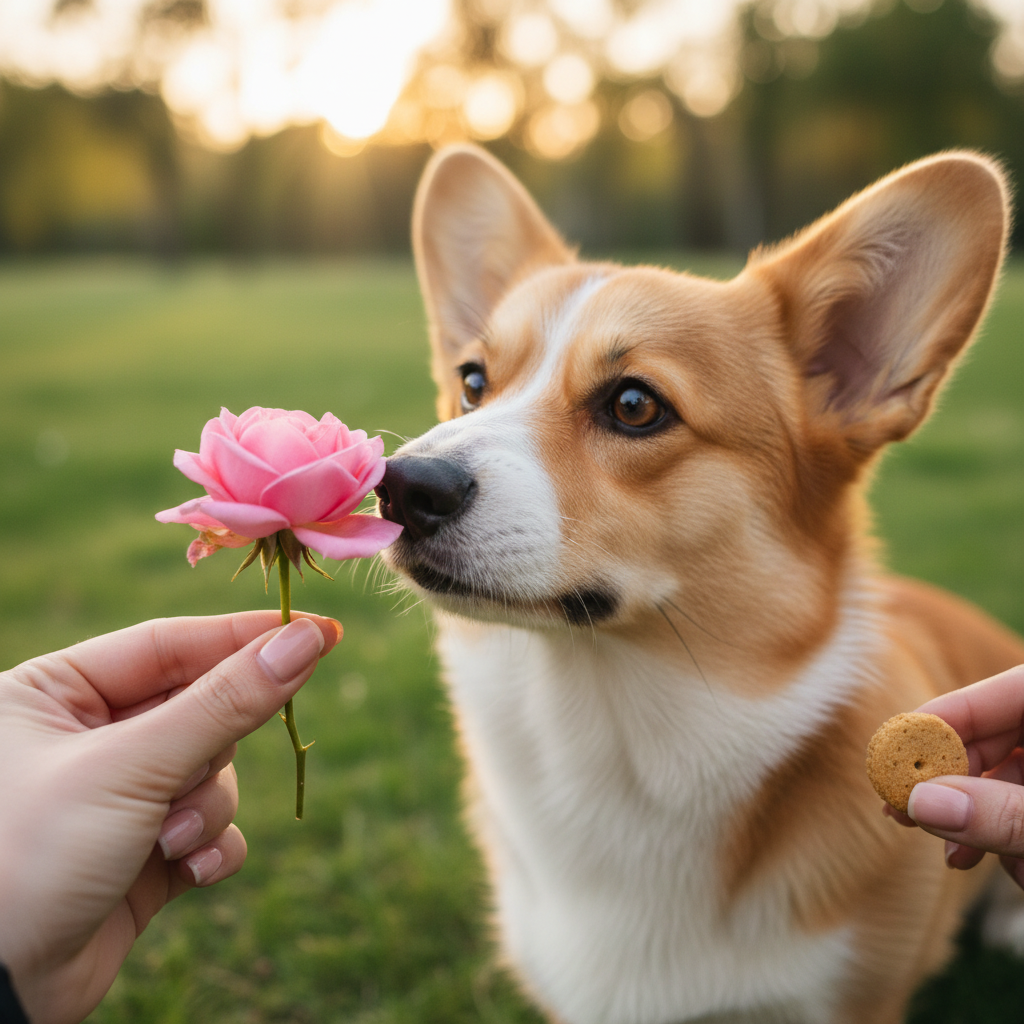
From ‘Sit’ to ‘Sniff’: Your Step-by-Step Training Guide
Alright, you’ve got your treats and your safe flowers—it’s showtime! Remember to keep your training sessions short, upbeat, and positive. Five to ten minutes a couple of times a day is far more effective than one long, frustrating session. Let’s break it down into simple, manageable steps.
- Step 1: Introduce the Flower (Luring). Start in a quiet area with minimal distractions. Hold a safe flower in one hand and your treats in the other. Simply present the flower to your dog. Out of curiosity, they will likely move their head toward it to investigate. The very instant they show interest—even just a glance or a slight lean towards it—mark the behavior with your click or “Yes!” and give them a treat. Do this a few times until they understand that interacting with the flower makes good things happen.
- Step 2: Shape the Behavior (Getting Closer). Now, we’ll ask for a little more. Hold the flower out and wait for your dog to move their nose closer to it. At first, reward them for getting within a few inches. As they succeed, gradually start waiting for them to get their nose even closer, until they are gently touching the flower with their nose. This is called ‘shaping’—rewarding small steps toward the final goal. The key is patience!
- Step 3: Add the Verbal Cue. Once your dog is reliably and eagerly touching their nose to the flower when you present it, it’s time to name the behavior. Just as they are about to perform the action, say your chosen cue in a clear, happy voice. Good cues could be “Sniff,” “Gentle,” or “Touch the flower.” Say the cue, wait for them to sniff, then mark and reward. Repetition is key here for them to build the association.
- Step 4: Build Duration. Your dog is now touching the flower on cue! That’s amazing! The next step is to ask them to hold the position for a second or two to get that perfect photo. Start asking them to keep their nose at the flower for just a split second longer before you mark and reward. Slowly increase this duration over several sessions. This teaches them to hold that lovely pose instead of just doing a quick boop.
- Step 5: Generalize the Behavior. The final step is to practice everywhere! Your dog might be a pro at sniffing a rose in the living room, but will they do it with a sunflower in the garden? Practice with different types of safe flowers, in different rooms of the house, and eventually in your backyard or a quiet park. This helps them understand that the “Sniff” cue applies to any flower, anywhere.
Oops-a-Daisy! Troubleshooting Common Training Hurdles
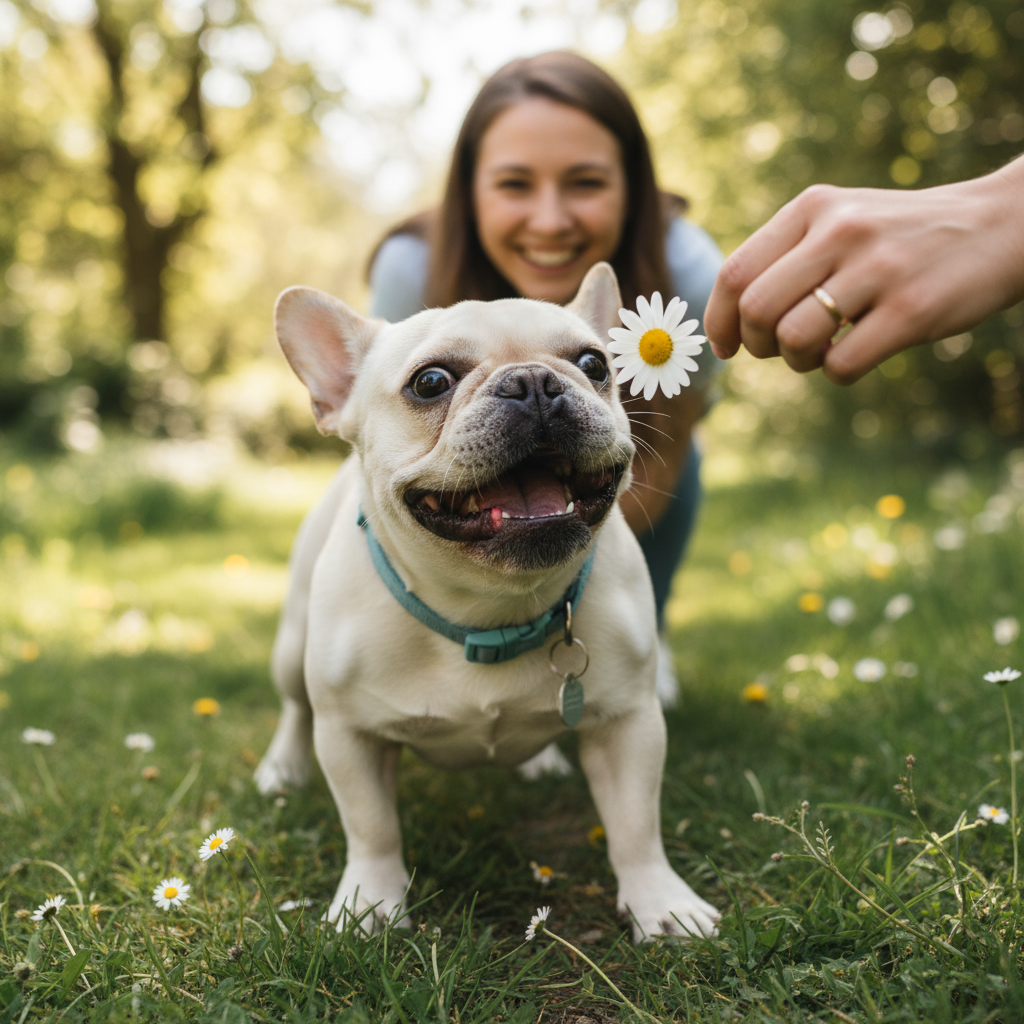
Oops-a-Daisy! Troubleshooting Common Training Hurdles
Even with the best treats and intentions, training doesn’t always go perfectly. Don’t worry, it happens to everyone! If you hit a snag, take a deep breath, keep it positive, and try one of these solutions to common sniffing setbacks.
Help! My Dog Wants to Eat the Flower!
This is probably the most common issue. A flower is a new, interesting object, and many dogs explore the world with their mouths. Here’s what to do:
- Check Their Hunger: Make sure you aren’t training a starving dog. A full belly can make them less likely to try and snack on your props.
- Reward Only for Sniffs: Be very precise with your timing. Only mark and reward for a gentle nose touch. If you see teeth, pull the flower back calmly, wait a second, and try again. They’ll learn that only a soft nose gets the reward.
- Start with Silk Flowers: If the temptation is too strong, start the training process with an artificial flower. Once they have the ‘gentle nose touch’ part down, you can transition to real, non-toxic flowers.
My Dog Seems Scared of or Uninterested in the Flower.
Some dogs, especially more cautious ones, might be wary of a strange new object being presented to them. The key here is to build positive associations without pressure.
- Let Them Initiate: Instead of pushing the flower toward them, place it on the floor. Click and treat them for any interaction: looking at it, stepping toward it, and eventually, sniffing it. Let them control the pace.
- Up the Treat Value: Is your kibble not cutting it? This is the time to bring out the big guns. Tiny pieces of hot dog or freeze-dried liver can make almost any dog interested in your training game.
- Keep it Short and Sweet: If your dog is losing focus, end the session on a positive note with a trick they know well. Forcing them to continue will only create a negative association with the flower. Try again later when they’re more engaged.
Picture Perfect Pups: Safety and Photography Tips
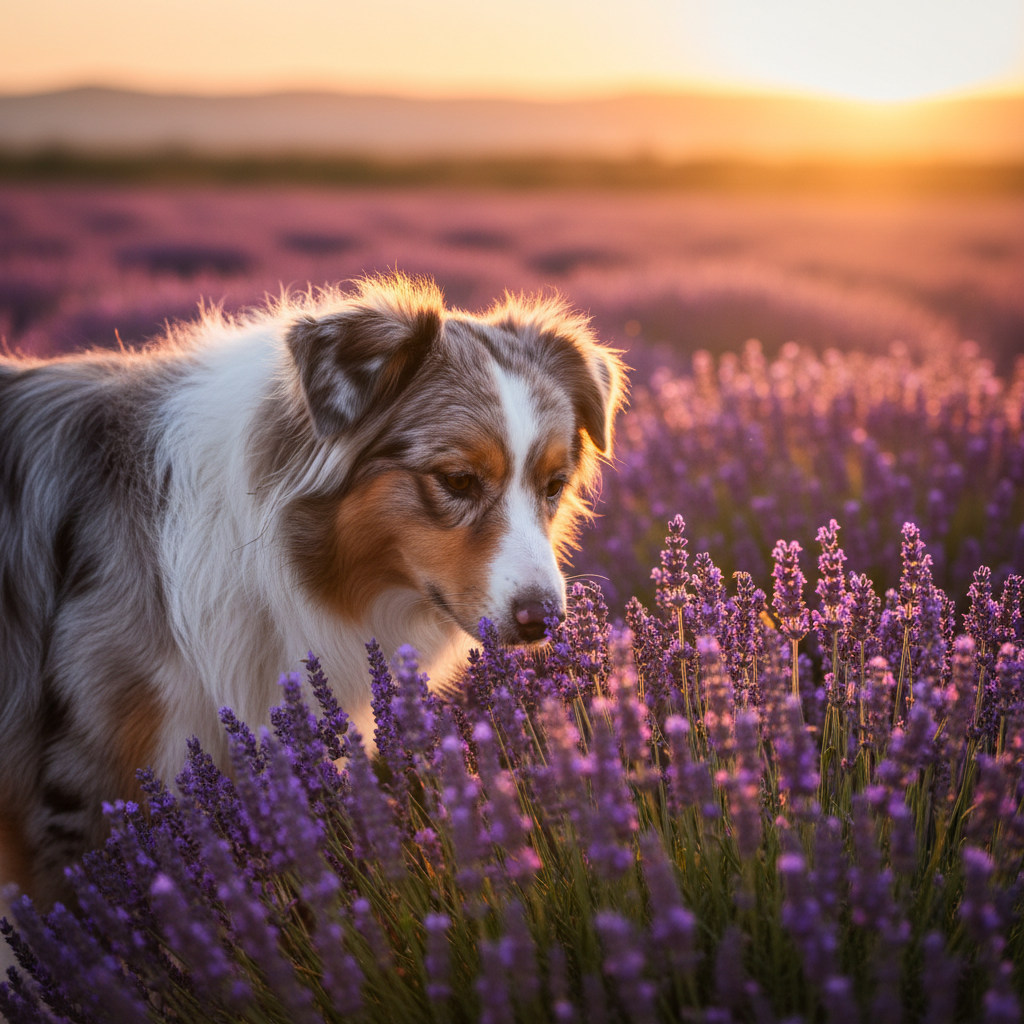
Picture Perfect Pups: Safety and Photography Tips
You’ve done it! Your dog is now a certified flower sniffer. Now comes the really fun part: capturing those magical moments. But before you start snapping away, let’s go over a few final reminders for safety and some tips to help you get the best possible photos.
Safety First, Always!
We can’t stress this enough. Your dog’s well-being is the number one priority.
- Stick to Non-Toxic Flowers: We’ve listed some, but always double-check if you’re unsure. Never let your dog interact with flowers in public parks or neighbors’ yards unless you can 100% identify them as safe.
- Beware of Pesticides: Flowers from florists or garden centers are often treated with chemicals. It’s best to use flowers from your own garden (if you don’t use pesticides) or those specifically grown to be organic and pet-safe.
- Watch for Bees: Flowers attract pollinators. Always check blooms for bees or wasps before asking your dog to sniff, to avoid a painful sting.
Tips for Capturing the Perfect Shot
You don’t need a fancy camera to take a great photo. Your smartphone is a powerful tool!
- Find the Light: Natural light is your best friend. The ‘golden hour’—the hour just after sunrise or before sunset—provides a soft, warm light that makes every photo look magical. Avoid harsh midday sun, which creates unflattering shadows.
- Get on Their Level: Don’t shoot from above. Crouch down so your camera is at your dog’s eye level. This creates a much more intimate and engaging portrait.
- Use Burst Mode: Dogs move fast! Use your phone’s burst mode (holding down the shutter button) to take a rapid series of photos. You’re much more likely to catch that one perfect, fleeting moment.
- Focus on the Eyes: In any portrait, human or canine, the eyes are the key. Tap on your dog’s eye on your phone screen to make sure it’s the sharpest point in the image.
With a little patience and a lot of treats, you’ll not only have a new, adorable trick in your repertoire but a whole collection of beautiful photos that celebrate the special bond you share with your dog.
Conclusion
And there you have it! Teaching your dog to sniff a flower is so much more than a cute trick for social media. It’s a wonderful way to strengthen your communication, build your dog’s confidence, and practice important skills like impulse control and gentleness. Every short training session is an investment in the beautiful relationship you share with your furry companion.
Remember to always prioritize safety, keep it fun, and celebrate every small success along the way. Now, go grab your camera and some dog-safe blooms, and start capturing those precious, picture-perfect spring moments. Happy training!