That sudden, ear-splitting BARK! right by the door. You know the one. It’s the sound that shatters a quiet evening, interrupts your Zoom call, or jolts you awake first thing in the morning. While it’s great that your dog is communicating their needs, the delivery system could use a little… refinement. If you’re tired of the barking alarm, you’ve come to the right place.
Imagine this instead: your dog walks calmly to the door, lifts a paw, and gives a soft, gentle scratch. You hear the quiet tap, let them out, and peace is restored. This isn’t a fantasy; it’s a completely achievable behavior that strengthens your bond and saves your eardrums (and your door!).
In this guide, we’re going to walk you through everything you need to know to transform your dog’s demanding barks into a polite paw-tap. We’ll cover why this method is so effective, what simple tools you’ll need, a detailed step-by-step training plan, and how to troubleshoot any bumps along the way. Let’s get started on the path to a quieter, more harmonious home!
Why a Gentle Scratch Beats Other Potty Signals
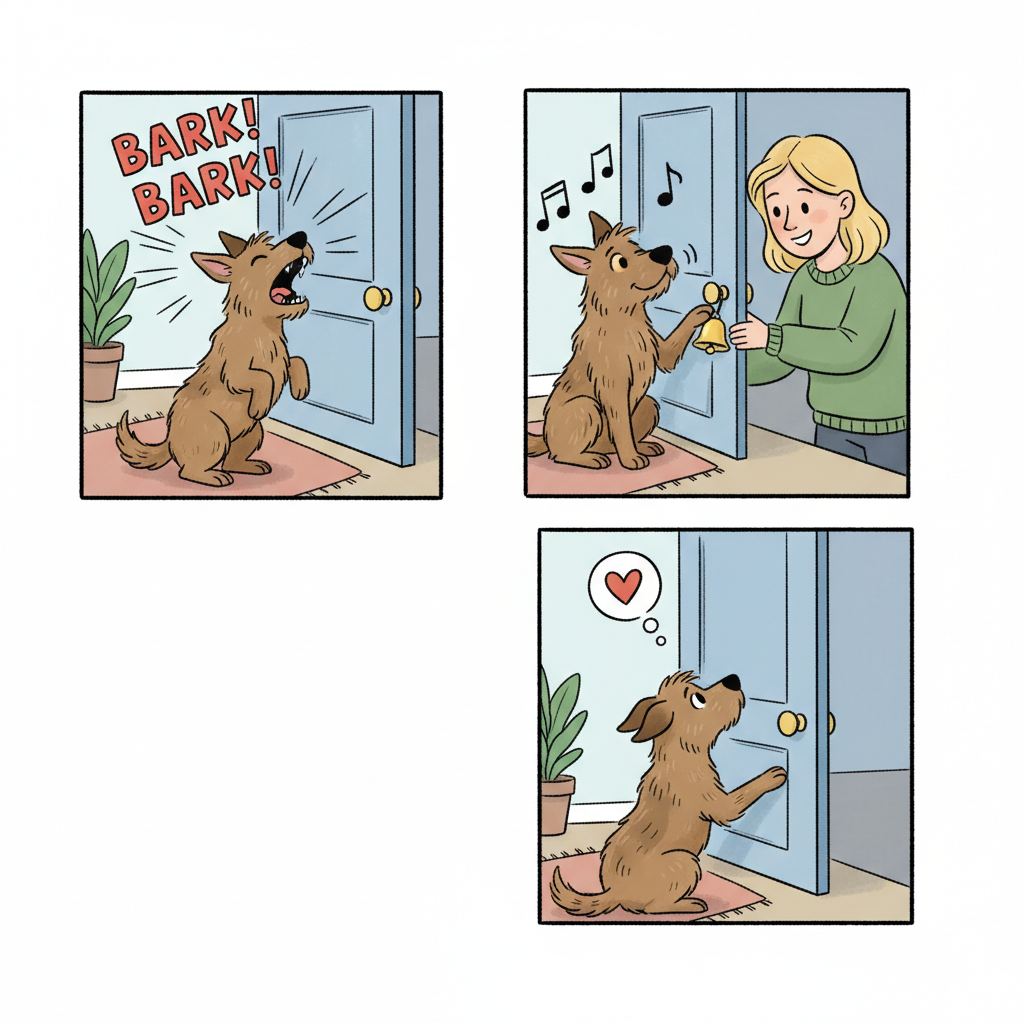
Before we dive into the ‘how,’ let’s talk about the ‘why.’ You might be wondering if this is better than other common methods, like barking or using potty bells. While any clear signal is better than accidents on the rug, the gentle scratch has some distinct advantages that make it a superior choice for many households.
The Problem with Barking
Barking is a natural dog behavior, but as a primary potty signal, it has some serious drawbacks:
- It’s Stressful: Constant, high-pitched barking can increase stress levels for both you and your dog. It creates an environment of urgency and anxiety rather than calm communication.
- It’s Ambiguous: Is your dog barking to go potty, or because a squirrel just ran past the window? Or is the mail carrier here? Barking can be a catch-all signal, leading to confusion and unnecessary trips outside.
- It’s Disruptive: As we mentioned, it’s just plain loud! It can disturb neighbors, sleeping babies, and your own peace of mind.
What About Potty Bells?
Potty bells are a popular alternative, but they come with their own set of challenges. Some dogs learn to ring them incessantly, not just for potty breaks but for attention, playtime, or just because it’s fun to make noise. This can quickly become just as annoying as the barking you were trying to avoid. Others can become fearful of the sound, or they might hit them with such enthusiasm that they damage the wall or doorframe.
Expert Tip: The goal of a potty signal is clear, calm communication. The method you choose should reduce household stress, not add a new source of noise or frustration.
Let’s compare these three common methods side-by-side:
| Signal Method | Pros | Cons |
|---|---|---|
| Barking | Natural for the dog; requires no training. | Loud, stressful, ambiguous, can be demanding. |
| Potty Bells | Clear, distinct sound; easy for some dogs to learn. | Can be overused for attention; some dogs fear the noise; can be just as noisy as barking. |
| Gentle Scratch | Quiet and polite; specific to one request; builds a calm communication routine. | Requires consistent training; potential for door damage if not taught correctly (we’ll fix that!). |
As you can see, when taught correctly, the gentle scratch provides the clearest, quietest, and most specific signal. It establishes a respectful dialogue between you and your dog, turning a moment of demand into a moment of polite request.
Gathering Your Training Toolkit
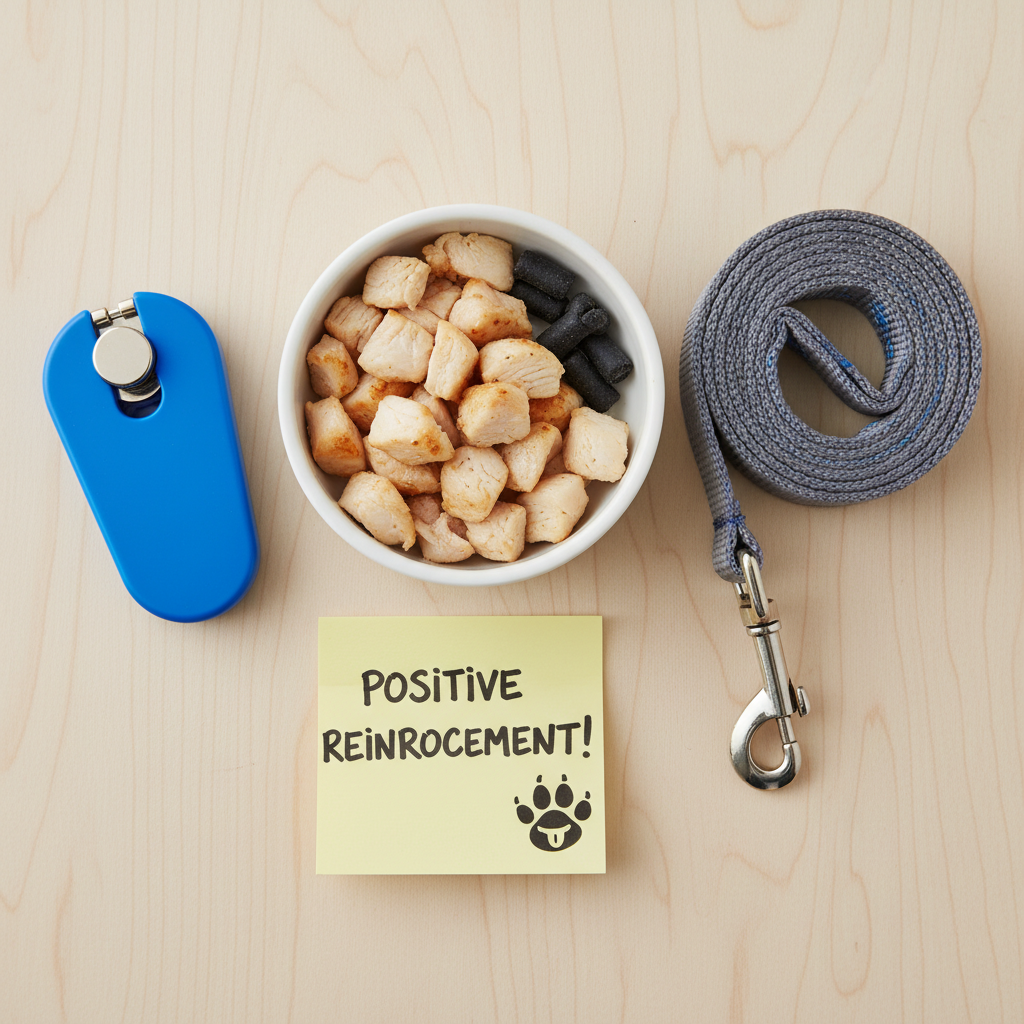
The beautiful thing about this training method is its simplicity. You don’t need a lot of fancy or expensive equipment to get started. In fact, you probably have most of what you need already! Setting yourself up for success is all about having the right tools on hand before you begin your first session.
Here’s Your Short Shopping List:
- High-Value Treats: This is the most important tool! We’re not talking about your dog’s regular kibble. High-value means something they absolutely love and don’t get all the time. Think small pieces of cooked chicken, cheese, hot dogs, or special soft training treats. The treat should be tiny—about the size of a pea—so you can reward your dog frequently without filling them up too quickly.
- A Clicker (Optional but Recommended): A clicker is a small plastic device that makes a distinct ‘click’ sound. In training, you ‘charge’ the clicker by clicking and immediately giving a treat, over and over. Your dog quickly learns that ‘click’ means ‘a treat is coming!’ This allows you to mark the exact moment your dog does the right thing (like their paw touching the door) with perfect timing, which speeds up learning significantly.
- Patience and a Positive Attitude: Okay, you can’t buy these, but they are non-negotiable! Training takes time and consistency. There will be good days and not-so-good days. Staying positive, keeping sessions short and fun, and celebrating small wins will keep your dog engaged and eager to learn.
- Sticky Notes or a Target Stick: You’ll need a small, obvious target to teach your dog where to place their paw initially. A brightly colored sticky note works perfectly. Alternatively, a store-bought target stick can also be used.
- Door Scratch Protector (Optional): If you’re concerned about your door’s finish during the learning phase, you can buy clear, adhesive plastic sheets designed to protect doors from pet scratches. This can give you peace of mind while your dog is still learning the ‘gentle’ part of the scratch.
Remember: Keep your training sessions short and sweet! Aim for 5-10 minute sessions a few times a day. Ending on a positive note, even if you only made tiny progress, is key to keeping your dog excited for the next lesson.
The 5-Step Plan to a Polite Potty Paw
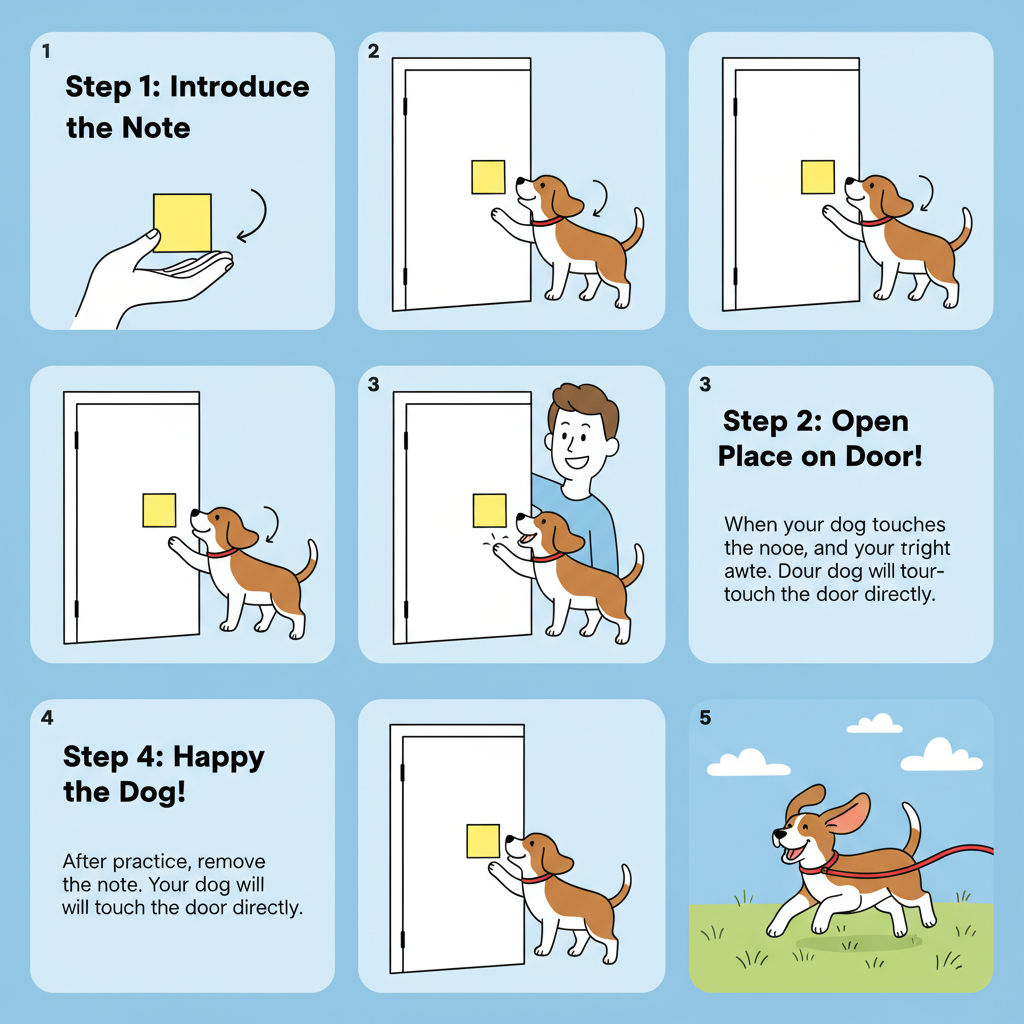
Alright, you’ve got your treats and your positive attitude ready to go! It’s time to teach your dog the main event. We’re going to break this down into five simple, manageable steps. Remember to master each step before moving on to the next. Let’s begin!
Step 1: Teach a ‘Touch’ Cue
Before we can ask the dog to scratch the door, we first need to teach them to target something with their paw. The easiest way to do this is with a sticky note.
- Hold the sticky note in the palm of your hand, flat.
- Show it to your dog. Out of curiosity, they will likely sniff or nudge it. The moment their nose or paw touches it, click (if using a clicker) and immediately give them a high-value treat.
- Repeat this several times. Your dog will quickly learn that touching the sticky note makes a treat appear!
- Now, start waiting for a paw touch specifically. Most dogs will eventually try using their paw. The instant the paw touches the note, have a ‘jackpot’ reward—several treats at once! This reinforces that the paw touch is what you’re looking for. Practice this until your dog reliably touches the sticky note with their paw on cue.
Step 2: Move the Target to the Door
Once your dog is a paw-targeting pro, it’s time to change the location.
- Take the same sticky note and place it on the door you use for potty breaks, at your dog’s eye level.
- Bring your dog to the door and give your ‘touch’ cue or simply point to the note.
- The moment their paw touches the sticky note on the door, click and treat. Reward them enthusiastically!
- Practice this in short bursts throughout the day. The goal is to build a strong association: touching the note on this specific door is a great thing to do.
Step 3: Introduce the Action and Reward
Now we connect the touch to the desired outcome: the door opening.
- With your dog on a leash, lead them to the door during a time you know they likely need to go potty (like after a nap or a meal).
- Cue them to ‘touch’ the sticky note.
- The second their paw makes contact, click, and instead of just giving a treat, immediately open the door while saying an excited ‘Yes! Let’s go potty!’ The open door becomes part of the reward.
- Take them out to their potty spot. When they eliminate, praise them lavishly. This solidifies the connection between the paw touch and the potty break.
Step 4: Fade the Target and Add the Scratch
Your dog is now touching the sticky note on the door to go out. The next step is to remove the visual aid and encourage the natural scratching motion.
- Once the behavior is reliable, try making the sticky note smaller, or even cutting it in half. Your dog should still perform the action.
- Eventually, remove the sticky note entirely. Point to the spot where it used to be and give your cue. Your dog might be hesitant at first, but they will likely touch the door itself. Reward this heavily!
- As they touch the door, they will naturally make a small scratching sound. This is what we want! Start rewarding the touches that make a slight sound more than a silent tap. This encourages a light scratch over a simple touch.
Step 5: Practice and Proofing
The final step is to make sure the behavior is reliable and not overused.
- Only reward the scratch when it’s genuinely time to go out. If you know your dog just went potty 10 minutes ago and they scratch the door, calmly ignore it or redirect them to a toy. This teaches them that the scratch is only for potty breaks, not for summoning you for fun.
- Practice at different times of the day and when there are minor distractions. Consistency is your best friend here. Before you know it, you’ll have a dog who politely scratches the door every time they need to go out, and the days of frantic barking will be a distant memory.
Troubleshooting: When Your Paws-itive Plan Goes Awry
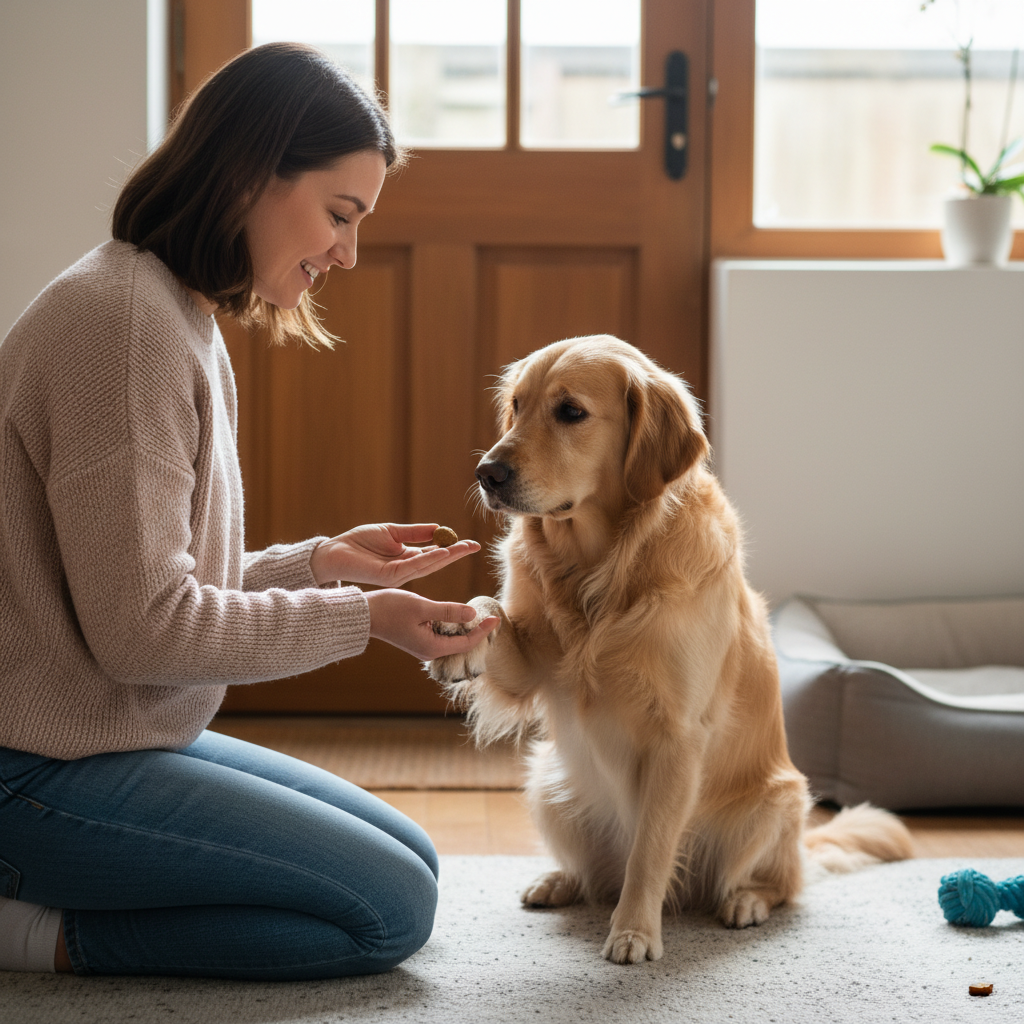
Even with the best plan, training doesn’t always go in a straight line. Dogs, like people, are individuals and might hit a few snags along the way. Don’t worry! Most common problems are easy to solve with a little patience and a slight adjustment to your technique. Here are some common issues and how to fix them.
Problem: “My dog is scratching way too hard! I’m worried about my door!”
Solution: This is a common concern and usually happens when a dog gets overly excited. The key is to go back and reward only the gentlest of touches. If your dog gives a frantic, five-clawed swipe, ignore it completely. Wait for a softer touch. The moment you get a gentle tap, reward it with extra enthusiasm and a high-value treat. You are teaching your dog that less is more. Using a door scratch protector during this phase can also save your sanity.
Problem: “My dog just licks or sniffs the door instead of using his paw.”
Solution: This means the initial ‘touch’ training wasn’t fully focused on the paw. Go back to Step 1. Use the sticky note in your hand and only reward paw touches. Ignore nose boops and licks. You may need to gently tap your dog’s paw to remind them what you’re looking for. Once they are reliably using their paw on the target in your hand, you can move it back to the door.
Problem: “She’s scratching all the time! I think she’s just doing it for attention or treats.”
Solution: This is a critical step in proofing the behavior. The scratch must only work for potty breaks. If you know for a fact your dog doesn’t need to go out (e.g., they just came in), and they scratch the door, you must ignore it. Don’t make eye contact, don’t say ‘no.’ Simply act as if it didn’t happen. After a moment, call them over to do a different activity, like playing with a toy or practicing a ‘sit.’ This teaches them that the scratch is not an all-purpose ‘summon human’ button.
Problem: “My dog won’t scratch at all. He just stares at the door.”
Solution: This usually indicates a lack of confidence or understanding. Go back to a step where they were successful. Was it touching the sticky note? Re-establish that behavior with lots of positive reinforcement. Make it a super fun game! You can also try ‘shaping’ the behavior. Reward any small movement toward the door, then for looking at the door, then for stepping closer, then for lifting a paw, and so on, until you build up to the full scratch. Keep sessions very short and end on a successful repetition to build their confidence.
Key Takeaway: If you get stuck, take a step back. 99% of training problems are solved by breaking the behavior down into smaller pieces and reinforcing a previously successful step. Stay patient and positive!
Conclusion
Congratulations! You now have a complete roadmap to a quieter home and a clearer communication line with your best friend. Swapping loud, demanding barks for a polite, gentle scratch is more than just a fun trick; it’s about building a foundation of mutual respect and understanding. It reduces stress for everyone in the household and makes potty time a calm, routine event rather than a frantic fire drill.
Remember that the keys to success are patience and consistency. Every dog learns at a different pace, so celebrate the small victories and don’t get discouraged if you need to take a step back occasionally. Keep your training sessions short, fun, and overflowing with positivity, and your dog will be eager to learn.
Enjoy the newfound peace and quiet, and take pride in the incredible bond you’re building with your dog. You’re not just teaching them a new behavior; you’re teaching them a new way to talk to you, and that’s a truly special thing.