Hey there, fellow dog lovers! Are you looking for a new, exciting way to play with your pup that goes beyond the usual game of fetch? Imagine your dog, focused and happy, skillfully nudging a soccer ball across the lawn. It’s not just an amazing party trick—it’s a fantastic form of mental and physical exercise that can deepen the bond you share. Teaching your dog to dribble is all about patience, positivity, and most importantly, fun! It transforms a simple ball into a tool for communication and teamwork. In this guide, we’ll walk you through everything you need, from picking the right gear to a complete step-by-step playbook. So, lace up your sneakers (or just slip on your clogs), grab some treats, and let’s turn your backyard into a World Cup training ground for your furry MVP!
Gearing Up for the Pitch: What You’ll Need
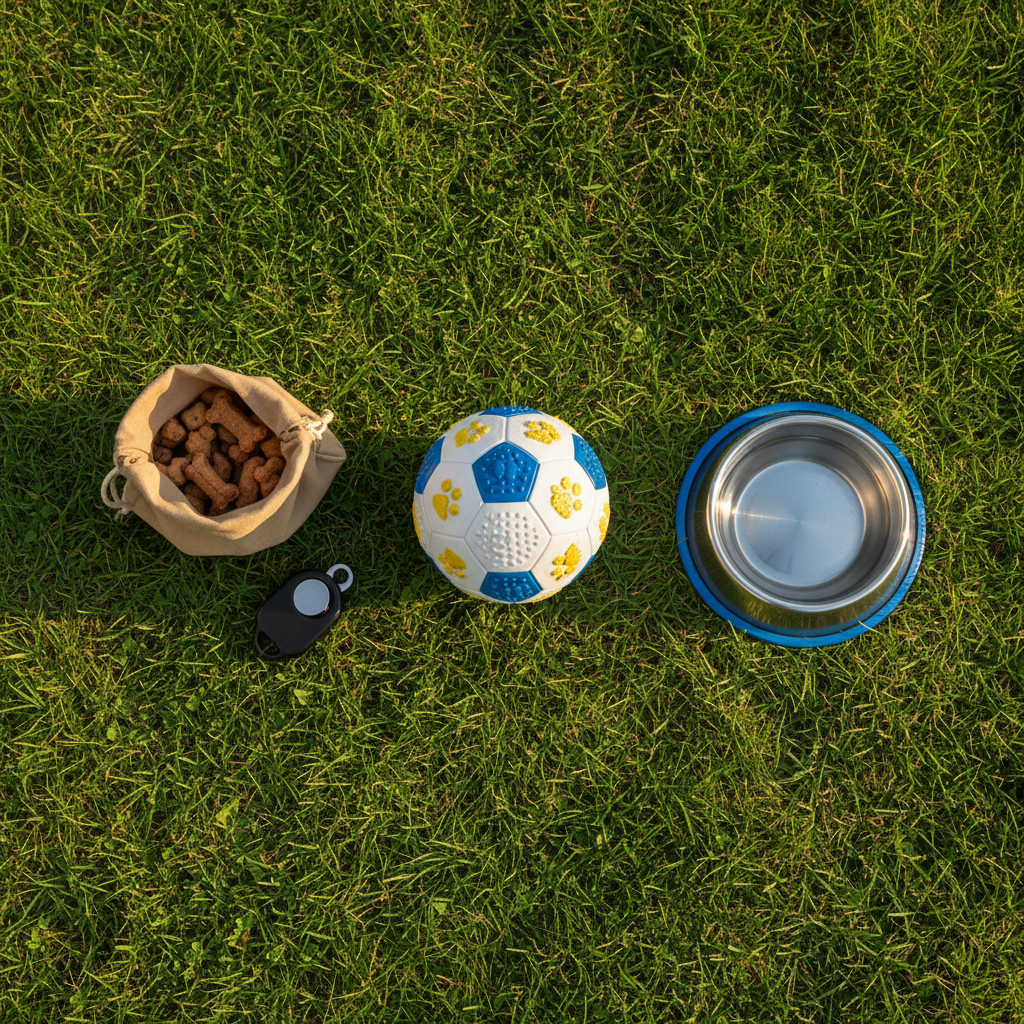
Before you and your canine companion can start training, you’ll need to gather a few essential items. Having the right equipment not only makes the process smoother but also ensures your dog stays safe and motivated. Think of this as packing your star player’s gear bag!
- A Dog-Appropriate Ball: This is the most crucial piece of equipment. Do not use a standard, inflated soccer ball. These are easily punctured by teeth and can be a choking hazard. Instead, look for a ‘herding’ or ‘jolly’ ball made from hard, durable plastic that your dog can push but not easily bite or pick up. Choose a size that is large enough so they can’t get their mouth around it—it should be about shoulder-height to your dog.
- High-Value Treats: We’re talking about the good stuff! Since this is a new and complex skill, you’ll need treats that your dog finds absolutely irresistible. Small, soft, smelly treats like tiny pieces of chicken, cheese, or commercial training treats work best. You’ll be using a lot, so keep them pea-sized to avoid overfeeding.
- A Clicker (Optional but Recommended): A clicker is a fantastic tool for marking the exact moment your dog does something right. This precise communication can speed up the learning process significantly. If you’ve never used one, don’t worry! The concept is simple: click the instant your dog performs the correct action (like touching the ball), then immediately give a treat.
- A Safe, Open Training Area: You’ll need a space with minimal distractions where your dog can focus. A fenced-in backyard is perfect. If you’re using a park, choose a quiet corner and consider using a long line to keep your dog safe. Ensure the ground is free of any hazards like sharp rocks or holes.
- Patience and a Positive Attitude: This is non-negotiable! Your energy and attitude will directly influence your dog’s willingness to learn. Keep it light, keep it fun, and be prepared to celebrate every tiny bit of progress. Remember, this is a game you’re learning together.
The Training Playbook: A Step-by-Step Guide to Dribbling
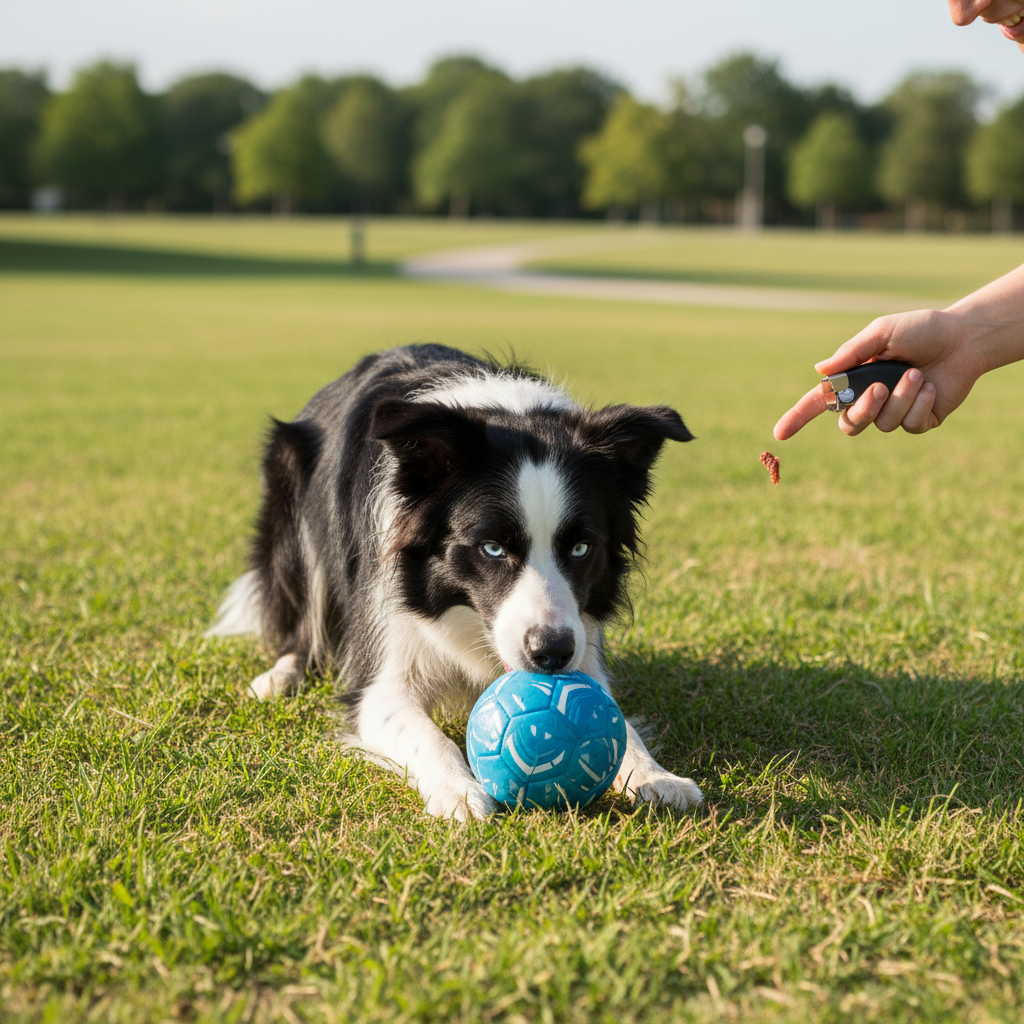
Alright, coach, it’s time for drills! This process is all about ‘shaping,’ which means we’ll reward small, successive steps that build up to the final behavior. Keep your training sessions short—5 to 10 minutes once or twice a day is plenty to keep your dog engaged without causing frustration. Let’s get started!
Phase 1: Introducing the Ball
- Initial Introduction: Place the ball on the ground in your training area. Don’t push it or hype it up. Just let your dog’s natural curiosity take over.
- Reward Curiosity: The moment your dog looks at, sniffs, or touches the ball with their nose or paws, click (if using) and give them a treat. Toss the treat a short distance away from the ball so they have to ‘reset’ and approach it again. Repeat this several times. We’re building a positive association: Good things happen when I interact with this big round thing!
Phase 2: Teaching the ‘Nose Nudge’
- Targeting the Touch: Now, we get more specific. Only reward your dog when they touch the ball with their nose. Ignore paw touches for now, as we want to encourage pushing, not swatting.
- Encourage a Push: As your dog gets the hang of nose-touching, wait for a slightly harder touch—one that makes the ball move, even just a tiny bit. When it moves, give a ‘jackpot’ reward (several treats at once) and lots of praise. This is a breakthrough moment!
- Add a Cue (Optional): Once your dog is reliably pushing the ball with their nose, you can add a verbal cue like “Push” or “Dribble.” Say the word right as they are about to touch the ball, then click and treat when they do.
Phase 3: Shaping the Dribble
- Building Momentum: Now, encourage your dog to push the ball multiple times. After the first push, take a step back and point to the ball excitedly. When they push it again, reward them. Gradually increase the number of pushes you ask for before giving a treat (e.g., two pushes, then three).
- Following the Ball: The goal is for your dog to follow the ball and continue nudging it forward. You can help by moving with them, keeping the energy high and praising them enthusiastically for staying with the ball.
Expert Tip: Always end each training session on a high note! Finish with a successful push or a trick your dog already knows and loves. This keeps them excited and eager for the next session.
Sideline Support: Troubleshooting Common Challenges
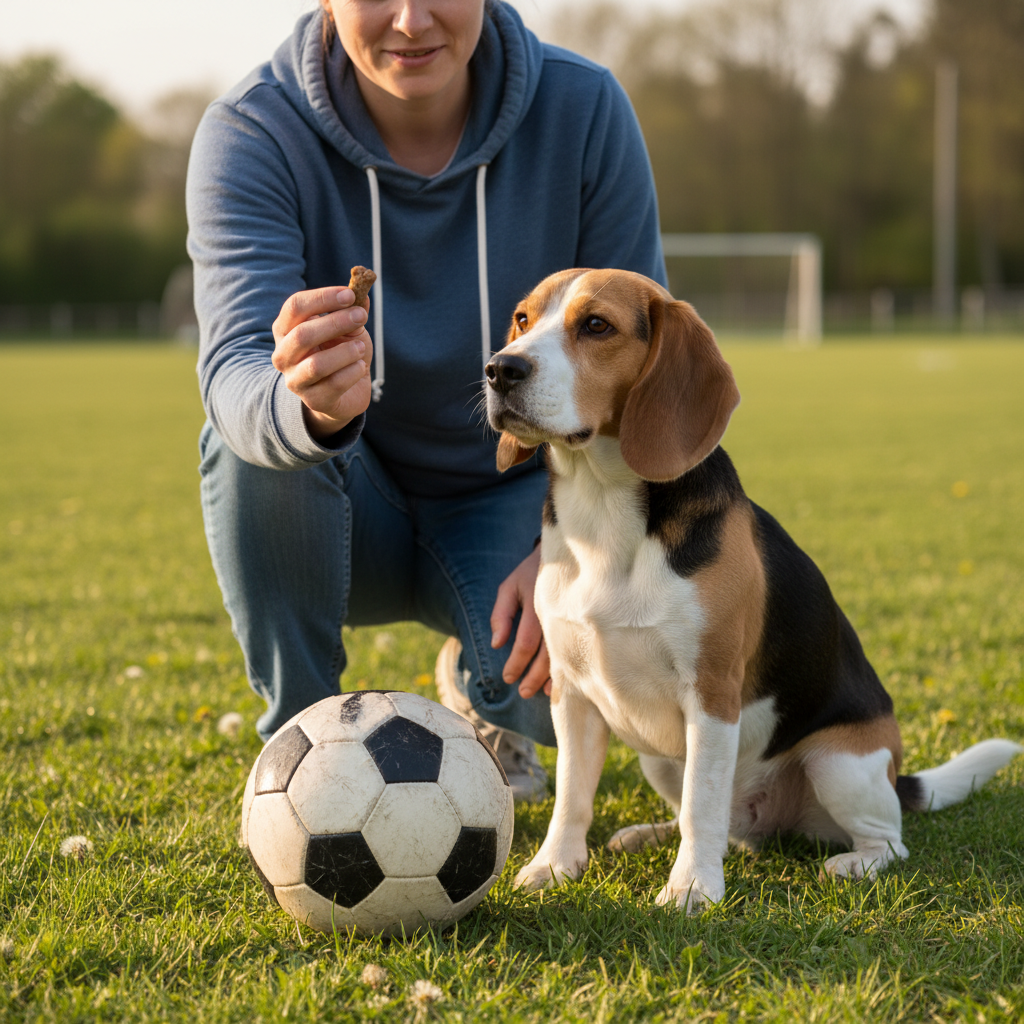
Even the most promising athletes have off days. It’s perfectly normal to hit a few snags while training. Don’t get discouraged! Here’s how to handle some of the most common challenges you might encounter on your journey to soccer stardom.
My dog keeps trying to bite or pick up the ball. What do I do?
This is very common, especially with mouthy breeds! It usually means the ball isn’t the right type or size. Ensure you’re using a hard plastic ball that’s too large for them to fit in their mouth. If they still try to bite it, immediately stop the game for a few seconds. Only reward nose-to-ball contact. They will quickly learn that nudging gets them the treat, while biting stops the fun.
My dog loses interest after just a minute or two.
This is a clear sign that the session is too long or the reward isn’t motivating enough. Try using an even more special treat that they only get during soccer practice. And shorten your sessions! A single, super-enthusiastic minute of training is far more effective than ten minutes of frustrated practice. Always stop before your dog gets bored.
My dog just barks at the ball instead of pushing it.
Barking is often a sign of excitement or uncertainty. Go back to the very beginning. Reward them for simply being calm near the ball. Then, reward for looking at it, then for sniffing it. You may need to break the steps down even further to build their confidence. Don’t acknowledge the barking; only reward the quiet, curious behavior you want to see.
They were doing great yesterday, but today they seem to have forgotten everything!
Welcome to dog training! This is completely normal. Dogs, like us, have good days and bad days. Don’t get frustrated. Just take a deep breath and go back to the last step where they were successful. A quick, positive refresher is often all it takes to get them back on track. Consistency is more important than constant progress.
Advanced Drills: Taking Your Skills to the Next Level
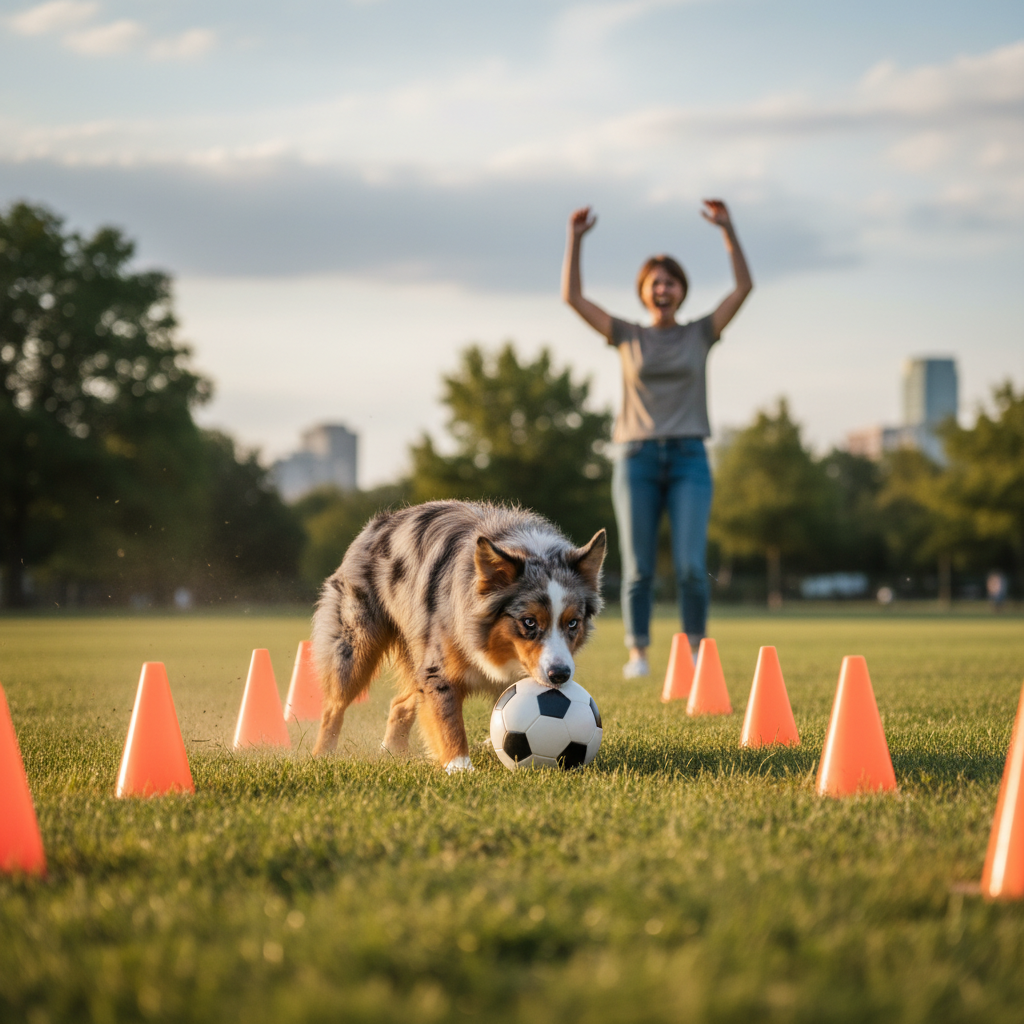
Once your dog has mastered the basic dribble, you can introduce new challenges to keep their minds sharp and the game exciting. These advanced drills build on the foundation you’ve already created and can be a ton of fun for you both. Remember to introduce these new concepts slowly and with lots of positive reinforcement.
- Weaving Through Cones: Set up a few small, pet-safe cones or markers in a line. Encourage your dog to dribble the ball in a weaving pattern around them. You can guide them with your body and by placing treats strategically to show them the way. This is fantastic for improving their coordination and ability to control the ball’s direction.
- Passing Practice: This is a great way to build teamwork! Sit on the ground and gently roll the ball towards your dog. Encourage them to push it back to you. When they do, give them tons of praise. Over time, you can build up to ‘passing’ the ball back and forth over greater distances.
- Scoring a Goal: Set up a small goal (two cones or even your shoes will work). Practice having your dog dribble the ball and push it between the markers. When they ‘score a goal,’ throw a party! Celebrate with jackpots of treats and lots of cheering. This gives them a clear objective and makes the game even more rewarding.
- Directional Dribbling: Start adding verbal cues for direction, like “Left” or “Right.” As your dog is dribbling, point in the direction you want them to go and say the cue. Reward them for even a slight nudge in the correct direction. This is a very advanced skill that builds incredible focus and communication.
These advanced drills are all about having fun and celebrating your dog’s amazing brain. There’s no pressure to be perfect. The real prize is the time you spend playing and learning together.
Conclusion
And there you have it—your complete playbook for teaching your dog to become a dribbling dynamo! Remember, the most important goal in this game isn’t getting the ball in the net; it’s the joy, laughter, and incredible bond you build along the way. Be patient with your pup and with yourself. Celebrate every little nose-nudge and wobbly dribble. Some dogs might pick it up in a week, while others might take a month, and that’s perfectly okay. The real victory is discovering a new way to communicate and play with your best friend. So get out there, have a ball, and enjoy every moment with your very own World Cup puppy!