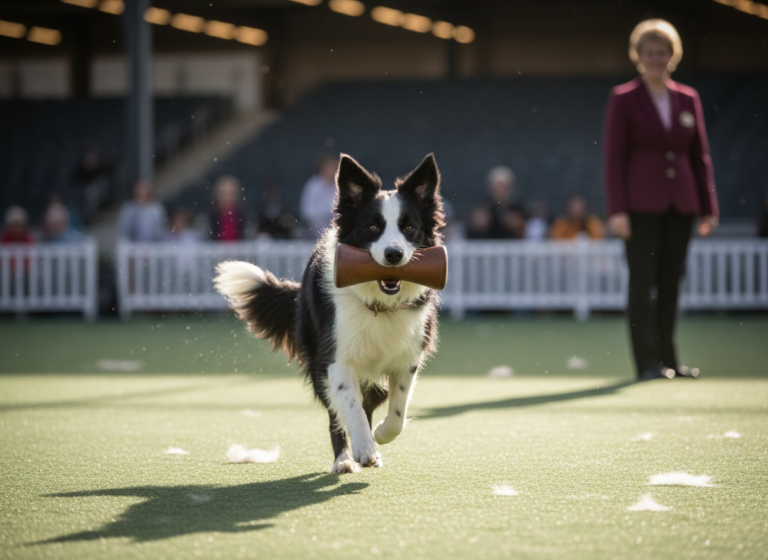
Have you ever found yourself juggling your phone, keys, a leash, and maybe a cup of coffee, all while trying to manage an excited pup on a walk? We’ve all been there! It’s in those moments we wish we had an extra hand. Well, what if that extra hand was actually a helpful paw? Imagine your furry best friend proudly trotting by your side, carrying a small bag with your mail or keys inside. It’s not just an adorable trick to show off at the park—it’s a fantastic way to give your brilliant dog a job, boost their confidence, and provide some much-needed mental stimulation.
Teaching your dog to carry a bag is an advanced training exercise that builds upon foundational commands and deepens the communication and trust between you. It transforms a simple walk into a collaborative adventure. In this guide, we’ll break down the entire process into simple, positive, and fun steps. From choosing the right gear to troubleshooting common hiccups, we’ll get you and your pup on the path to becoming the ultimate shopping duo. So, grab your tastiest treats, and let’s get started!
Gearing Up for Success: What You’ll Need Before You Start
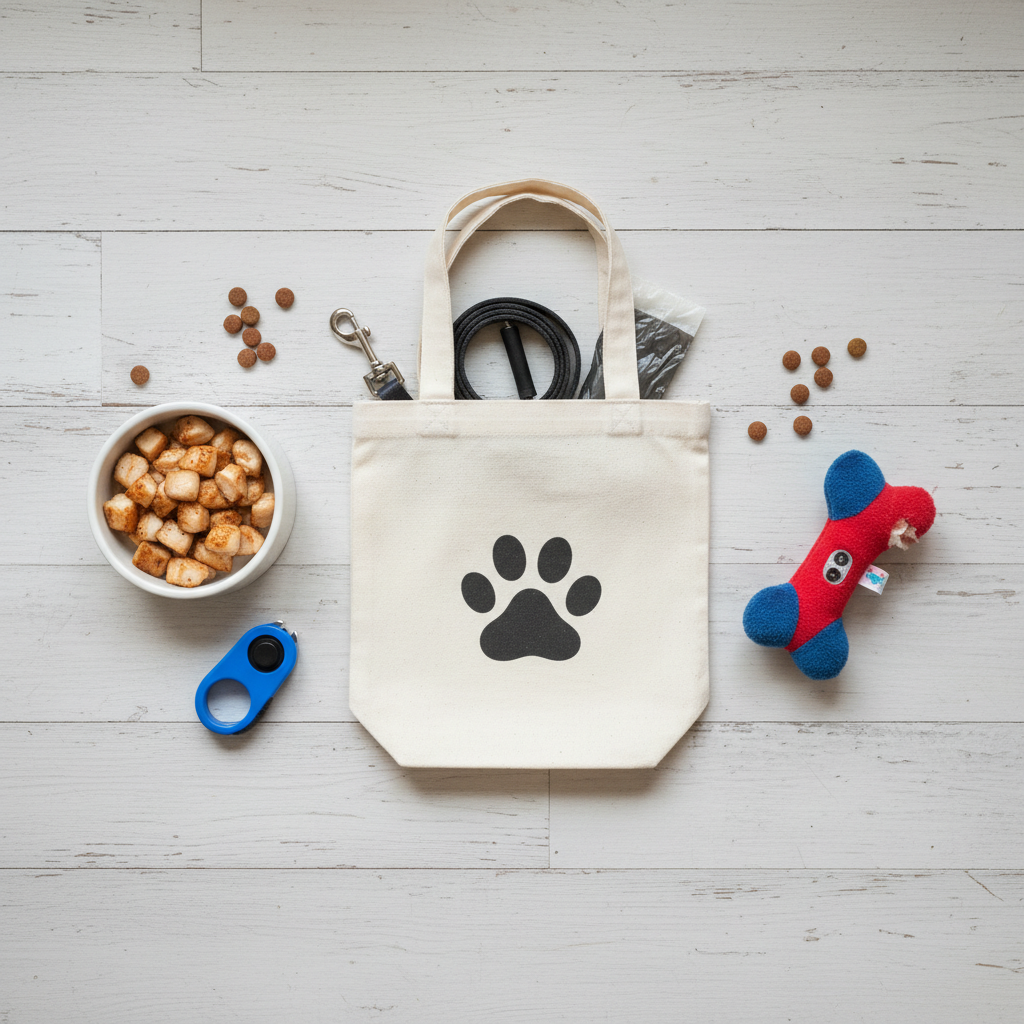
Before you jump into training, gathering the right tools will set you both up for a tail-waggingly good time. The key is to make the experience positive and comfortable for your dog from the very beginning. You don’t need a lot of fancy equipment, just a few key items.
The Perfect ‘Beginner’ Bag
This is the most important piece of equipment! The goal is to start with something incredibly light, soft, and easy for your dog to hold. Think comfort and simplicity.
- Material: Choose items made of soft canvas, felt, or even a plush material. Avoid hard plastic, heavy metal buckles, or anything that could be uncomfortable or clank against their teeth.
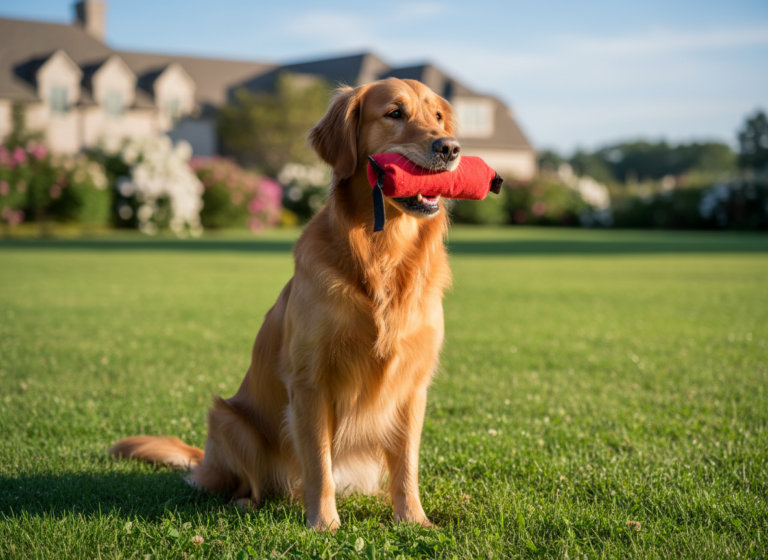
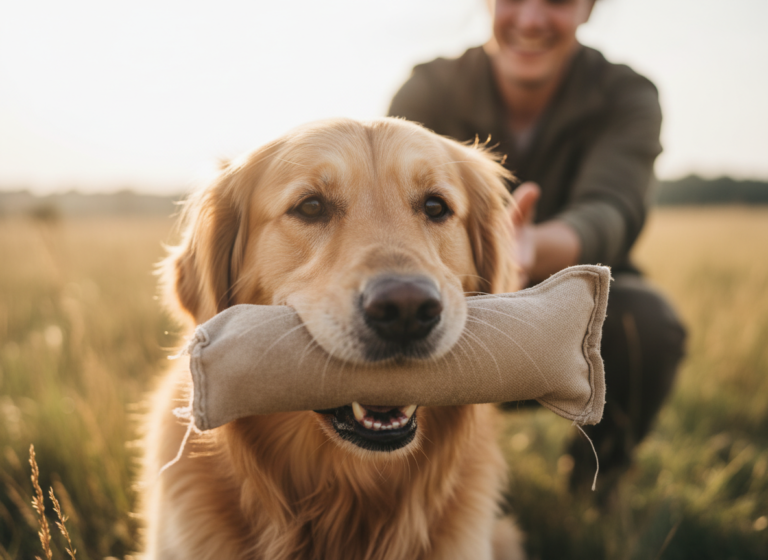
- Handles: Look for soft, rounded handles. A small canvas tote, a soft-sided lunch bag, or even a purpose-made soft dog dummy or toy can work perfectly. In the very beginning, you might even just use a rolled-up dish towel to get them used to the concept.
- Size & Weight: It should be small enough that it doesn’t drag on the ground or trip them up. And to start, it should be completely empty and weigh next to nothing.
High-Value Reinforcements
This is a challenging trick, so you’ll want to break out the good stuff! High-value treats are extra-special goodies that your dog absolutely loves and doesn’t get all the time. They are powerful motivators.
- Examples: Small pieces of boiled chicken, cheese, hot dogs, or commercial training treats that are soft and smelly.
- Size: Make sure the treats are tiny—pea-sized is perfect. You’ll be using a lot of them, and you don’t want your pup to get full too quickly or upset their stomach.
Helpful Training Tools
- Clicker (Optional but Recommended): A clicker is a fantastic tool for marking the exact moment your dog does something correctly. This precision helps your dog understand precisely what behavior earned them the reward. If you’re new to clicker training, you can easily ‘charge’ it by clicking and immediately giving a treat a dozen times until your dog associates the sound with a reward.
- A Quiet Training Space: Start your sessions indoors in a familiar room with minimal distractions. A quiet hallway or living room is a great place to begin, as it prevents your dog from getting sidetracked by squirrels, sounds, or other people.
Step-by-Step Guide: Building a Reliable ‘Take It’ and ‘Hold’
This is where the magic happens! We’re going to build this behavior piece by piece, ensuring your dog understands and enjoys every step. Remember to keep sessions short (5-10 minutes max) and always end on a positive note. Patience is your best friend here!
Step 1: Get Friendly with the Bag (‘Touch’)
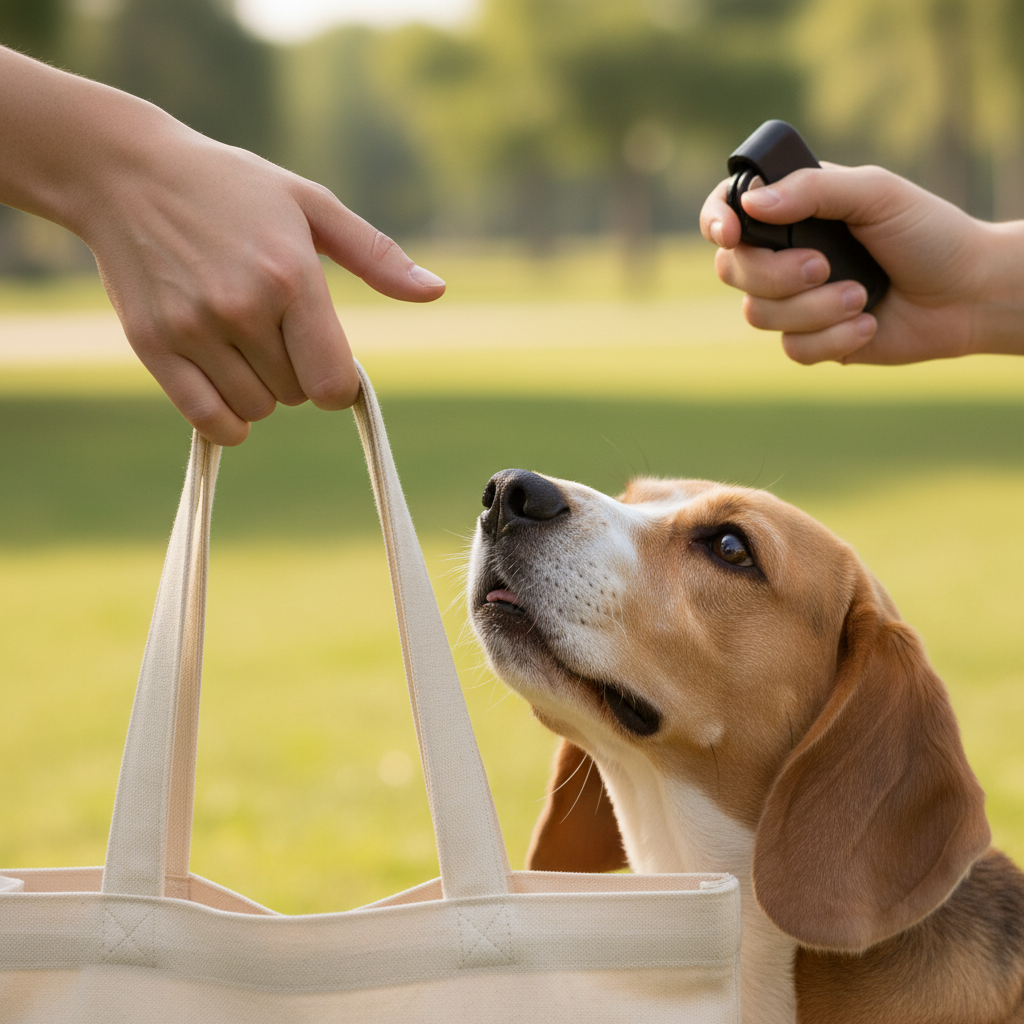
First, we just want your dog to think the bag is the best thing ever. We aren’t even asking them to pick it up yet. Hold the bag out. The second your dog’s nose touches it, click (or use a verbal marker like “Yes!”) and give them a treat. Repeat this a few times until your dog is eagerly booping the bag with their nose to get a reward.
Step 2: Introduce the ‘Take It’ Cue
Now, we’ll encourage them to interact with their mouth. Hold one of the bag’s soft handles near their mouth. They might sniff it, lick it, or gently mouth it. The very instant their teeth or lips touch the handle, click and treat. At this stage, you are rewarding any mouth interaction. Once they are consistently mouthing the handle, you can add your verbal cue. Just before you offer the bag, say “Take it” in a happy, encouraging tone. Then, click and treat for the mouth contact.
Expert Tip: If your dog is hesitant, try rubbing a tiny bit of peanut butter or cream cheese on the handle to encourage them to lick and mouth it.
Step 3: Shape the ‘Hold’
This step requires some patience. We want to go from a quick mouth-touch to a sustained hold. Delay your click by a split second. Your dog will likely keep their mouth on the handle for that extra moment, waiting for the click. Click and treat for that tiny duration! Gradually, over many short sessions, increase the duration you require before you click. Start with one second, then two, then five. This is called ‘shaping’ the behavior. If they drop it before you click, that’s okay! Don’t say anything, just reset and ask for a shorter duration on the next try. Once they can hold it for a few seconds reliably while you support the weight of the bag, you can add the ‘Hold’ cue.
Step 4: Teach a Clean Release (‘Give’)
A reliable ‘give’ or ‘drop it’ is just as important as the hold! You don’t want your pup dropping your belongings just anywhere. While they are holding the bag, present a high-value treat right in front of their nose. They will naturally have to open their mouth to take the treat, causing them to release the bag. The moment they do, say “Give!” and let them have the treat. Practice this until they release the item into your waiting hand on cue. Never play tug-of-war with the bag; we want the release to be gentle and calm.
Putting It All Together: From Holding to Heeling
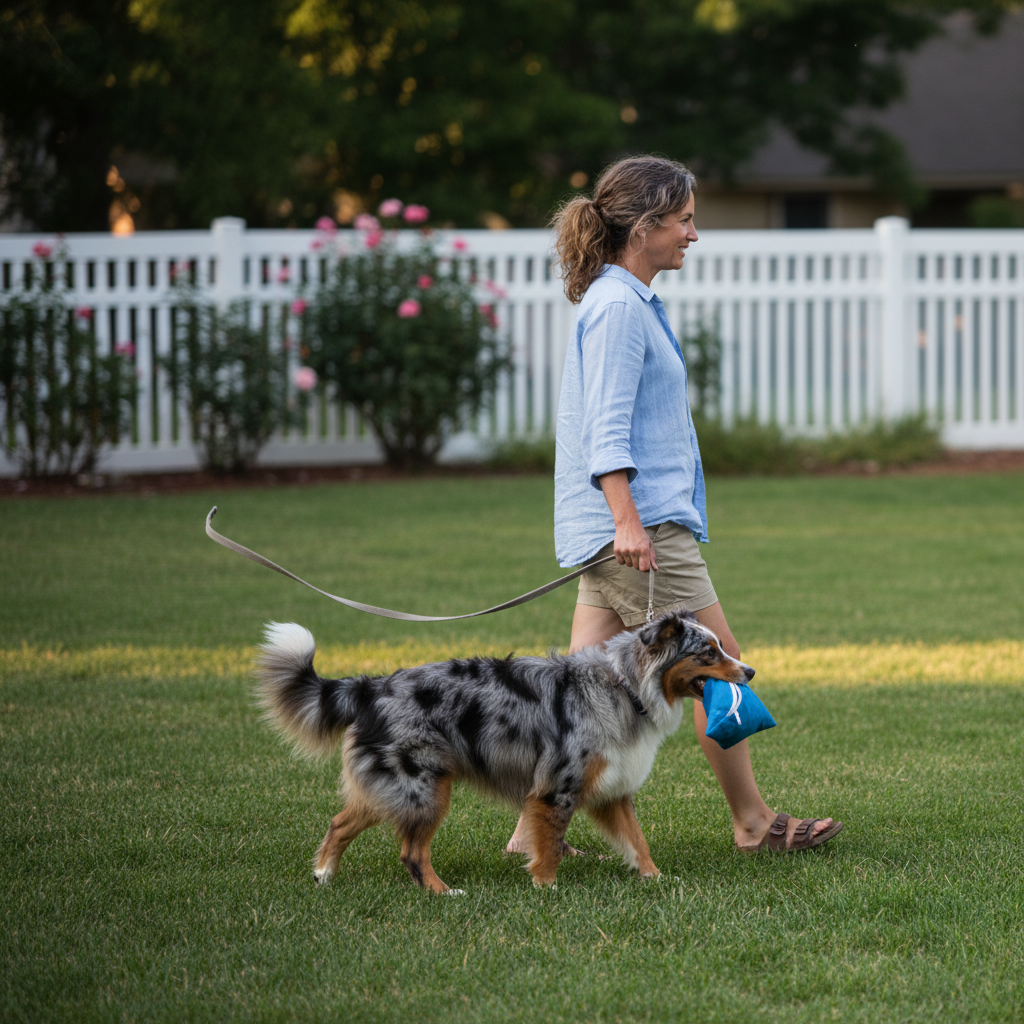
Once your dog has mastered a stationary ‘hold,’ it’s time to add some motion! This is a big step for your dog, as it requires them to concentrate on two things at once: walking nicely and holding the bag. Again, we’ll take it slow and make it a super positive experience.
Step 1: One Step at a Time
With your dog in a ‘hold,’ take just one small step backward and encourage them to follow you. If they take that step while still holding the bag, give them a huge reward and lots of praise! It’s a major milestone. Practice this until they can comfortably take one step with you. Then, progress to two steps, then three, building distance very gradually within your quiet training space.
Step 2: Walking in a Straight Line
Now, try walking a short distance across the room. Ask your dog to ‘heel’ (or walk beside you), then give the ‘take it’ and ‘hold’ cues. Walk a few paces, then ask them to ‘give’ it back and reward them enthusiastically. The goal is to keep the leash loose and the energy calm and focused. If they drop the bag, no problem. Simply stop, ask them to pick it up again, and try for a shorter distance.
Step 3: Introducing Turns and New Environments
Once your dog can confidently walk in a straight line indoors while carrying the bag, start adding small challenges. Practice gentle turns. Then, move your training to a low-distraction outdoor area, like your backyard. The new sights and smells will be challenging, so you may need to go back a few steps and practice a stationary ‘hold’ first before adding movement. Keep the sessions short and successful.
Remember: Every dog learns at a different pace. Celebrate the small victories and don’t get discouraged. The journey of training is just as important as the final result!
Oops! Troubleshooting Common Training Hurdles
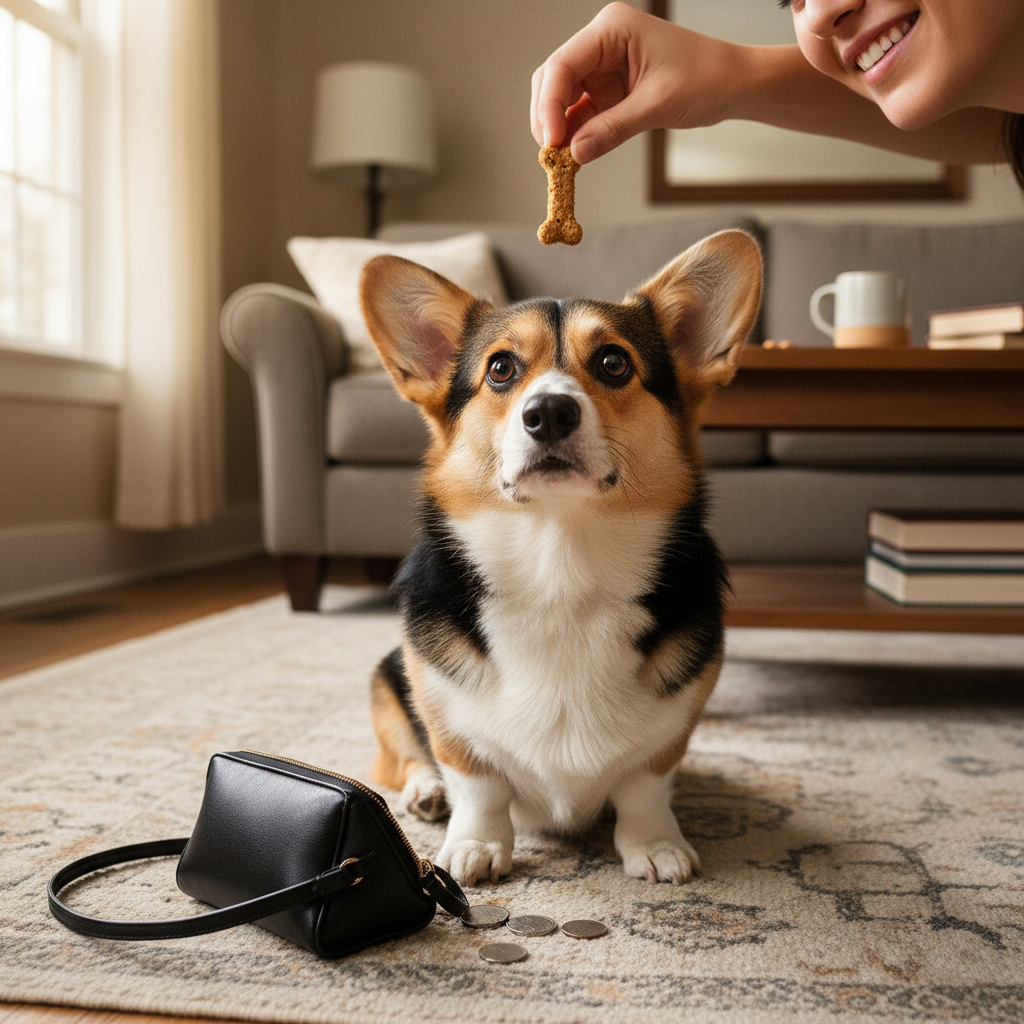
Even with the best plan, you might run into a few little bumps in the road. That’s a completely normal part of dog training! The key is to identify the problem and adjust your approach. Here are some common issues and how to solve them.
My dog keeps dropping the bag immediately.
This usually means you’ve asked for too much, too soon. The ‘hold’ duration is too long for their current level of understanding. Go back to rewarding for a split-second hold and build the duration up much more slowly. Also, make sure your treats are exciting enough to make holding the ‘boring’ bag worthwhile!
My dog starts chewing on the handle.
Chewing is a natural canine behavior, but we don’t want them gnawing on our belongings! If this happens, it could be a sign of excitement or uncertainty. Immediately ask for a ‘give’ to interrupt the chewing. On the next try, be ready to click and treat for a calm, gentle hold before the chewing starts. You can also use a less appealing object for training, like a simple canvas dummy, and save the ‘real’ bag for when the behavior is solid. Avoid fabric that is too similar to their soft toys.
My dog is a pro indoors but forgets everything outside.
This is a classic case of not ‘proofing’ the behavior. Dogs don’t generalize well, meaning they may not understand that a command learned in the living room applies to the park. When you move outside, you have to go back to basics. Start in a quiet backyard and practice a stationary ‘hold’ first. Reward heavily for focus. Slowly re-introduce walking, keeping distances very short. You are essentially re-teaching the skill in a more distracting environment.
| Problem | Quick Solution | Underlying Reason |
|---|---|---|
| Dropping the Bag | Reduce hold time; increase treat value. | Asking for too much duration too soon. |
| Chewing the Handle | Reward a gentle mouth; use the ‘give’ cue. | Excitement, anxiety, or object is too toy-like. |
| Won’t Pick It Up | Make the bag more interesting (scent); break down the ‘take it’ step further. | Hesitation, confusion, or lack of motivation. |
| Distracted Outdoors | Go back to basics in the new environment; manage distractions. | Lack of generalization; overstimulation. |
Safety First: Keeping Your Shopping Buddy Happy and Healthy
Teaching your dog to carry a bag is a delightful trick, but it comes with responsibilities. Your dog’s safety and comfort must always be the top priority. This is about fun and enrichment, not turning your dog into a furry pack mule.
Mind the Weight
This cannot be stressed enough: the bag should be virtually empty or carry only a single, feather-light item. Think a single piece of mail, a tissue packet, or your plastic house keys (not a heavy janitor-style key ring). Dogs are not built to carry significant weight in their mouths for extended periods. It can cause strain on their neck, jaw, and teeth. This trick is purely for novelty and mental engagement.
Choose the Right Bag Design
Not all bags are created equal in terms of safety. Pay close attention to the design:
- Soft Handles: Ensure the handles are soft, flexible, and free of any hard plastic or metal components that could chip your dog’s teeth.
- No Long Straps: Avoid bags with long shoulder straps that could get tangled in your dog’s legs and cause a fall or injury.
- Secure Closures: Make sure there are no zippers or clasps that your dog could accidentally ingest. An open-top tote or a bag with a simple velcro closure is safest.
Read Your Dog’s Body Language
Your dog will tell you if they are uncomfortable—you just need to know how to listen. Watch for signs of stress, such as:
- Averting their gaze
- Tucked tail
- Excessive panting or drooling
- Shaking their head frequently
- Hesitation or refusal to pick up the bag
If you see any of these signs, stop the session immediately. Training should always be a positive and enjoyable activity. Forcing your dog to do something they find stressful will only damage their trust and enthusiasm for training.
Always Supervise
Never allow your dog to carry a bag or any other object in their mouth without your direct supervision. This ensures they don’t chew and swallow part of it or get it caught on something. This is a team activity that you should only do when you can give them your full attention.
Conclusion
Congratulations! You now have all the tools and knowledge to teach your dog to become your very own shopping buddy. More than just a cute trick, this journey is a powerful way to enhance your communication, build your dog’s confidence, and provide them with a fulfilling ‘job.’ Remember that every training session is an investment in your relationship. Celebrate the small successes, laugh at the goofy mistakes, and cherish the process of learning together.
The keys to success are patience, positivity, and consistency. By breaking down the behavior into manageable steps and always keeping your dog’s well-being front and center, you’ll not only teach a fun new skill but also create a stronger, more joyful bond with your four-legged best friend. Now go have some fun and happy training!