Have you ever scrolled through social media and stumbled upon one of those almost unbelievable videos? A big, goofy Labrador or a majestic Golden Retriever, holding a completely raw, fragile egg in its mouth without so much as a hairline crack. It seems like a magic trick, right? Well, it’s not magic—it’s the result of incredible training and a concept known as a ‘soft mouth.’ But this skill is so much more than just a cool party trick to show your friends.
A soft mouth is a dog’s ability to carry an object gently, without biting down and causing damage. It’s a trait that was originally prized in retrieving breeds, who needed to bring back game birds for hunters without crushing them. Today, however, teaching this gentleness has amazing benefits for every dog owner. It enhances bite inhibition, makes playtime safer, and deepens the communication and trust between you and your furry best friend.
In this guide, we’re going to crack the code on this impressive skill. We’ll walk you through everything, from understanding the ‘why’ behind a soft mouth to a clear, step-by-step plan for teaching your dog to hold objects with the delicate touch of a surgeon. Get ready to embark on a fun, rewarding training journey that culminates in the ultimate test: the raw egg challenge!
What is a ‘Soft Mouth’ and Why Does It Matter?
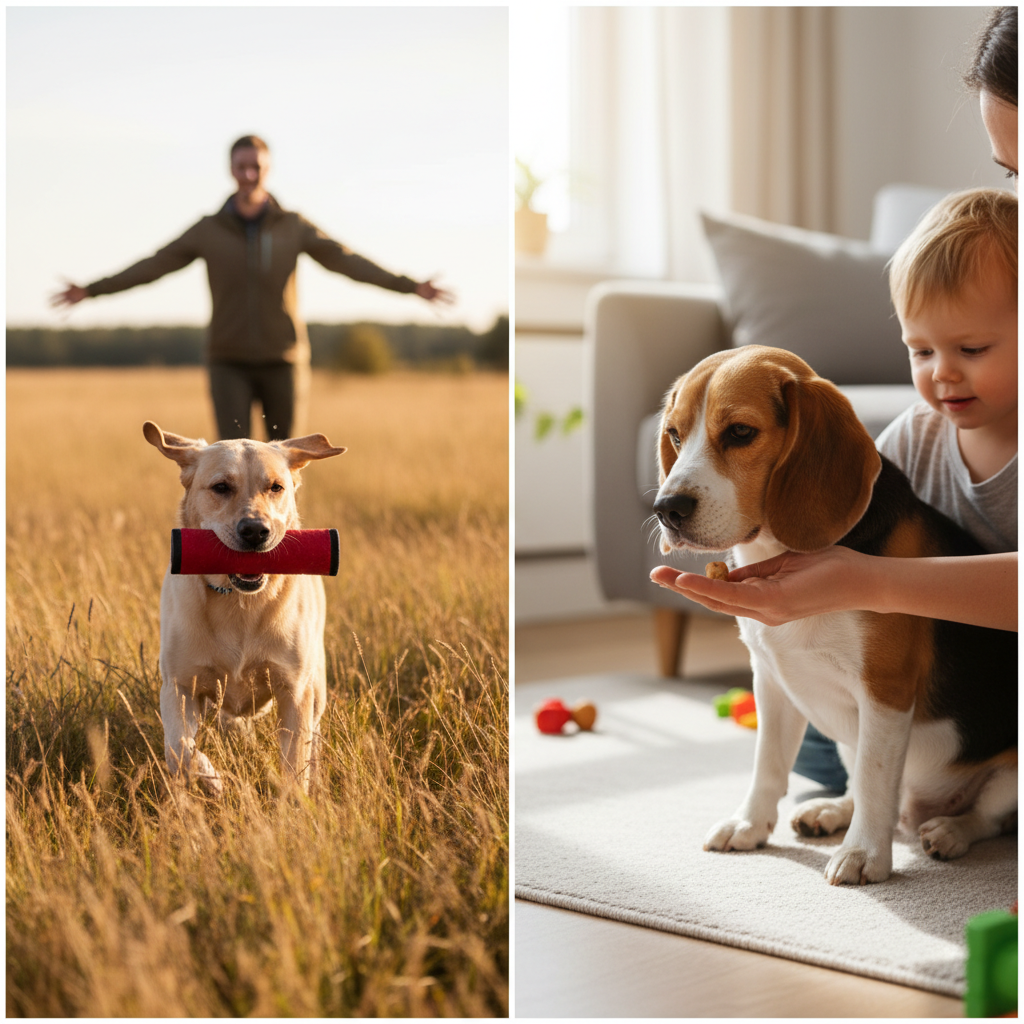
Before we jump into the ‘how,’ let’s dig into the ‘what’ and ‘why.’ At its core, a ‘soft mouth’ is about pressure modulation. It’s a dog’s learned ability to control the force of their jaw. While some breeds, particularly retrievers and other gundogs, have a natural predisposition for it, any dog can learn to be more gentle. Think of it as the difference between your dog chomping down on a sturdy chew toy versus delicately nibbling a treat from your fingers.
This skill goes far beyond retrieving. It’s directly linked to bite inhibition, which is one of the most critical lessons any dog can learn. A dog with good bite inhibition understands how to use their mouth gently during play and other interactions with people and other animals. Teaching a soft mouth reinforces this concept in a tangible and controlled way.
Practical Benefits for the Everyday Pet Owner:
- Safer Playtime: A dog that understands ‘soft’ is less likely to accidentally puncture a toy (or your hand!) during an exciting game of fetch or tug-of-war.
- Better Manners: It helps teach your dog to take treats from your hand gently, rather than snatching them.
- Builds Confidence and Focus: This type of detailed training requires your dog to think, focus, and exercise self-control, which is fantastic mental stimulation that can help reduce anxiety and boredom.
- Strengthens Your Bond: Working together on a nuanced skill like this builds a powerful two-way line of communication and trust. Your dog learns to trust your guidance, and you learn to better read your dog’s body language.
Expert Tip: A soft mouth isn’t about eliminating a dog’s natural instinct to use its mouth; it’s about channeling that instinct into a controlled, gentle, and cooperative behavior. It’s about finesse, not force.
Getting Started: Tools, Prep, and Safety First!
Alright, are you ready to become your dog’s soft-mouth sensei? Great! Like any successful project, preparation is key. Rushing into the egg challenge without laying the proper foundation is a recipe for a scrambled mess. Let’s gather our tools and set the stage for success.
What You’ll Need:
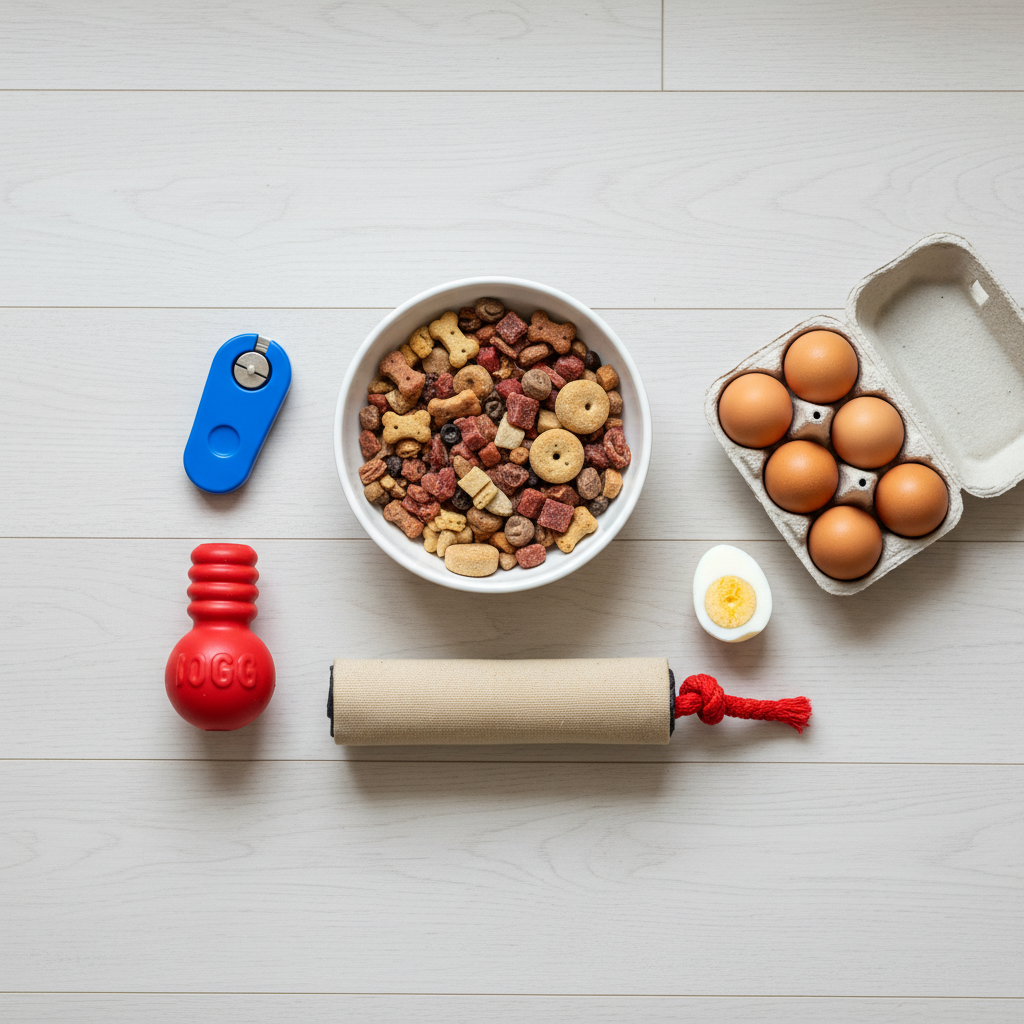
- High-Value Treats: This isn’t the time for boring kibble. You need extra-tasty, pea-sized treats that will really motivate your dog. Think small pieces of chicken, cheese, or their absolute favorite commercial training treat.
- A Clicker (Optional but Recommended): A clicker is a fantastic tool for marking the exact moment your dog does something right. It provides clear, precise communication. If you’re not using a clicker, choose a consistent marker word like ‘Yes!’.
- A Progression of Objects: The secret is to start easy and gradually increase the difficulty. Gather a few items like:
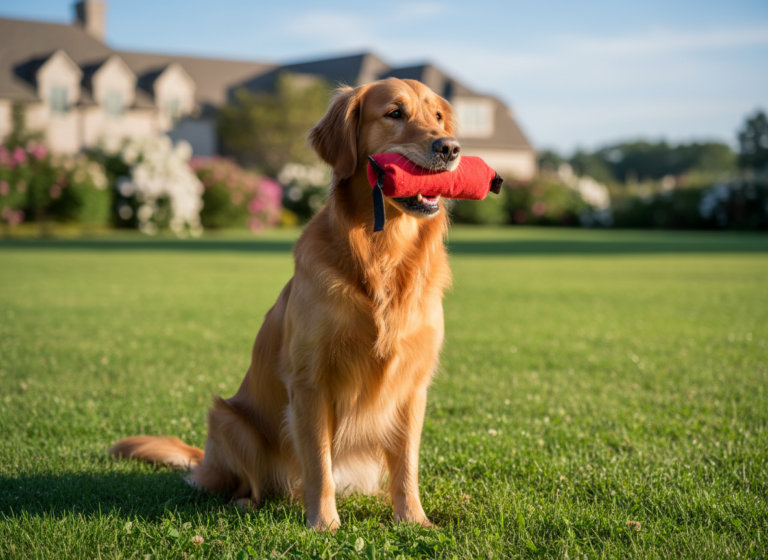
- A favorite sturdy toy (e.g., a rubber bone or canvas dummy)
- An object with a different texture (e.g., a plastic water bottle or a wooden block)
- A slightly more delicate object (e.g., a hard-boiled egg or a soft piece of fruit like a peach)
- The grand finale: A raw egg!
- A Cleanable Space: Especially for the final stages, train in an area that’s easy to clean, like a kitchen with a tile floor or an outdoor patio. Accidents will happen!
Safety and Mindset:
Before you begin, get into the right headspace. This must be a positive, fun game for your dog. Never force an object into your dog’s mouth. Your role is to encourage, shape, and reward their choices. Keep sessions short—just 5-10 minutes once or twice a day is perfect. Always end on a positive note, even if you don’t make huge progress. The goal is to build your dog’s confidence and love for the ‘gentle’ game.
The Step-by-Step Guide to Teaching the ‘Hold’ Command
This is where the magic happens! We’re going to build this behavior piece by piece. Remember to be patient and celebrate the small wins. Each step is a building block for the next.
Step 1: Introduce the ‘Hold’ Cue with a Familiar Toy
Start with your dog’s favorite sturdy toy. The goal here is just to teach the concept of holding something on cue without a frantic game of fetch involved.
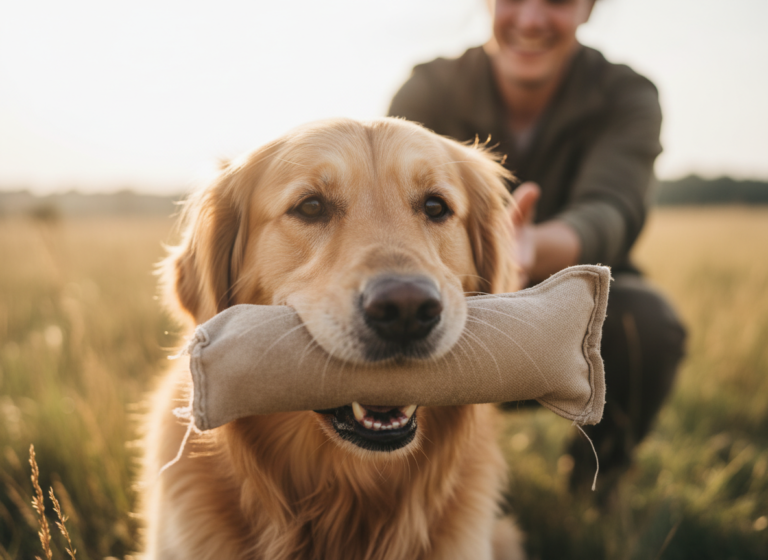
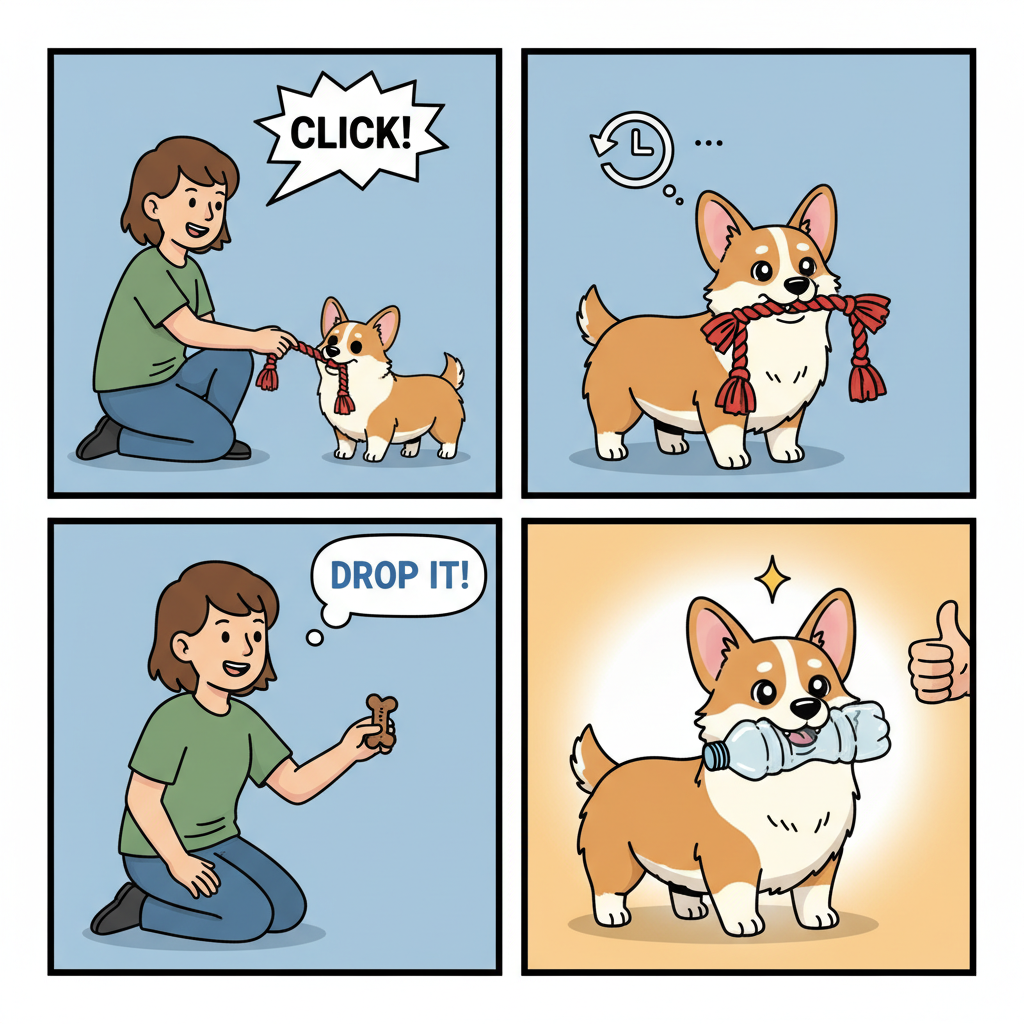
- Hold the toy out to your dog. The moment their mouth touches it, click (or say ‘Yes!’) and give them a treat. Repeat this several times.
- Next, wait for them to put their mouth around the toy for even a split second before you click and treat.
- Once they’re reliably mouthing the toy, add your verbal cue. Say ‘Hold’ just as they are about to take it.
- Gradually increase the duration. Ask for a one-second hold before you click/treat, then two seconds, then three. Keep it short and successful!
Step 2: Introduce the ‘Drop It’ or ‘Give’ Cue
A reliable release is just as important as a good hold. You need a clear way to tell your dog the job is done.
- While your dog is holding the toy, present a high-value treat near their nose. As they open their mouth to take the treat (and thus drop the toy), say your cue, ‘Drop it’ or ‘Give.’
- Praise them enthusiastically when they release the toy.
- Practice this until your dog starts to release the object on the verbal cue alone, even before you show the treat. Always reward the release.
Step 3: Generalizing the ‘Hold’ with New Objects
Now we teach your dog that ‘Hold’ applies to more than just their favorite toy. This step is crucial for teaching them to adjust their jaw pressure.
Introduce a new object, like a plastic bottle or a wooden spoon. Go back to the beginning of Step 1 with this new item. Because they already understand the ‘Hold’ game, they should progress much faster. Click and reward for any gentle interaction, then for a brief hold, and then for duration. Practice with several different objects of varying shapes, sizes, and textures before moving on to anything fragile.
Remember: If your dog is biting down too hard on a new object, simply go back to an easier item they were successful with. Build their confidence back up before trying the more challenging object again.
The Grand Finale: Introducing the Raw Egg
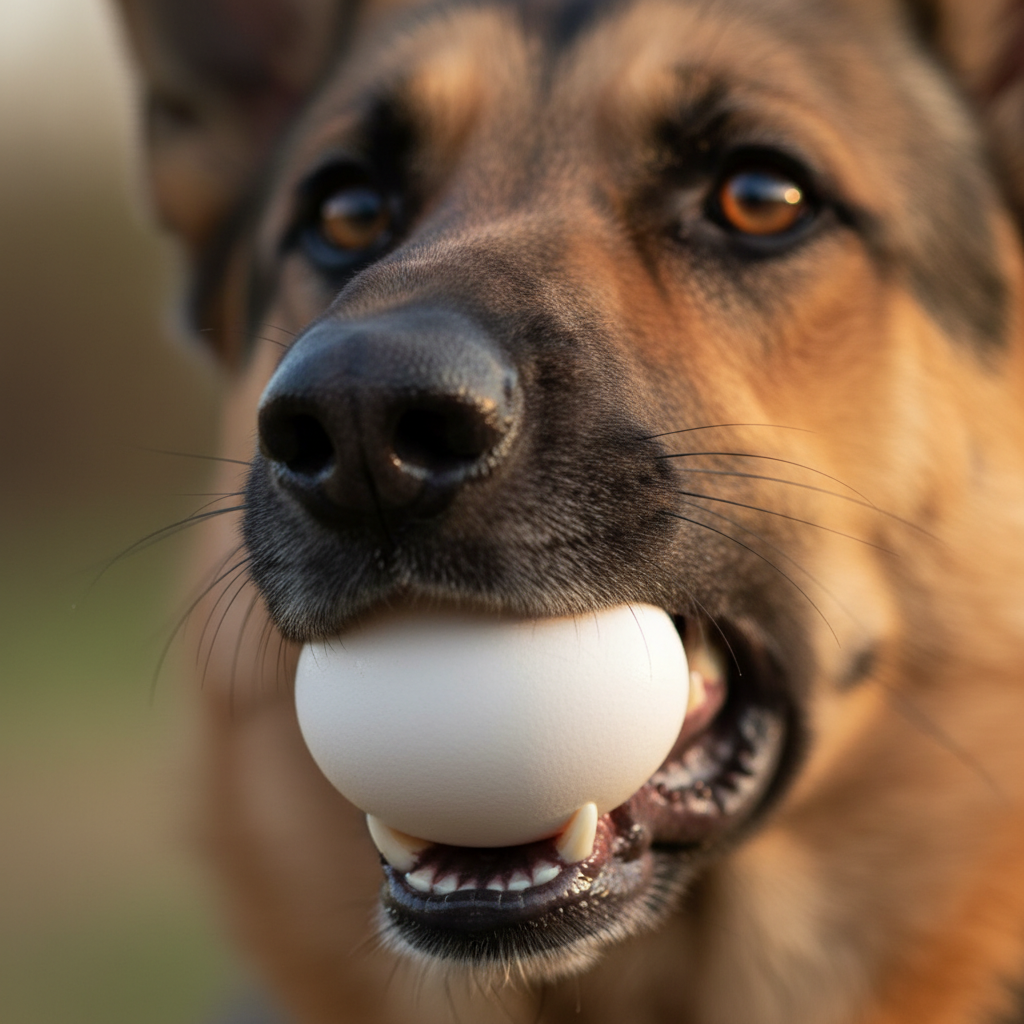
Okay, this is the moment of truth. You’ve built the foundation, your dog understands ‘Hold’ and ‘Drop it’ with various objects, and you’ve practiced with semi-delicate things like a hard-boiled egg. It’s time to introduce the raw egg. The key here is to lower your expectations and raise your patience level. This is advanced stuff!
Setting the Scene for Success
Choose a calm, quiet time for this session. Make sure your dog has had some exercise but isn’t overly tired. Have your super-special treats ready and your easy-to-clean floor prepared.
- Just the Presence: Start by simply showing your dog the egg in your hand. Let them sniff it. Click and treat for any calm, gentle investigation. We want to build a positive association with the egg itself.
- Rewarding Gentle Touch: Hold the egg in your palm. Ask for a ‘Hold.’ If your dog’s mouth touches the egg with any gentleness at all—even just a soft lip brush—click and treat immediately. This is the most critical stage. You are rewarding the absence of pressure.
- The Briefest Hold: After a few successful gentle touches, see if they will close their mouth around the egg for a fraction of a second. Be ready to click and treat the instant they do. Your timing here is everything.
- Building Duration: If you get a successful, uncracked hold for a split second, praise them like they just won the lottery! In your next session, see if you can get a full second. Then two. This step could take days or even weeks. Do not rush it. The goal is a perfect, gentle hold, not a fast one.
When your dog successfully holds the raw egg, ask for a ‘Drop it’ into your waiting, cupped hand. And then, celebrate! You and your dog have accomplished something truly special that speaks volumes about your relationship and training skills.
Troubleshooting: Cracked Eggs and Common Stumbles
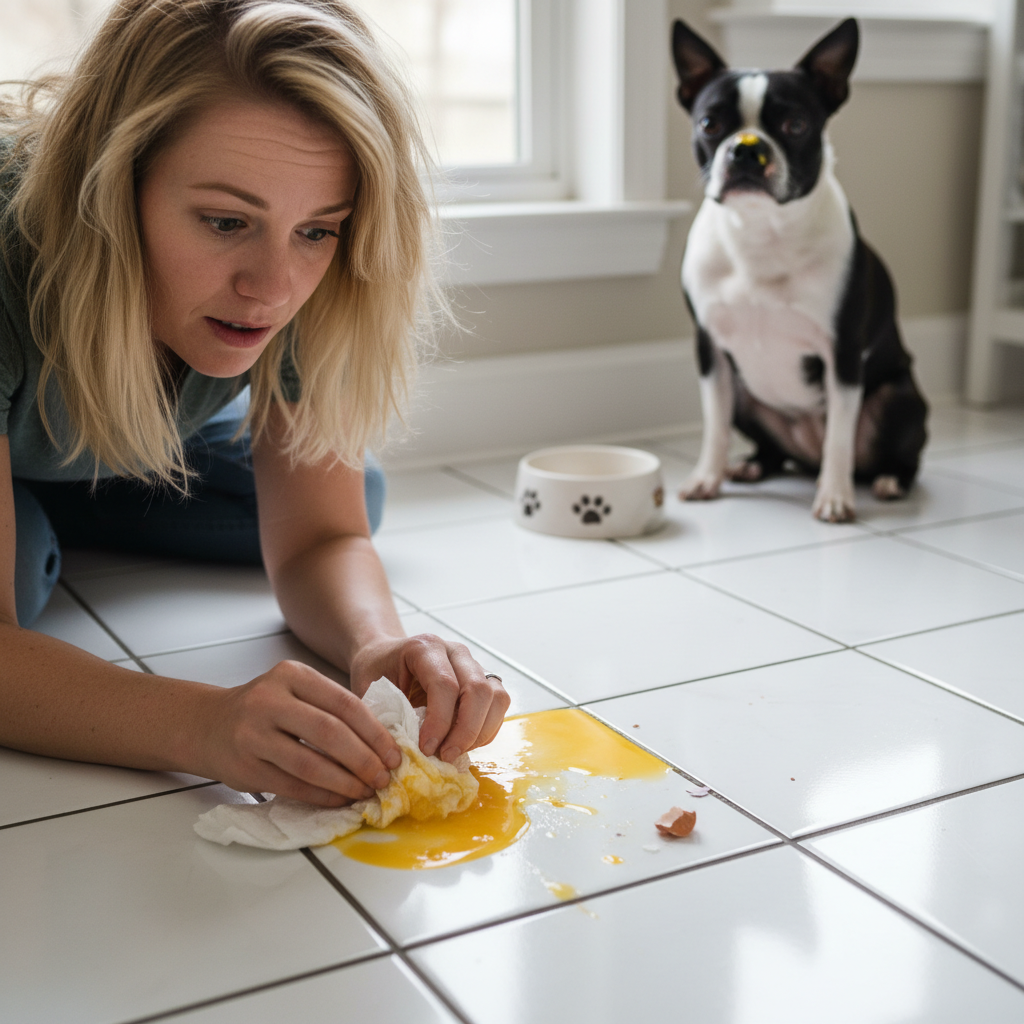
Training is never a straight line, and when you’re dealing with something as unforgiving as a raw egg, you’re bound to hit a few bumps. Don’t get discouraged! A cracked egg isn’t a failure; it’s just data. Here’s how to handle the most common challenges.
‘My dog immediately crushed the egg!’
This is the most common issue, and it’s a clear sign you’ve moved too fast. It’s not your dog’s fault! It just means the gap between the last object (e.g., a hard-boiled egg) and the raw egg was too big. The solution: Go back a few steps. Spend several more sessions rewarding an incredibly gentle hold on a hard-boiled egg or a piece of fruit like a tomato. You need to build a stronger history of reinforcement for gentleness before re-introducing the raw egg.
‘My dog won’t even touch the egg.’
Hesitation can happen for a few reasons. The egg might be cold, have a weird texture, or your dog might be sensing your own anxiety about it. The solution: Make the egg the best thing ever. Rub a tiny bit of peanut butter or cream cheese on it. Or, simply go back to rewarding tiny interactions. Click/treat for a sniff. Click/treat for a nose bump. Rebuild their confidence that interacting with this strange white object is a fun and rewarding game.
‘My dog holds it for a second and then spits it out.’
This often means the dog doesn’t see the value in holding the object. The solution: Increase the value of your reward. Are you using their absolute favorite, can’t-resist-it treat? Also, make sure you are clicking/treating while they are still holding the egg (if possible by treating with your other hand), not after they’ve already spit it out. You want to reward the action of holding itself.
Ultimately, remember that some dogs, particularly those from terrier or bully breeds with a naturally harder bite, may find this challenge much more difficult than a retriever. It may or may not be possible for every single dog, and that’s okay! The real prize is the journey and the skills in gentleness you teach along the way, not just the final photo-op.
Conclusion
So, can your dog hold an egg? With time, incredible patience, and a positive approach, the answer for many dogs is a resounding yes! But as we’ve discovered, this challenge is about so much more than a single, fragile object. It’s a beautiful demonstration of the trust, communication, and deep bond you share with your dog.
Through this process, you’ve done more than just teach a trick. You’ve refined your dog’s self-control, enhanced their bite inhibition, and spent quality time engaging their brilliant mind. You’ve learned to be a more precise and patient trainer, and your dog has learned to trust your guidance in new and exciting ways.
Whether your dog becomes an egg-holding champion or simply learns to be a bit gentler with their toys, celebrate your progress. Every step forward is a victory. The journey of mastering the soft mouth challenge is a testament to your partnership. Now, give your amazing dog a well-deserved scratch behind the ears—you’ve both earned it!