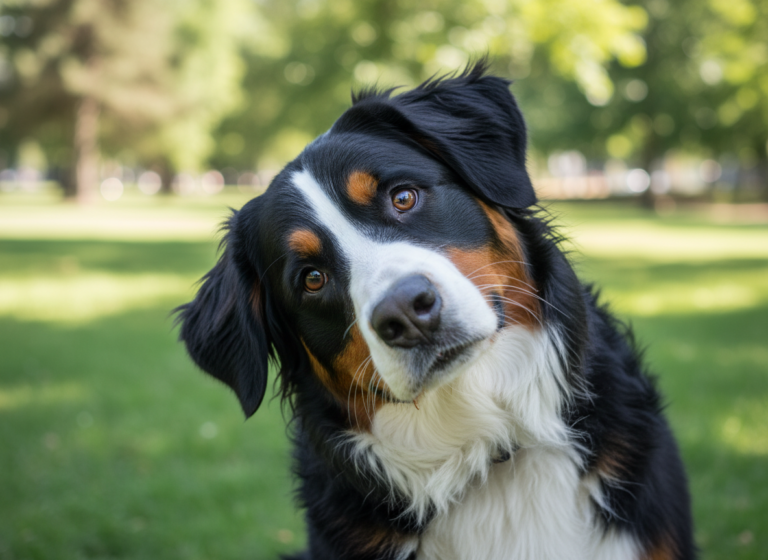
Hey there, fellow dog lovers! Are you always on the lookout for fun new ways to challenge your furry friend and show off their smarts? If so, you’re in for a treat. Today, we’re diving into one of the most charming and amusing tricks around: teaching your dog to kiss their own reflection. It’s the ultimate ‘vanity trick’ that’s guaranteed to get a laugh and an ‘aww’ from anyone who sees it.
But this trick is more than just a cute party piece. It’s a fantastic mental workout for your dog, a wonderful bonding activity for you both, and a great way to practice the principles of positive reinforcement. It requires patience, a good sense of humor, and a pocketful of tasty treats. So, grab your clicker, find a mirror, and let’s teach your pup to admire their own handsome face!
Setting the Stage for Success: What You’ll Need
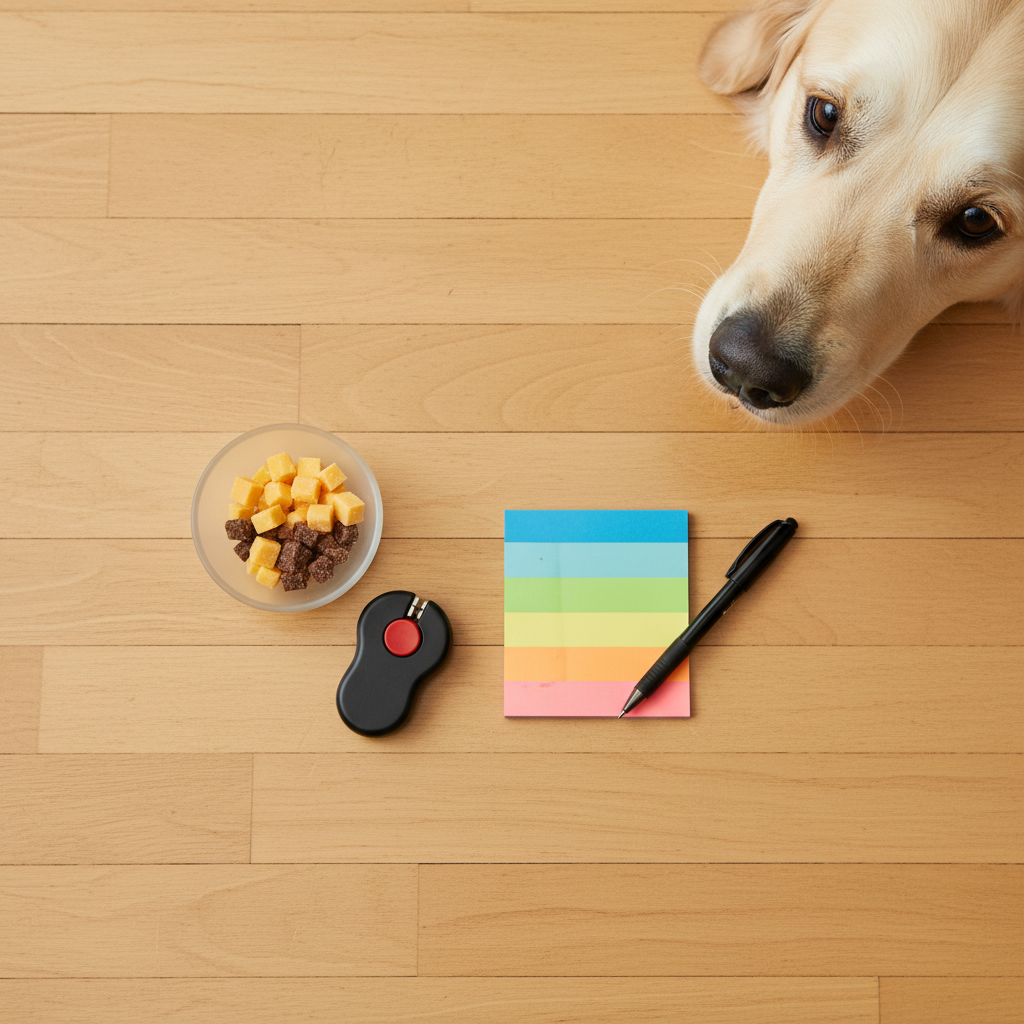
Before you and your pup start gazing into mirrors, it’s best to get all your tools ready. A little preparation goes a long way in making your training sessions smooth, fun, and effective. Think of it as setting up a stage for your furry star to perform on!
Here’s a simple checklist of everything you’ll need:
- A Large, Stable Mirror: A full-length mirror that you can lean securely against a wall or a large, low-hanging wall mirror is perfect. The most important thing is safety—make sure it can’t be knocked over by an enthusiastic pup. The bigger the mirror, the easier it is for your dog to see their ‘new friend’.
- High-Value Treats: We’re not talking about their everyday kibble here. You need the good stuff! Think tiny pieces of cooked chicken, cheese, hot dogs, or their favorite smelly commercial treats. The goal is to make the reward so irresistible that your dog is highly motivated to work for it.
- A Clicker (Optional, but Recommended): A clicker is a powerful tool for marking the exact moment your dog does something right. This precision helps your dog understand precisely what behavior earned them the reward. If you’re not using a clicker, you can use a consistent, short marker word like ‘Yes!’.
- A Removable Target: This will be your secret weapon! A simple sticky note works wonders. Alternatively, a tiny dab of something lick-safe like cream cheese, peanut butter (xylitol-free!), or plain yogurt on the mirror can also work as a starting point.
- A Quiet Training Space: Choose a room with minimal distractions. Turn off the TV, put your phone on silent, and make sure other pets or family members won’t interrupt your session.
- Patience and a Positive Attitude: This is the most crucial ingredient! Every dog learns at a different pace. Keep it light, keep it fun, and be prepared to celebrate the small victories along the way. Your positive energy is contagious!
Mirror, Mirror on the Wall: Your Step-by-Step Guide
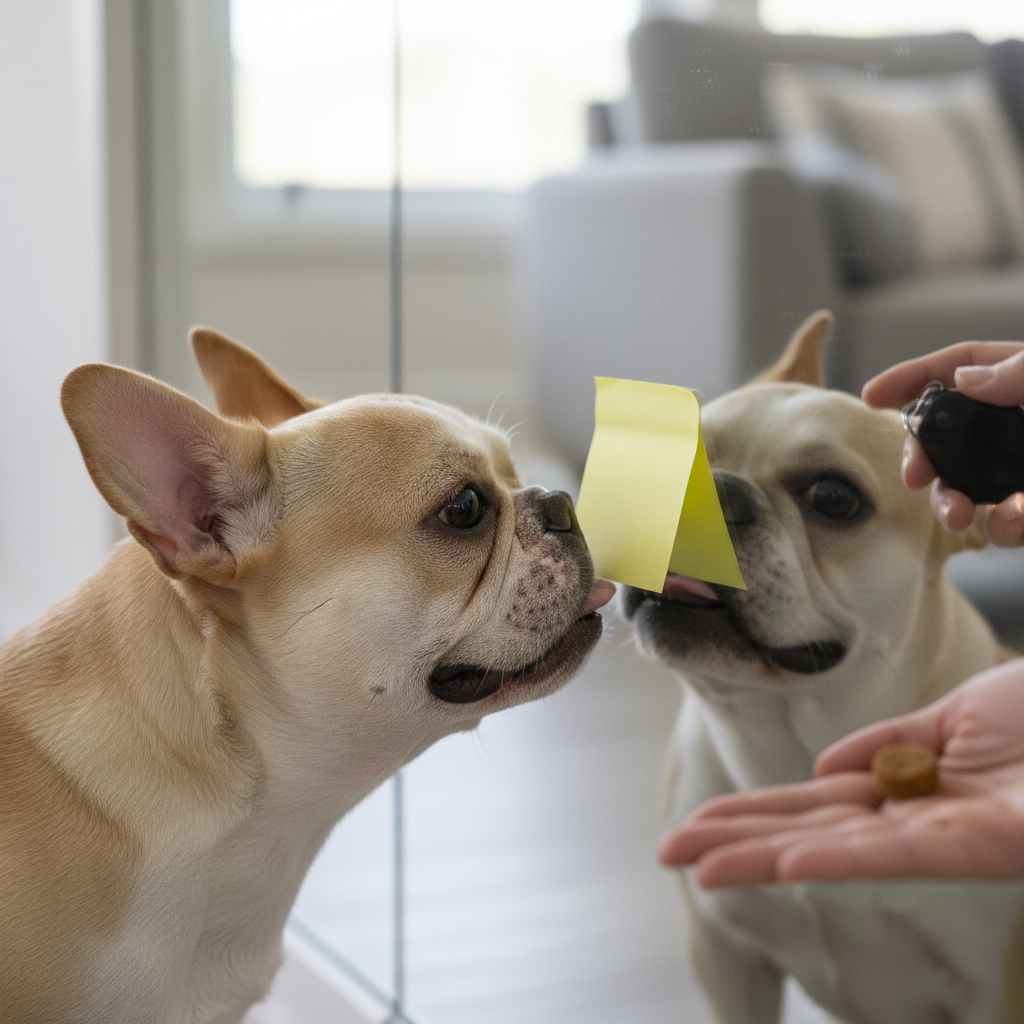
Alright, you’ve got your treats and your mirror is in place. It’s showtime! Remember to keep your training sessions short and sweet—5 to 10 minutes at a time is perfect to keep your dog engaged and prevent frustration. Let’s break this adorable trick down into manageable steps.
- Step 1: The Introduction Agency. First, just let your dog get acquainted with the mirror. Lead them over to it and let them sniff and investigate at their own pace. Many dogs will be curious, some might bark, and others might ignore it completely. Whatever their reaction, reward any calm, neutral behavior with a treat and praise. We want them to associate the mirror with good things from the very beginning.
- Step 2: Place the Target. Take your sticky note and place it on the mirror at your dog’s nose level. This gives your dog a clear, physical object to interact with. Point to the sticky note to draw their attention to it.
- Step 3: Lure the ‘Kiss’. Encourage your dog to touch the sticky note with their nose. You can do this by holding a treat near the note. The very instant their nose makes contact with the note, click your clicker (or say ‘Yes!’) and give them the treat. Repeat this several times. At this stage, we’re just rewarding the physical action of a nose-touch to the target. You can start adding a simple verbal cue here, like ‘Touch’.
- Step 4: Fade the Target. Once your dog is reliably and eagerly booping the sticky note with their nose, it’s time to start fading the prompt. You can do this in a few ways: cut the sticky note into smaller and smaller pieces over several sessions, or switch to a very light, transparent piece of tape. The goal is to have them touch the same spot on the mirror, even with a minimal physical cue.
- Step 5: Go Target-Free and Add the Final Cue. This is the magic moment! Remove the target completely. Point to the spot on the mirror and give your ‘Touch’ cue. When they touch their nose to the glass, have a jackpot party—lots of treats and praise! Now you can start introducing your fun, final cue. Instead of ‘Touch’, start saying something like ‘Who’s that pretty dog?’ or ‘Give a kiss!’ right before they touch the glass. Phase out the ‘Touch’ cue until they respond only to your new, fun phrase.
- Step 6: Generalize the Behavior. Your dog now knows how to kiss their reflection in this mirror. To make the trick solid, practice it in front of other reflective surfaces. Try a different mirror in the house, a shiny appliance in the kitchen, or even a store window (when it’s safe and appropriate). This helps them understand the cue means ‘touch your nose to the shiny thing’ in any context.
Expert Tip: If your dog uses their paw instead of their nose, simply ignore the pawing. Don’t reward it or say ‘no’. Wait for them to offer a different behavior. The moment their nose gets close to the target, encourage them and be ready to click and treat the nose-touch.
What’s My Dog Thinking? Decoding Mirror Reactions
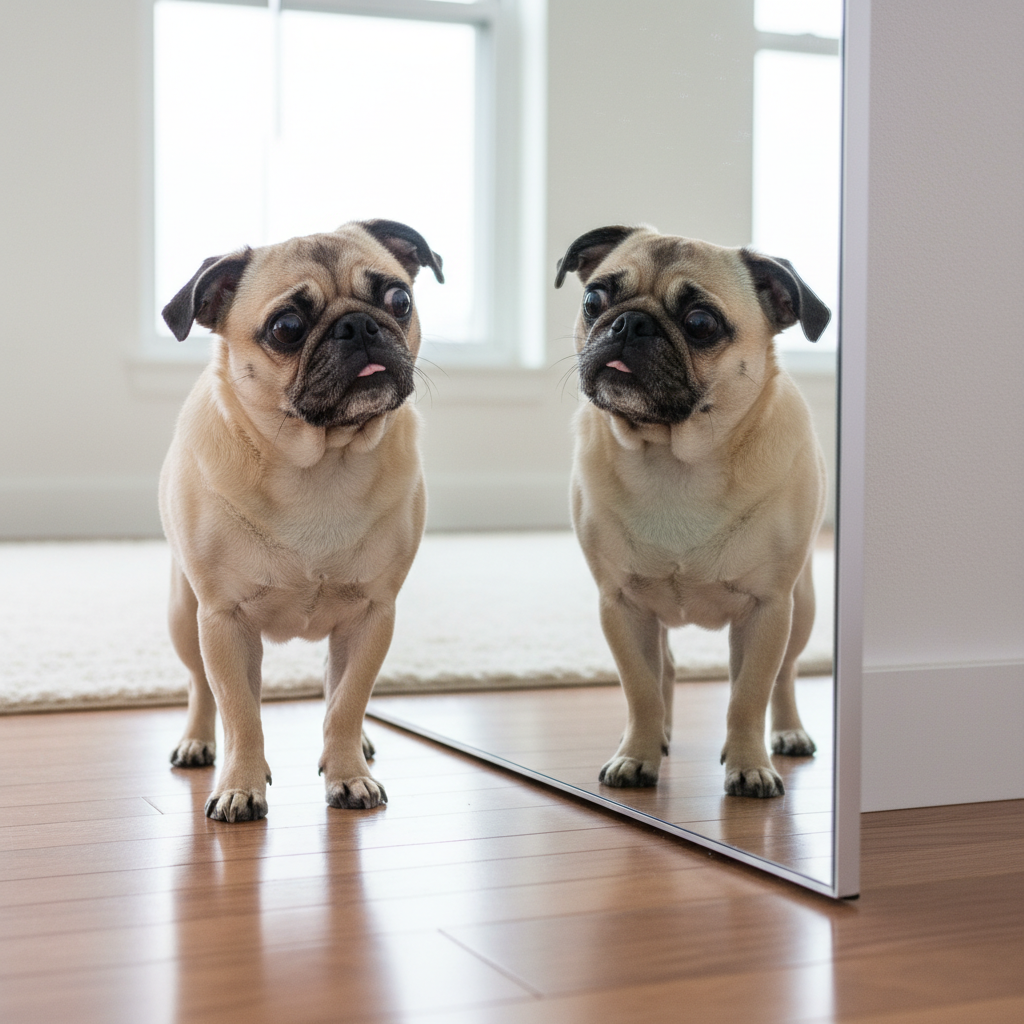
One of the most fascinating parts of this process is watching how your dog reacts to their reflection. It’s important to understand that dogs don’t possess self-recognition in the same way humans, great apes, or dolphins do. They don’t look in the mirror and think, ‘Wow, my fur is looking great today!’ Instead, they perceive the reflection as another dog.
This can lead to a few common reactions when they first encounter a mirror:
- The Socialite: This dog sees the reflection and thinks, ‘A new friend!’ They might try to initiate play by play-bowing, wagging their tail, or whining excitedly. They may even run behind the mirror to find where the other dog went.
- The Guardian: This dog sees a strange dog in their territory. This can result in barking, growling, or raising their hackles. They are acting on a protective instinct, and it’s important not to punish this behavior. Instead, work on creating a positive association with the mirror by tossing treats near it when they are calm.
- The Unimpressed: This dog might glance at the reflection, give it a quick sniff, and then walk away, completely uninterested. For them, the ‘other dog’ has no smell, which is the most important sense for canine communication. No smell means it’s not real or interesting.
Understanding this helps you tailor your approach. If your dog is fearful, you’ll need to go much slower with the introduction phase. If your dog is overly playful, you’ll need to work on focusing their attention on you and the target. And if they’re indifferent? Perfect! They’re a blank slate, ready to learn that interacting with the mirror earns them tasty snacks. This trick isn’t about teaching self-awareness; it’s about teaching a clever targeting behavior in a unique context.
Oops! Troubleshooting Common Training Snags
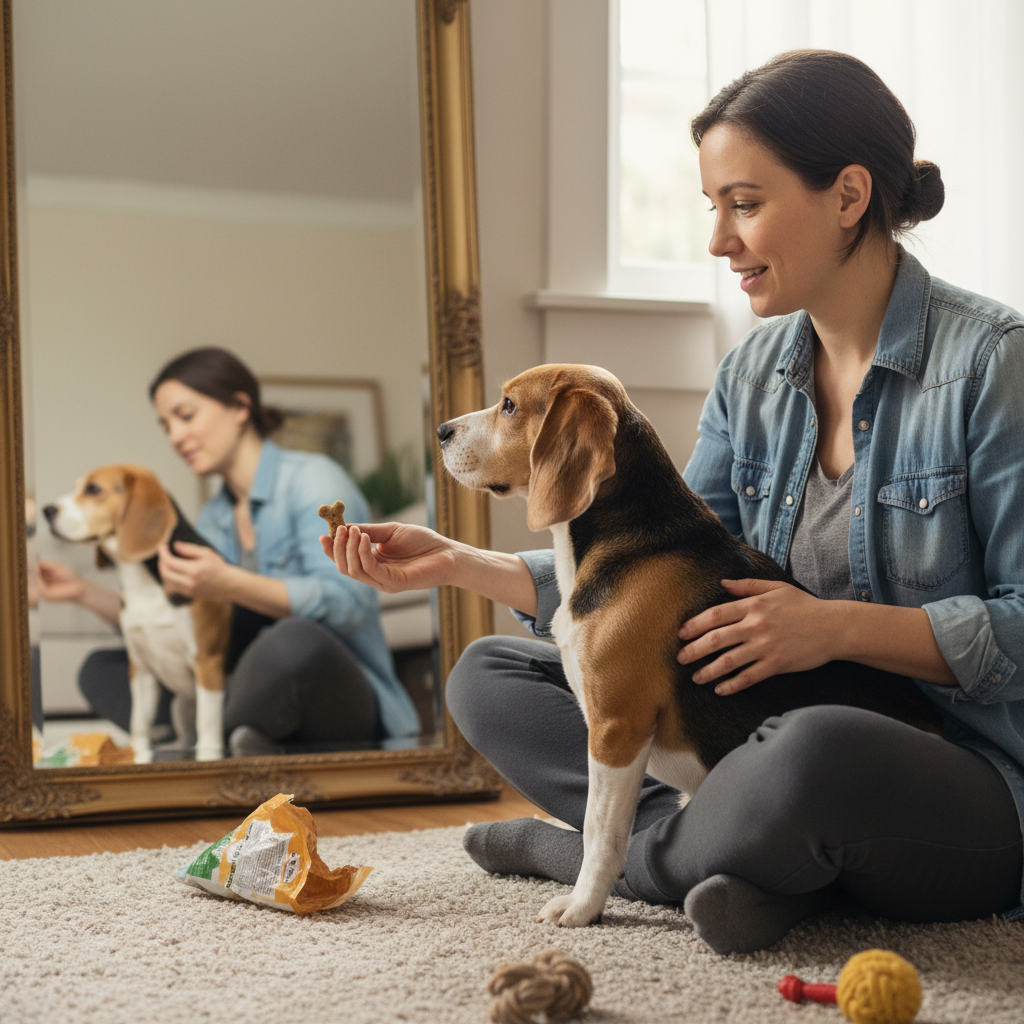
Even with the best plan, you might hit a little bump in the road. Don’t worry, it’s completely normal! Dog training is rarely a straight line. Here are some common hurdles and how to gracefully leap over them.
My dog is scared of the mirror.
If the ‘other dog’ is causing anxiety, take a big step back. Move the mirror to the edge of the room and for a few days, simply ignore it but occasionally toss high-value treats near it. Let your dog approach and get the treats on their own terms. We’re using counter-conditioning to change their emotional response from ‘that’s a scary thing’ to ‘good things happen near that shiny thing’. Don’t force any interaction until your dog is relaxed in the mirror’s presence.
My dog just licks the peanut butter off and doesn’t ‘touch’ the mirror.
This is a common issue with food-based targets! The solution is to switch to a non-edible target, like the trusty sticky note. This forces the dog to perform the ‘touch’ action to get the reward from your hand, rather than just licking the reward off the surface. It separates the action from the reward, which is a key concept in training.
My dog is pawing the mirror instead of using their nose.
A paw-swipe is often a sign of excitement or a bit of frustration. The key here is to have patience and precision. Only click and treat for a nose-touch. Completely ignore the pawing. If your dog paws, wait them out. They will eventually try something else, and the moment their nose moves toward the target, encourage them and be ready to mark that correct behavior. Keeping sessions short can also prevent the frustration that leads to pawing.
We seem to be stuck on one step.
If you feel like you’re not making progress, you’ve likely tried to advance too quickly. Training expert Karen Pryor famously said, ‘If you are not getting the behavior you want, try splitting, not lumping.’ This means breaking the current step down into even smaller, more manageable pieces. Go back to the last step where your dog was super successful, do a few easy repetitions to boost their confidence, and then try the challenging step again, but in a much easier version. Always end your training session on a successful repetition so you both finish feeling good!
More Than Just a Pretty Face: The Real Benefits of Trick Training
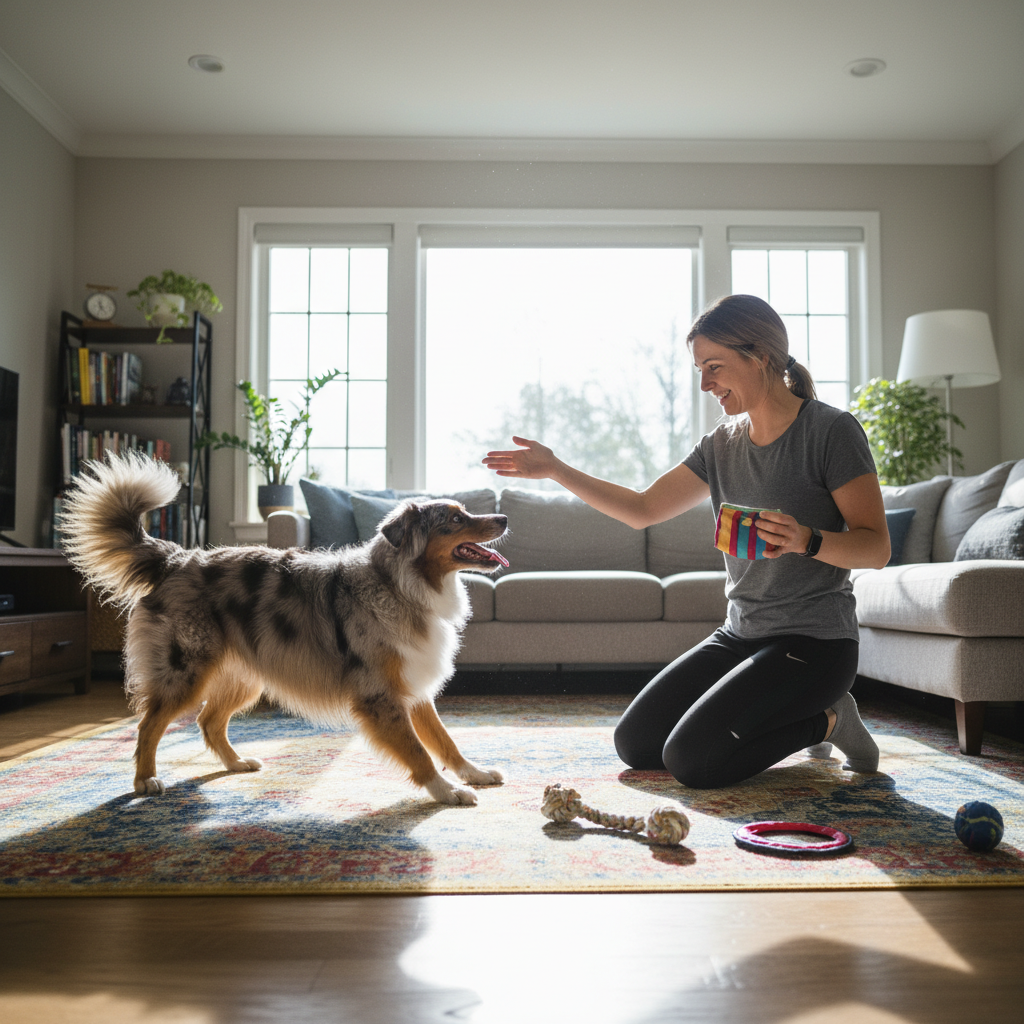
Teaching your dog to kiss their reflection is undeniably cute, but the benefits of trick training go far beyond creating a fun Instagram post. Engaging in these kinds of activities regularly can profoundly improve your dog’s overall well-being and your relationship with them.
- Builds an Incredible Bond: Working together towards a common goal, communicating effectively, and celebrating successes strengthens the trust and partnership between you and your dog. It’s quality time that’s both productive and fun.
- Provides Crucial Mental Stimulation: Dogs were bred to have jobs. While most of our pets are now professional couch potatoes, their brains still crave a challenge. Learning new tricks works their mind, preventing boredom, which in turn can reduce problem behaviors like excessive barking, chewing, or digging.
- Boosts Confidence: For dogs that are a bit shy, anxious, or unsure of themselves, mastering a new skill can be a huge confidence booster. The process of trying something new, figuring it out, and being rewarded for it teaches them that they are capable and that learning is a positive experience. This confidence can spill over into other areas of their life.
- Improves General Manners and Obedience: Trick training teaches your dog how to learn. They become better problem solvers and more attuned to you and your cues. A dog who loves to train is often a dog who is easier to live with and more responsive to everyday commands like ‘come’ or ‘stay’.
In the end, every trick you teach is another word you share in the unique language you’ve built with your dog. It’s less about the trick itself and more about the conversation you’re having along the way.
Conclusion
And there you have it! You’re now fully equipped to teach your dog the delightful vanity trick of kissing their own reflection. Remember that the journey is just as important as the destination. Embrace the funny moments, celebrate the small wins, and don’t be discouraged by the occasional setback. The real prize isn’t just the finished trick, but the stronger bond and deeper understanding you’ll have developed with your amazing canine companion.
So go ahead, give it a try, and get ready to capture some seriously adorable photos. Happy training!