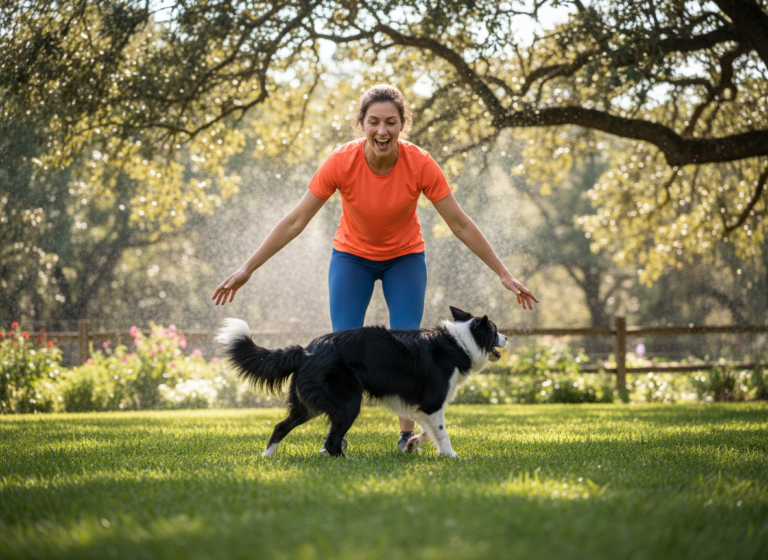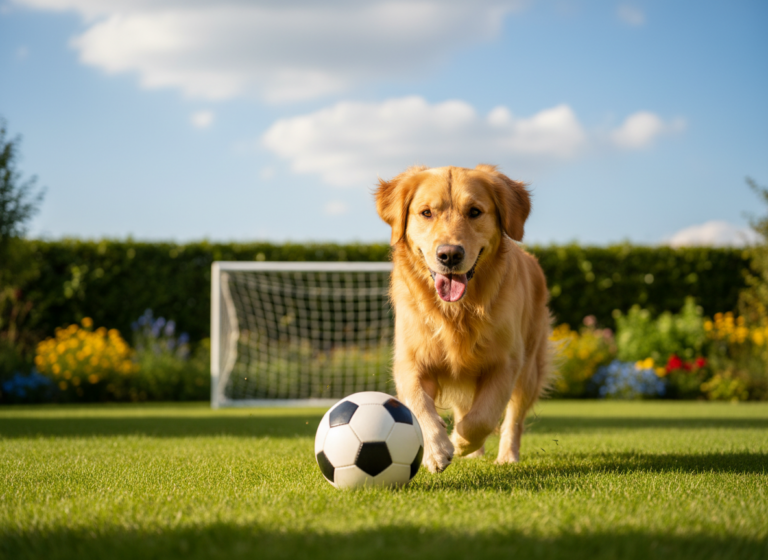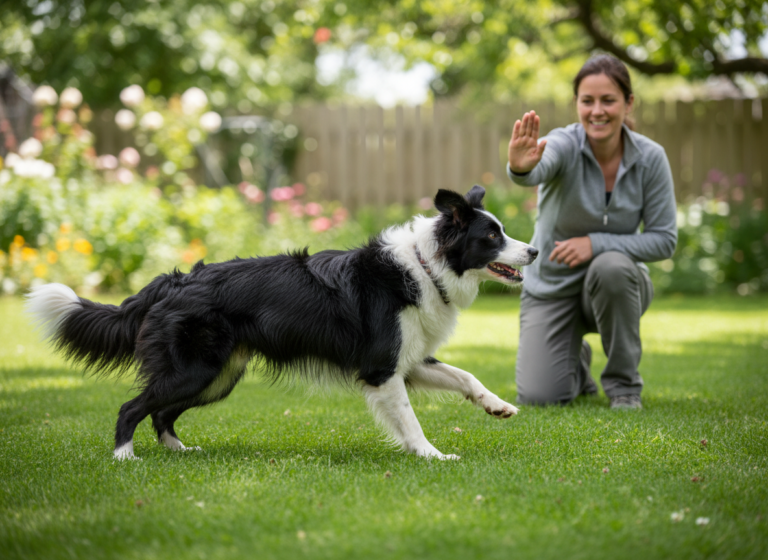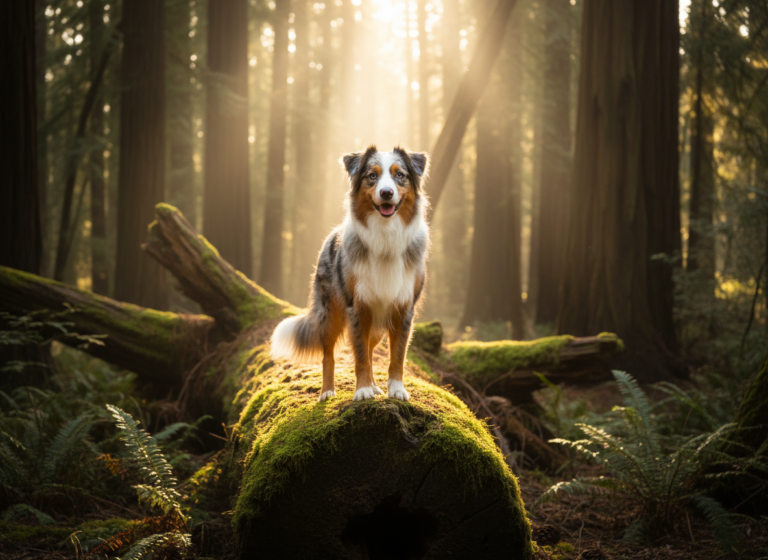
Ever look at your cattle dog mix giving the side-eye to a group of squirrels and think, ‘You’re meant for more than this concrete jungle’? Many of us share our lives with breeds that were born to run, herd, and work, but now find themselves navigating apartment hallways and leash laws. Their ancient instincts are still there, buzzing just beneath the surface, waiting for an outlet. What if you could give them that outlet? Enter Treibball (pronounced try-ball)!
Treibball, which means ‘push ball’ in German, is a fantastic, positive-reinforcement dog sport that’s perfect for urban dwellers. In this game, your dog learns to ‘herd’ large exercise balls into a goal, using only their nose or shoulders. It’s a low-impact, high-energy activity that provides incredible mental and physical stimulation. More than just a game, it’s a way to deepen your communication, strengthen your bond, and give your herding dog the ‘job’ they’ve always craved. Ready to turn your living room into a pasture and your pup into a happy herder? Let’s get rolling!
Gearing Up for Treibball: What You’ll Need
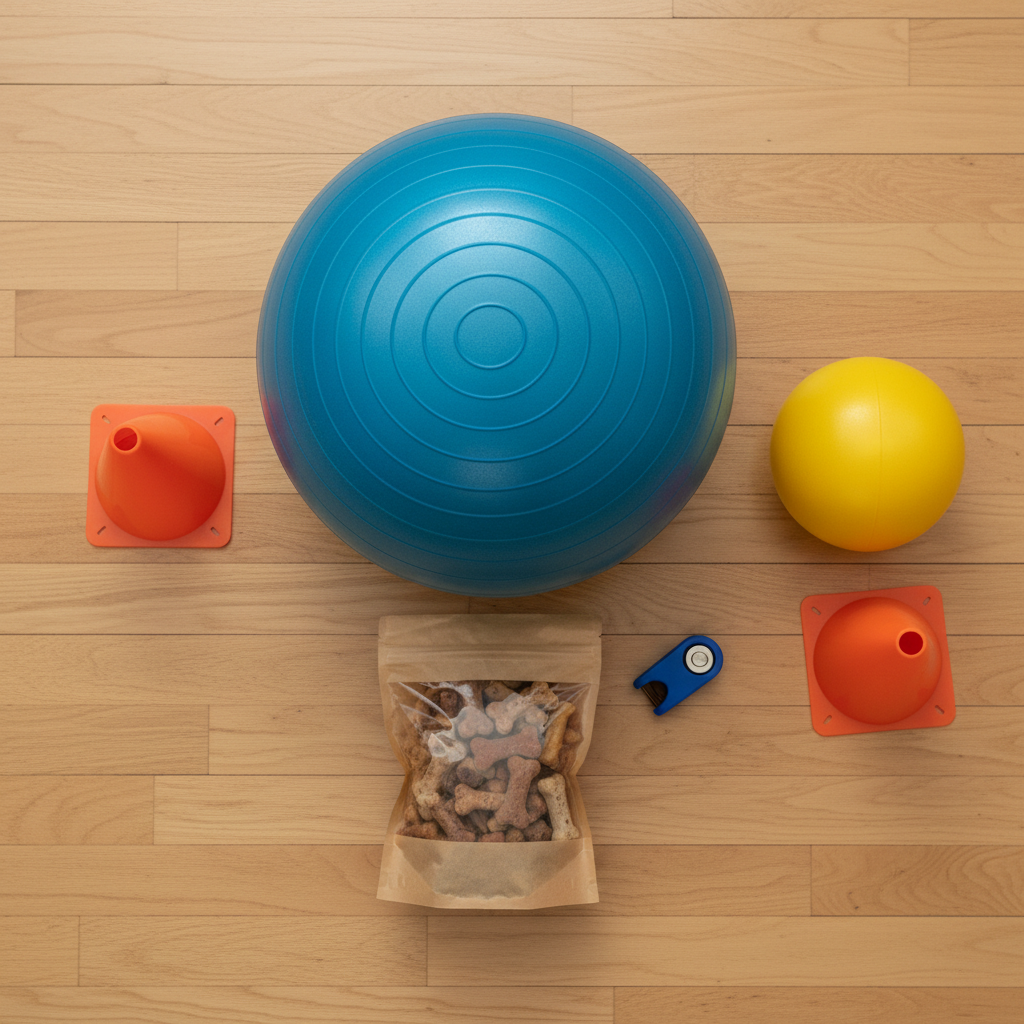
Before you and your furry friend can start your Treibball journey, you’ll need to gather a few key items. The great news is that the setup is relatively simple and doesn’t require a huge investment. Think of it as building your dog’s personal ‘herding’ toolkit. Here’s everything you need to get started:
- The ‘Sheep’ (Exercise Balls): This is the star of the show! You’ll need at least one large inflatable ball, often called a yoga ball or stability ball. When your dog is standing, the ball should ideally be about shoulder-height or slightly taller. Starting with a slightly smaller, lighter ball can be less intimidating for beginners. As you advance, you might work your way up to having multiple balls.
- High-Value Treats: Treibball is built on positive reinforcement, so you’ll need rewards that your dog goes wild for. Think small, soft, smelly treats like tiny pieces of chicken, cheese, or commercial training treats. The goal is a reward that’s quick to eat and exciting enough to keep your dog focused on the game.
- A Clicker (Optional, but Recommended): A clicker is a fantastic tool for marking the exact moment your dog does something right. This precision helps your dog understand precisely what behavior earned them the treat, speeding up the learning process significantly. If you’re not using a clicker, a consistent verbal marker like a sharp ‘Yes!’ works too.
- A Designated Training Space: You don’t need acres of land! A spacious living room (with fragile items moved aside), a fenced backyard, or a quiet corner of a park will do just fine. The key is to have enough room for the ball to roll and for your dog to maneuver around it. Aim for a space that’s at least 15×15 feet to start.
- A ‘Goal’: You need a target for your dog to push the ball towards. This can be as simple as your own legs as you sit on the floor, or you can set up a more formal goal. Two cones, a couple of laundry baskets, or even the space between two chairs can create the perfect ‘net’ for your pup to score in.
Expert Tip: When choosing a ball, look for one with an ‘anti-burst’ feature. While we’ll be teaching our dogs to use their noses and not their teeth, accidents can happen, and an anti-burst ball will deflate slowly rather than popping, which is much safer and less scary for your dog.
Foundation Skills: The Building Blocks of Treibball

Hold your horses (or, well, your dogs)! Before we even think about pushing that big, wobbly ball around, we need to lay a solid foundation. Treibball isn’t just about a dog randomly booping a ball; it’s a sport of communication and control. Mastering these fundamental skills first will make the entire process smoother, safer, and much more fun for both of you.
1. Powerful Nose Targeting (‘Touch’)
The primary way a dog moves the ball is with their nose. We need to teach them that ‘nose to object’ is a highly rewarding activity.
- Start by holding your flat palm out to your dog. The moment their nose touches it, click (or say ‘Yes!’) and give them a treat. Repeat this until they are enthusiastically booping your hand.
- Next, introduce a target stick or even a simple object like a plastic lid. Hold it out and reward them for touching it with their nose. This teaches them to target something other than you.
- Once they’ve mastered this, you can start placing the target on various surfaces, including the floor, to teach them to target away from your body.
2. The ‘Go Out’ Command
In Treibball, your dog needs to work at a distance from you. The ‘Go Out’ command teaches them to move away from you towards a target. This builds confidence and is crucial for the game.
- Place a visible target, like a small mat or a cone, a few feet away from you.
- Toss a treat onto the target. As your dog goes to get it, say your chosen cue, like ‘Go Out!’ or ‘Go Mat!’.
- Repeat this, gradually delaying the treat toss until you can send them to the target with just the verbal cue and a point. They run to the mat, and then you reward them. This builds the understanding that moving away from you is a good thing!
3. Orientation and Control at a Distance
The goal is for the dog to get behind the ball to push it towards you. This means we need to teach them to circle around an object.
- Start with a cone or even a sturdy water bottle. Stand close to it and use a treat to lure your dog around the cone in a circle. Click and treat when they complete the circle.
- Gradually increase your distance from the cone, sending them to circle it while you stand further away. Use clear hand signals (a sweeping motion) to help guide them.
- Practice sending them around the object in both directions. This skill is the final piece of the puzzle, allowing you to position your dog perfectly behind the ball, no matter where it is.
Remember Patience is Key: These foundation skills can take several short, fun sessions to master. Don’t rush it! A strong foundation is the difference between a frustrating experience and a joyful one.
Step-by-Step Guide: Introducing the Ball
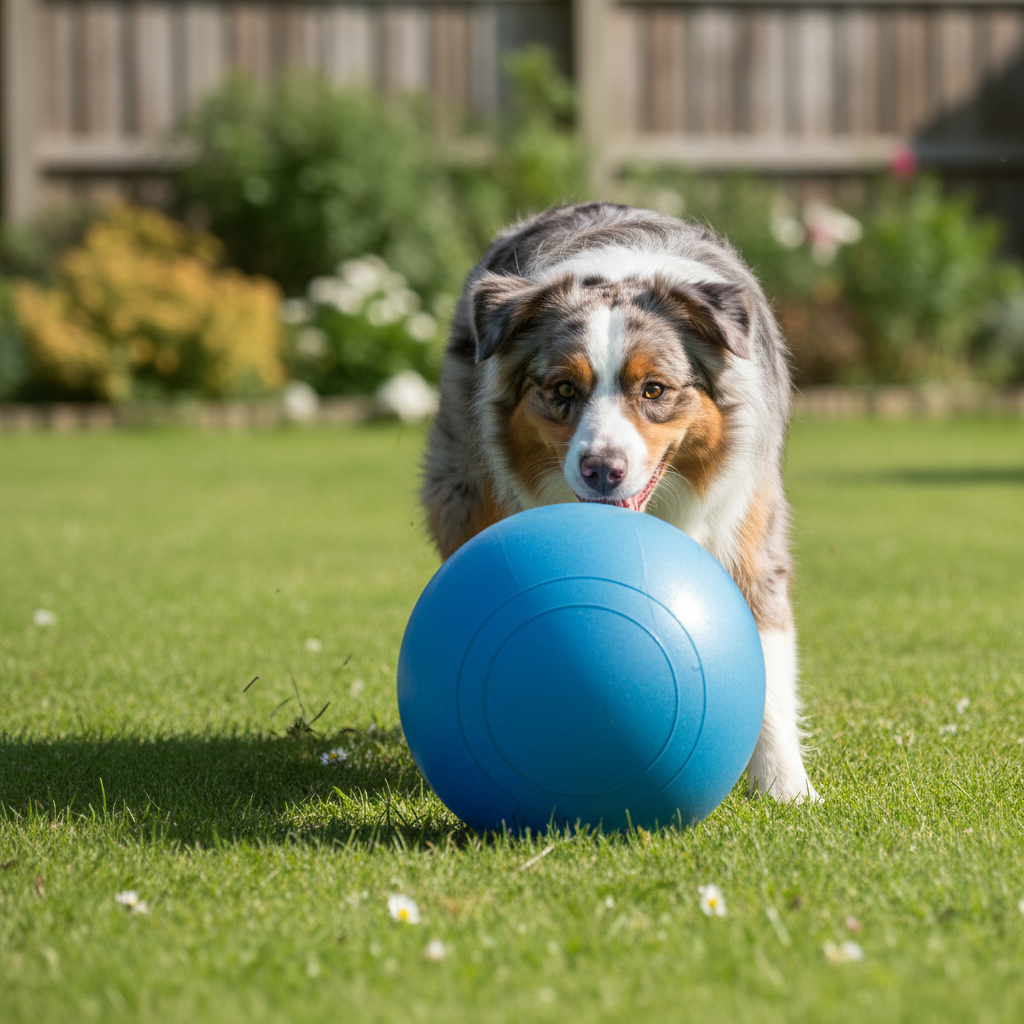
Alright, the foundation is set, and it’s time for the main event! Introducing the ball is an exciting step, but it requires patience and a focus on making it a positive experience. Remember, to a dog, a giant, wobbly sphere can be a bit weird, or even scary. Our job is to show them it’s the best toy ever. Let’s break it down into simple, achievable steps.
- Step 1: The Neutral Introduction. Place the ball on the floor in your training space. Don’t push it or hype it up. Just let it be. Let your dog investigate it at their own pace. If they sniff it, look at it, or show any calm curiosity, click and treat. We want the ball’s mere presence to be a good thing. Do this for a few short sessions until the ball is no longer a novelty.
- Step 2: The First Push. Now, we connect our nose-targeting foundation skill to the ball. Hold your hand or a target stick right against the surface of the ball. Ask your dog for a ‘touch’. When they touch the target, their nose will also touch the ball. Click and treat! After a few repetitions, remove the target and encourage them to touch the ball directly. Click and treat for any nose contact on the ball.
- Step 3: Rewarding Movement. Sooner or later, your dog’s nose boop will be strong enough to make the ball move, even just a tiny bit. The moment the ball moves from their touch, have a ‘jackpot’ reward ready—a handful of treats! This is the ‘aha!’ moment where your dog learns, ‘When I touch the ball and it moves, something amazing happens!’
- Step 4: Shaping Direction. Now we add the ‘goal’. Sit on the floor with your legs open to form a natural goal. Place the ball just a foot or two in front of you. Encourage your dog to push the ball towards you. Any push that sends the ball in your general direction gets a click and a treat. You are now the goal! This is where your ‘Go Out’ and orientation skills start to come in handy for positioning your dog on the far side of the ball.
- Step 5: Increasing Distance and Adding Goals. As your dog gets the hang of it, you can gradually increase the distance they have to push the ball. Move from sitting on the floor to setting up a proper goal with cones. Start sending your dog out to the ball and asking them to push it back to the goal from further and further away. Keep sessions short and successful to build their confidence.
This process is a marathon, not a sprint. Celebrate the small victories and focus on keeping it fun. If your dog gets frustrated, just end the session with an easy win (like a simple nose target) and try again later.
Common Challenges and Troubleshooting Tips
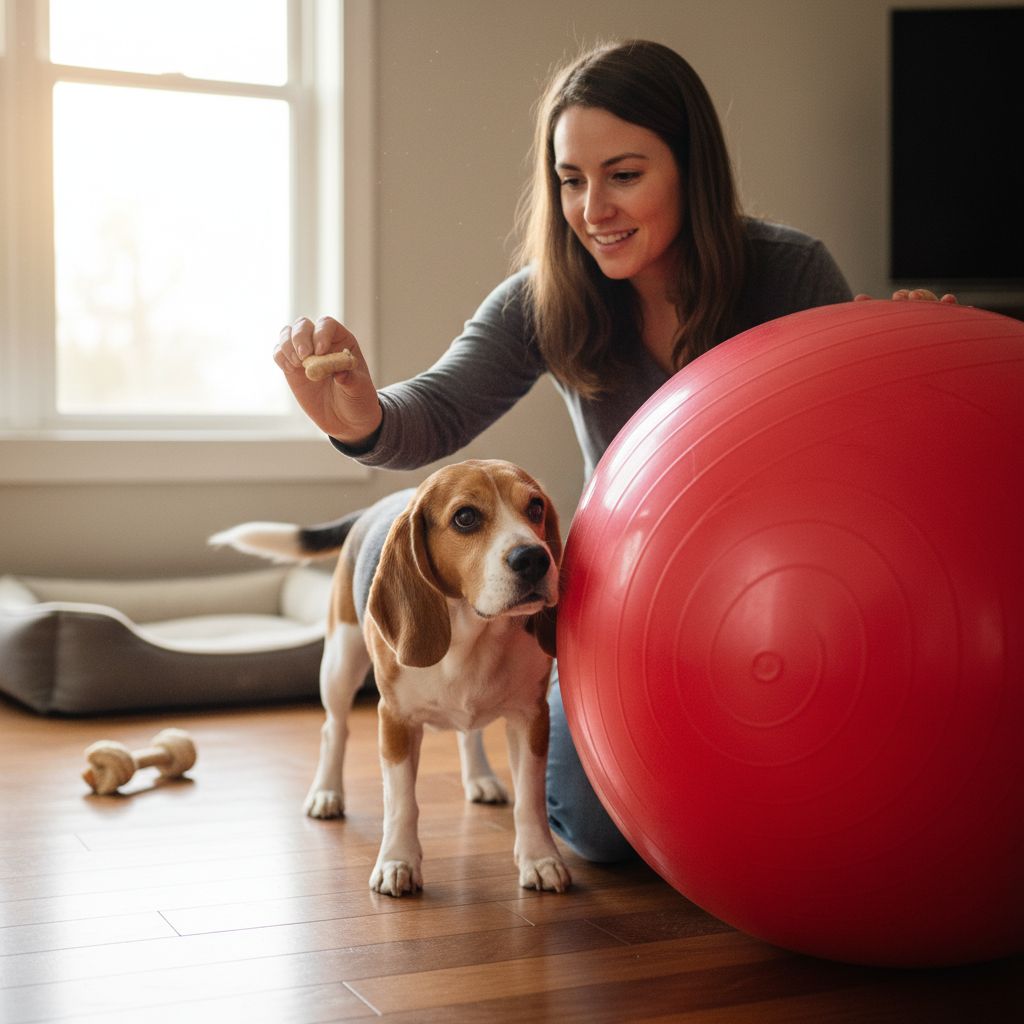
Even with the best planning, you might hit a few bumps on your Treibball journey. That’s completely normal! Every dog learns differently. The key is to identify the problem and approach it with patience and a positive attitude. Here are some of the most common challenges and how to work through them.
‘My Dog is Scared of the Ball!’
A giant, wobbly object can be intimidating. If your dog is barking at the ball, avoiding it, or showing signs of fear, you’ve moved too fast. Go back to Step 1 of introducing the ball. Put the ball in a corner of the room and ignore it. Reward your dog for simply being calm in the same room. Gradually decrease the distance between your dog and the ball over many sessions, rewarding calm behavior every step of the way. This process, called desensitization, can’t be rushed.
‘My Dog Wants to Bite or Paw the Ball!’
This is especially common with terriers or mouthy breeds like retrievers. The goal of Treibball is a nose or shoulder push, not biting. If your dog bites or paws, it means they’re trying to interact, which is great, but we need to shape the right interaction. Do not reward a bite or paw. Simply reset. Go back to rewarding only gentle nose touches. Make the nose touch so incredibly rewarding that they choose to do that instead. Using a slightly deflated or heavier ball can also discourage biting as it’s less ‘fun’ to grab.
‘My Dog Keeps Losing Focus.’
Is your dog getting distracted by a squirrel outside or suddenly deciding the rug is fascinating? This is usually a sign that the training session has gone on too long or the rewards aren’t exciting enough. Keep your Treibball sessions short and sweet—5 to 10 minutes is plenty, especially at the beginning. End on a high note when your dog is still engaged and successful. Also, make sure you’re using ‘high-value’ treats that are reserved only for this special training time.
‘We’re Stuck! Our Progress Has Stalled.’
Hitting a plateau is a normal part of any learning process. If you feel like you’re not making progress, the best solution is usually to take a step back. Is your dog’s ‘go out’ a bit sloppy? Go back and practice that for a session. Is their nose target weak? Reinforce it away from the ball. Often, strengthening one of the foundational skills will be the key to unlocking the next level of your Treibball training.
Expert Tip: Video your training sessions! Watching them back can help you spot things you miss in the moment, like a subtle signal your dog is giving you or a way you could be clearer with your own cues.
Taking It to the Next Level: Advancing Your Treibball Skills
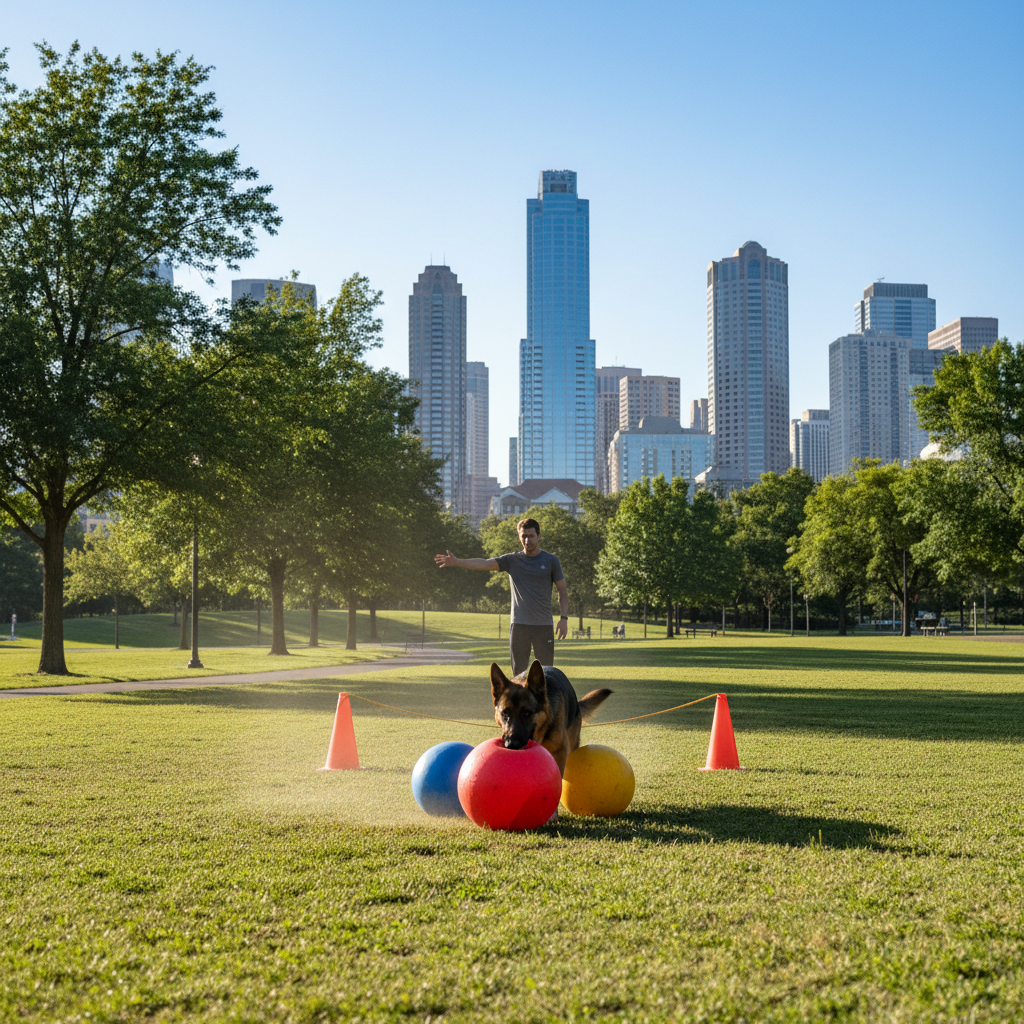
Once your dog is confidently and happily pushing a single ball into a goal, you might be wondering, ‘What’s next?’. This is where Treibball transforms from a simple game into a truly dynamic and strategic sport. Advancing your skills is all about increasing the complexity and strengthening your long-distance communication. It’s time to level up!
Introducing Multiple Balls
Competitive Treibball involves herding up to eight balls! Start small. Place two balls out in the field. Send your dog to push one ball in. Once they’ve scored, send them back out for the second one. This teaches them that the game isn’t over after the first ‘sheep’ is in the pen. Gradually increase the number of balls as your dog’s stamina and focus improve. You can arrange them in different patterns, like a triangle, to add a new challenge.
Improving Directional Cues
As the ‘field’ gets more complex, your dog will need to rely on your cues from a distance. This is where you can refine your hand signals and verbal cues. Teach them specific commands for ‘go left’ and ‘go right’ when they are out by the balls. This allows you to direct them to a specific ball you want them to work on next. It’s like being a true shepherd, guiding your flock from afar!
| Cue | Dog’s Action | Training Tip |
|---|---|---|
| ‘Push’ or ‘Drive’ | Dog pushes the ball straight towards the goal. | This is your basic cue, reinforced from the beginning. |
| ‘Left’ / ‘Right’ | Dog circles the ball to the left or right. | Use clear, sweeping arm signals in the direction you want them to go. |
| ‘Wait’ or ‘Stop’ | Dog stops and waits for the next cue. | Crucial for control. Practice a distance ‘wait’ away from the balls first. |
Finding a Community
One of the best ways to advance your skills is to connect with other Treibball enthusiasts. Look for local or online groups dedicated to the sport. The American Treibball Association or the National Association of Treibball Enthusiasts are great places to start. They offer resources, virtual events, and even formal competitions if you decide to take your game to the show! Training with others is motivating and a wonderful way to troubleshoot and share successes.
Ultimately, the goal of advanced Treibball is the same as beginner Treibball: to have fun and work together as a team. Enjoy the process of building this incredible new language with your dog.
Conclusion
From a simple nose boop to directing a whole ‘flock’ of balls into a goal, Treibball offers a world of fun and fulfillment for you and your dog. It’s more than just a game; it’s a powerful outlet for your dog’s natural instincts, a fantastic source of low-impact exercise, and an incredible way to build a partnership based on clear communication and positive reinforcement. You’re not just teaching your dog a new trick; you’re speaking their language.
Remember to keep it positive, celebrate the small wins, and cherish the unique bond you’re building. Whether you stick to casual games in the living room or decide to explore the world of competitive Treibball, you’ve given your city dog a wonderful gift—a ‘job’ that makes them feel happy, confident, and understood. So grab that ball, pocket some treats, and get ready to watch your urban pup embrace their inner herder. Happy pushing!