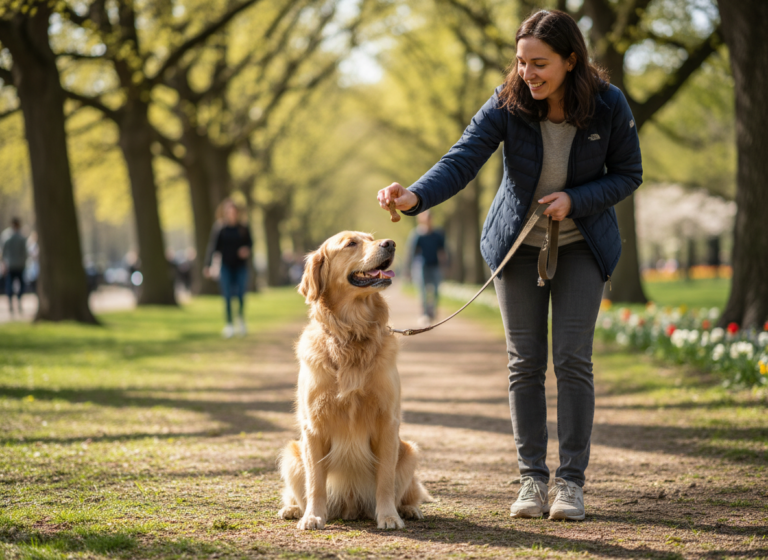
Picture this: a sunny afternoon, a charming pub garden, a cool drink in your hand, and your beloved dog snoozing peacefully at your feet. It’s the dream for many pet owners, but the reality can often be a whirlwind of tangled leashes, whines for your food, and anxious barks at every passerby. Sound familiar? Don’t worry, you’re not alone!
Transforming your energetic pup into a calm and collected pub-goer isn’t magic—it’s training. And the good news is, it’s entirely achievable. This guide is your complete roadmap, breaking down the process into simple, manageable steps. We’ll go from building foundational skills at home to confidently walking into your local establishment, ready for a relaxing time together. Let’s get started on the journey to creating the perfect pub dog!
Laying the Foundation: The Pre-Pub Prep Work
Laying the Foundation: The Pre-Pub Prep Work
Before you even think about ordering a round, you need to equip your dog with the basic skills for success. A bustling pub is a high-distraction environment, and you can’t expect your dog to behave there if they haven’t mastered the basics in a quiet space first. This foundational work is the most critical part of the entire process.
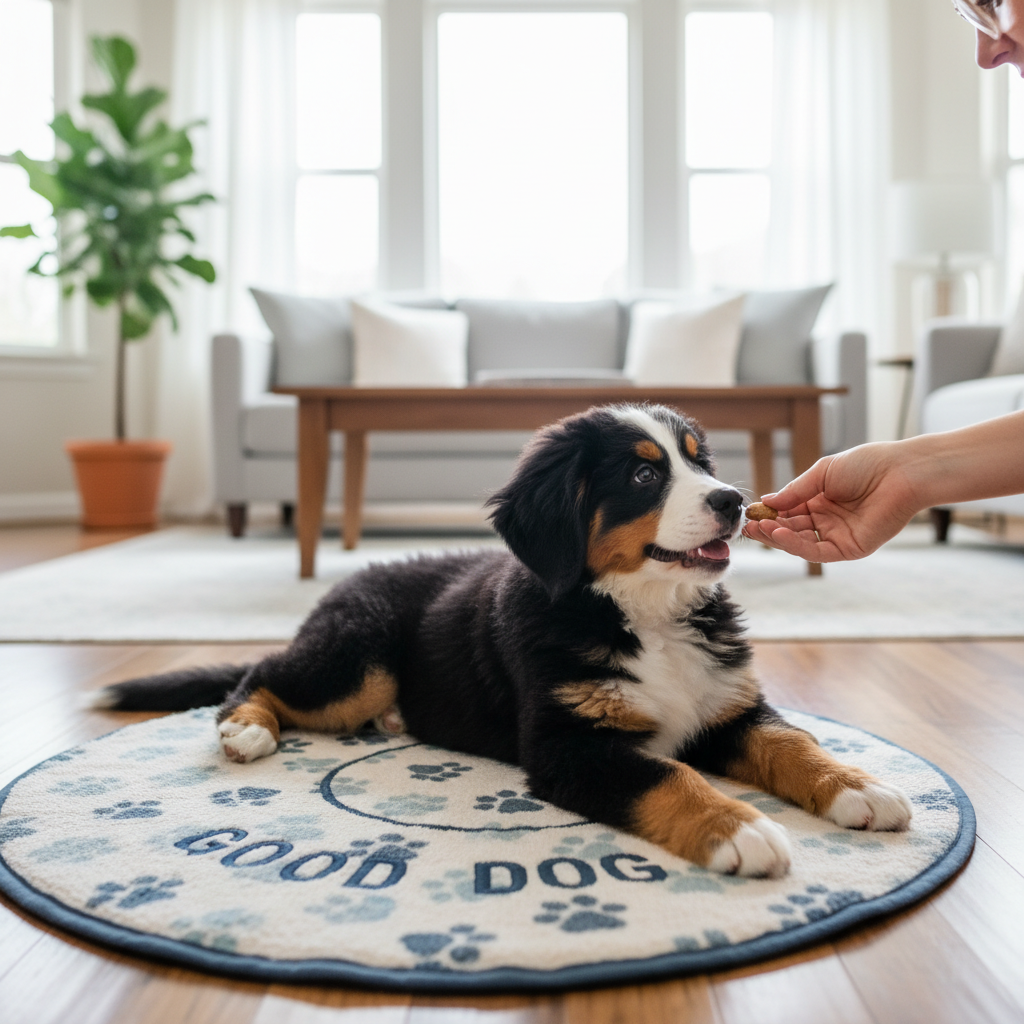
The ‘Settle on a Mat’ Command
This is your golden ticket. The goal is to teach your dog that a specific mat or blanket is their ‘zen zone’—a place to relax and stay calm, no matter where you are.
- Introduce the Mat: Place a distinct mat or blanket on the floor. Lure your dog onto it with a treat. The moment all four paws are on the mat, say “Yes!” and give them the treat. Repeat this several times.
- Encourage Lying Down: Once your dog is happily stepping onto the mat, start rewarding them for lying down on it. You can lure them into a ‘down’ position. Reward them generously for choosing to lie down on the mat.
- Build Duration: Start small. Ask your dog to lie on the mat, and drop treats between their paws every few seconds. Slowly increase the time between treats. This teaches them that staying put is highly rewarding.
- Add the Cue: Once your dog is reliably lying on the mat, you can add a verbal cue like “Settle” or “On your mat.”
Expert Tip: Use a specific mat just for this training. When your dog sees the mat, it will become a powerful visual cue that it’s time to relax. Make it easily portable for your pub trips!
Desensitization and Socialization
A pub is full of strange sights, sounds, and smells. A dog that isn’t properly socialized will find this overwhelming. It’s your job to expose them to different environments in a positive way before you hit the pub.
- Sound Desensitization: Play recordings of ambient pub noise (chatter, clinking glasses) at a low volume at home while your dog is relaxing or eating. Gradually increase the volume over several days.
- People Watching: Take your dog to a park bench or the outside of a coffee shop (at a distance). Reward them with high-value treats every time they look at a person or another dog and then look back at you without reacting. This is called ‘Look at That’ (LAT) training and teaches them that strange things predict good things from you.
- Surface Confidence: Get your dog used to walking and lying on different surfaces—wood floors, concrete, grass, etc. A pub might have a mix of all three!
Mastering these foundational skills at home, where distractions are minimal, sets your dog up for a winning performance when the real test comes.
The Step-by-Step Training Plan: From Your Living Room to the Local
The Step-by-Step Training Plan: From Your Living Room to the Local
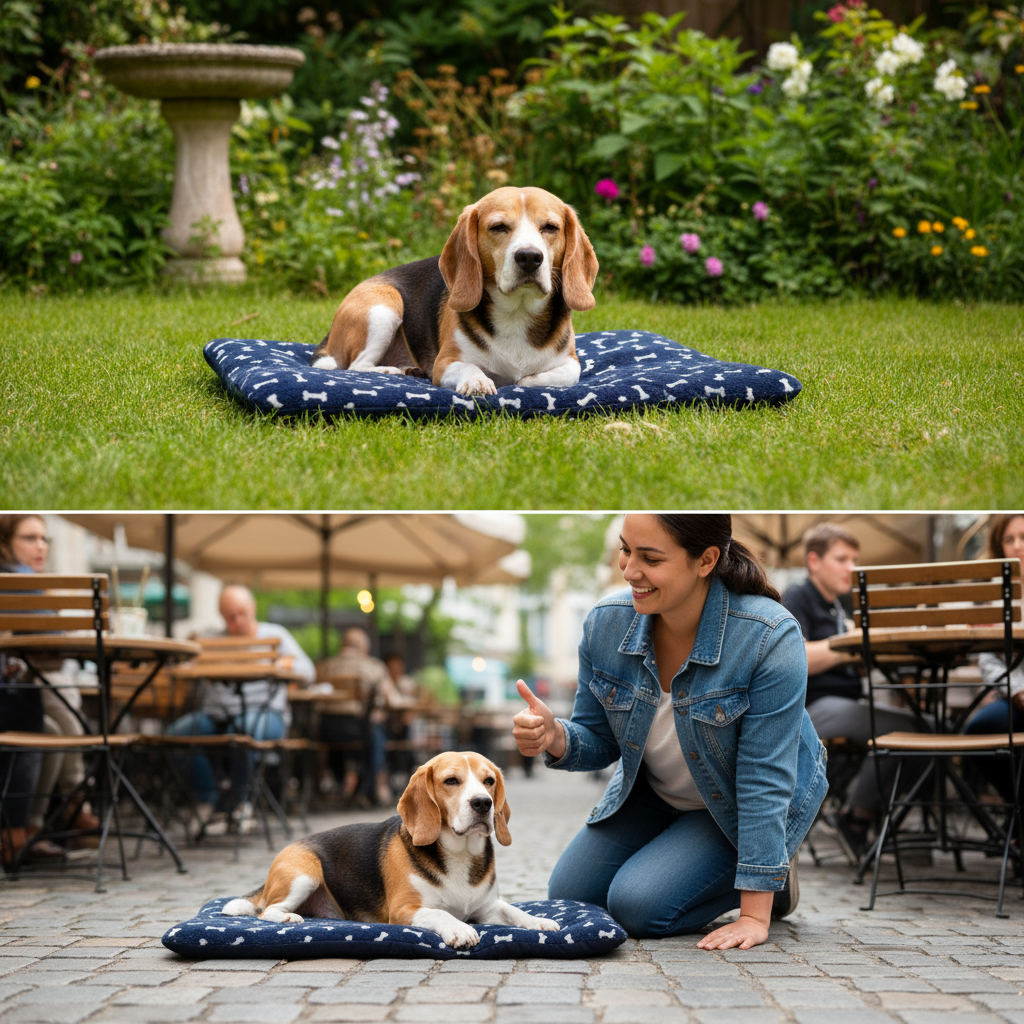
With your foundation in place, it’s time to gradually increase the difficulty. This phased approach ensures your dog is never overwhelmed, building their confidence every step of the way. Rushing this process is the fastest way to create a negative association with public places.
Phase 1: Proofing the ‘Settle’ at Home
Your dog can settle on their mat when it’s quiet. Now, can they do it with distractions? While they are on their mat, try these things:
- Walk around the room.
- Open and close doors.
- Have another family member walk past.
- Drop something (non-scary) on the floor.
Reward your dog for staying on the mat through these minor distractions. If they get up, simply guide them back calmly without scolding and try an easier distraction.
Phase 2: The ‘Almost-Pub’ Experience
Find a quiet, dog-friendly coffee shop patio or a park far from the main action. This is your training ground. The goal here isn’t for you to have a relaxing coffee; it’s a dedicated training session.
- Choose Your Spot: Pick a corner spot where your dog has their back to a wall. This reduces the number of things they have to watch and helps them feel more secure.
- The Settle: Bring out the special mat and ask for a ‘settle’. Since the environment is new, you’ll need to reward them more frequently than you do at home. Use very high-value treats!
- Keep it Short: Your first session might only be 5-10 minutes long. End on a high note while your dog is still calm and successful. You want them to leave thinking, “That was easy and fun!”
Phase 3: The Inaugural Pub Visit
The big day! Success here is all about planning.
- Tire Them Out: A tired dog is a calm dog. Go for a long walk, run, or have a vigorous play session an hour or so before you go.
- Go Off-Peak: Your first visit should be on a quiet Tuesday afternoon, not a bustling Friday night. Fewer people, less noise, more chance of success.
- Choose a Dog-Friendly Pub: Call ahead! Make sure the pub is genuinely dog-friendly, not just dog-tolerant. Ask if there’s a quieter area you could sit in.
- Repeat Phase 2: Find your corner, lay down the mat, ask for a settle, and reward, reward, reward. Keep the first visit short and sweet—maybe just long enough for one quick drink.
Important Takeaway: During these initial training stages, your focus should be 100% on your dog, not on your friends or your phone. You are actively training and managing them to ensure they succeed.
Packing for Success: Your Pub-Ready Doggy Go-Bag
Packing for Success: Your Pub-Ready Doggy Go-Bag
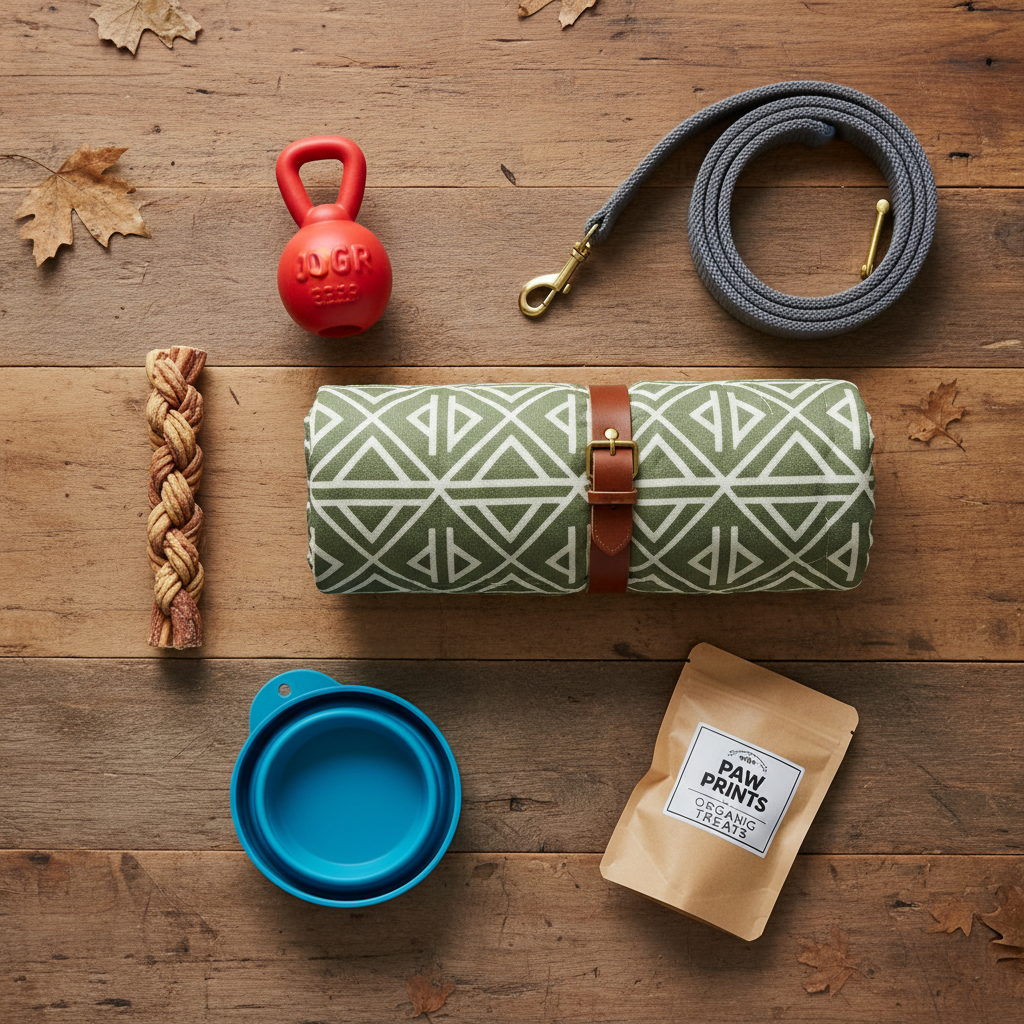
Being prepared can make the difference between a stressful outing and a relaxing one. Having a dedicated ‘go-bag’ for your pub adventures means you’ll always have what you need to keep your dog comfortable, occupied, and happy. Think of it as your toolkit for a peaceful pint.
Here’s a checklist of essentials to pack. We’ve broken it down into categories to make it easy to remember what you need and why.
| Item Category | Specific Items | Why It’s Essential |
|---|---|---|
| Comfort & Settling |
|
The mat is their designated ‘safe space.’ A familiar scent and texture provide comfort and signal that it’s time to relax, just like at home. |
| Enrichment & Occupation |
|
This is your secret weapon! A fantastic chew can keep your dog happily occupied for the entire duration of your visit. It prevents boredom, which is a major cause of misbehavior like barking or whining. |
| Hydration & Necessities |
|
Pubs can be warm, and a chew can make a dog thirsty. Always offer water. And being a responsible owner means always being prepared to clean up after your dog, even in the pub garden. |
| Training & Management |
|
Treats are for rewarding calm behavior. A fixed-length leash gives you better control and prevents your dog from wandering and bothering other patrons. |
Pro Tip: Prepare a frozen Kong toy ahead of time. Fill it with dog-safe peanut butter, yogurt, or their wet food and freeze it. A frozen Kong will last much longer, giving you more uninterrupted time to enjoy your meal.
Troubleshooting: Navigating Common Pub Problems
Troubleshooting: Navigating Common Pub Problems
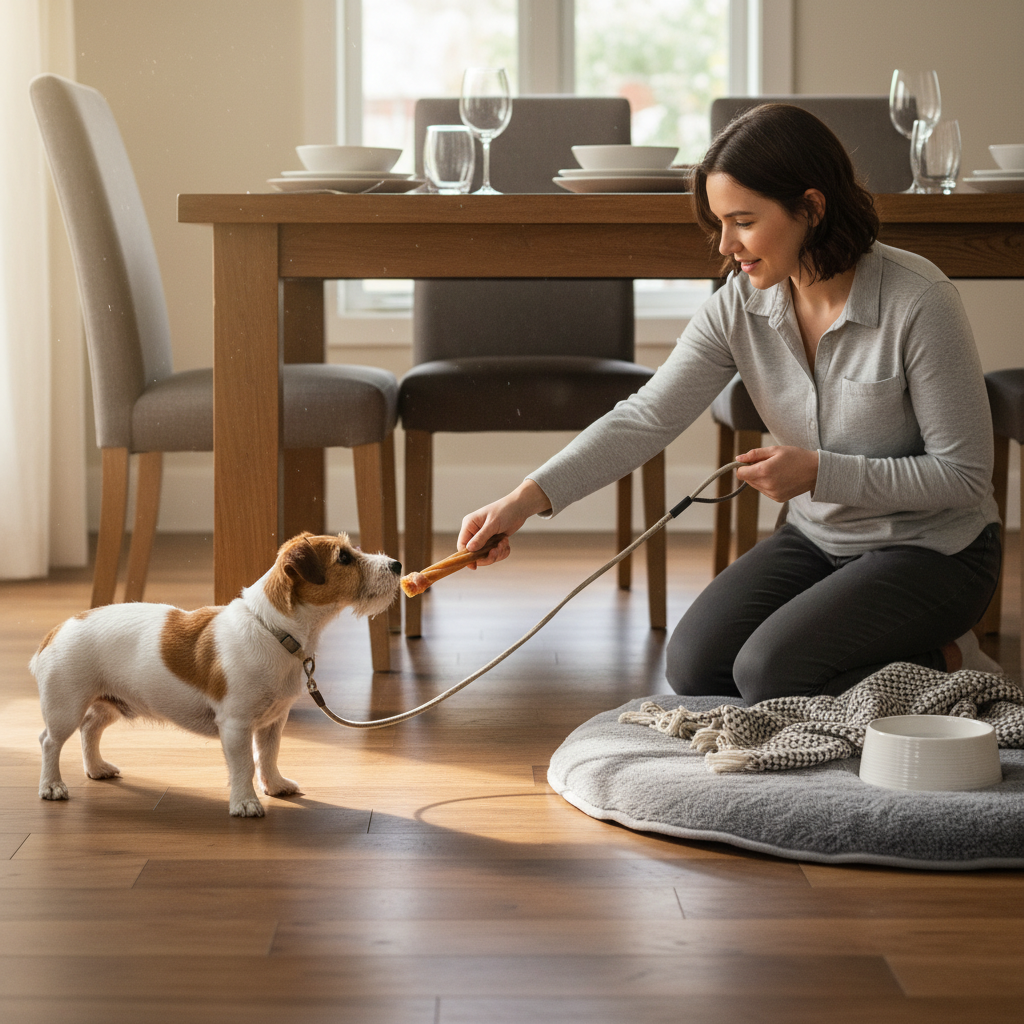
Even with the best training, real-world situations can pop up. Knowing how to handle common issues calmly and effectively will keep the experience positive for you, your dog, and everyone around you.
Problem 1: The Begging Bandit
The Scenario: Your dog is giving you the sad puppy-dog eyes, whining, or even putting their nose on the table, begging for a bite of your burger.
The Solution: This is where your long-lasting chew comes in. The best defense is a good offense! Give them their own delicious ‘meal’ (a filled Kong or chew) to enjoy while you eat yours. If they still beg, completely ignore the behavior. Don’t make eye contact, don’t talk to them, and certainly don’t give in. Any attention, even negative, can reinforce the begging. If needed, calmly lead them back to their mat. This teaches them that begging gets them nothing, while settling on their mat is where the good stuff happens.
Problem 2: The Barking Bouncer
The Scenario: Your dog barks every time someone walks past your table or the waiter approaches.
The Solution: This is often due to anxiety or over-stimulation. First, try to create more distance from the source of the trigger if possible. Next, use the ‘Look at That’ (LAT) game we mentioned earlier. The moment your dog looks at a person walking by (before they bark), say “Yes!” and give them a high-value treat. They will learn that people walking by predicts a treat from you, changing their emotional response from anxious to expectant. If they do bark, try a ‘scatter feed’—toss a few treats on their mat to get their nose down and sniffing, which is a calming activity that breaks their focus.
Problem 3: The Restless Rover
The Scenario: Your dog just can’t seem to settle. They’re constantly getting up, trying to wander, and seem agitated.
The Solution: This is a clear sign that they are over their ‘threshold’. The environment is too much for them at their current stage of training. Do not push them. Forcing them to stay will only create a negative association. End the session on a positive note if you can (e.g., one last successful ‘settle’ for a second), and then leave. Your next session should be shorter or in a quieter location. This isn’t a failure; it’s valuable information about your dog’s current limits. Remember to ensure they had enough exercise beforehand to burn off excess physical energy.
Pub Etiquette for Pawsome Patrons and Their People
Pub Etiquette for Pawsome Patrons and Their People
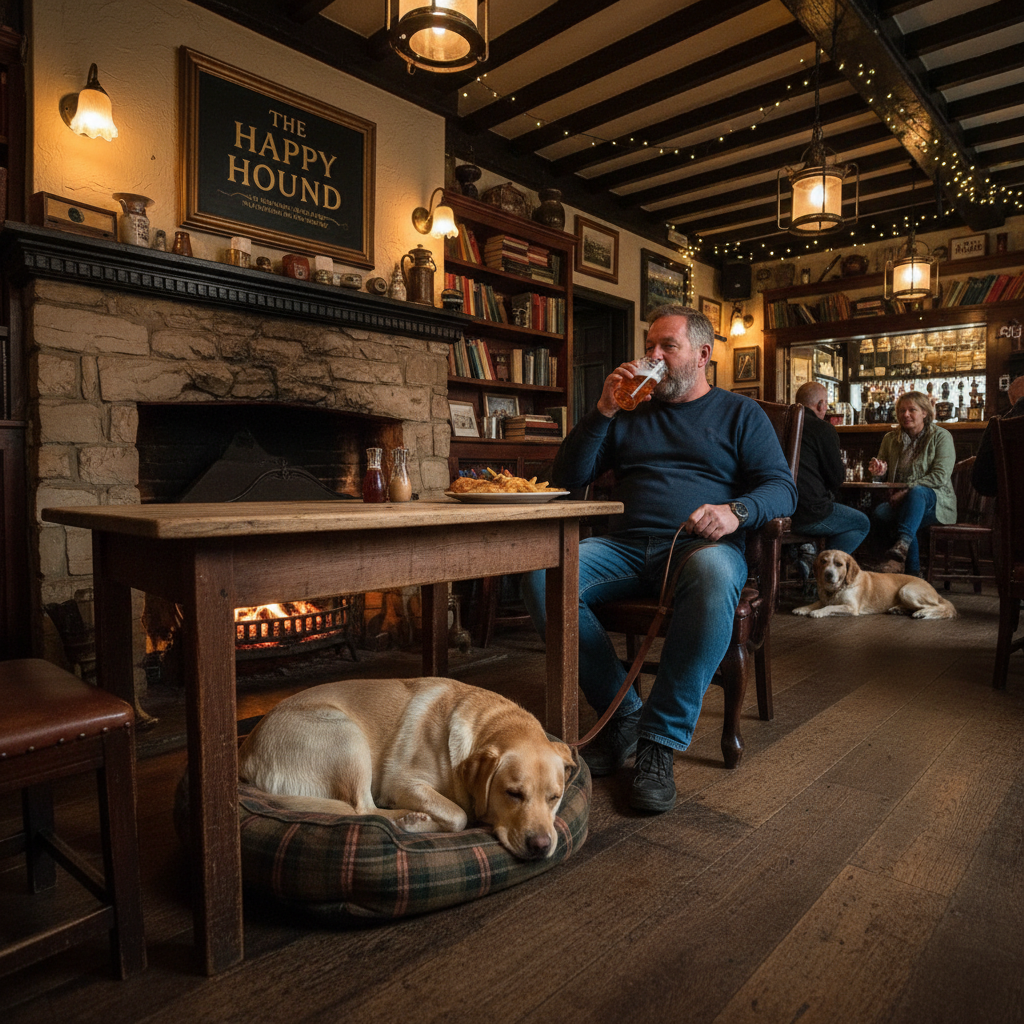
Being a truly pub-friendly dog owner goes beyond just training your dog to lie down. It’s about being a considerate member of the community and ensuring that dog-friendly establishments stay dog-friendly. Following these simple etiquette rules makes the experience better for everyone.
1. Leash is Law
Your dog should be on a leash at all times. No exceptions. Even if your dog has a perfect recall, a pub is not an off-leash park. Use a standard 4-6 foot leash, not a retractable one, which can be a tripping hazard and offers less control. Keep the leash looped around your wrist or securely under your chair leg to prevent your dog from wandering.
2. The Four-on-the-Floor Rule
Paws belong on the floor, not on chairs, benches, or your lap at the table. It’s a matter of hygiene and respect for the furniture and future patrons who may have allergies. This is where your comfy mat comes in—it gives them a designated, clean spot of their own.
3. Mind the Aisles
When you choose your spot, tuck your dog in beside your table, preferably against a wall. Don’t let them lie in the middle of a walkway where staff and other customers might trip over them or their leash. A sleeping dog in a busy thoroughfare is a recipe for a spilled tray of drinks!
4. Water Only from Their Own Bowl
While it’s a kind gesture, avoid letting your dog drink from a communal water bowl. It can be a way to spread canine illnesses. Bringing your own collapsible bowl is the most hygienic option for everyone.
5. Know When to Go
Always take your dog out for a potty break before you go inside, and be prepared to take them out during your visit if needed. And it goes without saying: always, always clean up after your dog immediately.
A Final Thought on Etiquette: Remember that not everyone loves dogs (hard to believe, we know!). Be respectful of other people’s space. If someone seems nervous, give them a wide berth. A well-behaved dog and a considerate owner are the best ambassadors for keeping our favorite spots open to our furry friends.
Conclusion
Congratulations! You now have all the tools and knowledge to cultivate a wonderful pub companion. Remember that the key to success is patience, consistency, and always putting your dog’s comfort and well-being first. There will be good days and challenging days, but every training session is a step in the right direction.
Start with the foundations, progress at your dog’s pace, and always be prepared to advocate for their needs. The reward—countless happy hours spent with your best friend by your side—is more than worth the effort. So, pack your go-bag, grab that special mat, and get ready to raise a glass to your perfectly behaved, pub-friendly pup. Cheers!