Living with an anxious dog can feel heartbreaking and overwhelming. You see them tremble during thunderstorms, bark frantically at visitors, or cower on walks. It’s a helpless feeling, wanting to tell them, “It’s okay, you’re safe,” but not having the right words. What if you could give them a physical safe space, a predictable little haven they can retreat to anytime they feel scared? That’s exactly what the ‘Middle’ command does.
This wonderfully simple yet powerful command teaches your dog to position themselves between your legs. It might sound basic, but for a nervous dog, this action is a game-changer. It provides physical comfort, blocks overwhelming stimuli, and gives them a specific job to do when their brain is buzzing with anxiety. It’s not just a trick; it’s a communication tool that deepens your bond and builds their confidence. In this guide, we’ll walk you through everything you need to know to teach this amazing command and bring a little more peace to your pup’s life.
The Psychology Behind the ‘Safe Space’: Why ‘Middle’ Works Wonders
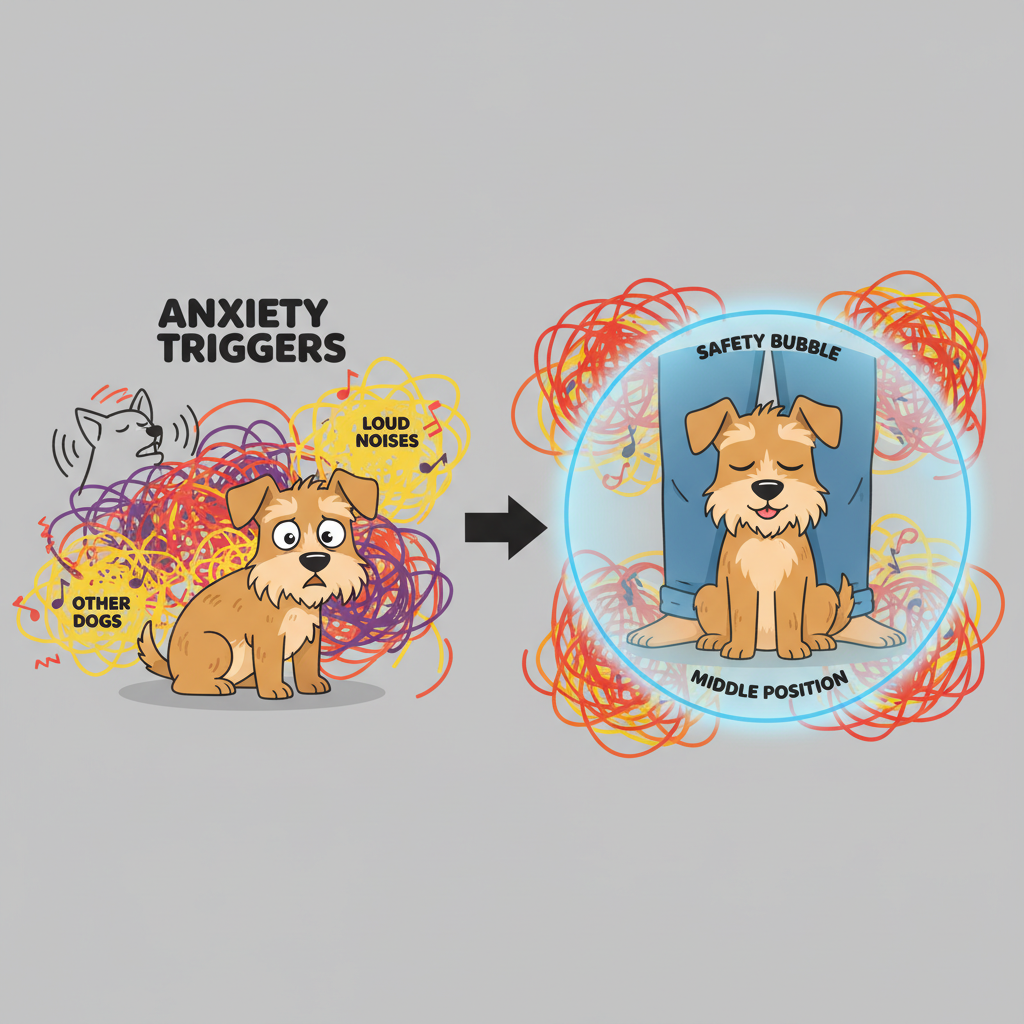
Before we jump into the ‘how-to,’ let’s talk about the ‘why.’ Understanding the psychology behind the ‘Middle’ command will help you appreciate its power and be a more effective trainer. It’s not just about your dog being physically close; it’s about fulfilling their deep-seated canine instincts for safety and guidance.
A Den of Their Own
Dogs are den animals by nature. In the wild, a den is a secure, enclosed space where they can rest, hide from predators, and feel safe from the elements. When you teach your dog ‘Middle,’ your legs essentially become a portable, pop-up den. This enclosed feeling can dramatically lower a dog’s stress levels. They are physically shielded from things that might scare them, like a boisterous dog approaching or a crowd of people. Their world literally shrinks to a manageable, safe size.
The Power of Touch and Proximity
Never underestimate the calming effect of your presence. When your dog is in the ‘Middle’ position, they are in direct contact with you. This pressure and closeness can release oxytocin—the ‘love hormone’—in both you and your dog, which has a naturally calming effect. It’s the same reason weighted blankets are effective for anxiety. Your dog feels your steady presence, hears your calm breathing, and knows their trusted leader is right there with them.
Redirecting Anxious Energy
An anxious brain doesn’t know what to do. It might tell the dog to flee, freeze, or fight. The ‘Middle’ command gives that buzzing brain a clear, simple, and positive task to focus on. Instead of reacting to the scary thing (the mail carrier, a loud truck), their job is now to find you and get into position. This act of seeking you out and performing a known behavior overrides the anxious impulse. It replaces a negative, reactive behavior with a positive, proactive one.
Expert Tip: Think of ‘Middle’ as a reset button for your dog’s emotional state. It interrupts the cycle of anxiety and gives them a chance to calm down under your direct protection and guidance.
Gearing Up: The Simple Tools You’ll Need for Success
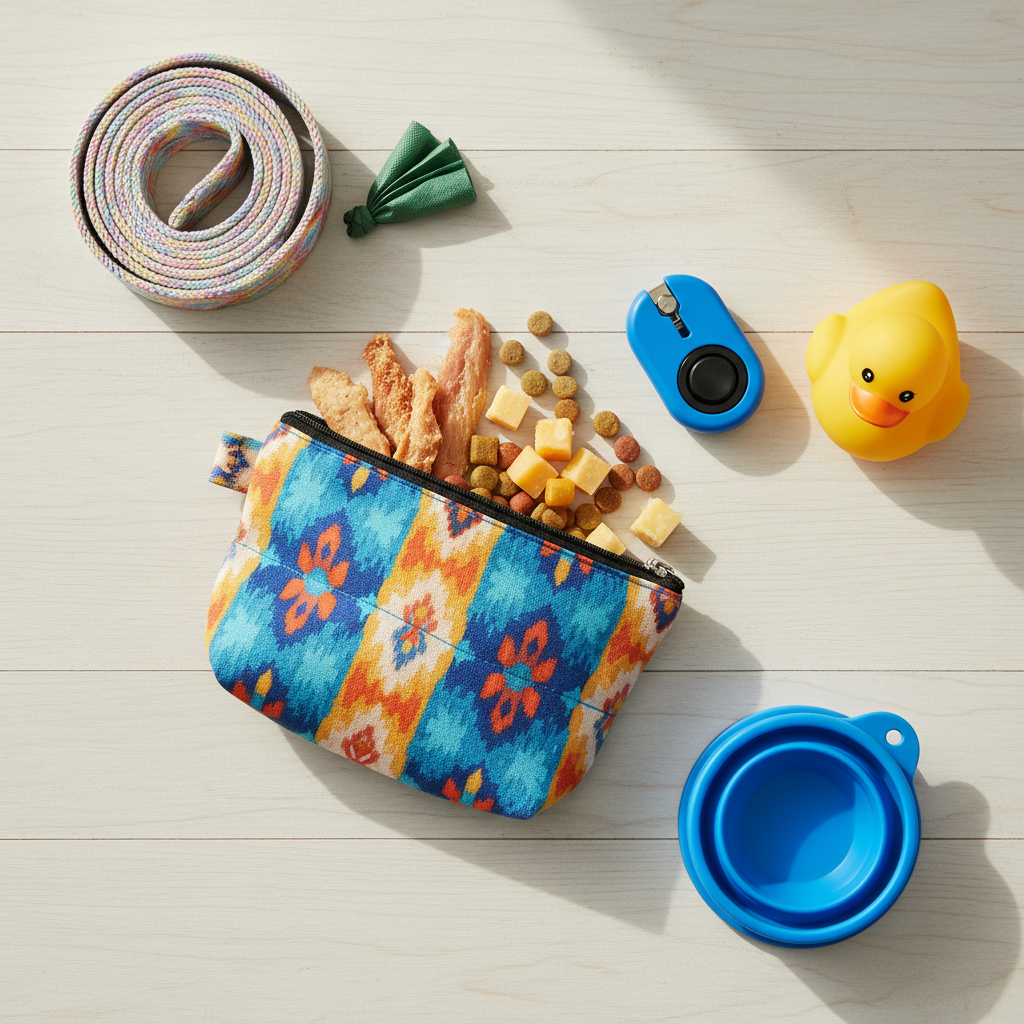
The beauty of teaching the ‘Middle’ command is that you don’t need a lot of fancy or expensive equipment. The most important tool is your patience and positive attitude! However, having a few key items on hand will make the training process smoother, faster, and more fun for both you and your furry student.
High-Value Treats
This is non-negotiable! We need to make the ‘Middle’ position the best place on Earth, and that means using treats that your dog absolutely loves. Standard kibble probably won’t cut it. Think small, soft, smelly, and delicious.
- Examples: Tiny pieces of boiled chicken, small cubes of cheese, freeze-dried liver, or store-bought training treats that are soft and easy to chew.
- Why they work: High-value treats create a strong positive association. Your dog will quickly learn that going between your legs results in a super tasty reward, making them eager to repeat the behavior.
A Clicker (Optional, but Recommended)
A clicker is a small handheld device that makes a distinct ‘click’ sound. In training, you use it to mark the exact moment your dog performs the correct behavior. It provides clear, precise communication.
- How it helps: The ‘click’ acts as a bridge, telling your dog, “YES, that exact thing you just did is what earned you the treat!” This can speed up learning significantly compared to just using a verbal marker like “Yes!”
- Charging the clicker: Before you start, ‘charge’ it by clicking and immediately giving your dog a treat, repeating this 10-15 times. Your dog will quickly learn that click = treat.
A Quiet, Distraction-Free Space
Start your training sessions in a calm environment where your dog can focus. Your living room, a quiet hallway, or a fenced backyard are all great options. Trying to teach a new skill in a busy park is a recipe for frustration. We’ll get to real-world scenarios later, but for now, keep it simple.
| Tool | Purpose | Pro Tip |
|---|---|---|
| High-Value Treats | To create a strong positive association with the command. | Cut treats into pea-sized pieces so you can do many repetitions without overfeeding. |
| Clicker | To precisely mark the desired behavior for clearer communication. | Always follow a click with a treat, even if you clicked by accident! |
| Quiet Space | To minimize distractions and help your dog focus on learning. | Turn off the TV and ask family members to give you some space for a 5-10 minute session. |
Let’s Get Training! A Step-by-Step Guide to Teaching ‘Middle’
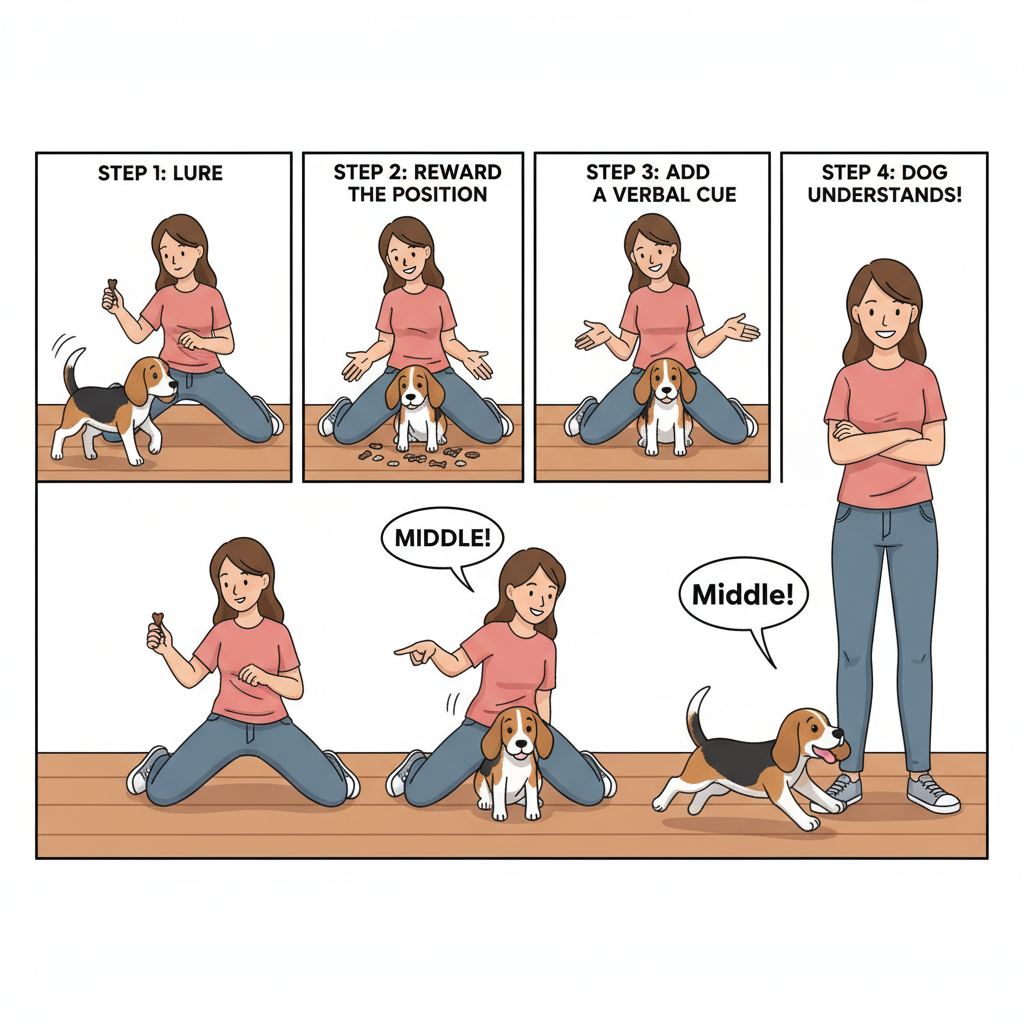
Alright, you’ve got your treats and you’ve found a quiet spot. It’s time for the fun part! Remember to keep your training sessions short (5-10 minutes is perfect) and always end on a positive note. The goal is for your dog to love this game. Let’s break it down into easy-to-follow steps.
-
Step 1: The Lure
The first step is to simply get your dog comfortable moving through your legs. We’ll use a treat to guide them, a technique called luring.
- Stand with your feet shoulder-width apart, creating an inviting tunnel.
- Take a high-value treat in your hand and let your dog sniff it.
- Slowly move the treat from your dog’s nose back through your legs. As your dog follows the treat and moves between your legs, shower them with praise.
- The moment their head is through, say “Yes!” (or click your clicker) and give them the treat.
- If your dog comes all the way through and exits the other side, that’s okay! Just reset and do it again. Repeat this 5-10 times.
-
Step 2: Building Duration
Now that your dog is happily moving through your legs, we want to encourage them to stay there for a second or two.
- Lure your dog into the ‘Middle’ position as before.
- This time, once they are between your legs, don’t give them the treat right away. Hold the treat at their nose level and praise them calmly: “Good middle…”
- After just one or two seconds, click/say “Yes!” and give them a ‘jackpot’ – a few treats dropped on the floor right between their paws. This teaches them that good things happen when they stay in the position.
- Gradually increase the duration, second by second. If your dog backs out, you’ve gone too fast. Simply go back to a shorter duration where they were successful.
-
Step 3: Adding the Verbal Cue
Your dog is now starting to understand the desired action. It’s time to give it a name! We only add the cue once the dog is reliably offering the behavior.
- As your dog is beginning to move towards and between your legs, say your chosen cue in a happy, inviting tone: “Middle!”
- When they get into position, click/say “Yes!” and reward them.
- Repeat this process. By saying the word just before they perform the action, they’ll start to connect the word “Middle” with the movement and position.
-
Step 4: Fading the Lure
Our goal is for the dog to respond to the verbal cue alone, without needing to see a treat first. We need to gradually phase out the hand lure.
- Start by using an empty hand to lure them, but still reward them from your other hand once they’re in position.
- Next, just use a hand gesture (like pointing between your legs) while saying “Middle!”
- Eventually, you should be able to stand with your feet apart, say “Middle!” and have your dog move into position without any hand signal at all. This takes time and repetition, so be patient!
Training Tip: Keep it fun! If you or your dog are getting frustrated, end the session with an easy win (like a simple ‘sit’) and try again later. Positive vibes are key!
Putting It to the Test: Using ‘Middle’ in the Real World
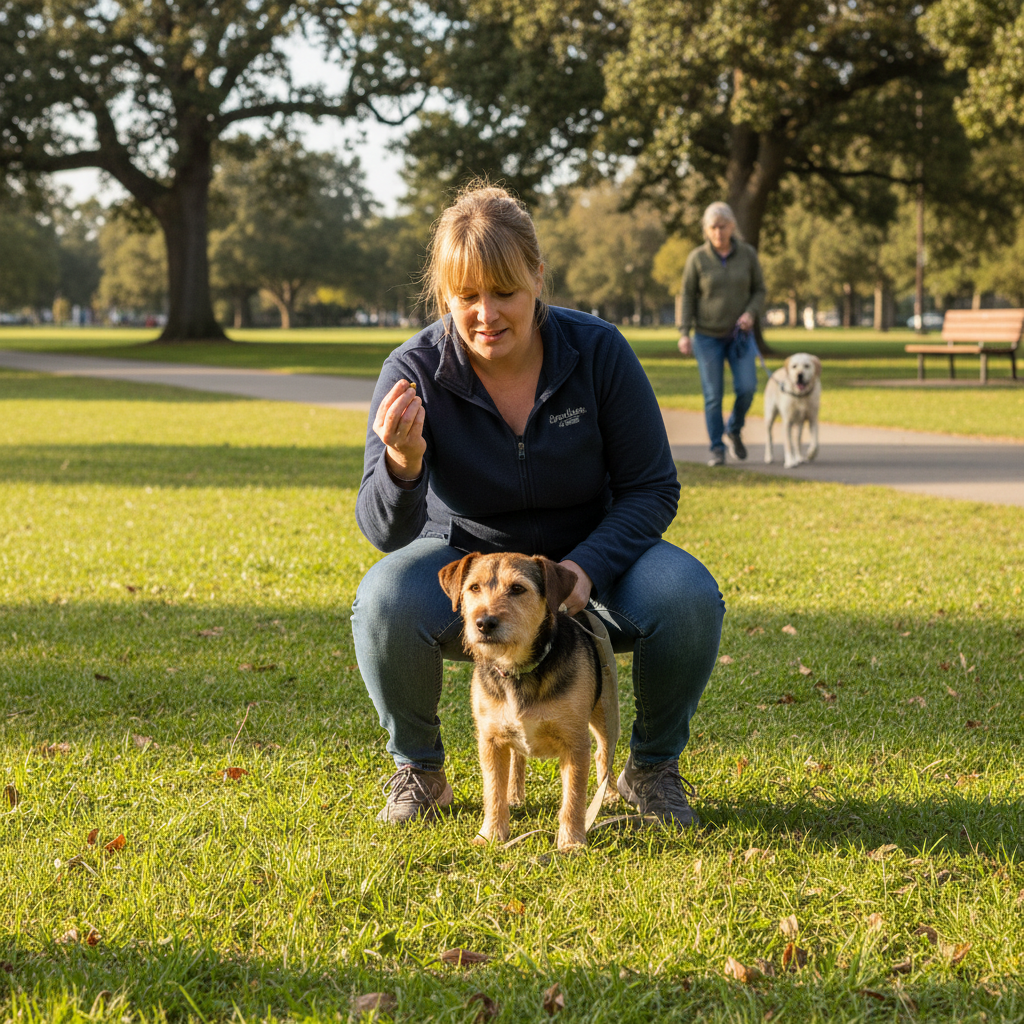
Practicing in your living room is one thing, but the true value of the ‘Middle’ command comes when you use it out in the world. This is where your dog’s safe space becomes a powerful management tool for stressful situations. The key is to introduce distractions gradually and set your dog up for success.
On Walks
This is one of the most common and useful applications. When you see a potential trigger approaching—a running child, another dog, a loud skateboard—you can use ‘Middle’ to keep your dog calm and focused on you.
- How to do it: Before the trigger gets too close, stop walking, assume your ‘Middle’ stance, and cheerfully say, “Middle!” When your dog gets into position, give them a steady stream of tiny, high-value treats as the trigger passes. This technique is called ‘counter-conditioning’ – you’re changing your dog’s emotional response from ‘Oh no, a scary thing!’ to ‘Oh boy, a scary thing means I get chicken!’
At the Vet’s Office
The waiting room at the vet can be a cocktail of stress for any dog. The strange smells, sounds, and presence of other anxious animals can be overwhelming.
- How to do it: Find a quiet corner of the waiting room. Ask your dog for a ‘Middle’ and reward them for staying there. This gives them a secure place to be, protected from the chaos, and allows you to keep them calmly contained without a tight leash.
When Visitors Arrive
Does the doorbell send your dog into a frenzy of barking or nervous hiding? ‘Middle’ can provide a structured alternative.
- How to do it: Before you open the door, ask your dog to ‘Middle.’ Drop a few treats on the floor to keep them occupied as your guest enters. This prevents them from rushing the door and gives them a safe place to observe the new person from. You can then ask your guest to ignore the dog initially, allowing your pup to get comfortable at their own pace.
In Crowded Places
If you’re at a pet-friendly farmer’s market or a park, crowds can be a lot for a dog to handle. ‘Middle’ is your portable safe zone.
- How to do it: Anytime you stop to chat or look at something, or if you feel your dog is getting overwhelmed, simply cue them into ‘Middle.’ It gives them a physical break from the foot traffic and sensory overload.
Important Note: The goal is to use ‘Middle’ before your dog has a major reaction. Watch their body language. If you see stiffening, wide eyes, or a tucked tail, it’s time to cue the command and create that safety. Don’t wait for the barking or lunging to start.
Common Sticking Points & How to Troubleshoot Them
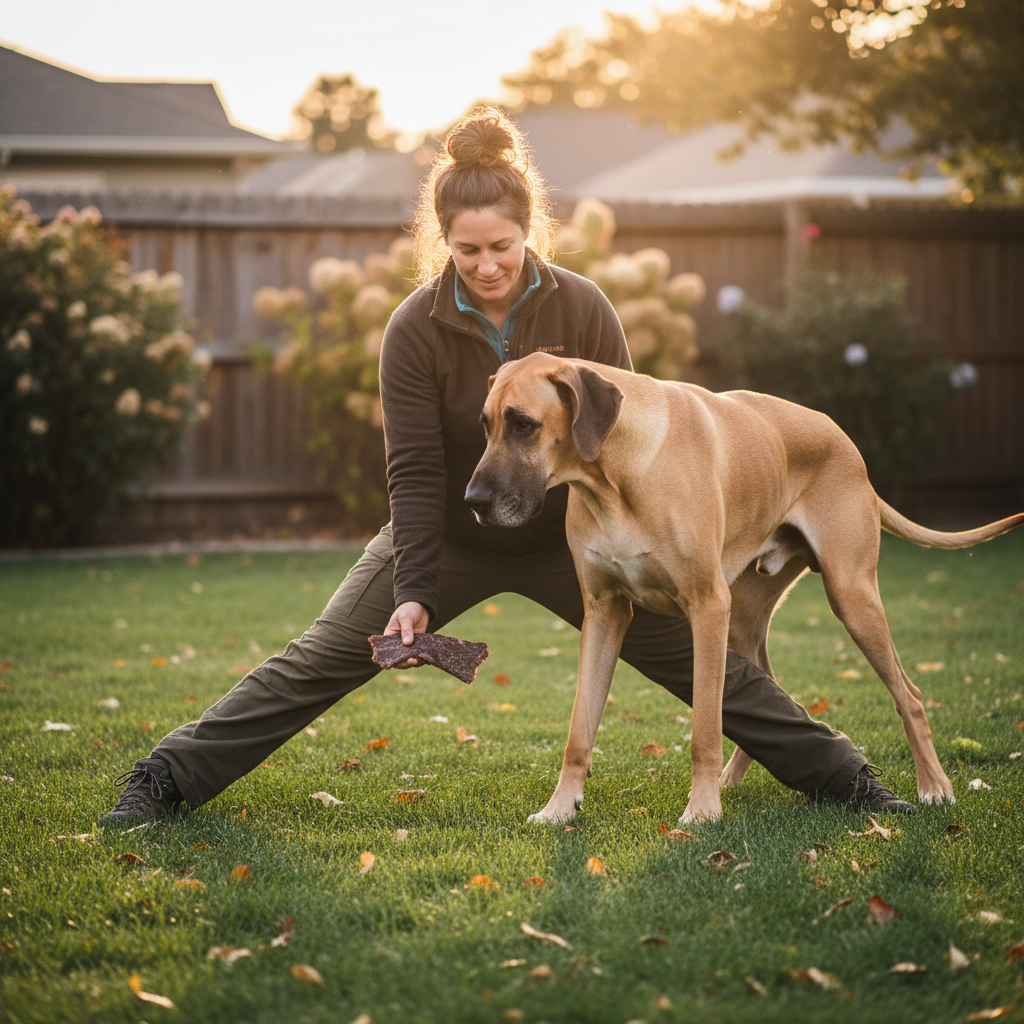
Even with the best training plan, you might hit a few bumps in the road. That’s completely normal! Dog training is rarely a straight line. Here are some of the most common challenges owners face when teaching ‘Middle’ and how to work through them with patience and positivity.
“My dog won’t go all the way through my legs.”
This is very common, especially with more timid dogs or larger breeds who might feel it’s a tight squeeze. The key is to make it less intimidating.
- Solution: Widen your stance significantly at first. You want to create a big, inviting tunnel. You can also try sitting on a stool or chair, which creates an even larger opening. Lure them through with an extra-special treat and celebrate big when they do it! As they get more confident, you can gradually narrow your stance.
“My dog goes in but immediately backs out.”
This usually means you’ve tried to build duration too quickly. Your dog hasn’t yet learned that staying in the position is the rewarding part.
- Solution: Go back to basics. For several repetitions, click/reward the instant they get into position. Then, start asking for just a single second of stillness before the reward. Use the ‘jackpot’ method—dropping multiple treats on the floor between their paws—to build value for staying put.
“My dog is too big/I’m too small for this to work!”
The ‘Middle’ command can be adapted for any size dog and person! It’s about the concept, not the exact look.
- Solution for Large Dogs: Instead of having them sit, their ‘Middle’ position might be to stand between your legs. Or, you can teach them to sit beside you with their body pressed against your leg as the ‘safe space’ cue. Another option is to teach them to rest their head on your lap when you’re sitting. The goal is the same: a specific, comforting position that means ‘you’re safe with me.’
“It works at home, but my dog ignores me outside.”
This is a classic issue of generalization. Dogs don’t automatically understand that a command learned in the living room applies everywhere. You need to teach them in new environments.
- Solution: Start in your quiet backyard. Once they’re reliable there, move to the front porch. Then try the sidewalk on a quiet morning. Gradually increase the level of distraction. You may need to use higher-value treats for outdoor sessions to compete with the exciting smells and sounds. Make it a super fun game, and don’t be afraid to take a step back if they’re struggling.
Conclusion
The ‘Middle’ command is so much more than a cute party trick. It’s a lifeline for your anxious dog, a powerful tool in your training toolkit, and a beautiful way to strengthen the bond of trust between you. By giving your dog a predictable, safe place to go when the world feels too big, you are empowering them to navigate challenges with confidence instead of fear.
Remember that consistency and patience are your best friends in this process. Celebrate the small victories, keep your sessions upbeat and fun, and never forget that you are your dog’s greatest advocate and safest space. With a little practice, that simple word, ‘Middle,’ will become a powerful symbol of your partnership, a quiet promise that no matter what happens, you’ve always got their back.