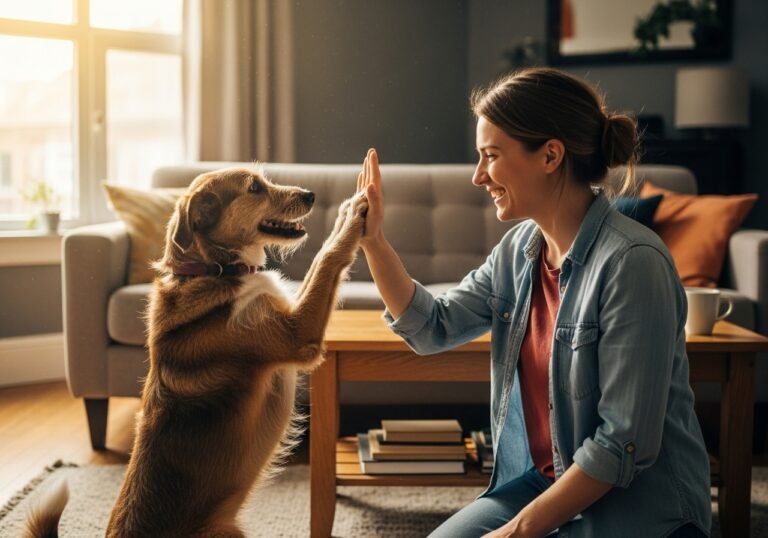
Are you looking for the perfect first trick to teach your new puppy or seasoned canine companion? You might be thinking of ‘Sit’ or ‘Shake,’ but what if I told you there’s a simpler, more versatile, and incredibly powerful command that can transform your training sessions? Enter the magic of ‘Touch’!
Often called hand targeting, ‘Touch’ is a deceptively simple trick where your dog learns to touch their nose to your hand (or another object) on cue. It might not have the same flashy reputation as ‘Roll Over,’ but don’t underestimate it. This single command is a gateway to better communication, a fantastic confidence booster for shy dogs, and the secret building block for dozens of more complex behaviors and real-world skills. It’s less about the trick itself and more about teaching your dog how to learn, problem-solve, and joyfully engage with you. In this guide, we’ll walk you through everything you need to know to master this foundational skill and unlock a whole new level of partnership with your best friend.
Why ‘Touch’ is More Than Just a Cute Trick
Before we dive into the ‘how-to,’ let’s talk about the ‘why.’ Understanding the incredible benefits of the ‘Touch’ command will motivate you through every step of the training process. It’s a true game-changer for your relationship with your dog.
A Universal Language
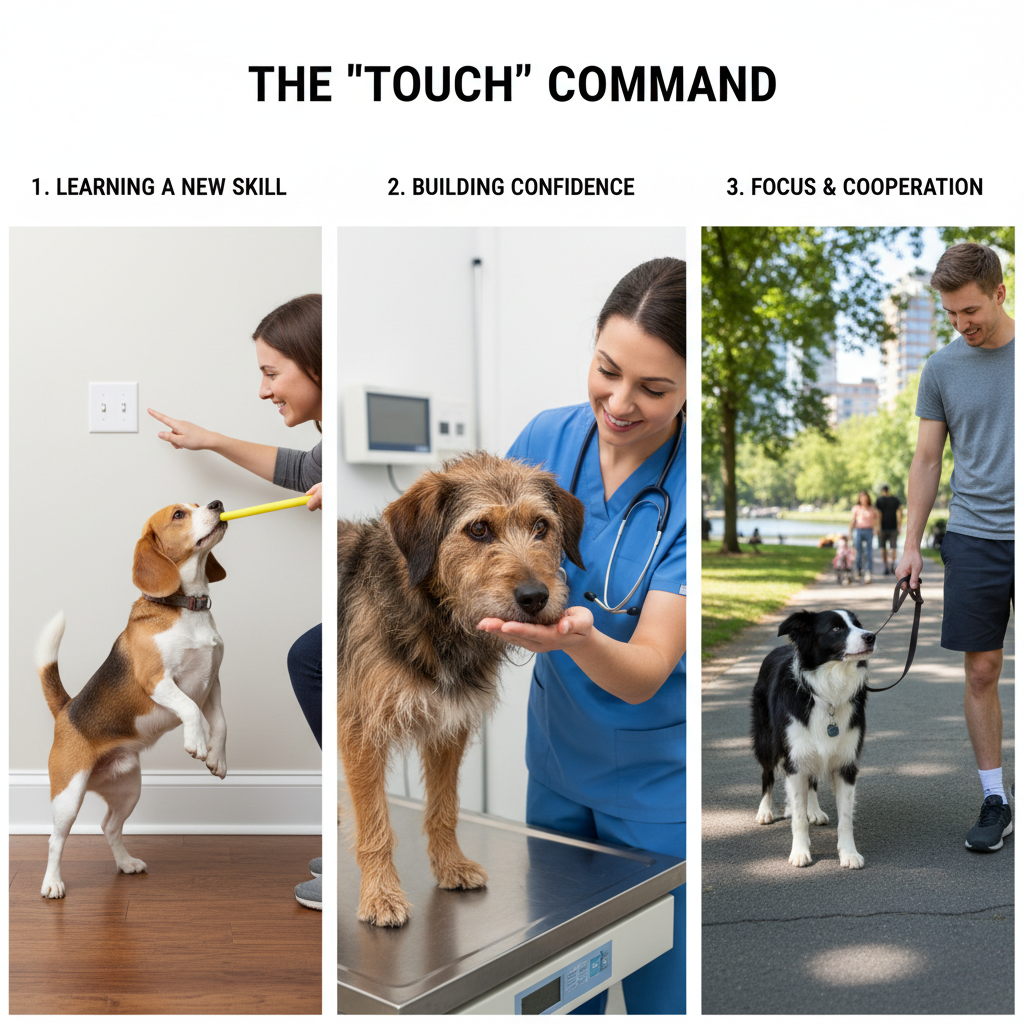
Imagine being able to guide your dog without pulling on their leash or collar. That’s what ‘Touch’ does. It becomes a non-verbal cue to direct your dog’s movement. You can use it to easily guide them:
- Onto the scale at the vet’s office
- Into the car or their crate
- Into the perfect position for a photo
- Away from something they shouldn’t be sniffing on a walk
- Through agility obstacles
It’s like having a floating steering wheel for your dog, allowing you to communicate movement requests gently and clearly.
The Ultimate Confidence Booster
For a shy, anxious, or fearful dog, the world can be a scary place. Even an outstretched hand can be intimidating. The ‘Touch’ command reframes this interaction entirely. It gives the dog a simple, predictable task to perform with a hand, and they get rewarded for it! It puts them in control—they are the ones choosing to approach and make contact. This simple choice can be monumental in building a nervous dog’s confidence and creating a positive association with hands and people.
A Foundation for Advanced Training
Think of ‘Touch’ as the alphabet of dog training. Once your dog understands the concept of targeting an object with their nose, you can transfer that skill to countless other behaviors. It’s the cornerstone for tricks like:
- Come When Called: A strong ‘Touch’ can create an enthusiastic recall. Instead of just calling their name, you can present your hand and say ‘Touch,’ making coming to you a fun game.
- Heeling: You can teach your dog to maintain a ‘Touch’ on your hand as you walk, creating the perfect heel position.
- Closing Doors: By transferring the target from your hand to a sticky note on a door, you can teach your dog to nudge doors shut.
- Turning on Lights: The same principle applies to light switches (with a target stick).
Expert Tip: ‘Touch’ is one of the best tools for redirecting unwanted behavior. Is your puppy starting to jump on a guest? Ask for a ‘Touch’! It gives them an appropriate, rewardable behavior to perform instead, channeling their excitement into a positive action.
Getting Started: Your ‘Touch’ Training Toolkit
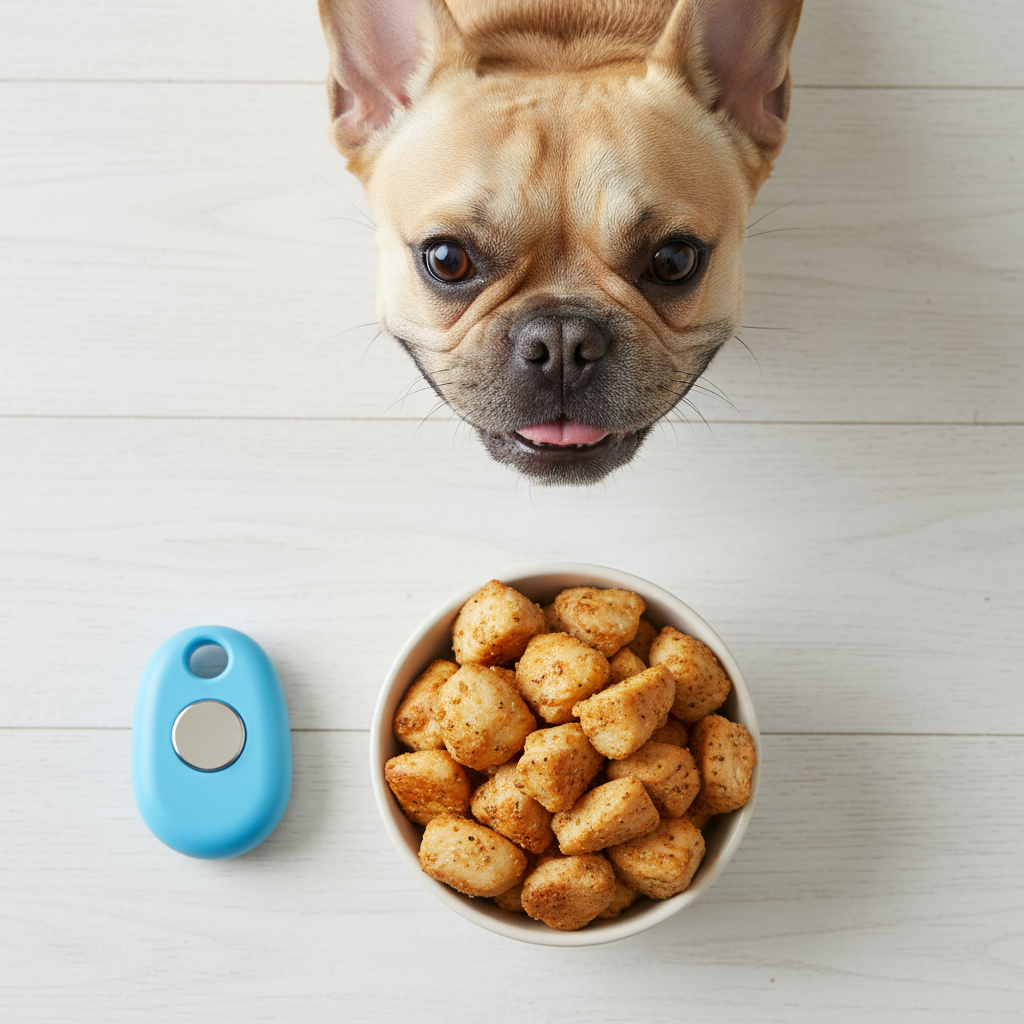
The beauty of teaching ‘Touch’ is its simplicity. You don’t need any fancy or expensive equipment to get started. In fact, you probably have everything you need right at home! Setting yourself up for success is all about having the right rewards and the right environment.
The Essentials
- High-Value Treats: This is the most important tool! We need to make it worth your dog’s while. Forget the dry kibble for now. Opt for small, soft, smelly, and delicious treats that your dog absolutely loves. Think tiny pieces of cheese, boiled chicken, or commercial training treats. They should be pea-sized so you can do lots of repetitions without filling your dog up too quickly.
- A Clicker (Optional, but Recommended): A clicker is a small plastic device that makes a distinct ‘click’ sound. It’s used as an ‘event marker’ to tell your dog the exact moment they did something right. The sequence is: dog touches hand -> you ‘click’ -> you give a treat. The click becomes a powerful signal that a reward is coming. It’s much more precise than saying ‘Good dog!’
- A Quiet Space: Start your training sessions in a low-distraction environment, like your living room or kitchen. You want your dog to be able to focus on you and the game, not the squirrel outside the window.
- An Enthusiastic You!: Your energy is contagious. If you’re excited and positive, your dog will be, too. Keep your voice upbeat and your attitude playful.
A Quick Word on Clicker Training
If you’ve never used a clicker, you first need to ‘charge’ it. This simply means teaching your dog that the click sound means a treat is coming. Sit with your dog, click the clicker, and immediately give them a treat. Repeat this 10-15 times. There’s no command and no action required from your dog. You’re just building the association: Click = Treat. Once your dog’s ears perk up and they look for a treat when they hear the click, you’re ready to go!
The ‘Touch’ Command: A Step-by-Step Guide
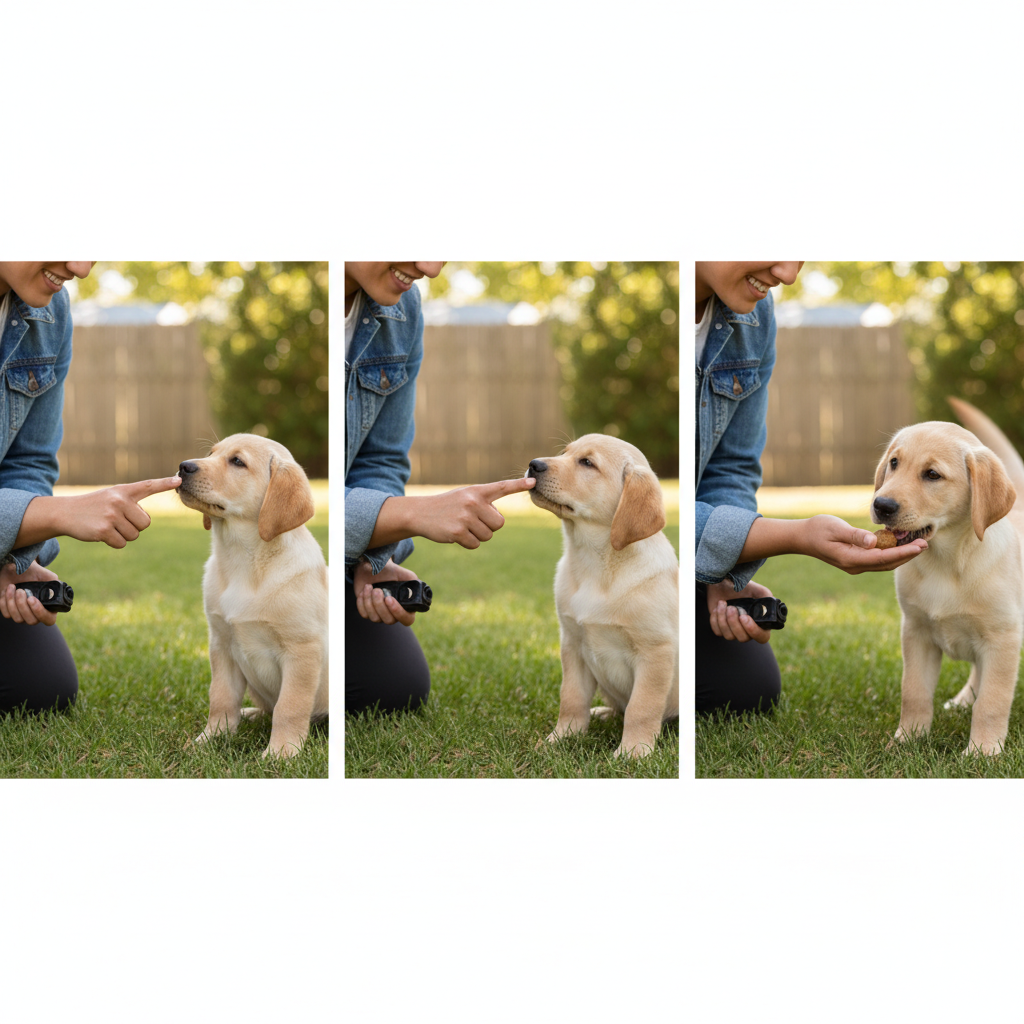
Alright, you’ve got your treats and your clicker, and your dog is ready to learn! Remember, the key to this process is to keep sessions short and fun—aim for just 2-5 minutes at a time, a few times a day. Let’s break it down into easy steps.
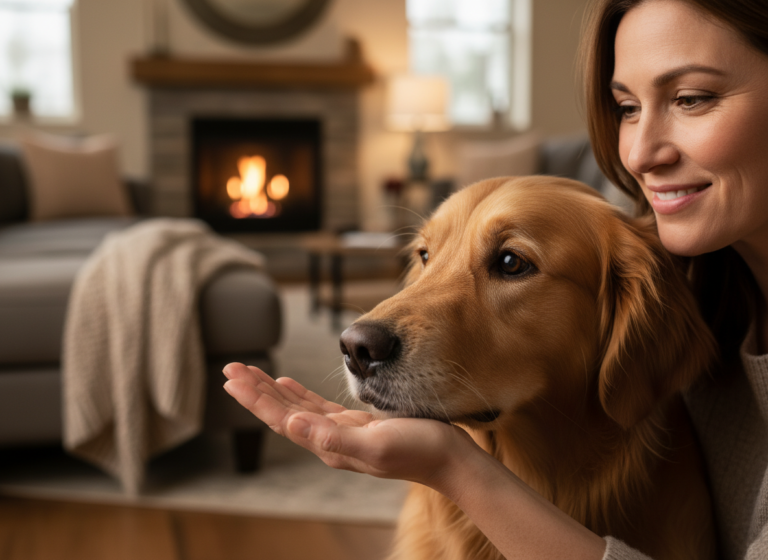
- Step 1: Present Your Hand. Hold one hand out to the side of your dog’s head, about an inch or two from their nose. Keep your hand still. You can present a flat palm or two extended fingers (like a peace sign). Most dogs will naturally be curious and move their nose toward your hand to sniff it.
- Step 2: Mark the Moment. The instant your dog’s nose makes contact with your hand—even the slightest brush—click your clicker (or use a verbal marker like ‘Yes!’). Timing is everything here! The click marks the exact moment of success.
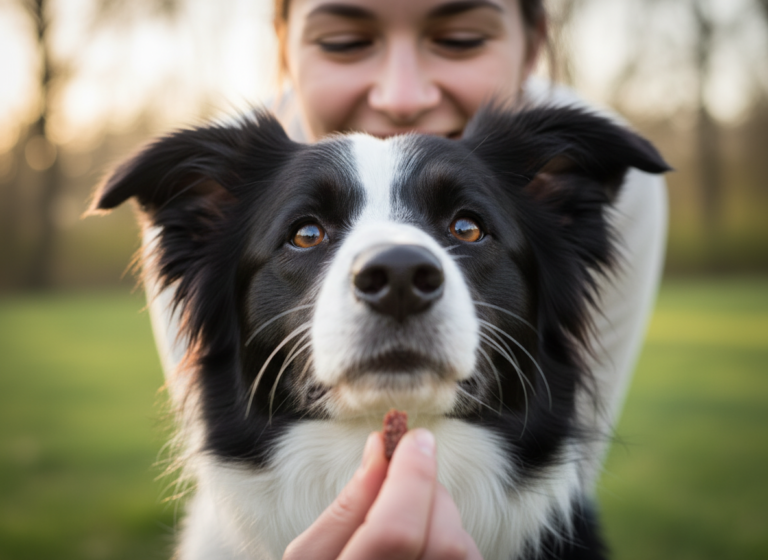
- Step 3: Reward the Action. Immediately after the click, give your dog a treat. It’s best to bring the treat to their mouth with your other hand, so they don’t get confused and start nibbling the target hand. After they eat the treat, pull your target hand away for a second.
- Step 4: Repeat, Repeat, Repeat. Present your hand again. When they touch it, click and treat. Do this 5-10 times in a row. You’ll see your dog start to offer the behavior more deliberately. They are learning, ‘When I touch that hand thing, I hear a click and get a snack. Cool!’ Start moving your hand to slightly different positions—a little higher, a little lower, more to the left—so they learn to seek it out.
- Step 5: Add the Verbal Cue. Once your dog is reliably and eagerly touching your hand as soon as you present it, it’s time to name the behavior. Right as you are about to present your hand, say your cue word—’Touch!’—in a clear, happy voice. Then, present your hand. When they touch it, click and treat as usual. The sequence is now: Say ‘Touch!’ -> Present Hand -> Dog Touches -> Click -> Treat.
- Step 6: Fade the Lure & Test the Cue. Now, try saying ‘Touch!’ and presenting your hand without moving it all the way to their nose. See if they will move a step or two to complete the behavior. You’re testing if they understand the verbal cue. Keep practicing in short, fun bursts!
Important Takeaway: Don’t push your dog’s nose or move your hand towards them to force the touch. The goal is for the dog to make the choice to initiate the contact. Patience is key!
Level Up! Advancing the ‘Touch’ Command
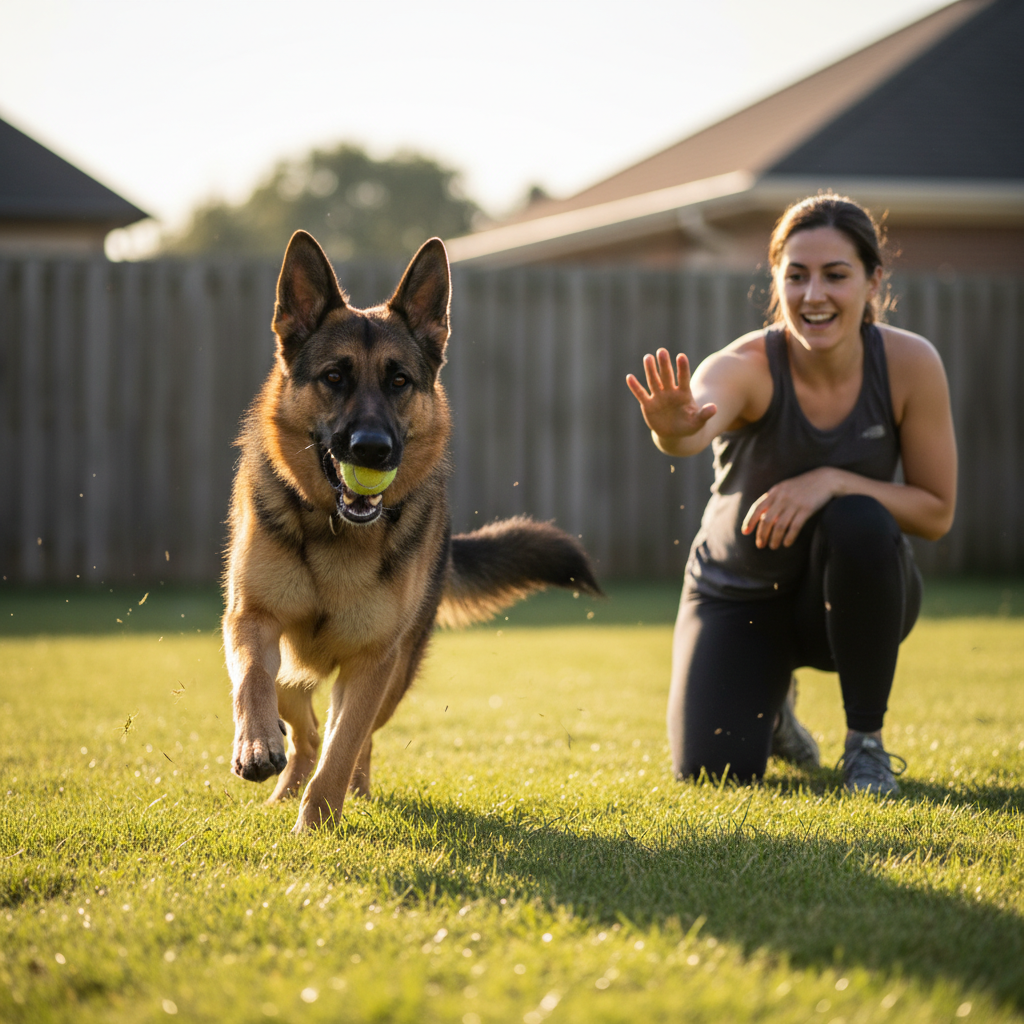
Once your dog has mastered the basic nose-to-hand touch, the fun really begins! Now you can start ‘proofing’ the behavior and applying it to more complex and useful situations. This is where ‘Touch’ evolves from a simple trick into an indispensable life skill.
Challenge 1: Duration
Instead of clicking the instant your dog’s nose makes contact, wait a single second while their nose is still pressed to your hand before you click and treat. Gradually increase this duration. This teaches your dog to ‘hold’ the target, which is incredibly useful for things like keeping their head still during vet exams or grooming.
Challenge 2: Distance and Distractions
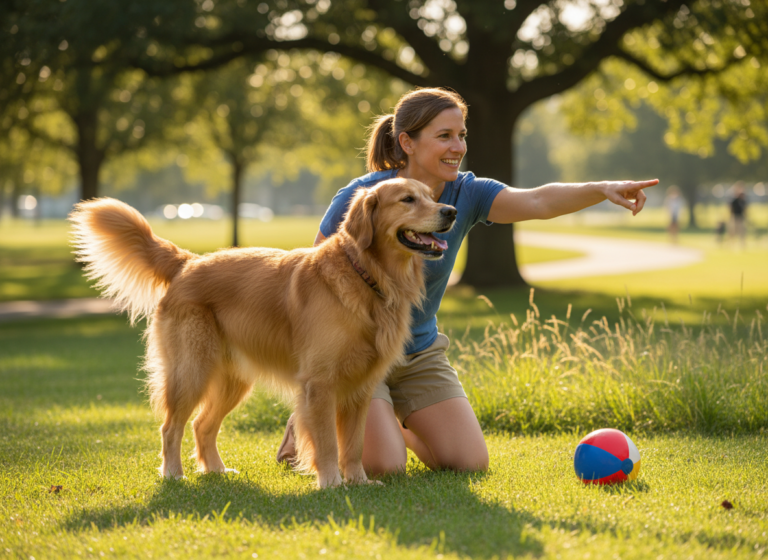
Start asking for the ‘Touch’ from further away. Take one step back, say ‘Touch!’ and present your hand. When your dog moves to you to touch your hand, throw a jackpot of treats! This builds a fantastic recall. Gradually increase the distance. Once they have that down, start practicing in more distracting environments, like your backyard or on a quiet street. Can they still focus on you and perform the ‘Touch’ when there are new smells and sounds?
Challenge 3: Generalizing the Target
Your dog knows how to touch your hand, but can they touch something else? This is the key to unlocking advanced tricks.
- Target Stick: Teach them to touch the end of a store-bought target stick or even a simple wooden spoon. Hold it out just like you did your hand and reward them for touching the end. A target stick acts as an extension of your hand, allowing you to ask for a ‘touch’ on objects that are far away or high up.
- Sticky Notes: Stick a colorful sticky note on a cabinet, a door, or the wall at your dog’s nose level. Point to it and ask for a ‘Touch.’ This is the first step to teaching your dog to close doors or press buttons.
| Challenge | Goal | Practical Application |
|---|---|---|
| Duration | Hold nose on target for 3-5 seconds | Cooperative care (holding still for exams, nail trims) |
| Distance | Respond from across the room | A fun and reliable ‘Come’ command |
| New Targets | Touch a sticky note on a door | Task training (closing doors, turning on lights) |
Troubleshooting Common ‘Touch’ Training Hiccups
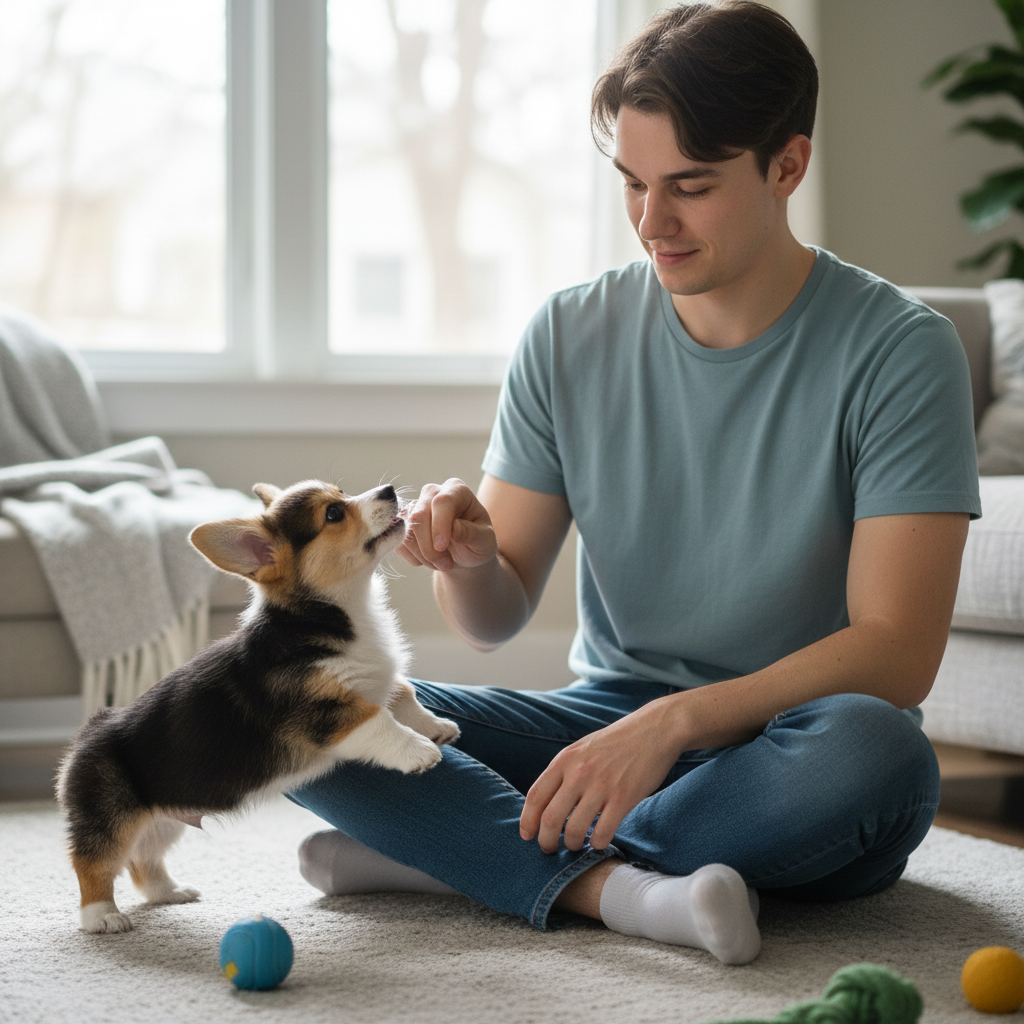
Even with the simplest tricks, sometimes we hit a snag. Don’t worry! Every dog learns at a different pace, and troubleshooting is a normal part of the training process. Here are some common issues and how to solve them.
‘My dog keeps mouthing or nipping my hand!’
This is very common, especially with puppies. They are exploring the world with their mouths! The solution is to reward only the correct behavior. If they touch with their teeth, say ‘Oops!’ in a neutral tone, and briefly pull your hand away. Present it again. The moment they touch gently with just their nose, click and have a mini-party! They will quickly learn that only a polite nose-boop earns the reward. Using a flat palm instead of extended fingers can also discourage nipping.
‘My dog just isn’t interested or loses focus.’
If your dog is sniffing the ground or looking away, there are a few things to check:
- Are your treats good enough? You might need to upgrade to something more enticing. This is called ‘competing with the environment.’ Your reward must be better than the distraction.
- Are your sessions too long? A dog’s attention span, especially a puppy’s, can be short. Keep training sessions to just a couple of minutes. It’s better to have five 2-minute sessions throughout the day than one frustrating 10-minute session.
- Is the environment too distracting? Go back to a quieter space until the behavior is more solid.
‘My dog was doing great, but now they won’t do it.’
Sometimes dogs seem to regress. This is normal! It doesn’t mean they’ve forgotten everything. It usually means we’ve tried to advance too quickly. Simply take a step back to where they were last successful. If they won’t touch your hand from a foot away, go back to holding it right by their nose. Rebuild their confidence with a few easy wins before trying to increase the difficulty again. Training is never a straight line; there are always ups and downs.
Remember the Golden Rule: Always end each training session on a high note! Ask for one last easy ‘Touch’ that you know they can do successfully, reward them enthusiastically, and then end the game. This keeps them eager for the next session.
Conclusion
Congratulations! You now have all the tools and knowledge to teach one of the most useful and relationship-building commands in the dog training world. The ‘Touch’ command is so much more than a party trick; it’s a communication tool, a confidence builder, and a stepping stone to a world of fun and cooperation with your dog. By teaching your dog to target, you’re teaching them a new way to interact with their world and with you, all through the power of positive reinforcement.
Remember to be patient, keep it fun, and celebrate the small victories along the way. The bond you build during these short, happy training sessions is the real prize. So grab those tasty treats, find a comfy spot, and start unlocking the magic of ‘Touch’ with your best friend today. Happy training!