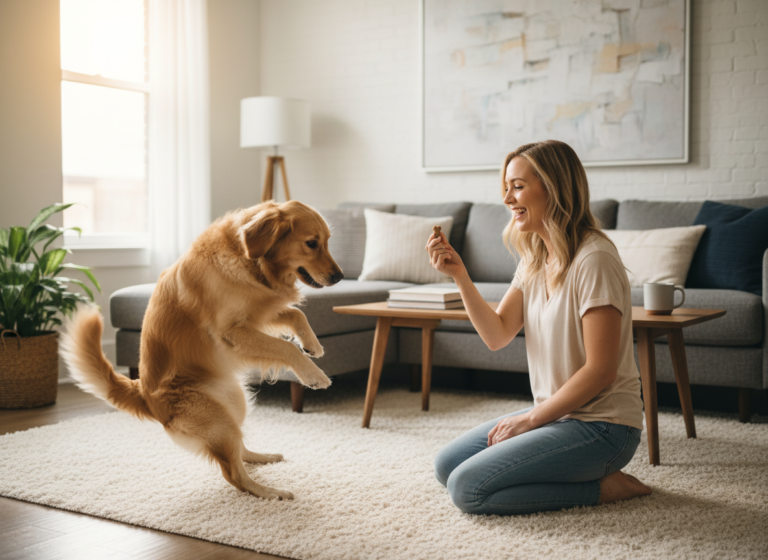
Are you a card-carrying member of the ‘just five more minutes’ club? Does the sound of your alarm clock fill you with a unique sense of dread each morning? If you’re nodding along, we’ve got a furry, four-legged solution that’s infinitely cuter and way more effective. Imagine, instead of a blaring beep, you’re woken by the gentle, persistent tug of your best friend, eager to start the day with you.
Teaching your dog to pull the covers off is more than just an adorable party trick; it’s a fantastic bonding exercise that stimulates your dog’s mind and strengthens your connection. This behavior, rooted in a game of tug, can become a practical and joyful part of your morning routine. It requires patience, a positive attitude, and a whole lot of tasty treats, but the payoff is a wake-up call you’ll actually look forward to. In this guide, we’ll break down the entire process, from gathering your supplies to troubleshooting common hiccups, ensuring you and your pup are set up for success.
Setting the Stage for Success: What You’ll Need
Setting the Stage for Success: What You’ll Need
Before you jump into training, a little preparation goes a long way. Think of it as setting up a fun classroom for your eager student. The goal is to make the learning process as clear, positive, and rewarding as possible. You don’t need a lot of fancy equipment, just a few key items and the right mindset.
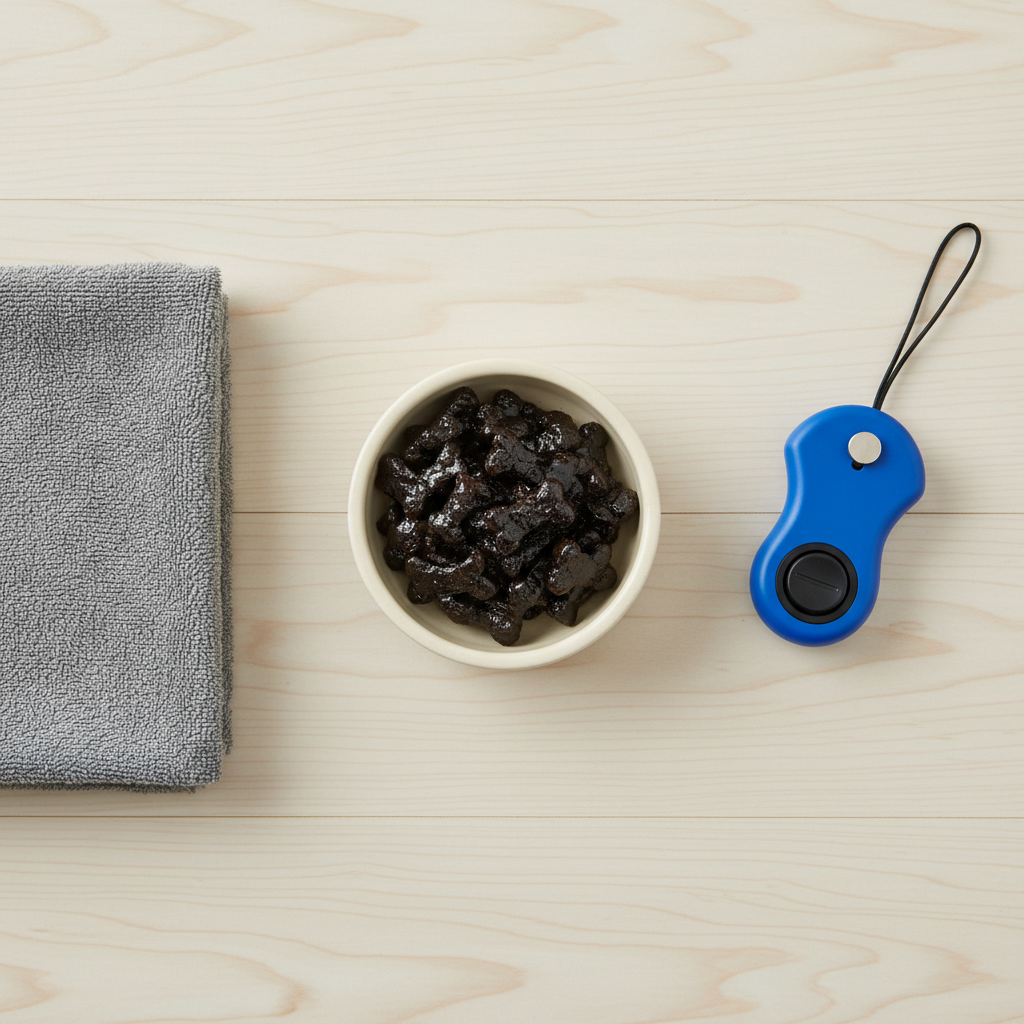
Essential Training Toolkit:
- High-Value Treats: We’re not talking about their everyday kibble. You need the good stuff! Think small, soft, smelly treats like tiny pieces of chicken, cheese, or commercial training treats that your dog absolutely adores. The higher the value, the more motivated they’ll be to work for it.
- A Clicker (Optional but Recommended): A clicker is a fantastic tool for marking the exact moment your dog does something right. This precise communication speeds up learning. If you’re not using a clicker, choose a consistent marker word like “Yes!” or “Good!” said in an upbeat tone.
- A Designated ‘Training’ Blanket: Don’t start with your expensive duvet! Grab an old towel, a small blanket, or a sturdy piece of fabric. This will be your dog’s ‘prop’ to learn the mechanics of pulling without you worrying about your bedding getting damaged during the learning phase.
- A Quiet, Distraction-Free Space: Choose a time and place where you won’t be interrupted. Turn off the TV, put your phone on silent, and find a room where your dog feels comfortable and can focus solely on you and the fun new game you’re about to play.
Helpful Prerequisite Skills:
While not strictly necessary, having a couple of foundational behaviors already in your dog’s repertoire can make this process much smoother. If your dog already knows a solid “Take It” or “Tug” cue, you’re ahead of the game! If not, don’t worry—we’ll incorporate the basics into the steps below. The most important prerequisite is a dog who enjoys playing and engaging with you.
Expert Tip: Keep your training sessions short and sweet! Dogs, especially puppies, have short attention spans. Aim for multiple 5-10 minute sessions throughout the day rather than one long, grueling one. Always end on a positive note when your dog has successfully completed a step.
The Fun Part: A Step-by-Step Guide to Your New Alarm Clock
The Fun Part: A Step-by-Step Guide to Your New Alarm Clock
Alright, treats are ready, your training towel is at hand, and your pup is looking at you with anticipation. It’s time to begin! Remember, the key here is to break the final behavior down into tiny, achievable pieces. We’ll build on each small success. Let’s get started.
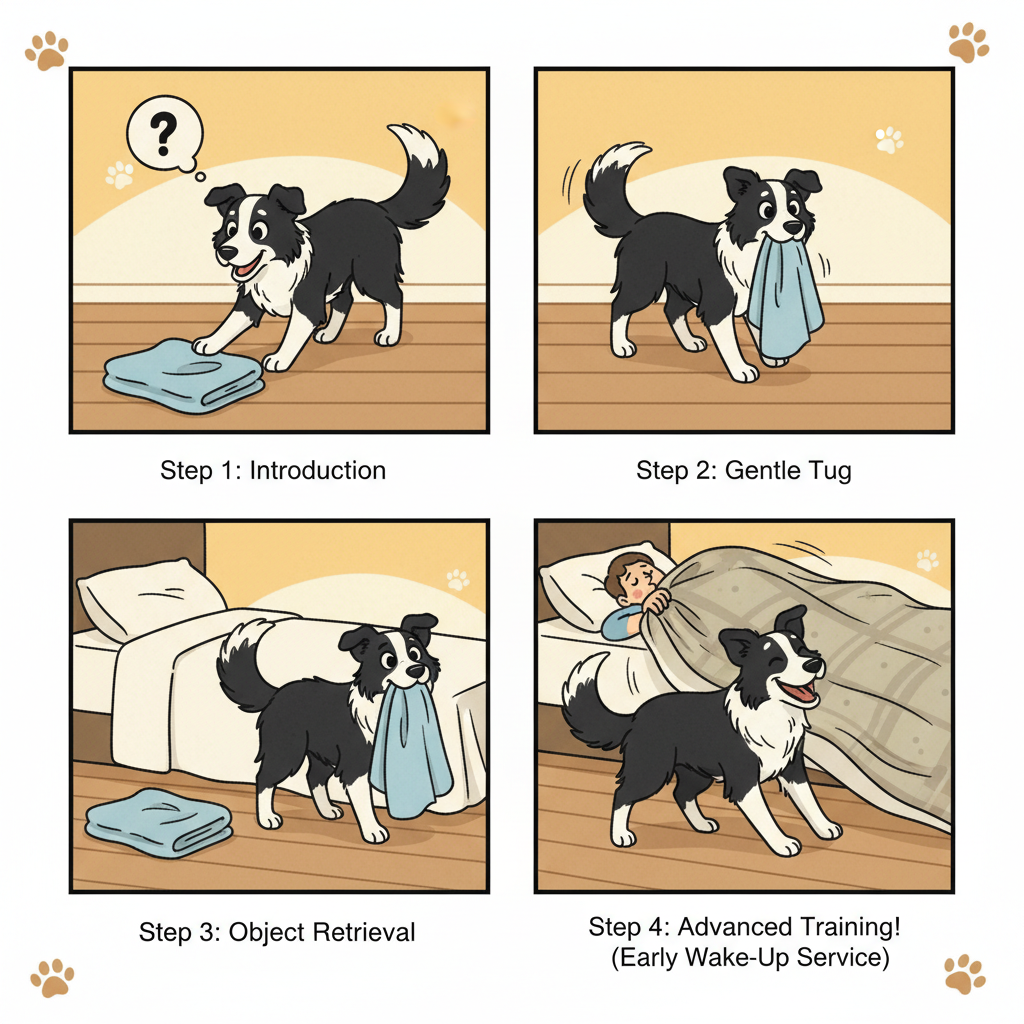
- Step 1: Introduce the Target (The Towel). The first goal is simple: get your dog interested in putting their mouth on the towel. Sit on the floor with your dog and hold the towel. Encourage them to investigate it. The moment their nose touches it, click (or say “Yes!”) and give them a treat. Repeat this a few times. Then, wait for them to put their mouth on it. Even the slightest nibble gets a click and a treat. We’re rewarding curiosity and interaction.
- Step 2: Encourage a Gentle Tug. Once your dog is confidently mouthing the towel, delay your click for a split second. This slight delay will often cause the dog to pull back on the object slightly. The instant you feel any tension or pulling, click and treat! You are now rewarding the ‘pull’ motion. You can add a soft verbal cue here like “Pull” as they are performing the action.
- Step 3: Build Duration and Pressure. Gradually ask for a little more. Wait for a slightly stronger or longer pull before you click and treat. You can encourage this by holding the towel a little more firmly (but not so firmly that it’s a true tug-of-war). The goal is for them to learn that pulling the object is what earns the reward. Keep it fun and light, like a game.
- Step 4: Transition to the Bed. Now it’s time to change the scenery. Take the training towel and place it on the edge of your bed while you sit on the floor or on the bed with your dog. Ask for the same “Pull” behavior. They may be confused at first, but with a little encouragement, they’ll understand the game is the same, just in a new spot. Once they are successfully pulling the training towel off the bed, you can try draping it over your legs as you sit on the bed.
- Step 5: Introduce the Real Covers. When your dog is a pro at pulling the training towel off the bed, it’s time to switch to your actual blanket or duvet. Start with just a corner of the blanket. Encourage them to target the blanket just as they did the towel. Because the blanket is heavier, be sure to reward even the smallest effort initially! Make it a huge jackpot (lots of treats and praise) when they successfully pull it.
- Step 6: Add the Final Cue and Context. Now that your dog understands the physical action, we can attach our final ‘alarm clock’ cue. As you lie in bed (at first, just pretend to be asleep), say your chosen cue—like “Wake Up!” or “Good Morning!”—and then encourage them to pull the covers. When they do, celebrate enthusiastically! Over time, with repetition, they will associate the verbal cue with the action of pulling the covers to wake you.
Oops! Troubleshooting Common Training Bumps

Oops! Troubleshooting Common Training Bumps
Even with the best plan, you might hit a snag or two. That’s completely normal in dog training! Every dog learns differently. The key is to stay patient, positive, and figure out how to communicate more clearly. Here are some common issues and how to navigate them.
| The Problem | The Solution |
|---|---|
| My dog won’t put their mouth on the blanket. | The blanket might not be interesting enough! Try using a favorite soft toy to start the game, then switch to the blanket. You can also (sparingly) smear a tiny dab of dog-safe peanut butter or cream cheese on the corner of the training towel to encourage mouthing. |
| My dog is too rough and wants to play a full-blown game of tug-of-war. | This is a sign of great enthusiasm! The key is to teach them that a gentle pull is what gets the reward. If they get too rough, simply say “Oops!” and drop the blanket, momentarily ending the game. When they are gentle again, restart the game. This teaches them that gentleness keeps the fun going. |
| My dog pulls the blanket but then runs off with it like it’s a prize. | This is common with dogs who love to play keep-away. To counter this, make sure the reward you give them (the treat) is way more exciting than the blanket itself. Reward them the instant they pull, so they learn to look to you for the good stuff rather than running off with the ‘toy’. |
| The trick works perfectly on the floor but falls apart on the bed. | This is a classic issue of generalization. Dogs don’t always transfer skills to new environments automatically. Go back a few steps. Reward your dog just for putting their paws on the bed, then for interacting with the training towel on the bed, and slowly build back up to the full pull. Make the bed a super fun place for this game. |
| My dog seems bored or distracted. | Your training session might be too long, or the treats might not be motivating enough. Cut the session short (end on a good note!) and try again later. And don’t be afraid to break out the really, really good treats to recapture their focus. |
Making it Official: Proofing and Real-World Application
Making it Official: Proofing and Real-World Application
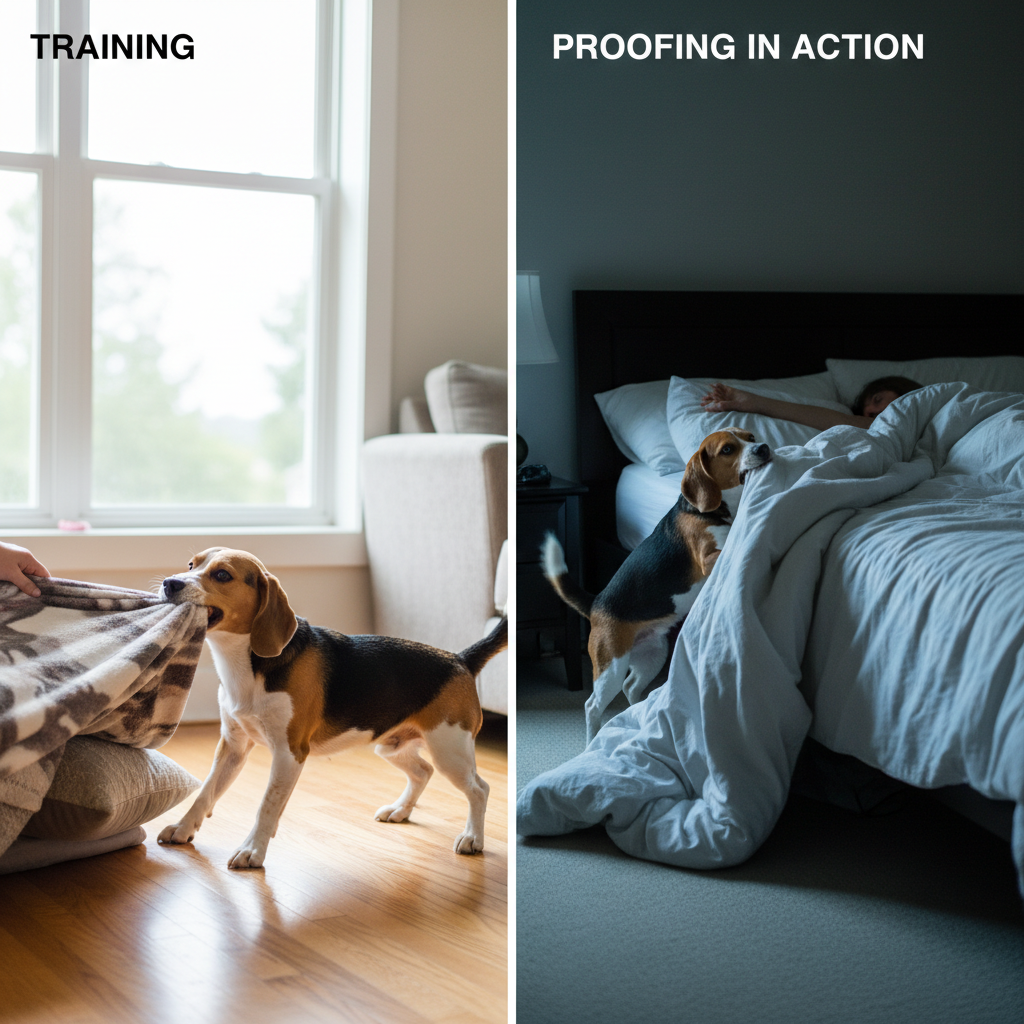
Your dog is now pulling the covers on cue—congratulations! You’ve taught a complex behavior. The final step is ‘proofing,’ which is trainer-speak for making sure the trick works reliably in the real world, not just in a perfect training setup. This is how we turn a fun trick into a functional alarm clock.
What is Proofing?
Proofing involves gradually adding distractions and changing the context to help your dog generalize the skill. We want them to understand that “Wake Up!” means pull the covers, whether it’s bright and sunny, you’re faking it in the afternoon, or you’re actually fast asleep in the morning.
- Vary the Time: Practice the cue at different times of day, not just in the morning. A quick, fun practice session in the evening reinforces the behavior.
- Vary Your Position: Ask for the cue while you’re fully under the covers, just partially covered, lying on your side, or on your back.
- Simulate the Real Thing: Before you rely on it for an actual wake-up call, do some dress rehearsals. Set your regular alarm. When it goes off, wait a second, and then give your dog their “Wake Up!” cue. This helps them associate their action with the sound of the alarm, creating a powerful sequence.
A Note on Responsibility and Fun
It’s crucial to remember that this should always be a fun and positive interaction for your dog. It’s a game, not a chore.
Never punish your dog if they fail to perform the cue. It simply means they need more practice or clearer communication. If they seem hesitant one morning, that’s okay! They aren’t a machine. Forcing the issue will only create a negative association with what should be a joyful routine.
By keeping it light and rewarding, you’re not just creating a cute alarm clock; you’re starting every single day with a moment of positive connection, teamwork, and a wagging tail. And honestly, what could be better than that?
Conclusion
You did it! You’ve gone from hitting the snooze button to getting a happy, furry wake-up call. By teaching your dog to pull the covers, you’ve done so much more than teach a cool trick. You’ve invested time in your relationship, challenged your dog’s brain, and built a unique routine that celebrates the incredible bond you share. Every morning now has the potential to start with a smile and a wagging tail.
Remember that the cornerstones of this training—and all dog training—are patience, consistency, and a whole lot of love. Cherish this fun new way to start your day, and give your adorable new alarm clock an extra ear scratch from us. Happy training, and even happier mornings!