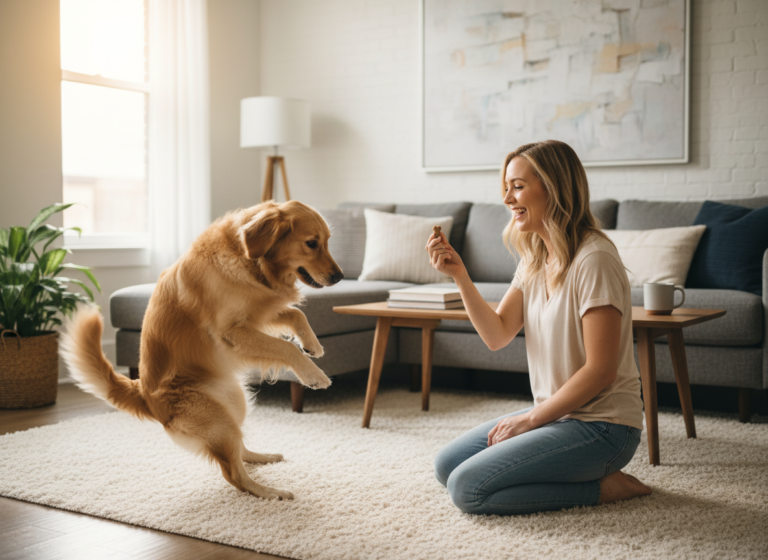
Have you ever seen a dog perform a trick that just made you smile from ear to ear? The ‘Cop-Cop’ trick is definitely one of those! Picture this: you start walking, and your dog, with their front paws perched delicately on your feet, walks right along with you. It’s an incredible display of trust, balance, and teamwork that’s a staple in the world of canine freestyle and dog dancing.
But don’t be intimidated! This impressive maneuver isn’t just for super-trainers and professional performers. With a little patience, a pocketful of tasty treats, and a positive attitude, you can teach your canine companion this amazing trick right in your own living room. It’s more than just a cool party trick; it’s a fantastic way to strengthen your bond, improve your dog’s body awareness, and provide some much-needed mental stimulation. So, are you ready to become dance partners with your dog? Let’s break down how to teach the ‘Cop-Cop’ trick, one happy step at a time!
Ready, Set, Treat! Gearing Up for the ‘Cop-Cop’ Trick
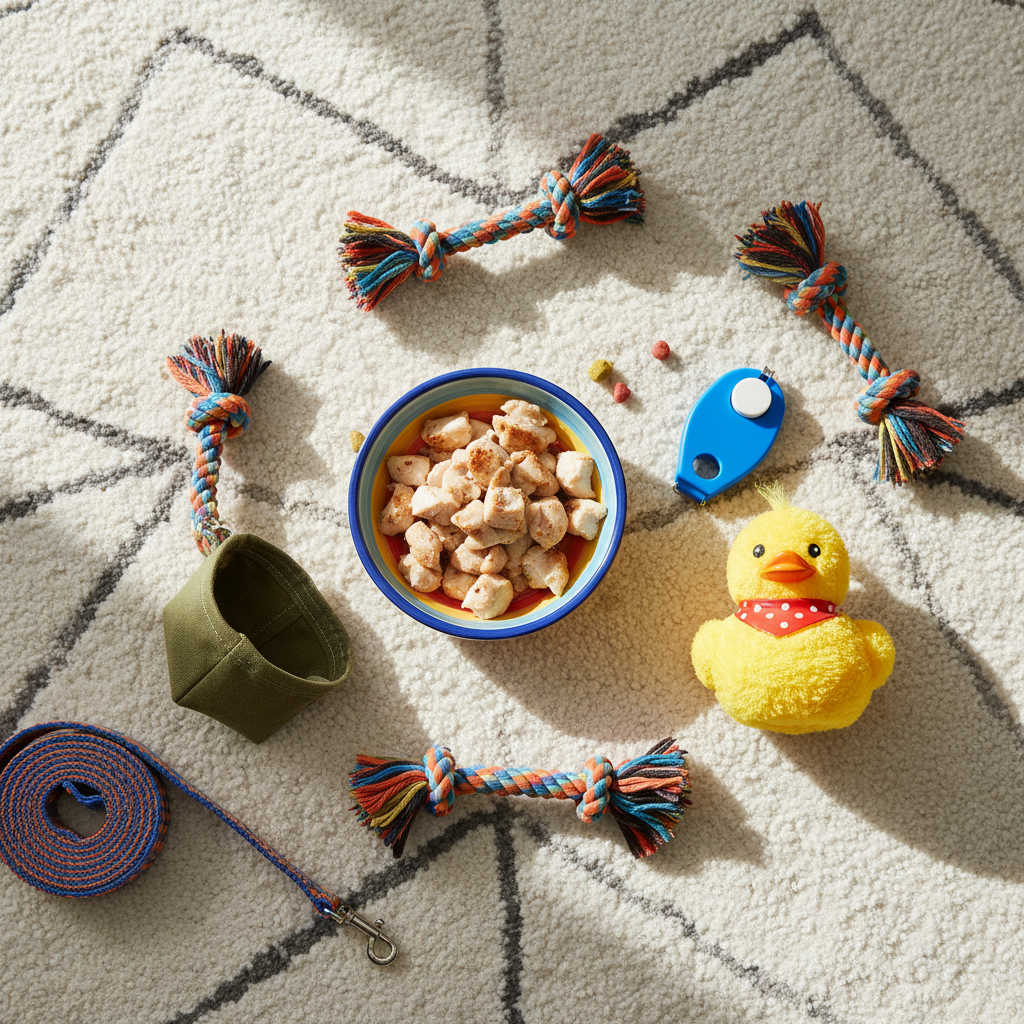
Before you and your pup start your dance lessons, it’s best to get everything you need in one place. A smooth training session is all about preparation! The good news is, you don’t need any fancy or expensive equipment for this trick. You probably have everything you need already.
What You’ll Need:
- High-Value Treats: This is the big one. You’ll want something extra special that your dog absolutely loves and doesn’t get all the time. Think tiny pieces of cooked chicken, cheese, hot dogs, or a favorite soft commercial treat. The key is that they should be small and easy to swallow quickly, so you can keep the training moving without a long chew break.
- A Clicker (Optional, but Recommended): If your dog is clicker-trained, this is the perfect time to use it! A clicker is a fantastic tool for marking the exact moment your dog does the right thing. This precise communication can speed up the learning process significantly. If you don’t use a clicker, a consistent verbal marker like a sharp “Yes!” or “Good!” works just as well.
- A Non-Slip Surface: Safety and confidence are key. You’ll want to train on a surface where your dog (and you!) won’t slip. A carpeted room, a large rug, or a grassy area outdoors are all great options. Avoid slippery surfaces like tile, laminate, or hardwood floors, as a slip could scare your dog and set your training back.
- Comfortable Shoes: You’ll be the dance floor, so make sure you’re wearing comfortable, flat-soled shoes. Sneakers or flats with a relatively wide, stable surface work best. High heels or narrow shoes will make it much harder for your dog to balance.
- Patience and a Positive Attitude: This is your most important tool! Remember, this is a complex trick. There will be moments of confusion and wobbly paws. Your job is to be your dog’s cheerleader. Keep sessions short, fun, and always end on a positive note. Your dog feeds off your energy, so if you’re having a good time, they will too!
Step-by-Step to Success: Teaching the ‘Cop-Cop’
Alright, let’s get to the fun part! We’re going to break this trick down into tiny, manageable pieces. The goal is to make it so easy for your dog to succeed that their confidence soars. Remember to go at your dog’s pace. If they seem stuck on a step, that’s okay! Just spend a little more time there before moving on.
-
Step 1: Paws Up! Introducing the Concept
The first goal is simple: get your dog comfortable with putting their paws on your feet. Sit down in a chair and have your treats ready. With a treat in your hand, lure your dog towards your foot. Hold the treat right over your shoe. The moment your dog’s paw touches your shoe—even for a split second—click (or say “Yes!”) and give them the treat. Repeat this several times. At first, reward any interaction with your foot, like a sniff or a nudge. Then, start rewarding only for a paw touch. Once they’re reliably touching with one paw, hold the treat in a way that encourages them to put their second paw up to get it. Big party when they do! At this stage, you are just rewarding them for getting on; don’t ask for any duration yet.
-
Step 2: Building Confidence and Duration
Now that your dog understands the ‘paws on feet’ game, we want them to stay there for a little longer. Ask your dog to put their paws up. The moment they do, start feeding them a slow, steady stream of tiny treats. This is called ‘duration feeding’. Let them stay there for just two or three seconds, then toss a treat away from you and say “All done!” to release them. This teaches them to wait for a release cue instead of just jumping off whenever they want. Gradually increase the amount of time they stay on your feet, from a few seconds to five, then ten. Keep it fun and don’t push for too much, too soon.
-
Step 3: The First Tiny Step
This is the moment where the magic starts to happen. With your dog in position on your feet while you’re standing, get ready to move. This is the part that can be tricky for some dogs, so we’re going to make the movement almost imperceptibly small. With their paws on your feet, simply shift your weight. Click and treat. Do that a few times. Now, slide one foot forward just an inch—a tiny shuffle. The instant you move, click and treat lavishly! The goal is for your dog to think, “Whoa, when we move together, I get a huge reward!” Repeat this tiny shuffle until your dog seems comfortable and confident with the small movement.
-
Step 4: Linking the Steps Together
Once your dog is comfortable with the single tiny shuffle, it’s time to try two. Ask for paws up, take one tiny step, then another, then click and have a treat party! You’re building a chain of behaviors. The key is to build this slowly. If you try to go from one step to five steps all at once, your dog will likely get confused and jump off. Go from one step to two. When that’s solid, try for three. Keep your steps small and slow at this stage. It’s better to take three tiny, successful steps than one big, wobbly one.
-
Step 5: Adding the Verbal Cue
Your dog is now reliably getting on your feet and taking a few steps with you. They understand the behavior! Now is the time to give it a name. Just before you lure them onto your feet, say your chosen cue in a clear, happy voice. “Cop-Cop!” is a popular choice, but you can use “Walkies,” “On Top,” or anything you like. Say the cue, lure them up, take a few steps, and reward. After several repetitions, you can try saying the cue without luring to see if they offer the behavior on their own. Don’t worry if they don’t get it right away; just go back to pairing the word with the action.
-
Step 6: Fading the Lure
The final step is to transition from using a food lure to guide your dog to responding just to the verbal cue or a hand signal. Instead of holding the treat to guide them, use an empty hand in the same motion. When they get on your feet, then give them the treat from your other hand. Over time, you can make this hand signal smaller and smaller, until you can simply say “Cop-Cop!” and have your dog hop into position, ready to walk. This process takes time, so be patient and reward every small success along the way!
Oops! Troubleshooting Common ‘Cop-Cop’ Challenges
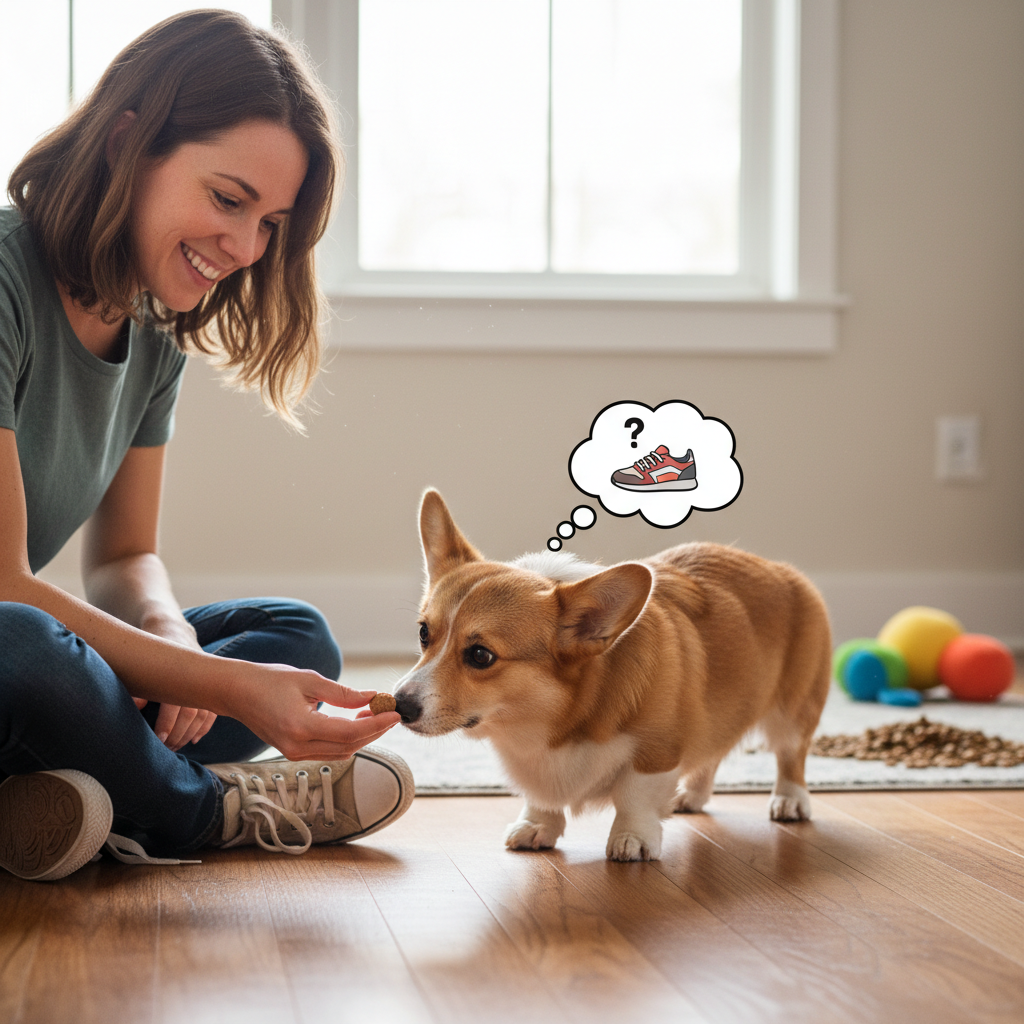
Even with the best plan, sometimes you hit a snag. Don’t worry, it’s a normal part of any training process! Every dog learns differently. Here are some common challenges you might face and how to work through them with a smile.
- Problem: My dog won’t put their paws on my feet at all.
Solution: Go back to basics and make it even easier! Try using a target. Place a small, brightly colored sticky note on the toe of your shoe. Click and treat your dog just for looking at it, then for sniffing it, then for touching it with their nose, and finally for touching it with their paw. You can also try different shoes. Some dogs prefer a wider, flatter surface. And make sure you’re using your most irresistible treats!
- Problem: My dog keeps slipping or falling off.
Solution: This is usually a confidence issue rooted in instability. First, double-check your training surface—is it truly non-slip? Second, look at your shoes. Are they providing a good platform? Third, and most importantly, go back to rewarding duration on your stationary feet. Build that confidence and balance first before adding movement. When you do add movement, make it even smaller and slower than you think you need to.
- Problem: My dog is nervous about my feet moving.
Solution: This is very common! The feeling of the ground moving underneath them can be spooky. Your job is to prove to them that it’s safe and fun. Go all the way back to just shifting your weight without even lifting your feet. Reward heavily for this. Then, lift your heel just a millimeter off the ground and reward. You need to break the movement down into the tiniest possible components to build your dog’s trust and show them there’s nothing to fear.
- Problem: We’re totally stuck and not making any progress.
Solution: It’s time for a break! It’s easy to get frustrated, but pushing through will only make things worse. End the session on a positive note by asking your dog for a trick they know and love, like ‘sit’ or ‘shake’. Give them a big reward and lots of praise, then end the session. You can try again later that day or the next day. Sometimes, a little break is all the brain needs to process the information. Keep it light, keep it fun, and remember that every training session, successful or not, strengthens your relationship.
Expert Tip: Keep your training sessions short and sweet! A dog’s brain, much like a child’s, can get tired. Three to five sessions of just 5 minutes each throughout the day are far more effective than one frustrating 30-minute session.
Level Up! Taking Your ‘Cop-Cop’ to the Next Level
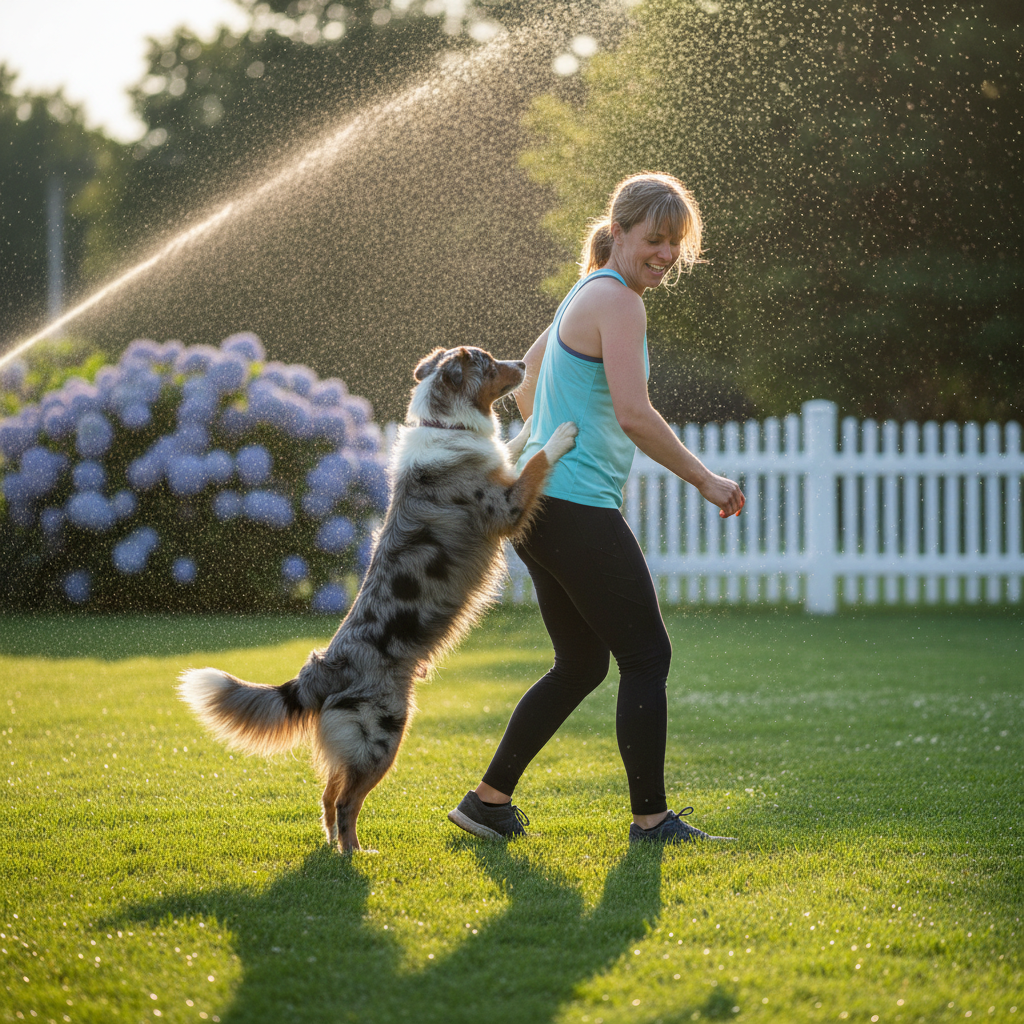
So, your dog has mastered the basic forward ‘Cop-Cop’ walk. Congratulations, you two are a regular dancing duo! But why stop there? Once your dog is confident and proficient with the basics, you can add some fancy footwork to your routine. These advanced variations will further challenge your dog’s brain and body, leading to even better coordination and focus.
Advanced ‘Cop-Cop’ Moves:
- Walking Backwards: This is a fantastic challenge for your dog’s body awareness. Using the same principles of luring and rewarding small movements, start teaching your dog to stay on your feet as you take tiny steps backward. This requires a lot of trust and is a great core workout for your pup!
- Turns and Circles: Can you and your partner turn in a slow circle? Start by turning just a few degrees, rewarding, and then gradually building up to a full 360-degree turn, both clockwise and counter-clockwise. This is a cornerstone of canine freestyle routines.
- Varying the Speed: Once the slow, deliberate walk is solid, see if you can speed it up slightly to a more normal walking pace. You can also practice going from slow to fast and back to slow, which teaches your dog to pay close attention to your body language and cues.
- Adding Other Tricks: Try incorporating the ‘Cop-Cop’ into a sequence of other tricks. For example, you could ask your dog for a ‘spin’ right before cueing them to hop onto your feet. Or, you could ‘Cop-Cop’ across the room and then release them into a ‘down-stay’. This builds a more complex and engaging training session.
Remember to introduce these new challenges slowly and with lots of positive reinforcement. The goal is always to keep it fun and build your dog’s confidence. Before you know it, you’ll have a whole dance routine choreographed!
Conclusion
You did it! You’ve gone from the first tentative paw touch to (maybe) a full-blown dance routine. Teaching the ‘Cop-Cop’ trick is so much more than just a novelty; it’s a testament to your relationship with your dog. It’s a dance built on trust, clear communication, and a shared sense of fun. Every step you took together, every little success you celebrated, has strengthened that incredible bond you share.
Remember to be proud of the work you’ve both put in. This kind of training provides wonderful mental enrichment, keeping your dog’s mind sharp and engaged, and preventing boredom. So, keep practicing, keep it positive, and don’t be afraid to show off your amazing new skill to friends and family. You’ve earned the bragging rights! Now go on and have your next dance.