Is brushing your dog more like a wrestling match than a grooming session? You’re not alone. Many pet owners dread pulling out the brush, knowing it signals the start of a chase, a struggle, or a chorus of unhappy whines. But what if we told you it doesn’t have to be this way? What if you could transform grooming from a stressful chore into a peaceful, positive bonding experience for you and your furry best friend?
It’s entirely possible, and the secret isn’t about force or fancy tools—it’s about understanding your dog’s perspective and using a little bit of training magic called positive reinforcement. By changing your dog’s emotional response to the brush, you can teach them that grooming is a wonderful activity that brings treats, praise, and gentle attention.
In this guide, we’ll walk you through the exact steps to teach your dog to stand still and even enjoy being brushed. We’ll cover everything from choosing the right tools to creating positive associations and troubleshooting common issues. Get ready to say goodbye to the grooming drama and hello to a beautifully brushed, happy pup!
Setting the Stage: Your Grooming Toolkit for Success
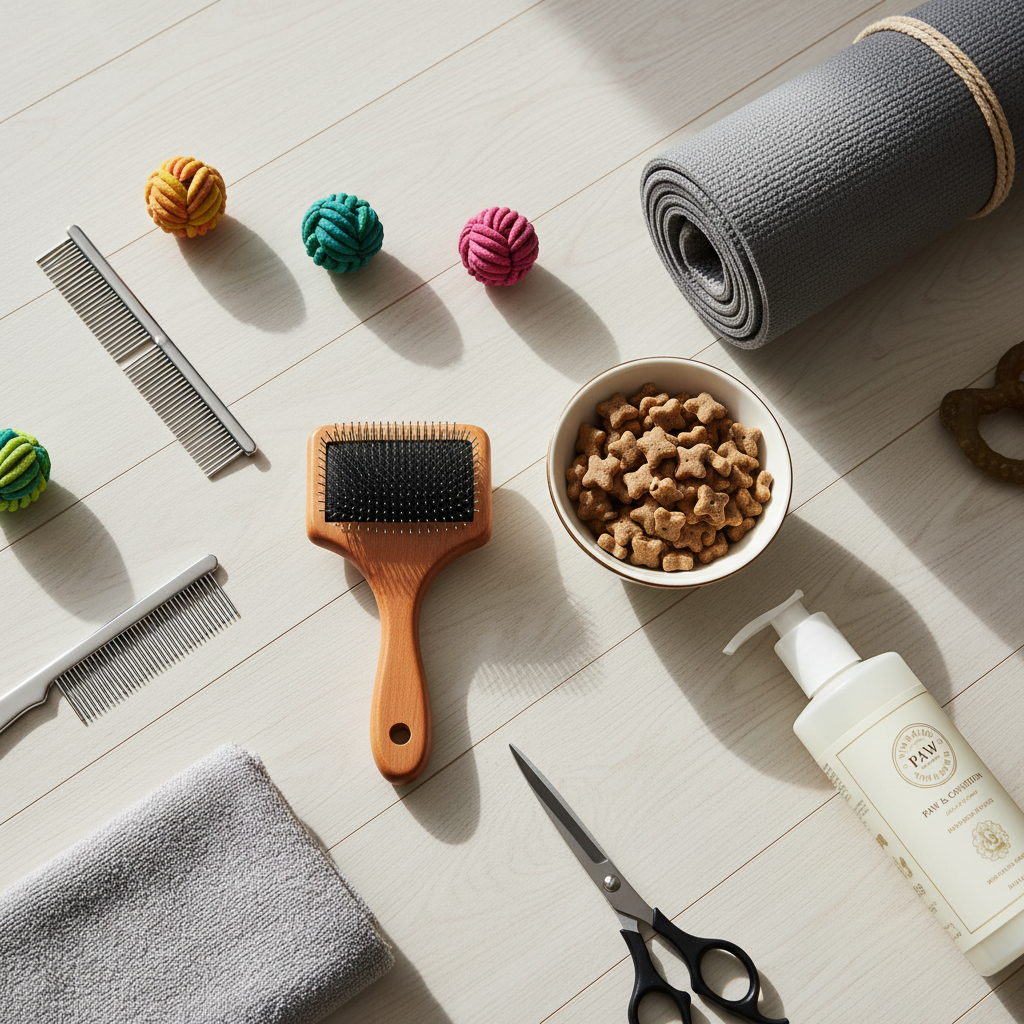
Before you even think about touching your dog with a brush, it’s crucial to set the scene for success. A calm environment and the right equipment can make all the difference. Think of this as your pre-grooming ritual to get both you and your pup in the right frame of mind.
The Essentials for a Calm Session
Your goal is to create an experience that feels safe and rewarding. Here’s what you’ll need:
- The Right Brush: This is non-negotiable. An uncomfortable brush can cause pain and instantly create a negative association. The best brush depends on your dog’s coat. A slicker brush is great for detangling curly or medium-to-long coats, a pin brush works well for general brushing on long, silky coats, and a rubber curry comb is fantastic for short-haired breeds. If you’re unsure, ask a professional groomer for a recommendation.
- High-Value Treats: We’re not talking about their regular kibble. You need something extra special that your dog absolutely loves. Think tiny pieces of boiled chicken, cheese, freeze-dried liver, or a lickable treat in a tube. The treats should be small so you can give many of them without filling your dog up too quickly.
- A Comfortable, Non-Slip Surface: Dogs often feel insecure on slippery floors. Place a yoga mat, bathmat with a rubber backing, or a thick towel on the floor. This gives them a secure footing and also designates a specific “grooming station,” which helps with training.
- A Quiet, Distraction-Free Space: Choose a time and place where your house is calm. Turn off the TV, put your phone on silent, and ask family members to give you some space. A relaxed environment helps keep your dog’s anxiety levels low.
Expert Tip: Keep your grooming sessions short and sweet, especially in the beginning. It’s far better to have a successful 2-minute session than a stressful 10-minute struggle. End on a positive note, before your dog gets fussy.
Step 1: Making Friends with the Brush (Without Brushing!)
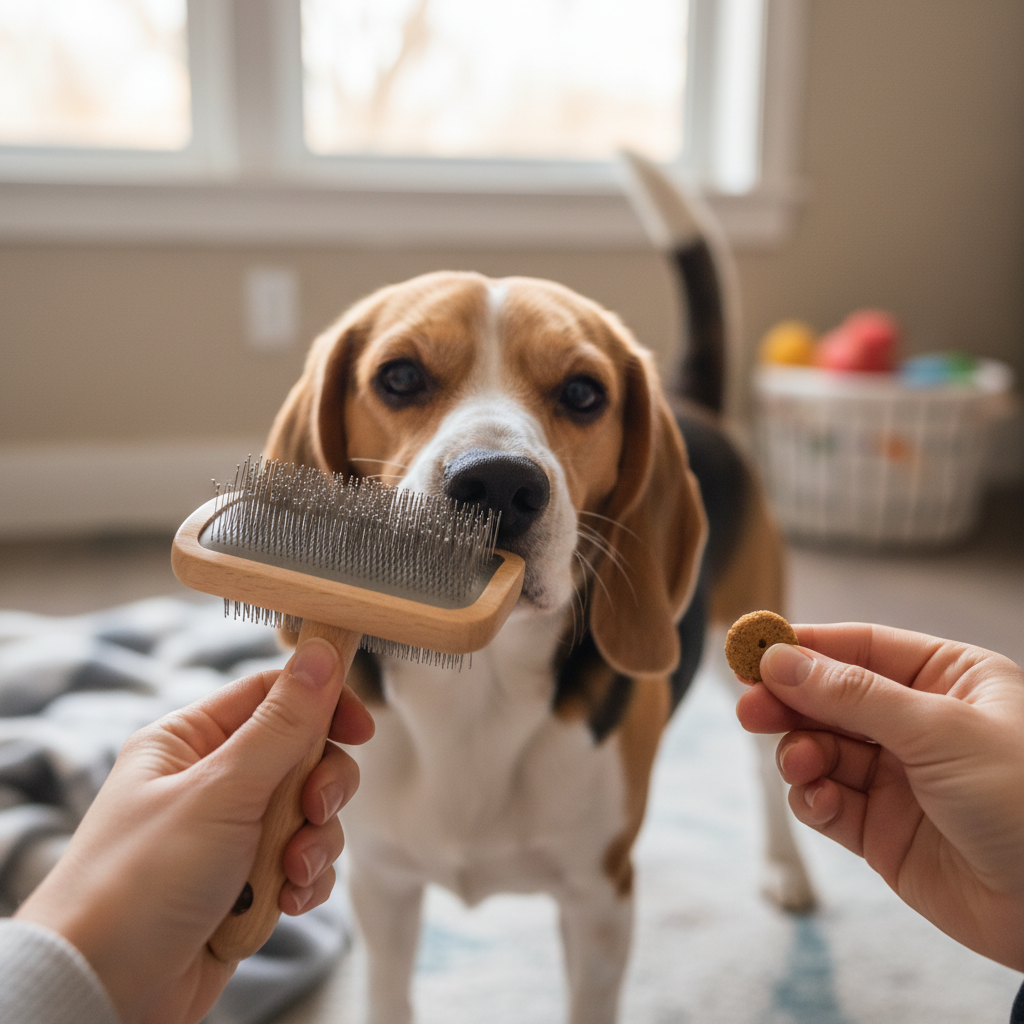
The single most important step in this process is changing how your dog feels about the grooming tools. Right now, your dog might see the brush and think, “Oh no, the torture device is out!” Our goal is to make them think, “Yay, the magic treat-bringer is here!” This is a process called counter-conditioning and desensitization.
The ‘Touch and Treat’ Game
This phase involves no actual brushing. You are simply building a new, wonderful association with the brush. Follow these micro-steps over several days.
- Introduce the Brush: Hold the brush in your hand and let your dog approach it. The moment their nose touches it, say “Yes!” in a happy voice and give them a high-value treat. Put the brush behind your back. Repeat 5-10 times.
- Move the Brush: Now, hold the brush and move it slightly towards your dog. If they remain calm, say “Yes!” and treat. If they back away, you’ve moved too fast. Go back to the previous step. The key is for them to stay relaxed.
- Touch with the ‘Wrong’ Side: Once your dog is comfortable with the brush nearby, gently touch their back or shoulder with the non-bristle side of the brush. The instant it touches them, “Yes!” and treat. Remove the brush. Repeat this several times in different spots they are comfortable with, like their back and sides.
Keep these sessions incredibly short—just a minute or two at a time, a few times a day. We are building a foundation of trust. If at any point your dog seems stressed (licking lips, yawning, showing the whites of their eyes), you’re moving too fast. Take a break and try an easier step in your next session.
Step 2: The First Gentle Strokes
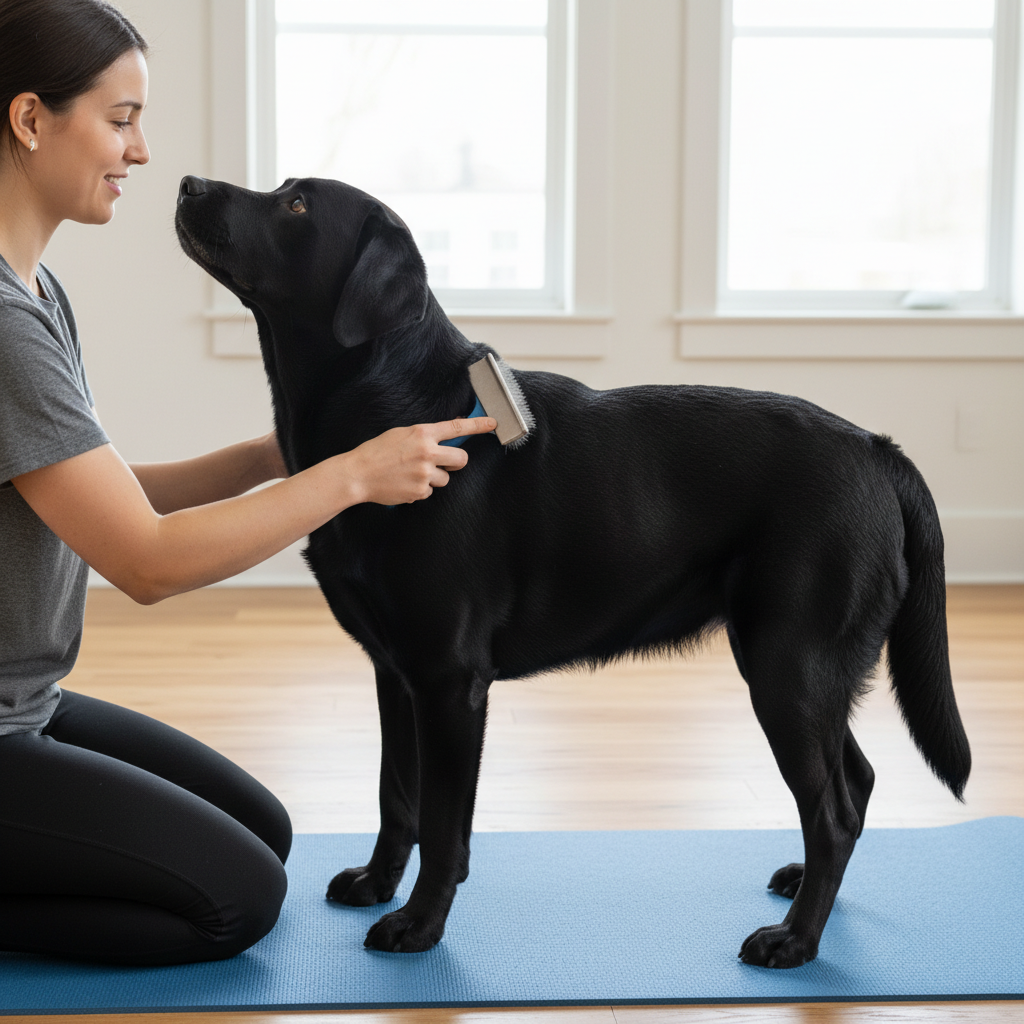
Once your dog is happily associating the brush with treats, it’s time to introduce the sensation of the bristles. The key words here are gentle and brief. We will build on the positive foundation you’ve already created.
From Touch to Stroke
Choose a time when your dog is naturally calm and relaxed. Bring them to your designated grooming station.
- One Gentle Stroke: Following the direction of hair growth, give your dog one single, gentle brush stroke on their back. As you finish the stroke, say “Yes!” and immediately give them a treat. Make the stroke light and pleasant.
- Praise and Repeat: Lavish your dog with verbal praise. “Good boy! That was amazing!” After a moment, repeat with another single stroke, followed by a treat. Do this just 3-5 times in the first session and then end with a fun game of tug or a special chew toy. You want to leave them wanting more.
- Gradually Increase: Over the next several sessions, you can slowly build up. Try two strokes, then a treat. Then three strokes, then a treat. The pattern is always: brush, then reward. The reward marks the end of the brushing, making the whole experience predictable and positive.
Remember the Golden Rule: Always stop the session while your dog is still happy and successful. If you push them to their limit, they will start to anticipate stress, which undoes all your hard work. It’s like ending a workout on a high note instead of pushing to exhaustion.
During this phase, stick to the easy-to-brush areas like the back, chest, and sides. We’ll tackle the more sensitive spots next.
Step 3: Conquering Tricky Areas (Legs, Tail, and Tummy)
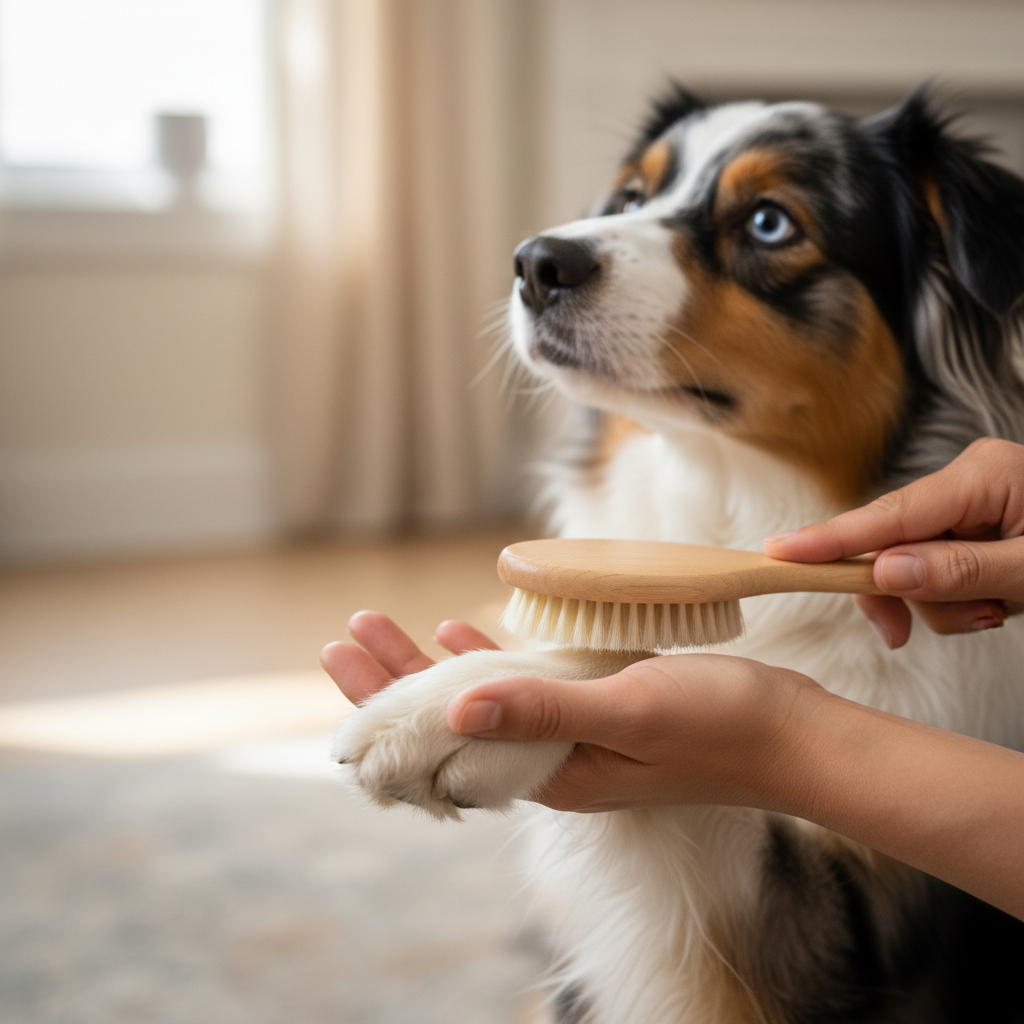
Most dogs are more sensitive about their legs, paws, tail, and belly being handled. These areas require extra patience and a slower approach. Don’t rush this stage; it’s where trust is truly put to the test.
Break It Down Further
We’ll use the same principles as before but break the actions down into even smaller, more manageable steps. Let’s use a front leg as an example:
- Touch Only: Gently touch your dog’s shoulder for a second. “Yes!” and treat. Work your way down, touching their upper leg, then their lower leg, rewarding at each step.
- Gentle Hold: Once they are comfortable with touch, gently cup your hand around their lower leg for one second. “Yes!” and treat. Gradually increase the duration of the hold.
- Introduce the Brush (No Bristles): While gently holding their leg, touch it with the back of the brush. “Yes!” and treat.
- First Stroke: Finally, try one very gentle stroke with the bristles on their leg. Follow immediately with a jackpot of treats—several delicious morsels in a row! This signals that handling sensitive areas brings an extra-special reward.
Apply this same micro-step process to the tail, tummy, and ears. Pay close attention to your dog’s body language. A flick of the ear, a turn of the head, or a slight tensing of the body are all subtle signals that your dog is reaching their limit. Respect these signals and end the session or go back to an easier step.
You can also introduce a verbal cue like “Stand” or “Still” in a calm, happy tone. Say the cue, and if your dog holds still for even a second, reward them. This helps them understand exactly what you’re asking them to do.
Troubleshooting: What to Do When Your Dog Says ‘No!’
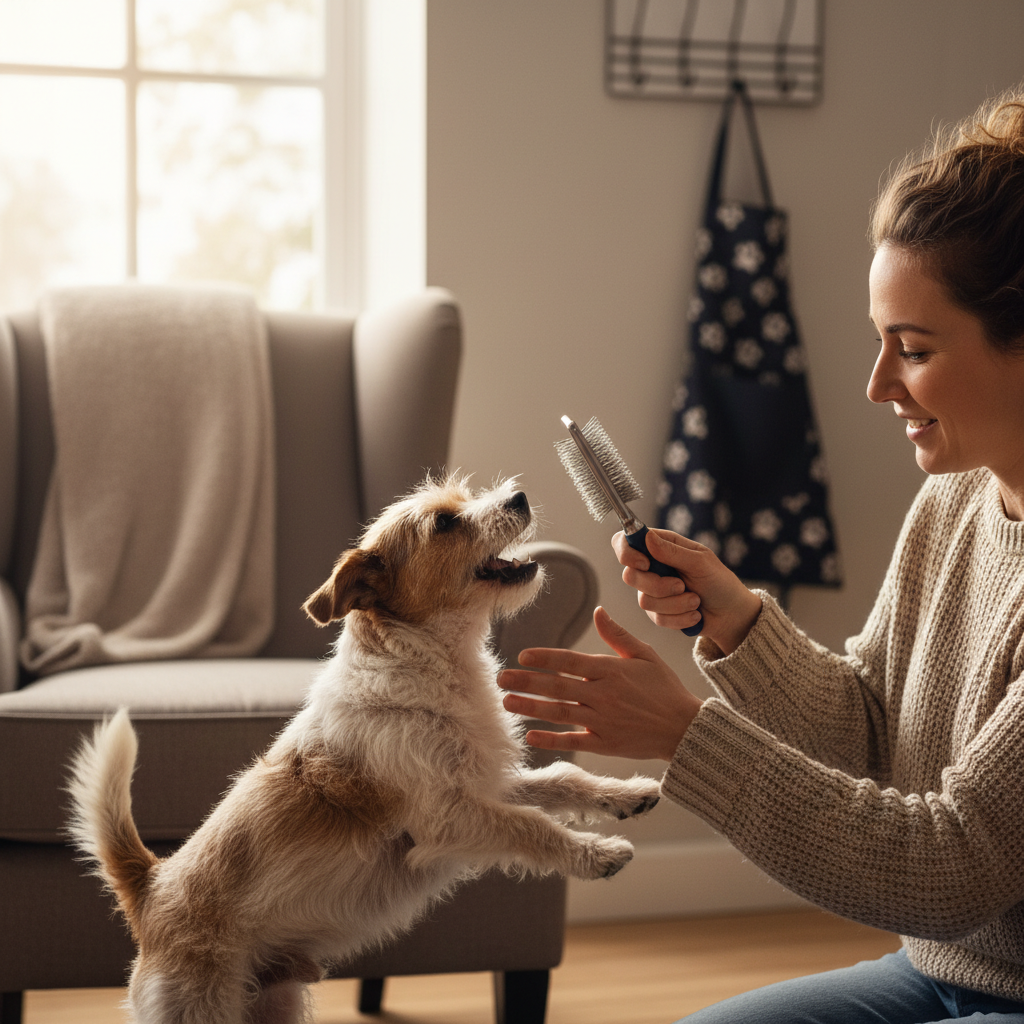
Even with the best training plan, you might hit a snag. The key is not to get frustrated but to see it as a communication from your dog. They’re not being “bad”—they’re telling you they are uncomfortable. Here’s how to listen and adjust.
Common Problems and Smart Solutions
If you encounter resistance, take a deep breath and try one of these strategies. We’ve put them in a handy table for you.
| Common Problem | Expert Solution |
|---|---|
| Mouthing or Biting the Brush | This is often a sign of anxiety or a puppy play behavior. Go back to Step 1 and make the brush ‘boring’ but rewarding. If they mouth it, say nothing, remove the brush for a few seconds, then represent. Reward only for gentle sniffing or ignoring. You can also offer a chew toy to hold while you brush another area. |
| Trying to Run Away | This is a clear signal you’ve moved too fast or the session is too long. End the session immediately on a positive note if you can (e.g., ask for a simple ‘sit’ and reward). Your next session should be much shorter and start with an easier step your dog can succeed at. Don’t corner your dog; they need to know they have a choice. |
| Crying, Whining, or Growling | Stop immediately. These are signs of significant stress or potential pain. First, check if the brush is pulling on a mat or tangle. If so, you may need a detangling spray or a professional groomer’s help. If not, the emotional stress is too high. Go back to very short sessions of just associating the brush with amazing treats, with no brushing at all. |
| General Fidgeting and Squirming | Your dog might be bored or the treats might not be motivating enough. Try using a higher-value reward. You can also use a distraction, like a lick mat smeared with dog-safe peanut butter or yogurt, stuck to a wall or the floor. This can keep them happily occupied while you do some light brushing. |
Mistakes to Avoid
- Never use force: Holding your dog down will destroy trust and increase their fear, making future grooming sessions even harder.
- Don’t scold them: Punishing a dog for showing fear or anxiety will only make them more anxious.
- Don’t brush over mats: Pulling on tangled fur is very painful. If your dog has mats, consult a professional groomer to have them safely removed.
Conclusion
Congratulations! You now have a complete roadmap to transform your dog’s grooming experience from a dreaded ordeal into a delightful routine. Remember that the pillars of this process are patience, positivity, and persistence. Every dog learns at a different pace, so celebrate the small victories and never be discouraged by a small setback. Just go back a step and rebuild that confidence.
By investing this time now, you’re not just working towards a tangle-free coat; you’re strengthening the bond of trust between you and your dog. You’re teaching them that you are a source of safety and rewards, even during activities they once found scary. Before you know it, the sight of the brush will bring a happy tail wag instead of a disappearing act. Happy brushing!