Picture this: you’re on the open road, tunes playing, snacks within reach, and your furry best friend is your co-pilot. It’s the perfect road trip… until your dog starts panting. You pull over, dig out the clunky water bowl, pour the water (spilling half of it on the car seat, of course), and wait for them to drink. There has to be a better way, right? There is! Welcome to the ultimate road trip hack: the travel water bottle with a spout.
These clever gadgets are a game-changer for pet parents on the move, providing a clean, easy, and spill-proof way to keep your pup hydrated. The only catch? Your dog needs to know how to use it. Don’t worry, it’s easier than you think! Forget the mess and stress. We’re about to walk you through a simple, positive, and fun training process that will have your dog sipping like a pro in no time. Let’s get your adventure-loving pup ready for their next journey!
Gearing Up for Success: Choosing the Right Bottle and Treats
Gearing Up for Success: Choosing the Right Bottle and Treats
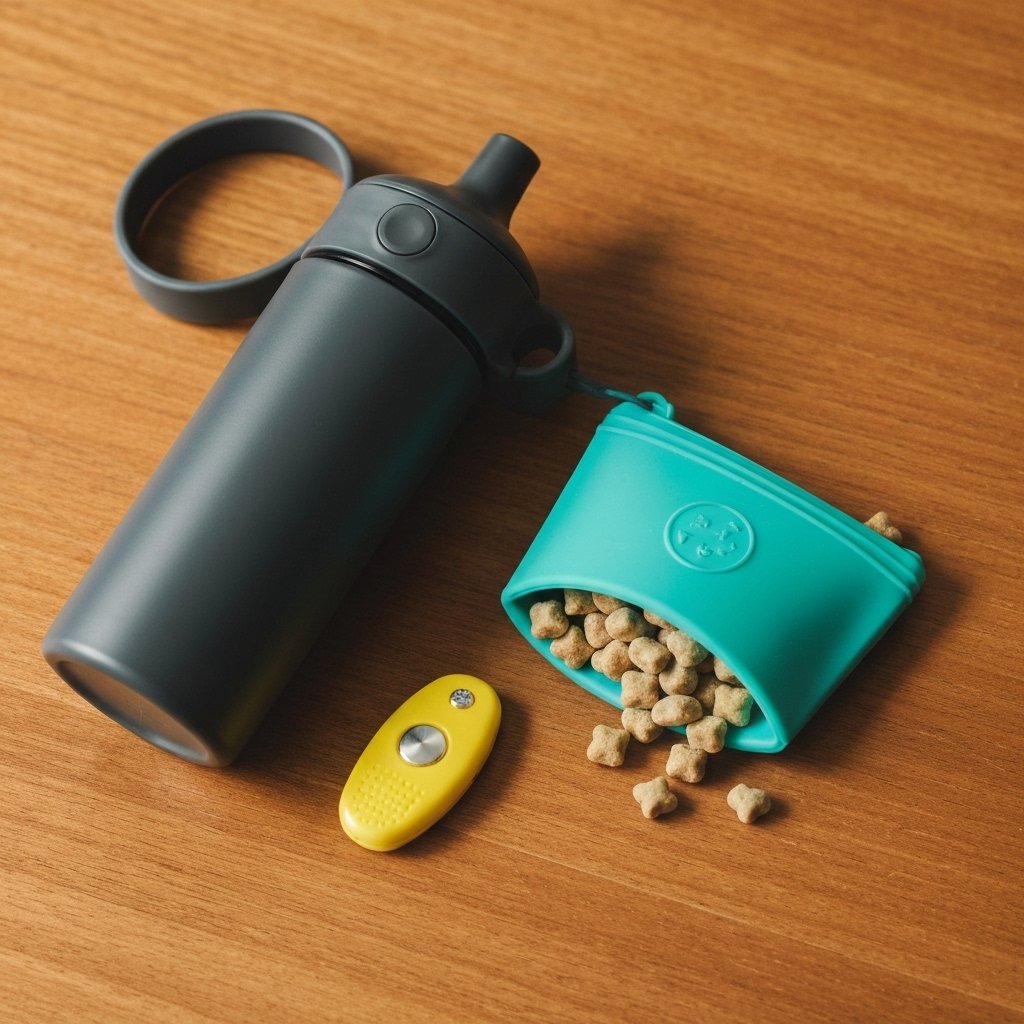
Before you can teach a new trick, you need the right tools. In this case, that means picking the perfect travel bottle and arming yourself with some irresistible treats. Setting yourself up for success from the start will make the entire training process smoother and more enjoyable for both you and your pup.
Selecting the Perfect Travel Water Bottle
Not all travel bottles are created equal. When you’re browsing the options, you’ll see a few common types, but for this specific training, we’re focusing on those with a spout or roller-ball nozzle.
- Squeeze-to-Dispense Bottles: These are often the easiest for dogs to learn with. They typically have a spout or a small, attached cup. You gently squeeze the bottle, and water flows out for your dog to lick. The design gives you control over the water flow, which is fantastic for the initial training stages.
- Roller-Ball Nozzle Bottles: Similar to a hamster’s water bottle, these require your dog to lick the ball at the tip to release water. They are incredibly leak-proof but can be a bit trickier for some dogs to figure out.
Whichever style you choose, look for these key features:
- BPA-Free Materials: Your dog’s health is paramount. Ensure the bottle is made from food-safe, non-toxic plastic.
- Leak-Proof Design: The whole point is to avoid messes! Look for bottles with a secure lock or a reliable seal to prevent leaks in your travel bag or car.
- Easy to Clean: A bottle that’s dishwasher-safe or has a wide mouth for easy hand-washing will prevent bacteria buildup.
- Appropriate Size: Consider your dog’s size and the length of your typical trips. A small bottle might be fine for a Chihuahua on a day trip, but a Great Dane on a weekend adventure will need something more substantial.
The Power of High-Value Treats
Positive reinforcement is the name of the game in modern dog training. We want to make learning this new skill a super positive and rewarding experience. Regular kibble might not be exciting enough to motivate your dog to try something new and strange like a water bottle spout. You need to bring out the good stuff!
Expert Tip: A high-value treat is anything your dog absolutely loves and doesn’t get every day. The smellier and tastier, the better!
Here are some fantastic high-value treat options:
- Small, pea-sized pieces of boiled chicken or turkey
- Tiny cubes of cheese (like cheddar or string cheese)
- Store-bought soft training treats (look for ones with real meat as the first ingredient)
- A tiny dab of dog-safe peanut butter (ensure it’s Xylitol-free!) or cream cheese to use as a lure.
Have these treats ready and cut into small pieces before you start each training session. You’ll be rewarding your dog frequently, so small sizes prevent them from filling up too quickly.
The Step-by-Step Training Guide: From Sniff to Sip
The Step-by-Step Training Guide: From Sniff to Sip
Alright, you’ve got your bottle and your treats—it’s time for the fun part! Remember, the key here is patience. Every dog learns at a different pace. Keep your training sessions short (5-10 minutes is perfect) and always end on a positive note. Let’s break it down into simple, manageable steps.
-
Step 1: The Introduction Party
The goal of this first step is simple: convince your dog that this new plastic object is the best thing ever. Don’t even think about water yet. Hold the bottle (with the cap on) in your hand. The moment your dog shows any interest—a sniff, a glance, a nose boop—say “Yes!” or click your clicker and give them a treat. Do this a few times. You’re building a positive association: Bottle = Awesome Treats!
-
Step 2: Add a Tasty Lure
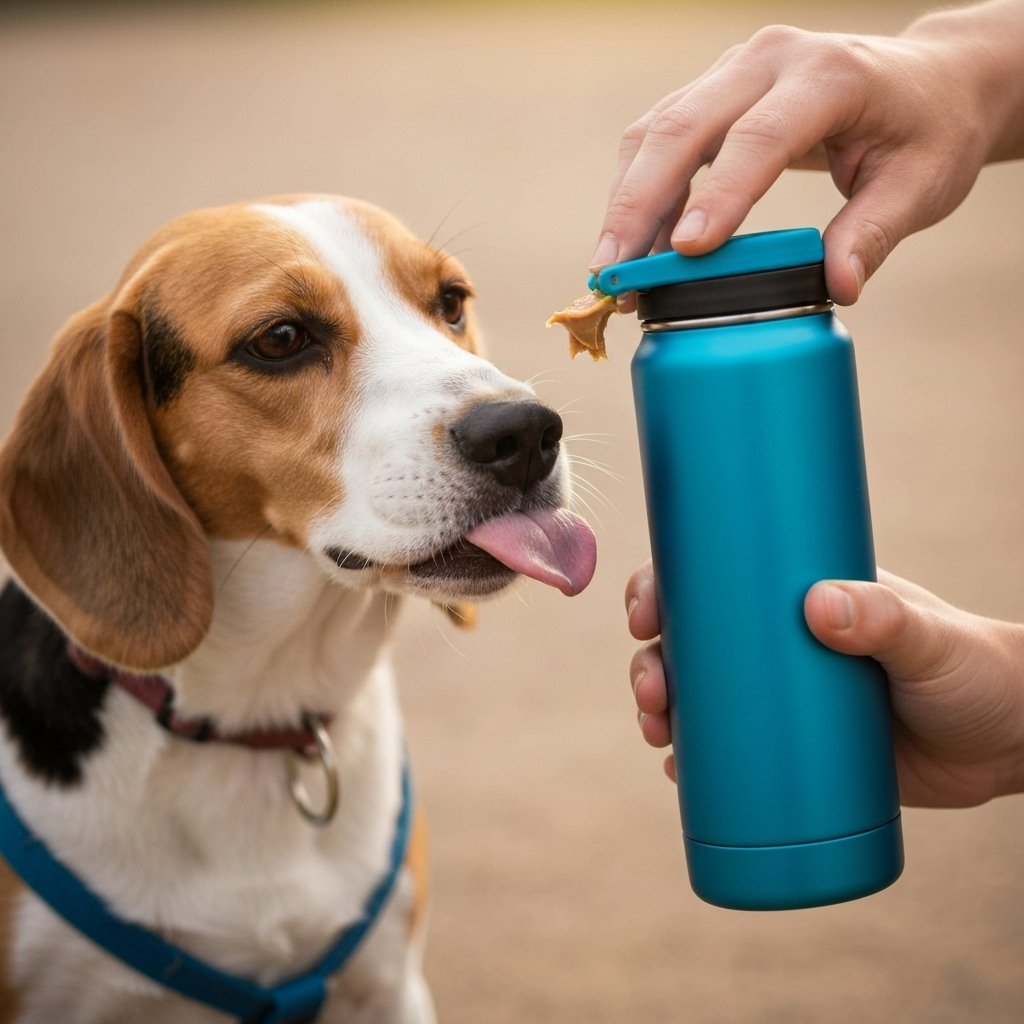
Now, let’s get them focused on the spout. Take the cap off and smear a tiny, tempting bit of peanut butter, cream cheese, or a wet treat right on the tip of the nozzle. Hold it out for your dog. As they lick the tasty stuff off the spout, praise them enthusiastically. Repeat this a few times until they’re eagerly licking the spout as soon as you present it.
-
Step 3: Just a Little Drip
This is where the magic starts. Once your dog is confidently licking the lure off the spout, it’s time to introduce water. As their tongue touches the spout to lick the lure, gently squeeze the bottle to release a small drip of water. They’ll get the lure and a bit of water at the same time. The goal is for them to barely notice the water at first. Mark and reward this with a treat (even though they got water, the treat reinforces the action).
-
Step 4: Encouraging the Lick-to-Drink Motion
As your dog gets the hang of it, start squeezing the bottle a little more each time they lick, creating a gentle stream. They’ll start to understand that their licking action makes the water appear. You’re connecting the dots for them: Licking the spout = Refreshing water! Continue to praise them warmly. You can start to reduce the amount of the food lure on the spout now, letting the water itself become part of the reward.
-
Step 5: Fading the Lure Completely
Time to see if they’ve got it! Present the bottle with a clean spout, no food lure at all. Out of habit, your dog will likely lick it. The moment they do, squeeze the bottle to reward them with water. Hooray! They’re now drinking from the bottle. If they hesitate, you can take one step back and add a tiny bit of lure again, but try to fade it out as quickly as possible.
-
Step 6: Practice Makes Perfect
Your dog might be a pro at drinking in the kitchen, but what about other places? Start practicing in different rooms of the house. Then move to the backyard. Then practice near your parked car. This process, called generalization, teaches your dog that the bottle works the same way everywhere, not just in one specific spot. This is crucial for making it a reliable tool on the road.
Troubleshooting Common Hiccups: What if My Dog Isn’t Getting It?
Troubleshooting Common Hiccups: What if My Dog Isn’t Getting It?
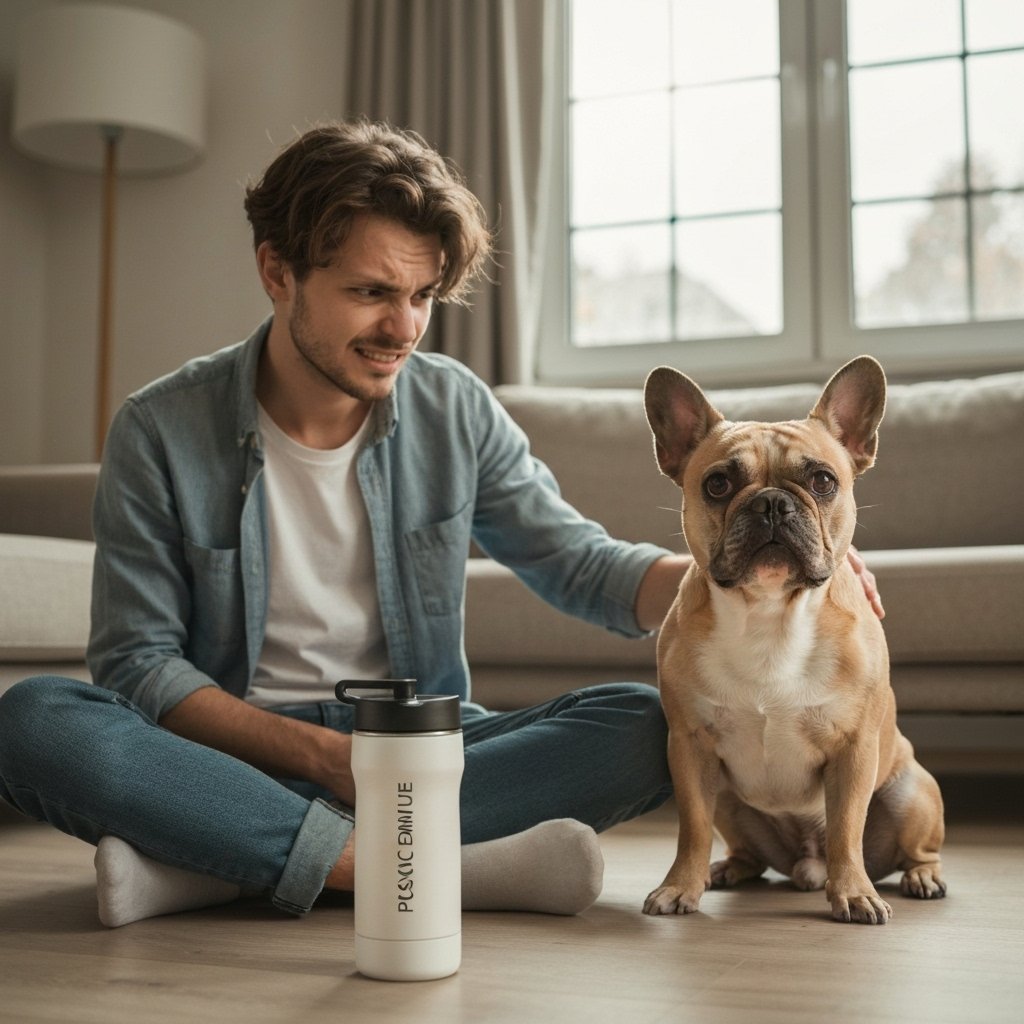
Sometimes, even with the best treats and intentions, you hit a snag. It’s completely normal! Don’t get discouraged. Dog training is rarely a straight line. Here are some common challenges and how to navigate them with a cool head and a patient heart.
“My dog seems scared of or uninterested in the bottle.”
This is very common with cautious or shy dogs. The key is to go back to square one and slow down. Put the bottle on the floor and just let it sit there. Don’t interact with it. Every time your dog goes near it or even looks at it, toss a high-value treat nearby. Don’t force them to interact. You’re teaching them that good things happen simply when the bottle is around. This can take a few sessions, but it builds a foundation of safety and trust.
“My dog just wants to chew on the bottle instead of licking it.”
Puppies and mouthy breeds are notorious for this! If your dog starts to gnaw, say a calm but firm “Ah-ah” or “No,” and briefly remove the bottle. Wait a second, then present it again. The second their tongue comes out to lick instead of chew, mark it with an enthusiastic “Yes!” and reward them. They will quickly learn that only licking gets them the reward (water and treats), while chewing makes the fun stop.
“My dog will lick the peanut butter but stops as soon as the water comes out.”
The sensation of water coming from the spout might be surprising or strange to your dog at first. The solution is to make the water less surprising. Go back a step and use a much, much smaller amount of water—just a single drop. You want the amount to be so small they barely register it. As they get more comfortable, you can gradually increase the flow. You can also try using a more diluted lure, like a bit of chicken broth, to bridge the gap between a food taste and plain water.
“This is taking forever! Are we doing something wrong?”
Patience is a virtue, especially in dog training! Every dog is an individual. An outgoing, food-motivated Labrador might pick this up in an afternoon, while a sensitive, reserved rescue dog might take a week or more. You are not doing anything wrong. The most important thing is to keep the sessions short, upbeat, and positive. If you feel yourself getting frustrated, it’s time to end the session with an easy win (like a simple ‘sit’) and try again later. Frustration travels right down the leash (or in this case, the water bottle) and will only make your dog anxious.
Road-Ready Paws: Prepping for the Real Trip
Road-Ready Paws: Prepping for the Real Trip
Congratulations! Your dog is now drinking from their travel bottle at home. Now it’s time to take this show on the road—literally. Applying this new skill in the environment where it’s most needed is the final, crucial step to ensuring your road trips are smooth, safe, and well-hydrated.
Practice in a Stationary Car
Before you even start the engine, get your dog comfortable with drinking in the car. Have them get into their designated travel spot (whether it’s a crate, a car seat with a harness, or the back seat). Then, while the car is parked in the driveway, offer them a drink from the bottle. Praise them lavishly! This helps them understand that the car is just another place where they can use their cool new skill. It decouples the act of drinking from the potentially stressful motion and noise of a moving vehicle.
Safety First: When and How to Offer Water
This is non-negotiable. Never offer your dog water while the vehicle is in motion. A sudden stop could cause them to choke or injure their mouth on the spout. The driver should always be focused on driving.
Safety Protocol: The best time to offer a drink is during a planned stop. When you pull over at a rest area or to stretch your legs, offer your dog a drink before you let them out of the car. This prevents them from guzzling too much too fast out of excitement.
Building a Travel Hydration Kit
Being prepared is the key to a stress-free trip. Think beyond just the bottle. Assemble a small, dedicated hydration kit that you can keep in your car.
| Item | Purpose |
|---|---|
| The Trained-For Travel Bottle | Your primary, quick-and-easy hydration tool. |
| A Collapsible Water Bowl | A great backup in case you drop or lose the bottle, or if your dog needs a longer drink. |
| An Extra Gallon of Water | Never rely on finding water on the road. Always have more than you think you’ll need, especially in hot weather. |
| Electrolyte Supplement for Dogs | Optional, but great for long trips or very active dogs to help with hydration and recovery. (Consult your vet first!) |
Know the Signs of Dehydration
Even with the best tools, it’s important to know how to spot dehydration in your dog. Keep an eye out for:
- Lethargy or weakness
- Dry, sticky gums
- Sunken eyes
- Loss of skin elasticity (if you gently pinch the skin on their back, it doesn’t spring back quickly)
If you notice these signs, it’s crucial to stop and get them hydrated immediately. Offering small, frequent sips is better than letting them drink a huge amount all at once.
Conclusion
And there you have it! You’re now equipped with the knowledge to teach your furry friend one of the most useful skills for any traveling pup. By transforming a simple water bottle into a fun and rewarding tool, you’ve unlocked a new level of convenience and care for all your future adventures. No more spills, no more bulky bowls, and no more worrying if your dog is getting enough to drink on the go.
Remember that the foundation of this training—and all training—is a strong, positive bond with your dog. Celebrate the small victories, have patience during the hiccups, and always keep it fun. Now, pack your bags, grab that water bottle, and get ready to make some incredible, well-hydrated memories on the open road. Happy travels to you and your four-legged co-pilot!