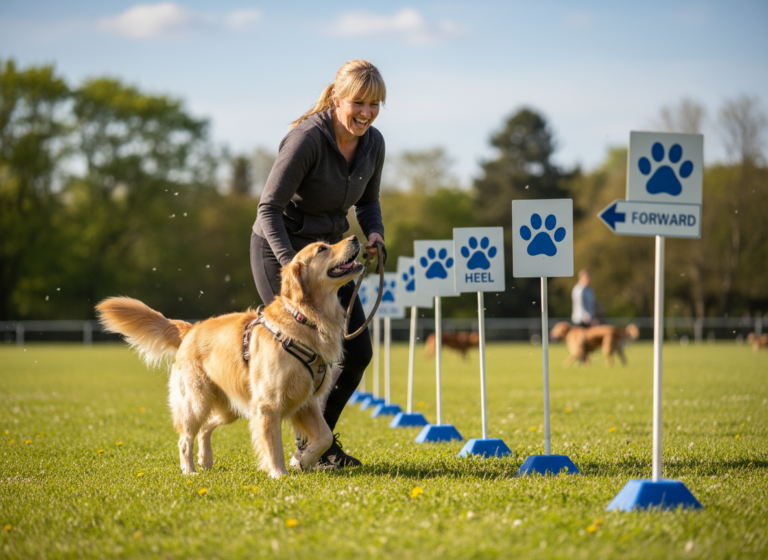
Have you ever watched a dog in a movie or a competition perform a complex task from afar and thought, ‘Wow, I wish my dog could do that!’? That incredible connection and off-leash focus might seem like Hollywood magic, but it’s more achievable than you think. Welcome to the world of the Distance Circle Command—a skill that not only looks amazing but also builds incredible focus, communication, and confidence in your dog.
Think of it as unlocking a new level in your training game. This command teaches your dog to circle an object, a tree, or even you, all based on a cue you give from a distance. It’s more than just a cool party trick; it’s a fantastic exercise for your dog’s body and mind, and a powerful tool for improving their recall and attention in distracting environments. In this guide, we’re going to break down this ‘remote control’ command into simple, fun, and manageable steps. Get your treats ready, because you and your pup are about to embark on an exciting new training adventure!
Gearing Up for Success: Your Training Toolkit
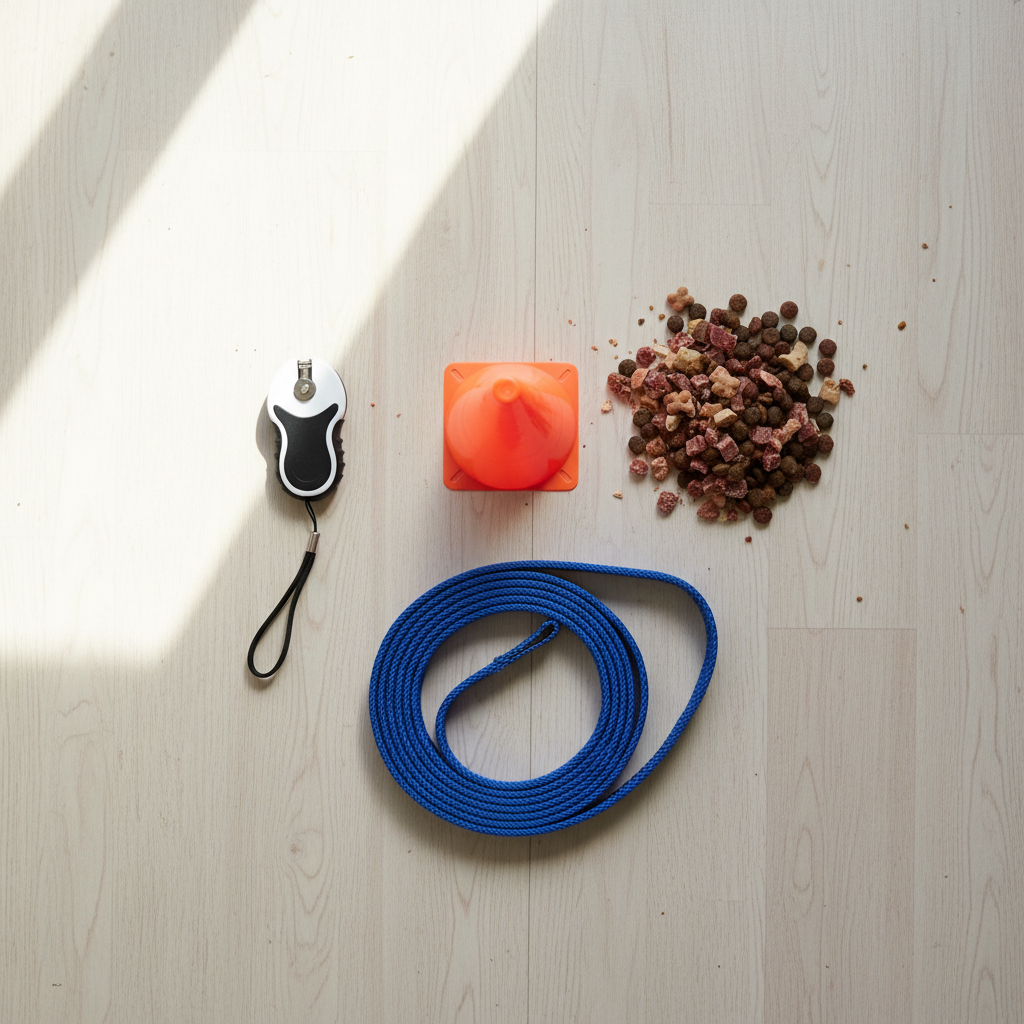
Before we jump into the fun part, let’s make sure we have everything we need. Setting up for success is half the battle in dog training! Having the right tools on hand makes the process smoother and more enjoyable for both you and your furry student. Don’t worry, you don’t need a lot of fancy equipment—just a few simple items and a boatload of enthusiasm.
What You’ll Need:
- High-Value Treats: We’re talking the good stuff! Small, soft, and extra tasty treats that your dog absolutely loves will keep them motivated. Think tiny pieces of chicken, cheese, or their favorite store-bought training treats.
- A Clicker (Optional but Recommended): A clicker is a fantastic tool for marking the exact moment your dog does something right. This clear communication speeds up the learning process. If you’re not using a clicker, you can use a consistent verbal marker like a sharp “Yes!”.
- A Target Object: You’ll need something for your dog to circle around. A small traffic cone, a sturdy water bottle, a backpack, or even a well-placed pile of leaves will work perfectly. Start with something about knee-high to make it visually clear for your dog.
- A Long Leash (15-30 feet): In the beginning stages, a long line gives you control and ensures your dog’s safety while they learn to work at a distance. It prevents them from wandering off if they get confused or distracted.
- A Positive Attitude: This is the most important tool of all! Training should be fun. Bring your patience, your sense of humor, and be ready to celebrate the small victories. Your dog feeds off your energy, so let’s make it positive!
Prerequisite Skills:
To set your dog up for the best chance of success, it’s helpful if they have a basic understanding of a ‘touch’ or ‘target’ command. A hand touch (targeting your palm with their nose) or an object target (touching a target stick or yogurt lid) can be a great foundation for luring them around the object in the initial steps. If your dog doesn’t know this, no worries! We can build the behavior from scratch.
Phase 1: Building the ‘Circle’ Concept Up Close
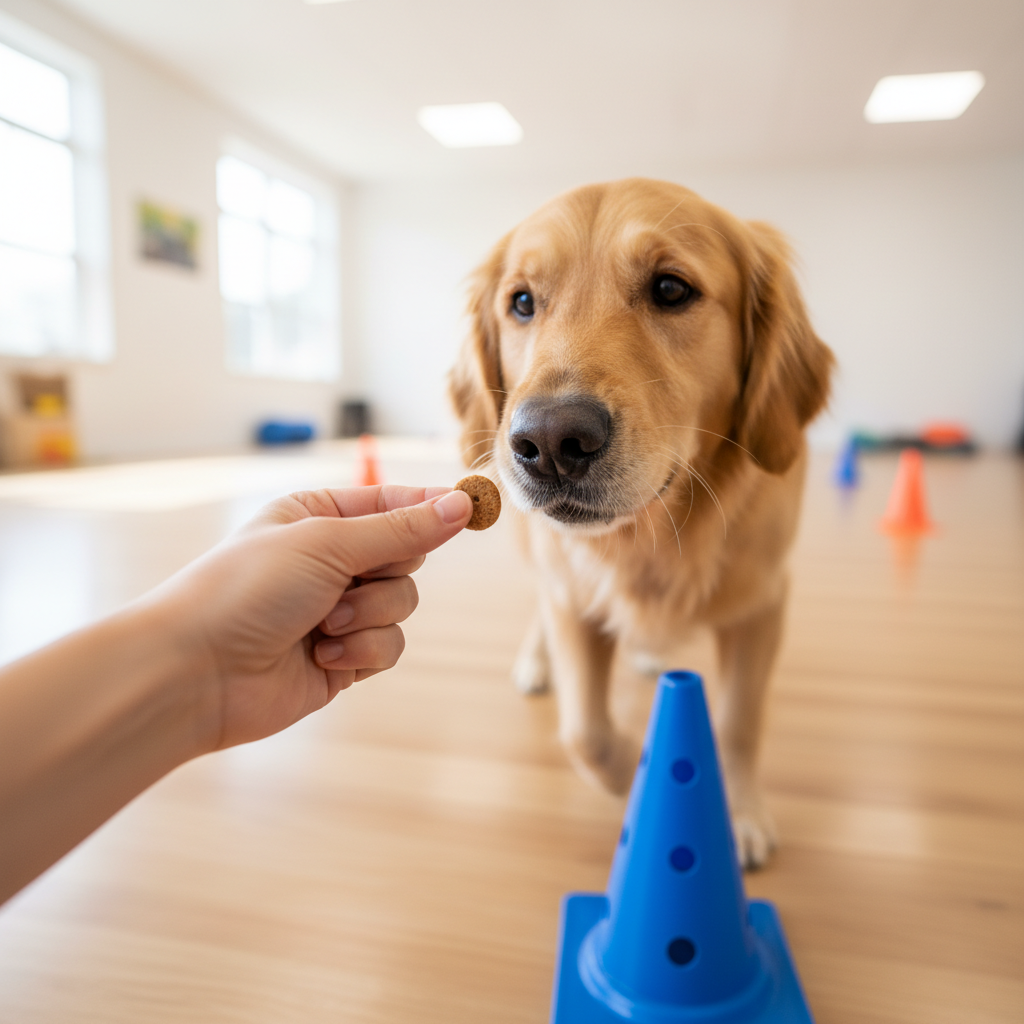
Alright, let’s get moving! The first step is to teach your dog the physical action of circling something. We’ll start super close to the object so the concept is crystal clear. Our goal in this phase is for your dog to understand that moving in a full circle around the target object earns them a fantastic reward. Remember to keep sessions short and sweet—a few minutes at a time is perfect to keep your dog engaged and eager to learn.
Step-by-Step Guide to the Close-Range Circle:
- Introduce the Object: Place your target object (like a cone) on the ground. Let your dog sniff it and get comfortable with it. Click and treat them for any calm interaction with the cone.
- Lure the Movement: Hold a high-value treat in your hand and hold it near your dog’s nose. Slowly lure them in a circle around the cone. You might need to take a few steps with them at first.
- Mark and Reward: The *instant* your dog completes a full circle, click your clicker (or say “Yes!”) and give them the treat. The timing is crucial here! You’re marking the completion of the circle.
- Repeat, Repeat, Repeat: Do this several times in one direction. Dogs, like people, often have a preferred direction, so it’s normal if one way feels more natural than the other.
- Switch Directions: Once your dog is getting the hang of it in one direction, practice luring them around the cone the other way. This helps build their coordination and understanding.
- Fade the Lure: As your dog starts to anticipate the movement, you can begin to fade the lure. Instead of having the treat right on their nose, hold your hand a few inches away. Eventually, you can make the luring motion with an empty hand, and then reward them from your other hand after the click. Your hand motion will eventually become your hand signal!
Expert Tip: If your dog is struggling to make a full circle, break it down! Click and treat for a quarter-circle, then a half-circle, and gradually build up to the full 360-degree rotation. Patience is key!
Phase 2: Adding Distance and Verbal Cues
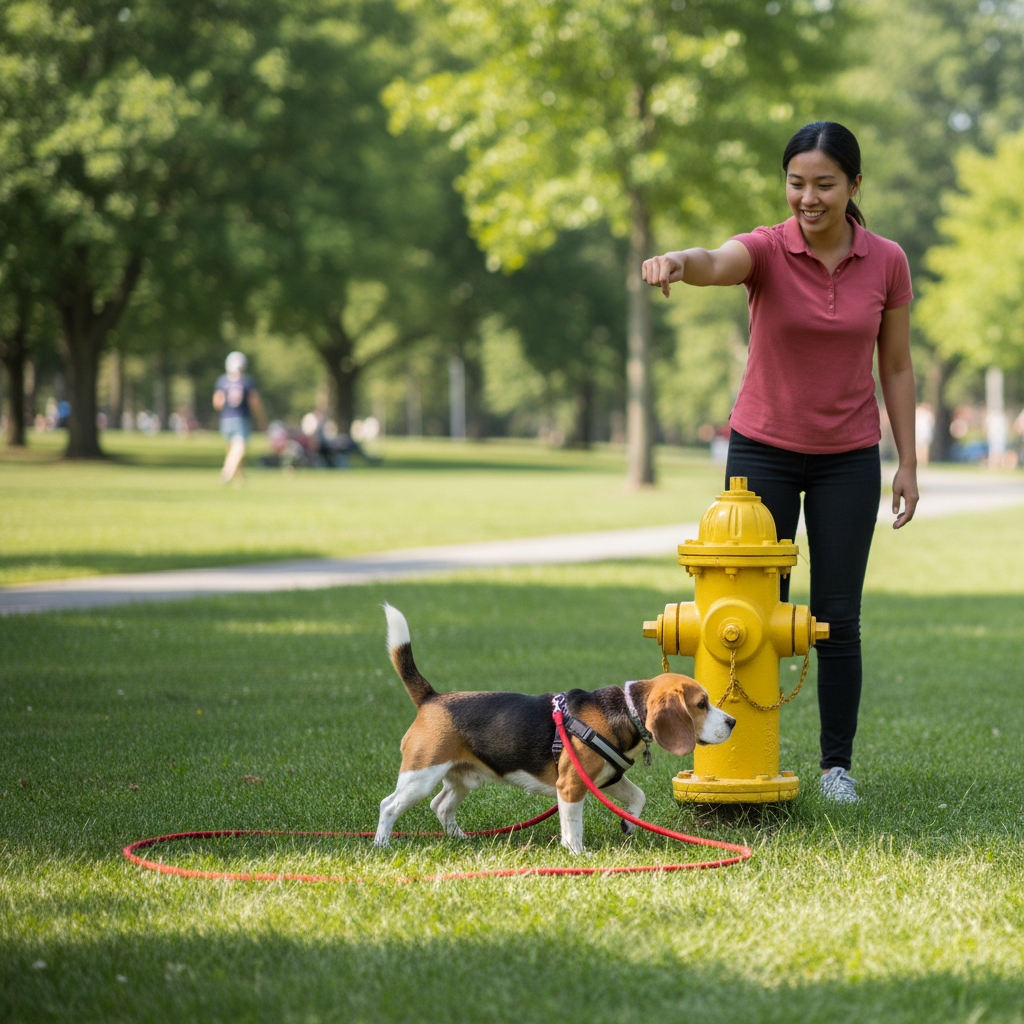
Your dog is now a pro at circling the cone when you’re right beside them. Fantastic! Now it’s time to start adding some distance. This is where the ‘remote control’ part really begins. We’ll also introduce a verbal cue and refine our hand signal. The key to this phase is to increase the distance gradually. If your dog gets confused, just take a step or two closer and help them succeed.
Step-by-Step Guide to Increasing Distance:
- Take One Step Back: Start with your dog and the cone in front of you. Take just one step back. Use your new hand signal (the faded lure motion from the previous phase) to gesture your dog around the cone. The moment they complete the circle, click and toss the treat to them or walk up and deliver it.
- Introduce the Verbal Cue: Once your dog is successfully circling from a step away, you can add your verbal cue. Say your chosen word, like “Circle!” or “Around!”, right before you give the hand signal. The sequence is: Verbal Cue -> Hand Signal -> Dog’s Action -> Click -> Reward.
- Gradually Increase the Distance: This is a marathon, not a sprint. Once your dog is confident from one step away, try two steps. Then three. Only increase the distance when they are succeeding consistently (maybe 8 out of 10 times). This is where your long line comes in handy for safety and management.
- Vary the Starting Position: Don’t always stand directly behind your dog. Practice sending them to the cone from your left side, your right side, and while you are walking. This helps them ‘generalize’ the command and understand it from different contexts.
- Practice in New Locations: Once they’re reliable in your living room or backyard, try practicing in a quiet park. New environments add a layer of difficulty, so you may need to decrease the distance temporarily to help them succeed.
Remember to keep your energy up! Cheer for your dog when they get it right. Your excitement is a huge part of their reward.
Phase 3: Mastering the ‘Remote Control’ – Fading the Object
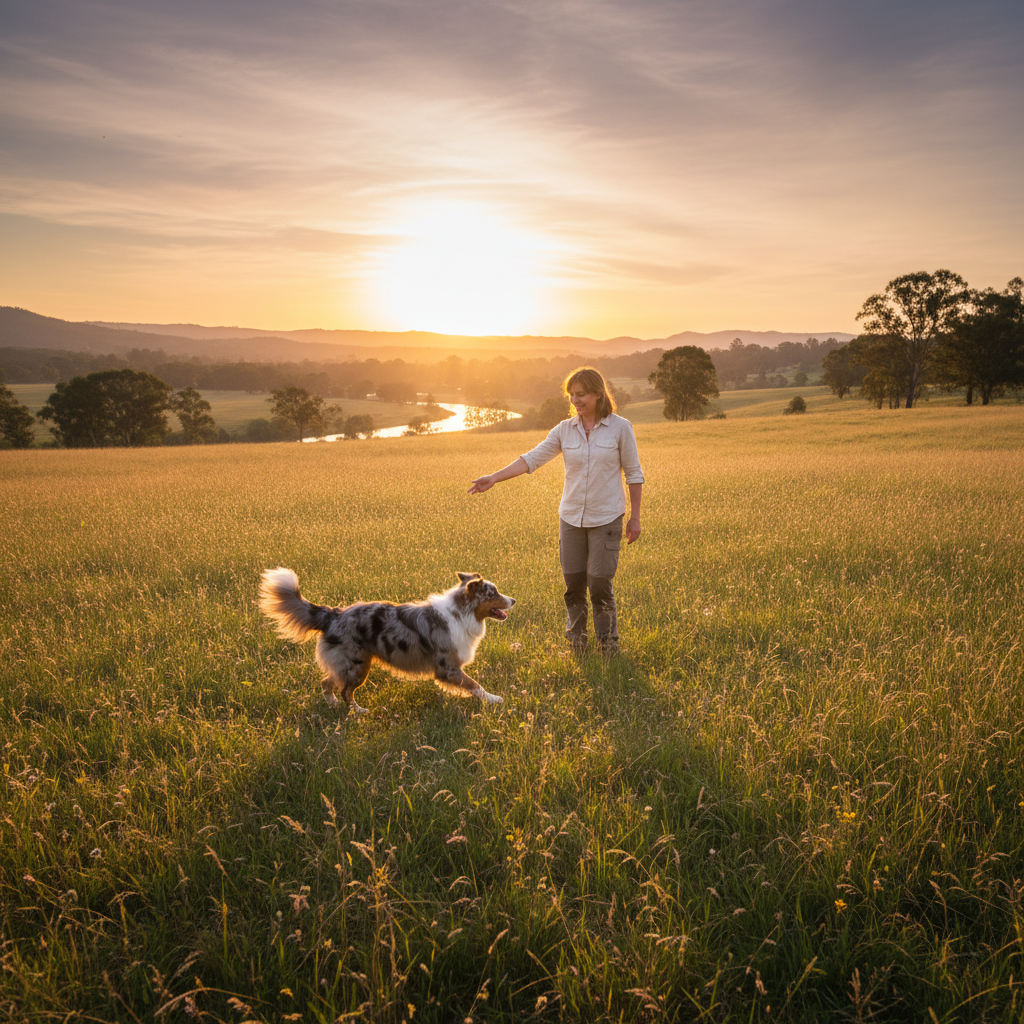
This is the final frontier of the Distance Circle Command! Your dog can now circle a physical object from a distance on cue. Now, let’s make the object disappear. The ultimate goal is to have your dog circle an imaginary point in space, or even better, to circle you. This level of skill demonstrates a truly incredible understanding and connection.
Steps to Go Object-Free:
- Shrink the Target: Start by swapping your large cone for a smaller, less obvious object. A dog toy, a shoe, or even a small disc marker will work. Practice the command with this new, smaller target until your dog is confident.
- Use a ‘Ghost’ Target: Now, place your tiny target on the ground. Send your dog to circle it a few times. Then, while your dog is watching, pick up the target but pretend to place it back down. Send your dog on the cue to circle the ‘ghost’ spot where the object used to be. Mark and reward extravagantly when they do! This is a huge mental leap for them.
- Transition to Circling You: This is a super fun variation. Stand still and use your hand signal and verbal cue, but gesture around your own body. You may need to use a lure for the first few repetitions to help them understand the new picture. The goal is to have them orbit around you on command. This is not only impressive but also a great tool for managing your dog in busy spaces.
- Proofing the Behavior: Now you can practice everywhere! Ask for a circle around a tree on your hike. Ask for a circle around a lamppost on your walk. Ask them to circle you at the park. The more you integrate it into your daily life, the stronger and more reliable the command will become.
Pro Tip: Keep it unpredictable! Sometimes reward with a treat, sometimes with a favorite toy, and sometimes with a super exciting game of tug-of-war. Varying the reward keeps the command exciting and your dog guessing what amazing thing will happen next.
Troubleshooting: Common Sticking Points and Solutions
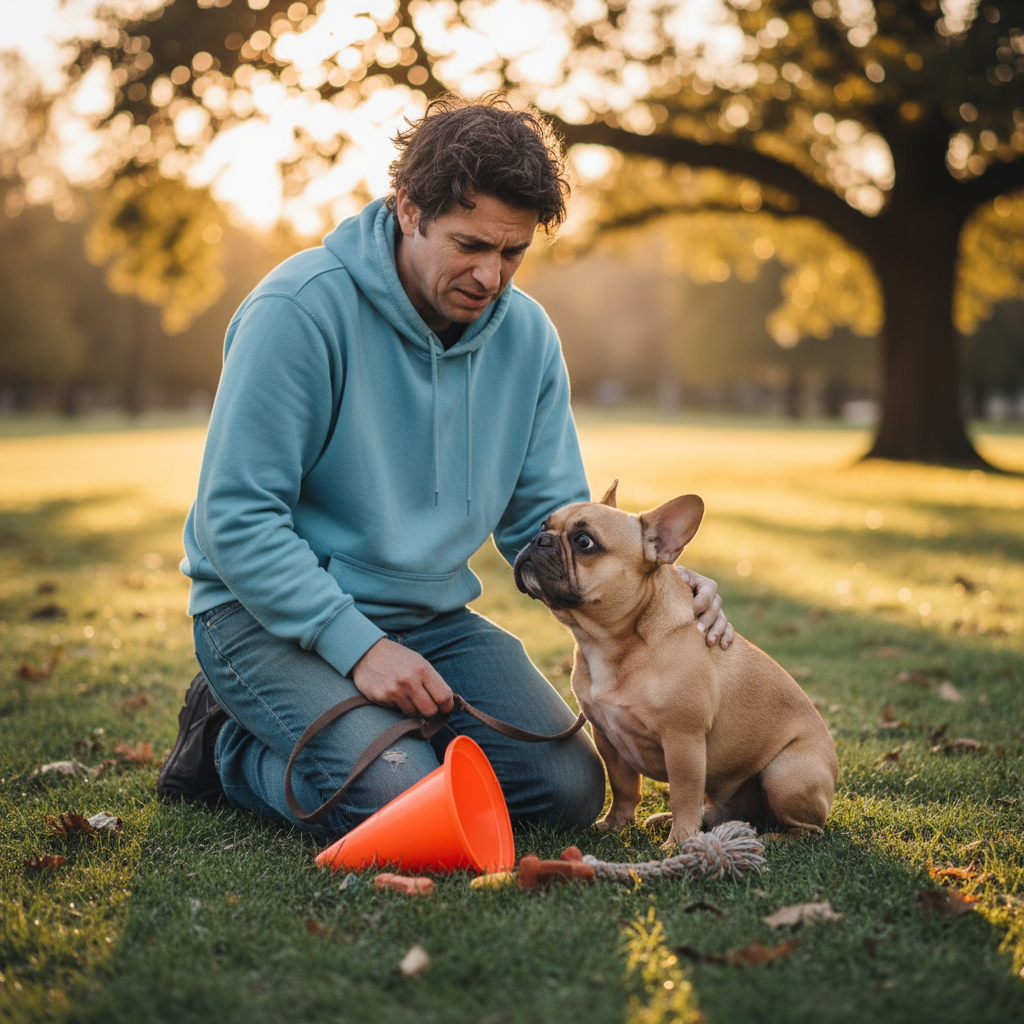
Even with the best plan, training sometimes hits a snag. Don’t get discouraged! Every dog learns at a different pace, and running into challenges is a normal part of the process. Identifying the problem is the first step to solving it. Let’s look at some common issues you might encounter and how to work through them with a positive approach.
Think of these moments not as failures, but as your dog giving you valuable information about what they don’t yet understand. It’s a puzzle for you to solve together! Below is a handy chart to help you diagnose and fix common sticking points.
| The Problem | Why It Might Be Happening | The Solution |
|---|---|---|
| The dog only completes a half-circle then comes back. | The dog is anticipating the reward too early or doesn’t fully understand that the reward comes after a full circle. | Go back to luring. Use your treat to guide them through the entire 360-degree motion. Click and reward only when they are back at the starting point. Break it down and reward for smaller increments if needed (e.g., a three-quarter circle). |
| The dog just runs to the object and stops. | They may be confusing the ‘Circle’ command with a ‘Go to Target’ or ‘Place’ command. The concept of ‘around’ isn’t clear yet. | Return to Phase 1. Stand right next to the object and physically guide them around it with a lure. Make the circular motion very exaggerated and fun. Reward for any forward motion around the object. |
| The dog gets distracted and wanders off mid-circle. | The distance is too great, the environment is too distracting, or the treats aren’t valuable enough to hold their attention. | Reduce the distance immediately. Go back to a distance where they were successful. Use higher-value treats and practice in a less distracting environment. Ensure you are more exciting than the distractions! |
| The dog won’t perform the command without a visible object. | They have become too dependent on the visual cue of the object and haven’t generalized the verbal/hand cue yet. | Don’t remove the object completely at first. Use a progressively smaller and flatter object (e.g., cone -> toy -> wallet -> leaf -> blade of grass). This gradual fading process helps them transfer the cue from the object to your signals. |
Conclusion
Congratulations! You’ve just unlocked one of the most impressive and rewarding commands you can teach your dog. Mastering the Distance Circle Command is about so much more than just a trick; it’s a testament to the clear communication, trust, and partnership you’ve built with your canine companion. You’ve challenged their mind, honed their focus, and given them a fun and engaging job to do.
Remember that consistency is your best friend. Practice in short, fun sessions, and don’t be afraid to take a step back if your dog is struggling. Every training session, no matter how small, strengthens your bond. So get out there and show off your dog’s amazing ‘remote control’ skills! Whether you’re impressing friends at the park, building focus on a hike, or just having fun in your backyard, you’ve given your dog a wonderful gift: the joy of working with the person they love most—you.