We’ve all been there. The sky opens up, the rain is pouring down, and your dog is giving you that look—the one that says, ‘But what about my walk?!’ A bored, under-exercised dog can quickly become a destructive or anxious one. Cabin fever is real, for both pets and their people! So, what’s a dedicated pet parent to do when the weather just won’t cooperate?
Enter the treadmill. It might sound a bit strange at first, but a treadmill can be an incredible tool for providing physical exercise and mental stimulation, especially for high-energy breeds. It’s not a replacement for the sensory joys of an outdoor walk, but it’s a fantastic supplement to keep your dog healthy and happy. However, you can’t just pop your pup on and press ‘start.’ Safety and proper training are absolutely crucial. This guide will walk you through everything you need to know, step by step, to turn your dog into a confident treadmill pro.
Gearing Up for Success: Choosing the Right Treadmill and Supplies
Prepping for Your First Session
Before you even think about starting, let’s get our gear in order. Setting up the right environment from the beginning will make the entire training process smoother and safer for your best friend. It’s not just about the treadmill; it’s about creating a positive association from the get-go.
Human Treadmill vs. Dog-Specific Treadmill
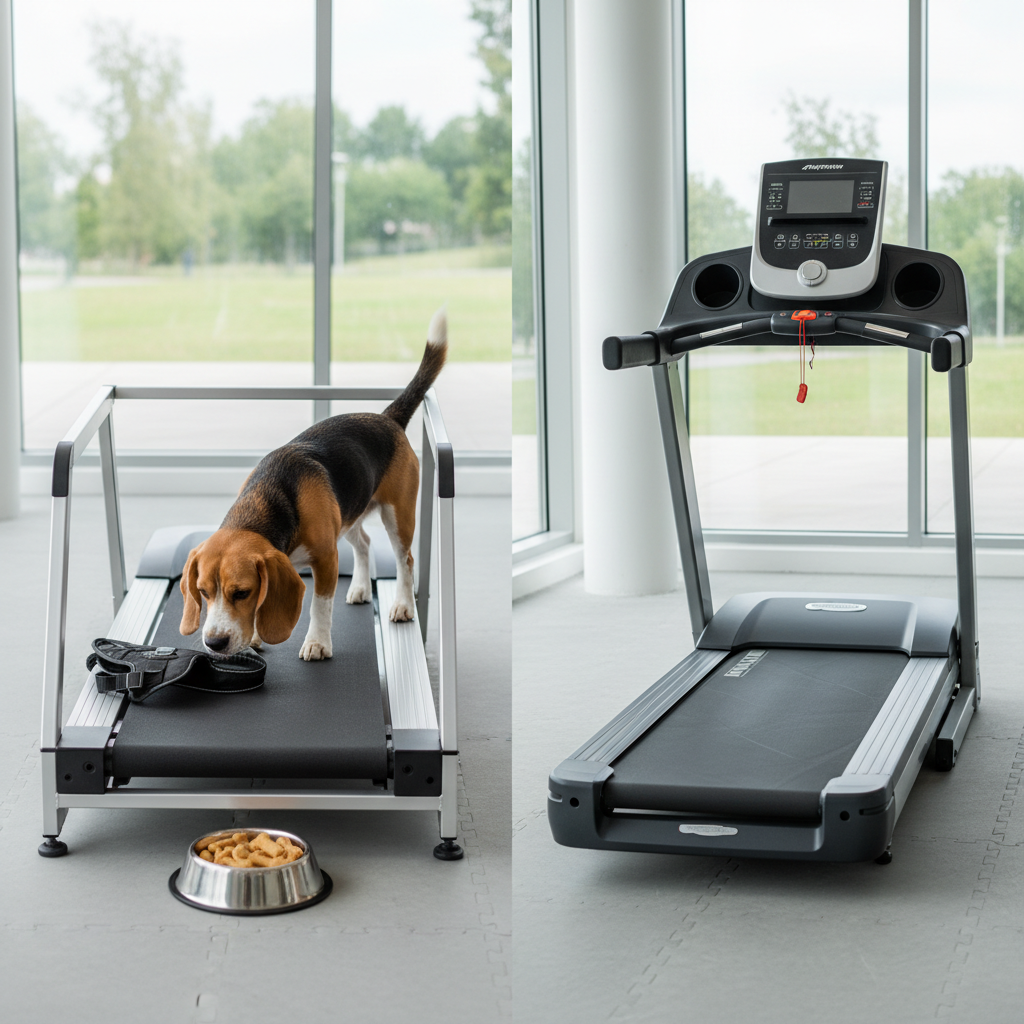
This is the first big question most owners have. While you can potentially use a human treadmill, one designed specifically for dogs is almost always the better and safer option. Here’s why:
- Motor Location & Noise: Dog treadmills often have their motors housed in a way that makes them quieter, which is less intimidating for a nervous pup. The motor covers on human treadmills can also have vents that might catch a dog’s fur.
- Track Length: Dog treadmills have a longer track relative to their width, which better accommodates a dog’s natural gait. Human treadmills might be too short for larger breeds, forcing them into an unnatural, shortened stride.
- Side Rails: Dog-specific models come with side rails that help keep your dog focused and centered on the belt, preventing them from accidentally stepping off.
- No Large Console: Human treadmills have a large, bulky console at the front, which can be intimidating and block your dog’s forward view. Dog treadmills are open at the front, allowing you to stand in front of your dog to offer treats and encouragement.
The Verdict: If you can, invest in a dog-specific treadmill. If you must use a human one, ensure it has a long enough track, can operate at very low speeds (0.5 mph), and that you take extra precautions to keep your dog safe.
Essential Training Supplies
Once you have the machine, gather these must-have items:
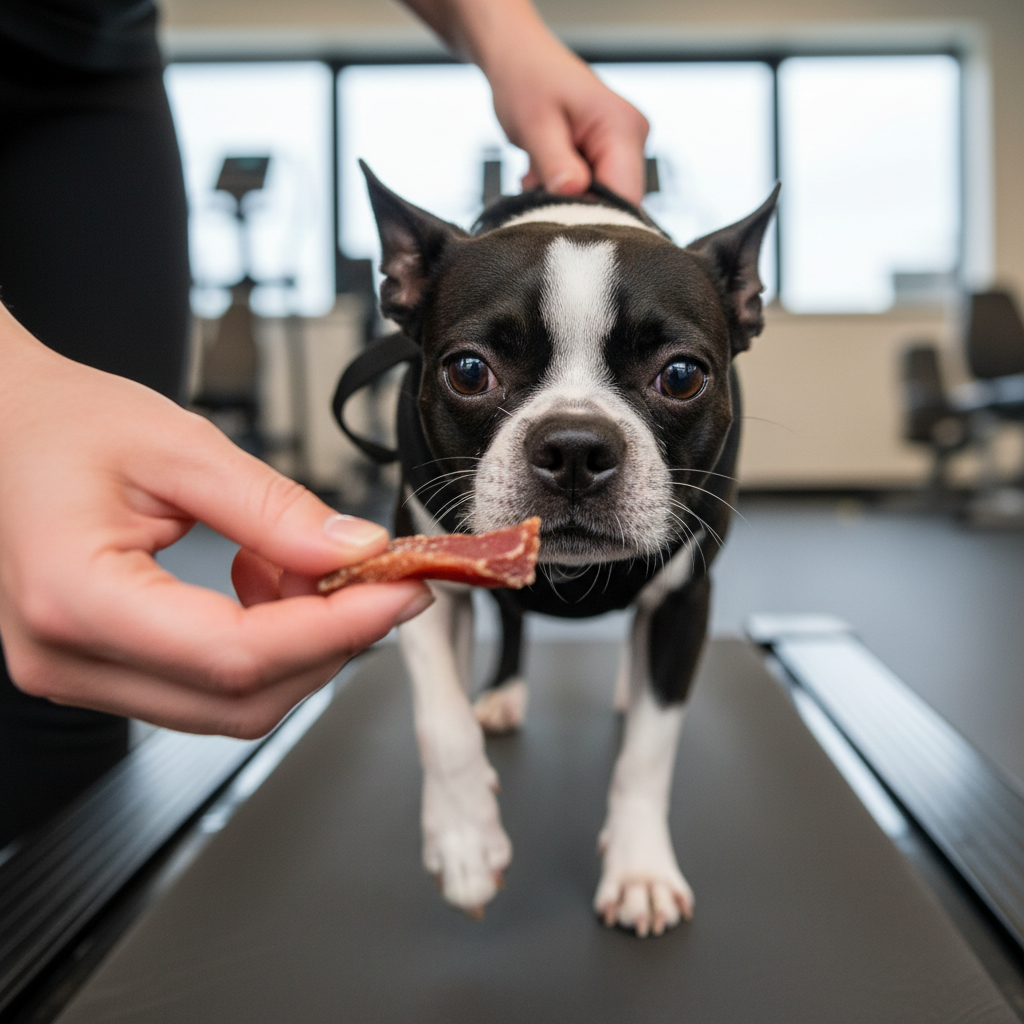
- High-Value Treats: We’re not talking about their everyday kibble. You need the good stuff! Think tiny pieces of cooked chicken, cheese, or their favorite soft training treats. The goal is to make the treadmill the most rewarding place in the house.
- A Comfortable Harness: Never, ever use a neck collar to guide your dog on a treadmill. A well-fitting, back-clip harness is the safest option. It gives you gentle control without putting any pressure on their throat.
- A Leash: You’ll hold the leash to guide your dog, but it should never be tied to the machine. It’s for guidance and safety, not for tethering.
- A Quiet, Distraction-Free Space: Set up the treadmill in a calm area of your home where you won’t be interrupted by other pets, kids, or loud noises.
Your Step-by-Step Guide to Treadmill Training
Patience is Key: The Training Process
Remember, this process is a marathon, not a sprint. The goal is for your dog to love the treadmill, not just tolerate it. Every dog learns at a different pace. Keep sessions short (5-10 minutes max to start) and always end on a positive note. Let’s break it down.
Step 1: The Introduction (Treadmill is OFF)
The machine is big, strange, and new. The first step is just getting your dog comfortable with its presence.
- Place the treadmill in its designated spot and let your dog investigate it on their own terms. Let them sniff it and walk around it.
- Anytime your dog shows calm, curious behavior near the machine, praise them and give them a treat.
- Lure them onto the stationary belt with a treat. Once all four paws are on, give them a jackpot of treats and lots of praise. Then, let them get off. Repeat this several times over a few days. We want them to think, ‘Great things happen when I step on this weird floor!’
Step 2: Getting Used to the Noise (Dog is OFF the treadmill)
The sound of the motor can be scary. We need to desensitize them to it.
- With your dog a comfortable distance away, turn the treadmill on to its lowest speed.
- As soon as it starts, toss them high-value treats. Let it run for 15-20 seconds, then turn it off. Stop giving treats the moment it’s off.
- Repeat this, gradually asking your dog to be a little closer to the machine each time. The goal is to create this association: Machine noise = yummy snacks!
Step 3: The First Steps (Treadmill is ON)
This is the big moment! Combine the previous steps.
- Stand in front of the treadmill, facing your dog. Lure them onto the belt with a treat, just like in Step 1.
- Have a handful of amazing treats ready. With your dog on the belt, turn the machine on to the absolute lowest speed possible (e.g., 0.5 mph).
- As soon as the belt moves, start feeding your dog a steady stream of tiny treats to encourage them to walk forward. Keep the leash slack but hold it for safety.
- Let them walk for just 15-30 seconds, then turn it off, praise them lavishly, and let them get off. End the session there. You’ve had a huge success!
Step 4: Building Duration and Speed
Once your dog is comfortably walking for 30-60 seconds at the lowest speed, you can slowly start to build on it.
- Duration: Gradually increase the time they spend walking in 30-second increments. Work your way up to 5 minutes, then 10, over many sessions. Most dogs will only need 15-25 minutes of continuous walking for a good workout.
- Speed: Once they have the duration down, you can slightly increase the speed to a comfortable walking pace or a slow trot. Watch your dog’s gait to ensure it looks natural and not rushed.
Expert Tip: Always start and end every session with a 1-2 minute ‘warm-up’ and ‘cool-down’ at a very slow pace. Just like human athletes, dogs need to prepare their muscles for work and cool them down afterward.
Safety First! The Dos and Don’ts of Treadmill Workouts
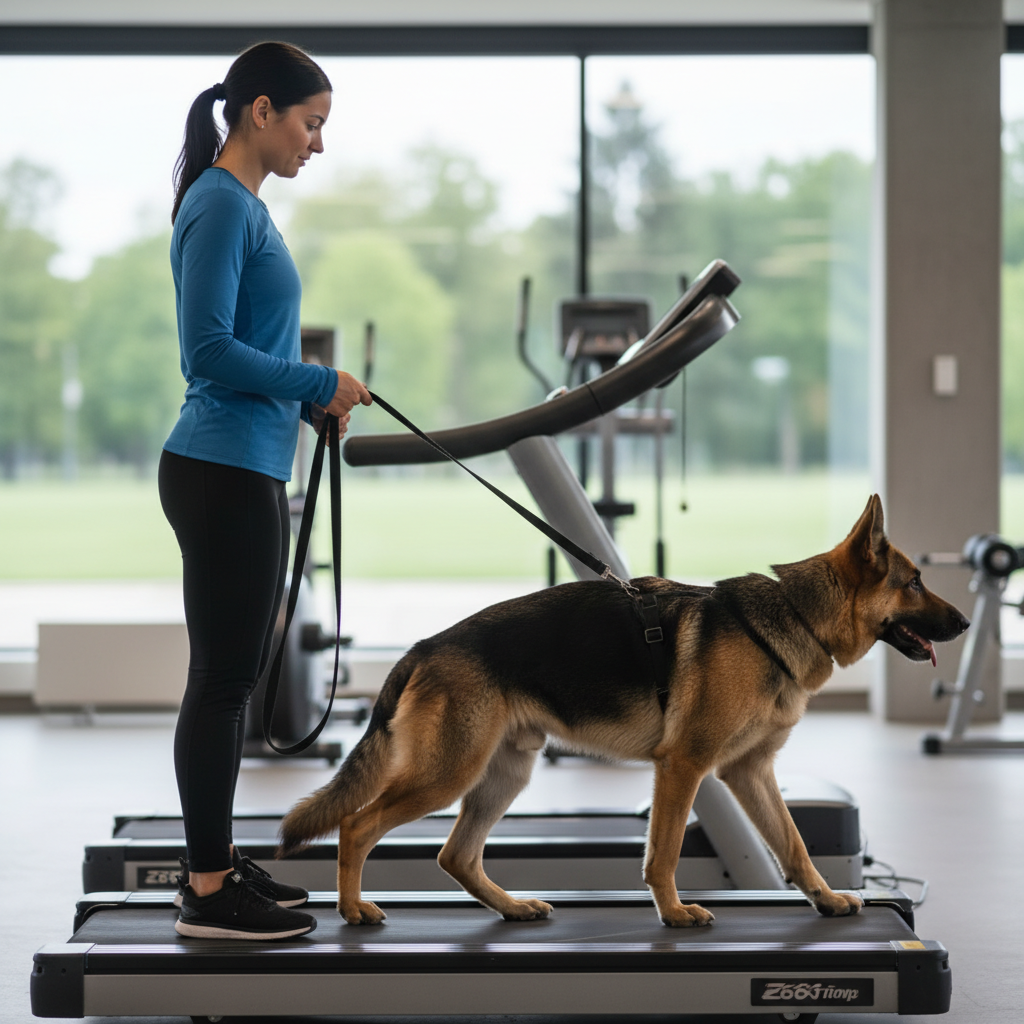
Keeping Your Pup Safe is Priority #1
A treadmill is a powerful piece of equipment, and safety should always be your top concern. Ignoring these rules can lead to injury or create a lifelong fear of the machine. Here are the non-negotiables of dog treadmill safety.
| The DOs (What You Should Always Do) | The DON’Ts (What You Should Never Do) |
|---|---|
| DO supervise your dog 100% of the time. Never leave them unattended on the treadmill, even for a second. | DON’T ever tie your dog’s leash to the treadmill. If they stumble or panic, this could lead to serious injury or strangulation. |
| DO use a harness, not a collar, for gentle guidance. | DON’T force your dog onto the machine. All training should be based on positive reinforcement. |
| DO keep sessions short and appropriate for your dog’s fitness level, age, and breed. | DON’T use the treadmill as a punishment or to tire out a hyperactive dog without mental stimulation. |
| DO start and end with a slow warm-up and cool-down period. | DON’T place the treadmill facing a wall. Your dog should have a clear, open view in front of them. |
| DO watch for signs of fatigue, such as excessive panting, lagging, or trying to get off. Stop immediately if you see these. | DON’T allow children or other pets to play near the treadmill while it’s in use. |
| DO ensure your dog’s paws are in good condition. Check for any cuts or abrasions before and after each session. | DON’T set the incline too high. A flat surface or a very minimal incline (1-2%) is best for most dogs to avoid strain. |
Hitting a Snag? Troubleshooting Common Treadmill Issues
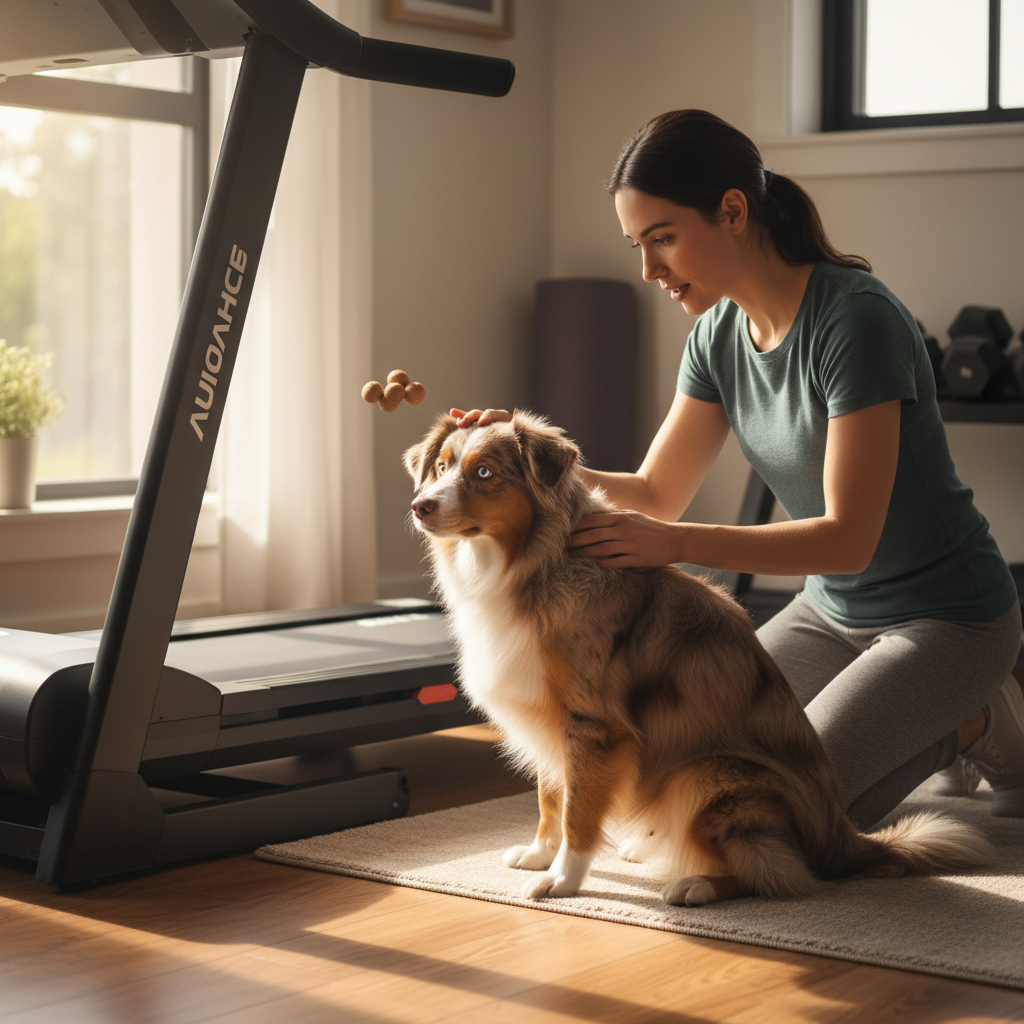
Working Through the Wobbles
Sometimes, despite our best efforts, our dogs get nervous or confused. That’s okay! Here’s how to handle some common roadblocks with patience and positivity.
My Dog is Terrified of the Treadmill
Fear is the most common hurdle. If your dog is showing signs of anxiety (tucked tail, flattened ears, trembling), you’ve moved too fast. Go back a few steps.
- Spend more time just rewarding your dog for being near the stationary machine.
- Play fun games like ‘find the treat’ on and around the turned-off treadmill.
- Break down the ‘getting used to the noise’ step even further. Start with the machine on the other side of the room, or even in a different room, and reward for calm behavior.
My Dog Keeps Trying to Jump Off the Side
This usually happens when a dog is unsure or distracted. If you are using a dog-specific treadmill with side rails, this is less of an issue. If not:
- Make sure you are standing in front of your dog, keeping their focus forward on you and the treats.
- Use your body and the leash to gently guide them back to the center. Don’t pull or yank, just apply gentle, steady guidance.
- Ensure the speed isn’t too fast. A dog may try to bail if they can’t keep up.
My Dog Just Stands There and Lets the Belt Move Under Him
Some dogs don’t immediately understand the concept of walking. They might brace themselves and let the belt slide beneath them until they fall off the back.
- Start at the absolute slowest speed possible.
- Hold a very enticing treat right in front of their nose and slowly move it forward, encouraging that first step. As soon as they take one, praise and reward!
- You can also try using a target stick or having a second person lightly tap their rear paws to encourage movement.
Remember: Every interaction with the treadmill should be positive. If a session is going poorly and your dog is stressed, it’s better to stop, take a break, and try again another day. Forcing the issue will only create a negative association that’s hard to undo.
Conclusion
Congratulations! You now have all the tools and knowledge to safely introduce your dog to the treadmill. It’s more than just a rainy-day solution; it’s a way to manage your dog’s weight, provide an outlet for high-energy breeds, and help with rehabilitation after an injury (with your vet’s approval, of course). The key to success is patience, positivity, and putting your dog’s safety and comfort above all else.
By following these steps, you can transform a potentially scary machine into a source of fun and fitness. So next time the storm clouds roll in, you and your furry friend will be ready for a great indoor adventure. Happy walking!