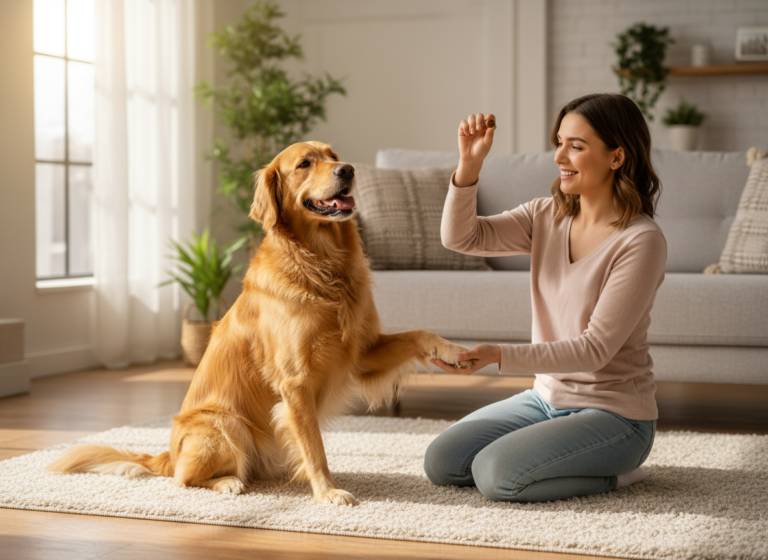
Welcome to one of the most rewarding chapters of pet ownership: caring for a senior dog. As our beloved companions trade their boundless puppy energy for a more distinguished, leisurely pace, their needs for activity and engagement don’t disappear—they simply change. It’s a common misconception that an old dog is happy to just sleep the day away. While they certainly love their naps, their minds and bodies still crave stimulation to stay healthy and happy.
The key is shifting our focus from high-intensity romps to gentle, low-impact activities that nurture their bodies and challenge their minds. Pounding the pavement or leaping for frisbees can be tough on aging joints, but that doesn’t mean the fun has to stop! In fact, this is a wonderful opportunity to deepen your bond and discover new ways to enjoy your time together.
In this guide, we’ll walk you through seven fantastic, veterinarian-approved activities perfect for your senior sidekick. These ideas are designed to provide physical exercise, mental enrichment, and quality bonding time, all while protecting their precious joints. Let’s get ready to prove that you absolutely can teach an old dog new tricks!
Activity 1: The Art of the ‘Sniffari’ (Scent Walks)
Let Their Nose Lead the Way
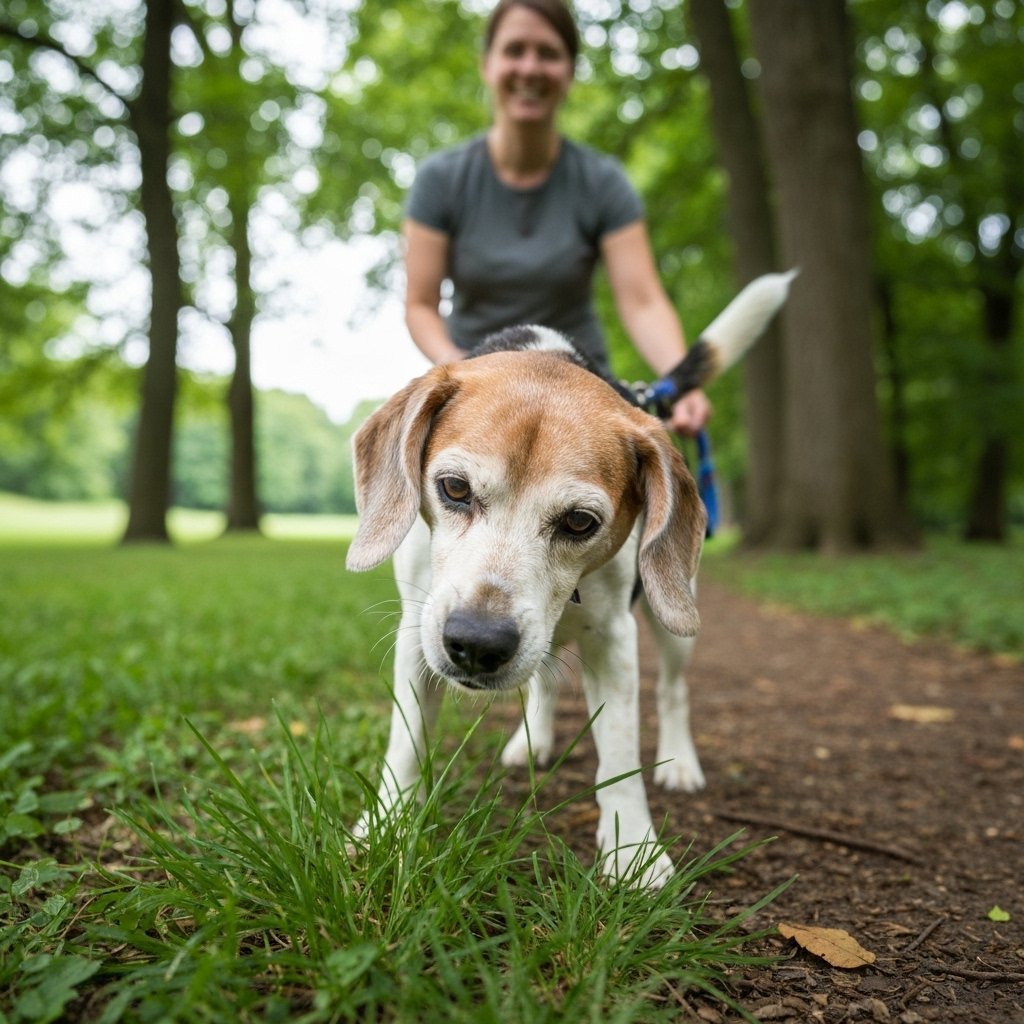
Have you ever noticed how your dog seems to be reading the ‘morning paper’ with their nose on a walk? That’s because a dog’s sense of smell is their primary way of understanding the world. A ‘sniffari’—a portmanteau of ‘sniff’ and ‘safari’—is a walk where you let your dog’s nose be the guide. Instead of focusing on distance or pace, the goal is to let them explore every fascinating scent along the way.
Why It’s Great for Seniors:
- Mental Stimulation: Processing scents is incredibly engaging for a dog’s brain. A 20-minute sniffari can be more tiring and satisfying for a senior than a 40-minute brisk walk. It’s like a crossword puzzle for their mind!
- Low Physical Strain: The pace is naturally slow and meandering, which is perfect for dogs with arthritis or low stamina. There’s no pressure to keep up.
- Reduces Stress: Allowing a dog to engage in natural behaviors like sniffing can be incredibly calming and stress-relieving.
How to Go on a Sniffari:
- Use the Right Gear: Opt for a comfortable, well-fitting harness instead of a collar to avoid any pressure on their neck. A longer leash (6-10 feet) gives them more freedom to explore without you having to walk over every single bush.
- Choose a Rich Environment: A quiet park, a grassy field, or a new neighborhood trail are all fantastic options. Avoid busy sidewalks where you might feel rushed.
- Let Go of Control: This is the hardest part for us humans! Your job is to be the anchor, keeping them safe while they follow a scent trail. If they want to spend five minutes sniffing one blade of grass, let them.
Expert Tip: Try to visit a new place once a week. The novel smells provide an extra layer of enrichment and excitement for your senior dog, breaking up the monotony of the same old route.
Activity 2: Swimming and Water Fun
A Splash of Joint-Friendly Fun
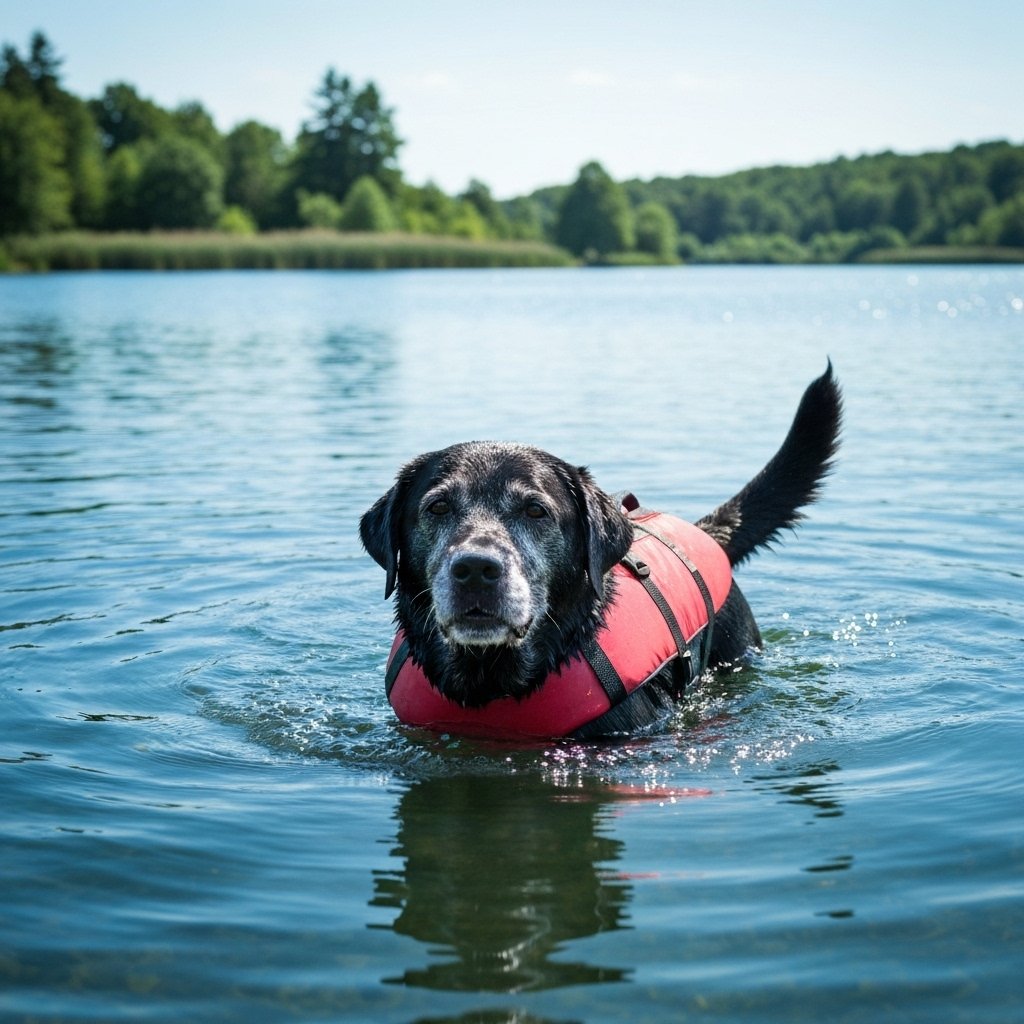
Water is a senior dog’s best friend. The buoyancy of water supports their body weight, taking virtually all the pressure off of their achy joints and spine. This allows them to move their limbs through a full range of motion, which can help maintain muscle mass and flexibility without the painful impact of walking or running.
Benefits of Water-Based Activities:
- Full-Body Workout: Swimming is a fantastic cardiovascular exercise that is gentle on the entire body.
- Pain Relief: For dogs with arthritis, the warm water of a therapy pool can be incredibly soothing, acting as a natural anti-inflammatory.
- Improved Mobility: Regular, gentle swimming can help improve a dog’s overall mobility and strength on land.
Getting Your Senior Wet Safely:
Not all dogs are natural swimmers, and safety is paramount, especially for older pets who may tire more quickly.
- Invest in a Life Vest: A well-fitted canine life vest provides extra buoyancy and confidence. Look for one with a sturdy handle on top, which makes it easy for you to guide them or lift them out of the water if needed.
- Ensure Easy Entry and Exit: Never let your senior dog jump into a pool. Use a ramp or walk them in slowly from a gently sloping beach or lake shore. Getting out is just as important; they need a clear, non-slip way to exit when they’re tired.
- Keep it Short and Sweet: Start with very short sessions of just 5-10 minutes. Watch for signs of fatigue, like slower paddling or heavy panting.
- Consider Professional Hydrotherapy: For a more structured and therapeutic experience, look for a certified canine hydrotherapy center. They often have heated pools, underwater treadmills, and trained therapists to guide your dog through specific exercises.
Important Note: Always supervise your dog in the water, regardless of their swimming ability. After their swim, rinse them with fresh water to remove chlorine or bacteria, and dry their ears thoroughly to prevent infections.
Activity 3: Puzzle Toys and Brain Games
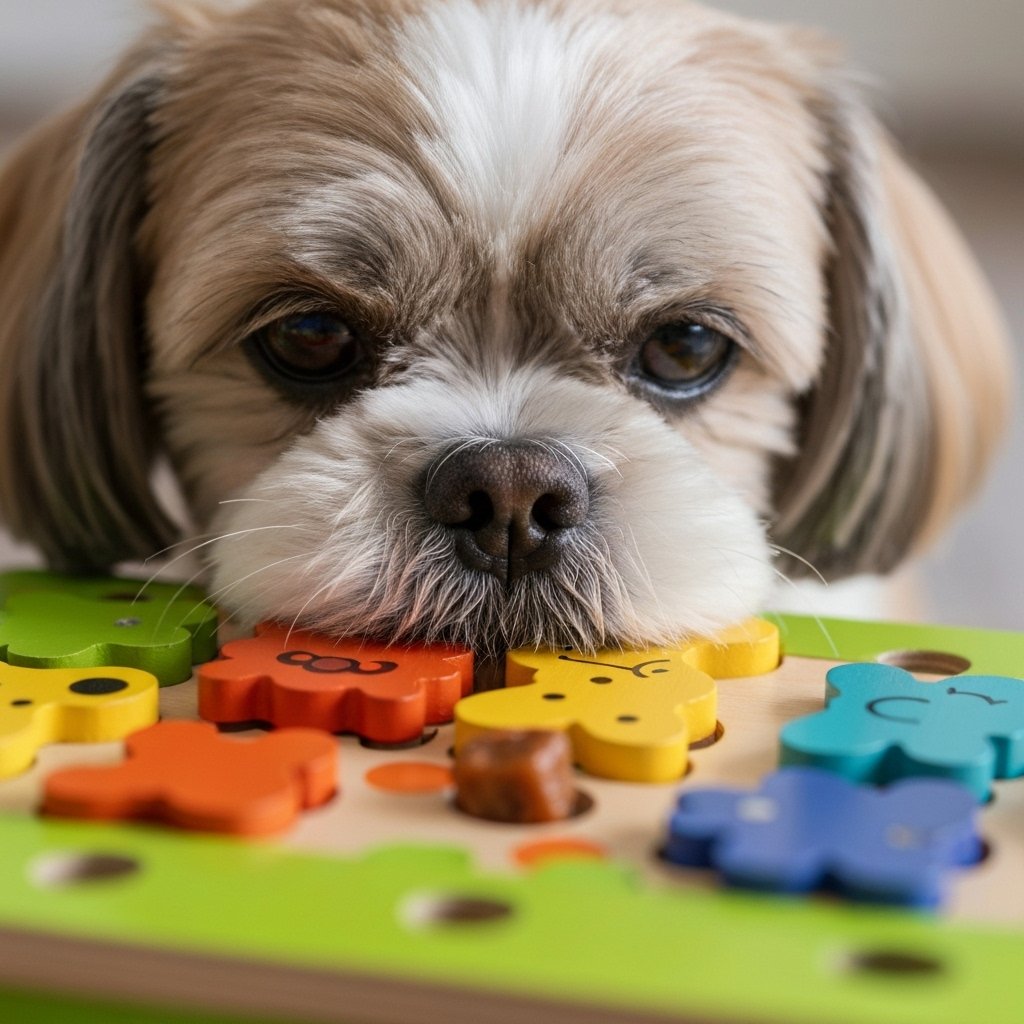
Work the Mind to Keep it Sharp
As dogs age, their bodies might slow down, but their brains still need a good workout. Canine Cognitive Dysfunction (CCD), similar to Alzheimer’s in humans, is a real concern for senior pets. Engaging their minds with puzzles and games can help keep neural pathways active and delay the onset of cognitive decline. It’s also a fantastic way to bust boredom on rainy days or for dogs with limited mobility.
Types of Brain Games for Seniors:
- Food-Dispensing Toys: These are the perfect entry point. Toys like the KONG Classic or a snuffle mat encourage your dog to use their nose and paws to work for their food, which is far more engaging than eating from a bowl.
- Interactive Puzzle Toys: These come in various difficulty levels, from simple lift-the-flap puzzles to more complex sliders and spinners. Start with a Level 1 puzzle to build their confidence before moving on to more challenging ones.
- DIY Games: You don’t need to spend a lot of money! Try the ‘Muffin Tin Game’ by placing a few treats in a muffin tin and covering them with tennis balls. Or, play the ‘Shell Game’ with three plastic cups and a treat hidden under one.
Tips for Success:
The goal is to challenge, not frustrate. If your dog is struggling, make it easier for them. Show them how it works and praise them enthusiastically for any effort. Keep sessions short (10-15 minutes) to hold their interest. This should be a fun bonding activity, not a stressful test.
| Game Type | Best For | Key Benefit |
|---|---|---|
| Snuffle Mat | Beginners & Food-Motivated Dogs | Encourages natural foraging instincts. |
| Level 1 Puzzle Toy | Seniors new to puzzles | Builds confidence with simple actions. |
| ‘Find It’ Game | Dogs with good noses | Engages their powerful sense of smell. |
Activity 4: Indoor Scent Work

Unleash Their Inner Detective
Scent work, or ‘nose work,’ is a fun and exciting dog sport that has been adapted into a fantastic low-impact activity for pets of all ages. It taps into a dog’s most powerful natural asset: their sense of smell. You teach your dog to find a specific scent (like birch or clove oil), but for a fun at-home version, you can simply use their favorite smelly treats!
Why Scent Work is Perfect for Seniors:
- Zero Physical Impact: The ‘work’ is all done with their nose. It requires no jumping, running, or physically demanding movements.
- Boosts Confidence: Successfully finding a hidden item is a huge confidence booster, especially for dogs who may feel less capable physically than they used to.
- It’s Incredibly Tiring: Just like the sniffari, a 15-minute scent work session can wear a dog out more than a long, boring walk. It’s the ultimate mental workout.
How to Get Started with Simple Scent Games:
- The ‘Which Hand?’ Game: Start easy. Place a treat in one hand, close both fists, and present them to your dog. When they sniff or paw at the correct hand, open it and give them the reward with lots of praise.
- The ‘Box Search’: Gather a few cardboard boxes and place them in a room. While your dog is watching, put a high-value treat in one of the boxes. Give them a command like ‘Find it!’ and encourage them to search. Celebrate wildly when they succeed!
- Increase the Difficulty: As they get better, you can hide treats around a room without them watching—under a rug, behind a chair leg, or on a low shelf. This encourages them to rely solely on their nose.
Expert Tip: Always end on a successful find! You want your dog to finish the game feeling proud and accomplished. If they’re struggling to find a particularly tricky hide, help them out so they can ‘win’ before you stop.
Activity 5: Low-Impact Trick Training

Yes, You CAN Teach an Old Dog New Tricks!
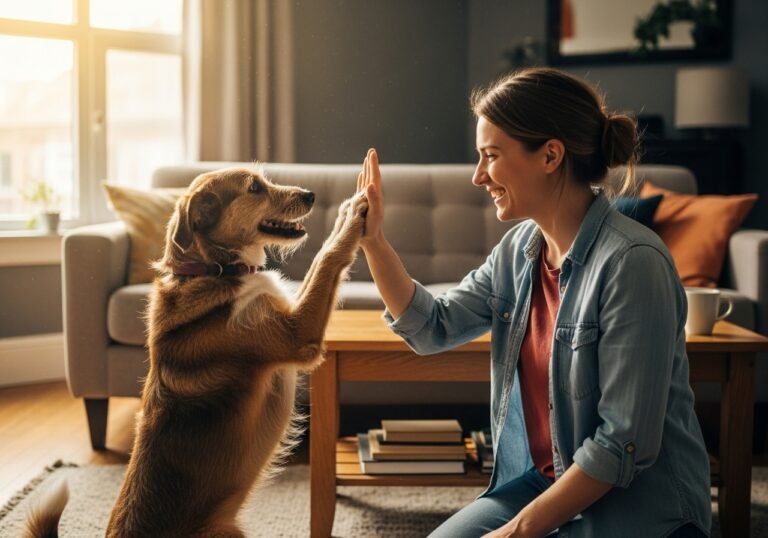
The old adage simply isn’t true. Senior dogs are often easier to train than puppies because they have longer attention spans and a well-established bond with you. Learning new tricks is a wonderful way to keep their minds active and reinforce your connection. The key is to choose tricks that are gentle on their bodies.
Senior-Friendly Trick Ideas:
- ‘Touch’: Teach them to touch their nose to your outstretched palm. This is a great foundation for other tricks.
- ‘Weave’: Stand with your feet apart and use a treat to lure them to weave through your legs in a figure-eight pattern.
- ‘Find Your Leash’: A useful and fun trick! Teach them to locate and pick up their leash.
- ‘Wave’ or ‘High Five’: These can be done from a comfortable sitting or lying position.
- ‘Hold’: Teach them to gently hold a soft object in their mouth.
Training Tips for the Golden Years:
Patience and positive reinforcement are your best friends. Keep training sessions short, upbeat, and fun—no more than 5-10 minutes at a time. Use high-value treats that are easy for them to chew. Most importantly, celebrate every small success! The goal isn’t perfect execution; it’s the process of working together and having a good time.
Remember: Avoid any tricks that require jumping, tight turns, or balancing on their hind legs, as these can be painful or dangerous for a senior with joint issues.
Activity 6: Canine Massage and Gentle Stretching

The Healing Power of Touch
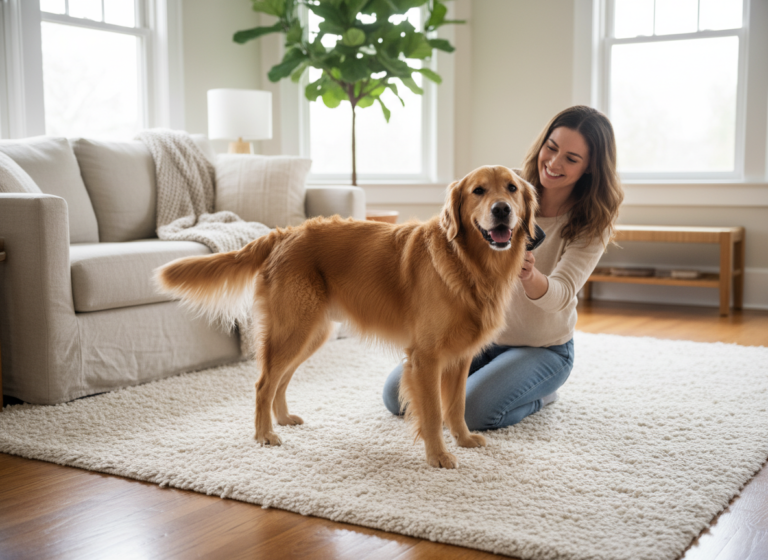
This activity is less about exercise and more about wellness and bonding. Just like in humans, massage can work wonders for a senior dog’s stiff muscles and arthritic joints. It helps improve circulation, reduce stiffness, and can be an incredibly relaxing and bonding experience for both of you.
Simple Massage Techniques:
Find a quiet, comfortable spot and wait until your dog is already relaxed. Use long, gentle, sweeping strokes with a flat palm along their neck, shoulders, back, and thighs. Always move in the direction of their hair growth. Pay attention to their body language—if they lean into your touch, you’re doing it right. If they flinch or move away, lighten your pressure or avoid that area.
Safe and Gentle Stretches:
Stretching can help maintain flexibility, but it must be done with extreme care. Never force a stretch.
- ‘Cookie’ Stretches: While your dog is standing, use a treat to lure their head around towards their shoulder, then their hip, then down towards their chest. This gently stretches their neck and spine.
- Passive Range of Motion: If your dog is comfortable, you can gently support a leg and slowly move the joint through its natural range of motion (e.g., bending and straightening the knee). This should only be done if your vet has shown you the proper technique.
When to See a Pro: If you’re unsure, or if your dog has specific mobility issues, it’s always best to consult a veterinarian or a certified canine rehabilitation therapist. They can teach you safe and effective massage and stretching techniques tailored to your dog’s specific needs.
Activity 7: Scenic Car Rides & Park Bench People-Watching
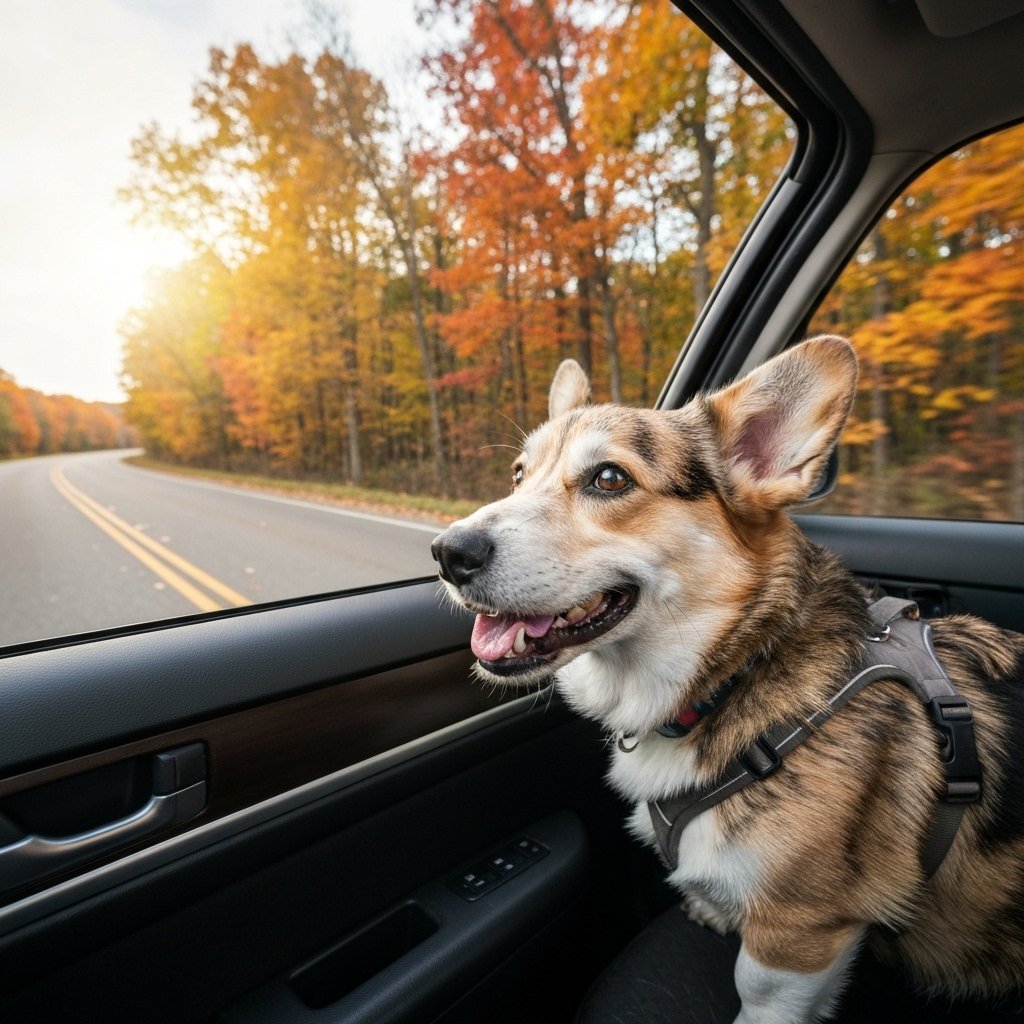
Enrichment Without Exertion
Sometimes, the best activity is one that requires almost no physical effort at all. For seniors with severe mobility limitations, getting out of the house for a change of scenery can be the highlight of their day. It provides a wealth of new sights, sounds, and smells to stimulate their minds without taxing their bodies.
The Joy of a Simple Outing:
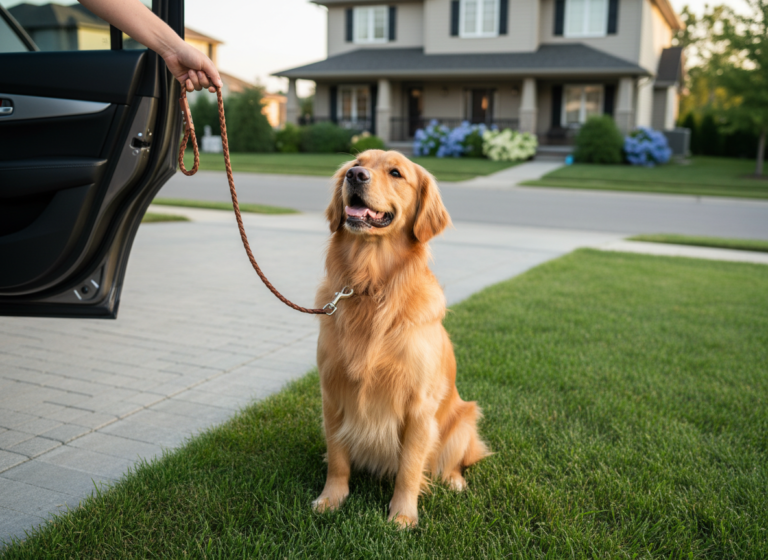
- Scenic Drives: A slow drive through a park or the countryside with the windows cracked (safely, of course!) is a sensory feast. Your dog gets to experience the world from the comfort of their car seat.
- Park Bench Sessions: Find a quiet bench in a park, and just sit together. Let your dog watch the world go by—kids playing, other dogs walking, squirrels scampering. It’s calming for you and mentally engaging for them.
- Visit a Pet-Friendly Patio: A calm café with an outdoor patio can be a great place to relax. Your dog gets to enjoy new smells and a little social exposure from a safe and comfortable distance.
Safety First, Always:
Even on these simple outings, safety is key. In the car, your senior should always be secured with a canine seatbelt harness, a well-ventilated crate, or a car seat. This prevents them from being injured during a sudden stop. When you’re out, make sure they have a comfortable place to lie down and access to fresh water.
These quiet adventures prove that enrichment isn’t always about action. Often, it’s simply about sharing a peaceful moment and experiencing the world together.
Conclusion
Caring for a senior dog is a journey of adaptation, love, and immense reward. By embracing these seven low-impact activities, you can ensure your faithful friend’s golden years are filled with joy, comfort, and engagement. From the mental puzzle of a scent game to the soothing relief of a gentle swim, each activity offers a unique way to nurture their body, stimulate their mind, and strengthen the incredible bond you share.
Remember to always watch your dog for cues of enjoyment or discomfort, and celebrate their effort, not their performance. The goal is no longer about speed or distance, but about shared moments and quality of life. Cherish this special time, take things at their pace, and enjoy the quiet, beautiful journey of growing old together.