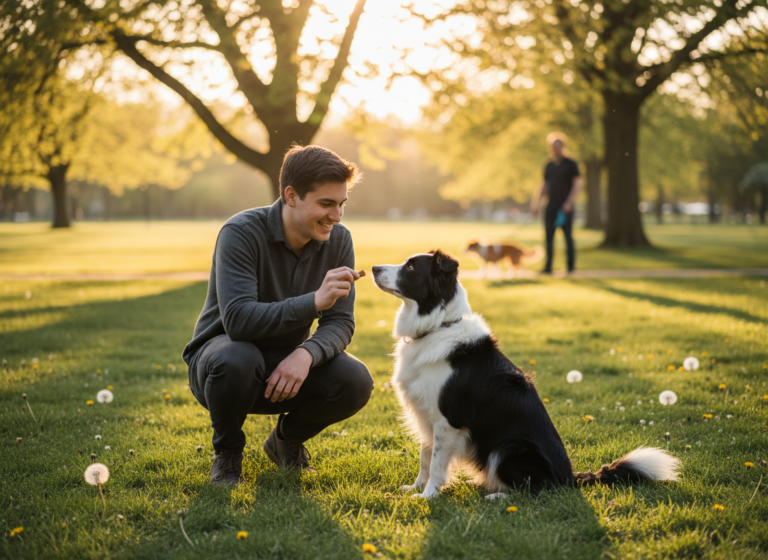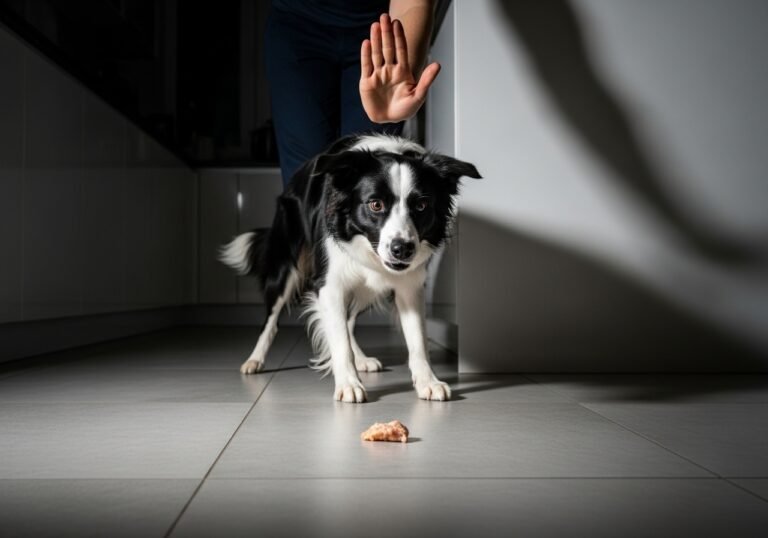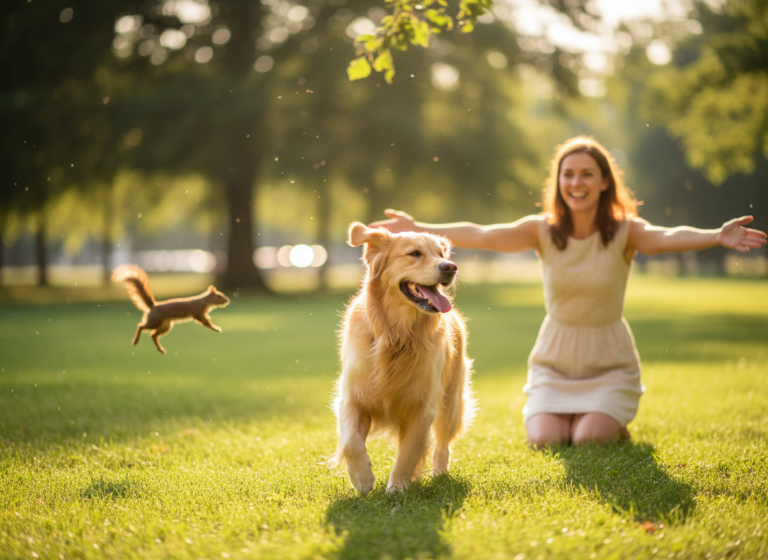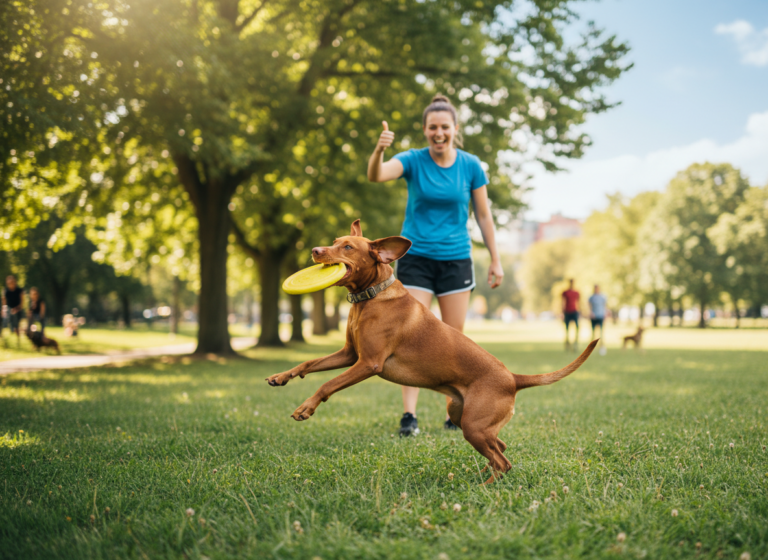
Does this sound familiar? You pull out your dog’s favorite squeaky squirrel, and before you can even suggest a game of fetch, your furry friend has launched themselves forward, snatching it from your hand with the speed of a tiny, fluffy ninja. It’s a common scenario in many households, and while it stems from pure excitement, it can make playtime chaotic and even a little frustrating. What if you could transform that frantic energy into focused anticipation? What if playtime could become a powerful tool for strengthening your bond and reinforcing good manners?
Welcome to the world of teaching your dog to stay until released for a toy! This isn’t just a party trick; it’s a foundational exercise in self-control that has incredible benefits for your dog’s overall behavior. Teaching this skill helps your dog learn to manage their impulses, listen to you even when they’re excited, and understand that good things come to those who wait. In this guide, we’re going to walk you through everything you need to know, step-by-step. We’ll break down the process into simple, fun, and effective training sessions that will have your dog waiting like a pro. Get ready to unlock a new level of communication and cooperation with your best friend!
Why Impulse Control is a Game-Changer for Your Dog
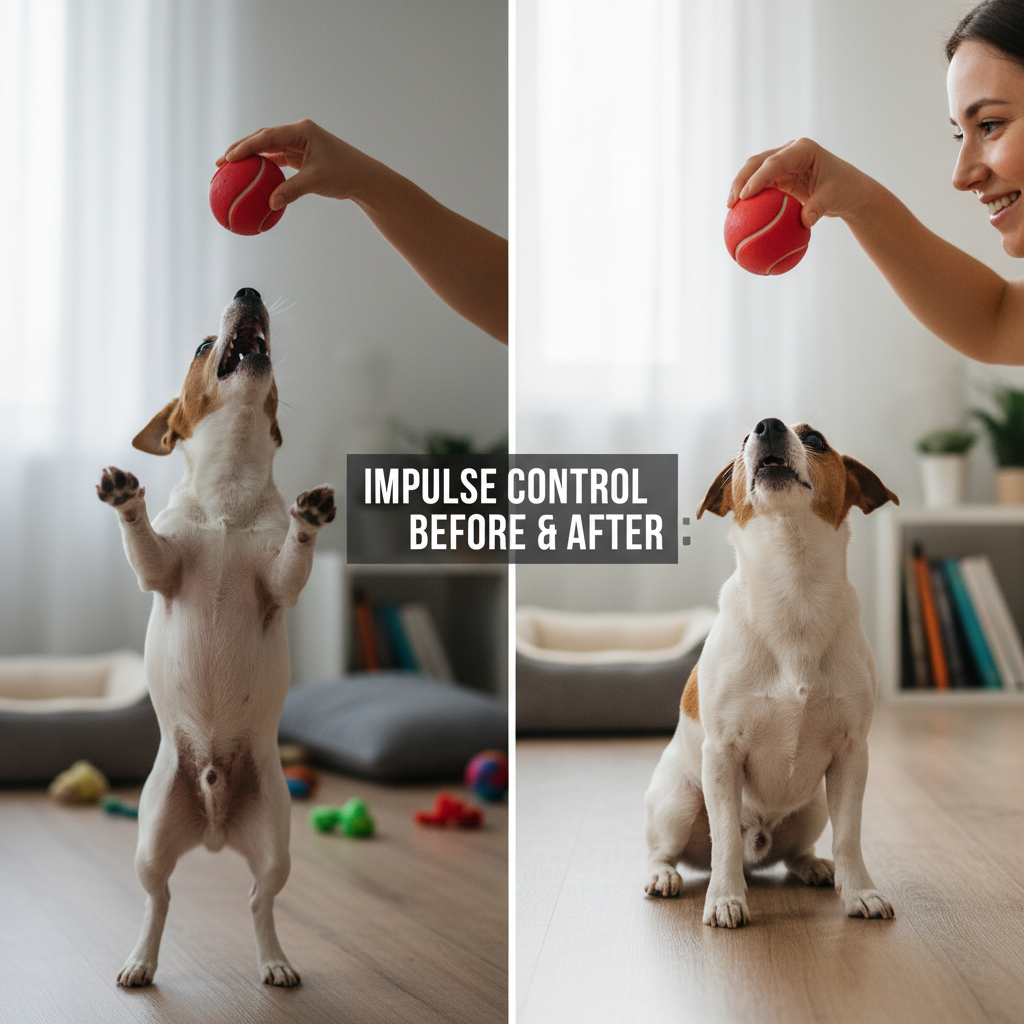
Before we dive into the ‘how-to,’ let’s talk about the ‘why.’ Why should you invest your time in teaching your dog to wait for a toy? Simply put, impulse control is one of the most valuable life skills you can teach them. A dog who can manage their excitement is a dog who is safer, better behaved, and less stressed.
Beyond the Toy Box: Real-World Benefits
Think about it. This skill translates to so many other areas of your life together:
- Safety at Doorways: A dog with good impulse control can be taught to wait at an open door instead of bolting into the street. This single skill can be a literal lifesaver.
- Polite Greetings: Instead of jumping all over guests the second they walk in, a dog who understands ‘wait’ can learn to greet people calmly.
- Mealtime Manners: No more getting mobbed while you fill their food bowl! They can learn to wait patiently until you place the bowl down and give the release cue.
- Reduced Reactivity: Impulse control helps dogs think before they act. This can be crucial on walks, helping them to pause and look to you for guidance when they see another dog or a squirrel, rather than immediately lunging or barking.
Building a Stronger Bond
Training, especially a skill that requires this much communication, is a powerful bonding activity. When you work on this together, you’re not just teaching a command; you’re building a language. Your dog learns to trust that you are the source of all good things (like toys!) and that listening to you pays off. This creates a beautiful feedback loop of trust and respect. You become a more predictable and reliable leader in their eyes, and they become a more attentive and engaged partner. It transforms your relationship from one of simply coexisting to one of true teamwork.
Expert Tip: Think of every training session as a deposit in your relationship bank account. The more positive, clear, and rewarding interactions you have, the richer your bond becomes. Impulse control exercises are a high-yield investment!
Gearing Up for Success: Your Training Toolkit
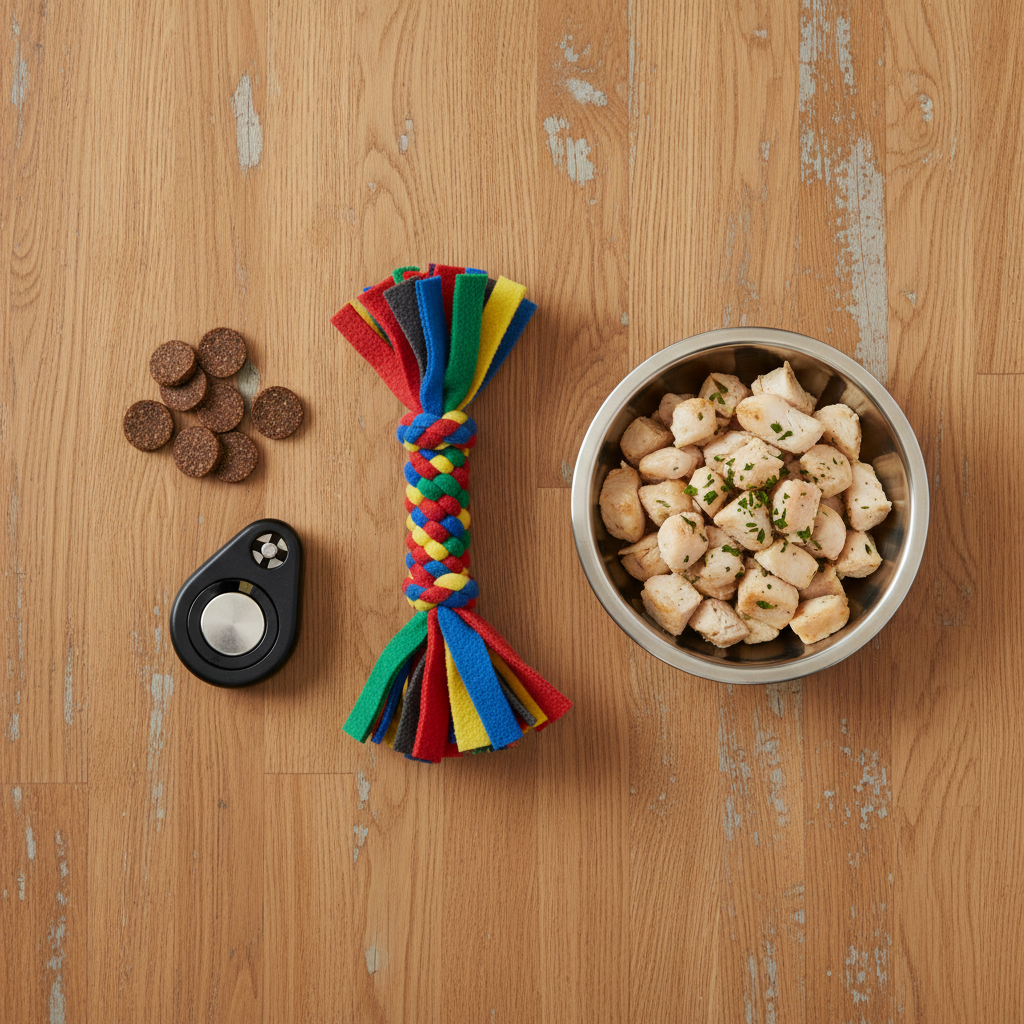
The great news is that you don’t need a lot of fancy or expensive equipment to teach this skill. Success comes from your technique, not your gear. However, having a few key items ready will make your training sessions smoother and more effective. Let’s get our toolkit together!
The Must-Haves
- Your Dog’s Favorite Toy: This is the star of the show! Choose a toy that your dog absolutely loves and finds highly motivating. A squeaky ball, a tug rope, or a plush toy can all work. For the initial stages, it’s often best to use a toy that you can hold easily, rather than something that rolls away, like a tennis ball. We want to control the reward.
- High-Value Treats: Wait, treats for toy training? Yes! Especially in the beginning. We want to heavily reward the ‘wait’ itself, not just the eventual release to the toy. Using small, tasty, easy-to-swallow treats allows you to give your dog quick feedback for making the right choice (i.e., staying put). Think tiny pieces of chicken, cheese, or their favorite soft training treats.
- A Quiet Training Space: Start in a low-distraction environment. Your living room, a quiet hallway, or a securely fenced backyard are all great options. The goal is to set your dog up for success by minimizing things that could pull their attention away from you and the game.
- A Clicker (Optional): If you are a fan of clicker training, this is a fantastic tool to use here. A clicker allows you to mark the *exact* moment your dog performs the correct behavior (holding the stay) with perfect timing, followed by a reward. If you’re not using a clicker, a clear, consistent verbal marker like “Yes!” works just as well.
What NOT to Use
It’s just as important to know what to avoid. Steer clear of punitive tools like prong collars, choke chains, or e-collars. This training is about building self-control through positive reinforcement and clear communication, not through fear or intimidation. We want your dog to want to wait because they understand the game and know a great reward is coming. Using force will only create anxiety and can damage the trust you’re working so hard to build.
The Step-by-Step Training Plan: From Zero to Pro
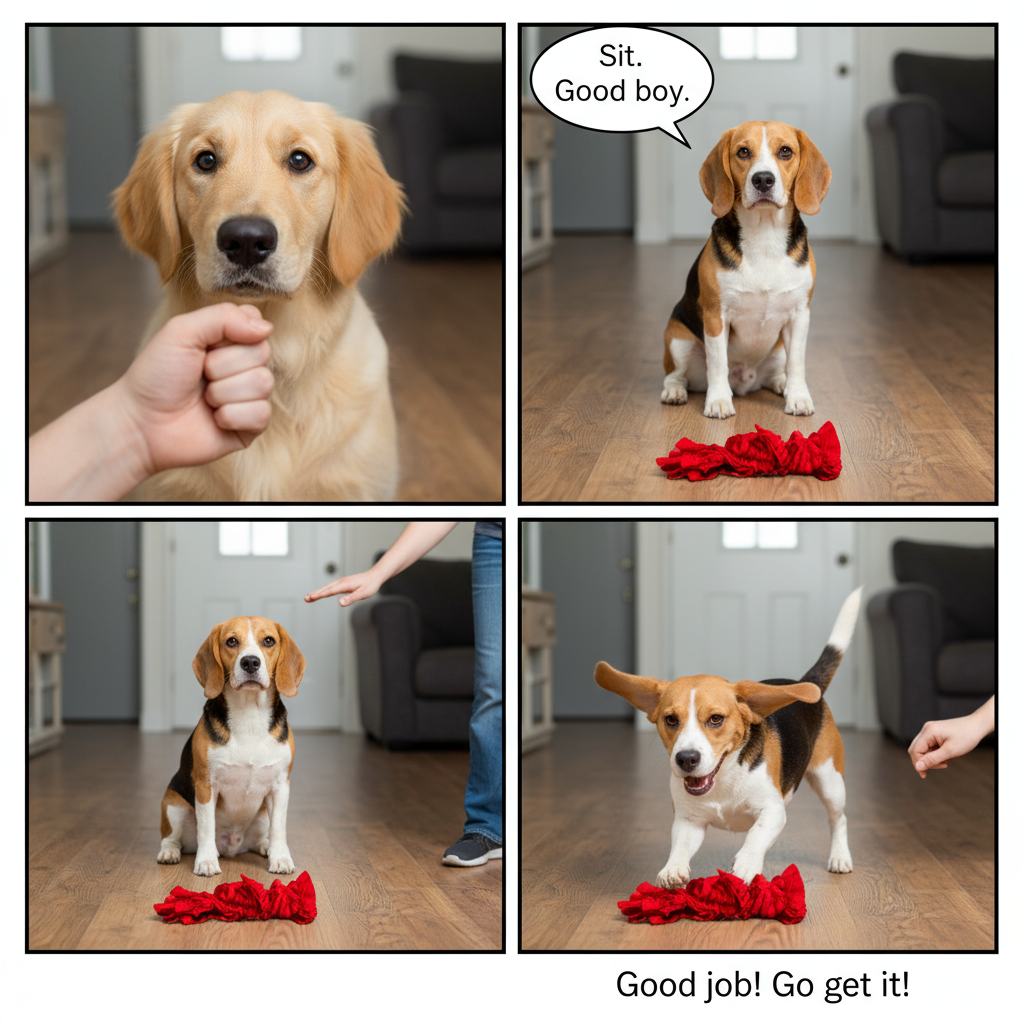
Alright, it’s time for the fun part! Remember, the key to success is to break this down into tiny, achievable steps. We want to build a solid foundation and gradually increase the difficulty. Keep your sessions short (5-10 minutes is plenty) and always end on a positive note. Let’s begin!
Step 1: The ‘Wait’ Foundation (No Toy Yet!)
Before we even bring the toy into the picture, your dog needs to understand the concept of waiting for a treat. This builds the basic skill in a lower-excitement context.
- Ask your dog for a ‘Sit’ or ‘Down’.
- Hold a low-value treat (like their regular kibble) in your closed fist and present it to them. They will likely sniff, lick, or paw at your hand. Ignore this. The moment they pull their head back, even for a split second, say “Yes!” and give them the treat from your other hand. We want to teach them that moving away from the temptation is what gets them the reward.
- Repeat this a few times. Soon, they will stop mugging your hand and will wait patiently.
- Now, introduce your verbal cue. As you present your closed fist, say “Wait.” The moment they hesitate, say “Yes!” and reward from your other hand.
- Gradually start opening your hand. If they lunge, simply close your hand. They only get the treat when they wait patiently while your hand is open.
Step 2: Introducing the Toy
Once your dog understands the basic ‘Wait’ game with a treat, we can swap in the main prize. This will raise the excitement level, so be prepared to take a step back if needed.
- Ask your dog for a ‘Sit’. Show them the toy, but hold it securely behind your back or high up where they can’t get it.
- Say your ‘Wait’ cue.
- Slowly start to lower the toy towards the floor in front of them. The *instant* they start to get up or lunge, immediately lift the toy back up and out of reach. Don’t say anything; just reset. The removal of the toy is the consequence.
- Ask for a ‘Sit’ again and repeat. Lower the toy. If they hold their position for even one second, say “Yes!” enthusiastically, and then immediately say your release cue (like “Okay!” or “Get it!”) and toss the toy for them to play.
- The goal here is to find the threshold where they can be successful. Maybe you can only lower the toy an inch at first. That’s fine! Reward that success and build from there.
Step 3: Building Duration
Your dog can now hold a sit for a second while you place the toy down. It’s time to stretch that time out!
- Follow the steps above to place the toy on the floor.
- This time, after placing it, just wait. Count ‘one-one-thousand’ in your head. If they stay, say “Yes!”, then your release cue “Okay!”, and let them have the toy.
- Gradually increase the duration. Go from one second to two seconds, then three. Don’t always make it harder! Sometimes do a 5-second wait, then a 2-second wait. This variability keeps them engaged.
- If they break the stay, no big deal. Just calmly pick up the toy, ask for a ‘Sit’, and try again with a shorter duration you know they can succeed at.
Step 4: Adding Distance and Distractions
Once your dog can reliably wait for 10-15 seconds with you right beside them, you can start adding new challenges.
- Distance: After placing the toy and giving the ‘Wait’ cue, take one small step back. Immediately step forward again, say “Yes!”, and release them. Slowly increase the distance you can move away from them while they hold their position.
- Distractions: Start small! Walk a slow circle around your dog. If they hold their stay, release them for the toy. Try a little jump. Make a silly noise. The key is to introduce distractions at a low intensity and reward your dog heavily for ignoring them and staying focused on the task.
Troubleshooting Common Hurdles
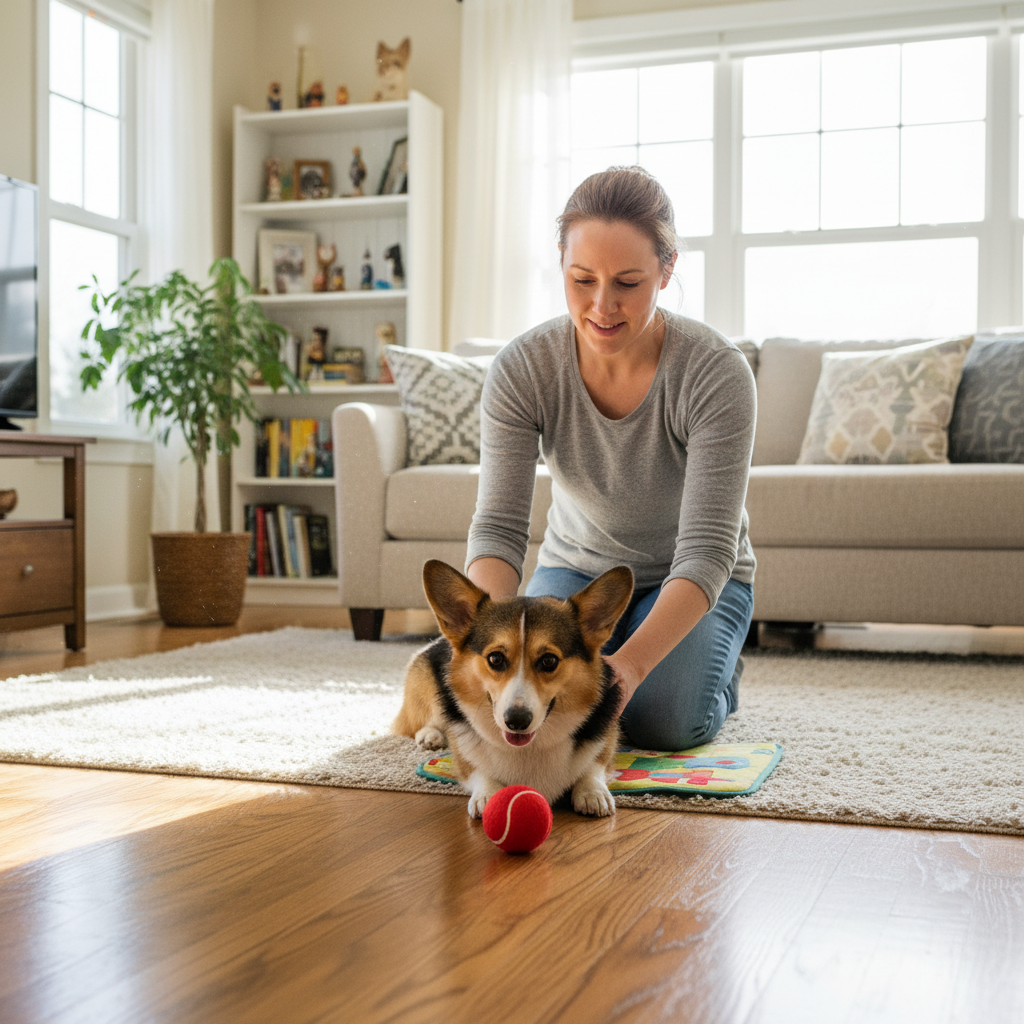
Training is never a straight line to success. You’re going to hit bumps in the road, and that’s completely normal! The key is to know how to navigate them without getting frustrated. Here are some of the most common challenges you might face and how to work through them.
Remember, every ‘mistake’ your dog makes is just information. It’s telling you that the step was too hard, and you need to make it a little easier. Patience is your superpower!
| Common Problem | Why It Happens | Solution |
|---|---|---|
| The Instant Break Your dog gets up the second the toy appears. |
The toy is too exciting, and the dog hasn’t fully grasped the ‘Wait’ concept in this context. The temptation is just too high. | Go back a step! Practice the ‘Wait’ game with a boring treat or piece of kibble first. When reintroducing the toy, don’t even try to place it on the floor. Just reward your dog for staying seated while you simply hold the toy. Make the criteria for success super easy. |
| Whining or Barking Your dog holds the stay but vocalizes their impatience. |
This is often a sign of frustration or over-excitement. They are trying to control themselves but are finding it very difficult. | Shorten the duration of the wait. If they start whining at the 4-second mark, release them at 3 seconds. Reward the quiet moments. You can also give them a ‘calm-down’ treat (a small, low-value one) for being quiet during the wait, before the final release for the toy. |
| The ‘Creeping’ Dog They don’t get up, but they slowly inch forward. |
This is a clever pup testing the boundaries! They know they’re supposed to stay but are trying to decrease the distance to the toy. | Be strict with your criteria. A stay means a stay in that exact spot. If you see them start to creep, use a ‘no reward marker’ like “Oops!” and reset them in the original position. Then, try again with a shorter duration to ensure they succeed. |
| Losing Interest Your dog just looks away or seems bored. |
The session might be too long, they might not be in the mood, or the toy/reward isn’t motivating enough at that moment. | Keep sessions short and sweet (5 minutes max). If they seem disengaged, end the session on a positive note with a simple win and try again later. You can also try using a different, more exciting toy to reignite their interest. |
Common Mistakes to Sidestep on Your Training Journey
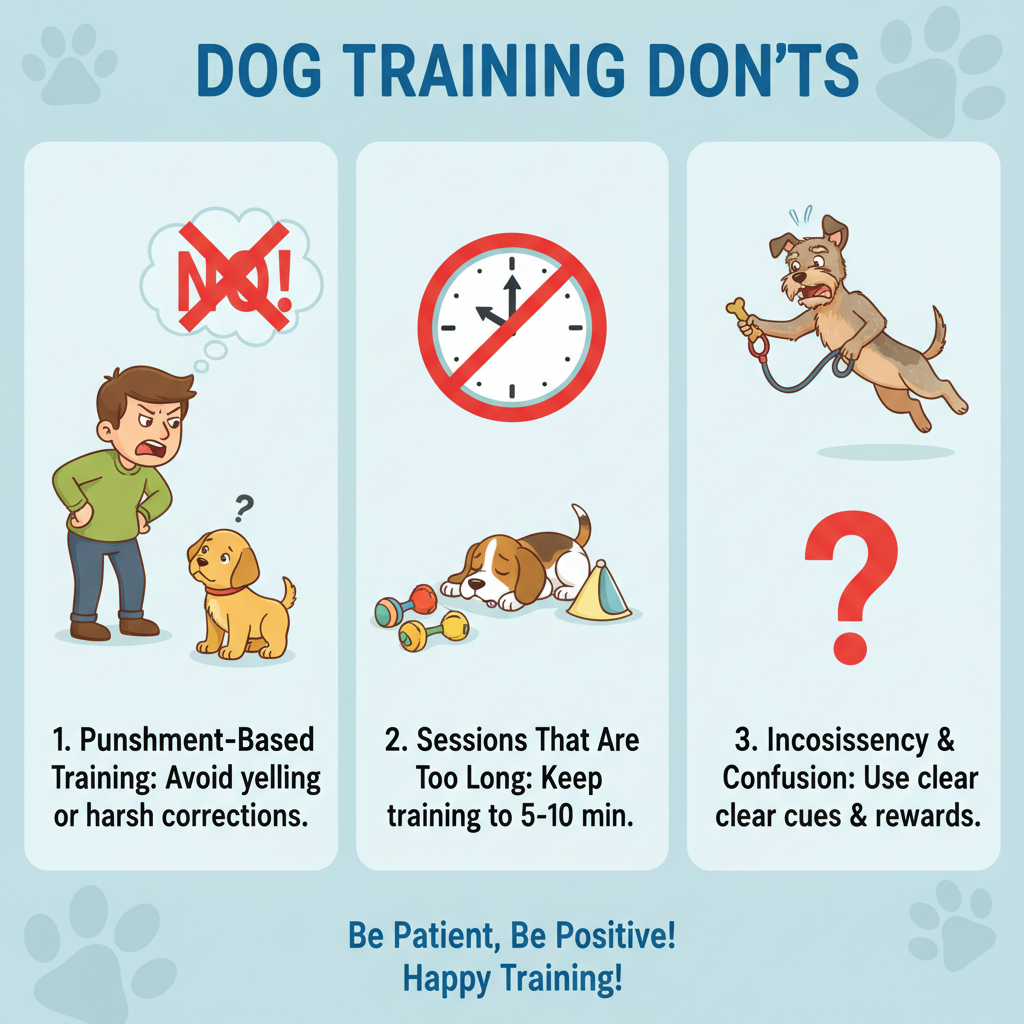
Knowing what not to do is just as important as knowing what to do. Avoiding these common pitfalls will keep your training positive, effective, and fun for both you and your dog. Let’s make sure you’re setting yourselves up for a win!
Mistake #1: Making Training Sessions Too Long
A dog’s attention span, especially when faced with an exciting toy, is shorter than we think. A marathon 30-minute session will likely lead to frustration and burnout for everyone. Your dog will start making mistakes simply because they’re mentally tired.
The Fix: Keep it short and sweet! Three to five sessions of just 5 minutes each spread throughout the day are far more effective than one long session. Always aim to end while your dog is still engaged and wants more. This leaves them excited for the next training game.
Mistake #2: Inconsistent Cues
Are you saying “Wait” sometimes, but “Stay” other times? Is your release word “Okay,” but sometimes you say “Free” or “Go”? This is incredibly confusing for your dog. They thrive on clarity and consistency.
The Fix: Decide on your cues and stick to them. Choose one word for ‘wait’ (e.g., “Wait”) and one for ‘release’ (e.g., “Okay!”). Make sure everyone in the family uses the exact same words. Consistency is the bedrock of clear communication.
Mistake #3: Using Punishment or Scolding
It can be frustrating when your dog breaks their stay for the tenth time. The temptation to say “No!” or to scold them can be strong. However, this will only create a negative association with the training game. It can make your dog anxious, less willing to try, and can damage your bond.
The Fix: Stay positive! If your dog makes a mistake, it’s not disobedience; it’s a communication that the task was too hard. Simply and calmly reset. Pick up the toy, ask them to sit again, and make the next attempt easier so they can succeed. Remember, the removal of the opportunity to get the toy is a consequence in itself.
Mistake #4: Increasing Difficulty Too Quickly
You had a great session where your dog waited for 5 seconds, so the next time you try for 20 seconds and add distance. This is a recipe for failure. Dogs need to build their skills incrementally.
The Fix: Follow the ‘One New Thing at a Time’ rule. When you’re working on increasing duration, don’t also add distance. When you’re adding distance, keep the duration short. When you add a distraction, make duration and distance super easy. Gradual, steady progress will build a much more reliable and confident ‘stay’ in the long run.
Conclusion
Congratulations! You now have the complete blueprint for teaching your dog one of the most impressive and useful skills in their repertoire. Mastering the art of waiting for a toy is about so much more than polite playtime; it’s a testament to your dog’s incredible capacity for self-control and a celebration of the clear, positive communication you’ve built together.
Remember to be patient with your pup and with yourself. There will be amazing days where they seem like a seasoned pro, and there will be other days where their excitement gets the better of them. That’s all part of the beautiful, messy, and rewarding process of training. Celebrate the small victories, keep your sense of humor, and focus on the fun of the game.
By investing this time and effort, you’re not just getting a dog who can perform a cool trick. You’re nurturing a calmer, more thoughtful companion who looks to you for guidance. You’re strengthening your bond in a way that will carry over into every aspect of your lives together. Now go grab that favorite toy, find a comfy spot, and start building that beautiful impulse control, one ‘wait’ at a time.