Bringing a new puppy home is a whirlwind of joy, cuddles, and… challenges. And right at the top of that challenge list for many new pet parents is crate training. Does the mere sight of the kennel send your pup whining, barking, or doing a full-on protest-pancake on the floor? You’re not alone. Many puppies initially see the crate as a place of confinement, not comfort. But what if you could change their mind? What if you could transform that plastic or metal box into their very own happy, safe, and beloved den?
The secret isn’t about forcing them in; it’s about making them want to go in. And the best way to do that is through play! By turning crate time into game time, you can rewire your puppy’s brain to associate their kennel with fun, treats, and relaxation. Forget the battle of wills. We’re about to embark on a fun-filled training adventure with five simple games designed to make your puppy not just tolerate their crate, but truly love it. Get ready to say goodbye to crate anxiety and hello to a happy, well-adjusted pup!
Before You Play: Setting the Stage for Crate Game Success

Before we jump into the fun and games, we need to make sure the stage is set for success. Think of it as preparing the ultimate puppy VIP lounge. A little prep work now will make the games ten times more effective and enjoyable for your furry student.
Choosing the Right Crate
The first step is ensuring the crate is the right size. It should be large enough for your puppy to stand up, turn around, and lie down comfortably, but not so large that they can use one end as a bathroom and the other as a bedroom. If you’ve bought an adult-sized crate, use the divider to make it puppy-sized for now. Comfort is key!
Making it a Cozy Den
Nobody wants to hang out in a bare, cold box. Make the crate inviting! Add soft, comfortable bedding that’s easy to wash. A blanket that smells like you or their littermates can be incredibly comforting. You can also include one or two safe, durable chew toys to keep them occupied. The goal is to make it the coziest spot in the house.
Gathering Your Game Supplies
Every good game needs the right equipment. Here’s what you’ll want to have on hand:
- High-Value Treats: We’re not talking about their regular kibble. You need the good stuff! Think tiny pieces of boiled chicken, small bits of cheese, or soft, smelly training treats. The goal is to make the reward irresistible.
- Favorite Toys: Have a couple of their favorite toys ready, especially one that’s good for tossing, like a small ball or a soft plush toy.
- A Positive Attitude: This is the most important tool! Your puppy feeds off your energy. Stay patient, upbeat, and encouraging. Your cheerful voice is a powerful reward in itself.
Expert Tip: Keep training sessions short and sweet, especially for young puppies. Aim for multiple 5-10 minute sessions throughout the day rather than one long, exhausting one. Always end on a positive note when your puppy has successfully completed a step!
Game 1: The ‘Find It’ Treasure Hunt
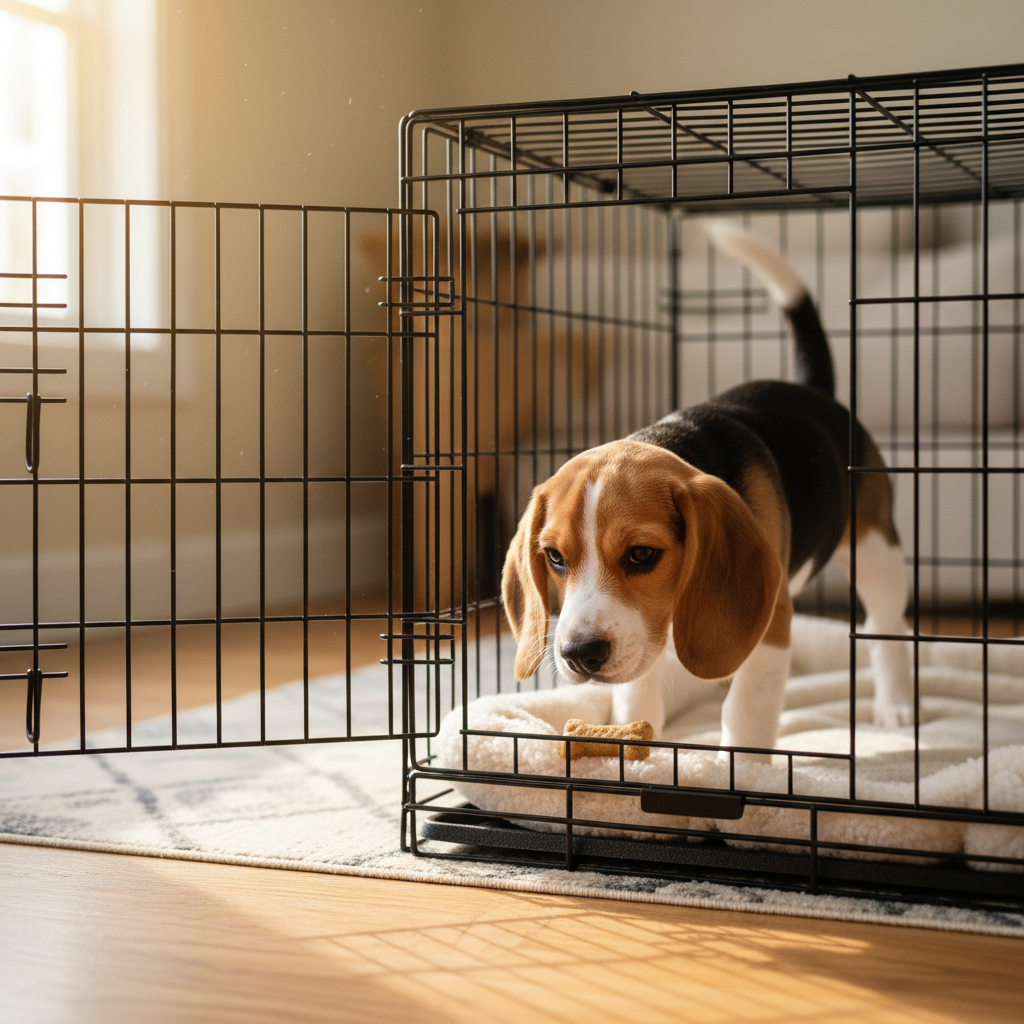
This is the perfect introductory game. It’s simple, fun, and immediately teaches your puppy one crucial lesson: amazing things happen inside the crate! The goal is to build a powerful positive association by making the crate a place where delicious treasures magically appear.
How to Play:
- Start Easy: With the crate door wide open, get your puppy’s attention. Show them a tasty treat, say an enthusiastic “Find it!” or “Go to your crate!” and toss the treat just inside the entrance of the crate.
- Praise and Repeat: Let your puppy go in, gobble up the treat, and come right back out. As soon as they get it, praise them like they just won the lottery! “Good job! Yes! What a smart puppy!” Repeat this step 5-10 times.
- Go Deeper: Once your puppy is eagerly poking their head in, start tossing the treat a little further back each time. The goal is to get them comfortably walking all the way inside on their own.
- The Surprise Element: When your puppy isn’t looking, sneak a treat or two into the back of their crate. A little later, casually say, “Hey, what’s in your crate? Go check!” When they discover the surprise, they’ll start to think of the crate as a place worth investigating on their own.
This game is all about building voluntary entry. There’s no pressure, no closing doors, just fun and food. It teaches your puppy that walking into the crate is their brilliant idea.
Game 2: The ‘Open-Shut’ Door Game
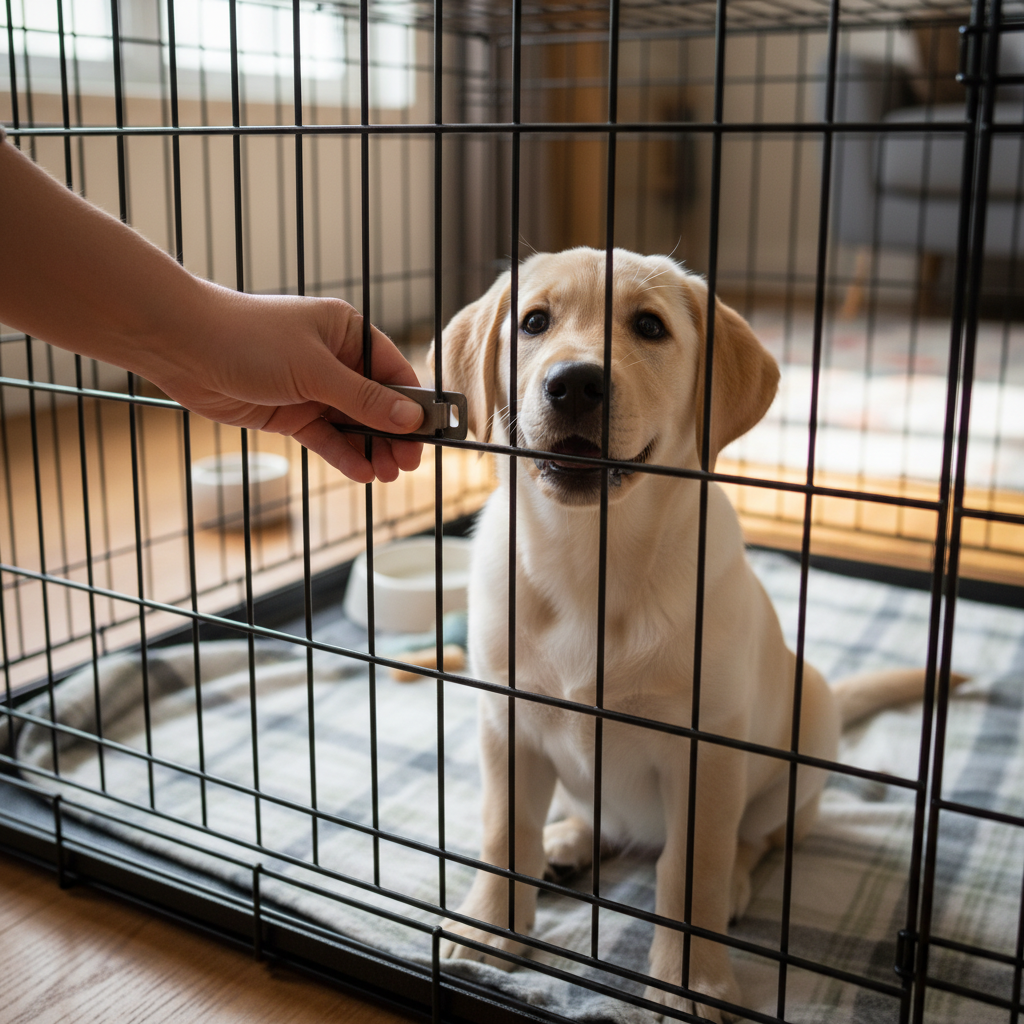
One of the scariest parts of the crate for many puppies is the sound and feeling of the door closing. It can feel like being trapped. This game is designed to desensitize them to the door, turning a scary moment into a non-event that actually predicts a reward.
How to Play:
- Lure Them In: Using a treat, lure your puppy all the way into the crate. As they are munching on their reward, proceed to the next step.
- Touch and Treat: While they are still inside, simply touch the crate door. Don’t move it yet. Just touch it, then give them another treat. Repeat a few times.
- Swing and Reward: Now, gently swing the door, but don’t close it. Swing it a few inches and then swing it back open. Give a treat. The motion of the door should become a predictor of good things.
- The Split-Second Close: Once they are comfortable with the door moving, gently swing it shut for a single second, and immediately open it and deliver a jackpot of treats and praise. The key is to open it before they have a chance to feel anxious.
- Build Duration Slowly: Very, very gradually, increase the amount of time the door is closed. Go from one second to two seconds, then back to one, then up to three. Keep it unpredictable and always reward calm behavior. If your puppy starts to whine or paw at the door, you’ve gone too fast. Simply go back to a shorter duration where they were successful.
Important Takeaway: The point of this game is for the puppy to learn that a closed door is no big deal because it always opens again, and it results in a fantastic reward. Patience is your best friend here.
Game 3: Mealtime Magic in the Den
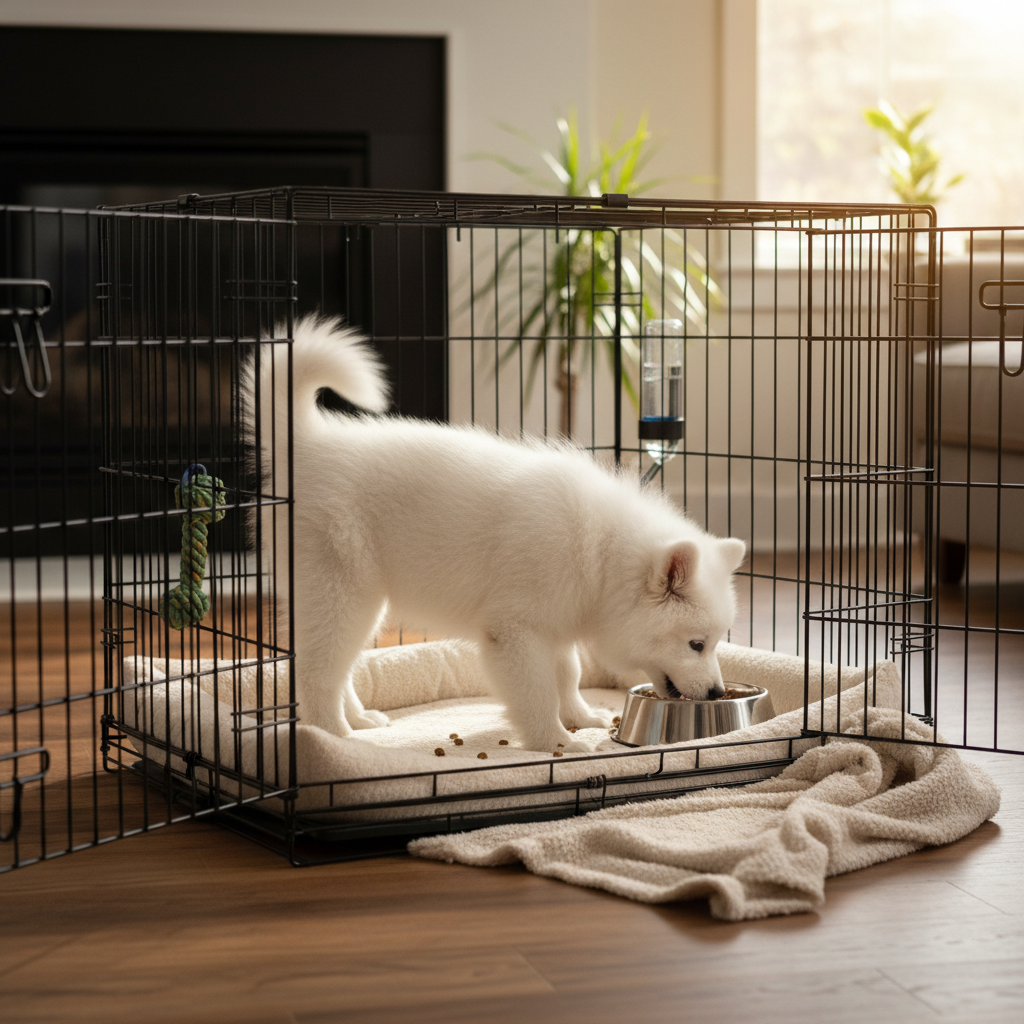
What’s the one thing almost every puppy universally adores? Dinner time! By leveraging the power of their daily meals, we can create one of the strongest positive associations with the crate. The crate becomes the best restaurant in town, and it’s always open for business.
How to Play:
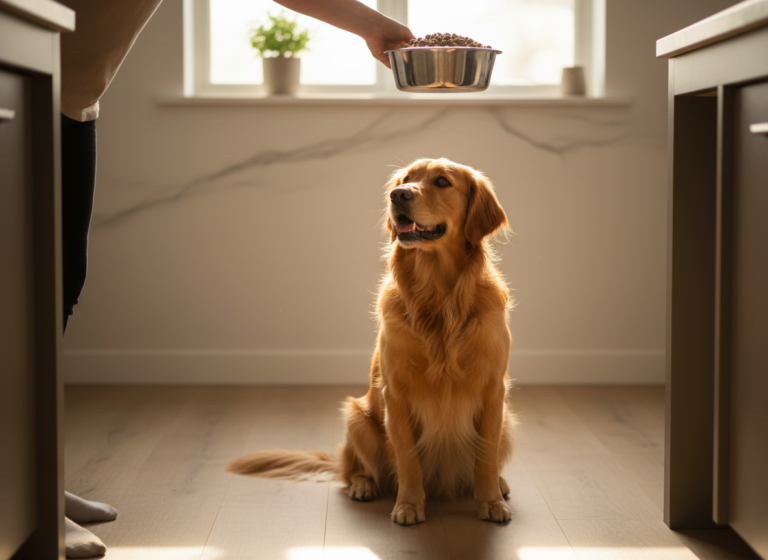
- The Appetizer Course: For the first few meals, place your puppy’s food bowl right at the entrance of the crate. They can eat comfortably with just their head and neck inside. This gets them used to the idea of approaching the crate for food.
- The Main Course, Inside: After a few successful meals at the entrance, move the bowl to the middle of the crate. Now they’ll need to step inside with their front paws to eat.
- Dining in the Back: Once they’re comfortable with the halfway point, move the food bowl to the very back of the crate. At this stage, they will need to go all the way inside to eat their meal. Let them do this for several days with the door wide open.
- Dinner with the Door: When your puppy is confidently going all the way in to eat, you can start closing the door while they are eating. Don’t latch it at first, just hold it closed. As soon as they finish their last bite, open the door.
- Lingering After Dinner: The final step is to latch the door while they eat and leave it closed for a minute or two after they’ve finished. Gradually increase this time. This teaches them that being in the crate after a meal is a time for calm digestion and relaxation.
By making the crate the permanent dining spot, you ensure your puppy has at least two or three guaranteed positive experiences with it every single day.
Game 4: The ‘Toy Toss’ Retrieve
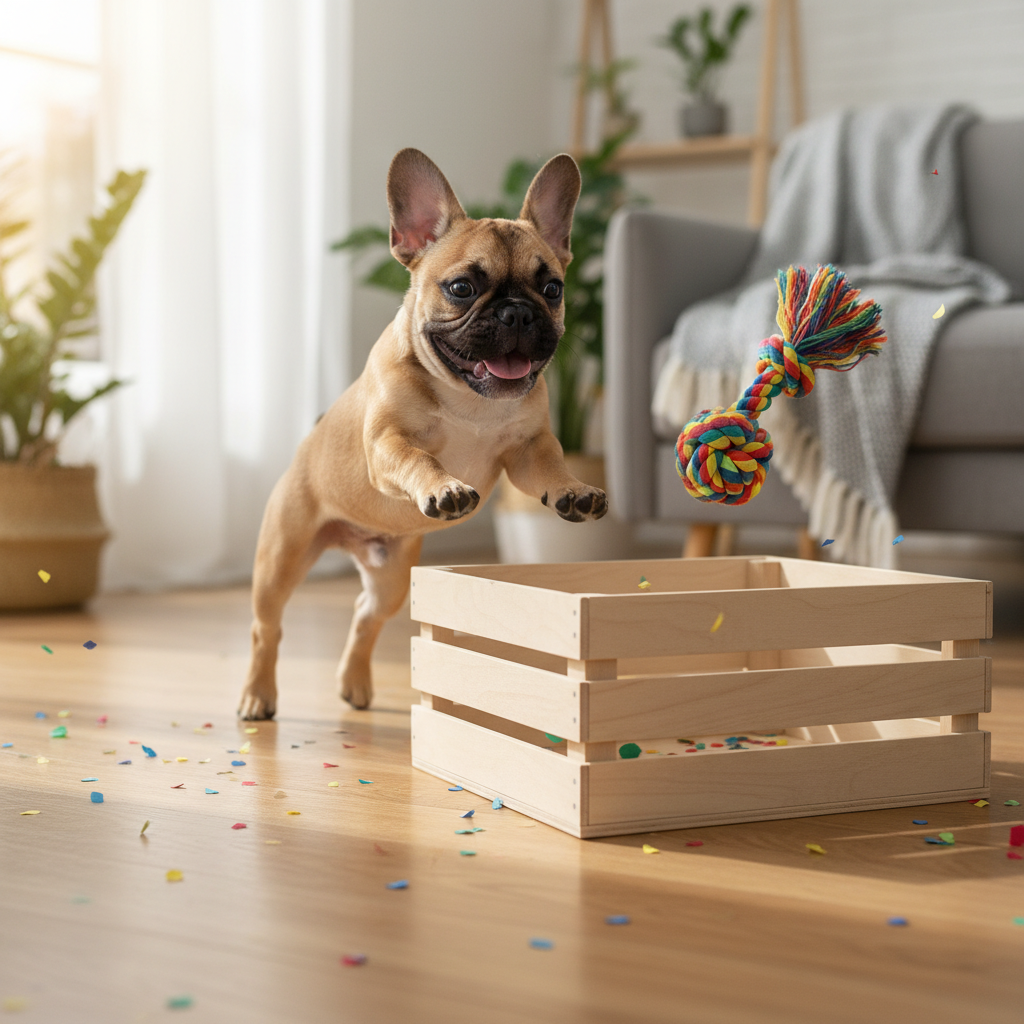
If your puppy is more motivated by toys than food, this game is for them! The ‘Toy Toss’ turns the crate into the start of a fun game of fetch, rather than the end of playtime. It builds excitement and a speedy, happy response to entering the kennel.
How to Play:
- Build Excitement: Start by getting your puppy engaged and excited with one of their absolute favorite toys. A squeaky ball or a soft, easy-to-grab plush toy works great. Get them hyped up and ready to play.
- Toss it In!: With a cheerful “Get your toy!”, toss the toy into the back of the open crate.
- Celebrate the Entry: The moment your puppy runs into the crate to grab the toy, shower them with praise. “Yay, you got it! Good puppy!” Their action of entering the crate is what earns the praise.
- Bring it Back and Repeat: Let them bring the toy out of the crate. You can engage in a mini-game of tug or a quick toss outside the crate for a few seconds. Then, repeat the process. The fun of getting the toy is directly linked to dashing into the crate.
This game is fantastic for building a fast, happy ‘kennel up’ cue. Your puppy learns that going into the crate doesn’t mean the fun stops; it’s just part of the game. It’s an excellent way to burn off a little energy while reinforcing positive crate behavior.
Game 5: The ‘Chill Out’ on Cue
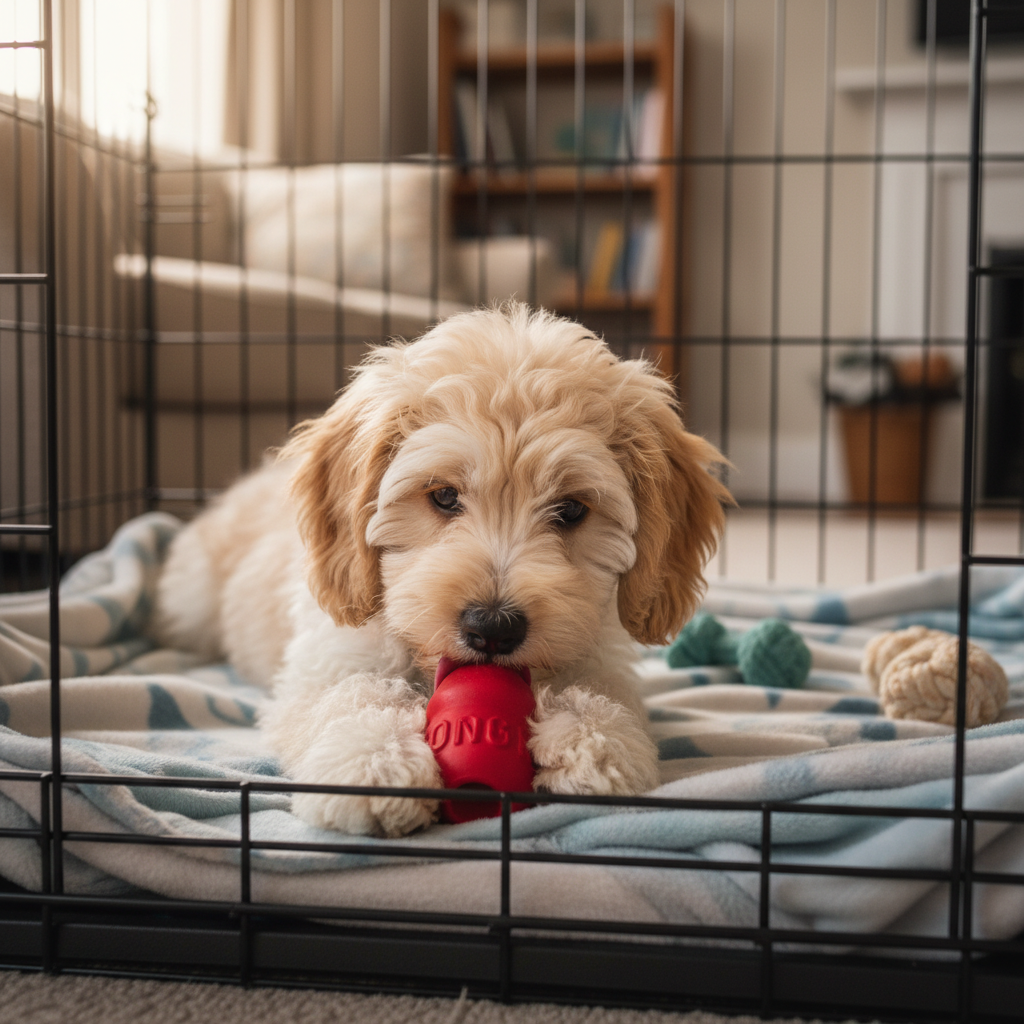
While the other games are about building excitement for entering the crate, this final game is about teaching your puppy that the crate is a wonderful place to settle down and relax. This is crucial for longer stays and for helping your puppy learn to self-soothe.
How to Play:
- Introduce a Special Chew: This game requires a high-value, long-lasting chew that your puppy only gets inside their crate. A frozen KONG stuffed with peanut butter (xylitol-free!) or yogurt, a bully stick, or a dental chew are all great options.
- Show and Place: Get your puppy excited by showing them the special chew. Let them sniff it and get interested. Then, with a calm cue like “Go to your place” or “Kennel up,” place the chew in the back of their crate.
- Close the Door and Relax: As your puppy goes in to enjoy their special treat, calmly close and latch the door. Step away and let them work on it. This teaches them to settle down with a rewarding activity without you needing to be right there.
- The Goal is Calm: The purpose is to associate the crate with a calm, focused, and rewarding activity. They learn that this is their special place to enjoy their most prized possessions in peace.
Troubleshooting Common Crate Training Hurdles
Even with games, you might hit a snag. Here are some quick tips:
- Whining or Crying: First, ensure all their needs are met (potty, exercise, water). If they are, it’s likely for attention. It’s crucial to ignore the whining. Only let them out or give attention when they are quiet, even if it’s for a split second. Rewarding quiet is the key.
- Barking: Similar to whining, do not reward barking with attention (even negative attention). You can try a firm “Quiet” command. When they pause, reward them. Covering the crate with a blanket can also help reduce visual stimuli and calm them down.
- Refusing to Enter: If your puppy hesitates, you’ve likely moved too fast. Go back a step. Make the games easier and the treats even more valuable. Never, ever shove your puppy into the crate. Keep it 100% positive.
Conclusion
Transforming your puppy’s perception of their crate is one of the most valuable gifts you can give them. It provides them with a safe, secure den for life—a place they can retreat to when they’re tired, overwhelmed, or just need some alone time. By consistently playing these five simple games, you’re not just training a behavior; you’re building a foundation of trust and positive association.
Remember to be patient, stay positive, and celebrate every small step forward. Some puppies will catch on in a day, while others might take a few weeks. That’s perfectly okay! The goal is progress, not perfection. Before you know it, you’ll find your puppy choosing to nap in their crate on their own, and you’ll know you’ve successfully turned that kennel into a cherished home within your home.