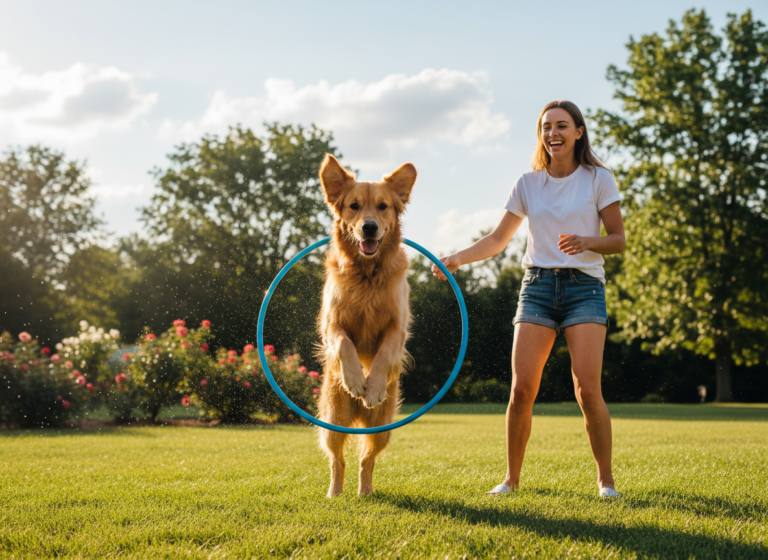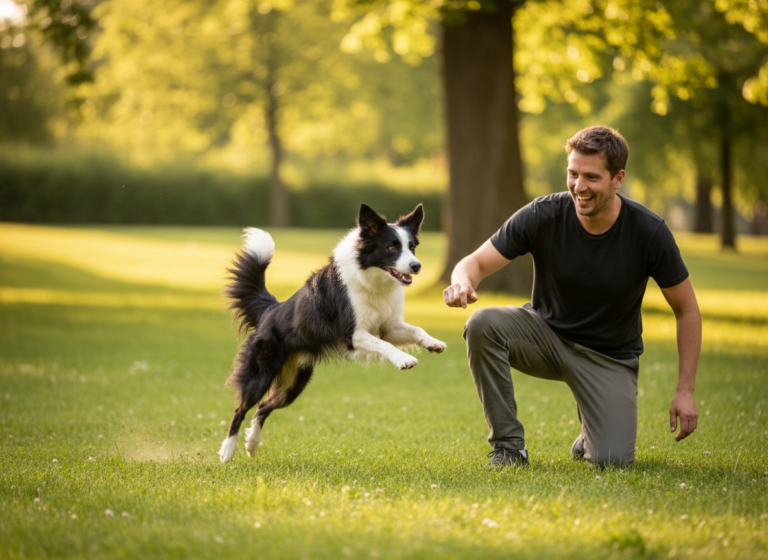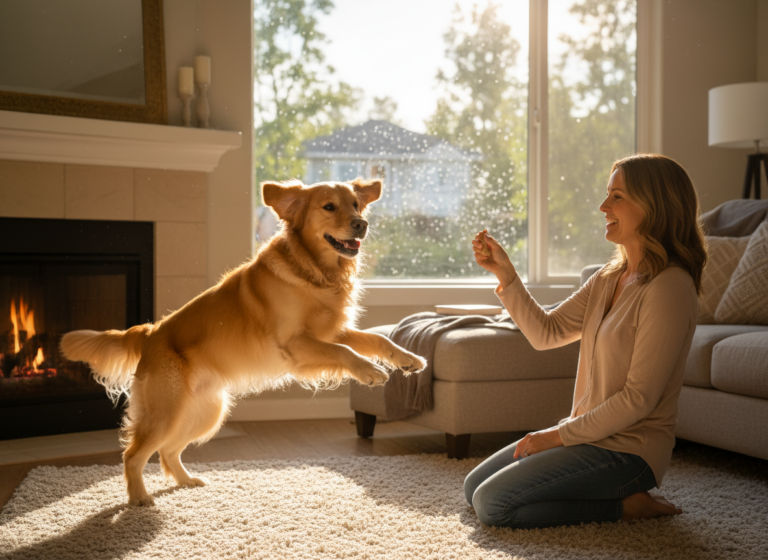
Hey there, fellow dog lovers! If you’ve ever watched a dog agility competition, you know the thrill of seeing a canine athlete navigate a complex course with speed and precision. One of the most visually impressive obstacles is the tire or hoop jump. But what happens when the dog can’t see the other side? That’s the ‘blind hoop’ jump, and it’s a true test of trust, confidence, and communication between you and your furry partner. It might look like a magic trick, but I promise, it’s a skill you and your dog can master together!
Teaching this advanced move isn’t just about scoring points in a competition; it’s about building an incredible bond and boosting your dog’s self-assurance. It asks your dog to trust your guidance completely and leap into the unknown. In this guide, we’re going to break down the process into fun, manageable steps, using nothing but positive reinforcement and a whole lot of high-fives (or paw-fives!). So grab your tastiest treats and your most enthusiastic ‘good dog!’ voice, and let’s get ready to level up your agility game!
Gearing Up for Success: Essential Tools and Foundation Skills
First Things First: What You’ll Need
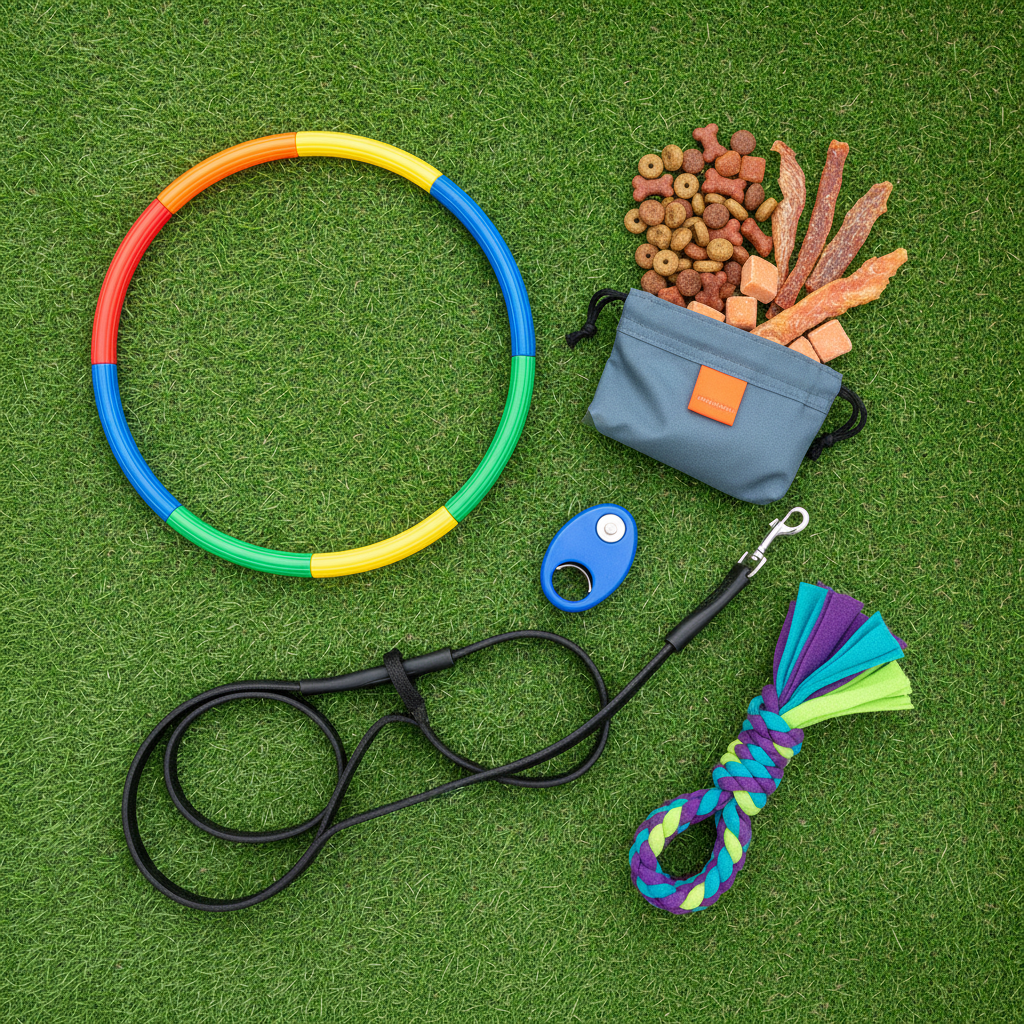
Before we jump in (pun intended!), let’s make sure you have everything you need for a successful and safe training session. The good news is, you don’t need a professional-grade agility course to get started. Here’s a simple checklist:
- An Agility Hoop or Tire: This is the star of the show! You can purchase a competition-standard tire, but a lightweight practice hoop or even a hula hoop can work wonders for initial training. Make sure it’s large enough for your dog to jump through comfortably and safely.
- High-Value Treats: We’re talking about the good stuff! Think small, smelly, and delicious morsels like boiled chicken, cheese, or special training treats that your dog goes absolutely wild for. You’ll need lots of them to keep motivation high.
- A Clicker (Optional): If you use clicker training, have it ready. A clicker is a fantastic tool for marking the exact moment your dog does something right, making communication crystal clear.
- A Positive Attitude: This is the most important tool of all! Training should be fun for both of you. Bring your patience, your enthusiasm, and be ready to celebrate every tiny victory.
Building the Foundation: Is Your Dog Ready?
The blind hoop jump isn’t a day-one skill. Your dog should have a few basics down before you tackle this challenge. A solid foundation will make the learning process smoother and more enjoyable. Here’s what your dog should ideally know:
- Basic Obedience: A reliable ‘stay’ and ‘come’ are incredibly helpful for managing your dog around the equipment.
- A ‘Go’ or ‘Forward’ Cue: Your dog should understand a verbal cue that means ‘move forward away from me.’ This is often taught with targeting exercises, like sending your dog to touch a cone or a mat.
- Confidence with Jumps: Your dog should already be comfortable and happy jumping over standard bar jumps. We want to build on existing confidence, not create fear.
- Focus and Engagement: Your dog should be able to focus on you and the training game, even with mild distractions. Short, upbeat sessions are key to maintaining this focus.
Expert Tip: Keep your training sessions short and sweet, especially in the beginning. Aim for 5-10 minute sessions a couple of times a day. Always end on a high note with a successful repetition to keep your dog excited for the next lesson!
Step-by-Step Guide: From Open Hoop to Blind Brilliance
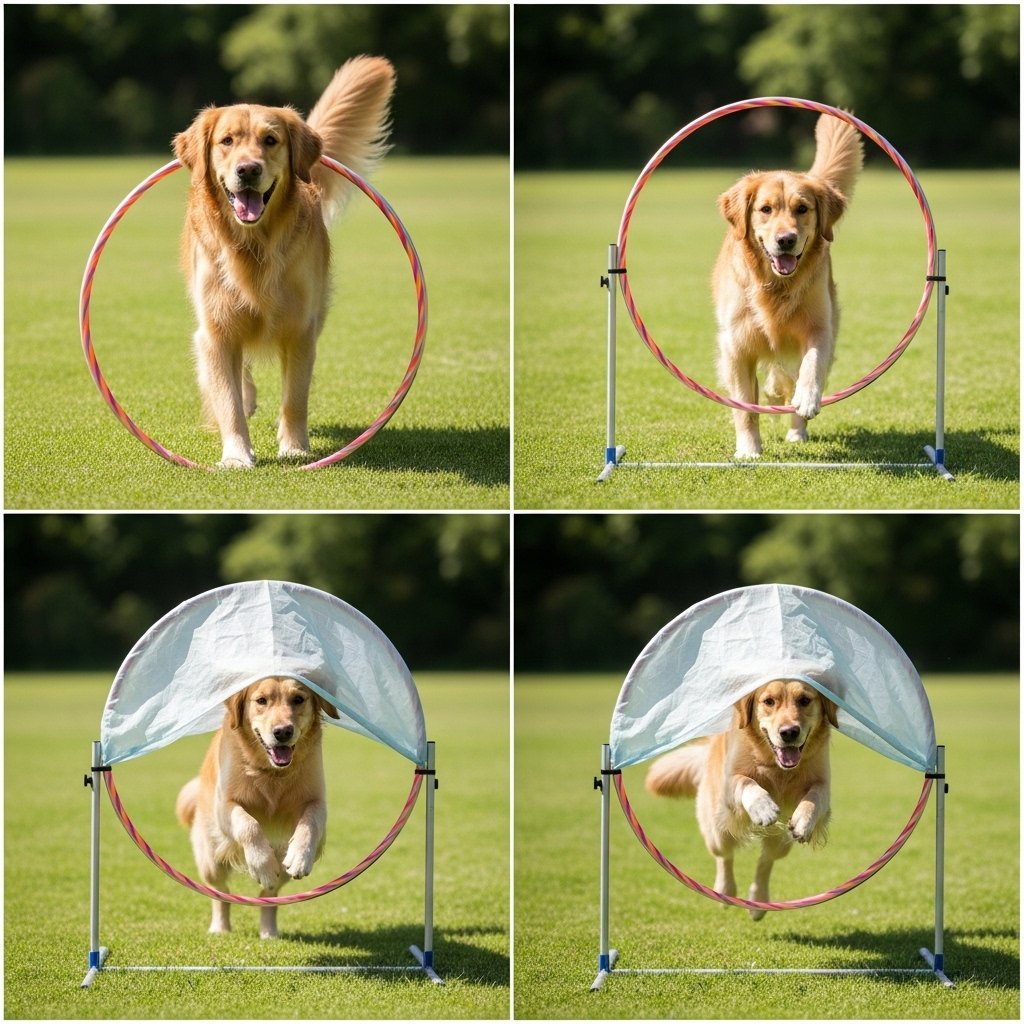
Alright, it’s time for the fun part! We’re going to build this skill piece by piece. Remember, every dog learns at a different pace, so be patient and adjust these steps to suit your dog’s needs. The goal is a confident, happy dog, not a world record on your first day.
Step 1: Introduce the Open Hoop (The Funnel)
Our first goal is simply to get your dog comfortable moving through the hoop. We’ll start with the hoop fully open, with no ‘blind’ element yet. It should look like an inviting tunnel.
- Place the hoop on the ground or at a very low height. Make sure it’s stable and won’t fall over and scare your dog.
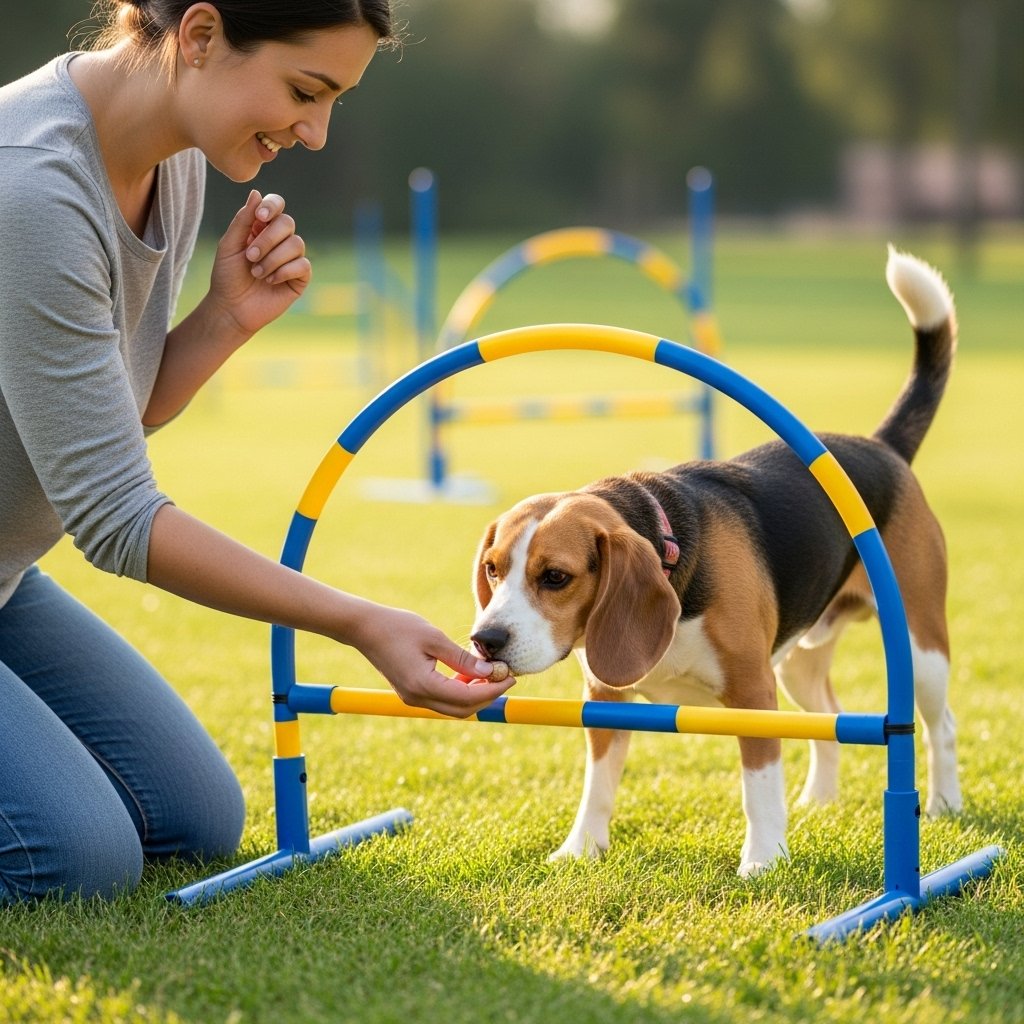
- Kneel on one side of the hoop and have a friend or use a treat to lure your dog through from the other side. As they pass through, say ‘Yes!’ or click, and give them a jackpot of treats and praise on the other side.
- Repeat this a few times, making it a super fun game. We want your dog to think, ‘Going through that circle is the best thing ever!’
- Once they are moving through eagerly, add your verbal cue. As they start to move towards the hoop, say your chosen word, like ‘Hoop!’ or ‘Through!’.
Step 2: Raising the Bar (Literally!)
Once your dog is rocketing through the hoop on the ground, it’s time to gradually raise the height. The key here is gradually.
- Raise the hoop just a few inches off the ground. The goal is for your dog to step through it, not necessarily jump yet.
- Continue to lure or cue them through, rewarding them enthusiastically each time.
- Slowly, over several sessions, raise the height until it’s at a comfortable and safe jumping height for your dog. This will vary depending on your dog’s size and athletic ability. For most dogs, this is around elbow height.
Step 3: Introducing the ‘Blind’ Element
This is where the magic happens! We’ll start to cover the hoop to create the ‘blind’ effect. Don’t use a solid cover right away; that can be intimidating. We’ll use a visual barrier that your dog can still partially see through.
- Start by covering just the bottom quarter of the hoop with a light piece of fabric, a towel, or even some wrapping paper taped on. The goal is for your dog to see that the opening is still there.
- Cue your dog to jump through. Most dogs, confident from the previous steps, will jump without hesitation. Lavish them with praise and treats!
- Over many repetitions and multiple sessions, slowly increase the amount of the hoop that is covered. Go from covering the bottom quarter, to the bottom half, to the bottom three-quarters.
- Finally, cover the entire hoop. By this point, your dog has built up so much positive reinforcement history with the hoop that they trust that the opening is there, even if they can’t see it. The first time they jump through a fully blind hoop is a huge milestone! Celebrate accordingly!
Safety First: Always ensure the material you use to cover the hoop is ‘breakaway’ or will tear easily. Never use something heavy or rigid that could injure your dog if they misjudge the jump.
Troubleshooting Common Hurdles
Even with the best training plan, you might hit a snag. That’s totally normal! Dog training is never a straight line. Here are some common issues and how to work through them with a positive approach.
Problem: My Dog is Hesitant or Scared of the Hoop.
Solution: This usually means we’ve moved a little too fast. The key is to go back a step and build more confidence. Take the hoop completely apart if possible and just lay the pieces on the ground. Reward your dog for sniffing them, pawing at them, or any interaction at all. Rebuild it slowly, making every step a fun game. Go back to luring them through on the ground for lots of easy, confidence-boosting wins before you try raising it or covering it again.
Problem: My Dog Runs Around the Hoop Instead of Through It.
Solution: This is a classic! It tells us the reward for going through isn’t high enough or the path around is just too easy. You can use ‘guides’ to help. Place two chairs, cones, or even laundry baskets on either side of the hoop to create a natural ‘funnel’ that directs your dog through the center. This is a management tool, not a punishment. As your dog gets the idea, you can gradually widen the guides and then remove them altogether.
Problem: My Dog Bumps into the Hoop.
Solution: Bumping the hoop can be caused by a few things. It could be that the height is a little awkward for their stride, or they aren’t judging the distance correctly. Try adjusting the height up or down slightly to see if that helps. You can also practice by placing a ‘ground pole’ (like a broomstick) a foot or two in front of the jump to encourage your dog to take off a little earlier, creating a better arc for their jump.
| Issue | Quick Fix | Long-Term Strategy |
|---|---|---|
| Hesitation/Fear | Lower the hoop to the ground. | Go back to Step 1. Rebuild positive association with lots of treats and praise for any interaction. |
| Running Around | Use chairs or cones to create a ‘funnel’. | Increase the value of the reward for going through and ensure the cue is clear. |
| Bumping the Hoop | Adjust jump height slightly. | Use a ground pole to help your dog learn a better take-off spot. |
| Losing Interest | End the session with an easy win. | Keep sessions short (5 mins), use higher-value treats, and ensure your energy is high and positive. |
Proofing and Advancing the Skill
Proofing and Advancing the Skill
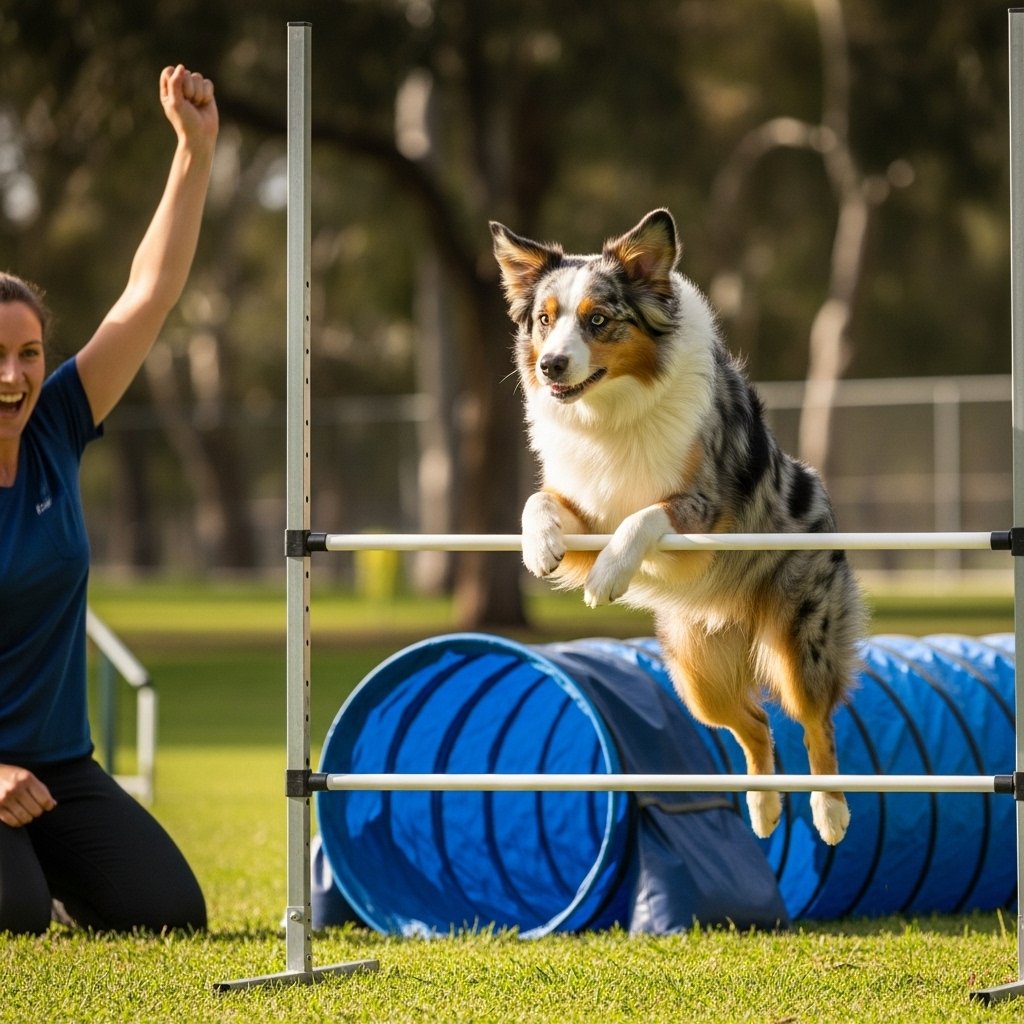
Your dog is now bravely jumping through the blind hoop in your backyard—that’s amazing! The next step is ‘proofing,’ which means teaching your dog to perform the skill reliably in different situations. After that, we can start adding it to fun agility sequences!
What is Proofing?
Proofing is the process of generalizing a behavior. We want your dog to understand that ‘Hoop!’ means jump through the blind hoop whether you’re in the backyard, at a park, or at a new training facility. We do this by gradually changing the picture.
- Change the Location: Try practicing in your front yard instead of the back. Then, take your hoop to a quiet corner of a local park. Each new location adds a new layer of distraction. Go back a few steps if needed and reward heavily in the new environment.
- Change Your Position: So far, you’ve probably been standing right next to the hoop. Now, try sending your dog to the hoop from a few feet away. Can you stand on the left side? The right side? Can you send them while you are moving? This is crucial for real agility courses.
- Add Distractions: Can your dog perform the jump if another person is standing nearby? What if a toy is sitting on the ground a safe distance away? Start with very mild distractions and slowly increase the difficulty.
Putting It All Together: Simple Sequences
Now you can start treating the blind hoop like a true agility obstacle by combining it with other things your dog knows. This is where you’ll see all your hard work pay off!
- Jump to Hoop: Set up a simple bar jump about 10-15 feet in front of your blind hoop. Cue your dog over the jump and then immediately give your ‘Hoop!’ cue. This teaches them to look ahead for the next obstacle.
- Hoop to Tunnel: Place a tunnel a short distance after the blind hoop. The reward of rocketing through a tunnel can be a huge motivator for a speedy hoop performance!
- The Figure-Eight: Set up two obstacles, like your blind hoop and a bar jump, about 20 feet apart. Practice sending your dog through the hoop, calling them around to your side, and then sending them over the bar jump in a figure-eight pattern.
Remember to build these sequences slowly. Start with just two obstacles, then three. The goal is to build fluid motion and keep your dog’s confidence soaring. Before you know it, you’ll be navigating courses like pros!
Conclusion
Look at you and your amazing dog! You’ve taken on a challenging agility skill and broken it down into a fun, confidence-building journey. Teaching the blind hoop jump is so much more than just a cool trick; it’s a testament to the trust, communication, and partnership you share with your canine companion. Every time your dog leaps through that hoop, they’re showing you how much they trust your guidance.
Remember to always keep it positive, celebrate the small victories, and know when to call it a day. The most important thing is that you’re both having fun. Whether your goal is the agility competition ring or just having a blast in your own backyard, you’ve now got a fantastic new skill in your training toolbox. So give your dog a big hug and an extra treat from me—you’ve both earned it!