Have you ever watched your dog chase a ball and thought, ‘They’ve got some serious skills!’? Well, you might be looking at your very own furry soccer star! Teaching your dog to play soccer isn’t just an adorable party trick; it’s a fantastic form of physical exercise and mental stimulation that can supercharge your bond. It taps into their natural instincts to chase and herd, providing an outlet for all that amazing energy.
Unlike complex agility courses or demanding obedience trials, dog soccer is wonderfully accessible. You don’t need a ton of expensive equipment or a massive field to get started. All you need is a dog-safe ball, some tasty treats, and a playful spirit. In this guide, we’re going to break down the training process into three simple, manageable steps. We’ll cover everything from choosing the right gear to troubleshooting common hiccups along the way. So, lace up your sneakers (and get your pup’s paws ready), because it’s time to hit the pitch and discover a fun new way to play together!
Gearing Up for Kick-Off: What You’ll Need
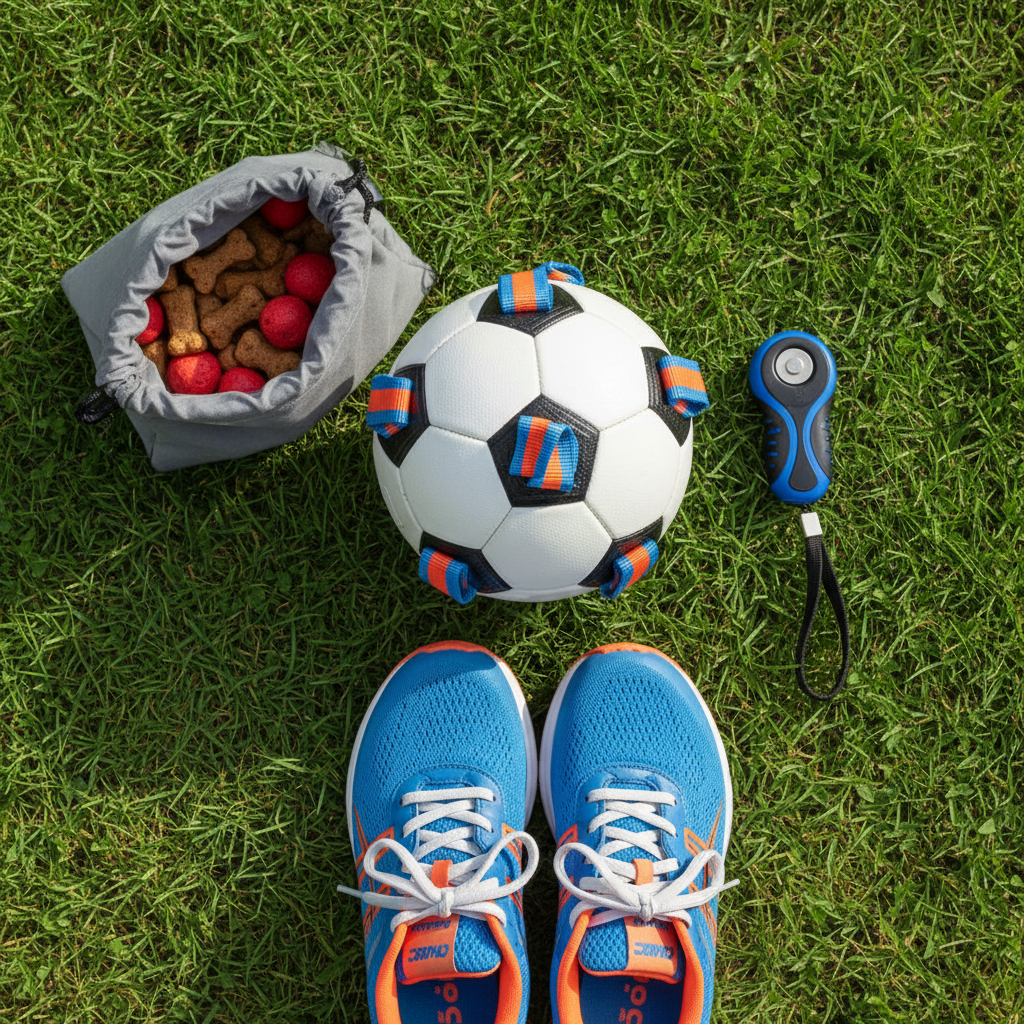
Before you can crown your canine the next Lionel Messi, you need to gather the right equipment. Setting yourself up for success starts with having the right tools on hand. Don’t worry, the list is short and simple!
The Most Important Piece of Equipment: The Ball
This isn’t the time to grab a standard soccer ball from the garage. Human soccer balls are often made from materials that can be easily punctured by a dog’s teeth, creating a choking hazard. They’re also inflated to a pressure that can be tough on a dog’s mouth. Instead, you’ll want a ball designed specifically for dogs.
- Dog Soccer Balls or Herding Balls: Look for balls made from hard, puncture-resistant plastic or extra-durable rubber. Many brands make large balls with features like woven grips or handles that make it easier for your dog to push and for you to throw.
- Size Matters: The ball should be large enough that your dog can’t fit it in their mouth. The goal is for them to push it with their nose or chest, not carry it. A good rule of thumb is a ball that is at least as tall as your dog’s shoulders.
The High-Value Currency: Treats!
Positive reinforcement is the name of the game. You’ll need a stash of high-value treats to reward your pup’s efforts. These should be small, soft, and extra delicious—something more exciting than their regular kibble.
- Examples: Think tiny pieces of cooked chicken, cheese, hot dogs, or commercial training treats that your dog absolutely loves.
- Timing is Everything: Have them ready in a treat pouch or your pocket so you can deliver a reward the instant your dog does the right thing.
Optional but Awesome Tools
- A Clicker: If you’re familiar with clicker training, this is a perfect opportunity to use it. The ‘click’ marks the exact moment your dog performs the correct action (like touching the ball), making your communication crystal clear. If you don’t use a clicker, a verbal marker like a sharp “Yes!” works just as well.
- A Positive Mindset: This is the most crucial ‘tool’ of all! Training should always be fun. Keep your sessions short (5-10 minutes is perfect), stay patient, and celebrate every little bit of progress. If you or your dog get frustrated, it’s time to take a break and try again later.
Expert Tip: Before you even start training, let your dog get used to the new ball. Leave it on the floor for a few days and reward any curious sniffs or gentle interactions. This helps prevent any fear or uncertainty around the new ‘toy’.
The 3 Simple Steps to Canine Soccer Stardom
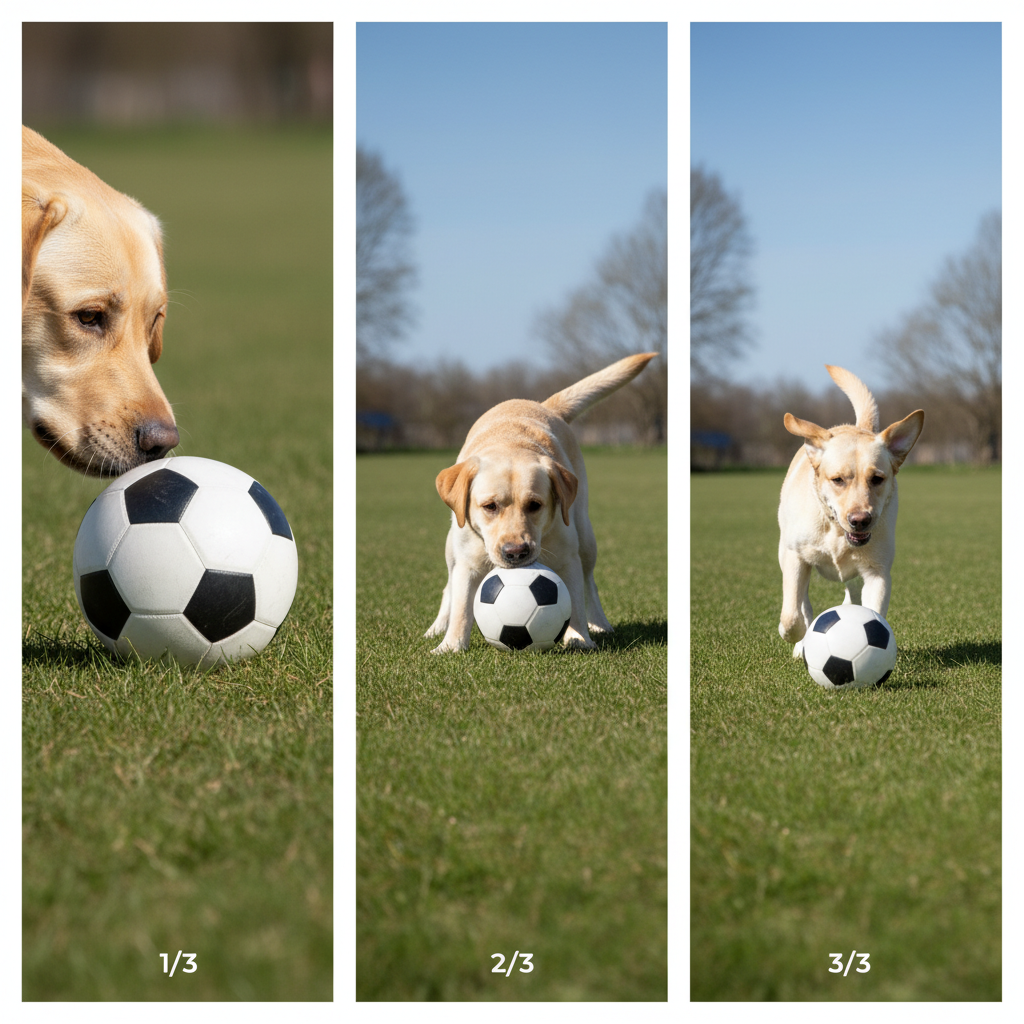
Alright, you’ve got your gear and your game face on. It’s time to get down to the actual training. Remember, every dog learns at a different pace. The key is to break the behavior down into tiny, achievable pieces and celebrate each one. Let’s get started!
Step 1: The Nose-Boop Introduction
The foundation of dog soccer is the ‘nose boop’ or ‘nose target.’ We need to teach your dog that touching the ball with their nose is a fantastic, reward-worthy action.
- Initial Interaction: Sit on the floor with your dog and the soccer ball. Hold the ball still with one hand. The moment your dog shows any interest—looks at it, sniffs it, or moves toward it—click (or say “Yes!”) and give them a treat. Repeat this a few times.
- Encourage the Touch: Now, wait for them to make contact. When your dog’s nose touches the ball, even for a split second, that’s your jackpot moment! Mark it with a click/”Yes!” and deliver a super high-value treat. Your enthusiasm here is key!
- Practice, Practice, Practice: Continue this process. At first, reward any touch. As your dog gets the hang of it, start rewarding only the more intentional ‘boops.’ Keep sessions short and exciting to build a strong positive association with the ball.
Step 2: From Boop to Push
Once your dog is confidently booping the ball on cue, it’s time to add some motion. We want to shape that gentle touch into a more forceful nudge that actually moves the ball.
- Reward Bigger Boops: Start to be a little more selective with your rewards. Wait for a slightly harder nose boop that causes the ball to wiggle or roll just a tiny bit. When it moves, give a big reward and lots of praise. Your dog will quickly learn that making the ball move is what earns the best rewards.
- Introduce Movement: Place the ball on the floor a short distance away. Point to it and use a cue you’ve been practicing, like “Touch” or “Target.” When they run up and boop it, causing it to roll, celebrate! You’re now transitioning from a stationary exercise to a moving one.
- Use Your Environment: Try rolling the ball slowly away from your dog. Their natural chase instinct may kick in, and they might run after it and push it with their nose. Be ready to mark and reward that moment!
Step 3: Let the Games Begin! Putting It All Together
Your dog is now booping and pushing the ball. It’s time to turn this skill into a real game! This step is all about adding cues, distance, and the fun back-and-forth rhythm of soccer.
- Add a Verbal Cue: As your dog is reliably pushing the ball, start adding a verbal cue like “Push!”, “Play soccer!”, or “Move it!”. Say the cue right as they are about to make contact with the ball. Over time, they will associate the word with the action.
- Create a ‘Rally’: Gently roll the ball towards your dog. When they push it back towards you, praise them enthusiastically and roll it back again. This is the beginning of a real game! You are now the goalie.
- Introduce ‘Goals’: Set up two cones or even just two shoes to act as a goal. Encourage your dog to push the ball between the cones. Every time they score a ‘goal,’ make it a huge celebration with lots of treats and praise. This gives the game a clear objective and makes it even more rewarding for your pup.
Troubleshooting & Pro Tips for Your Pup-lete
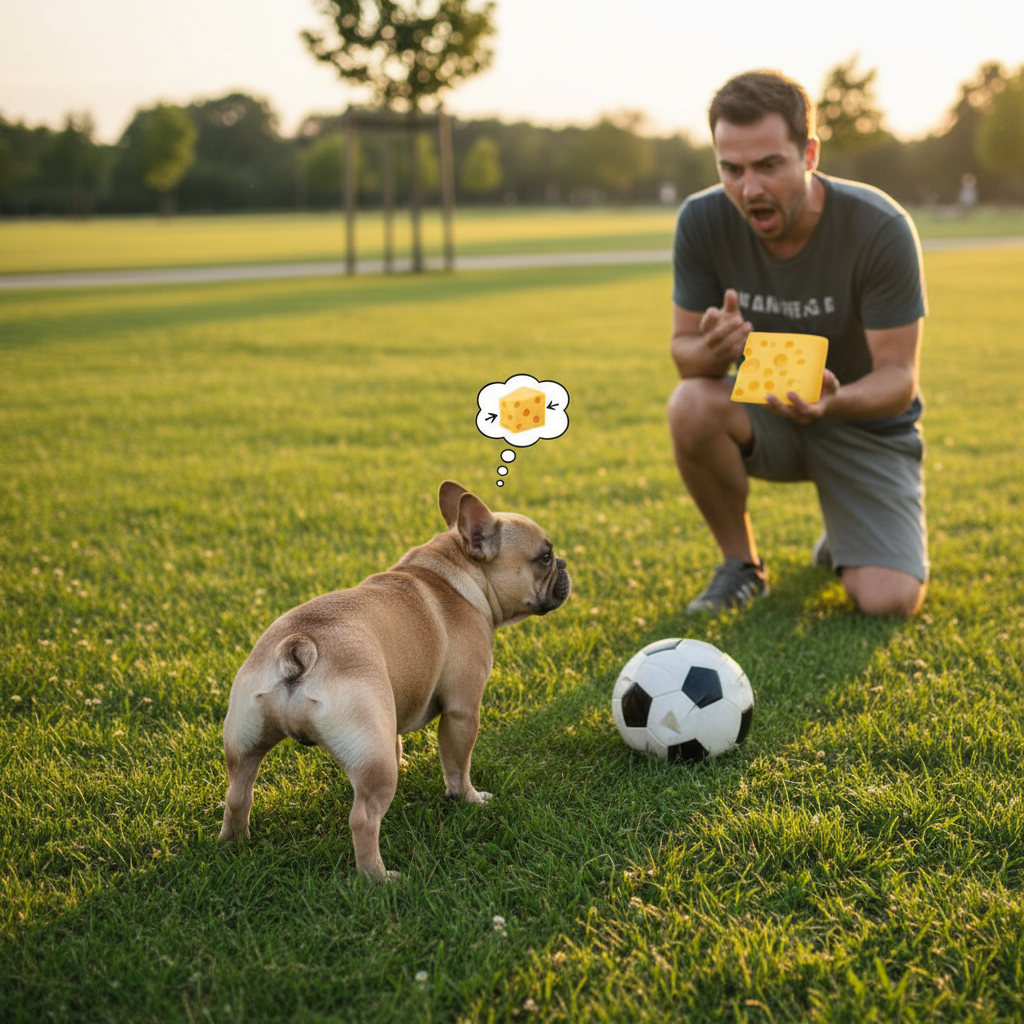
Even the most promising soccer stars have off days. Training doesn’t always go in a straight line, and you’re bound to hit a few bumps. Don’t worry! Here’s how to handle some of the most common challenges and a few pro tips to keep the game fun.
Common Training Hurdles and How to Clear Them
- My dog keeps trying to bite or pick up the ball.
This is very common, especially with mouthy breeds! It usually means the ball is too small. Ensure the ball is large enough that they can’t get their jaws around it. If they still try to bite, immediately withdraw your attention for a few seconds. When they stop, re-engage. Reward only nose or chest touches. You are teaching them that pushing, not biting, is what makes the fun continue. - My dog seems scared of or uninterested in the ball.
Never force your dog to interact with the ball. Go back to basics. Place the ball in the room and ignore it. Reward your dog for simply looking at it or being calm near it. Smear a tiny bit of peanut butter (xylitol-free!) or cream cheese on the ball to encourage sniffing and licking. Make all interactions positive and low-pressure. - My dog loses interest after a minute or two.
You’re probably training for too long! A dog’s attention span, especially for a new skill, can be short. It’s far better to have five super-enthusiastic 2-minute sessions throughout the day than one frustrating 10-minute session. Always end on a high note when your dog is still engaged and having fun. This leaves them wanting more next time.
Pro-Level Coaching Tips
| Pro Tip | Why It Works |
|---|---|
| Vary the Location | Practicing in different environments (backyard, quiet park, living room) helps ‘proof’ the behavior, teaching your dog to play soccer anywhere, not just in one specific spot. |
| Jackpot Rewards | When your dog makes a breakthrough—like pushing the ball a long distance for the first time—give them a ‘jackpot’ reward of multiple treats and over-the-top praise. This marks the moment as extra special. |
| Let Them Win | This is a game, not a competition. Let your dog ‘score’ goals often. The goal is for them to have a blast and build confidence. The more they succeed, the more they will love the game. |
Remember the Golden Rule: The primary goal of this game is to have fun and strengthen your relationship with your dog. If it stops being fun for either of you, take a break. The soccer ball will still be there tomorrow!
Conclusion
And there you have it—your playbook for teaching your furry friend to become a soccer sensation! By following these three simple steps—introducing the nose-boop, shaping it into a push, and turning it into a game—you’ve unlocked a wonderful new activity to share. Remember that patience, positivity, and a pocketful of tasty treats are your best coaching tools. Every nudge, every roll, and every playful chase is a victory worth celebrating.
Playing soccer with your dog is so much more than a cute trick. It’s a brain game that busts boredom, a workout that keeps them healthy, and most importantly, a shared experience that deepens the incredible bond between you and your canine companion. So get out there, have a ball, and enjoy the beautiful game with your best friend. Who knows, you might just have the next big star of the Animal World Cup right there in your backyard!