Hey there, fellow dog lover! Have you ever looked at your four-legged friend and thought, ‘You know what’s missing? The ability to dominate at a backyard luau.’ Well, you’re in luck! Teaching your dog to do the limbo is not only an impressive and hilarious party trick, but it’s also a fantastic way to boost their confidence, improve their body awareness, and strengthen your bond.
Unlike more complex agility work, the limbo is a low-impact, high-reward activity that dogs of many shapes and sizes can learn to enjoy. It’s all about fun, patience, and a whole lot of treats. In this guide, we’ll walk you through every step of the process, from gathering your ‘equipment’ (hint: you already have it) to celebrating your dog’s first successful shimmy under the pole. So, put on some festive music, grab the tastiest snacks, and let’s find out just how low your pup can go!
Setting the Stage: What You’ll Need for Limbo Success
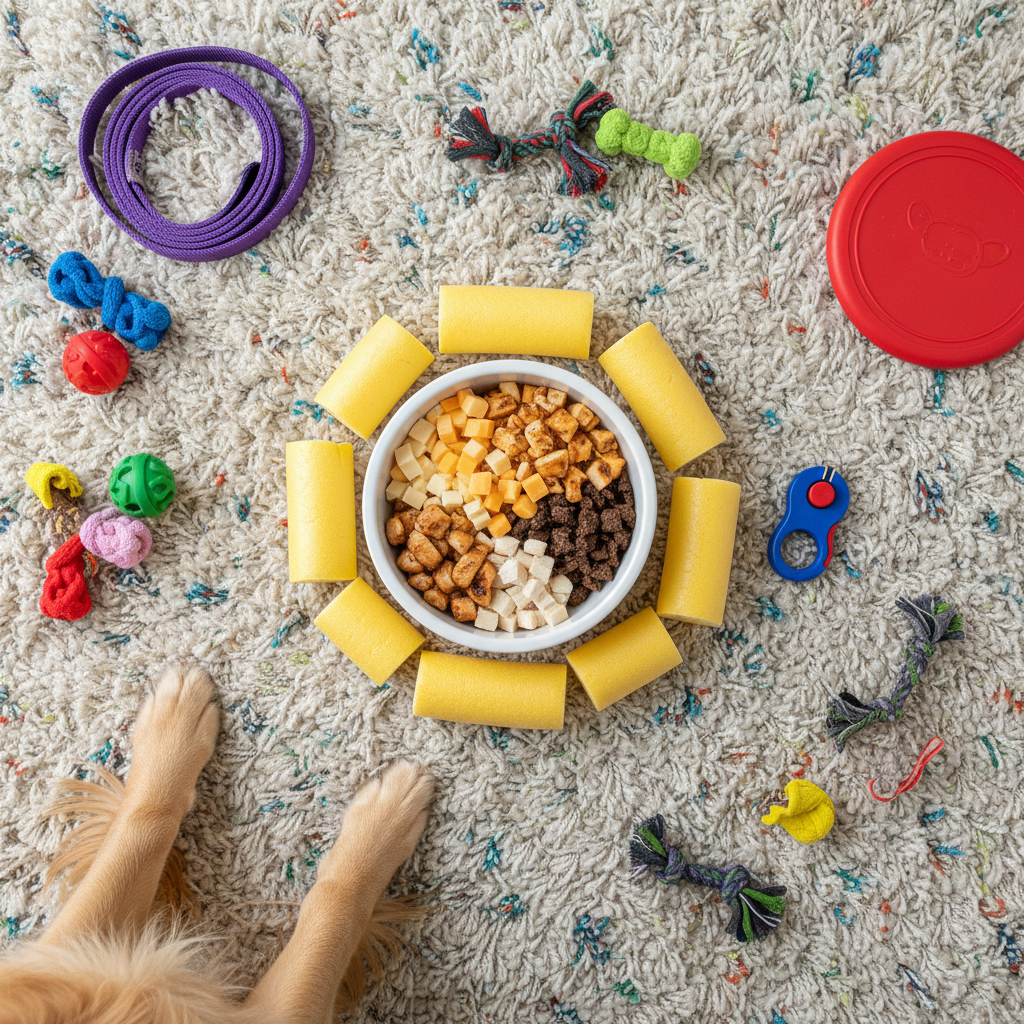
Before you start the training, let’s get our gear in order. The great news is you don’t need any fancy or expensive equipment. You probably have everything you need lying around the house right now!
The Limbo ‘Pole’
This is the star of the show! The ideal pole is something lightweight and safe, so it won’t hurt your dog if it gets knocked over. Avoid heavy or sharp objects.
- A broomstick or mop handle: The classic choice. Just be sure to hold it lightly.
- A pool noodle: Our top recommendation! They are soft, colorful, and impossible to get hurt on.
- A PVC pipe: A lightweight option from the hardware store.
- Your own arms or legs: For a spontaneous limbo session, you can be the pole!
High-Value Treats
This is your currency. The limbo requires a bit of physical effort and brainpower, so you’ll want to use treats that your dog finds extra-special. Think beyond their everyday kibble.
- Small pieces of cooked chicken or turkey
- Cheese cubes
- Store-bought soft training treats
- Pea-sized bits of hot dog
Expert Tip: Keep the treats tiny! You’ll be using a lot of them during a training session, and you don’t want your pup to fill up too quickly or consume too many calories.
A Positive Attitude and a Quiet Space
Your energy is contagious. Approach training with enthusiasm and patience. Choose a training area with minimal distractions and a non-slip surface, like a carpeted room or a grassy spot in the yard, to help your dog feel secure as they learn to crouch and crawl.
The Limbo Lowdown: Your Step-by-Step Training Guide
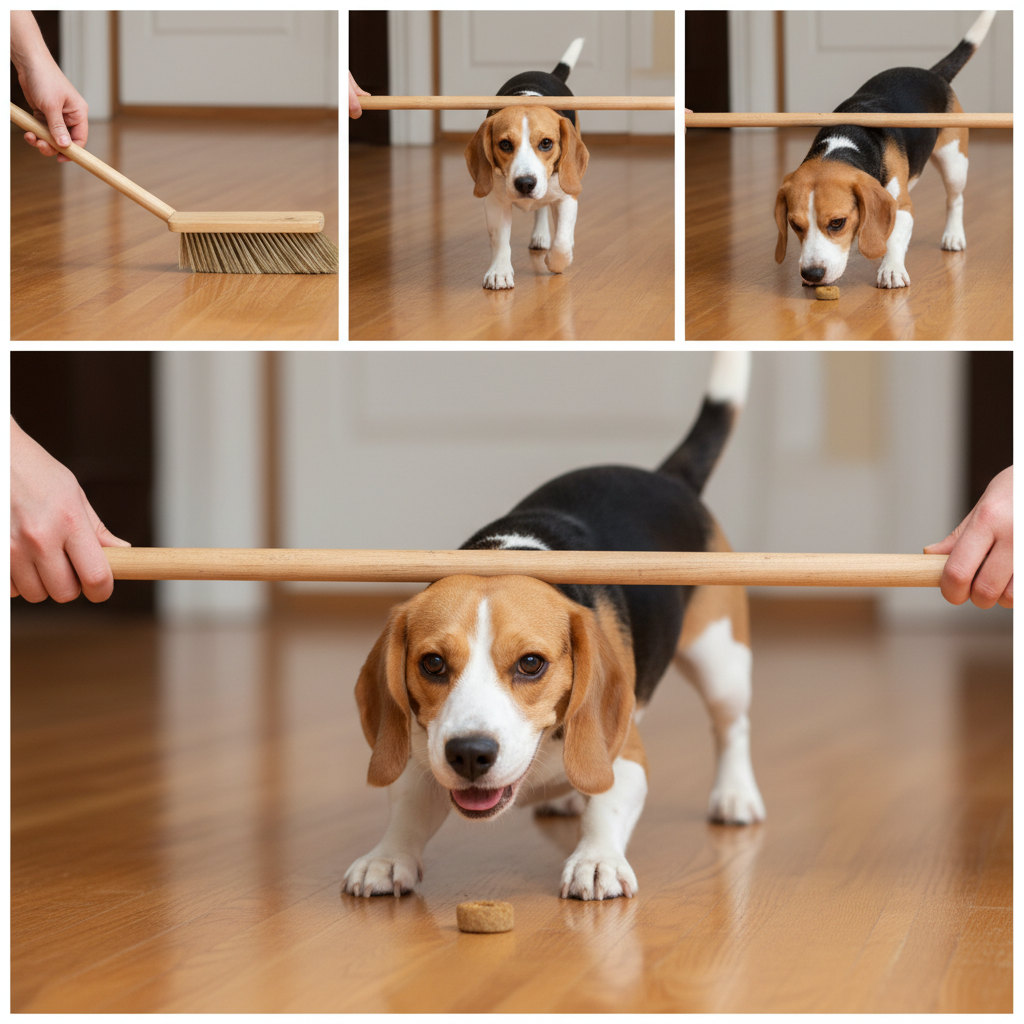
Alright, it’s time for the main event! Remember to keep your training sessions short and sweet—around 5-10 minutes is perfect. Always end on a positive note. Let’s break it down into easy, manageable steps.
- Step 1: Introduce the Pole. Before you even ask your dog to go under it, let them get comfortable with the pole. Place it on the floor. When your dog sniffs or interacts with it, click (if you’re using a clicker) and give them a treat. Let them see that the pole is a fun treat-bringer, not something to be wary of.
- Step 2: Lure Under (The Easy Win). Hold the pole high enough that your dog can walk under it without even having to duck. Use a tasty treat to lure them from one side to the other. As soon as they walk under, click and reward with the treat and lots of praise. Repeat this 5-6 times until they are happily trotting under the high pole.
- Step 3: The First Little Duck. Now, lower the pole just an inch or two. It should be low enough that your dog has to consciously dip their head to get under. This is the first real ‘limbo’ movement! Lure them through. The moment they lower their head and come through, give them a jackpot of treats and praise. This is a big step!
- Step 4: Gradually Getting Lower. This is where the real training happens. In tiny, gradual increments, lower the pole. The goal is to encourage a crawling or crouching motion. Don’t rush this! If your dog hesitates, barks, or tries to go around, you’ve likely lowered it too much, too soon. Just raise it back to the last successful height and try again. Each successful pass gets a click and a treat.
- Step 5: Adding the Verbal Cue. Once your dog is reliably crouching to get under the pole, you can add your cue word. Just as they are about to start the movement, say your chosen word clearly and cheerfully. Good options are “Limbo!”, “How low?”, or “Under!”. After a few repetitions, they’ll begin to associate the word with the action.
- Step 6: Fading the Lure. The final step is to transition from a food lure to a hand signal. Start by luring them with an empty hand, but still give them the treat from your other hand after they go under. Eventually, you can just point from one side of the pole to the other. The ultimate goal is for your dog to perform the trick on the verbal cue alone!
Oops, a Limbo Limp? Troubleshooting Common Hurdles

Is your limbo training not going as smoothly as a well-oiled conga line? Don’t worry! Every dog learns differently, and hitting a snag is a normal part of the process. Here are some common issues and how to solve them.
Problem: My dog just jumps over the pole!
Solution: This is very common, especially with energetic dogs! It usually means the reward for going ‘under’ isn’t clear enough. You can try a few things. First, practice in a hallway or doorway to limit their ability to go around. Second, hold the pole a bit closer to their head as you lure them, making ‘under’ the more obvious path. And most importantly, only reward the ‘under’ movement. If they jump over, simply say nothing, reset, and try again at a slightly higher pole position.
Problem: My dog seems scared of the pole.
Solution: If your dog is showing signs of fear (tucking their tail, avoiding the pole, backing away), it’s crucial to stop and reassess. Go all the way back to Step 1. Place the pole on the ground and just reward them for being near it. You can also try a different object—a soft pool noodle is much less intimidating than a hard stick. The goal is to build a positive association. This is a game, not a task!
Problem: My dog just knocks the pole over and walks through.
Solution: Perfect! This is actually not a big problem. Let them knock it over. Don’t hold it so firmly that it becomes a barrier. If they knock it down but still perform the crouching motion to get to the other side, reward them! The goal is to teach the ‘get low’ body movement, not to teach them to be an expert pole-avoider. Over time, as they get more skilled, they will naturally learn to clear it without touching it.
Remember: The key to all dog training is patience. If you or your dog gets frustrated, just end the session with an easy win (like a simple ‘sit’) and try again tomorrow. Keep it fun!
Safety First! Keeping the Limbo Fun and Injury-Free

While the limbo is a relatively safe trick, it’s important to keep your dog’s physical well-being in mind. A few simple precautions can ensure this game stays fun and free of any ‘ouches’.
Know Your Dog’s Limits
Not every dog is built for the limbo, and that’s okay!
- Puppies: Their growth plates are still developing, so avoid any activity that puts stress on their joints. Stick to a very high pole that they can walk under.
- Senior Dogs: Older dogs may have arthritis or stiffness that makes crouching uncomfortable. Let them set the pace and never push them lower than they are willing to go.
- Dogs with Health Issues: If your dog has a history of back problems (common in breeds like Dachshunds), joint issues, or is recovering from an injury, consult your veterinarian before starting this trick.
Choose the Right Surface
Always practice on a non-slip surface. Hardwood or tile floors can be slippery and may cause your dog to splay out and potentially pull a muscle. A rug, carpet, or grass provides the traction they need to move confidently.
Keep Sessions Short and Sweet
Repetitive movements can be tiring. Keep your training sessions to just a few minutes per day. This prevents physical fatigue and mental burnout, ensuring your dog is excited every time they see the limbo pole come out.
Watch Their Body Language
Your dog will tell you if they’re uncomfortable. Watch for signs of stress or pain, such as lip licking, yawning, pinning ears back, or hesitation. If you see these, it’s time to stop. Training should always be an enjoyable experience for your pup.
Conclusion
Congratulations, you’re now equipped with all the knowledge you need to teach your dog one of the coolest tricks on the block! Remember that the real prize isn’t a perfectly executed limbo; it’s the laughter, the teamwork, and the special moments you share with your dog during training. Every little head dip and tail wag is a victory.
So, be patient, stay positive, and celebrate every small step of progress. Before you know it, you’ll have a limbo champion who’s ready to steal the show at your next get-together. Now go on, grab that pole, and have some fun!