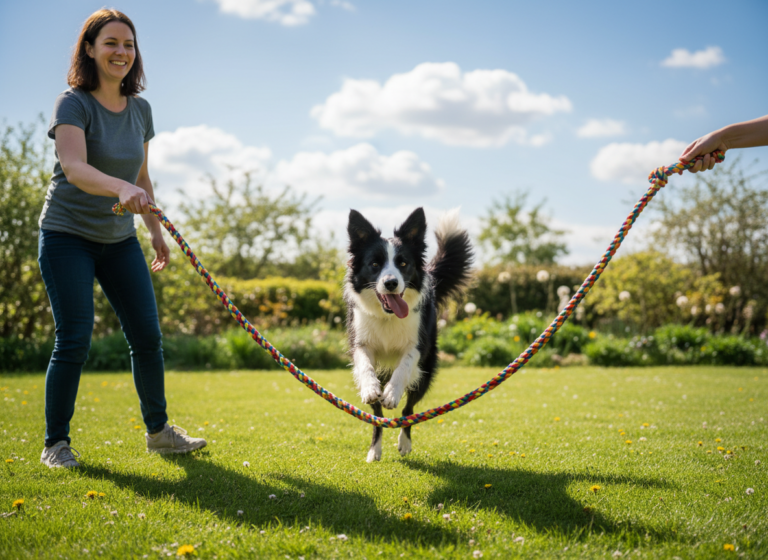
There’s nothing quite like the simple pleasure of a walk with your furry best friend. That is, until you round a corner and see it: the puddle. It might as well be a small lake, standing directly between you and a clean car, a spotless floor, and your sanity. You hold your breath, hoping your dog will navigate around it, but… splash. The familiar scene of a happy, muddy dog and your sinking heart plays out once again.
But what if it didn’t have to be this way? What if, instead of a messy obstacle, that puddle became a fun training opportunity? Teaching your dog to jump over puddles isn’t just a cute party trick; it’s a practical skill that keeps them clean, builds their confidence, and strengthens the bond you share. It transforms a potentially frustrating moment into a fun game of teamwork.
In this guide, we’re going to walk you through the simple, positive steps to teach your dog the ‘jump’ cue. We’ll start indoors, build confidence outside, and before you know it, you’ll have a puddle-hopping champion who can conquer any rainy-day walk with dry paws. Let’s get started!
Getting Started: Your Puddle-Jumping Toolkit
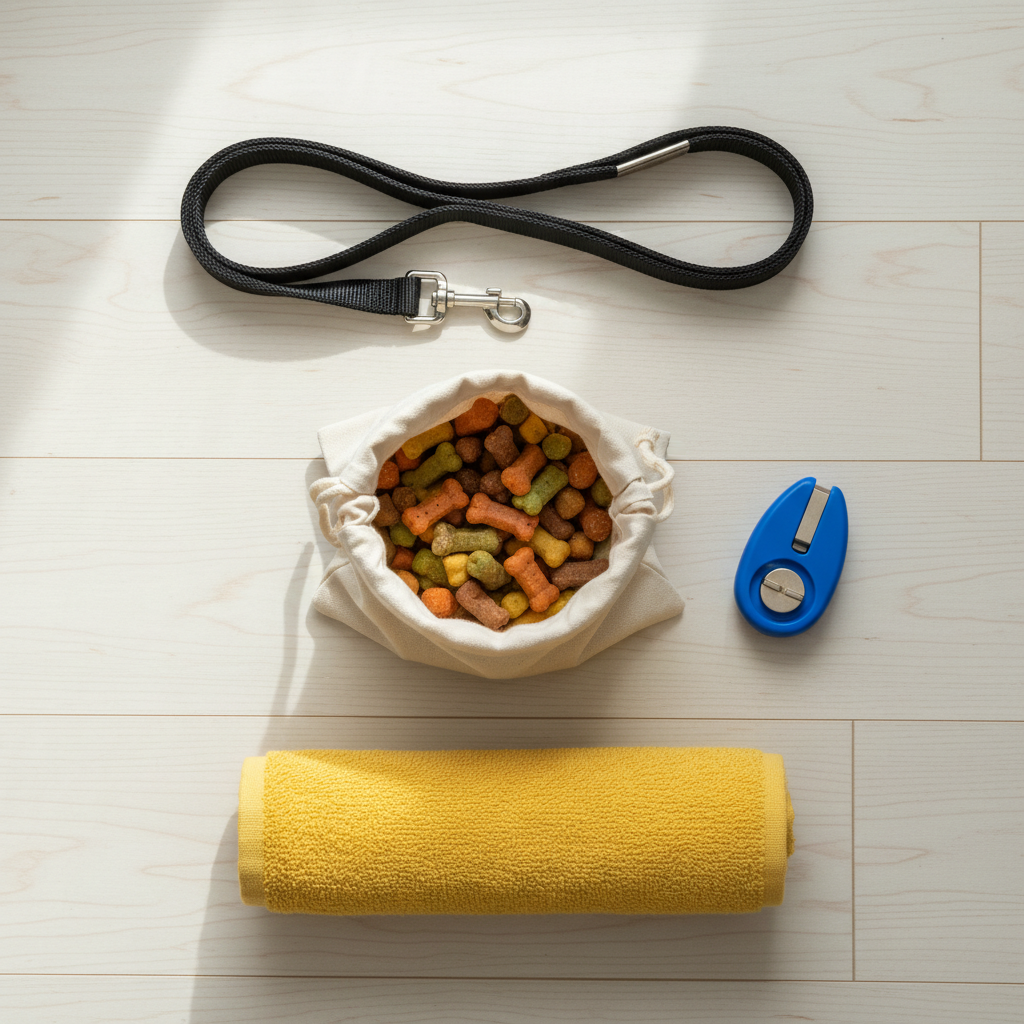
Before you and your pup take the leap, it’s best to gather a few essential supplies. Having the right tools on hand makes the training process smoother, more effective, and a lot more fun for your dog. Think of it as packing your bag for success! You don’t need anything fancy, and you probably have most of these items at home already.
Essential Gear:
- High-Value Treats: We’re not talking about their everyday kibble. For a new skill like this, you need the good stuff! Think small, soft, smelly treats like tiny pieces of chicken, cheese, or commercial training treats that your dog absolutely adores. The goal is to make the reward so irresistible that jumping over an obstacle is 100% worth their while.
- A Standard 6-Foot Leash: A simple leash gives you gentle control and guidance without the risks associated with retractable leashes. It helps you keep your dog focused and safely direct them towards the obstacle without any sudden jerks or pulls.
- A Clicker (Optional but Recommended): A clicker is a fantastic tool for marking the exact moment your dog does something right. The ‘click’ acts as a precise signal that means, “Yes, that exact action earned you a treat!” If you don’t have a clicker, a consistent verbal marker like a sharp “Yes!” or “Good!” works just as well.
- An Indoor “Obstacle”: Start your training indoors with something non-intimidating. A broomstick laid on the floor, a rolled-up towel or yoga mat, or even a couple of books to mark a space are all perfect options. The key is to start low and simple.
- A Positive, Patient Attitude: This is the most important tool of all! Training should always be a fun and positive experience. Bring your happy voice, plenty of patience, and be ready to celebrate the small wins. Your dog feeds off your energy, so if you’re excited, they will be too!
Step 1: Building the ‘Jump’ Foundation Indoors
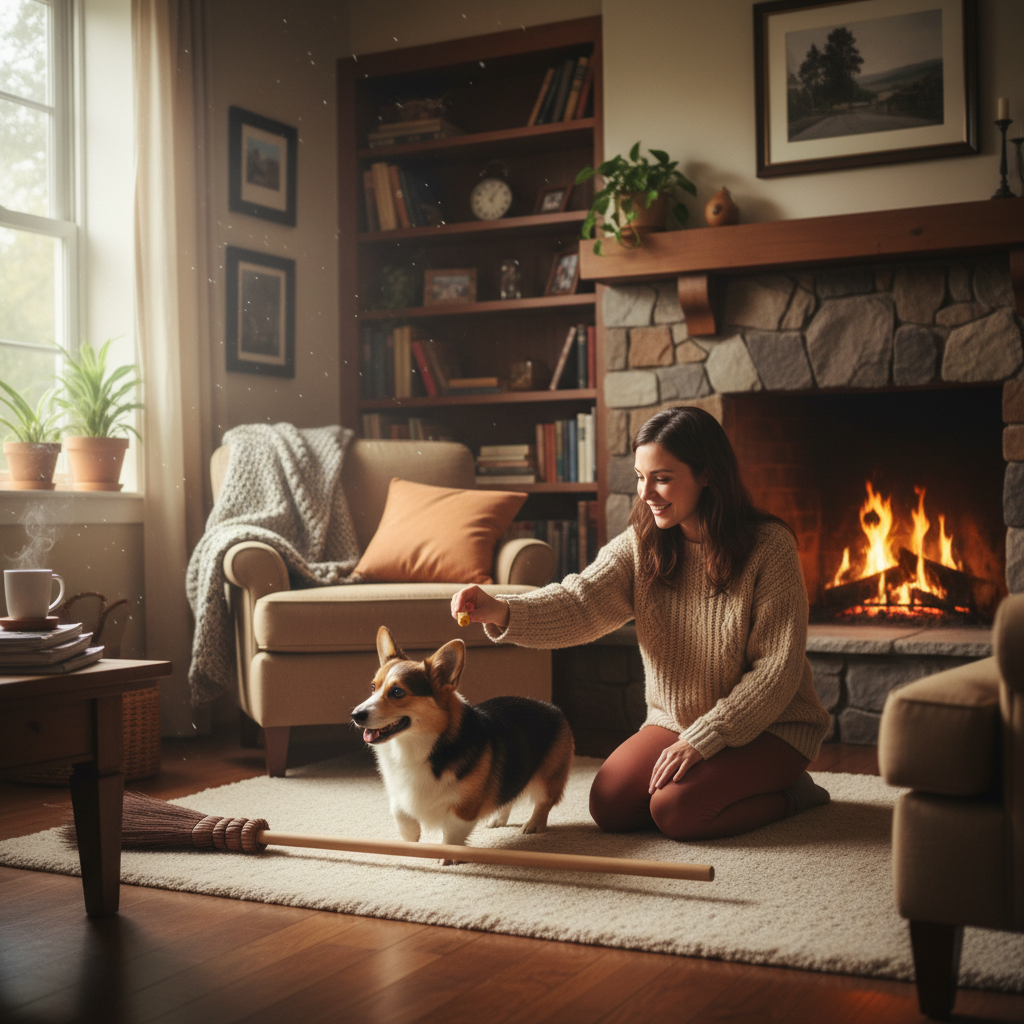
The journey to conquering outdoor puddles begins in the comfort of your own home. By starting in a familiar, low-distraction environment, you set your dog up for success. Here, they can focus on learning the basic mechanics of jumping over an object without worrying about squirrels, other dogs, or scary noises. This foundational step is all about building a positive association with the action of going ‘over’ something.
Phase 1: The Lure
Place your chosen indoor obstacle, like a broomstick, on the floor. Grab a high-value treat and let your dog sniff it. With the treat in your hand, lure your dog towards the broomstick. As they approach, move your hand over the broomstick to the other side, encouraging them to step over it to get their reward. The moment all four of their paws are on the other side, say your marker word (“Yes!”) or click, and give them the treat along with lots of praise.
Expert Tip: Keep the sessions short and sweet! Aim for 2-3 sessions a day, each lasting no more than five minutes. This prevents your dog from getting bored or frustrated and keeps them excited for the next ‘game.’
Phase 2: Fading the Lure and Adding the Cue
After a few repetitions, your dog will likely start offering to step over the broomstick without needing the treat to guide them every inch of the way. This is your chance to start fading the lure. Pretend to have a treat in your hand and use the same hand motion to guide them over. When they cross it, mark the moment and reward them with a treat from your other hand. This teaches them to follow your hand signal, not just the treat itself.
Once they are confidently hopping over the object with just a hand signal, it’s time to add the verbal cue! Right as your dog is about to begin the motion of going over, say your chosen cue in a clear, happy voice. Good options are “Jump,” “Over,” or “Hup!” The timing is key: say the word, they perform the action, and then they get the reward. After several repetitions, they will begin to associate the word with the action.
Phase 3: Testing the Cue
Now, try standing upright and saying your cue without luring. If they jump, throw a treat party! If they hesitate, that’s okay. Simply take a step back to the luring phase and practice a few more times before trying again. The goal is for your dog to hear “Jump!” and happily hop over the obstacle on their own.
Step 2: Taking the Leap Outside (On Dry Land!)
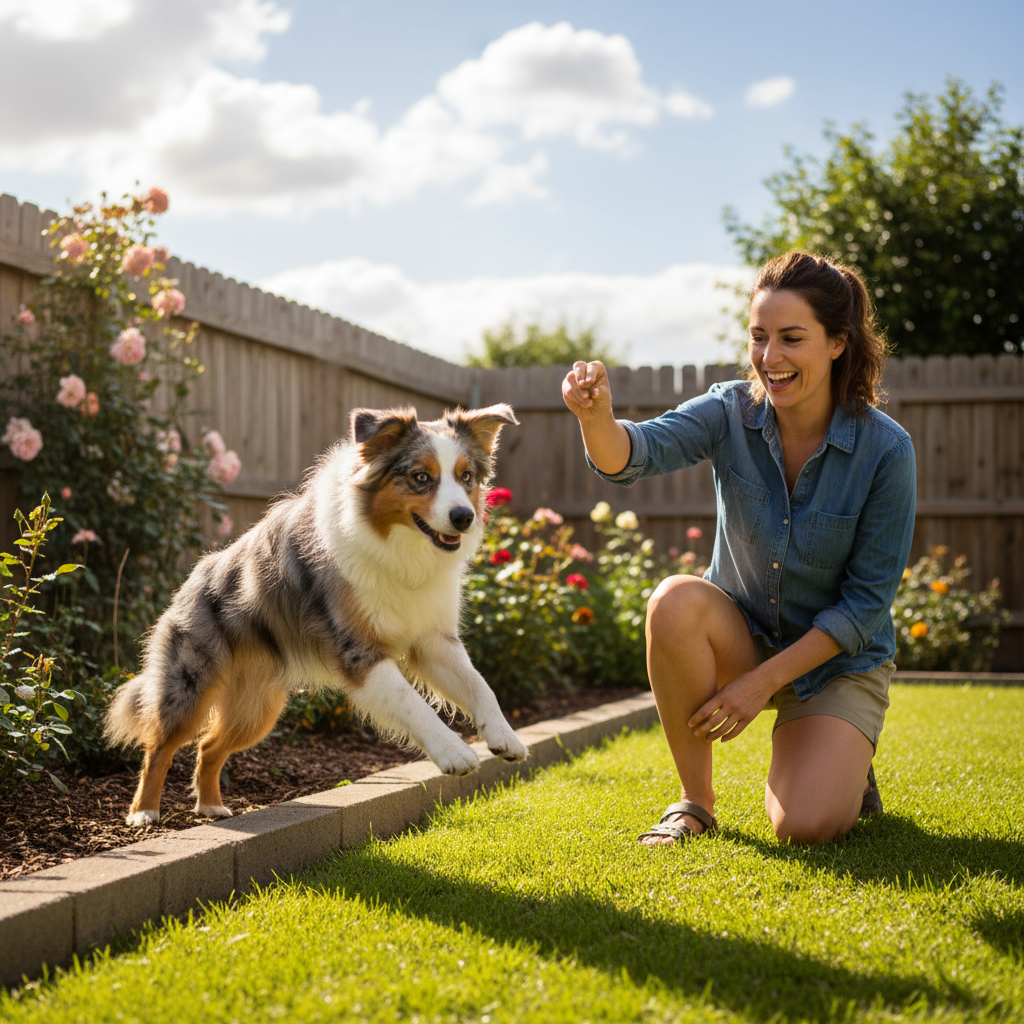
Once your dog is a pro at jumping over the broomstick in the living room, it’s time to take the show on the road. Moving the training outside introduces new sights, sounds, and smells, which can be distracting. That’s why we’re not jumping straight into puddles yet. The goal of this step is to ‘generalize’ the behavior, which means teaching your dog that the “Jump” cue applies everywhere, not just in your house.
Find a Low-Distraction Zone
Start in a relatively quiet outdoor area, like your backyard or a calm corner of a park during off-peak hours. The fewer distractions, the easier it will be for your dog to focus on you and the task at hand. Keep them on their leash to help them stay on track.
Choose a Natural Obstacle
Look for a safe, low-lying object to practice with. This could be:
- A small, stable log or fallen branch.
- The curb of a sidewalk.
- A line you draw in the dirt with your shoe.
- Even your own foot held out low to the ground!
The object itself doesn’t matter as much as the action of going over it. Start with something very low to build their confidence in the new environment.
Practice, Praise, and Repeat
Walk your dog towards your chosen outdoor obstacle. Just as they get close, give your verbal cue (“Jump!”) with an encouraging tone. You might need to use your hand signal or a lure for the first few tries, and that’s perfectly normal. When they successfully go over it, reward them enthusiastically. A jackpot of several treats can work wonders here to show them they did an amazing job! Practice this in different spots with different objects to help them understand that “Jump” means to clear whatever is in front of them.
Step 3: Time to Make a Splash (Figuratively!)
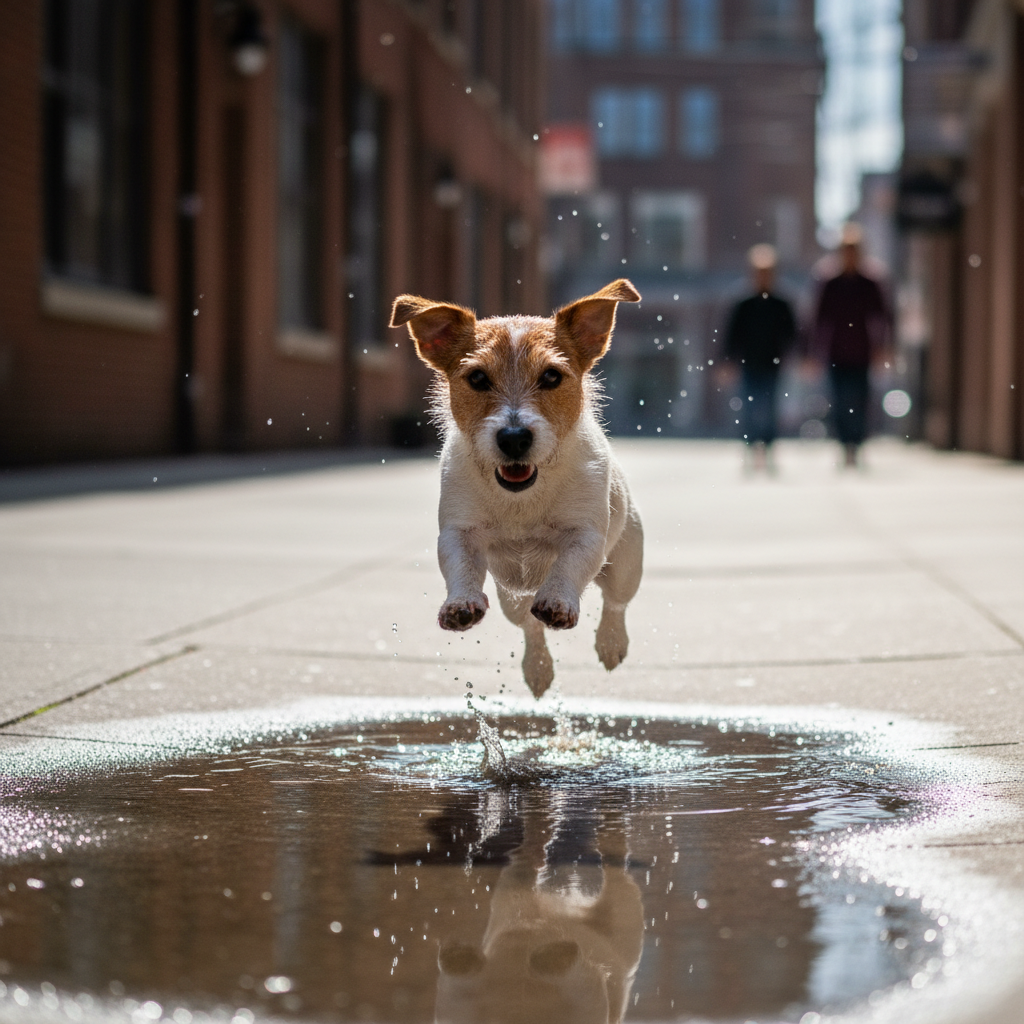
This is the moment you’ve been waiting for! Your dog understands the “Jump” cue and has practiced it in various locations. Now it’s time to introduce the main event: the puddle. The key to this final step is to make it a fun, positive experience and never, ever force your dog if they seem scared or hesitant. Their comfort and confidence are the top priorities.
Start Small and Shallow
On your next walk after a rain, seek out the smallest, most insignificant puddle you can find. We’re talking barely-get-your-paws-wet small. A huge, intimidating puddle can be overwhelming for a first-timer. Your goal is to make the first encounter a guaranteed success.
Bring the Energy!
Approach the tiny puddle with an upbeat, playful attitude. Your dog will pick up on your confident energy. As you get close, give your “Jump!” cue in the same happy tone you’ve been using all along. Use a hand gesture to guide their eyes over the puddle. If they successfully jump it, even if it’s a clumsy attempt, celebrate like they just won the Olympics! Shower them with praise and give them a jackpot of their favorite treats.
What if They Walk Through It?
It’s very likely that on the first try, your dog will just walk right through the puddle. Don’t worry! This is normal. Simply don’t reward the splash-through. Circle back, get them excited again, and try once more. You can make the jump more obvious by tossing a treat on the ground on the other side of the puddle right after you give the cue. This encourages them to leap over to get the reward.
Gradually Increase the Challenge
Once your dog is reliably jumping over tiny puddles, you can slowly move on to slightly larger or deeper ones. The process is the same: stay positive, reward success, and never push them past their comfort level. If you encounter a puddle that seems too big, simply walk around it. This training is about giving them an option, not forcing them into scary situations. Before you know it, your dog will see a puddle ahead and look to you, ready for their fun jumping cue!
Troubleshooting: When Puddle Jumping Gets Puzzling
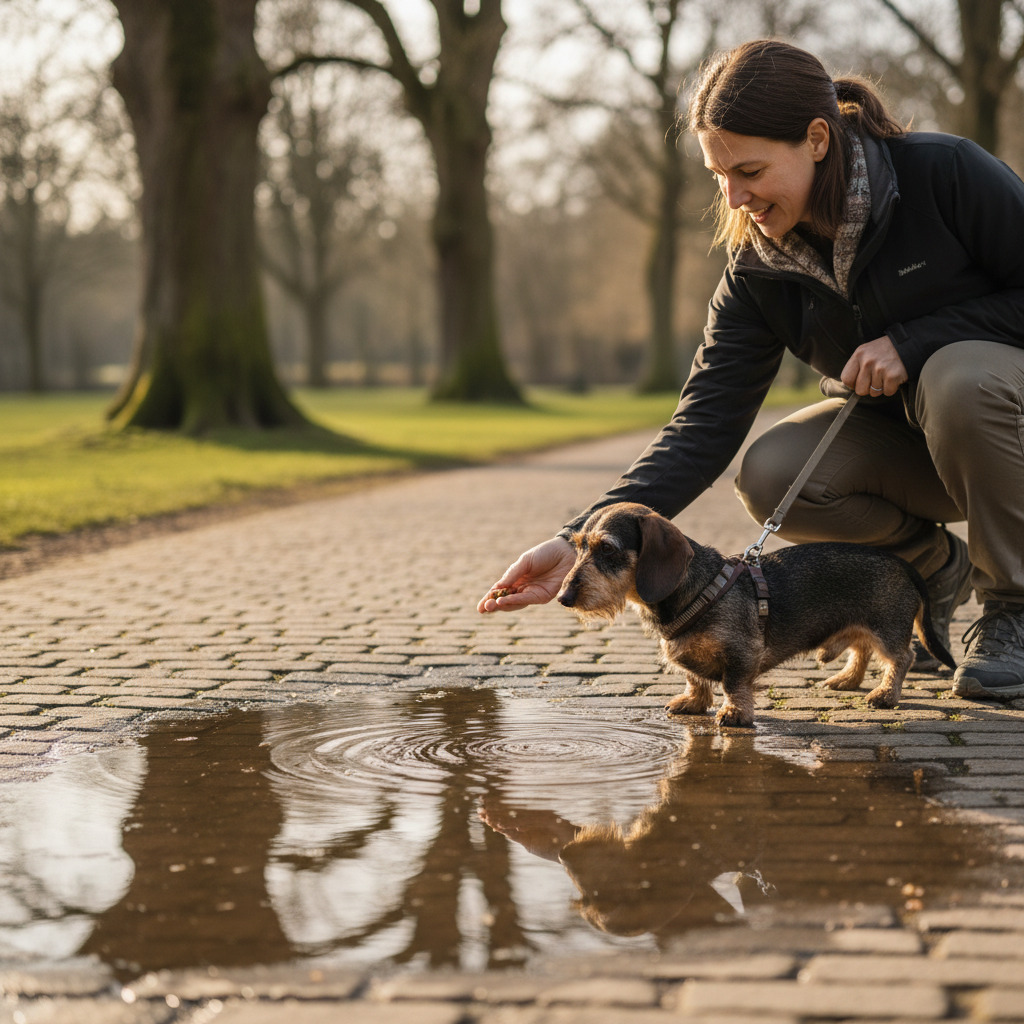
Training is rarely a straight line, and it’s completely normal to hit a few bumps—or in this case, splashes—along the way. If you’re running into some trouble, don’t get discouraged! Here are some common challenges and how to navigate them with patience and positivity.
My dog is scared of the water or the sound of the splash.
Solution: Never force a fearful dog. Fear will only set your training back. Instead, focus on counter-conditioning. Start far away from the puddle, at a distance where your dog is comfortable. Reward them just for looking at the puddle. Gradually decrease the distance over many sessions, rewarding them for calm behavior at each step. You can play fun games like fetch near (but not in) the water. The goal is to change their association from ‘scary water’ to ‘fun times with my human.’ This may take time, so be patient.
My dog just walks around the puddle instead of jumping.
Solution: This is a smart dog problem! They’ve found a simpler solution. To encourage the jump, you need to make it more rewarding and easier than going around. Try walking in a narrower space, like between a building and the puddle, to limit their options. You can also stand on the opposite side of the puddle and use an excited voice to call them to you, giving the “Jump” cue as they approach. Make the reward for jumping so amazing that it becomes the most attractive choice.
My dog tries to jump but lands right in the middle.
Solution: This is often a matter of confidence or misjudging the distance. Go back to practicing with ground-level objects like lines or broomsticks, but gradually increase the ‘width’ they have to jump. You can place two sticks on the ground and have them jump from one to the other. This helps them learn to gauge distance and power. When you return to puddles, start with very narrow ones and work your way up, ensuring they have plenty of room for a good ‘takeoff’ and ‘landing.’ Tossing a treat a few feet past the puddle can also encourage a longer, more successful jump.
Remember: Every dog learns at a different pace. If one approach isn’t working, take a break and try again later with a fresh perspective. The most important thing is to keep it fun and pressure-free.
Conclusion
Congratulations! You now have all the tools and techniques you need to teach your dog the fantastic skill of puddle jumping. By breaking it down into simple, manageable steps—starting indoors, generalizing the cue outside, and then finally introducing puddles—you’ve set your pup up for a lifetime of success and dry paws. More than just a practical trick, this journey is a wonderful way to build your dog’s confidence, provide fun mental stimulation, and deepen the incredible bond of trust and communication you share.
Remember to always be patient, keep your training sessions short and positive, and celebrate every small victory along the way. Before long, you’ll be able to look at a rainy forecast not with dread, but with excitement for your next walking adventure. Happy training, and here’s to many more clean, joyful, puddle-hopping walks together!