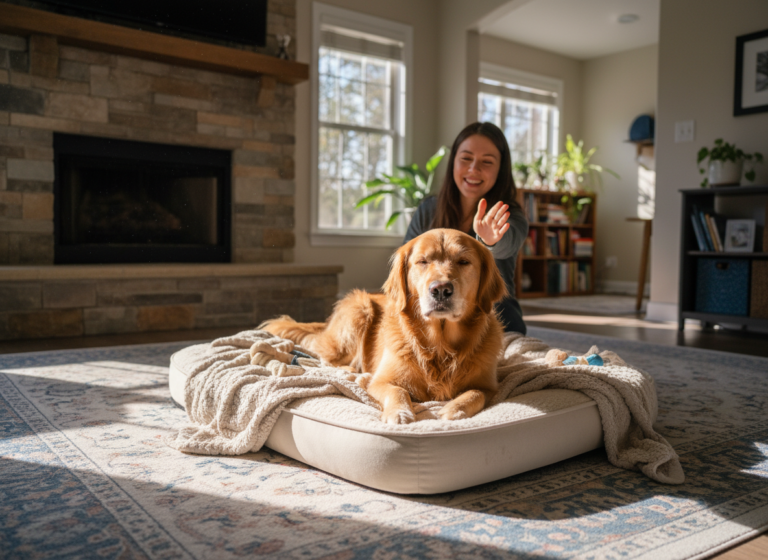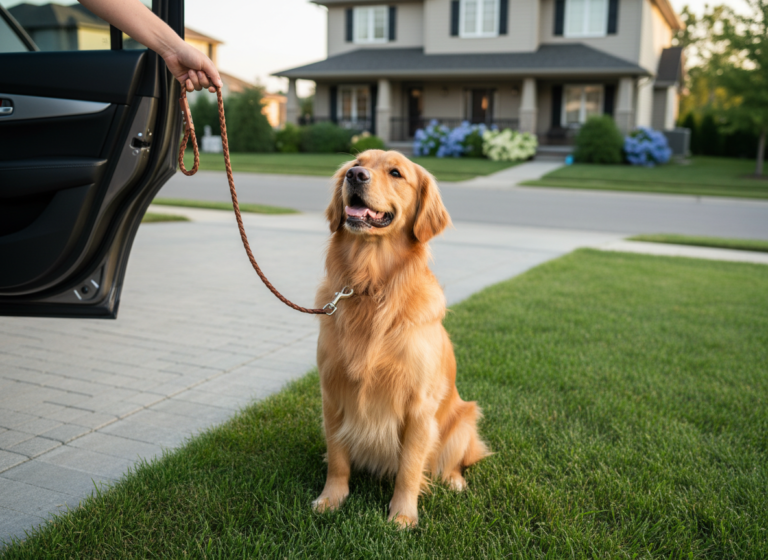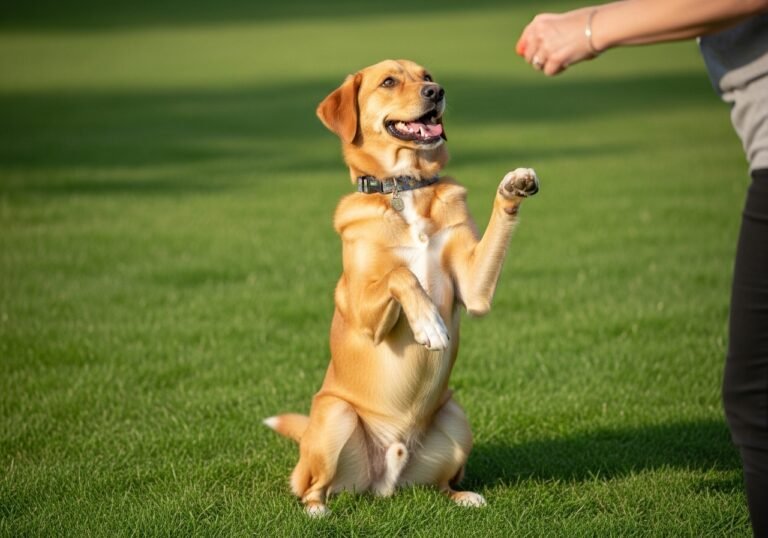
Is your dog’s name starting to sound more like a suggestion than a signal for attention? You call, “Max!… Max?… MAAAAX!” and get nothing but an ear twitch before he goes right back to sniffing that fascinating blade of grass. It’s a common, and frankly, frustrating experience for so many pet parents. You might feel ignored, disrespected, or even worried that your dog won’t respond when it really matters.
But here’s the secret: your dog isn’t being stubborn or defiant. More often than not, they’ve simply learned that their name doesn’t mean much. Through overuse or negative associations, their own name has become meaningless background noise. The good news is that you can change this, and it’s easier and more fun than you think!
Enter the ‘Name Game.’ This isn’t about dominance or force; it’s a simple, positive reinforcement exercise designed to rebuild the value of your dog’s name. The goal is to make your dog’s name the most exciting, wonderful word they’ve ever heard—a word that predicts treats, praise, and fun. In this guide, we’ll walk you through everything you need to know to turn your dog’s selective hearing into laser-focused attention.
Why Your Dog’s Name Became Background Noise
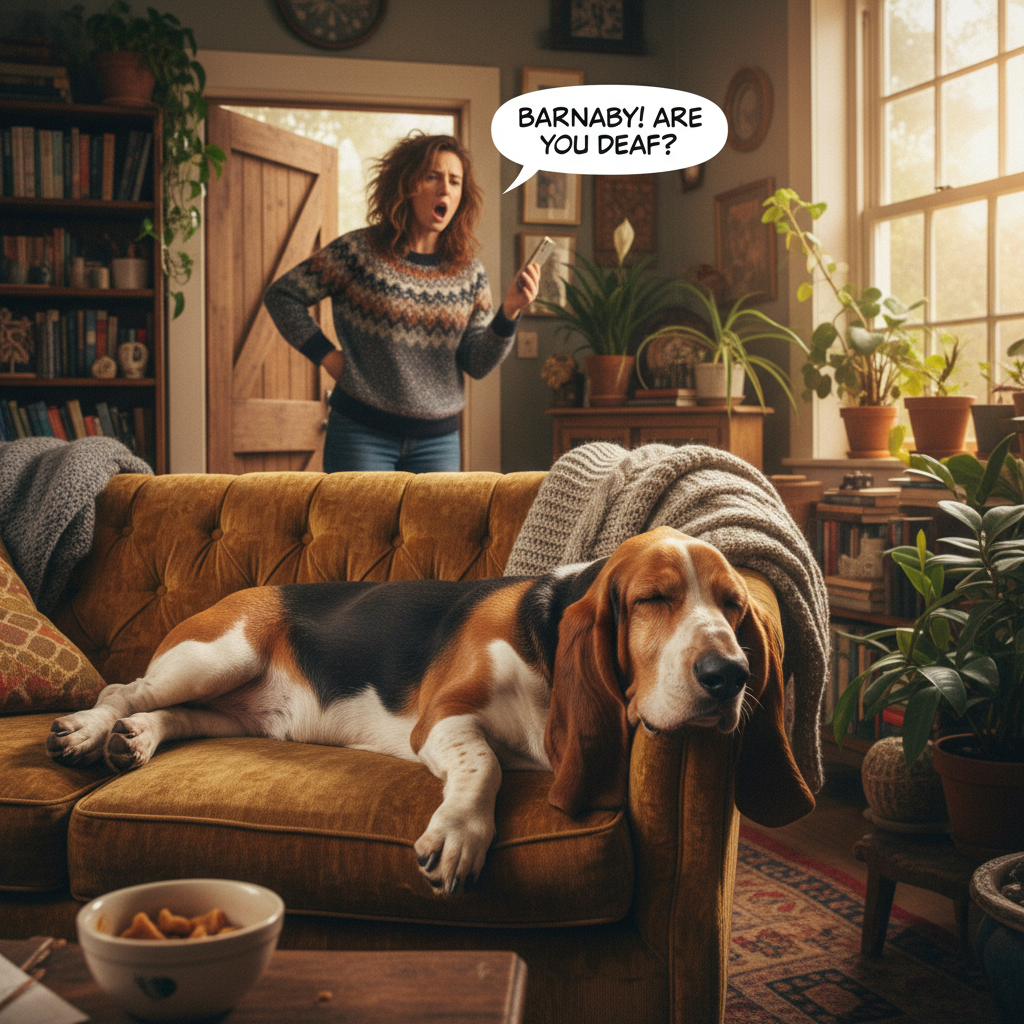
Understanding the ‘Name Poisoning’ Problem
Before we can fix the problem, we need to understand how it started. Think about how many times a day you say your dog’s name. Often, it’s connected to something they don’t enjoy. For example:
- For something unpleasant: “Buddy, time for a bath!” or “Buddy, drop that!”
- For nagging: “Luna, get off the couch. Luna, stop begging. Luna, no.”
- For no reason at all: Just saying their name randomly as they walk by without any follow-up.
This is a phenomenon trainers call ‘name poisoning.’ When a dog’s name is constantly associated with negative or neutral outcomes, it loses its power. They learn to tune it out because, from their perspective, 9 times out of 10, hearing their name either means the fun is about to stop or nothing happens at all. Why would they bother responding? The Name Game is the antidote to name poisoning, re-teaching your dog that their name predicts amazing things are coming their way.
Gearing Up for Success: What You’ll Need
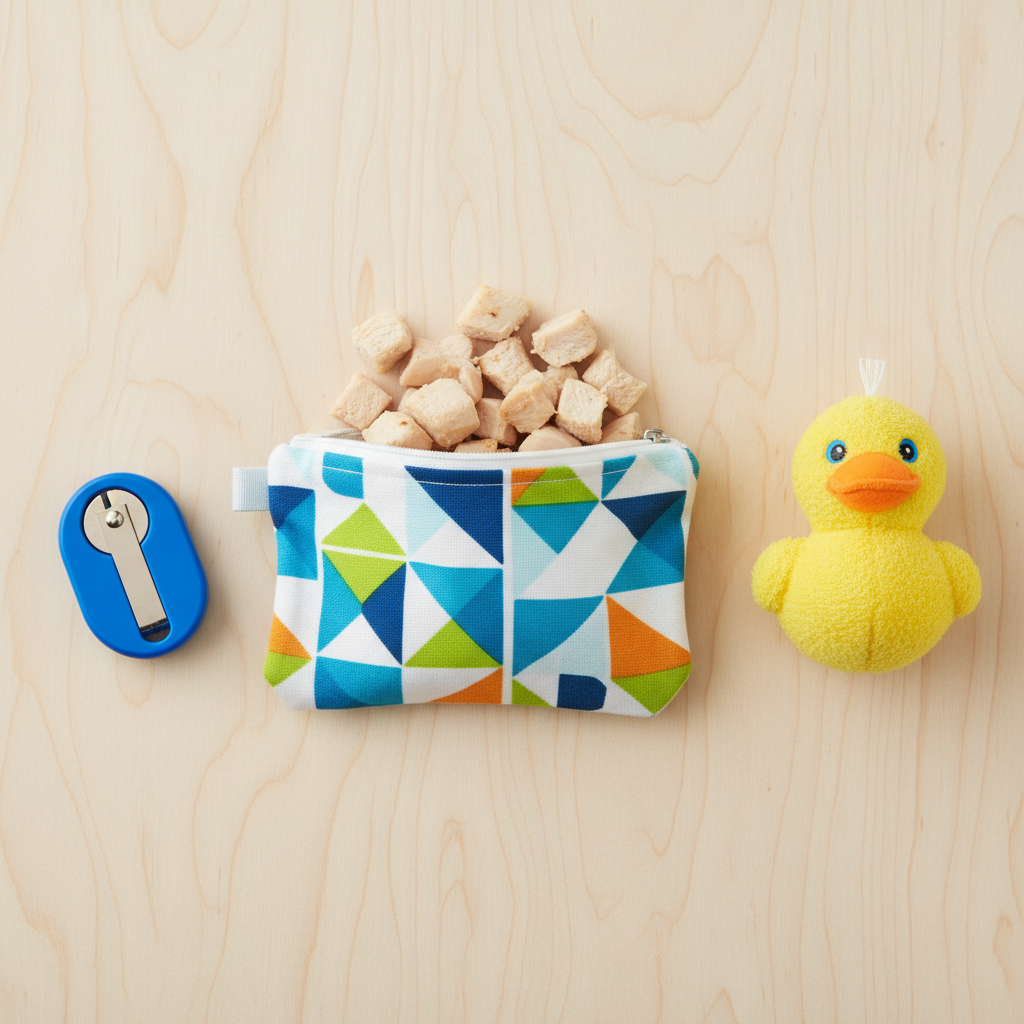
Setting the Stage for the Name Game
The beauty of this training exercise is its simplicity. You don’t need a lot of fancy equipment, but having the right tools will make your sessions much more effective. Here’s your checklist:
- High-Value Treats: This is the most important tool! We’re not talking about their everyday kibble. High-value means something extra special that your dog goes crazy for. Think small pieces of boiled chicken, cheese, hot dogs, or soft, smelly training treats. The goal is to make the reward worth their attention. Cut them into tiny, pea-sized pieces so you can do lots of repetitions.
- A Quiet Environment: Start your training in a place with minimal distractions, like your living room or a quiet hallway. We want to set our dogs up for success, and that means not competing with squirrels, other dogs, or the mailman right away.
- A Positive Attitude: Your dog can read your energy. This should be a fun, upbeat game, not a chore. Bring your happy voice and a patient mindset to every session.
- A Clicker (Optional): If you’re familiar with clicker training, a clicker can be a fantastic tool for precisely marking the moment your dog looks at you. If not, a verbal marker like a sharp “Yes!” works just as well.
Expert Tip: Prepare your treats ahead of time and keep them in a handy treat pouch. This keeps your hands free and allows you to deliver the reward instantly, which is crucial for helping your dog make the connection.
Let’s Play! The Step-by-Step Guide to the Name Game
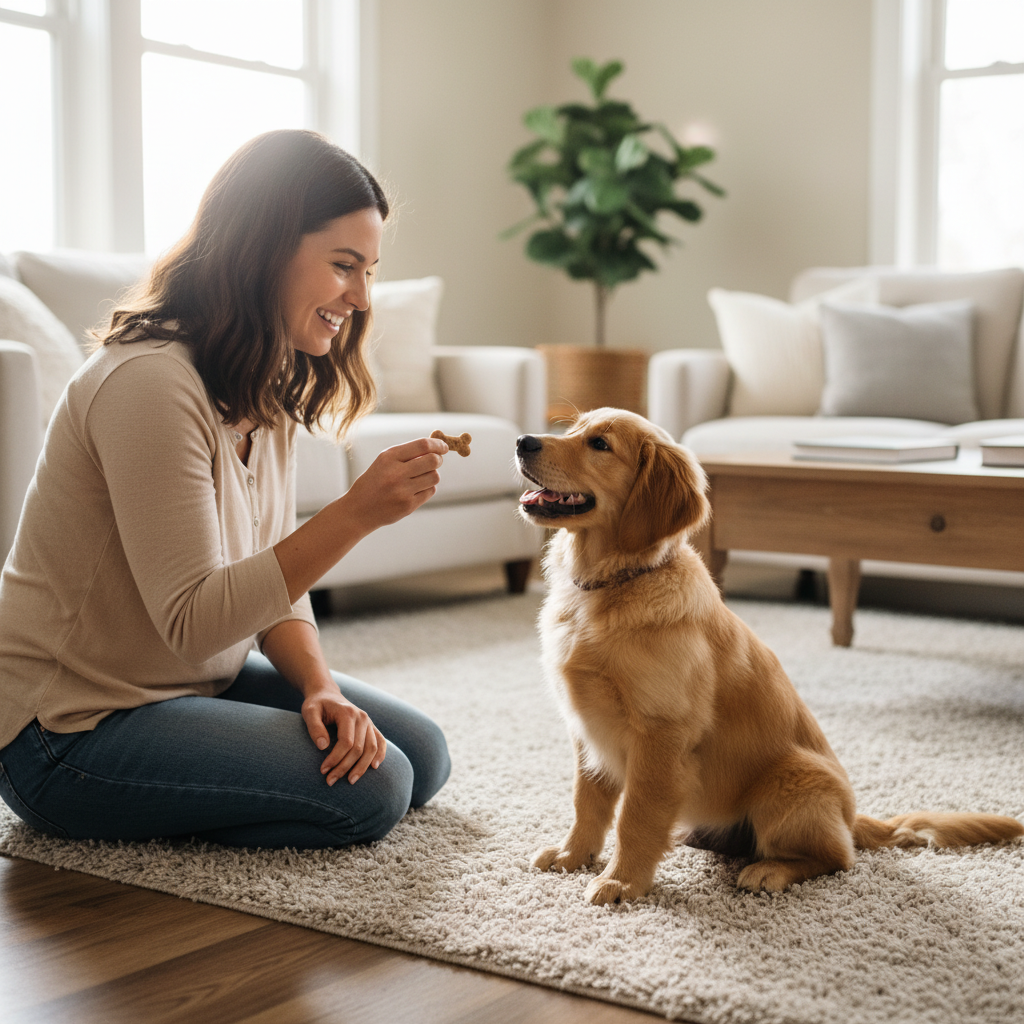
Phase 1: Building a Positive Association
This is where the magic happens. Keep your sessions short and sweet—just 2-5 minutes, a few times a day is perfect. We want to end on a high note, leaving your dog wanting more.
- Start Close: Begin in your quiet space with your dog just a few feet away from you. Have your high-value treats ready.
- Say Their Name Once: In a happy, cheerful tone of voice, say your dog’s name. Just once. For example, “Fido!”
- Wait for the Head Turn: The very instant your dog’s head turns toward you or they make eye contact, mark the behavior with your verbal “Yes!” or a click.
- Reward Immediately: Instantly give them a high-value treat. You can toss it to them or give it from your hand. The key is that the treat appears after they look at you.
- Reset and Repeat: Let them finish their treat. You can toss the next treat a short distance away to ‘reset’ them so they are no longer looking at you. Once they are distracted again, repeat the process. Aim for about 10-15 repetitions in a single session.
Important: Do NOT repeat their name if they don’t respond. If they don’t look, try making a small kissing sound or a quiet clap to get their attention. When they look, reward them. The goal is for the name itself to become the cue, but in the very beginning, we just need to reward any orientation toward us.
Leveling Up: Adding Distractions, Distance, and Duration
Phase 2: Proofing the Behavior
Once your dog is whipping their head around reliably in a quiet room, it’s time to make the game a little more challenging. This process is called ‘proofing,’ and it’s how you make the behavior reliable in the real world. The key is to increase the difficulty gradually.
Adding the 3 D’s of Dog Training:
Only increase one of the following criteria at a time. If your dog starts to fail, you’ve made it too hard too fast. Simply take a step back to where they were successful and build up more slowly.
1. Distance: Start practicing with more space between you and your dog. Begin at the other end of the room, then move to different rooms in the house.
2. Duration: After your dog looks at you, wait a single second before you mark and reward. Gradually build this up to a few seconds of sustained eye contact. This teaches them that their name means “look at me and keep looking at me until I release you.”
3. Distractions: This is the ultimate test. Start with low-level distractions and work your way up. Below is a sample progression plan.
| Level | Location | Example Distraction | Training Goal |
|---|---|---|---|
| Beginner | Quiet room | No distractions | Instant head turn 10/10 times. |
| Easy | Your backyard | Sniffing grass, a familiar toy on the ground | Respond to name despite minor scents. |
| Intermediate | Quiet street on-leash | A person walking far away, a distant sound | Respond while in a new environment. |
| Advanced | A park during a quiet time | Other dogs at a great distance, new smells | Maintain focus with significant distractions. |
| Expert | Near a busier area | People and dogs walking closer by (but not interacting) | Reliable attention in stimulating situations. |
Common Mistakes to Avoid (And How to Fix Them)
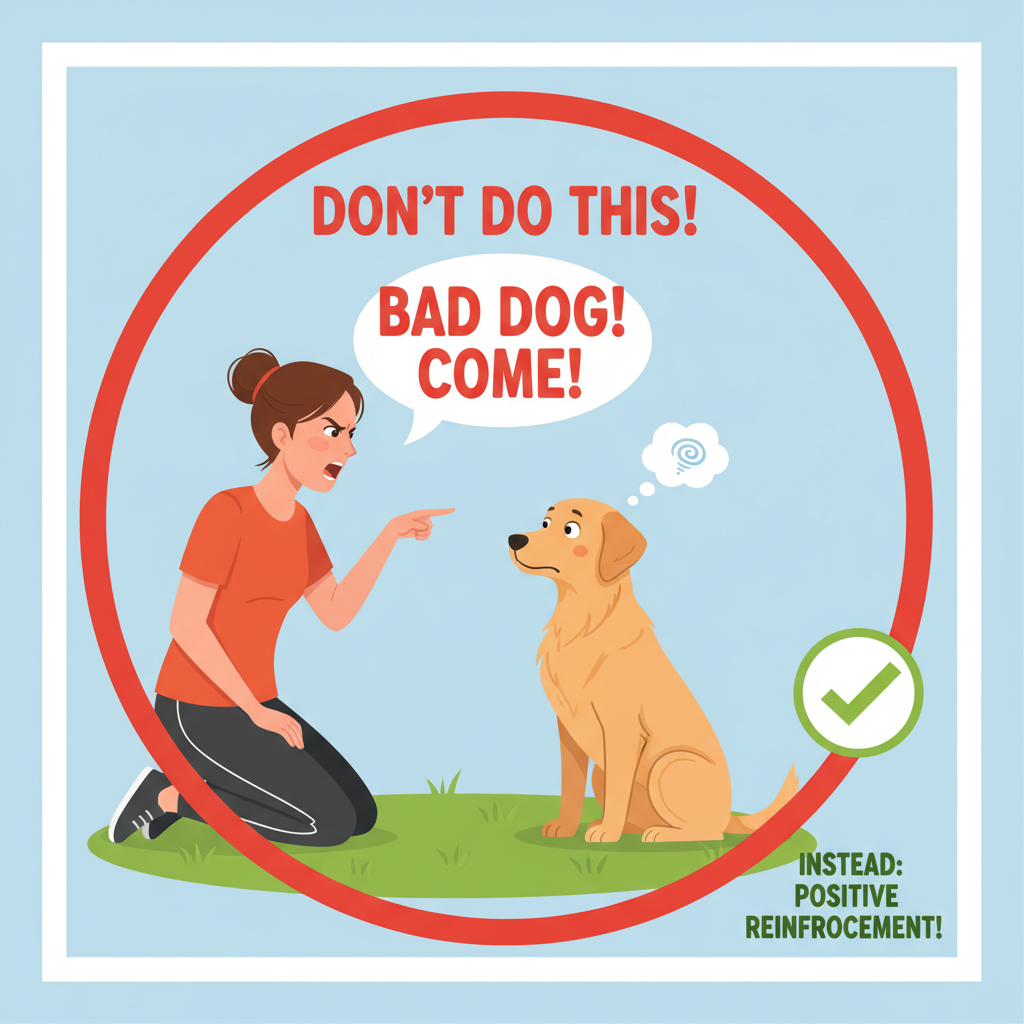
Troubleshooting Your Name Game Training
The Name Game is straightforward, but a few common pitfalls can slow your progress. Be mindful to avoid these training traps:
- Repeating the Name: This is the number one mistake! If you say “Bella, Bella, Bella,” you’re teaching her that her name is “Bella, Bella, Bella.” Say the name once. If there’s no response, you’ve added too much distraction or distance. Make it easier for them to succeed.
- Using a Harsh Tone: Remember, this is a happy game! Your tone should always be light and cheerful. Never use their name to scold or punish. If you need to interrupt a bad behavior, use a different cue like “Ah-ah!” or “Leave it.”
- Turning It Into a Recall Command Too Soon: The Name Game is purely for getting attention—a head turn. It is the precursor to a recall, but it is not the recall itself. The behavior you are rewarding is looking at you, not coming to you. Once their response to their name is rock-solid, you can start adding a separate “Come!” command after you have their attention.
- Training for Too Long: Marathon training sessions lead to boredom and frustration for both you and your dog. Keep sessions short (under 5 minutes) and always end on a positive, successful repetition. This builds enthusiasm for the next session.
- Using Low-Value Rewards: If your dog isn’t motivated, your training will stall. If you see their interest waning, it might be time to switch to an even tastier treat. What was exciting yesterday might be boring today!
Conclusion
From Ignored to Adored: Your New Connection
Congratulations! By playing the Name Game consistently, you are doing so much more than just teaching your dog to respond to their name. You are fundamentally changing their perception of it. Their name is no longer a signal for a bath or a scolding; it’s a predictor of wonderful things, a direct line to their favorite person in the world—you.
Patience and consistency are your best friends in this process. Every short, fun session you play strengthens your bond and builds a powerful foundation for all other training. Soon, you’ll find that a single, happy call of their name is all it takes to get those ears to perk up and those loving eyes to lock onto yours, no matter where you are. Enjoy your newfound connection and the joy of having a dog who is truly happy to hear you call.