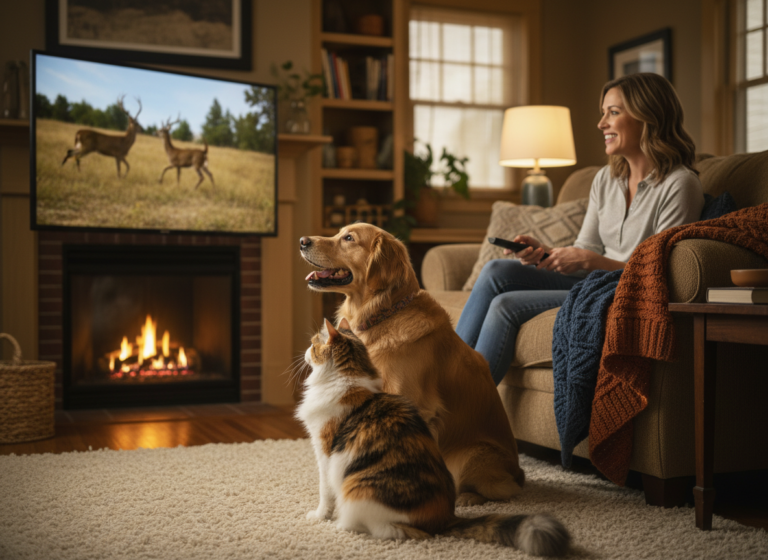
Have you ever noticed your dog watching you intently, seemingly trying to figure out what you’re doing? From tilting their head when you speak to following your gaze, dogs are natural observers. What if you could harness that incredible focus and turn it into a powerful training tool? Welcome to the world of Do As I Do, a revolutionary training method based on social learning and imitation.
Forget complex luring with treats or endless repetitions with a clicker. ‘Do As I Do’ taps into your dog’s innate ability to learn by watching and copying. It’s a fun, engaging, and scientifically validated protocol that not only teaches complex behaviors but also deepens the communication and bond you share with your furry best friend. In this guide, we’ll walk you through everything you need to know to get started, transforming your training sessions from a chore into a delightful game of copycat you can both enjoy.
The Science Behind ‘Copycat’ Canines: What Is Do As I Do?
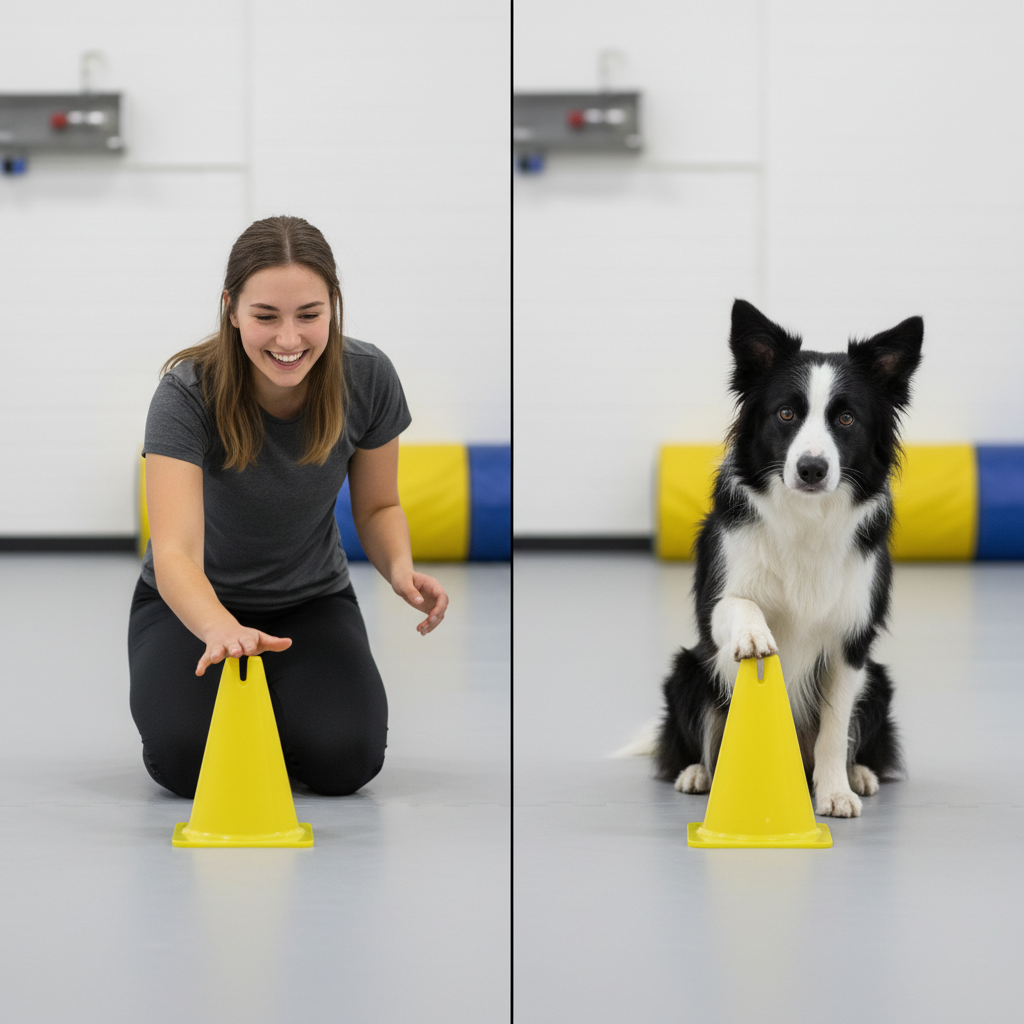
At its core, ‘Do As I Do’ (DAID) is a training technique developed by researcher Claudia Fugazza. It’s built on the principle of social learning—specifically, a dog’s ability to imitate the actions of a demonstrator (that’s you!). Instead of breaking down a behavior into tiny pieces (a process called ‘shaping’), you simply demonstrate the entire action yourself and then give your dog a special cue to copy it.
Think about how puppies learn from their mother and littermates. They watch, they process, and they imitate. DAID formalizes this natural process into a structured training protocol. It leverages your dog’s cognitive skills, encouraging them to think and problem-solve rather than just reacting to a lure or a command.
How is this different from other training methods?
- Luring: Using a treat to guide a dog into position (e.g., holding a treat over their head to get a ‘sit’). DAID requires no physical guidance.
- Shaping: Rewarding successive approximations of a behavior until the final action is achieved. DAID teaches the full action in one go through demonstration.
- Capturing: Waiting for the dog to offer a behavior naturally and then rewarding it. DAID is proactive, with the owner initiating the action.
Expert Tip: ‘Do As I Do’ isn’t just for tricks! It’s a form of cognitive enrichment that works your dog’s brain in a new way, which can help reduce boredom and build confidence.
The magic happens when your dog makes the connection: ‘When my human does something and then says that word, I should do the same thing to get a reward!’ This ‘Aha!’ moment is incredible to witness and builds a new layer of understanding between you and your pet.
Setting the Stage for Success: Prerequisites and Tools
Before you start waving your arms around and expecting your dog to copy you, a little prep work is required. The ‘Do As I Do’ method builds upon a foundation of basic obedience. Without it, your dog might be too distracted or confused to focus on your demonstration.
Foundation Behaviors Your Dog Must Know
Your dog needs to be fluent in a few key behaviors before you can introduce the ‘imitate me’ concept. These known behaviors will be your ‘training wheels.’ Crucially, your dog must be able to perform these on a verbal cue without any hand signals or lures.
- A Rock-Solid ‘Stay’: This is non-negotiable. Your dog must be able to stay in one spot (sitting or lying down) while you move around to demonstrate an action. If your dog breaks their stay to follow you, they won’t be able to properly observe the behavior you’re modeling.
- At Least 3-5 Known Behaviors on Verbal Cue: These are the actions you will first use to teach the ‘Do It!’ rule. Good examples include:
- Sit
- Lie Down
- Spin
- Touch a target
- Pick up an object
Essential Tools for Training
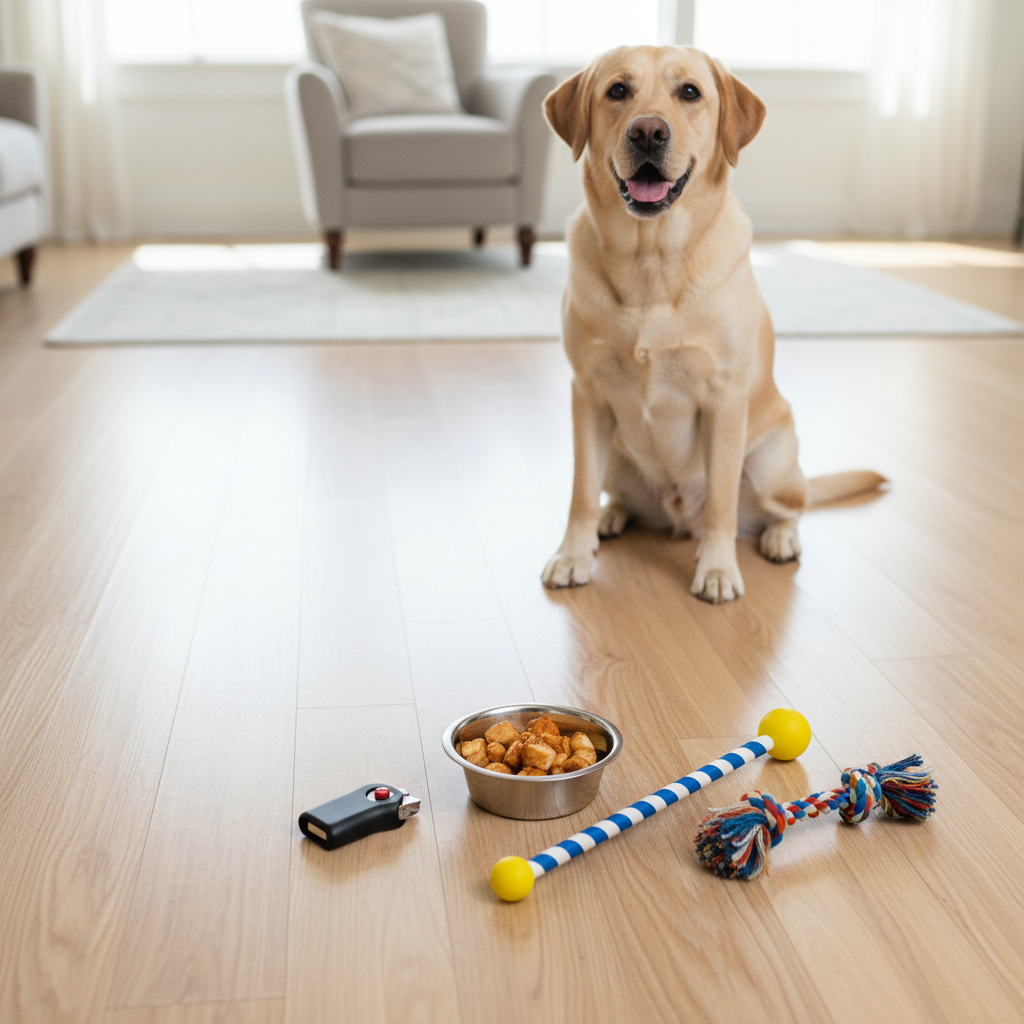
The good news is you don’t need a lot of fancy equipment! Here’s what to gather:
- High-Value Treats: Small, delicious treats that your dog absolutely loves. This is for rewarding their successful imitations.
- A Clicker (Optional): If your dog is already clicker-trained, a clicker can be a great tool to precisely mark the moment they perform the correct action.
- Props: Depending on the tricks you want to teach, you might need some simple props. Think cones, boxes, toys, or a low stool. Start with something your dog is already familiar with.
Remember: Keep your training sessions short and sweet! Aim for 5-10 minute sessions to keep your dog engaged and prevent frustration. Always end on a positive note.
The ‘Do As I Do’ Protocol: A Step-by-Step Guide
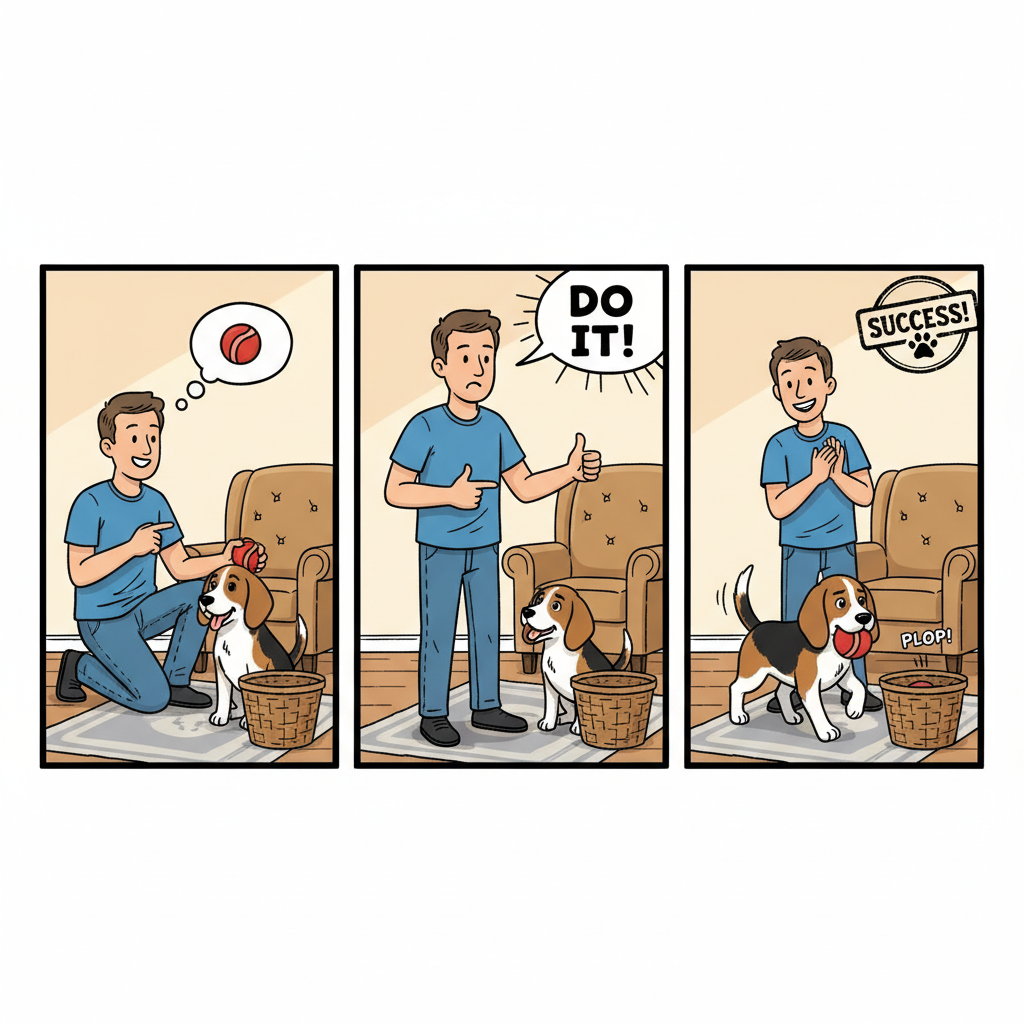
Ready to become your dog’s personal trainer and role model? Follow these steps carefully. The key is to be consistent and patient. This is a new way of learning for your dog, so give them time to understand the game.
Phase 1: Teaching the ‘Do It!’ Rule
In this phase, you’ll use the behaviors your dog already knows to teach them that the cue ‘Do It!’ means ‘copy what I just did.’
- Get Your Dog in Position: Ask your dog to ‘Stay’ in a specific spot. This is their observation post.
- Demonstrate a Known Behavior: Let’s use ‘spin’ as an example. Say your dog’s name to get their attention, then perform a spin yourself. Keep it simple and clear.
- Give the Old Cue: Immediately after your spin, give their familiar verbal cue: ‘Spin!’
- Reward: When your dog spins, praise them enthusiastically and give them a high-value treat.
- Introduce the New Cue: Repeat steps 2-4 a few times. Now, it’s time to link your action to the new cue. Demonstrate the spin again, but this time, say ‘Do It!’ right before you give the old cue, ‘Spin!’. So it looks like this: You Spin -> Say ‘Do It!’ -> Say ‘Spin!’ -> Dog spins -> Reward.
- Fade the Old Cue: After several successful repetitions, it’s time for the leap of faith. Demonstrate the spin, then give only the new cue: ‘Do It!’ Pause and wait. The first time, your dog might be confused. Give them a moment to think. If they offer the spin, throw a party! Massive praise and jackpot rewards. If they don’t get it, that’s okay. Go back a step and re-pair the ‘Do It!’ and ‘Spin!’ cues a few more times.
- Generalize with Other Behaviors: Once your dog reliably spins when you demonstrate and say ‘Do It!’, repeat the entire process with your other known foundation behaviors (e.g., lie down, touch a target). This teaches your dog that ‘Do It!’ is a general rule for imitation, not just a cue for ‘spin’.
Phase 2: Introducing a New Behavior
This is where the real magic happens! Now that your dog understands the ‘Do It!’ rule, you can teach them something completely new.
- Choose a Simple, Novel Action: Pick something your dog has never done before. A great first choice is touching a new object with their paw. Let’s use a small box as our prop.
- Demonstrate the New Action: Put your dog in their ‘Stay’ position. Get their attention, then walk over to the box and tap the top of it with your hand. Make the action obvious.
- Give the ‘Do It!’ Cue: Return to your starting position, look at your dog, and say ‘Do It!’ with an encouraging tone.
- Wait and Watch: This is the most important part. Be patient. Your dog’s brain is working hard. They might look at you, look at the box, and try to figure out what you did. They might offer a known behavior first. Don’t say anything. Let them problem-solve.
- Reward ANY Interaction: The moment your dog interacts with the box in a way that resembles your action—even if they just nudge it with their nose or touch it with a paw—praise them and reward them! You’ve just witnessed your dog learn through imitation.
- Refine and Repeat: Continue practicing in short sessions. Over time, you can refine the behavior, only rewarding closer and closer approximations of your original action (e.g., only rewarding a paw touch instead of a nose nudge).
Troubleshooting and Common Mistakes
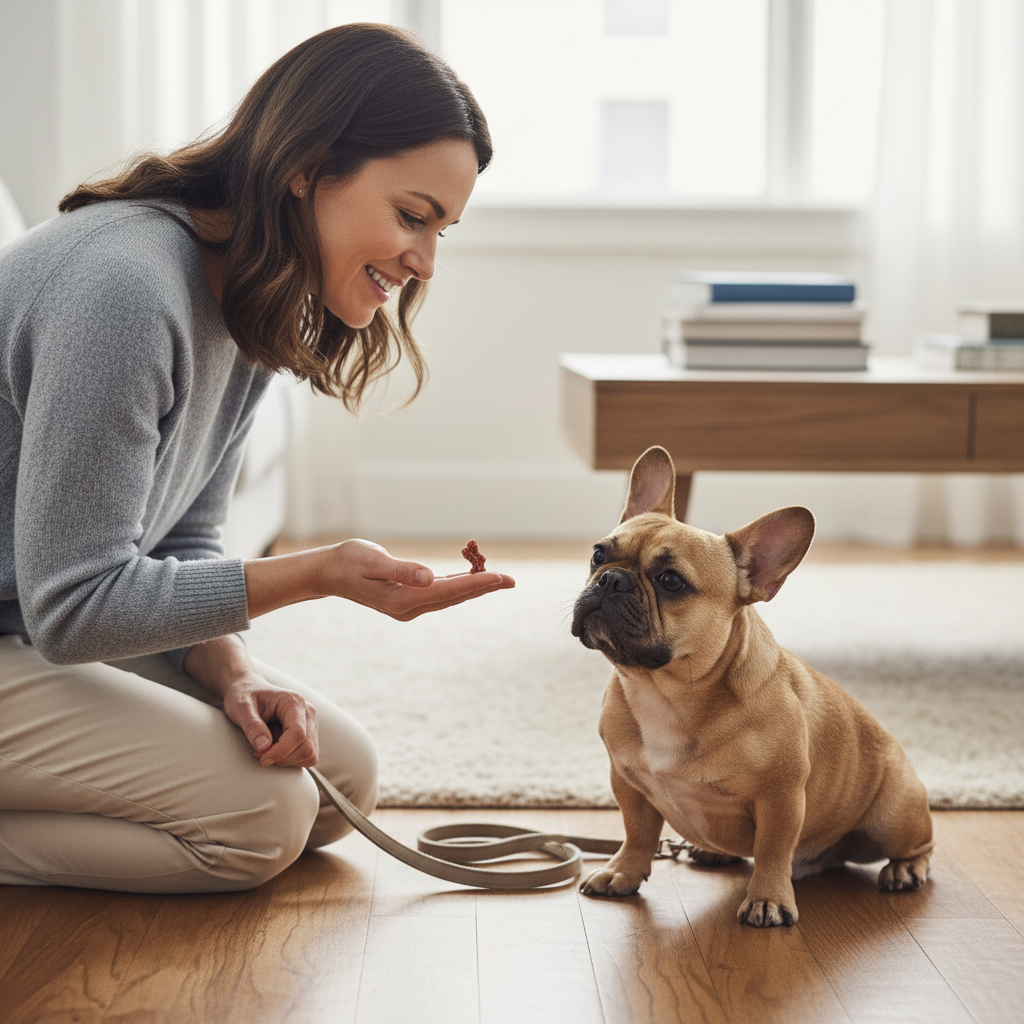
Even with the best plan, you might hit a few bumps in the road. That’s completely normal! Dog training is rarely a straight line. Here are some common challenges and how to navigate them.
‘My dog keeps breaking their stay!’
This is the most common issue. It means the ‘stay’ isn’t strong enough yet. Go back to basics and practice a rock-solid stay with duration, distance, and distractions before resuming DAID training. Make the ‘stay’ position super rewarding so they want to be there.
‘My dog just stares at me blankly after I say ‘Do It!”
This ‘analysis paralysis’ can happen for a few reasons:
- The rule isn’t clear yet: They may not fully understand what ‘Do It!’ means. Go back to Phase 1 and practice generalizing the cue with more known behaviors. Make it a fun, fast-paced game.
- The new action is too complex: Trying to teach ‘do the laundry’ on day one is a recipe for failure. Start with very simple object interactions, like touching a cone or stepping on a mat.
- Low motivation: Are your treats exciting enough? Is the environment too distracting? Make sure you’re setting your dog up for a win with high-value rewards in a low-distraction space.
‘My dog offers a different behavior instead.’
This is actually a great sign! It shows your dog is engaged and trying to solve the puzzle. They’re thinking, ‘Okay, I know ‘Do It!’ means I have to do something… was it spin? No? How about down?’ Simply don’t reward the incorrect behavior. Stay neutral and silent. Give them a moment, then reset and try the demonstration again. Make your demonstration even clearer this time.
A Common Mistake to Avoid: Don’t add extra words or get frustrated. If you start saying ‘No, Do It! C’mon, touch the box! Do it!’, you’ll only confuse your dog. Silence is your best tool while they are thinking. The cue is ‘Do It!’—nothing more.
| Problem | Quick Solution |
|---|---|
| Dog breaks ‘Stay’ | Reinforce ‘Stay’ training separately with high rewards. Shorten the distance between you and your dog initially. |
| Dog seems confused by ‘Do It!’ | Go back to Phase 1. Practice with 3-5 well-known behaviors until the cue is fluent. |
| Dog doesn’t interact with the new object | Make the object more interesting. Rub a treat on it or use a favorite toy as the prop. Start by rewarding just looking at or moving toward the object. |
| Dog gets frustrated and disengages | The session is too long or the task is too hard. End the session with an easy win (like a known behavior) and try again later with a simpler task. |
Conclusion
Embracing the ‘Do As I Do’ method is about more than just teaching flashy tricks. It’s about opening up a new channel of communication with your dog. You’re not just giving commands; you’re inviting your dog to be your partner, to observe you, and to think critically. This cognitive challenge is incredibly enriching for them, and the bond you’ll build through this shared understanding is truly special.
Remember to be patient, keep it positive, and celebrate the small victories. Every time your dog watches you and tries to copy your actions, they’re telling you how much they value your connection. So go ahead, start a game of copycat. You’ll be amazed at what your brilliant dog can learn, just by doing as you do.