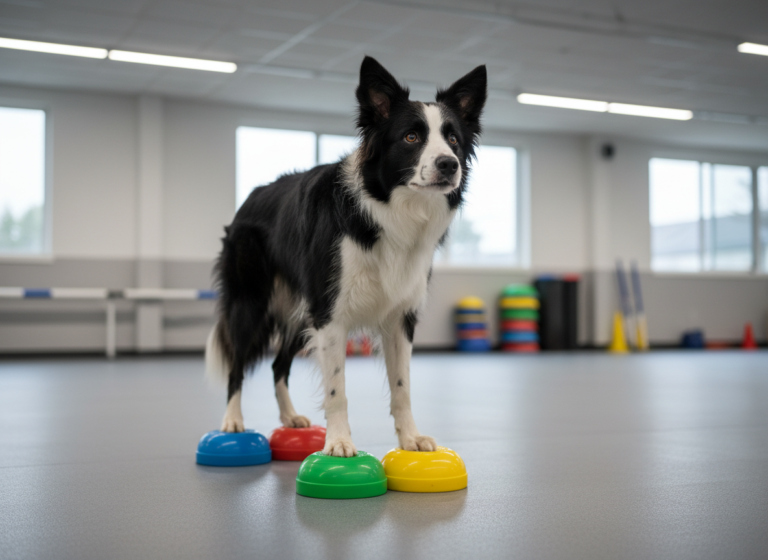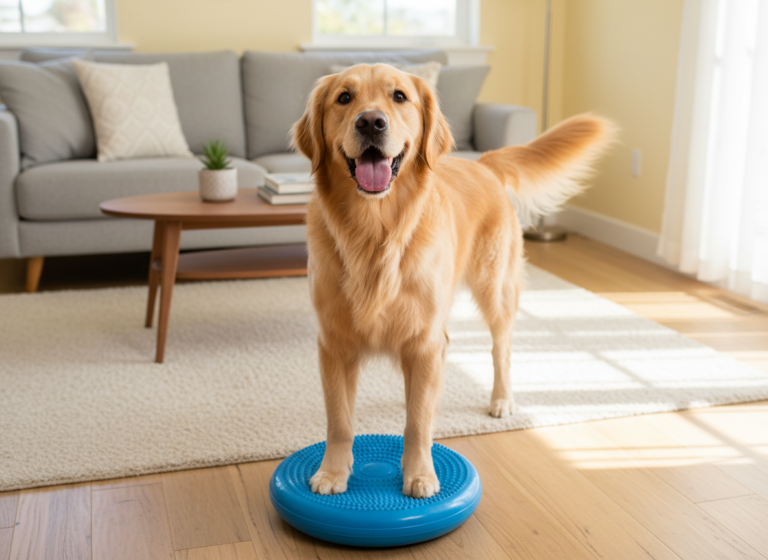
Ever look at your dog, full of pent-up energy on a rainy day, and wish you had a magic button to channel that zoomie-power into something productive? Well, what if I told you that you could build a mini gym for your pup, right in your living room? Welcome to the wonderful world of wobble board training! It’s not just a circus trick; it’s a powerhouse workout for your dog’s body and mind.
A wobble board, or balance board, is a simple piece of equipment that challenges your dog to maintain their balance on an unstable surface. This simple act engages their core muscles, fine-tunes their coordination, and skyrockets their confidence. Think of it as a mix of pilates, a puzzle toy, and a trust exercise all rolled into one. In this guide, we’ll not only walk you through how to introduce this fantastic tool to your furry friend but also show you how to build your very own DIY wobble board. Let’s get ready to wobble!
Why Wobble? The Amazing Benefits of Balance Training
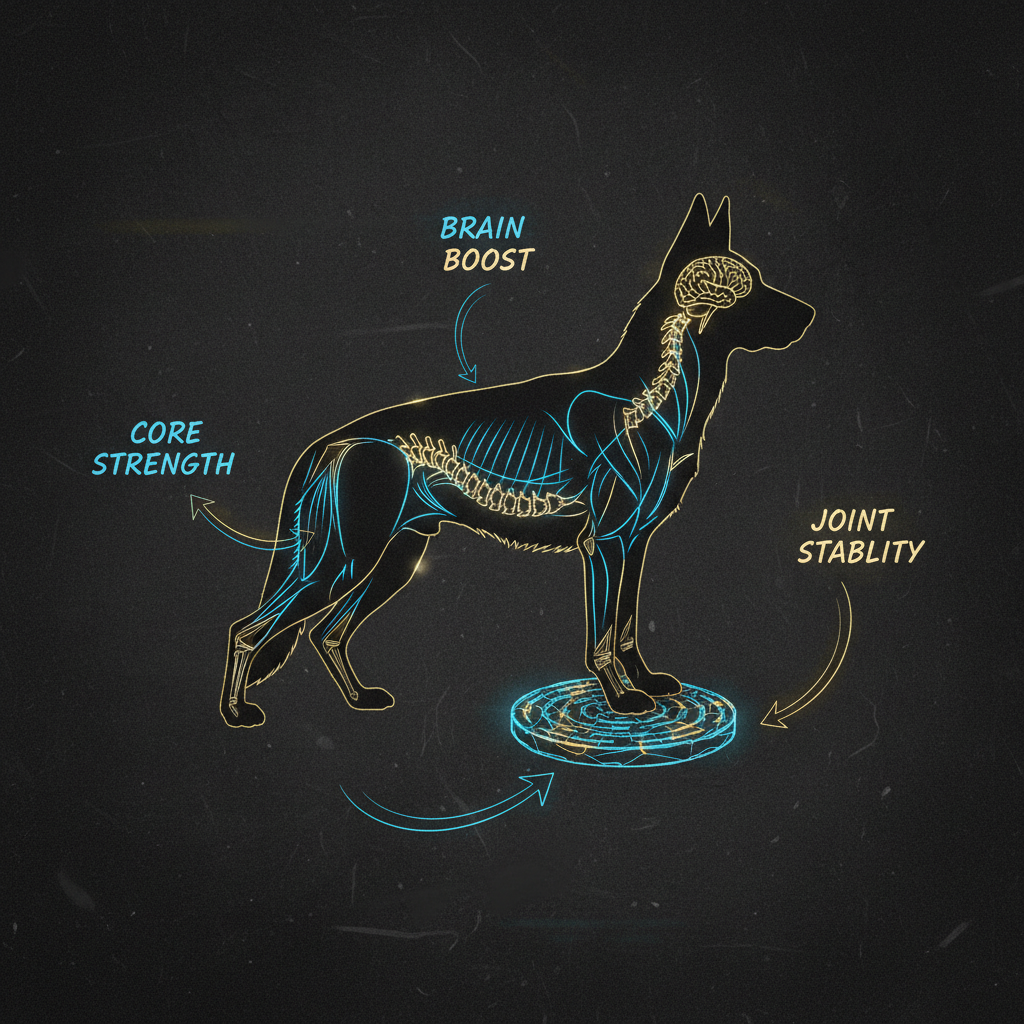
Before we start building and training, let’s talk about the ‘why.’ What makes this wobbly piece of wood so incredible for our dogs? The benefits go far beyond just being a neat party trick. This is about enhancing your dog’s overall well-being from the inside out.
Meet Proprioception: Your Dog’s Sixth Sense
The star of the show here is a concept called proprioception. It’s essentially your dog’s subconscious awareness of their body’s position and movement in space. Good proprioception prevents clumsiness, reduces the risk of injury, and allows for quick, agile movements. When a dog steps onto a wobble board, their brain and body have to work together in overdrive. Tiny, rapid-fire adjustments in their muscles and joints keep them upright. This constant feedback loop is an incredible workout for their nervous system, making them more coordinated and body-aware in their everyday life.
Core Strength & Joint Health
Just like for humans, a strong core is the foundation of a healthy body for a dog. The micro-movements required to stay on a wobble board are fantastic for strengthening the deep stabilizing muscles in your dog’s abdomen, back, and hips. This provides better support for their spine and can be especially beneficial for:
- Sporting Dogs: Agility, flyball, or dock diving dogs need a powerful core to perform safely and efficiently.
- Senior Dogs: Gentle balance work can help maintain muscle mass and support arthritic joints.
- Puppies: It helps them develop body awareness from a young age (always ensure the exercises are low-impact and safe!).
A Super-Sized Confidence Boost
For a timid or anxious dog, conquering a new challenge can be life-changing. The wobble board is an unfamiliar object that makes strange movements. By using positive reinforcement to guide your dog through the process of mastering it, you’re not just teaching them to balance; you’re teaching them that new things can be fun, not scary. Overcoming this physical challenge builds incredible confidence that often translates to other areas of their life.
Expert Tip: The goal is for your dog to succeed. Start with the board stabilized and celebrate every tiny step of progress. This is a trust-building exercise as much as a physical one.
Building Your Own DIY Wobble Board: A Simple Guide
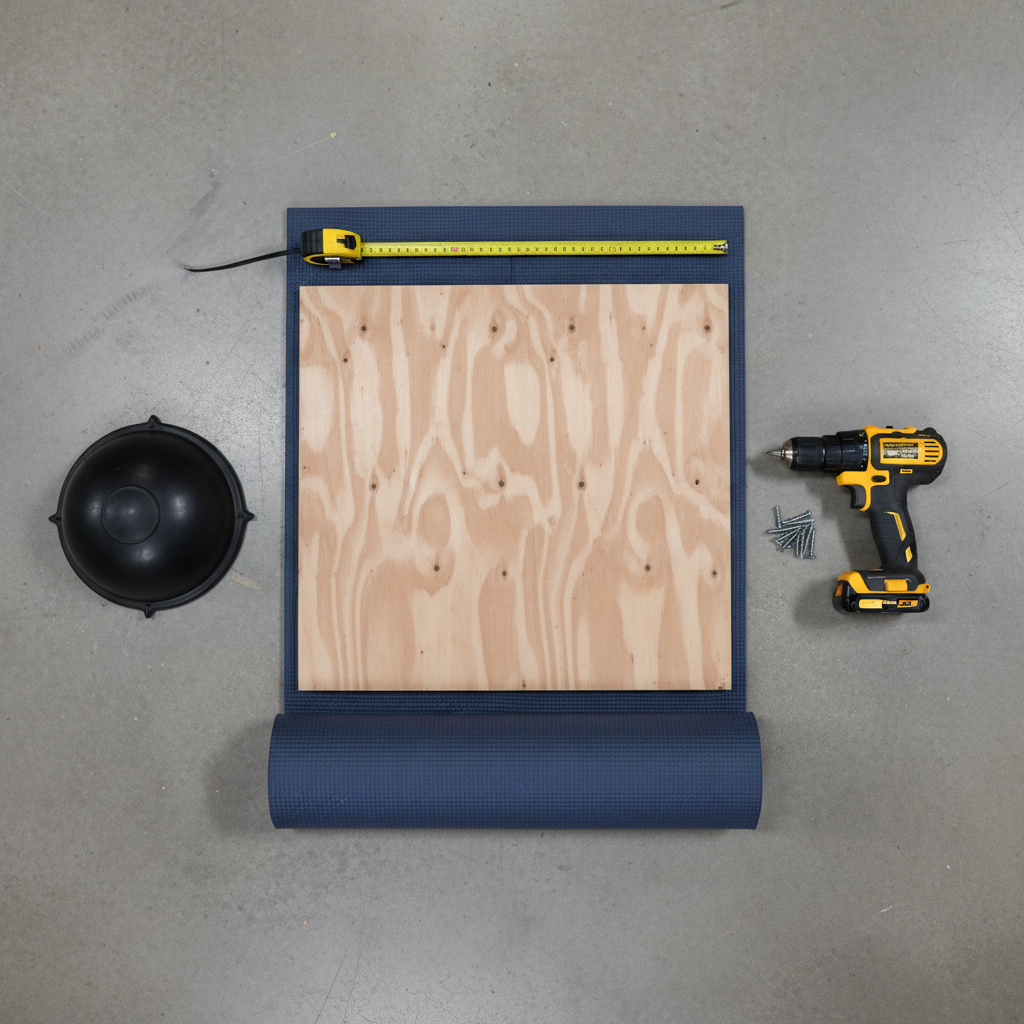
Ready to get crafty? Building a wobble board is a surprisingly simple and rewarding weekend project. You can customize the size and difficulty to perfectly suit your dog. Safety is key, so make sure your final product is sturdy and has a non-slip surface.
Materials & Tools Needed
You can find most of these items at your local hardware store.
- The Deck: A 3/4-inch thick piece of plywood is ideal. For a medium-sized dog (30-60 lbs), a 24×24 inch square or a 24-inch diameter circle is a great starting point. Make sure there are no splinters!
- The Base (Rocker): This determines the difficulty. Choose one:
- Easy: A small, stable object like a plastic bowl or a cut-off section of a 4-inch PVC pipe cap.
- Medium: A larger half-ball, like a balance trainer pod or a lacrosse ball for smaller boards.
- Hard: A larger, firmer ball that offers more wobble.
- The Surface: A piece of non-slip material to cover the top. A yoga mat, rubber bath mat with texture, or outdoor carpet remnant works perfectly.
- Hardware: Wood screws that are long enough to secure the base to the deck without poking through the top.
- Tools: A drill, a saw (if you need to cut the wood), a pencil, a tape measure, and strong adhesive or a staple gun for the surface.
Step-by-Step Assembly Instructions
- Prepare the Deck: Cut your plywood to your desired shape and size. Sand all the edges thoroughly to prevent any splinters.
- Attach the Surface: Cut your non-slip mat to the same size as the deck. You can use a strong construction adhesive to glue it down, or for a less permanent option, wrap it tightly over the top and use a staple gun to secure it to the underside of the board. Ensure it’s completely flat and has no bumps.
- Find the Center: Use your tape measure to find the exact center on the underside of your deck and mark it with a pencil. This is crucial for an evenly balanced board.
- Secure the Base: Place your chosen base (the half-ball or PVC cap) on the center mark. Pre-drill pilot holes through the base and into the wood. Then, use your wood screws to securely fasten the base to the deck. Make sure it’s tight and doesn’t wiggle.
- Final Inspection: Flip it over and give it a test push. It should wobble smoothly. Check for any sharp edges, loose screws, or peeling surfaces before you introduce it to your dog.
Getting Started: Your Step-by-Step Wobble Board Training Plan
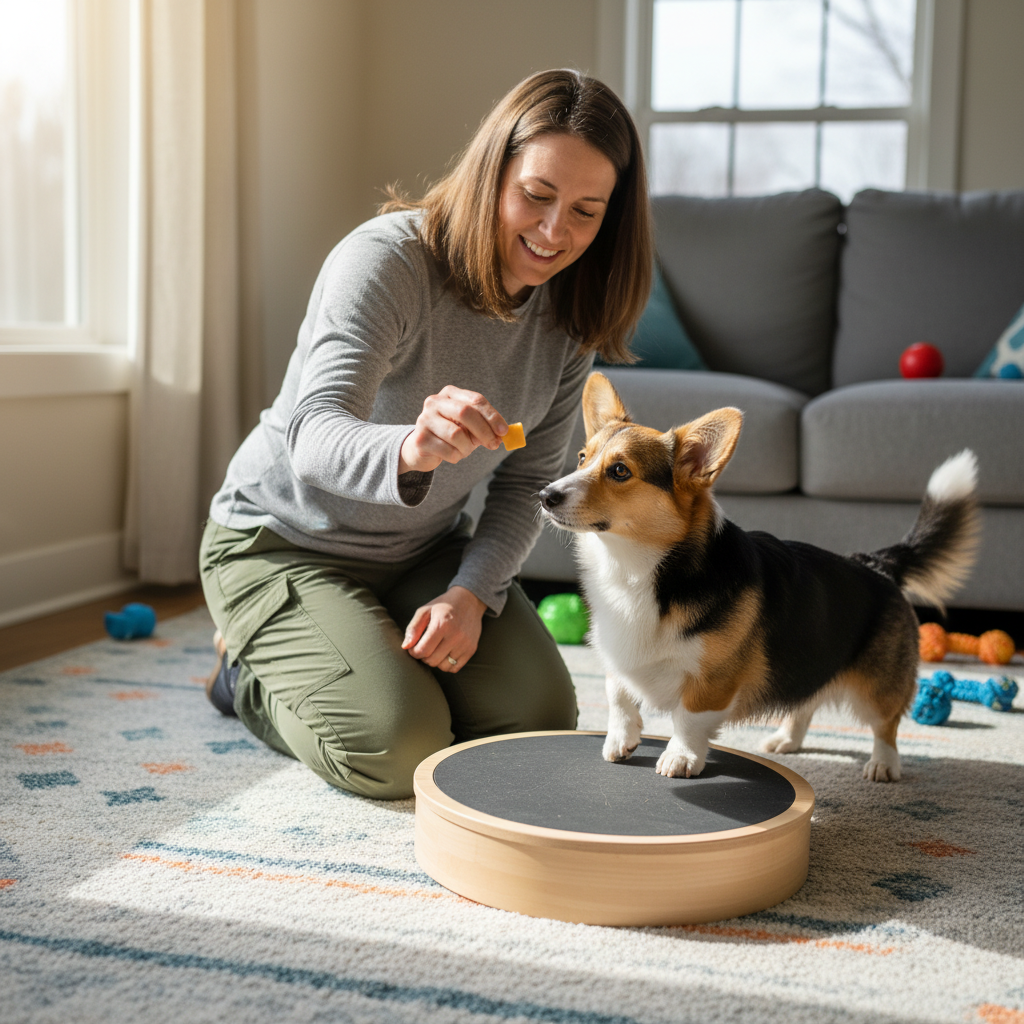
Now for the fun part! Remember, the key to success is to go at your dog’s pace and make every interaction with the board a positive one. Keep your training sessions short (just 1-3 minutes at a time) and end on a high note. Grab some high-value treats your dog absolutely loves!
Step 1: The Introduction (No Wobble!)
Place the board on the floor, but use books or yoga blocks to brace it so it’s completely stable. The goal is just to make it a wonderful piece of furniture. Toss treats near it. When your dog approaches, praise and reward. Then, toss treats on it. Let your dog eat the treats off the board without any pressure to get on. Do this for a few short sessions until your dog happily approaches the board.
Step 2: One Paw Up
With the board still stable, encourage your dog to interact more. Hold a treat over the board to lure your dog to place a single paw on it. The moment their paw touches the surface, mark the behavior with a ‘Yes!’ or a clicker and give them the treat. Repeat until they are confidently offering a paw.
Step 3: All Four Paws on Deck
Now, lure them further so they step on with both front paws. Reward generously! From there, use the lure to guide them into placing all four paws on the stabilized board. This might take a few tries. Shower them with praise and treats the moment all four paws are on. Keep this step very short initially—just a second or two is a huge win!
Step 4: Introducing the Tiniest Wobble
Once your dog is comfortable standing on the stable board, you can introduce movement. Remove one of the supports, so the board can only tip slightly in one direction. Encourage your dog to get on. When the board makes a tiny movement, give them lots of treats and praise for staying calm. The goal is to teach them that the movement is safe and rewarding. Then, remove all supports but keep your foot lightly on the edge to minimize the wobble.
Step 5: Building Duration and Confidence
As your dog gets more confident, you can gradually let the board move more freely. Encourage them to stay on for a few seconds at a time. You can do this by feeding them multiple small treats in a row while they are on the board. Slowly build up the duration. Focus on your dog’s posture—you want them to have a relaxed, neutral stance, not a hunched, fearful one.
Level Up! Advanced Wobble Board Exercises
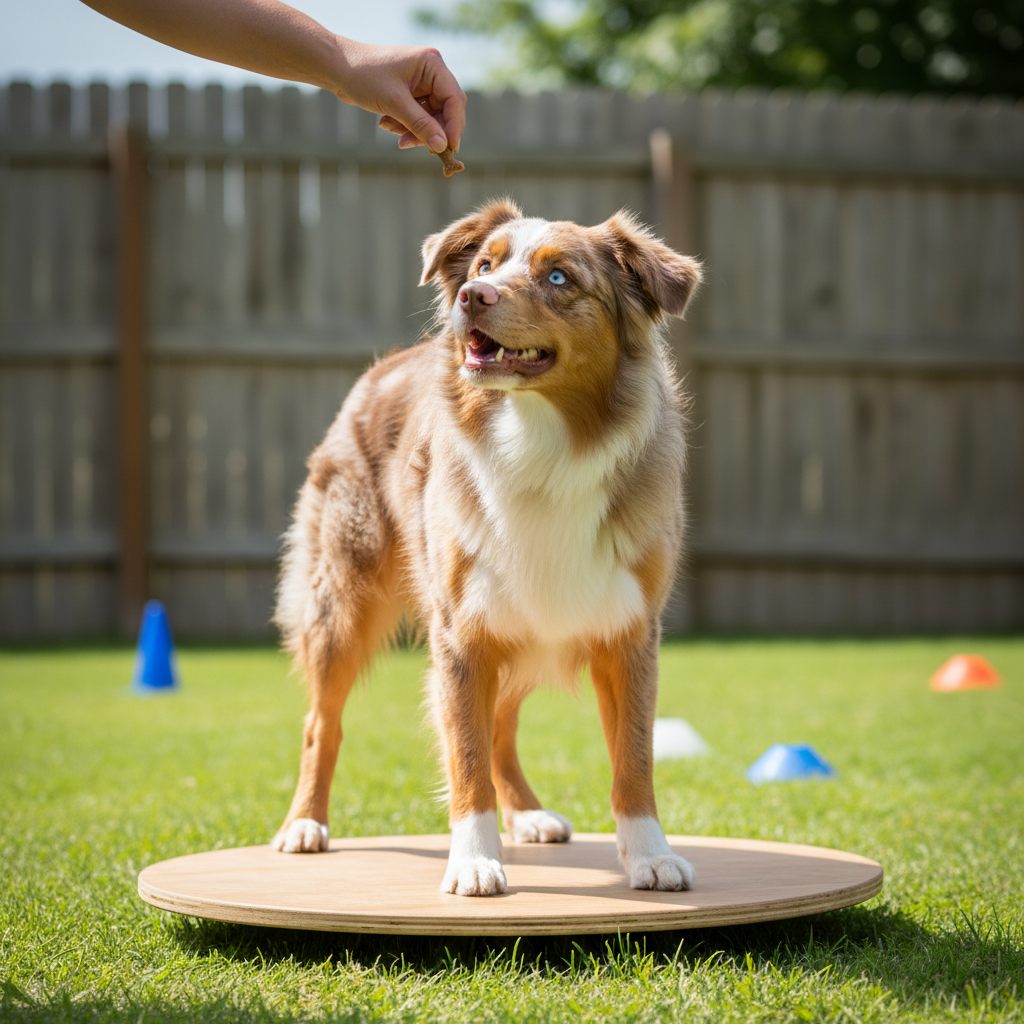
Once your dog has mastered simply standing on the wobble board and is confident with the movement, you can start adding new challenges to keep their brain and body engaged. These advanced exercises will further improve their balance, focus, and strength. Always ensure your dog has mastered the basics before moving on to these more difficult behaviors.
1. Position Changes
Ask your dog for simple behaviors they already know while they are on the board. This requires a huge amount of core control and concentration.
- Sit to Stand: Lure your dog into a sit while on the board, then lure them back into a stand.
- Down to Stand: This is more challenging. Ask for a down, then encourage them to stand back up without stepping off.
- Spins: Lure your dog to perform a 360-degree spin in one direction, then the other.
2. Weight Shifts
Encourage your dog to purposefully shift their weight, which is a fantastic core exercise. You can do this by holding a treat to one side of their head so they have to reach for it, then to the other side. This causes them to engage their abdominal muscles to counteract the shift. You can also try gentle ‘puppy push-ups’ (sit-to-down-to-sit transitions).
3. Adding Distractions
To increase focus, you can add simple distractions. Ask your dog to hold their position on the board while you walk a circle around them or toss a toy a few feet away (without them getting off to get it). This teaches impulse control and strengthens their concentration in an unstable environment.
Advanced Tip: You can create more instability by using a smaller or rounder base for your DIY board, or by placing a slightly deflated inflatable disc on top of a stable platform. Only progress to this level when your dog is extremely confident and physically fit.
4. Combining with Other Equipment
For the canine fitness pros, you can create mini obstacle courses. For example, have your dog walk over a set of cavaletti poles (low poles to step over) and then get onto their wobble board and hold a position for 5 seconds. This combines different types of body awareness exercises into one fun sequence.
Conclusion
And there you have it—your complete guide to unlocking a new level of fun and fitness with wobble board training! From a simple weekend DIY project to a powerful training tool, the wobble board is a fantastic way to invest in your dog’s physical health and mental sharpness. Remember to always listen to your dog, keep sessions positive, and celebrate every small victory. You’re not just building muscle and balance; you’re building a stronger bond, one wobble at a time. Now go ahead and create your own canine gym—your dog will thank you for it!