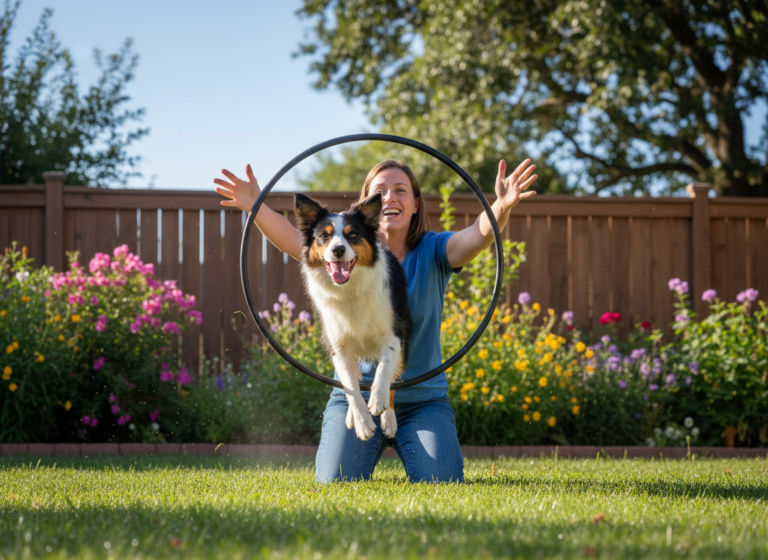
Have you ever watched those amazing agility dogs on TV, weaving through poles and leaping over hurdles, and thought, ‘My dog could never do that!’? Well, think again! Agility isn’t just for super-athletes and professional trainers. It’s a fantastic way for any dog and owner to bond, get some exercise, and give their brains a workout. And the best part? You don’t need a field of expensive equipment to get started. In fact, you can begin your agility journey with something you might already have lying around: a hula hoop!
Teaching your dog to jump through a hula hoop is one of the most fun and rewarding foundation tricks for agility. It’s a simple concept that builds confidence (for both of you!), improves your dog’s body awareness, and sharpens your communication skills. This guide is your friendly, step-by-step manual to transforming that plastic circle into a gateway for fun. We’ll cover everything from picking the right hoop to troubleshooting common hiccups, all while keeping things positive and playful. So, grab some treats, find a clear space, and let’s get ready to jump into some fun!
Gearing Up for Success: What You’ll Need
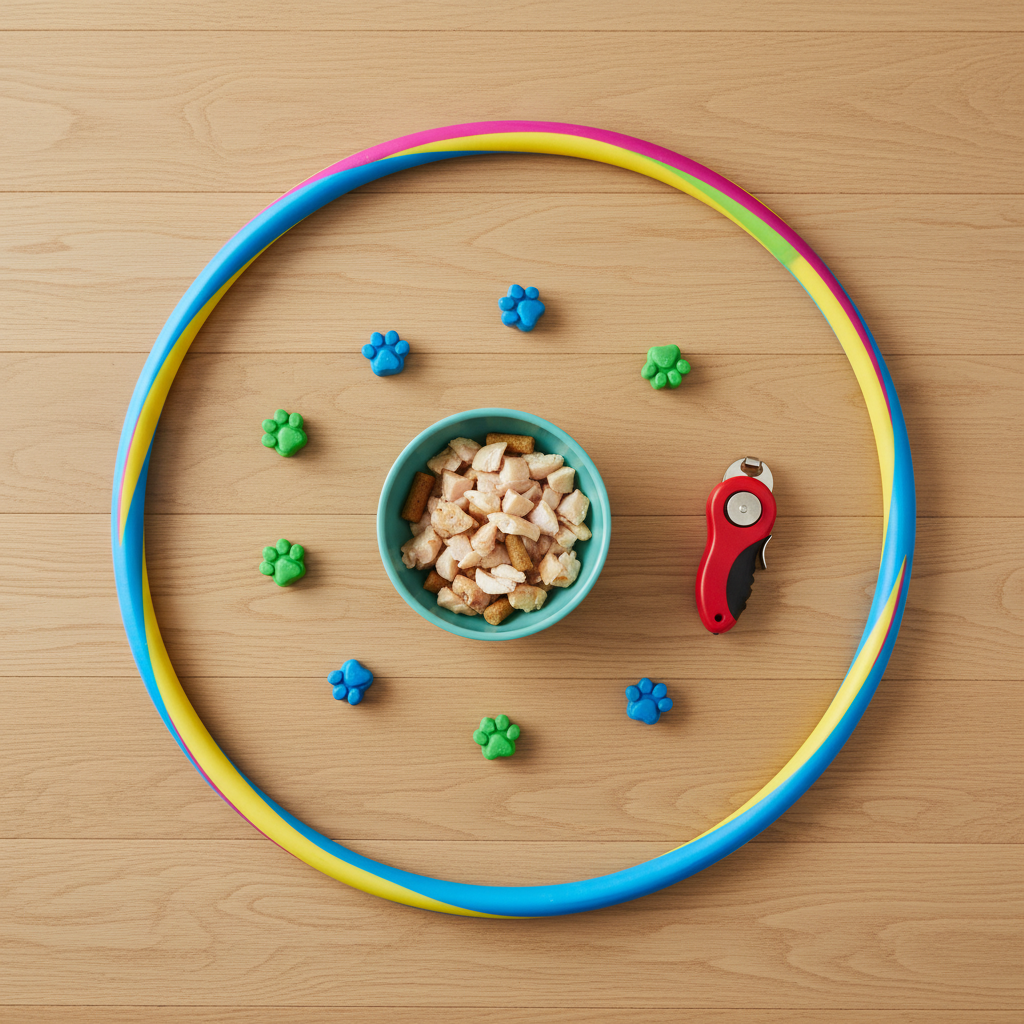
Before you and your furry friend start your circus training, let’s gather a few simple supplies. The beauty of this trick is its simplicity—you don’t need much to create a lot of fun. Keeping it simple ensures the focus stays on your dog and the positive experience.
The Essentials List:
- A Hula Hoop: The star of the show! When choosing a hoop, think about your dog’s size. A standard, lightweight plastic hoop from a toy store is perfect for most medium to large dogs. For smaller pups, you might look for a child-sized hoop. The goal is for the hoop to be large enough for your dog to pass through comfortably and safely without having to squeeze. Avoid weighted or fancy fitness hoops, as they can be too heavy and intimidating.
- High-Value Treats: We’re talking the good stuff! This isn’t the time for their regular kibble. Think small, soft, smelly treats that your dog absolutely loves—like tiny pieces of chicken, cheese, or commercial training treats. The goal is to make going through that hoop the most rewarding thing they could possibly do.
- A Clicker (Optional but Recommended): If you’re familiar with clicker training, this is a perfect time to use it. A clicker is a tool that makes a distinct ‘click’ sound to mark the exact moment your dog does something correctly. It provides clear, precise feedback, which can speed up the learning process. If you don’t use a clicker, a consistent marker word like ‘Yes!’ or ‘Good!’ works just as well.
- A Positive Attitude and Patience: This is the most crucial piece of equipment! Training should always be fun. Bring your energy, your smiles, and a whole lot of patience. Every dog learns at a different pace, so celebrate the small victories and never get discouraged.
Expert Tip: Cut your treats into pea-sized pieces. This allows you to reward your dog frequently during a short training session without filling them up too quickly or adding too many calories to their diet.
Step 1: The Introduction – Making the Hoop a Friend, Not a Foe
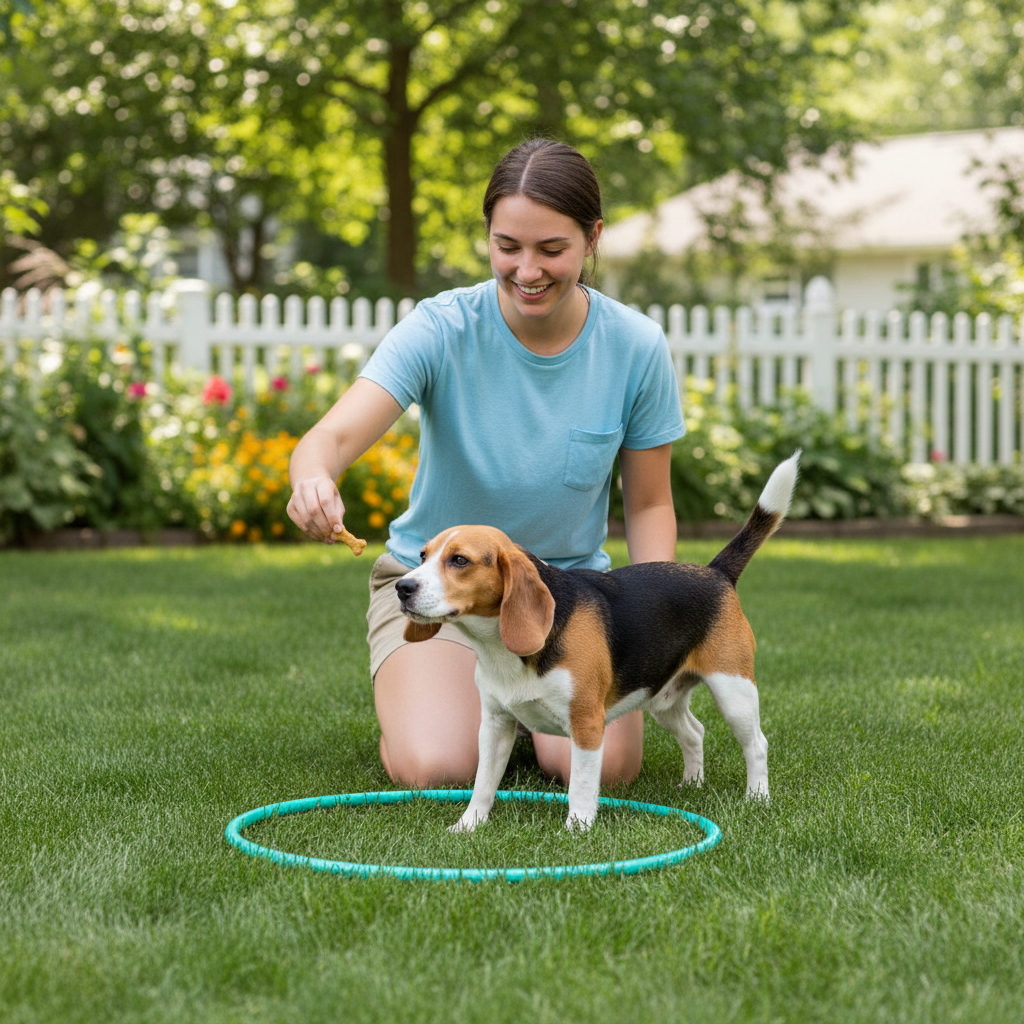
The first and most important step is to ensure your dog has a wonderful, positive association with the hula hoop. Some dogs might be naturally curious, while others might be a bit wary of this new, strange plastic circle. Our job is to convince them it’s the best thing ever!
Never force your dog to interact with the hoop. We want them to choose to engage with it because it leads to amazing things (treats and praise!).
Building a Positive Association:
- Place the Hoop on the Ground: Start by simply laying the hula hoop flat on the floor in a familiar, open space like your living room or backyard.
- Let Them Investigate: Allow your dog to approach and sniff the hoop at their own pace. When they show any interest—a sniff, a glance, a paw touch—immediately praise them enthusiastically and give them a treat. You’re rewarding their curiosity.
- Treats Around and Inside: Scatter a few high-value treats around the outside of the hoop. Once they are comfortable eating those, place a few treats just inside the rim of the hoop. The goal is to have them happily stick their head inside the circle to get a reward.
- The Lure Through: Now, hold a treat in your hand. With the hoop still flat on the ground, use the treat to lure your dog to walk from one side, through the middle of the hoop, to the other. As soon as they step all the way through, click (or say ‘Yes!’) and give them the treat and lots of praise. Repeat this several times until they are walking through confidently.
Remember: Keep these initial sessions super short—just a minute or two at a time. We want to end on a high note, leaving them wanting more, rather than pushing until they get bored or frustrated.
Step 2: Raising the Bar (Literally!) – From Ground to Jump
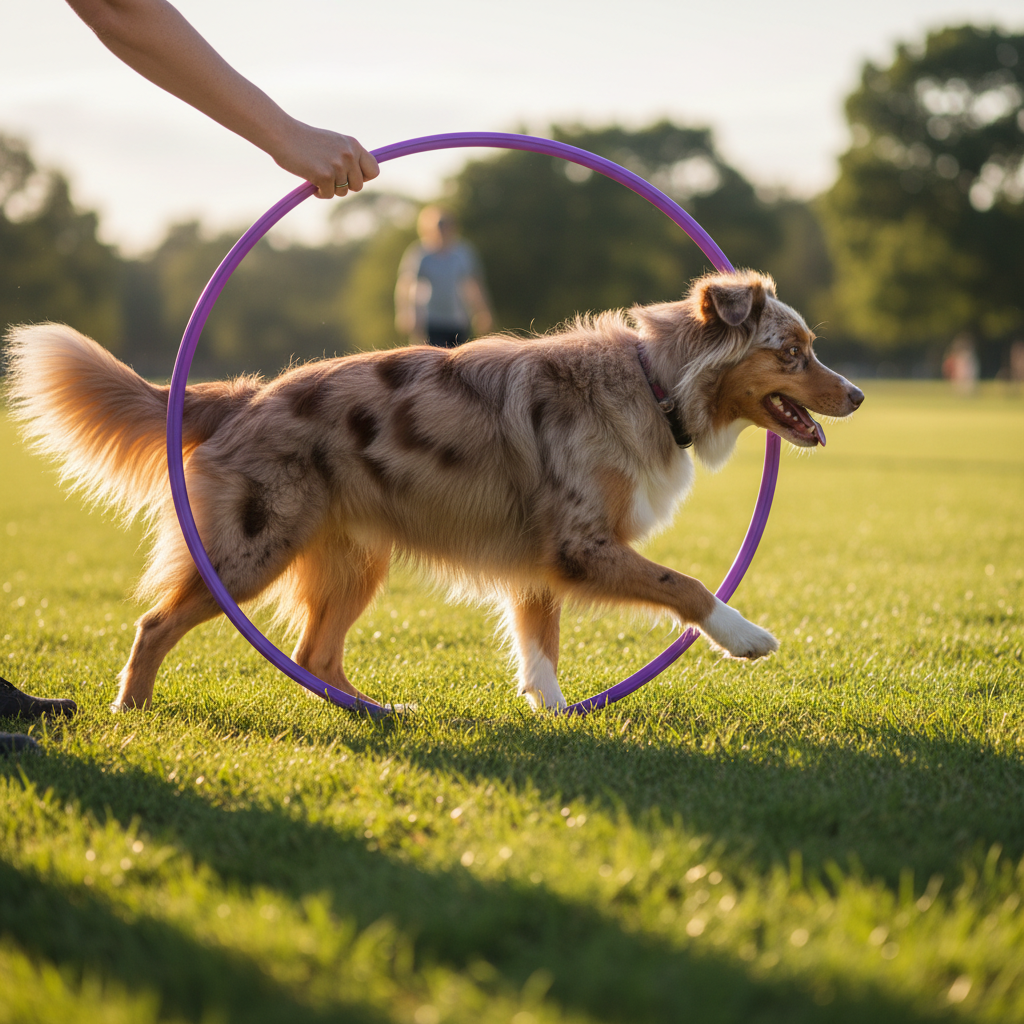
Once your dog is a pro at walking through the hoop on the ground, it’s time to add a little height. This is where the magic happens! The key here is to go incredibly slowly. The jump should be so small at first that it’s barely a jump at all.
The Gradual Lift-Off:
- One Inch High: Hold the hula hoop so the bottom rim is touching the ground. You’re essentially just holding it upright. Lure your dog through just as you did before. Click/praise and treat when they go through. They’re not jumping yet, just getting used to the new orientation.
- Lift It Slightly: Now, lift the hoop so the bottom rim is just one inch off the ground. It should be low enough that your dog can simply step over it. Lure them through, click/praise, and reward. Repeat this until they seem completely comfortable.
- Introduce a Cue: Once they are reliably stepping through the slightly raised hoop, you can add a verbal cue. Just before you lure them through, say your chosen word in a happy, upbeat tone. Good cues are short and distinct, like ‘Hoop!’, ‘Through!’, or ‘Jump!’.
- Gradual Increases: Over several training sessions, slowly begin to raise the height of the hoop, an inch or two at a time. The goal is to raise it so gradually that your dog doesn’t even notice the change. If at any point they hesitate, go around, or seem unsure, you’ve likely raised it too high, too fast. Simply lower it back to the last height where they were successful and practice a few more times before trying to raise it again.
- Fading the Lure: As your dog gets the hang of it, start to fade the food lure. Instead of holding the treat to guide their nose, use an empty hand gesture to motion them through the hoop. Give them the treat and praise only after they’ve successfully gone through. Eventually, your verbal cue and hand signal will be all you need!
Patience is everything in this step. Celebrate every successful pass-through, no matter how low the hoop is!
Troubleshooting Common Hurdles
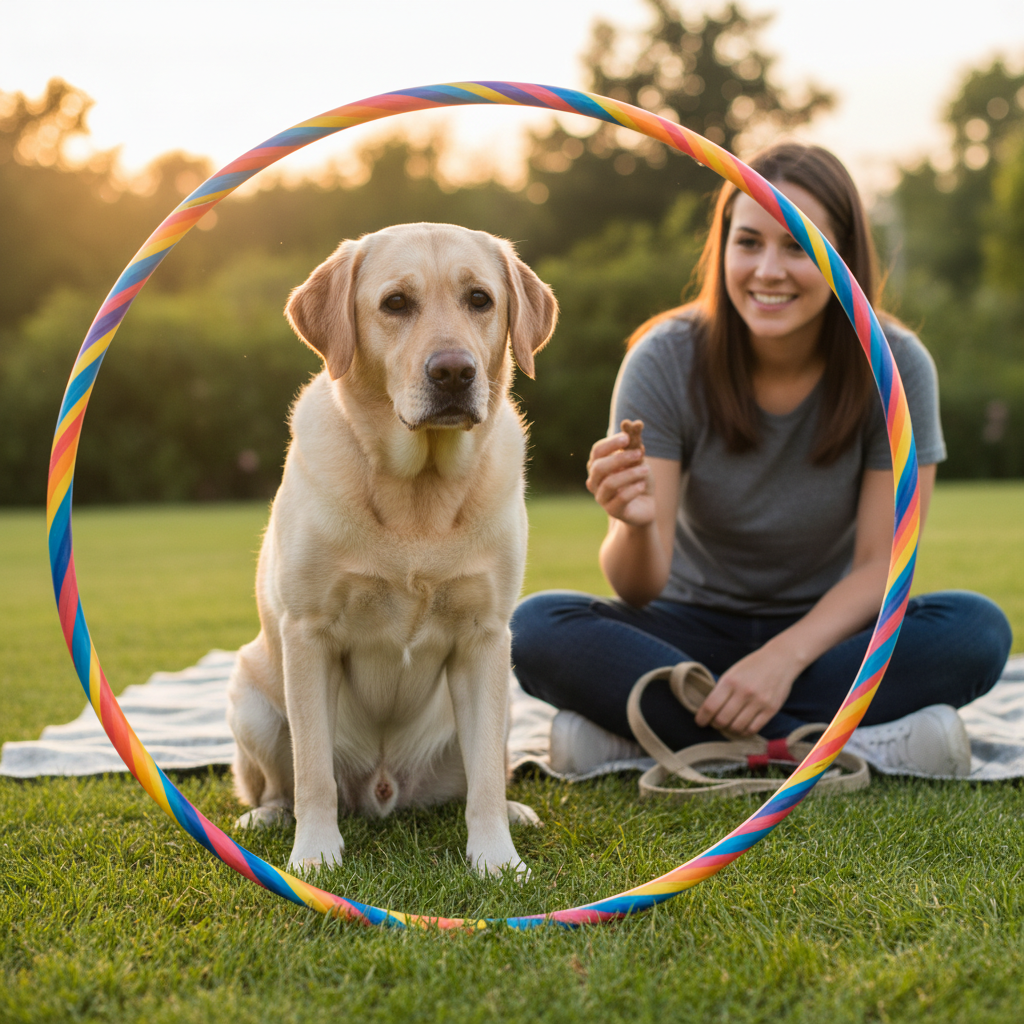
Even with the best plan, you might run into a few little snags. Don’t worry, it’s a normal part of the training process! Here’s how to handle some of the most common challenges.
My dog is scared of the hoop.
Solution: Go back to Step 1 and spend more time on it. Don’t even try to get them to go through it yet. Simply reward any interaction—looking at it, sniffing it, being near it. Play fun games near the hoop. You can also try a different color or size of hoop; sometimes a small change can make a big difference to a sensitive dog.
My dog keeps going around the hoop instead of through it.
Solution: This is very common! Make the ‘through’ option much more appealing and the ‘around’ option more difficult. Try practicing in a narrower space, like a hallway, where going around isn’t as easy. You can even use pillows or cushions to create a ‘channel’ that guides them toward the center of the hoop. Also, make sure your treat lure is going directly through the center and that you’re rewarding the instant they pass through.
My dog bumps into the hoop when they jump.
Solution: The hoop might be too high for their current comfort level, or it might be too small for their size. Lower the height back to where they were confident and successful. Also, make sure you are holding the hoop very steady so it doesn’t wobble and startle them as they approach.
My dog loses interest quickly.
Solution: Keep your training sessions short and sweet! It’s far better to have five energetic, one-minute sessions throughout the day than one frustrating ten-minute session. Always end on a successful repetition so your dog feels a sense of accomplishment and is excited for the next session.
Safety First! Keeping the Fun Injury-Free
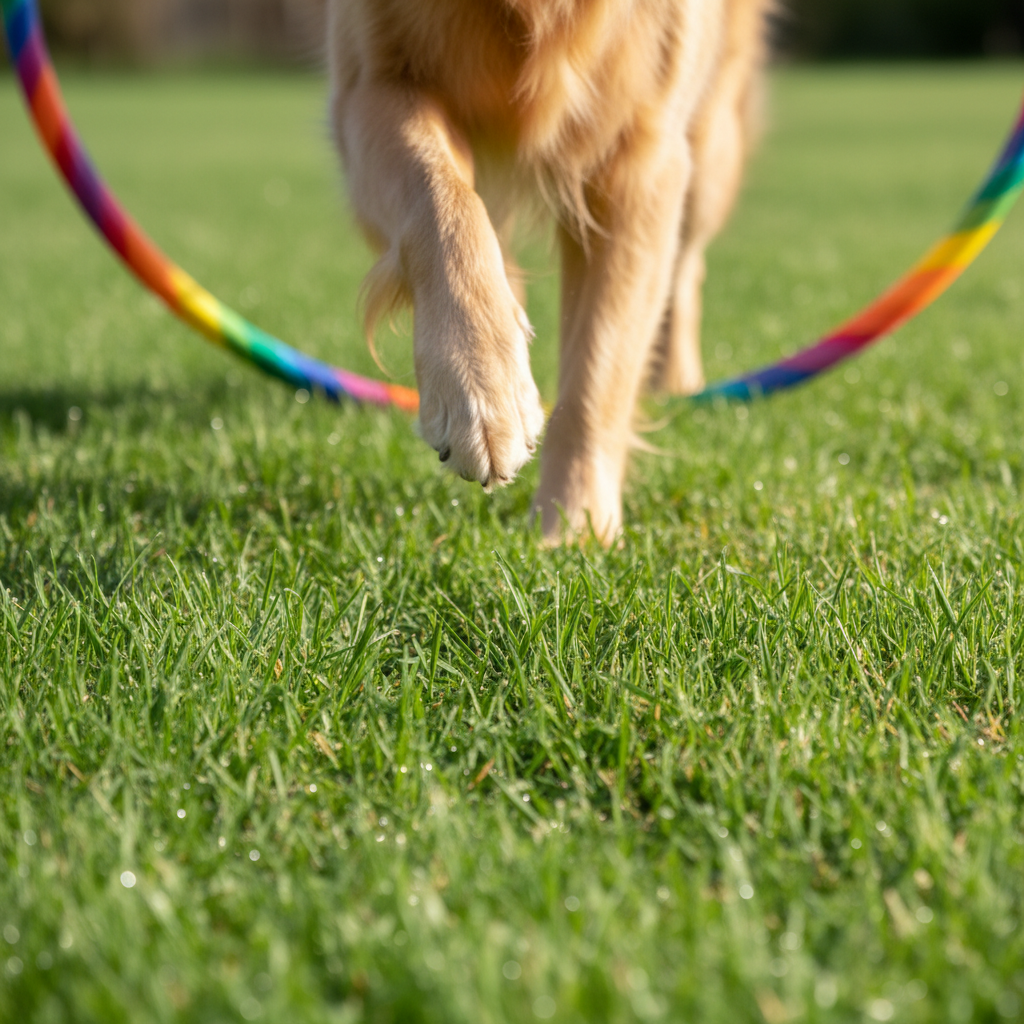
While jumping through a hoop is a relatively low-impact activity, safety should always be our top priority. We want this to be a positive experience in every way, and that means keeping our four-legged friends sound and healthy.
- Know Your Dog’s Limits: Never raise the hoop higher than your dog’s elbow height for repetitive jumping. For casual fun, a jump to shoulder height is the absolute maximum for a healthy, adult dog. High jumps can put unnecessary strain on their joints.
- Puppies and Seniors: For puppies whose growth plates haven’t closed yet (typically under 12-18 months), all ‘jumping’ should be done with the hoop on the ground or raised just an inch or two. Their bodies are still developing. Similarly, for senior dogs or those with joint issues, keep the hoop on the ground and celebrate a nice walk-through instead of a jump.
- Choose a Safe Surface: Always practice on a non-slip surface that provides some cushioning. Grass in the backyard or a carpeted room is ideal. Avoid slippery surfaces like tile, wood floors, or concrete, which can lead to slips and injuries.
- Warm-Up and Cool-Down: Just like human athletes, dogs benefit from a little warm-up. A few minutes of brisk walking or light play before you start training can help prepare their muscles.
- Hold it Steady, But Not Rigid: Hold the hoop firmly enough that it doesn’t wobble, but be prepared to let go or move it if your dog misjudges the jump. A lightweight plastic hoop will simply clatter to the ground, which is much safer than a dog getting tangled in a heavy or rigid object.
Conclusion
Congratulations! You now have all the tools and knowledge you need to teach your dog one of the coolest tricks on the block. But teaching your dog to jump through a hula hoop is about so much more than just the trick itself. It’s about spending quality time together, learning to communicate more effectively, and building a foundation of trust and teamwork that will carry over into all aspects of your life with your dog.
Remember to be patient, keep it positive, and most importantly, have fun! The wagging tail and proud look on your dog’s face when they finally ‘get it’ will be your greatest reward. So go grab that hoop, and start your DIY agility adventure today. You and your best friend are about to create some amazing memories together.