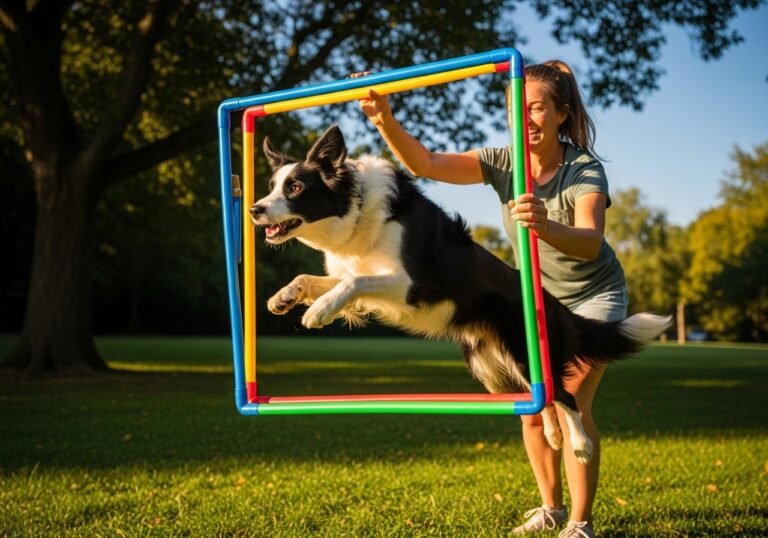
Have you ever watched those amazing dogs on TV, effortlessly weaving through poles and soaring over jumps, and thought, ‘My dog could never do that!’? Well, I’m here to tell you that not only can your dog get started with agility, but you can do it right in your own living room with an item you definitely already have: a broomstick!
Agility isn’t just for super-athletic Border Collies. It’s a fantastic way for any dog to get mental and physical exercise. It builds confidence, strengthens communication, and deepens the bond you share. Forget expensive equipment and complicated courses. Today, we’re starting with the basics. We’re going to teach your dog one of the foundational skills of agility—the jump—using nothing more than a household broom. Get ready for some high-flying fun!
Gearing Up for Success: What You’ll Need
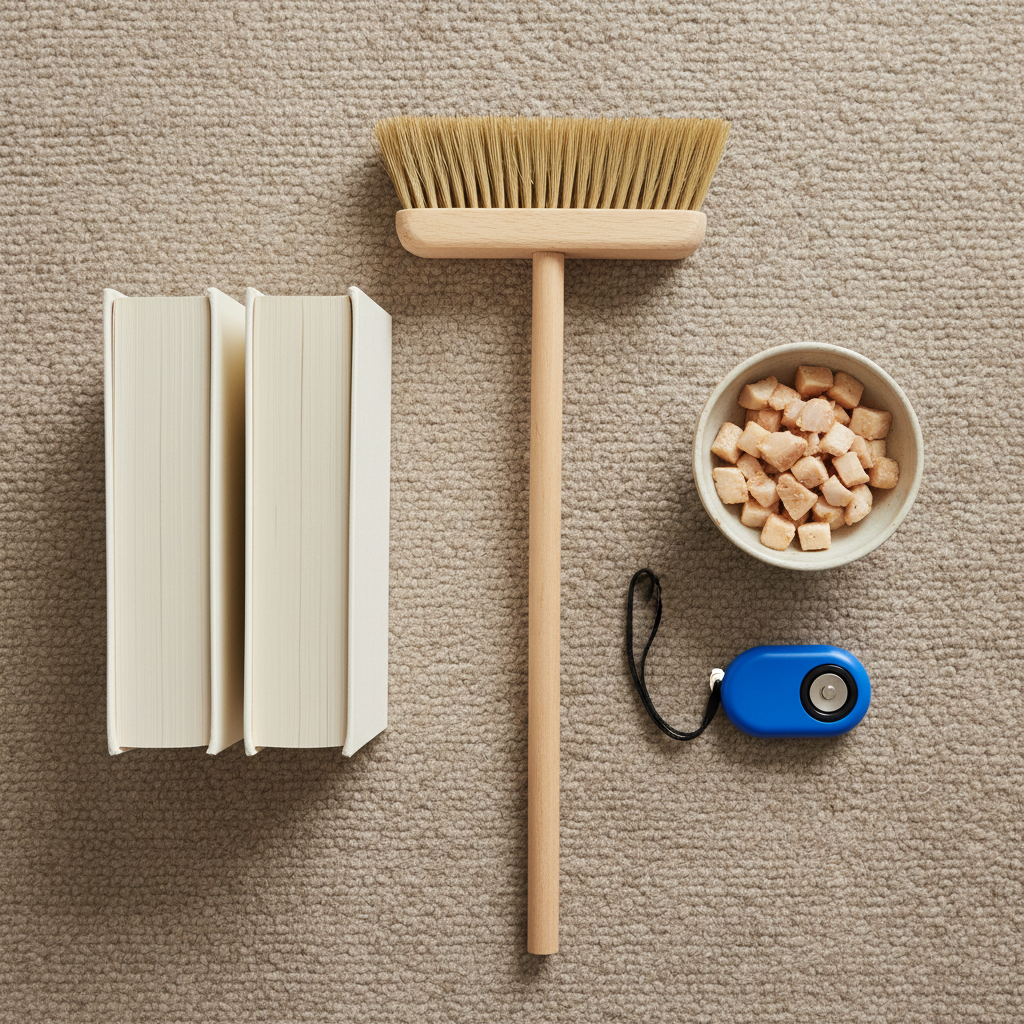
Before we get our pups airborne, let’s gather a few simple supplies. The beauty of this exercise is its simplicity. You likely have everything you need already!
The Essentials List:
- A Broomstick or Mop Handle: The star of our show! Make sure it’s just the stick, without the brush or mop head attached. A lightweight PVC pipe or even a sturdy wrapping paper tube can also work.
- Two Sturdy, Identical Objects: These will act as your jump standards to hold the pole. Think two large, thick books (like old textbooks), two small, stable cardboard boxes, or even two stacks of yoga blocks. The key is that they are stable and won’t topple over easily.
- High-Value Treats: We need to make this super rewarding for your dog. Regular kibble might not cut it. Think small, pea-sized pieces of boiled chicken, cheese, hot dogs, or their absolute favorite store-bought training treats. They should be tasty and easy to swallow quickly.
- A Non-Slip Surface: Safety is paramount! Training on a rug, carpet, or grass is ideal. Avoid slippery surfaces like tile, laminate, or hardwood floors, as your dog could slip and injure themselves when landing.
- A Positive Attitude: This is the most important tool in your kit! This should be a fun game, not a chore. Bring your patience, your happy voice, and be ready to celebrate every tiny success.
Expert Tip: If you use a clicker in your training, have it ready! A clicker is a fantastic tool for marking the exact moment your dog does something right, making communication crystal clear. If you don’t use one, a consistent verbal marker like a happy “Yes!” works just as well.
The Step-by-Step Guide to the Perfect Jump
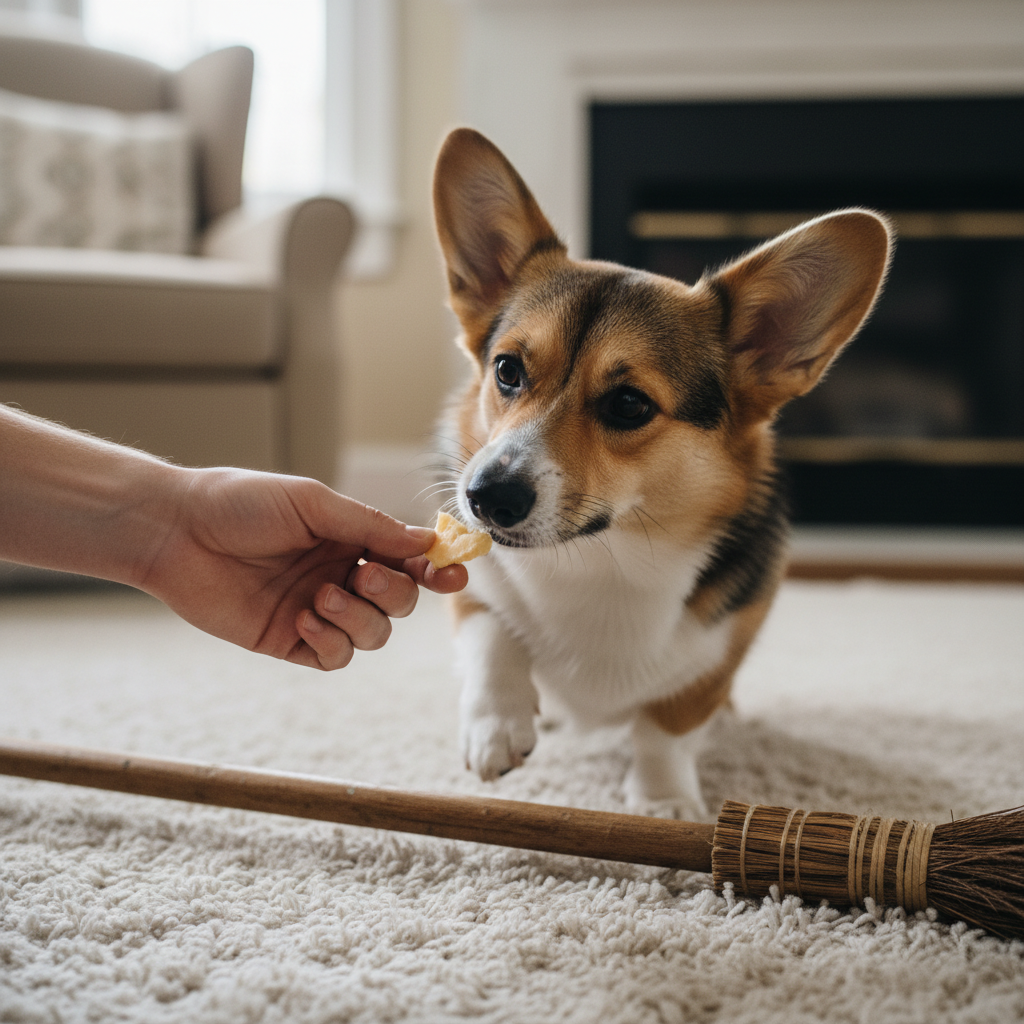
Alright, treats are in your pocket, and your ‘jump’ is ready. It’s time to begin! Remember, we’re going to break this down into tiny, easy-to-win steps. Keep your training sessions short—just 5-10 minutes at a time is perfect to keep your dog engaged and eager for more.
-
Step 1: Introduce the Bar on the Floor
First things first, we want to make sure your dog is completely comfortable with the broomstick. Lay it flat on the ground in the middle of your training area. Don’t ask your dog to do anything yet. Just let them sniff it and investigate it. Scatter a few treats on and around the pole to create a positive association. Let them see that this new object brings yummy things!
-
Step 2: Lure Over the Flat Bar
Now, take a tasty treat in your hand. With the pole still flat on the ground, hold the treat on one side of the pole while your dog is on the other. Use the treat to lure them across the pole. The moment their last paw steps over, say “Yes!” (or click) and give them the treat. Repeat this 5-6 times from both directions.
-
Step 3: Add Your Verbal Cue
Once your dog is confidently stepping over the pole to get the treat, it’s time to name the behavior. Just before you lure them over, say your chosen cue in a clear, happy voice. Good cues are short and distinct, like “Jump,” “Over,” or “Hup!” Say the cue, lure them over, and reward. After a few repetitions, they’ll start to connect the word with the action.
-
Step 4: Raise the Bar (Just a Little!)
This is the exciting part! Place your two stacks of books or boxes on either side of the training space and rest the broomstick on top. For the very first ‘jump,’ it should be incredibly low—we’re talking an inch or two off the ground. The goal is for your dog to succeed easily. Now, repeat Step 3: say your cue, lure them over the slightly raised bar, and have a party when they do! Most dogs will simply step over it at this height, and that’s perfectly fine.
-
Step 5: Fade the Lure
As your dog gets the hang of it, you can start to fade the food lure. Instead of holding the treat right in front of their nose, use an empty hand to gesture over the jump, and then reward them from your other hand after they cross. Eventually, your hand signal or just the verbal cue alone will be enough to send them over.
Remember this golden rule: Always end your training session on a high note! Finish with a successful jump that earns your dog lots of praise and a jackpot of treats. This ensures they’ll be excited for the next session.
Level Up! Making the Broomstick Jump More Challenging
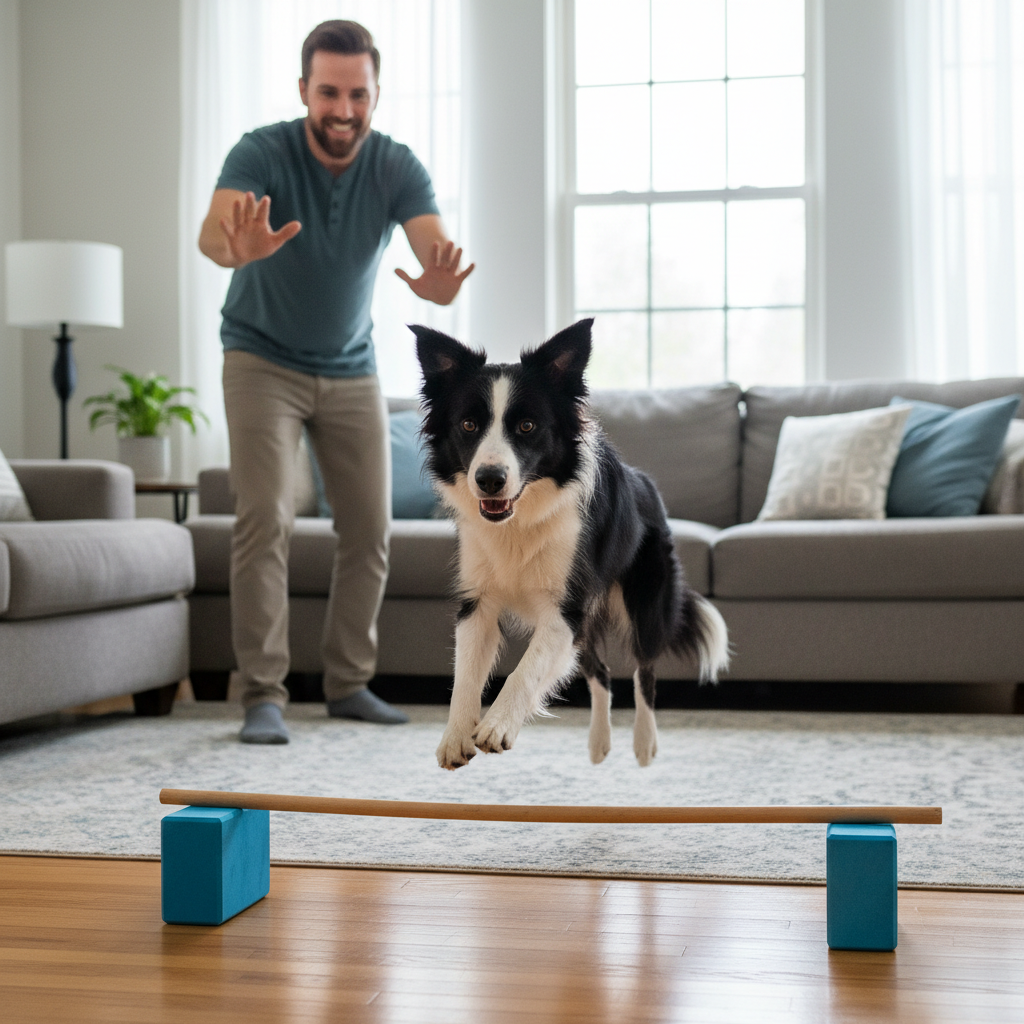
Once your dog has mastered the basic jump and is responding reliably to your verbal cue, you can start adding some fun new challenges. This is where you really start to build their skills and confidence. Always increase difficulty in small increments to set your dog up for success.
Ideas for a New Challenge:
- Gradually Increase the Height: This is the most obvious next step. Add another book to each stack to raise the bar by an inch. Don’t rush this! The goal is a clean jump, not a record-breaking height. For most dogs, a jump height at or below their elbow level is plenty for at-home fun and safety. If they start knocking the bar, you’ve gone too high too fast—just lower it back down to the last successful height for a few more reps.
- Increase Your Distance: Start asking your dog to take the jump while you stand a few feet away. Can you send them over the jump while you stand off to the side? This builds their independence and ability to follow cues from a distance.
- Build a ‘Jump Chute’: To encourage a straight approach to the jump, you can place two chairs or cushions on either side, creating a small ‘hallway’ that guides them directly over the bar.
- Introduce Sequencing: Start combining the jump with other commands your dog already knows. For example, ask for a “Sit,” then “Stay,” then release them with your “Jump!” cue. This is a great brain game and a foundational skill for more complex agility sequences later on.
By mixing things up, you keep the game fresh and exciting for your dog, preventing boredom and continuously building their focus and skills.
Troubleshooting Common Hurdles
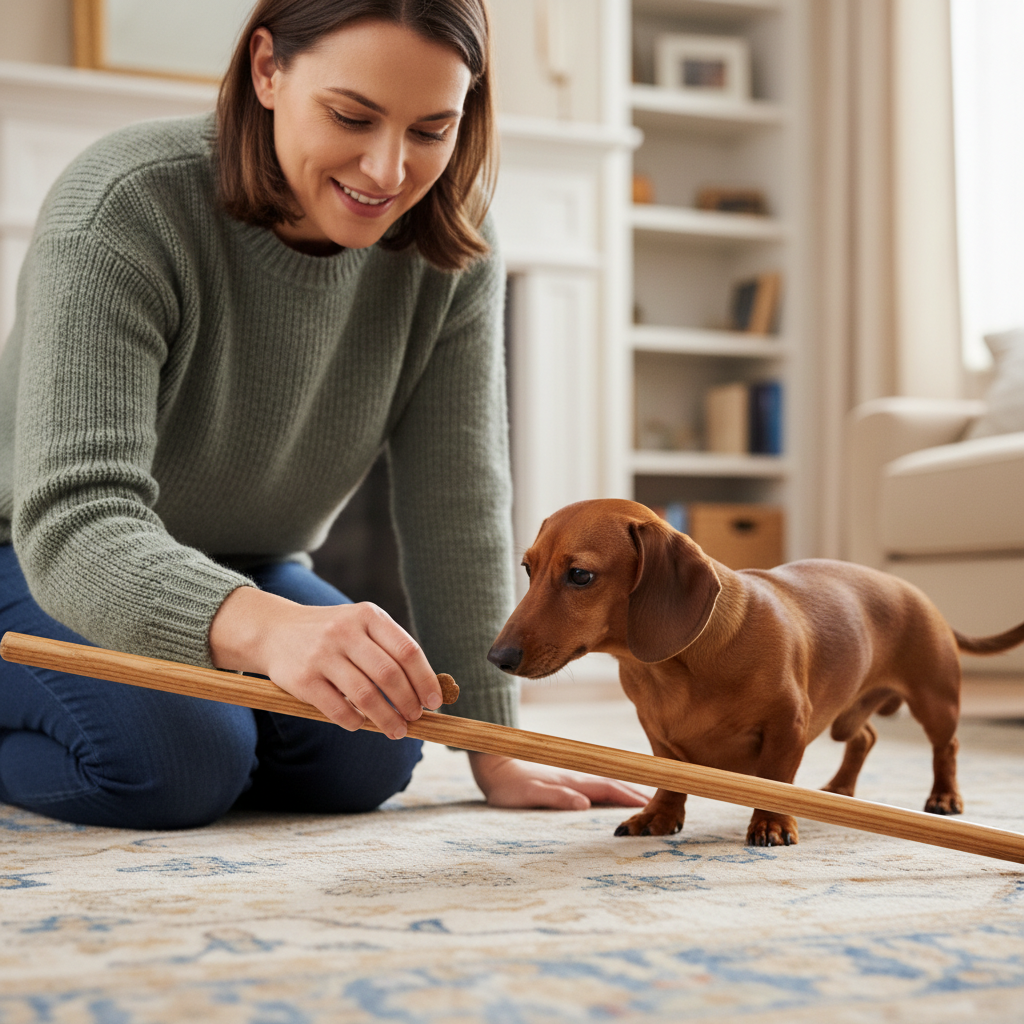
Even with the best plan, sometimes our canine students have other ideas! Don’t worry if you hit a snag. Training is never a straight line, and troubleshooting is part of the process. Here are some common issues and how to solve them.
My dog just walks around the jump instead of going over it.
This is very common! It usually means the dog sees going around as the easier, more direct path to the treat. To fix this, make going over the jump the easiest option. Try practicing in a hallway where there’s no room to go around. You can also create the ‘jump chute’ mentioned earlier by placing pillows or chairs on either side to block the path around the jump.
My dog keeps knocking the bar down.
A knocked bar is usually a sign of one of two things: the bar is too high for their current confidence level, or they’re not paying attention. The solution is simple: lower the bar! Take it back down to a height where they were 100% successful and practice there for a while to rebuild their confidence. Ensure you’re using an exciting tone and high-value rewards to keep them motivated and focused on the task.
My dog seems scared of the broomstick or tries to run away.
If your dog shows any fear, it’s crucial to stop and take a step back. We want this to be a fun, confidence-building game. Go back to Step 1 and focus solely on creating a positive association. Lay the pole on the ground and don’t ask for any interaction. Simply drop super high-value treats (like tiny pieces of steak) all around it. Do this for a few short sessions without any pressure. Let your dog learn at their own pace that the pole predicts amazing things. Only once they are happily and comfortably approaching the pole on the floor should you try luring them over it again.
Safety First: The Golden Rules of At-Home Agility
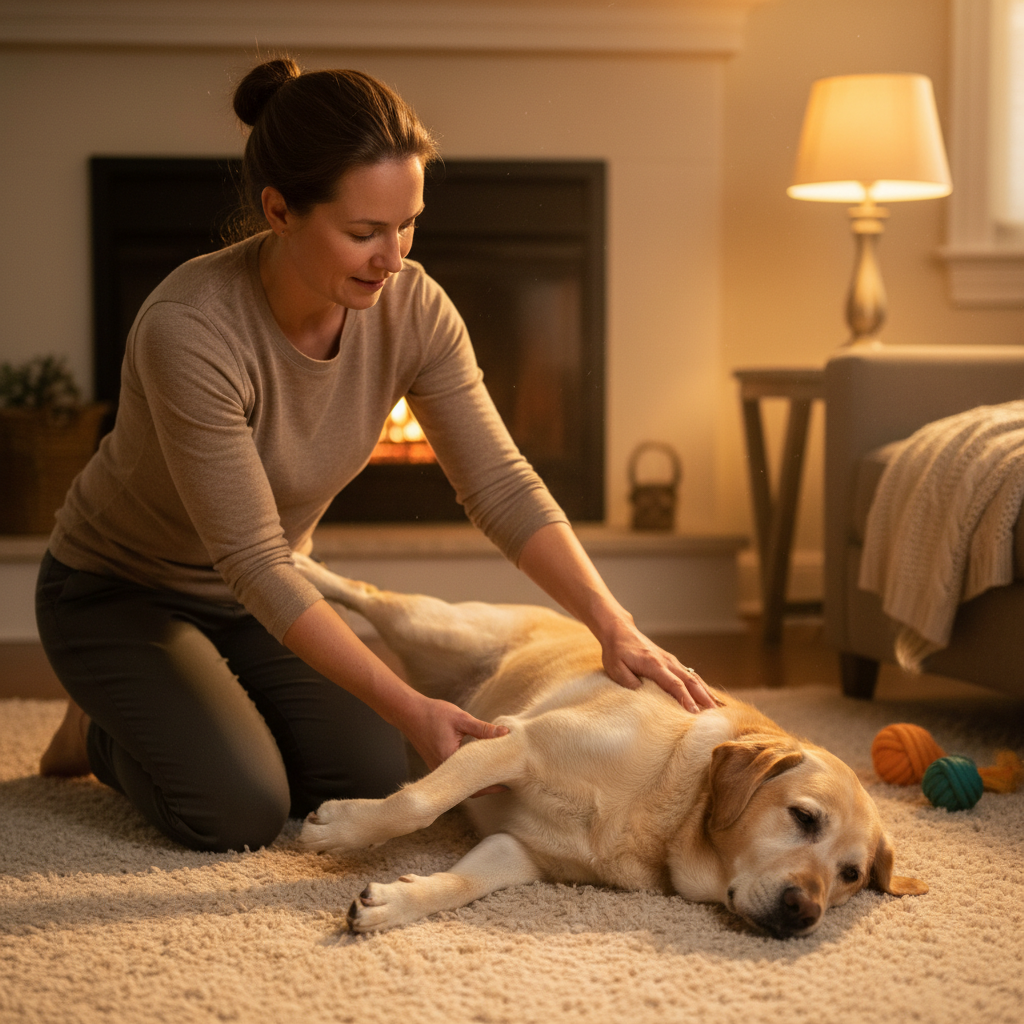
Fun is the goal, but safety is the number one priority. Agility involves physical exertion, so we need to make sure we’re setting our dogs up for a lifetime of healthy play. Please keep these crucial safety rules in mind every time you practice.
- Always Warm-Up and Cool-Down: Just like human athletes, dogs need to prepare their muscles. A few minutes of brisk walking or light fetch before you start is a great warm-up. Afterwards, a calm walk to cool down helps prevent stiffness.
- Keep Jumps Low: For DIY fun, there’s no need to push for height. Keeping the jump bar at or below your dog’s elbow height is a good rule of thumb to protect their joints. This is especially important for young puppies whose growth plates are not yet closed, and for senior dogs.
- Non-Slip Surfaces are Non-Negotiable: I mentioned it before, but it’s worth repeating. Always practice on carpet, grass, or a rubber mat to provide traction and cushion for your dog’s landings.
- Listen to Your Dog: If your dog seems tired, sore, or just isn’t ‘into it’ on a particular day, respect that. End the session. Training should never be forced.
- Use a ‘Displaceable’ Bar: The broomstick should just rest on top of your books or boxes, not be fixed in place. This is critical so that if your dog does hit it, the bar simply falls away harmlessly instead of causing them to trip or fall.
Veterinarian’s Advice: Before starting any new strenuous activity, including at-home agility, it’s always a good idea to check with your veterinarian to ensure your dog is healthy enough for the exercise. This is particularly important for dogs with pre-existing conditions like arthritis or hip dysplasia.
Conclusion
And there you have it! You’ve successfully turned a boring old broomstick into a source of endless fun and a fantastic training tool. You’ve learned how to introduce the jump, build your dog’s confidence, and troubleshoot common issues, all while keeping them safe.
Remember, the goal here isn’t to train the next world champion. The goal is to spend quality, engaging time with your best friend. Celebrate every little hop, every successful ‘jump,’ and even the silly moments when they decide to walk around it. This is your special game. So grab that broomstick, a handful of treats, and go have some fun!