Have you ever been on a walk and wished you could magically direct your dog around a muddy puddle without breaking your stride? Or maybe you’re navigating a busy area and need to guide your pup around a lamppost or a group of people without yanking on the leash. If you’re nodding along, then you’re in the perfect place! Welcome to the wonderful world of the ‘Go Around’ command.
This isn’t just a flashy party trick (though it’s definitely impressive!). Teaching your dog to circle an object on cue is a fantastic way to build their confidence, sharpen their listening skills, and strengthen your communication, especially from a distance. It’s a brilliant mental workout that can help burn off extra energy and prevent boredom. Plus, it forms a building block for more advanced training and dog sports like agility.
In this guide, we’re going to break down the entire process into simple, manageable steps. We’ll cover everything from the gear you’ll need to troubleshooting common hiccups along the way. Get ready to have some fun and watch your dog’s amazing brain at work!
Gearing Up for Success: What You’ll Need
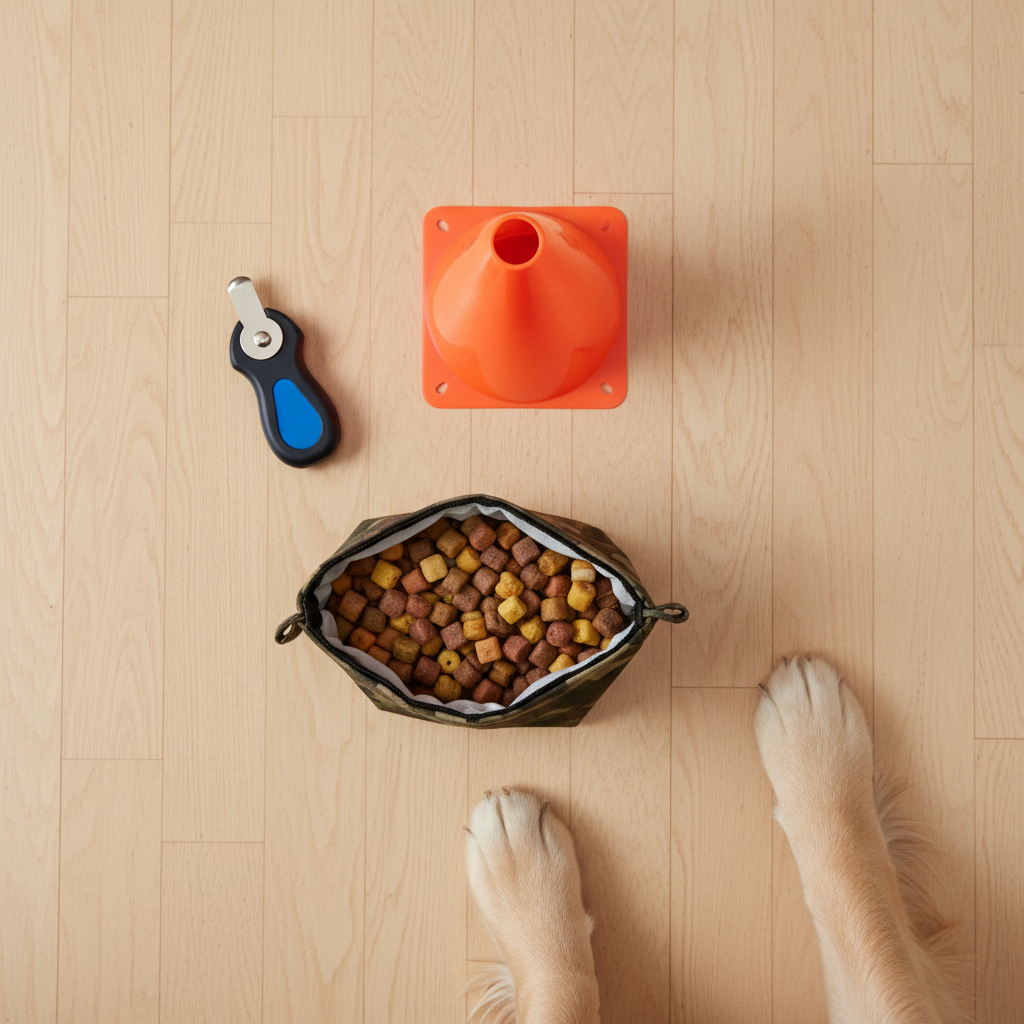
Before we jump into the fun stuff, let’s make sure we have everything we need to set our dogs up for a successful training session. The right tools can make all the difference! The goal is to keep it fun, positive, and super rewarding for your furry student.
The Essentials Checklist:
- An Object: You need something for your dog to go around! Start with something neutral and about waist-high. A traffic cone, a sturdy chair, a planter, or even a small tree in your yard are all great options. Avoid anything that might seem scary or wobbly to your dog at first.
- High-Value Treats: This is key! We’re asking for more focus than a simple ‘sit,’ so we need to pay well. Think small, soft, smelly treats that your dog absolutely loves and can eat quickly. Think tiny pieces of chicken, cheese, or commercial training treats, not their everyday kibble.
- A Clicker (Optional but Recommended): A clicker is a fantastic tool for marking the exact moment your dog does the right thing. This precise communication can speed up the learning process significantly. If you’re not using a clicker, you’ll need a consistent verbal marker, like a sharp “Yes!”.
- A Non-Distracting Space: Begin your training in a quiet, familiar area with minimal distractions, like your living room or a fenced backyard.
Choosing the right reward is crucial for keeping your dog engaged. Here’s a quick look at how different treats can impact your training session:
| Reward Type | Best For | Examples |
|---|---|---|
| High-Value Treats | Teaching new or difficult commands like ‘Go Around’. | Diced hot dogs, boiled chicken, string cheese, freeze-dried liver. |
| Medium-Value Treats | Practicing known commands or for less intensive sessions. | Soft commercial training treats, small pieces of jerky. |
| Low-Value Treats | General rewards or for dogs with lower food motivation. | Kibble, simple dog biscuits. |
Expert Tip: Keep your training sessions short and sweet! Aim for 5-10 minute sessions a couple of times a day. Ending on a positive note, even if you only made a tiny bit of progress, keeps your dog excited for the next lesson.
The Foundation: A Step-by-Step Guide to the ‘Go Around’ Command
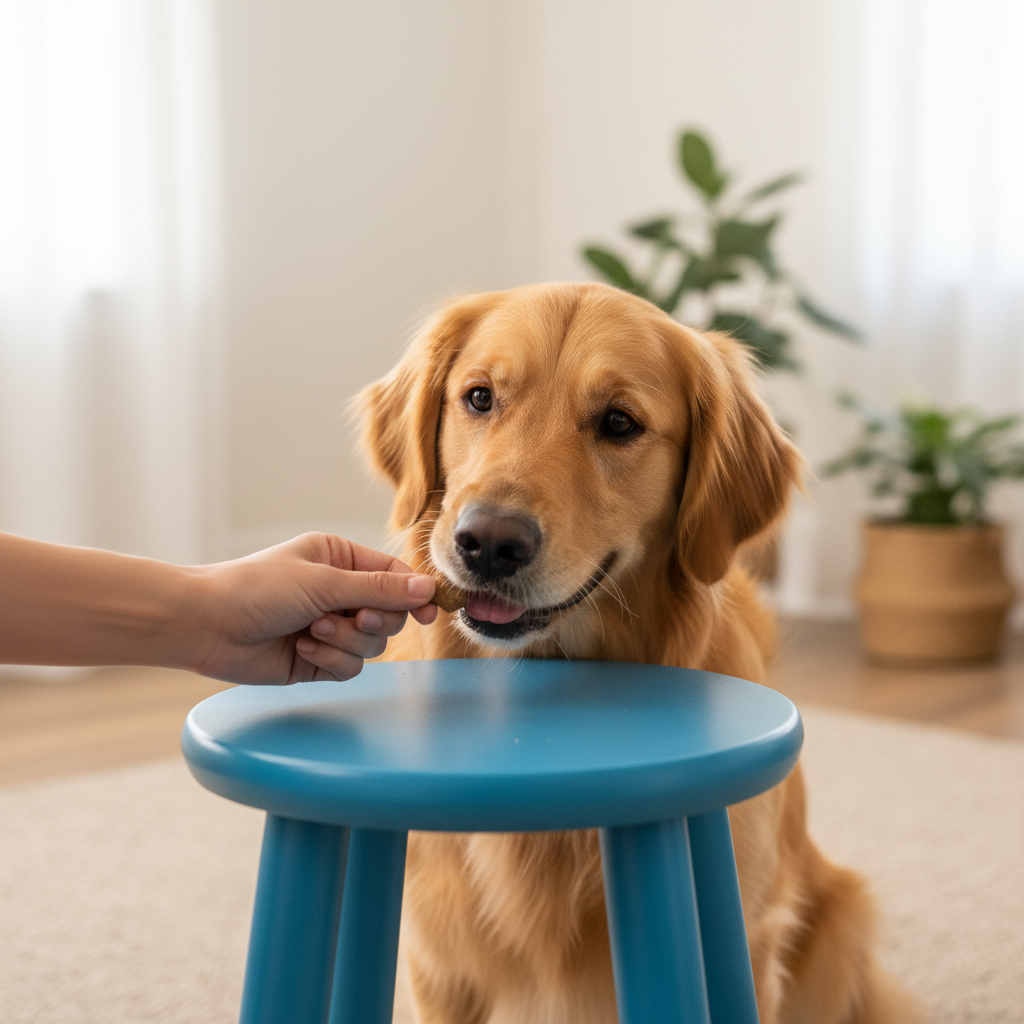
Alright, let’s get down to business! This is where the magic happens. Remember, patience and positivity are your best friends. Every dog learns at a different pace, so celebrate the small wins and enjoy the process. We’ll break this down into five core steps.
-
Step 1: Introduce the Object
First, we just want your dog to be comfortable with the object. Place your cone or chair in the middle of your training space. Let your dog sniff it and investigate it. Click and treat them for any calm, positive interaction with the object, like sniffing it or walking near it. We want them to think, “This cone thing is awesome! Good things happen around it.” Do this for a minute or two.
-
Step 2: Lure the Movement
Now, let’s get some motion! Hold a high-value treat in your hand, right at your dog’s nose. Slowly guide them in a circle around the object. For the first few tries, you might only get a quarter or half of the way around. That’s okay! Click and treat for any movement in the right direction. Gradually, over several repetitions, lure them the entire way around the object. Keep the treat on their nose like a magnet.
-
Step 3: Add the Verbal Cue
Once your dog is consistently following the lure all the way around the object (maybe 8 out of 10 times), it’s time to name the behavior. Just before you start the luring motion, say your verbal cue in a clear, upbeat voice: “Go Around!”. Then, immediately lure them around as you did before. Click and treat upon completion. The sequence is: Cue -> Lure -> Action -> Click -> Treat. Repetition will help your dog connect the words “Go Around” with the action of circling the object.
-
Step 4: Fade the Lure
Our goal is for the dog to perform the command without a treat stuck to their nose. Start making your hand signal bigger and less precise. Instead of holding the treat in your fingers, hide it in your palm. Use your empty fingers to guide your dog, making a large, circular motion around the object. It might feel like you’re a flight controller guiding a plane! As your dog succeeds, make the hand signal more subtle over time. The goal is to transition from a full-body lure to a simple, pointed circle with your finger.
-
Step 5: Build the Full Behavior
Now, we want the dog to complete the circle before getting the reward. Wait until your dog has gone all the way around the object before you click and treat. This teaches them that the reward comes after the entire behavior is finished. If they stop halfway, don’t worry! Just use your hand signal to encourage them to finish the circle. This step solidifies the command and builds stamina.
Taking It to the Next Level: Adding Distance and Difficulty
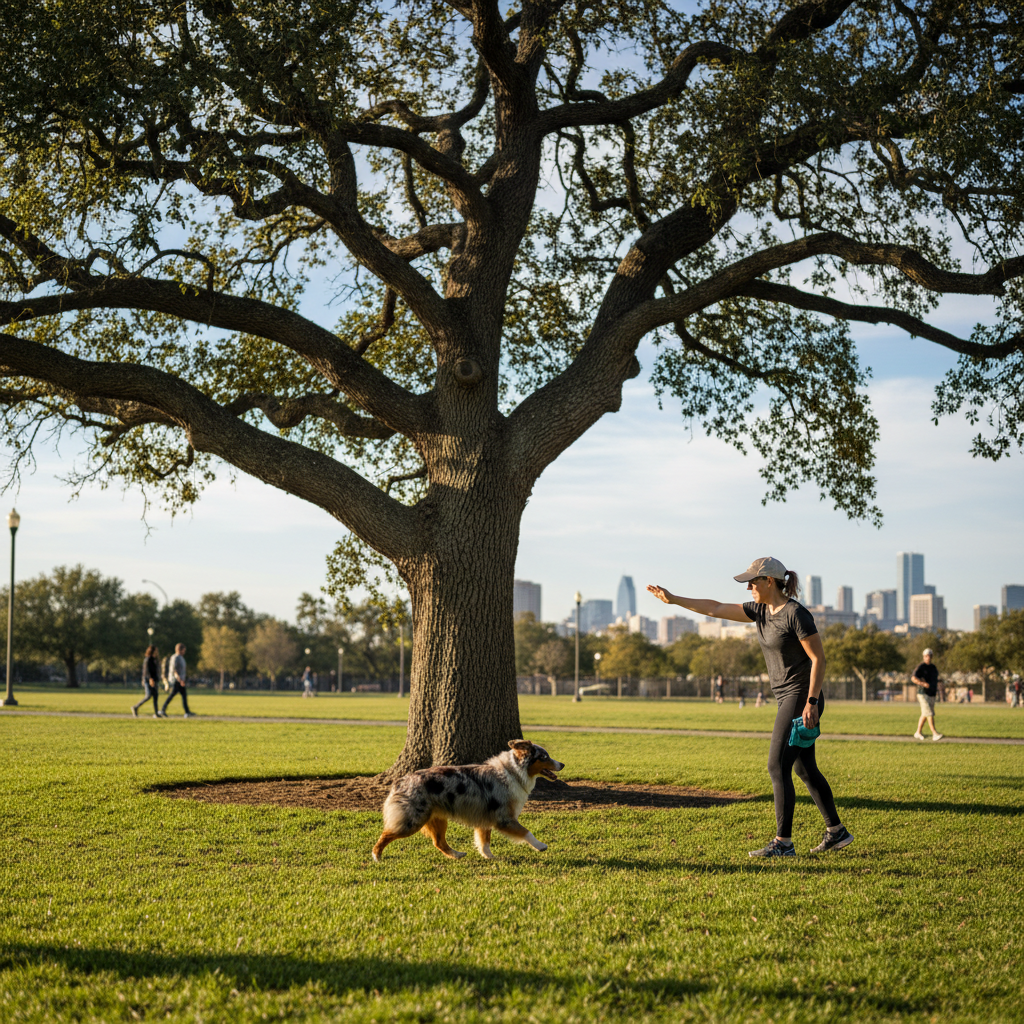
Once your dog has mastered the basic ‘Go Around’ in your living room, it’s time to level up! This is how the command becomes truly useful in the real world. The key to advancing is to increase the difficulty in small, incremental steps. Only increase one criterion at a time (e.g., add distance OR change the object, but not both at the same time).
Increasing Distance
This is the core of distance training. Start by taking one small step back from the object before you give the command. If your dog succeeds, give them lots of praise and a jackpot reward (multiple treats!). Gradually increase the distance, one step at a time. If your dog gets confused, you’ve likely moved too far, too fast. Just take a step closer and help them succeed before trying from a farther distance again. The goal is to eventually be able to send your dog around an object from across the yard!
Generalizing with New Objects
We want our dogs to understand that ‘Go Around’ applies to any object, not just the training cone. Start practicing with different items: a trash can, a mailbox, a fire hydrant, a tree on your walk. When introducing a new object, you may need to move closer and use a more obvious hand signal at first, just like you did in the beginning. This process of generalization is a huge brain-booster for your dog.
Adding Directionality
For the super-smart pups, you can teach them to go around in a specific direction. You’ll need two distinct cues. For example, use “Go Around” for a clockwise circle and a new cue like “Switch” or “Other Way” for a counter-clockwise circle. You will need to train this just like a new command, luring them in the new direction and pairing it with the new cue until they understand the difference.
Chaining Behaviors
Now you can start combining ‘Go Around’ with other commands your dog knows. This is fantastic for building focus and off-leash reliability. Try these fun combinations:
- Ask your dog to ‘Go Around’ a tree and then ‘Come’ back to you.
- Tell your dog to ‘Stay,’ walk across the yard, and then send them to ‘Go Around’ an object from a distance.
- Set up two objects and ask them to ‘Go Around’ one and then immediately send them to ‘Go Around’ the other.
Troubleshooting Common Hurdles: What to Do When You’re Stuck
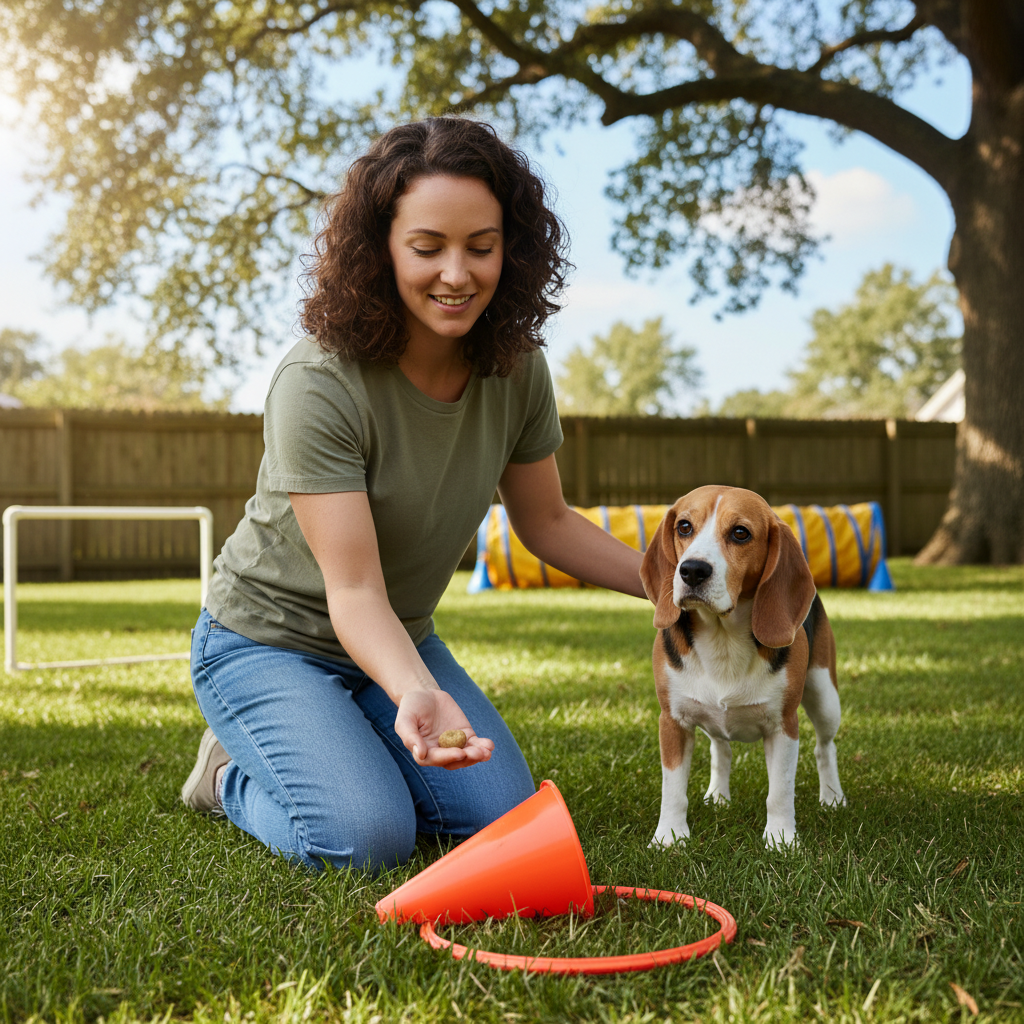
Even with the best plan, you might hit a snag. Don’t get discouraged! Training is never a straight line. It’s a dance of communication between you and your dog. Here are some of the most common issues and how to work through them.
- Problem: My dog only goes halfway and then comes back to me.
Solution: This usually means the reward is happening too soon or the lure isn’t clear enough. Go back to Step 2. Make sure you are luring them the entire way around before you click and treat. Use a high-value treat they can’t resist to keep their nose ‘glued’ to your hand for the full circle. - Problem: My dog just barks at the object instead of going around it.
Solution: This can be a sign of confusion or frustration. Take a break and end the session on a positive note with a command they know well, like ‘Sit.’ When you try again later, go back to Step 1 and spend more time building a positive association with the object. Reward any calm behavior near it before you even try to lure them around. - Problem: My dog won’t do it unless I have a treat visibly in my hand.
Solution: This is a classic issue when fading the lure. The trick is to make the transition gradual. First, just pretend to have a treat in your luring hand while holding the real treat in your other hand, hidden behind your back. Go through the motion, and when they complete the circle, praise them and present the treat from your other hand. It teaches them the reward comes from you, not necessarily the hand that gives the signal. - Problem: My dog gets distracted by everything else in the yard.
Solution: This is a sign that the environment is too challenging for the current stage of training. Go back to a less distracting area, like inside your house. You need to build a strong foundation of success before you can expect them to perform with squirrels and birds around. Also, make sure your treats are more interesting than the distractions!
Remember the Golden Rule of Dog Training: If your dog isn’t getting it, it’s not because they are stubborn. It’s usually because we haven’t broken down the behavior into small enough steps. Take a step back, make it easier, and build their confidence back up. You can do it!
Conclusion
Congratulations! You now have all the tools and knowledge you need to teach your dog the amazing ‘Go Around’ command. More than just a neat trick, this command opens up a new level of communication and teamwork between you and your best friend. It builds focus, provides excellent mental stimulation, and can be incredibly useful in everyday situations.
The journey of training is filled with small victories, funny mistakes, and incredible ‘aha!’ moments. Remember to keep your sessions short, your attitude positive, and your treat pouch full of your dog’s favorite goodies. Celebrate every bit of progress, from the first tentative step around the cone to a full-speed circle around a tree from 50 feet away.
So grab your clicker, pick an object, and have fun with it. You’re not just training a behavior; you’re building a stronger, more trusting, and more joyful relationship with your dog. Happy training!