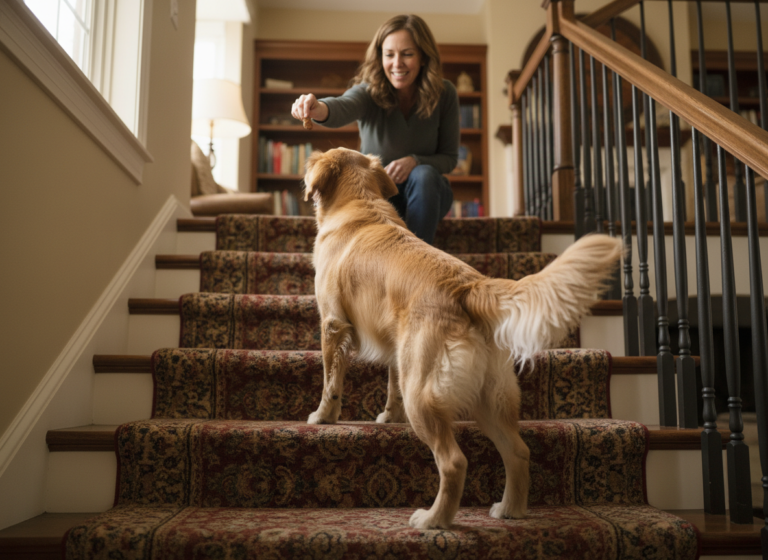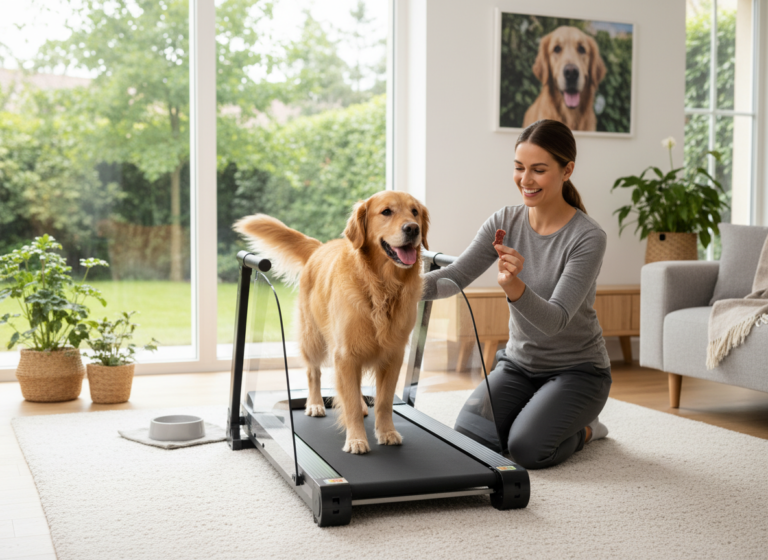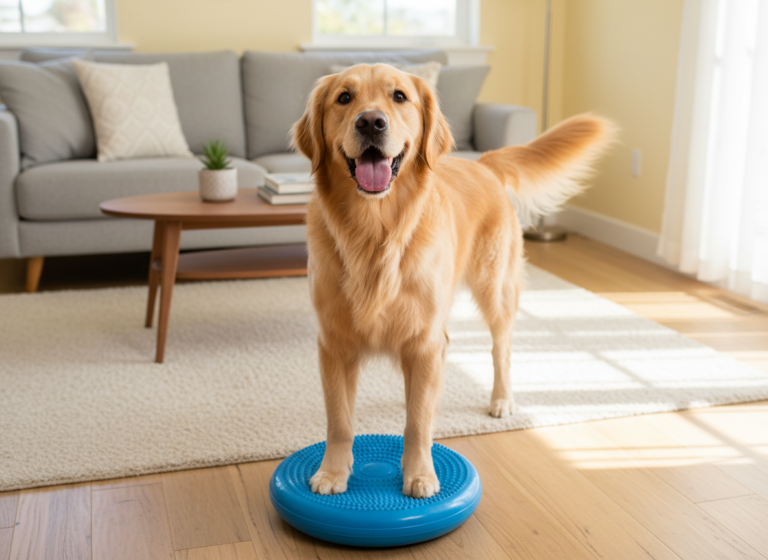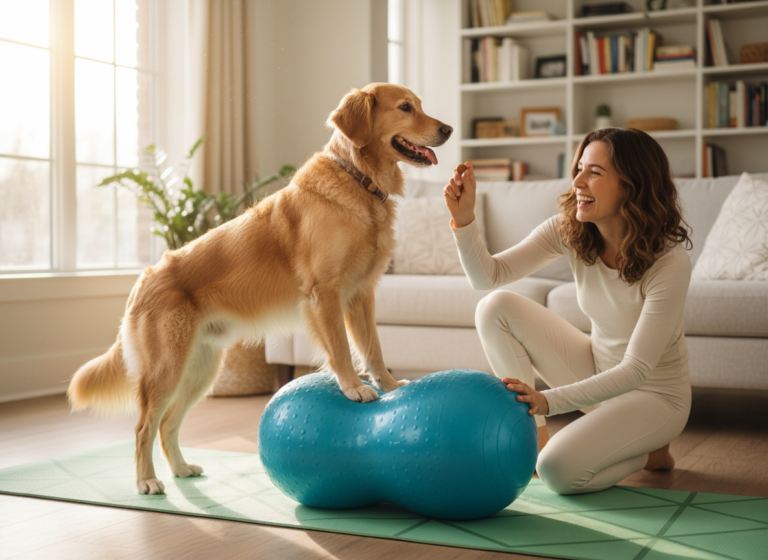
Have you ever watched your dog take a sharp turn while chasing a squirrel and marveled at their agility? Or maybe you’ve noticed your older pup getting a little less steady on their feet? That amazing physical control—or lack thereof—is deeply connected to one crucial element: their core strength. Just like for us, a strong core is the foundation for a dog’s stability, power, and overall physical health. It helps protect their spine, improves their posture, and can even prevent injuries down the road.
So, how can you help your furry best friend build this essential strength? Forget boring doggy sit-ups! We’re going to talk about a fun, engaging, and incredibly effective method: balance training on a stability ball. It might look like a circus trick, but it’s one of the best ways to activate those deep stabilizing muscles. In this guide, we’ll break down everything you need to know, from picking the right equipment to a step-by-step training plan that will have your dog balancing like a pro. Get ready to have some fun and build a stronger, more confident companion!
Why Core Strength is a Game-Changer for Your Dog
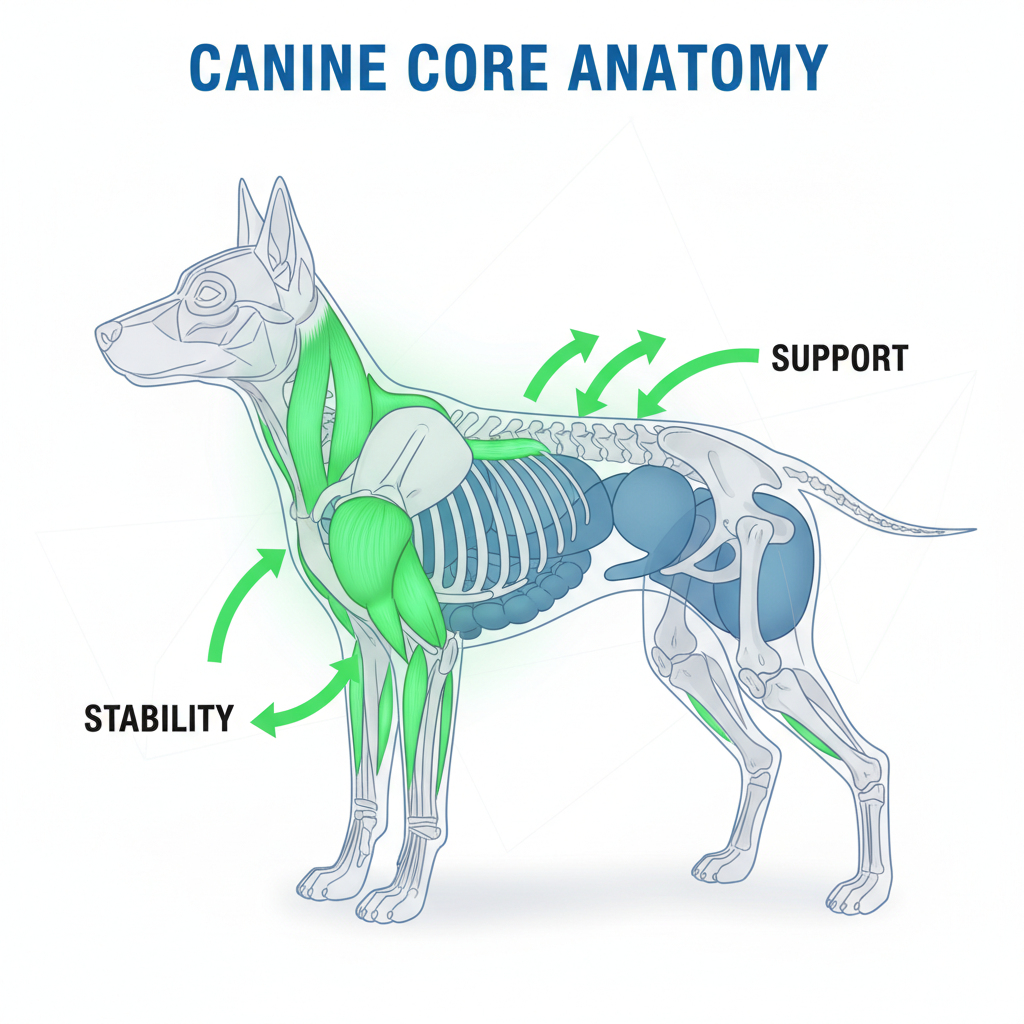
Before we jump into the ‘how,’ let’s talk about the ‘why.’ Building your dog’s core isn’t just about impressive tricks; it’s a fundamental investment in their long-term health and happiness. A dog’s core muscles include the abdominals, the muscles along the spine, and the obliques. When these muscles are strong and conditioned, the benefits ripple through their entire body.
Injury Prevention Powerhouse
A strong core acts like a natural corset, supporting and stabilizing your dog’s spine and pelvis. This is incredibly important for preventing common injuries, especially those related to the back and cruciate ligaments (similar to our ACL). For active dogs who love to run, jump, and twist, a stable core means their joints and spine are better protected from the stress of high-impact activities.
Enhanced Body Awareness (Proprioception)
Proprioception is your dog’s sense of where their body is in space. Balance training on an unstable surface like a ball forces your dog’s brain and body to work together in new ways. They learn to make tiny, constant adjustments to stay upright. This heightened body awareness translates to better coordination and agility in everyday life, making them less clumsy and more confident in their movements.
A Boost for Canine Athletes and Working Dogs
If your dog participates in sports like agility, flyball, or dock diving, core strength is non-negotiable. It’s the source of their power for explosive movements like jumping, weaving, and turning. A well-conditioned core allows for a more efficient transfer of energy through the body, leading to better performance and reduced risk of sport-related injuries.
Graceful Aging for Senior Dogs
As dogs age, they naturally lose muscle mass, which can lead to instability, weakness in the hind end, and an increased risk of falling. Gentle core-strengthening exercises can dramatically improve a senior dog’s quality of life. By keeping these stabilizing muscles active, you help them maintain their balance, mobility, and independence for longer.
Confidence Building and Mental Stimulation
Learning a new skill like balancing is a fantastic mental workout. It requires focus, problem-solving, and trust between you and your dog. Successfully mastering this challenge can be a huge confidence booster, especially for timid or anxious dogs. The focused training sessions also strengthen your bond, creating a positive and rewarding shared experience.
Gearing Up: What You’ll Need for Success
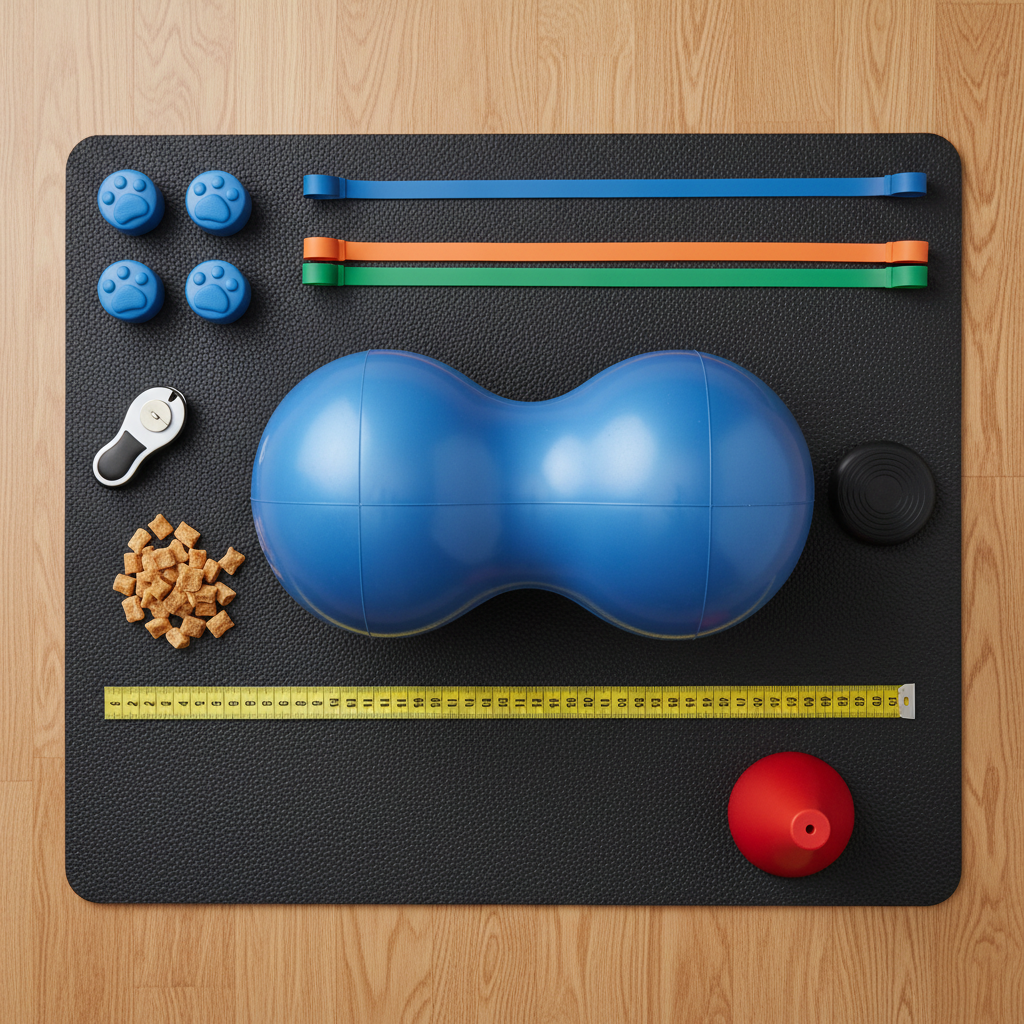
Alright, are you excited to get started? Great! But before you grab the nearest bouncy ball, let’s make sure you have the right tools for the job. Setting up for success is half the battle and ensures the process is safe and fun for your canine partner.
Choosing the Right Ball
This is the most important piece of equipment. You’re not looking for a heavy medicine ball, but rather an inflatable stability ball or balance ball. Here’s what to look for:
- Size Matters: The ball should be the right size for your dog. A good rule of thumb is that when your dog is standing over the ball, their back should be relatively straight and parallel to the floor. Their paws should be able to touch the ground on either side when straddling it. For beginners, a slightly larger ball that’s under-inflated can provide more stability.
- Shape: While the classic round ball is great, you might also consider a peanut-shaped ball. These are often more stable as they only roll forward and backward, not side-to-side, making them an excellent choice for beginners or dogs who are a bit nervous.
- Material: Look for a ball made from a durable, anti-burst PVC material designed for fitness. A grippy, non-slip texture is also a huge plus to help your dog feel more secure.
| Dog Size | Recommended Ball Diameter | Alternative |
|---|---|---|
| Small (e.g., Terrier, Dachshund) | 45 cm | Balance Disc or Donut Ball |
| Medium (e.g., Border Collie, Spaniel) | 55 cm | Medium Peanut Ball |
| Large (e.g., Retriever, Shepherd) | 65 cm | Large Peanut Ball |
Essential Accessories
- Non-Slip Surface: Safety first! Never practice on a slippery surface like hardwood or tile. Use a yoga mat, a rubber-backed rug, or interlocking gym flooring to provide a stable, grippy base for both the ball and your dog.
- High-Value Treats: This is your currency for a job well done! Use small, soft, extra-tasty treats that your dog absolutely loves and can swallow quickly. You’ll be rewarding frequently, so you don’t want them to fill up too fast. Think tiny pieces of chicken, cheese, or commercial training treats.
- A Clicker (Optional): If your dog is clicker-trained, this is a fantastic tool for precisely marking the moment they perform the correct action, like putting a paw on the ball or holding their balance for a second.
- Patience and a Positive Attitude: This is the most crucial ‘tool’ of all! This process should be fun. Keep your energy light and encouraging. Your dog will feed off your positive vibes.
The Step-by-Step Guide to Ball Balancing
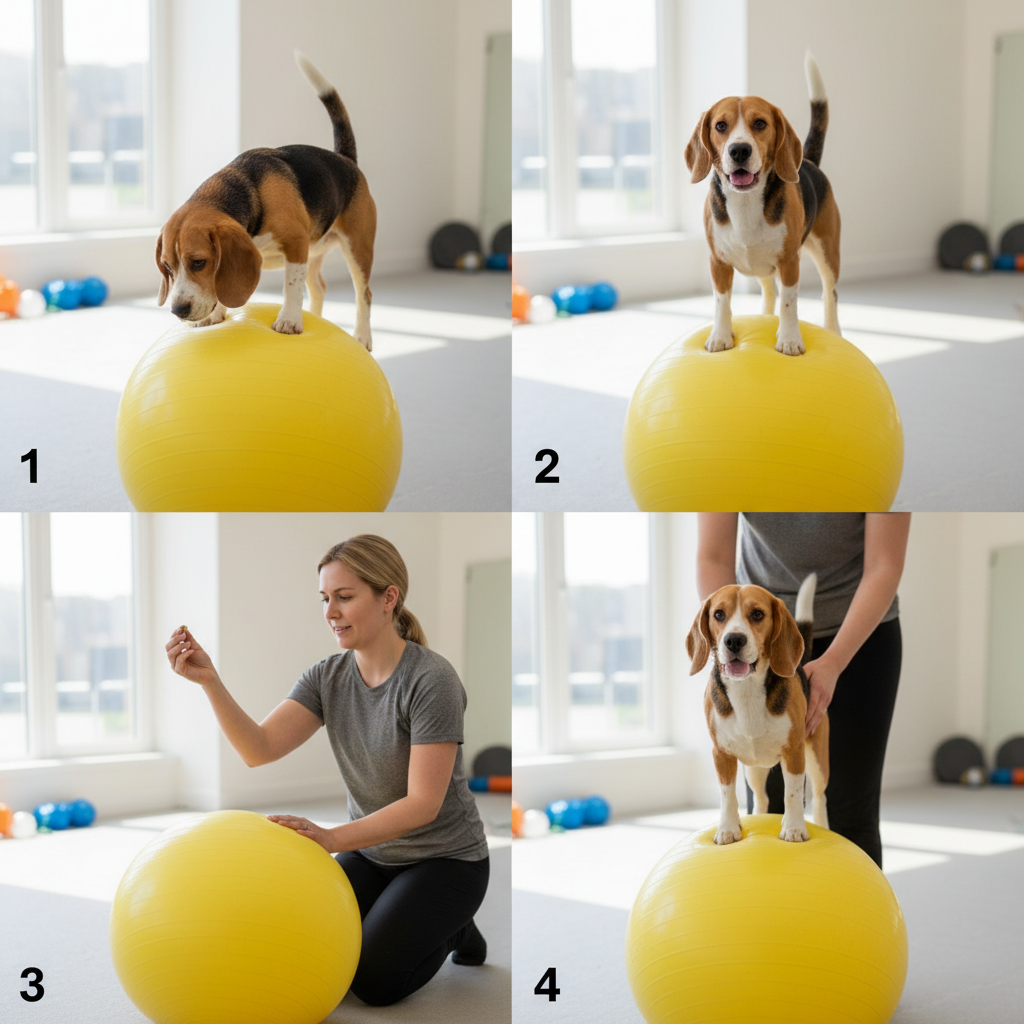
Here we go—the fun part! Remember, every dog learns at a different pace. The key is to break the process down into tiny, achievable steps and celebrate every small victory. Keep sessions short (5-10 minutes max) and always end on a positive note.
Step 1: The Introduction Ceremony
The goal here is simple: make the big, weird ball the best thing ever. Don’t force any interaction. Place the ball (slightly deflated to keep it from rolling away) on your non-slip mat. Act excited about it! Any time your dog looks at it, sniffs it, or bumps it with their nose, click (if you’re using one) and toss them a treat near the ball. Let them discover that good things happen when they are near this new object. Do this for a few short sessions until they are completely comfortable and happy in its presence.
Step 2: Paws Up!
Now, we’ll ask for a little more interaction. With the ball stabilized (you can brace it between your feet or against a wall), use a treat to lure your dog towards it. The goal is to get them to place one, then both, of their front paws on the ball. The moment a paw touches the ball, click and treat! Repeat this, rewarding them for resting their front paws on the surface. Don’t push for all four paws yet; we’re just building confidence with the new texture and slight instability.
Expert Tip: If your dog is hesitant, try placing a treat directly on the ball for them to take. This encourages them to interact with it on their own terms.
Step 3: The Supported Full Mount
Once your dog is confidently putting their front paws on the ball, it’s time to aim for all four. This step requires your full support. Keep the ball firmly braced. Lure your dog forward with a treat so their front paws are on top. Then, gently guide their hind end, encouraging them to step up with their back feet. You may need to physically lift their back legs onto the ball the first few times. As soon as all four paws are on, give them lots of praise and a jackpot of treats! Your hands should be on your dog the entire time, supporting their hips and shoulders to ensure they feel safe and stable.
Step 4: Finding Their Balance
With your dog on the ball and your hands providing support, just let them be for a second or two. They will naturally start to wobble. Your job is to be their safety net. Let them feel the tiny movements and make micro-adjustments with their muscles. Reward them for staying calm and holding the position, even with your help. As they get more comfortable, you can gradually lessen the pressure of your supporting hands, but keep them hovering just over their body, ready to assist. The goal is for them to hold the balance for 1-2 seconds with minimal help.
Step 5: Building Duration and Confidence
Now you can start putting a name to the behavior. As you help them onto the ball, say your cue, like “Balance!” or “Hold!” Start asking for just a few seconds of unaided balance. Gradually increase the duration as their strength and confidence grow. Count out loud: “One… two… good boy!” and release them with a treat. Slowly work your way up to 5, then 10 seconds. Always be ready to stabilize them if they get too wobbly. This is where the real core workout happens!
Safety First: Common Mistakes to Avoid
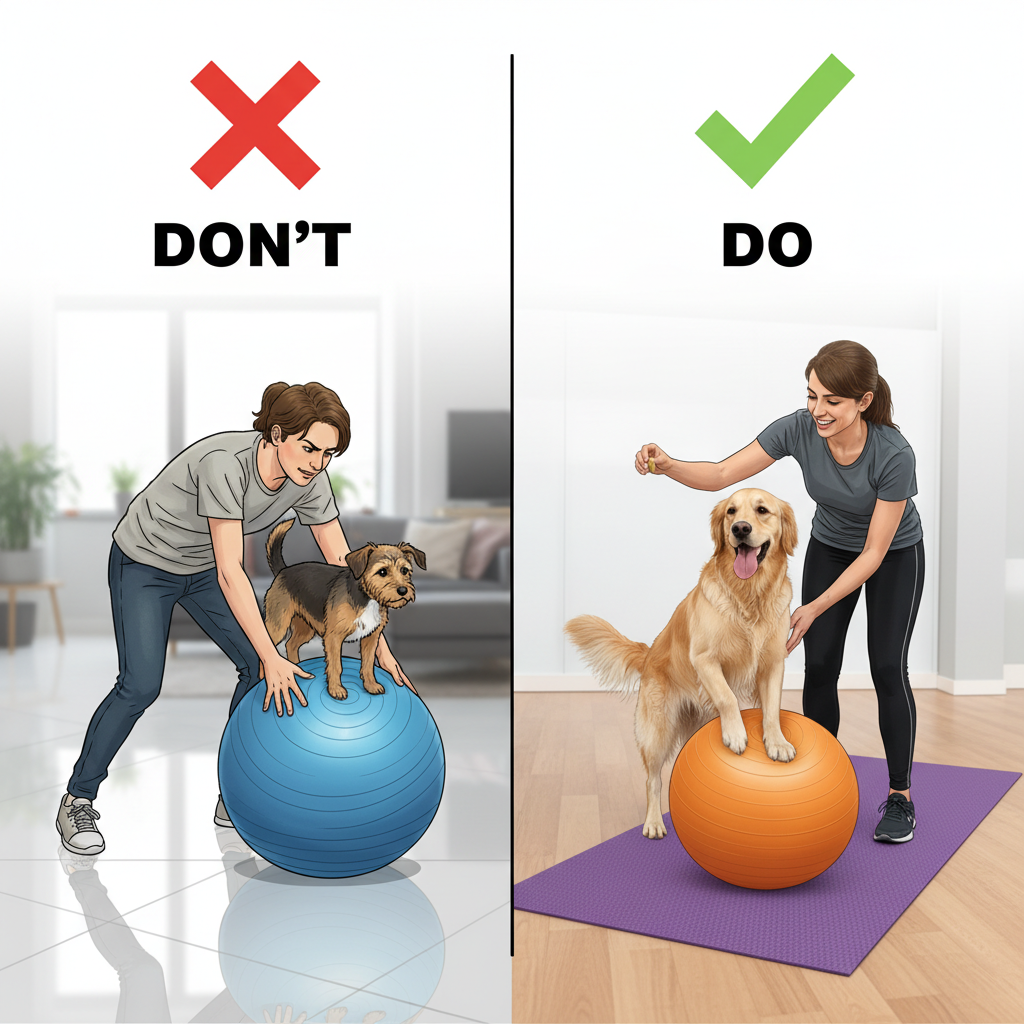
While balance training is incredibly beneficial, safety should always be your top priority. Progressing too quickly or using improper technique can lead to fear, frustration, or even injury. Here are some common pitfalls to watch out for to keep the experience positive and productive.
- Using the Wrong Equipment: A ball that is too big, too small, or over-inflated can be dangerous. An over-inflated ball is very unstable and can shoot out from under your dog. Always ensure the size is right and that it’s made from anti-burst material.
- Forcing the Issue: Never, ever push or drag your dog onto the ball. This is a surefire way to create a negative association and make them fear the object. All interactions should be voluntary and heavily rewarded. Let your dog set the pace.
- Training on a Slippery Surface: This is a critical safety rule. Without a non-slip mat, the ball can easily roll away, causing your dog to fall. This can be scary and physically harmful. Secure your environment before you begin.
- Marathon Training Sessions: Remember, this is hard work! The small stabilizing muscles your dog is using will fatigue quickly. Keep your training sessions short and sweet (5-10 minutes is plenty). It’s better to have two short, successful sessions in a day than one long, frustrating one.
- Removing Support Too Soon: Your dog needs to trust that you are there to catch them. In the beginning, your hands should be on your dog, providing physical and emotional support. Removing that support before they are physically and mentally ready can lead to a fall and a major setback in their confidence.
- Ignoring Signs of Stress: Pay close attention to your dog’s body language. Yawning, lip licking, showing the whites of their eyes (whale eye), or a tucked tail are all signs of stress. If you see these, the session is likely too difficult or too long. End on an easy, positive note (like just putting front paws up) and try again later.
- Forgetting a Warm-Up: Just like any athletic activity, a brief warm-up is a great idea. A short walk or a few simple tricks like ‘sit’ and ‘down’ can get the blood flowing and prepare their muscles for the work ahead.
Beyond the Basics: Next-Level Core Exercises
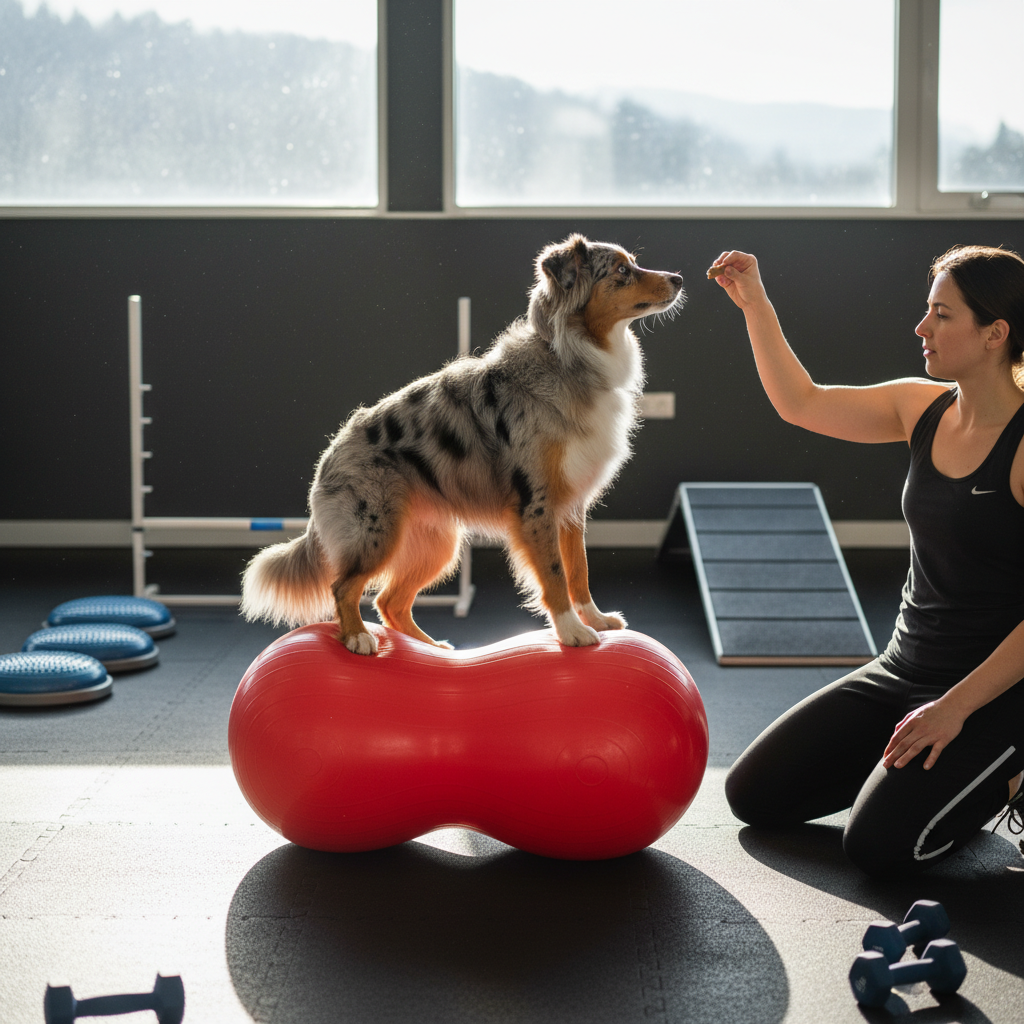
Once your dog has mastered standing on the stability ball and can hold their balance confidently for 10-15 seconds, you can start introducing new challenges to continue building their strength and coordination. These progressions should be introduced slowly and carefully, always watching to make sure your dog remains confident and comfortable.
1. Gentle Weight Shifts
While your dog is balancing, place your hands gently on their hips and create a very slight, slow rocking motion from side to side or front to back. This forces them to engage their core muscles even more to maintain their center of gravity. The movement should be barely perceptible at first. Reward them for staying stable through the shift.
2. Head Turns
This simple movement has a big impact on balance. While your dog is standing on the ball, hold a treat near their nose and slowly lure their head to one side, then the other. Then try luring their head up and down. These small shifts in head position change their weight distribution and challenge their core to keep them centered.
3. Paw Lifts
This is a very advanced move and should only be attempted by dogs who are extremely comfortable and strong on the ball. Encourage your dog to lift one paw just an inch or two off the ball’s surface. This three-legged stand dramatically increases the core stability challenge. Start by just asking for a one-second lift and build from there. Be ready with lots of support!
4. Introducing New Equipment
If your dog loves balance work, you can expand your home gym! Other great pieces of canine fitness equipment that work the core include:
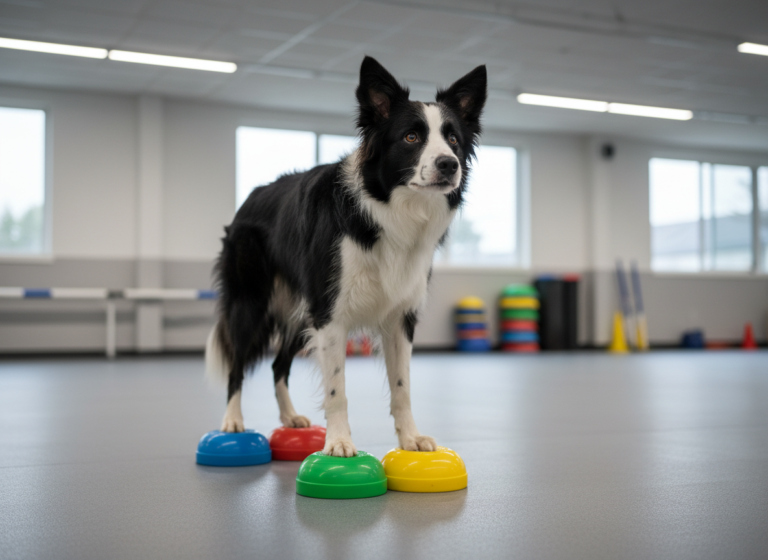
- Balance Discs: These are small, inflatable discs that challenge a dog’s balance on a smaller scale. You can have them place their front feet on one and their back feet on another.
- Peanut Balls: If you started with a round ball, moving to a peanut ball (or vice versa) offers a different kind of stability challenge.
- FitPAWS K9FITbone: This is a bone-shaped balance tool that provides a fun and challenging surface for core workouts.
Remember: The goal of these advanced exercises is not to perform circus tricks, but to thoughtfully and safely challenge your dog’s muscles. Always prioritize your dog’s safety and confidence over the complexity of the exercise.
Conclusion
Congratulations! You now have all the tools and knowledge you need to embark on a fun and rewarding fitness journey with your dog. Building core strength with a stability ball is so much more than a cool party trick; it’s a powerful way to enhance your dog’s physical health, prevent injuries, and boost their mental confidence. It’s a testament to the incredible bond you share, built on trust, communication, and positive reinforcement.
Remember to be patient, keep it positive, and celebrate every tiny step forward. The wobbly first attempts are just as important as the rock-solid balances that will come later. So, grab that ball, pocket some tasty treats, and get ready to see your dog stand a little taller, move a little stronger, and feel a whole lot better. Happy balancing!