Have you ever watched your dog wake up from a nap and perform that long, luxurious, whole-body stretch? It looks so satisfying, doesn’t it? That instinctive movement is your dog’s natural way of waking up their muscles and getting ready for action. But what if you could tap into that natural behavior and turn it into a fun, healthy routine? Welcome to the world of ‘Doga,’ or canine yoga!
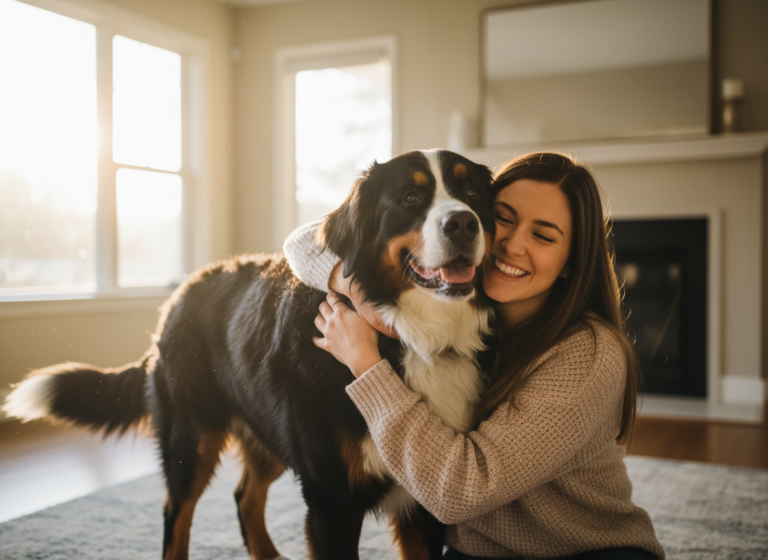
Don’t worry, you don’t need to get your pup into a tiny leotard or have them master the downward-facing dog (though they’ve already got that one covered!). Canine yoga is all about gentle, guided stretches that promote flexibility, improve circulation, and enhance body awareness. More than just a physical activity, it’s a fantastic way to strengthen the bond you share with your best friend.
In this guide, we’re going to focus on one of the most beneficial stretches: the back leg extension. It’s a fantastic move for active dogs, senior dogs, and every pup in between. We’ll walk you through everything you need, from setting the mood to a detailed, step-by-step training plan using only positive, fun techniques. Let’s get ready to stretch!
Preparing for Your Doga Session: Setting the Stage for Success
Preparing for Your Doga Session: Setting the Stage for Success
Before you and your pup roll out the yoga mats, a little preparation goes a long way. Creating a calm and positive environment is the secret ingredient to a successful training session. Think of this as building your dog’s personal yoga studio, a zen space where they feel safe, comfortable, and ready to learn.
Choose the Right Time and Place
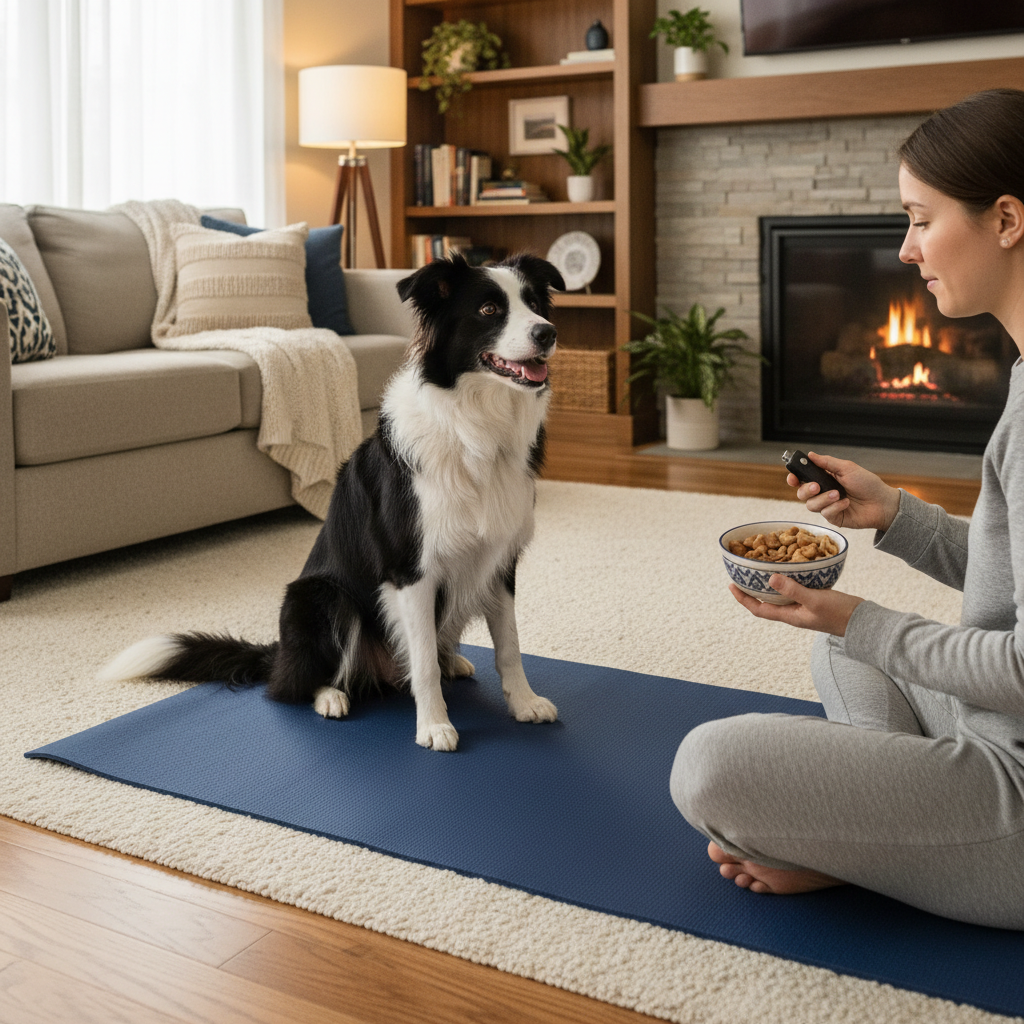
Timing is everything. You don’t want to start a stretching session when your dog has a case of the ‘zoomies’ or right after a big meal. The ideal time is when your dog is naturally calm but alert. This might be mid-morning after their breakfast has settled, or in the evening as things are winding down. The location should be a quiet area of your home, free from the distractions of kids playing, the TV blaring, or other pets vying for attention. A soft carpet or a yoga mat is perfect as it provides a non-slip surface, which is crucial for preventing slips and helping your dog feel secure.
Gather Your Tools
You don’t need much to get started, but having the right tools on hand makes the process smoother. Here’s your canine yoga toolkit:
- High-Value Treats: These are the special, super-tasty treats that your dog absolutely loves and doesn’t get all the time. Think small pieces of cooked chicken, cheese, or freeze-dried liver. The goal is to make the reward so exciting that your dog is highly motivated to participate. Chop them into tiny, pea-sized bits so you can give many rewards without overfeeding.
- A Clicker (Optional): A clicker is a fantastic tool for marking the exact moment your dog does the right thing. The ‘click’ acts as a precise signal that means, “Yes, that’s it! A treat is coming!” If you’re not familiar with clicker training, you can use a simple verbal marker like a clear and happy “Yes!” instead.
- A Comfortable Mat: While not strictly necessary on a carpeted floor, a yoga mat can help define the ‘training space’ for your dog and provide extra grip and comfort.
Assess Your Dog’s Readiness
This is the most important step. Before you begin, give your dog a quick check-in. Are they feeling relaxed and receptive? If they seem anxious, stressed, or tired, it’s better to postpone the session. Most importantly, consider their physical health.
Expert Tip: Always consult your veterinarian before starting any new exercise or stretching routine, especially for senior dogs, puppies whose growth plates haven’t closed, or dogs with pre-existing health conditions like arthritis, hip dysplasia, or back problems. Never, ever force a stretch. This is about encouraging natural movement, not manipulating your dog’s body.
Once you’ve created your zen space and have your treats ready, you’re all set to begin the fun part: teaching the moves!
Step-by-Step Guide: Teaching the ‘Bow’ to Initiate the Stretch
Step-by-Step Guide: Teaching the ‘Bow’ to Initiate the Stretch
The foundation of our back leg stretch is a classic doggy move: the ‘play bow.’ You’ve seen your dog do it a thousand times when they’re trying to entice another dog (or you) to play. Their front end goes down, elbows on the floor, while their rear end stays up in the air. It’s a natural, happy posture, which makes it the perfect starting point. We’re going to teach your dog to offer this position on cue.
Step 1: Luring the Bow
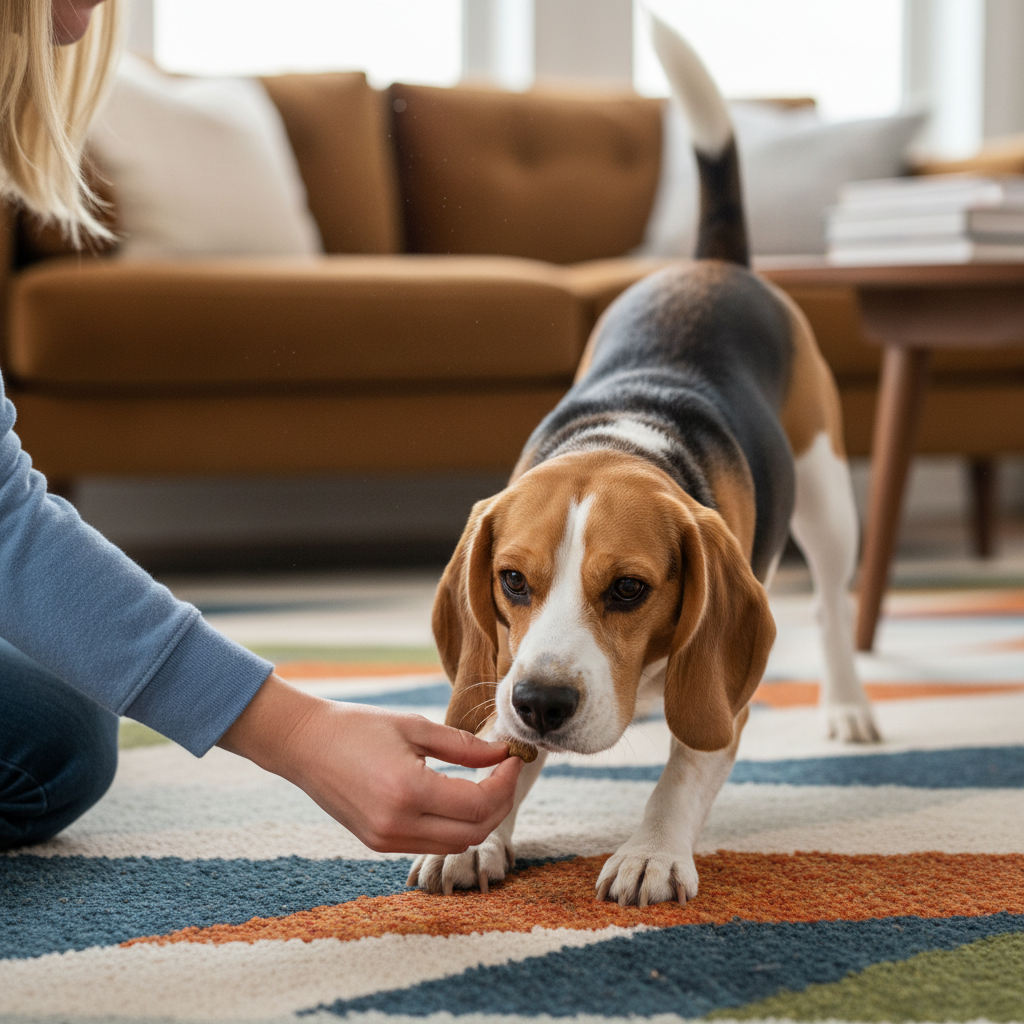
‘Luring’ is simply using a treat to guide your dog into a specific position. Hold a high-value treat between your thumb and forefinger. Let your dog sniff it, then slowly lower the treat from their nose straight down towards the floor, right between their front paws. As their nose follows the treat, their front end will lower. The moment their elbows touch the floor and their butt is still in the air, you’ve got a bow!
Step 2: Marking and Rewarding
Timing is critical here. The very instant your dog hits that bow position, you need to ‘mark’ the behavior. If you’re using a clicker, click now. If you’re using a verbal marker, say “Yes!” in a cheerful tone. Immediately after the marker, give them the treat. In the beginning, release them from the position to get the treat. This sequence—bow, click/Yes!, treat—tells your dog precisely what action earned them the reward.
Repeat this process in short, fun sessions of just a few minutes. If your dog gets it right a few times in a row, end the session on a high note with lots of praise and maybe a little game of tug. We want them to associate this new game with fun, not work.
Step 3: Adding the Verbal Cue
Once your dog is reliably following the treat lure into the bow position every time, you can start adding a name to the action. Just before you begin the luring motion with the treat, say your chosen cue word clearly. Good options are “Bow,” “Stretch,” or “Play.” So the sequence becomes: Say “Bow” -> Lure them into position -> Mark (Click/Yes!) -> Reward. After several repetitions, your dog will start to associate the word “Bow” with the action of lowering their front end.
Step 4: Fading the Lure
The ultimate goal is for your dog to perform the bow with just the verbal cue, without needing the treat to guide them. To get there, we ‘fade’ the lure. Start by making your hand motion smaller and less obvious. Instead of luring all the way to the floor, maybe you just point towards the floor. Eventually, your hand signal can become a simple, subtle downward gesture. Continue to mark and reward every successful bow. With practice, you’ll be able to say “Bow,” and your dog will happily drop into position, eagerly awaiting their reward. This mastery of the basic bow is your ticket to the next, more advanced stretching phase.
Level Up: Encouraging the Full Back Leg Stretch

Level Up: Encouraging the Full Back Leg Stretch
Okay, your dog is now a bowing champion! They understand the cue and can hold the position. Now it’s time to build on that foundation and encourage the full back leg extension. This part requires a bit more patience and keen observation. Our goal is to ‘capture’ a natural movement that happens when the dog shifts its weight while in the bow position.
Step 1: Building Duration in the Bow
First, we want to make the bow position a comfortable place for your dog to hang out for a few seconds. Ask your dog to “Bow.” Once they are in position, wait just one or two seconds before you mark and reward. Gradually increase this duration. This teaches them to hold the position steady, which is necessary for the next step. If they pop up too early, just reset and try again for a shorter duration. Keep it positive!
Step 2: Luring the Head to Shift the Weight
Here’s where the magic happens. With your dog holding the bow position, take a second high-value treat in your other hand. Slowly move that treat from their nose towards their hip on one side. As their head turns to follow the treat, they will naturally have to shift their weight onto the opposite front leg and hip to stay balanced. This weight shift often causes the back leg on the same side as the treat to extend backward slightly. It might just be a small shift or a toe-drag at first, and that’s perfectly fine!
Step 3: Capturing the Stretch
This is all about observation. The very second you see that back leg begin to straighten, extend, or stretch backward—even a tiny bit—mark it with your clicker or “Yes!” and give them the treat with lots of praise. You are ‘capturing’ the behavior. You’re telling your dog, “That little leg movement you just did? That’s what I’m looking for!” In the beginning, reward any effort in the right direction. Over time, you can become more selective and only reward the bigger, more defined stretches.
Step 4: Adding a New Verbal Cue
Once your dog starts to understand the game and begins to offer the leg extension more deliberately, you can give this new, advanced move its own name. As you lure their head to the side, just as they begin to stretch, say your new cue, such as “Stretch,” “Extend,” or “Yoga.” Repeat on both sides, but keep sessions short to avoid muscle fatigue. Remember to work both back legs equally to maintain balanced muscle development.
This process takes time and patience. Some dogs will get it quickly, while others may need many sessions. The key is to celebrate the small victories and never push your dog beyond their comfort level. This is a partnership, and the journey of learning together is the biggest reward.
Hitting a Snag? Troubleshooting Common Doga Hurdles
Hitting a Snag? Troubleshooting Common Doga Hurdles
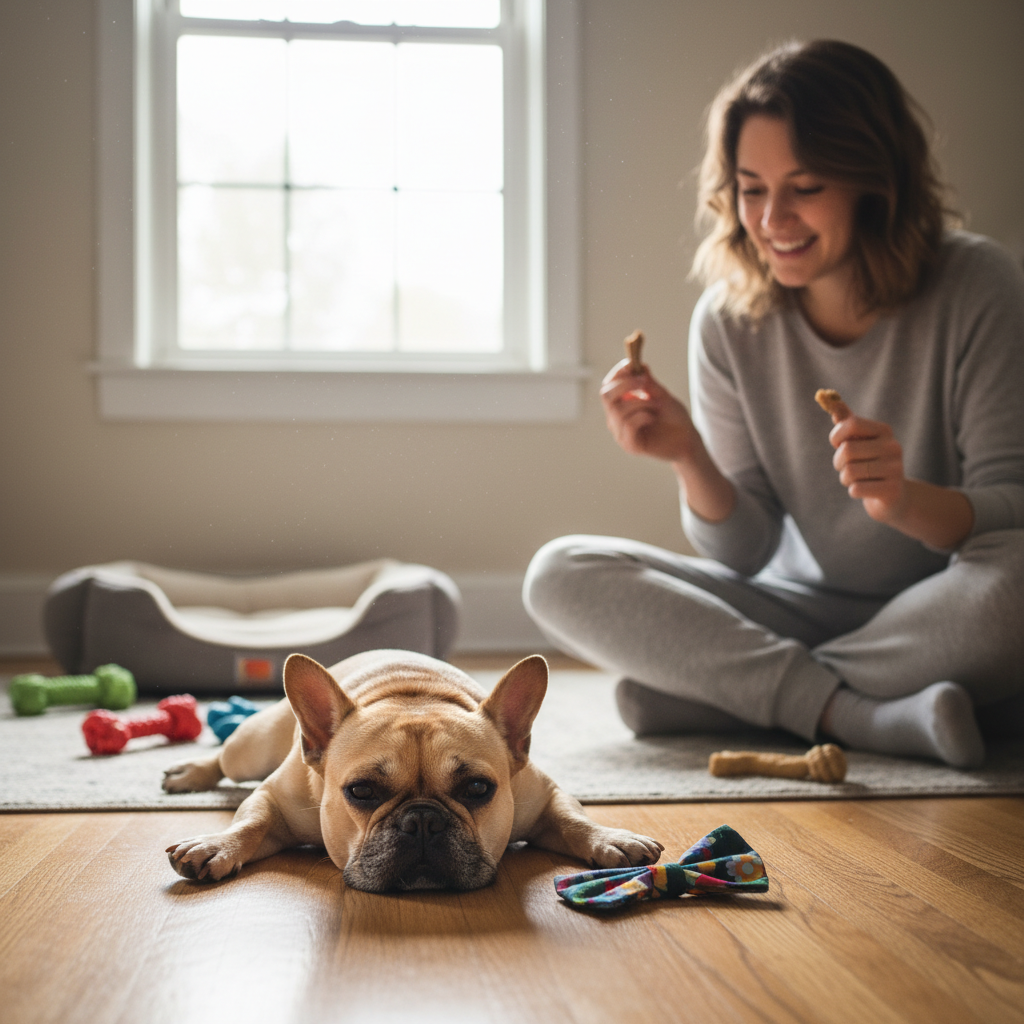
Even with the best treats and the happiest attitude, you might run into a few little roadblocks on your canine yoga journey. That’s completely normal! Every dog learns differently. Let’s look at some common challenges and how to navigate them with a positive approach.
| Common Problem | Troubleshooting Solution |
|---|---|
| My dog just lies down completely instead of holding a bow. | This often happens if the session is too long or the dog is tired. Keep training sessions super short (1-2 minutes). You can also try using a higher-value treat to keep them more engaged. Ensure you’re rewarding the instant they hit the bow, before they have a chance to pancake onto the floor. |
| My dog won’t extend their back leg at all. | Go back a step! Spend more time rewarding a simple, solid ‘bow’. When you reintroduce the head-turn lure, make the movement very slow and exaggerated. Reward even the tiniest weight shift or toe wiggle at first. Patience is your best friend here. |
| My dog gets too excited and starts barking or jumping. | This is a case of a dog who is too motivated! It’s a good problem to have. Try having your Doga session after a walk or a game of fetch when they’ve burned off some excess energy. Also, check your own energy—stay calm and quiet in your movements and voice. |
| My dog is interested for a minute, then just wanders off. | The environment might be too distracting, or the reward might not be motivating enough. Move to a quieter room and level up your treats to something truly irresistible. Remember to end each session on a positive note while they are still engaged, leaving them wanting more next time. |
An Expert Trainer’s Reminder: Frustration is the enemy of good training. If you feel yourself getting frustrated, or if your dog seems confused or stressed, just end the session with a simple, successful move you know they can do (like ‘sit’). Give them a treat, lots of praise, and try again another day. The goal is connection and fun, not perfection.
Making it a Habit: The Broader Benefits of Canine Stretching
Making it a Habit: The Broader Benefits of Canine Stretching
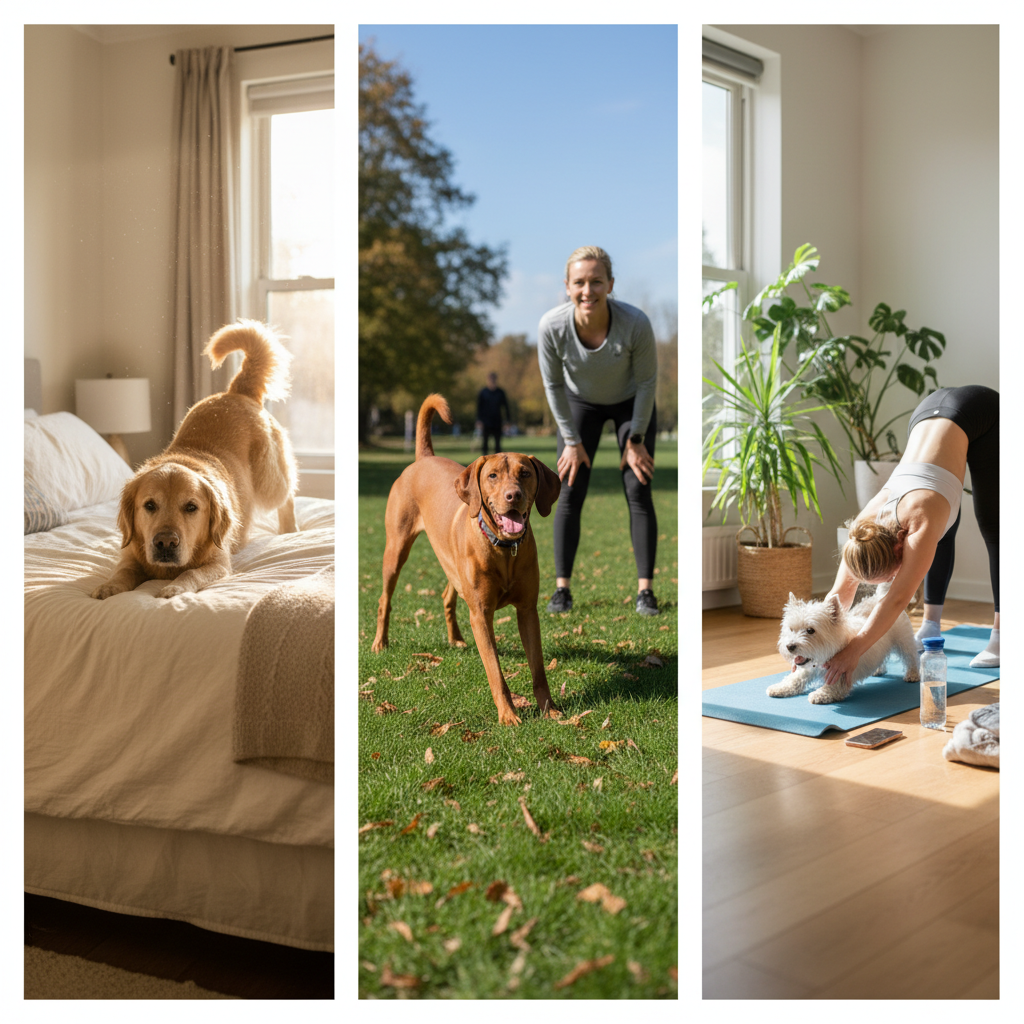
Congratulations, you’ve taught your dog a fantastic new skill! But the journey doesn’t end here. Integrating this stretch and other simple movements into your daily routine can have profound, long-lasting benefits for your dog’s physical and mental well-being.
When and How Often Should We Practice?
Think of these stretches as little wellness moments throughout the day. Here are some great times to incorporate them:
- As a Warm-Up: A few gentle bows and leg stretches are a perfect way to warm up your dog’s muscles before a brisk walk, a run, or a game of fetch.
- As a Cool-Down: After exercise, a good stretch can help reduce muscle soreness and increase flexibility as the muscles cool down.
- As a Calming Ritual: If your dog gets anxious or over-excited, a short, focused Doga session can be a wonderful way to help them settle down and relax.
- For Senior Dogs: For our older companions, gentle daily stretching can be incredibly beneficial for managing stiffness associated with arthritis and maintaining mobility.
You don’t need to do a long session every day. Just a couple of minutes, once or twice a day, is enough to make a real difference.
Beyond the Bow: Other Simple Stretches
While the back leg extension is a great targeted stretch, you can also encourage other natural movements. When your dog does their ‘long dog’ stretch after a nap (front legs forward, back legs back), you can give it a name like “Big Stretch!” and reward them for it. This reinforces their natural instinct to stretch and makes them more aware of the movements that feel good for their body.
The Real Goal: A Healthier Dog and a Stronger Bond
Teaching your dog to stretch is about so much more than just a cool trick. It enhances their physical health by improving circulation, maintaining joint health, and preventing injuries. But just as importantly, it enriches their mental health. Training sessions like this build confidence and provide valuable mental stimulation.
Ultimately, the time you spend patiently teaching, rewarding, and connecting with your dog is an investment in your relationship. You’re learning to communicate more clearly, to understand their body language, and to work together as a team. That shared experience is the heart and soul of canine yoga.
Conclusion
You did it! You’ve embarked on a wonderful journey into the world of canine yoga. By patiently guiding your dog through the steps, from a simple play bow to a full back leg extension, you’ve given them a gift that supports their physical health for years to come. You’ve helped them improve their flexibility, body awareness, and overall comfort.
But as you’ve probably discovered, the real magic isn’t just in the stretch itself. It’s in the quiet moments of communication, the wagging tail when they get it right, and the focused attention you share. Every treat, every word of praise, and every successful ‘bow’ has strengthened the invisible leash of love and trust that connects you.
So keep it up! Continue to make these little wellness moments a part of your daily routine. Celebrate your dog’s progress, have a good laugh at the ‘pancake’ moments, and cherish this unique and wonderful way of connecting with your best friend. Your bond will be all the stronger and more flexible for it.