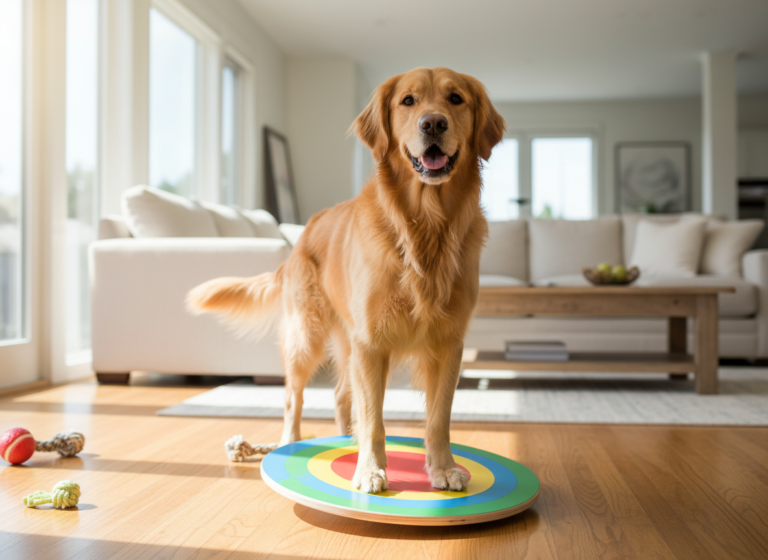
Hey there, fellow dog lover! Have you ever watched your pup chase a ball with incredible agility or leap onto the couch with effortless grace? That power comes from a strong, stable core. Just like for us humans, a dog’s core is the powerhouse for almost every movement they make. But how do we help them build and maintain that strength safely? Enter the peanut ball!
You might have seen these funny-shaped inflatable balls in physical therapy offices or gyms, but they are an absolutely fantastic tool for canine fitness. They offer a fun, low-impact way to improve your dog’s balance, body awareness, and overall core strength. Whether you have a high-energy sporting dog, a senior pup who needs some stability support, or just want a fun new way to interact with your best friend, you’re in the right place. This guide will walk you through everything you need to know to get started with beginner balance exercises using a peanut ball. Let’s get ready to roll!
The ‘Core’ of the Matter: Why Canine Core Strength is So Important
Before we jump into the fun exercises, let’s chat about why this is so important for your furry friend. A dog’s core isn’t just about their tummy muscles; it’s a complex group of muscles including the abdominals, back muscles, and pelvic muscles that work together to stabilize the spine. Think of it as your dog’s central support system.
A Strong Core Means a Healthier Dog
A well-conditioned core provides a ton of benefits that go far beyond just looking fit. Here’s what you can expect:
- Injury Prevention: A strong core acts like a natural brace for your dog’s spine and joints. It helps distribute weight and force evenly during activities, reducing the risk of sprains, strains, and even more serious injuries like cruciate ligament tears.
- Improved Performance: For the canine athletes out there who love agility, flyball, or dock diving, a powerful core is a game-changer. It enhances power, agility, and coordination, allowing them to run faster, turn sharper, and jump higher.
- Better Balance and Stability: This is especially crucial for senior dogs or those with mobility issues. A stable core helps them navigate slippery floors, uneven terrain, and daily movements with more confidence and less risk of falling.
- Enhanced Body Awareness (Proprioception): Proprioception is your dog’s sense of where their body and limbs are in space. Peanut ball exercises challenge this sense, making your dog more coordinated and less clumsy.
- Post-Surgery Rehabilitation: Under veterinary guidance, core-strengthening exercises are often a key part of recovering from orthopedic surgeries, helping to rebuild muscle safely.
Expert Tip: Core conditioning isn’t just for super-active dogs! Every single dog, from a tiny Chihuahua to a giant Great Dane, benefits from a stable core for everyday activities like getting up from a nap or hopping into the car.
Gearing Up: Choosing the Right Peanut Ball & Safety First
Alright, are you excited to get started? First things first, we need to make sure you have the right equipment and a safe space to work. The success and safety of these exercises depend on it!
Finding the Perfect Peanut
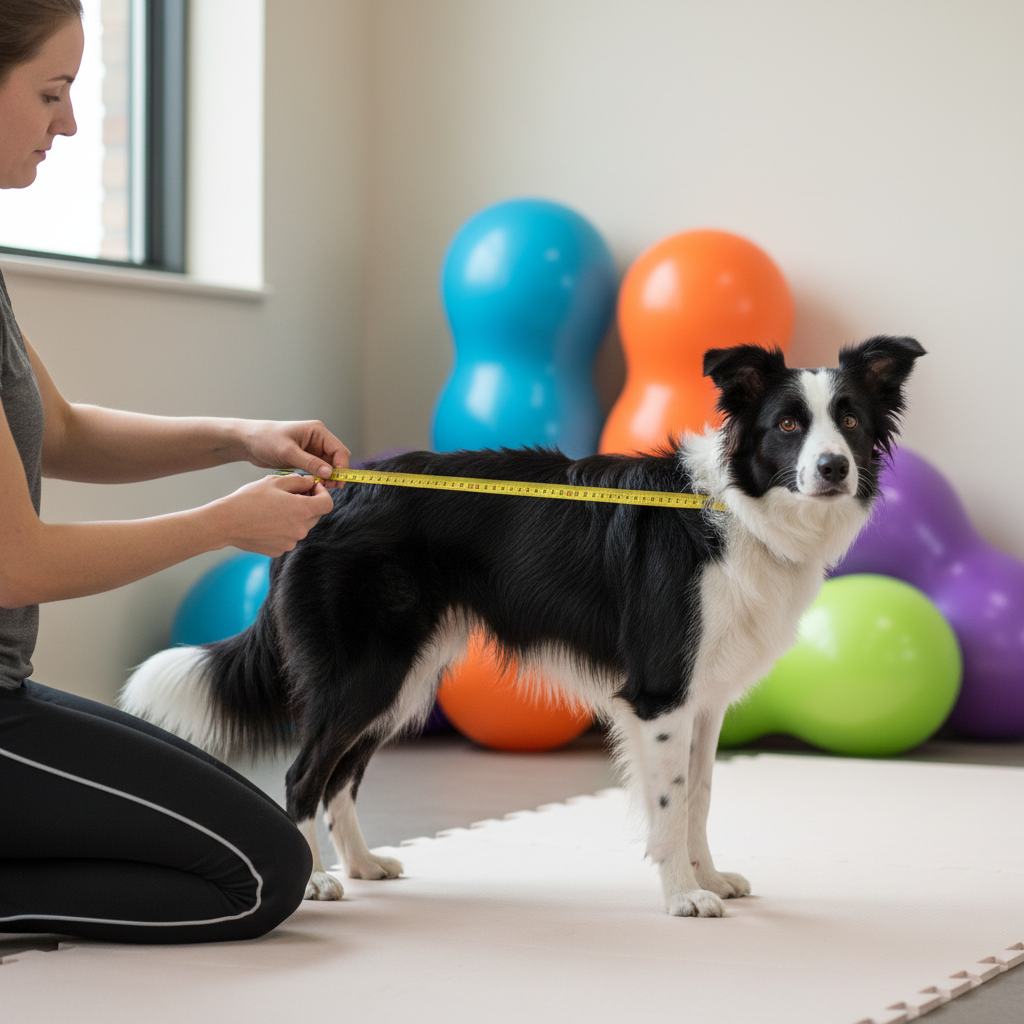
Peanut balls are not one-size-fits-all. Choosing the correct size is critical for your dog’s comfort and proper form. The goal is for your dog to be able to stand over the ball in a natural, neutral position with their back straight. Their back should be parallel to the floor, not curving up or dipping down.
Here’s a general guide to help you choose:
| Dog’s Back Length (Shoulder to Rump) | Recommended Peanut Ball Diameter | Example Breeds |
|---|---|---|
| Up to 16 inches | 40 cm | Chihuahua, Pomeranian, Small Terriers |
| 16 to 20 inches | 50 cm | Beagle, Cocker Spaniel, French Bulldog |
| 20 to 24 inches | 60 cm | Border Collie, Australian Shepherd, Springer Spaniel |
| 24 to 28 inches | 70 cm | Labrador Retriever, Golden Retriever, German Shepherd |
| Over 28 inches | 80 cm | Great Dane, Mastiff, Bernese Mountain Dog |
Important Note: Always measure your dog first! These are just examples. Also, look for a high-quality, anti-burst peanut ball designed for fitness or canine use. They’re much more durable than a simple toy.
Creating a Safe Workout Zone
Safety is our number one priority. Never leave your dog unattended with the peanut ball.
- Non-Slip Surface: Always perform these exercises on a non-slip surface like a yoga mat, interlocking rubber mats, or a rug. Hardwood or tile floors are too slippery and can cause injury.
- Clear the Area: Make sure you have plenty of space around you, free from furniture or other obstacles your dog could bump into.
- Positive Vibes Only: Keep sessions short, positive, and fun! Use lots of high-value treats (small, tasty morsels work best) and praise. If your dog seems stressed, scared, or tired, end the session and try again another day.
- Start with Low Inflation: A less-inflated ball is more stable and easier for beginners. You can always add more air to increase the challenge as your dog gets more confident.
The First Date: Introducing Your Dog to the Peanut Ball
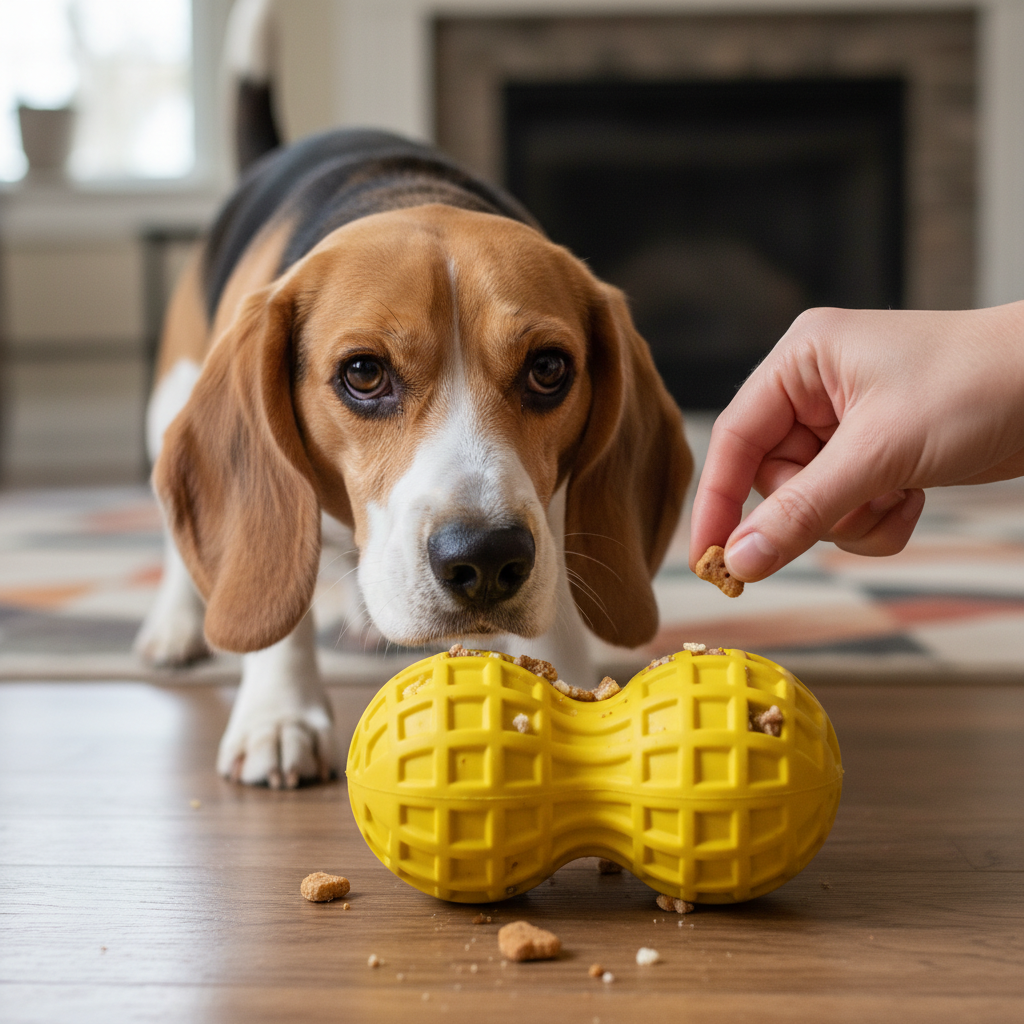
You wouldn’t jump straight into a complex workout without a warm-up, and we shouldn’t ask our dogs to either. The initial introduction to this big, weirdly-shaped object is a crucial step. The goal is to build a positive association. We want your dog to think, “Yay, the fun peanut!” not “Oh no, the scary monster!”
Follow these steps, moving at your dog’s pace:
- Just Let It Exist: Place the partially deflated peanut ball on the floor in your training area. Let your dog investigate it on their own terms. Don’t force them near it. Just let them sniff it, nudge it, and get used to its presence.
- The Treat Game: Once your dog is comfortable being near the ball, start placing high-value treats on and around it. Let them eat the treats off the floor near the ball first, then eventually from the top of the ball itself. This teaches them that good things happen around this new object.
- Rewarding Interaction: Any time your dog voluntarily touches the ball with their nose or a paw, say “Yes!” and give them a treat. We are rewarding their curiosity and confidence.
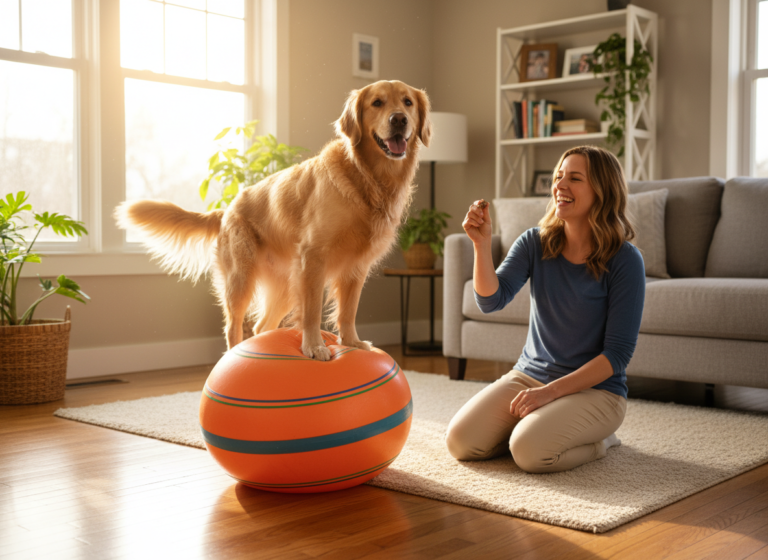
- Stabilize and Touch: Kneel on the floor and hold the ball steady between your knees. Encourage your dog to put their front paws up on the ball. The moment they do, reward them enthusiastically. Don’t ask for a long hold yet; we’re just building the behavior. Repeat this a few times.
Patience is Key: This introduction phase could take a few minutes for a bold dog or a few days for a more cautious one. Let your dog set the pace. Short, successful sessions are far better than long, frustrating ones.
Let’s Get Physical: 3 Beginner Balance Exercises
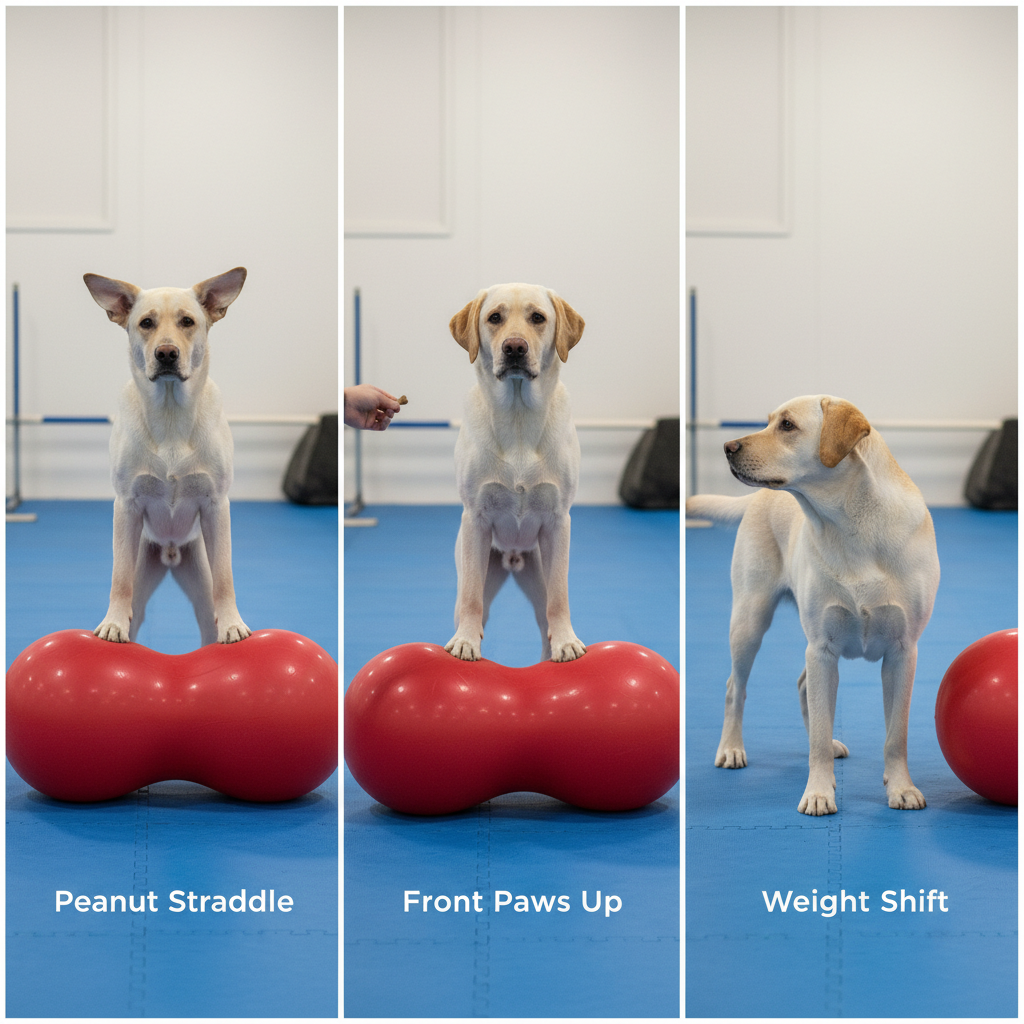
Once your dog is happily interacting with the peanut ball, it’s time to try some foundational exercises. Remember to keep it fun and use lots of praise! For all these exercises, you will need to be actively spotting your dog, with your hands gently hovering near their hips or shoulders to provide support if they lose their balance.
Exercise 1: The Peanut Straddle (Foundation)
This is the starting point for most peanut ball work. It helps your dog get used to the feel of the ball under their belly and how to engage their core to stay stable.
- Lure your dog to stand over the properly sized, partially inflated peanut ball. Their front paws should be on the floor on one side, and their back paws on the floor on the other.
- Their spine should be in a straight, neutral position. You may need to use a treat to guide their head forward and keep their back flat.
- Simply ask them to hold this position for 3-5 seconds. Use your hands to keep the ball from rolling and to support your dog’s body.
- Reward them with a treat and praise while they are holding the position.
- Gently help them step off. Repeat 3-5 times.
Exercise 2: Front Paws Up
This exercise starts to shift your dog’s weight and encourages them to engage their rear-end and core muscles to stay balanced.
- Place the peanut ball perpendicular to your dog (like a “T”). Hold it steady.
- Use a treat to lure your dog to place both front paws on the top of the ball.
- Their body should be in a straight line from their head to their tail. Try to avoid any arching or sagging in their back.
- Ask them to hold this position for 5-10 seconds. You will see their core muscles trembling and engaging to keep them stable.
- Reward and release. Repeat 3-5 times. As they get stronger, you can increase the duration.
Exercise 3: Gentle Weight Shifts
This is a more dynamic exercise that builds on the ‘Front Paws Up’ position. It actively challenges their stabilizing muscles.
- Have your dog in the ‘Front Paws Up’ position, with you holding the ball securely.
- Once they are stable, use a treat to lure their head slowly to the left. This will cause them to shift their weight onto their right side. Hold for a second, then bring the treat back to the center.
- Now, lure their head slowly to the right, causing them to shift their weight to their left side. Hold for a second, then return to center.
- That’s one repetition. Aim for 3-5 reps per set. The movements should be very slow and controlled.
Fine-Tuning Your Technique: Common Mistakes & Pro Tips
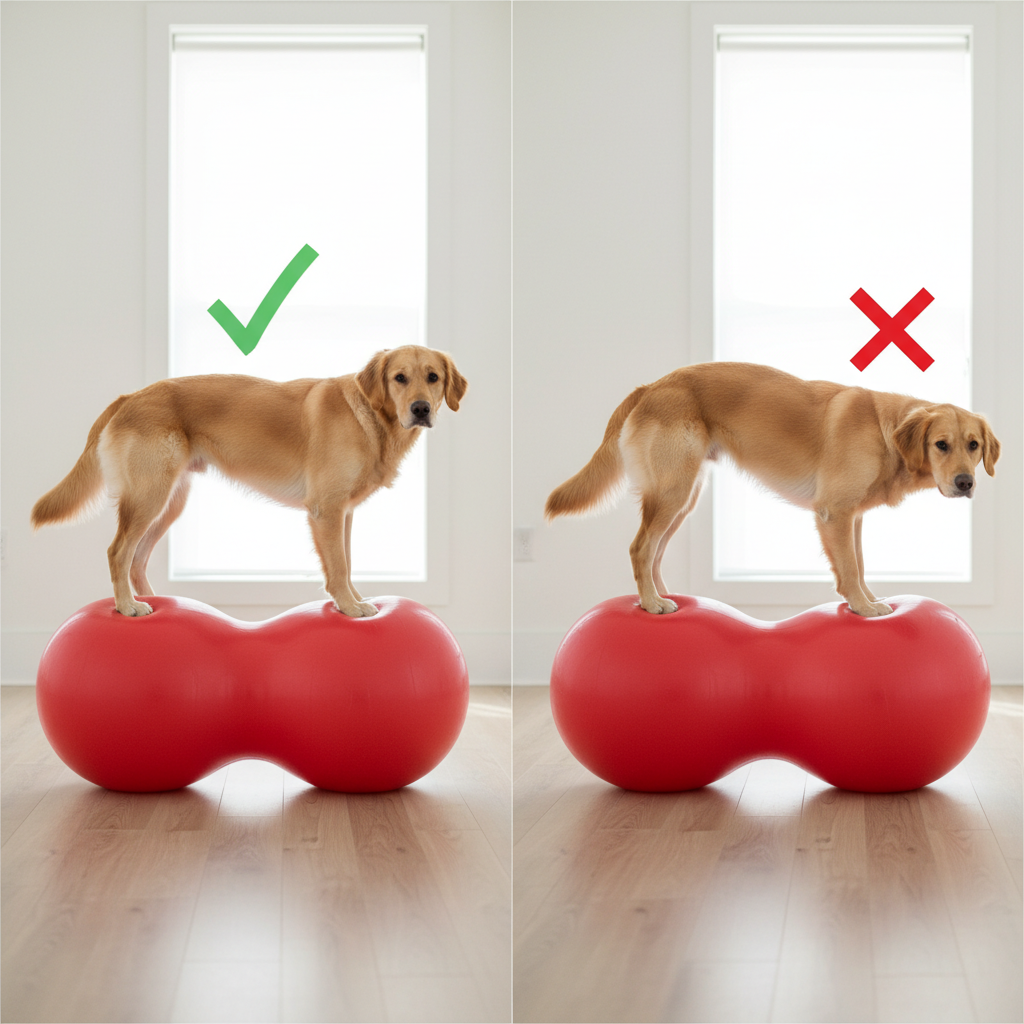
As you and your dog become a core-conditioning team, you might run into a few little bumps. That’s totally normal! Here are some common mistakes to watch out for and some pro tips to ensure your sessions are as effective and fun as possible.
Common Mistakes to Avoid
- Going Too Fast: The most common mistake is trying to do too much, too soon. Fitness training for dogs is a marathon, not a sprint. Keep initial sessions under 5 minutes and focus on quality over quantity.
- Improper Form: Watch for a ‘roached’ (arched) or sagging back. This often means the exercise is too difficult, the dog is tired, or the ball is the wrong size. A straight, neutral spine is always the goal. Stop and reset if you see poor form.
- Forgetting to Spot: Never take your hands completely off your dog or the ball, especially in the beginning. Your job is to be their safety net and support system.
- Working on a Slippery Surface: We mentioned it before, but it’s worth repeating. A lack of traction is dangerous and makes it impossible for your dog to properly engage their muscles. Use a mat!
Pro Tips for Peanut Ball Success
- Be the Cheerleader: Your energy is contagious! If you are excited and encouraging, your dog is more likely to be engaged and confident. Use a happy, upbeat tone of voice.
- Keep it Predictable: Dogs thrive on routine. Try to do your exercises in the same place and around the same time. Start each session with the same warm-up (like the introduction games) to get them in the right mindset.
- Watch for Signs of Fatigue: Heavy panting, a lagging tail, or a desire to leave the area are all signs your dog has had enough. Always end the session on a positive note before they get exhausted.
- Combine with Other Activities: Peanut ball exercises are a fantastic supplement to your dog’s regular activities like walks, runs, and playtime. They are not a replacement for aerobic exercise.
Remember, the ultimate goal is to build strength, confidence, and have fun together. Listen to your dog, celebrate the small victories, and enjoy this wonderful new way to bond with your best friend.
Conclusion
Congratulations! You’re now equipped with the knowledge to safely and effectively introduce your dog to the wonderful world of core conditioning with a peanut ball. By starting slow, focusing on positive reinforcement, and prioritizing safety, you’re not just building muscle; you’re building confidence and deepening the trust between you and your canine companion.
Remember that consistency is more important than intensity. A few short, fun sessions each week will yield amazing results over time, contributing to a longer, healthier, and more active life for your dog. So, grab that peanut ball, a handful of treats, and get ready to watch your dog become a stronger, more stable, and more confident version of themselves. Happy training!