Have you ever looked at your furry best friend and thought, ‘You’re smart enough to be managing your own finances’? While they might not be ready to balance a checkbook just yet, you can teach them a trick that’s the next best thing! Welcome to one of the most adorable and mentally stimulating tricks in the book: teaching your dog to put a ‘coin’ in a piggy bank.
This isn’t just a cute party trick. It’s a powerful brain game that provides incredible mental enrichment, builds your dog’s problem-solving skills, and boosts their confidence. More importantly, it’s a wonderful opportunity to spend quality time together, strengthening that special bond you share. Using positive reinforcement, you’ll break down the behavior into tiny, achievable steps, turning your pup into a little saver. In this guide, we’ll walk you through everything you need, from gathering the right supplies to troubleshooting common hiccups, ensuring your training sessions are fun, safe, and successful. Let’s get started!
Gathering Your Supplies: What You’ll Need to Get Started
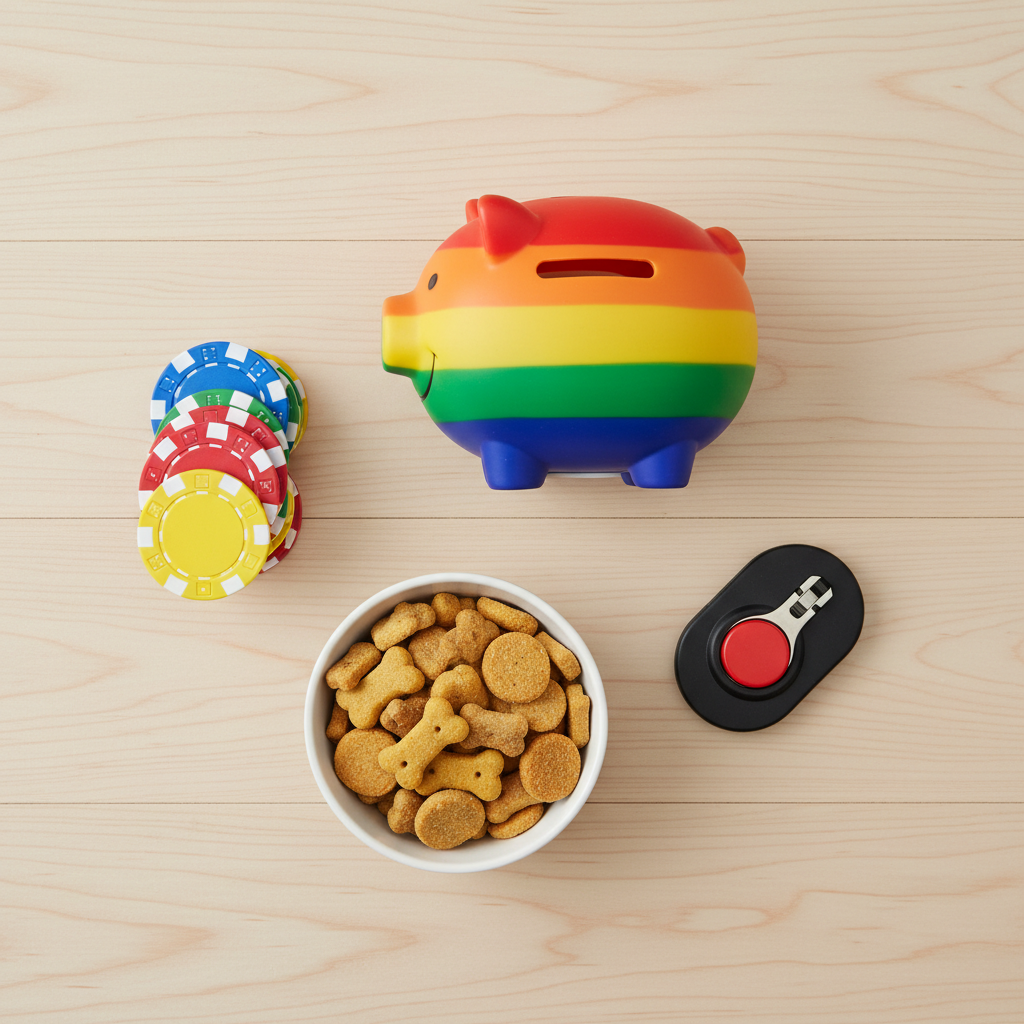
Before you can turn your pup into a piggy bank pro, you’ll need to set yourselves up for success. Having the right tools on hand makes the training process smoother and, most importantly, safer for your dog. Here’s a checklist of everything you’ll need:
- A Dog-Friendly ‘Bank’: Forget fragile ceramic piggy banks. You’ll want something sturdy made from plastic or wood that won’t break if knocked over. The most critical feature is a large slot. It needs to be big enough for your chosen ‘coins’ to pass through easily, and wide enough that there’s no risk of your dog’s snout getting stuck.
- Large, Dog-Safe ‘Coins’: This is the most important safety consideration. Never use real coins. They are a serious choking hazard and can cause zinc toxicity if ingested. Instead, opt for items that are too large for your dog to swallow. Great options include large plastic poker chips, smooth wooden discs, or even a specific, designated flat rubber toy. Ensure they are made from non-toxic materials.
- High-Value Treats: This trick requires focus, so you’ll want to use extra-special treats to keep your dog motivated. Think small, soft, and smelly goodies like tiny pieces of cheese, chicken, or their favorite store-bought training treats.
- A Clicker (Optional): A clicker is a fantastic tool for marking the exact moment your dog does something right. If you’re new to clicker training, this is a great trick to start with! If you prefer not to use one, a consistent marker word like “Yes!” works just as well.
- A Quiet Training Space: Choose a comfortable, distraction-free area in your home where you and your dog can focus. A quiet living room or hallway is perfect. Keeping sessions short and sweet (5-10 minutes) will also help maintain your dog’s enthusiasm.
Step-by-Step Guide: From ‘Hold’ to ‘Ka-Ching!’
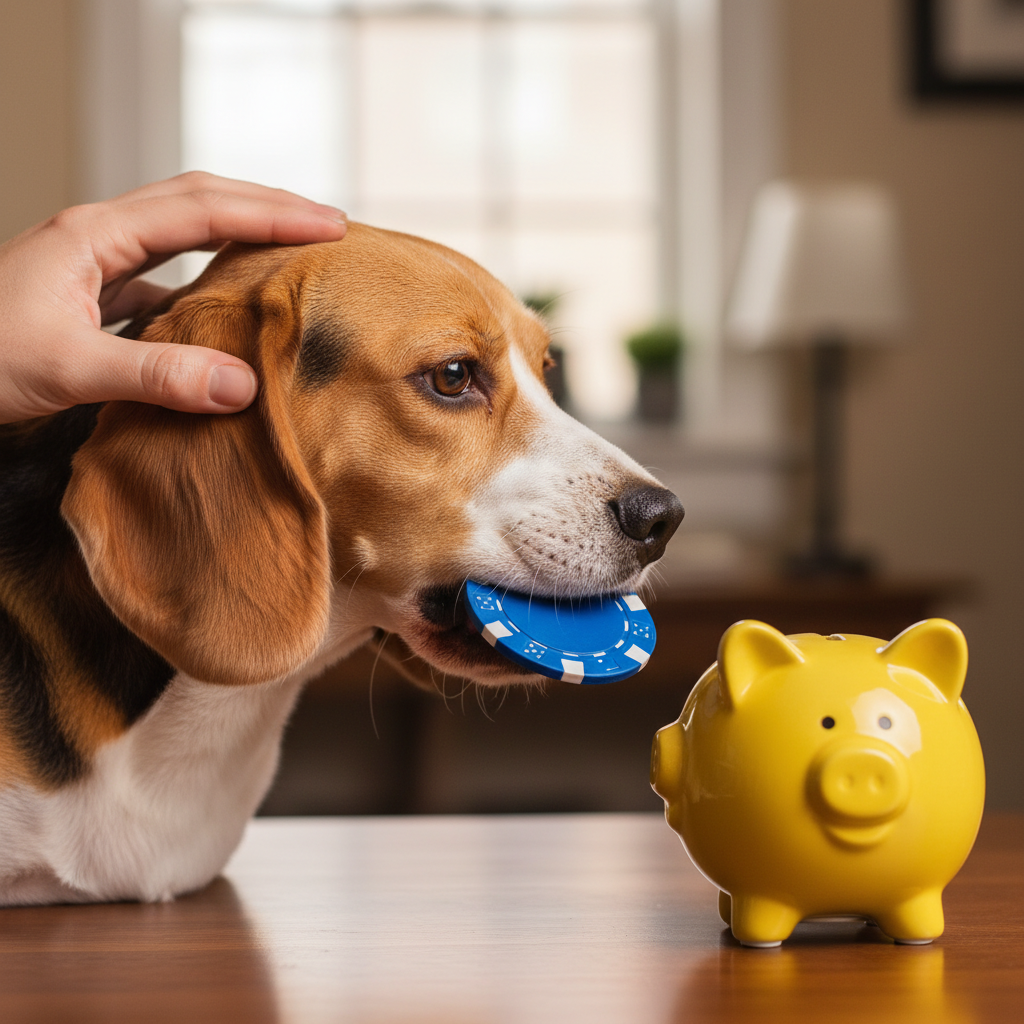
Teaching this trick is all about ‘shaping’—rewarding small approximations of the final behavior until your dog puts all the pieces together. Be patient, stay positive, and celebrate every tiny bit of progress! We’ll break it down into five core steps.
Step 1: Introduce the ‘Coin’
The first goal is to make your dog love the ‘coin’. Sit on the floor and place one of your dog-safe coins in front of you. The moment your dog shows any interest—sniffing it, nudging it, or touching it—click (or say “Yes!”) and give them a treat. Repeat this until your dog is eagerly interacting with the coin. Then, start rewarding only when they put their mouth on it.
Step 2: Master the ‘Hold’ Command
Once your dog is comfortably mouthing the coin, you can teach them to hold it. Encourage them to pick it up. The instant they have it in their mouth, click/treat. Gradually, you’ll want to delay the click/treat by a single second, then two, and so on, to build duration. You’re looking for a gentle hold, not a chew. If they start chewing, you’re moving too fast. Keep sessions short to avoid frustration.
Step 3: Introduce the Bank
Now, bring the piggy bank into the picture. Place it on the floor near you. At first, simply reward your dog for being near the bank. Then, ask your dog to hold the coin. If they are holding the coin and happen to be near the bank, give them a jackpot of treats! You want them to form a positive association between holding the coin and being near the bank.
Step 4: Shaping the ‘Drop’
This is where it all comes together. Have your dog hold the coin and position the bank underneath their chin. They will eventually drop the coin. The moment it falls into the bank (even by accident!), throw a treat party! Lots of praise and multiple treats. Repeat this, holding the bank for them. Soon, your dog will realize that dropping the coin into the bank is what earns the reward. Once they get the hang of it, you can place the bank on the floor and encourage them to move towards it and drop the coin in.
Step 5: Putting It All Together with a Cue
When your dog is reliably picking up the coin, walking to the bank, and dropping it in, you can add a verbal cue. Just as your dog is about to perform the action, say your chosen cue, such as “Save it!” or “Bank it!” After a few repetitions, you can start saying the cue to initiate the behavior. You’ve done it! Your dog is now a little money-saver!
Troubleshooting Common Hiccups: When Your Pup Needs a Little Help
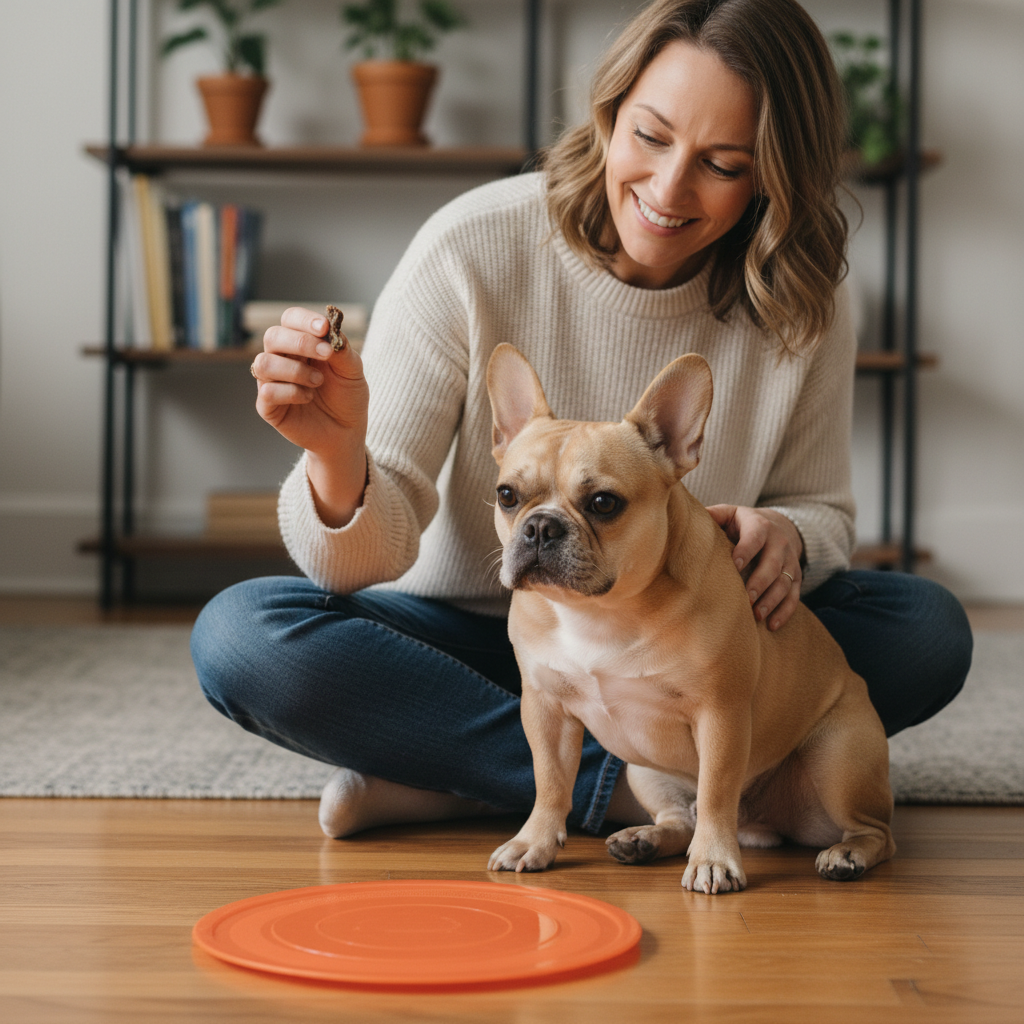
Even with the best plan, you might run into a few snags. Don’t worry, it’s a normal part of the training process! Here are some common challenges and how to overcome them with patience and positivity.
- My dog chews the ‘coin’ instead of holding it. This is very common! It usually means the ‘hold’ duration is too long for them at first, or the ‘coin’ is too tempting to chew. Go back a step and reward for very short holds (less than a second). You can also try a different type of ‘coin’, like a hard plastic or smooth wooden one that is less satisfying to chew.
- My dog drops the ‘coin’ before reaching the bank. This is a sign you’ve tried to combine too many steps at once. Break it down even further. Reward your dog for taking just one step towards the bank while holding the coin. Then two steps. Slowly close the distance until they can make it all the way. Remember, every step in the right direction is a success!
- My dog seems scared of the piggy bank. The noise of the ‘coin’ dropping in can be startling for some dogs. To fix this, use a process called counter-conditioning. Simply place the bank on the floor and drop treats on and around it without asking your dog to do anything. Let them approach and eat the treats at their own pace. This helps them associate the bank with good things. You can also stuff a small towel inside the bank to muffle the sound initially.
- My dog just won’t pick up the ‘coin’. If your dog is hesitant to put the object in their mouth, you can make it more appealing. Try smearing a tiny, lick-safe amount of peanut butter or cream cheese on it. Once they start licking it, they are more likely to pick it up. Reward any mouth contact to build their confidence.
Remember the golden rule of dog training: always end on a positive note. If you or your dog are getting frustrated, end the session with an easy win (like a simple ‘sit’ or ‘touch’) and try again later.
Level Up! Making the Game More Challenging
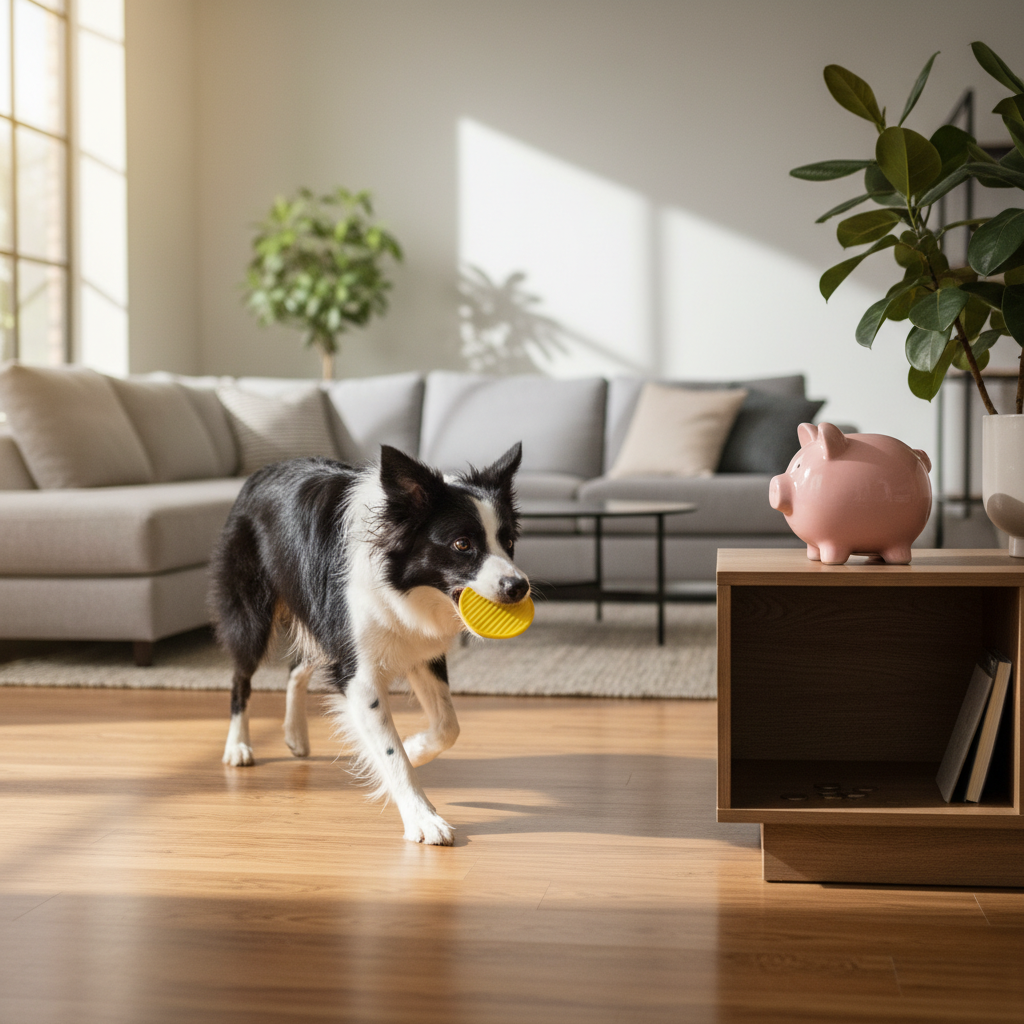
Once your dog has mastered the basic trick of putting a coin in the bank, you don’t have to stop there! You can build on this foundation to make the game even more engaging and mentally challenging. This is where you can get creative and keep your dog’s brain buzzing.
Increase the Distance
Start by placing the ‘coin’ a few feet away from the bank. Ask your dog to go get the coin and bring it back to deposit it. Gradually increase the distance as they become more successful. This adds a retrieving component to the trick, which many dogs love.
Play ‘Find It’
Turn the trick into a scent game. Place the bank in its usual spot, but ‘hide’ the coin in an obvious place in the same room. Tell your dog to “Find it!” and then “Save it!” once they’ve picked it up. This engages their natural sniffing instincts and adds a new layer of problem-solving.
Use Multiple Coins
Line up two or three ‘coins’ and see if your dog can pick them up one by one and deposit them all. This requires more focus and persistence. Be sure to reward them enthusiastically after each successful deposit to keep them engaged!
Teach a Color Discrimination
For the truly advanced canine scholar, you can teach them to differentiate. Using two different colored ‘coins’ (e.g., red and blue), teach a new cue like “Get blue.” Only reward your dog when they pick up the blue coin. This is a complex task that requires a lot of patience, but it’s an incredible way to challenge a smart dog’s mind.
By adding these variations, you transform a single trick into an entire repertoire of brain games, ensuring your dog stays mentally sharp, engaged, and entertained for years to come.
Conclusion
Congratulations! You’ve just unlocked a fantastic new way to engage with your dog. Teaching them to put a ‘coin’ in a bank is so much more than a simple trick; it’s a testament to your dog’s intelligence and the incredible bond you share. Throughout this process, you’ve practiced patience, clear communication, and positive reinforcement—the cornerstones of any healthy and happy relationship with your pet.
Remember to always keep it fun and end on a high note. Whether your dog mastered it in a day or is still working on the first step, the most important thing is the quality time you’re spending together. So, celebrate every little success, keep those treats handy, and enjoy the amazing feeling of accomplishing something new with your four-legged best friend. Now, go show off your little saver’s new skills!