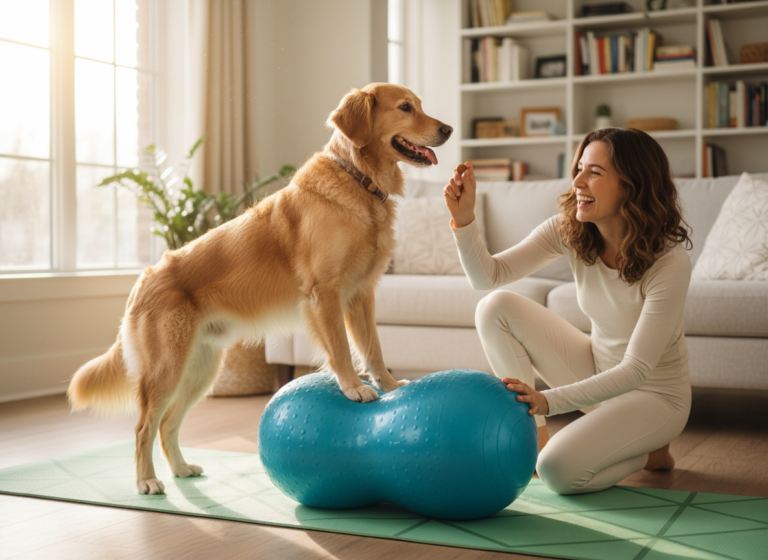
Does this sound familiar? You’re watching your new puppy joyfully bounce around the living room, and then… thump. They’ve misjudged a turn and tumbled right into the coffee table. Or maybe they’re constantly tripping over their own, ever-growing paws. It’s cute, for sure, but it might leave you wondering if your little one is destined for a life of lovable clumsiness. Well, what if I told you there’s a secret ‘sixth sense’ you can help them develop? It’s called proprioception, and it’s the key to transforming your wobbly pup into a confident, coordinated companion.
Simply put, proprioception is your puppy’s awareness of their body in space. It’s an internal GPS that tells their brain where their paws, tail, and torso are without them having to look. For a growing puppy, this system is still under construction! By playing simple, fun games, you can help them build these crucial neural pathways, improving their balance, preventing future injuries, and boosting their overall confidence. Forget expensive equipment; all you need are a few household items and a playful spirit. Let’s dive into the world of body awareness and get your puppy on the path to physical grace!
What in the World is Proprioception? (And Why Your Puppy Needs It)
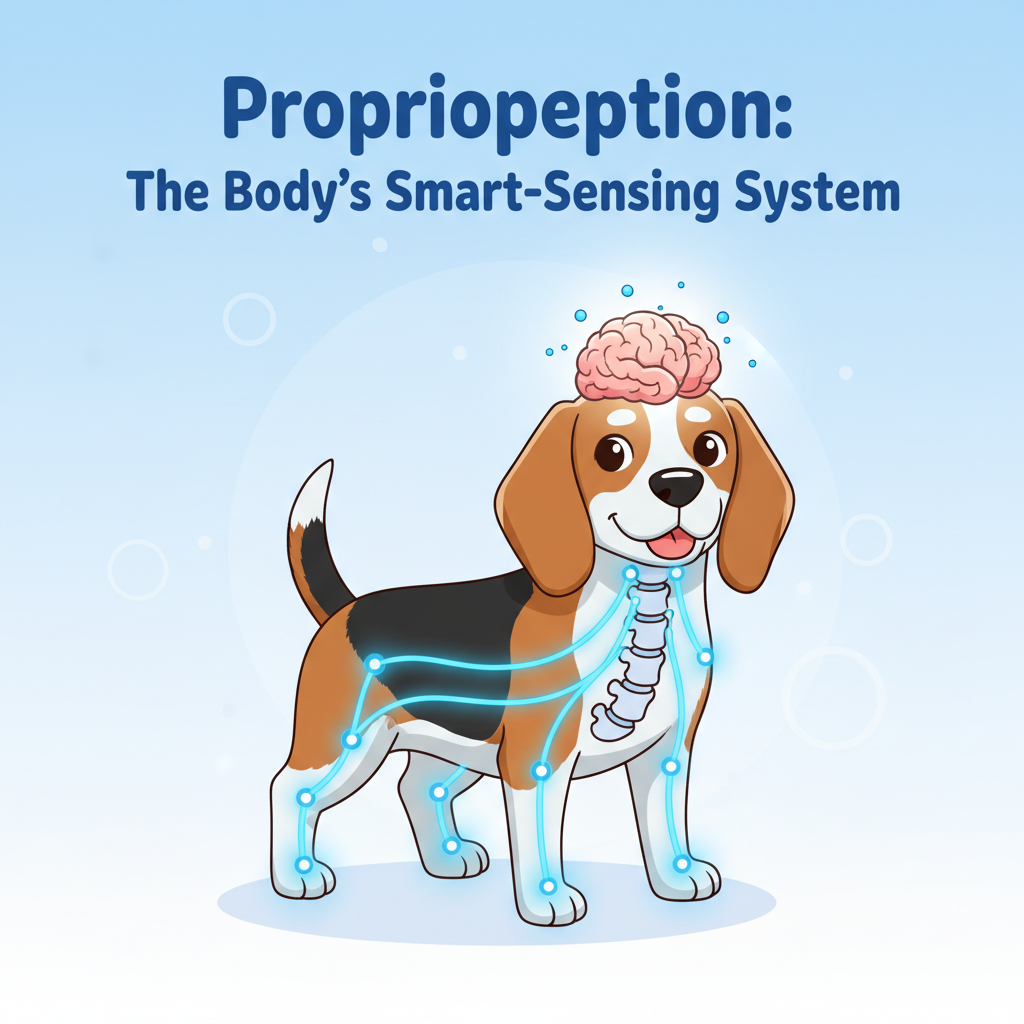
Let’s break it down. Proprioception is a constant stream of information from nerves in your puppy’s muscles and joints, flowing to their brain. This feedback loop tells them if they’re standing on a hill, lifting a paw, or squeezing into a tight space. Think about how you can walk up a flight of stairs in the dark—that’s your proprioceptive system at work! Puppies aren’t born with this system fully developed; they fine-tune it through play and exploration.
A puppy with a well-developed sense of proprioception is more ‘sure-footed.’ They can navigate different surfaces with ease, recover their balance quickly, and are less likely to take a tumble. On the other hand, a pup with poor body awareness might seem hesitant on new textures, frequently misjudge distances, and appear generally uncoordinated.
The Big Benefits of Better Body Awareness
Investing a little time in these games pays huge dividends for your puppy’s entire life. Here’s why it matters so much:
- Injury Prevention: A dog who knows where their feet are is less likely to land awkwardly, twist a joint, or take a bad fall. This is especially important for breeds prone to joint issues.
- Confidence Boost: Navigating a ‘scary’ pile of pillows or a wobbly cushion successfully is a huge win for a puppy! Mastering these physical challenges translates into greater confidence in all areas of their life.
- Enhanced Athletic Performance: If you ever plan on doing dog sports like agility, flyball, or even just playing fetch at the park, good proprioception is the foundation for all of it. It’s the difference between a dog who can leap for a frisbee and one who fumbles the landing.
- Strengthened Bond: Working together on these fun, low-pressure games builds trust and communication between you and your puppy. It’s quality time that has a purpose.
Expert Tip: Think of proprioception exercises as ‘brain games’ for the body. You’re not just building muscle; you’re building a smarter, more connected nervous system that will serve your dog for a lifetime.
Setting Up for Success: Gear and Safety First!
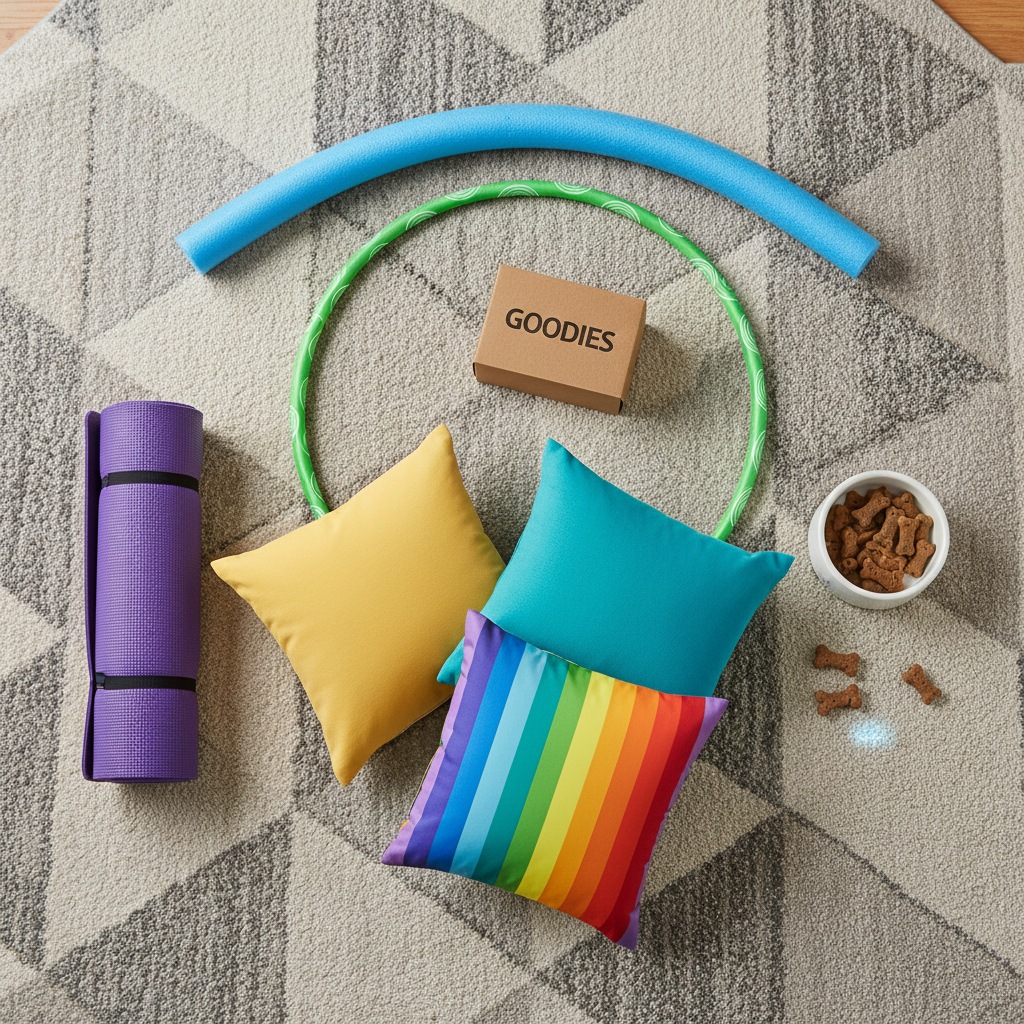
The best part about proprioception training is that you don’t need to order a cartful of fancy equipment. Your home is already a treasure trove of perfect props! The goal is to create novel and safe challenges for your puppy’s brain and body.
Your DIY Proprioception Toolkit
Look around your house for items like these:
- Pillows & Cushions: Sofa cushions, bed pillows, and throw pillows of various sizes and firmness.
- Blankets & Towels: A crumpled-up duvet or a few folded towels create an uneven surface to walk on.
- Cardboard Boxes: A low, wide box with both ends open makes a fantastic beginner’s tunnel.
- Pool Noodles: Inexpensive and versatile! You can lay them on the ground for the puppy to step over.
- Yoga Mat or Rolled Towel: Something that creates a narrow, raised path.
- Bubble Wrap: For a fun, noisy texture challenge (always supervise this one closely!).
The Golden Rules of Safe Play
Before you turn your living room into a puppy playground, let’s go over some crucial safety rules. Remember, the goal is to build confidence, not create fear.
- Non-Slip Surface: Always play on a rug, carpet, or interlocking foam mats. Hardwood or tile floors can be slippery and dangerous for these exercises.
- Go Slow & Keep it Positive: Let your puppy investigate new objects at their own pace. Use lots of high-value treats and cheerful praise. Lure them over or through things; never push, pull, or force them.
- Short & Sweet Sessions: A puppy’s attention span is short, and this work is mentally taxing. Keep training sessions to just 3-5 minutes at a time, once or twice a day. Always end on a high note!
- Bare Paws are Best: Let your puppy do these exercises with ‘naked’ paws. This allows the nerves in their feet to get the maximum amount of sensory information from the different surfaces.
- Puppy’s Choice: If your pup is having an off day or seems scared of an object, don’t push it. Put it away and try again another day, or break it down into an even smaller step.
The Games Begin! 5 Fun & Easy Proprioception Exercises
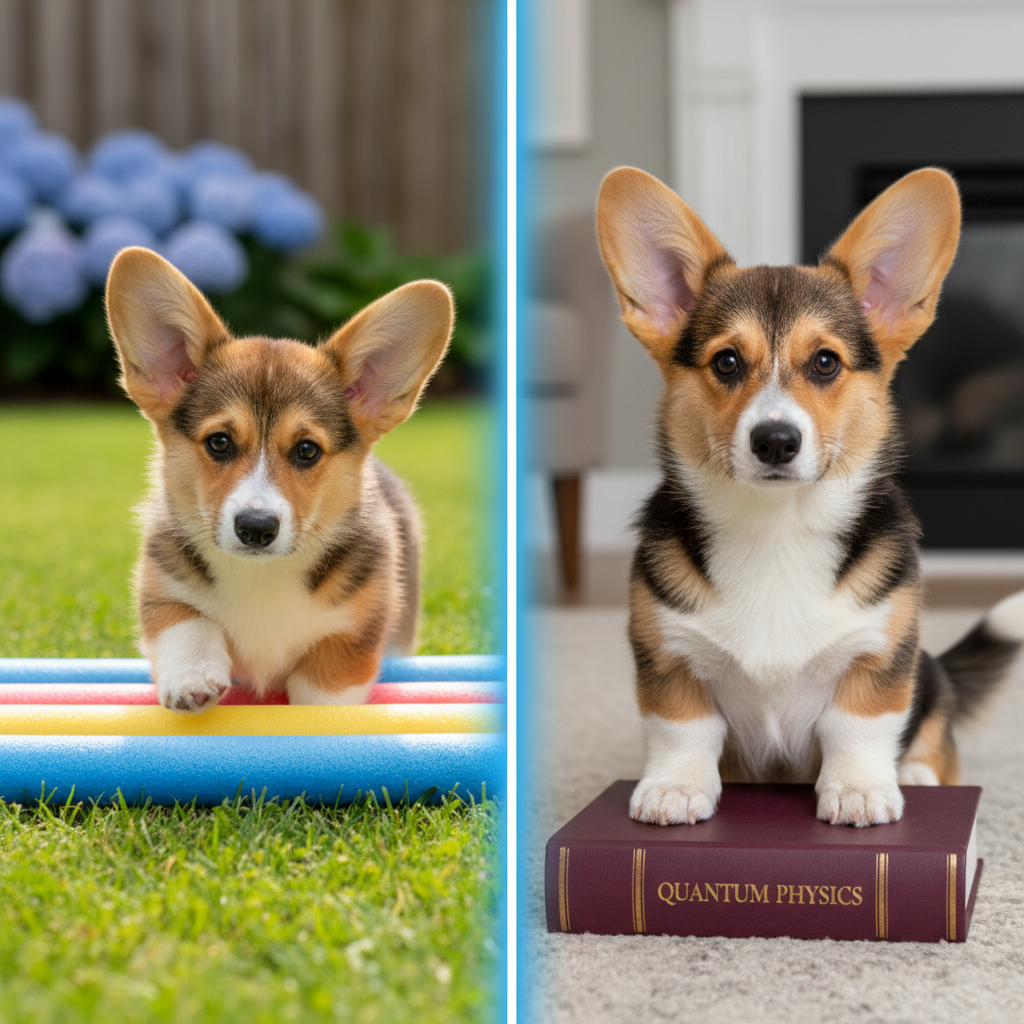
Alright, it’s playtime! Here are five simple games you can start with today. Remember to have your tasty treats ready and keep your energy fun and encouraging. Let’s go!
1. The Pillow Pit
This is the perfect starting point. It’s low-impact and teaches your puppy to navigate an unstable surface.
- Setup: Scatter a few pillows and sofa cushions on the floor in a small, contained pile.
- Action: Toss a high-value treat into the middle of the pillow pit. Cheerfully encourage your puppy to go get it.
- Goal: For your puppy to confidently walk through the pillows without trying to jump over them all. Their feet will sink in, forcing them to think about their paw placement and balance.
2. The Texture Trail
This game exposes your puppy to various surfaces, building their confidence with new sensations underfoot.
- Setup: Lay out a ‘trail’ of different textured items in a line. For example: a fluffy towel, a flat doormat, a sheet of bubble wrap (supervised!), and a crinkled-up blanket.
- Action: Using a treat as a lure, slowly guide your puppy across the texture trail. Praise them for each new surface they step on.
- Goal: To have your puppy walk calmly across all the different textures without hesitation.
3. The Noodle Dance
This exercise encourages your puppy to lift their feet higher than they normally would, which is great for body awareness.
- Setup: Place one or two pool noodles on the floor, parallel to each other and about a foot apart.
- Action: Lure your puppy to walk through the ‘lane’ between the noodles. Once they are comfortable, place a noodle directly in their path and lure them to step over it. Start with one, then build up to a line of 3-4 noodles to create a ‘cavaletti’ course.
- Goal: For your puppy to deliberately lift each paw over the noodles instead of trying to bulldoze through them.
4. The Two-On, Two-Off Challenge
This is a slightly more advanced game that isolates the front and back ends of your puppy’s body, a key skill for proprioception.
- Setup: Find a low, stable object like a thick book, a yoga block, or a very low, wide footstool. Ensure it won’t slip.
- Action: Lure your puppy so their two front paws are up on the object, while their two back paws remain on the floor. Reward them for holding this position for a second or two. You can also try luring them the other way to get their back feet up.
- Goal: For your puppy to understand how to move the front and back of their body independently and balance in this new position.
5. The Box Tunnel Adventure
This game helps puppies understand the dimensions of their own body as they learn to crouch and move through a confined space.
- Setup: Get a cardboard box that is tall enough for your puppy to crawl through and short enough that they can see out the other side. Cut off the top and bottom flaps.
- Action: Place the box ‘tunnel’ on the floor. Kneel at one end and use an exciting voice and a tasty treat to encourage your puppy to come through the tunnel to you.
- Goal: For your puppy to confidently crawl through the box without panicking. This teaches them to make their body smaller to fit through an opening.
Reading Your Puppy’s Cues & Troubleshooting
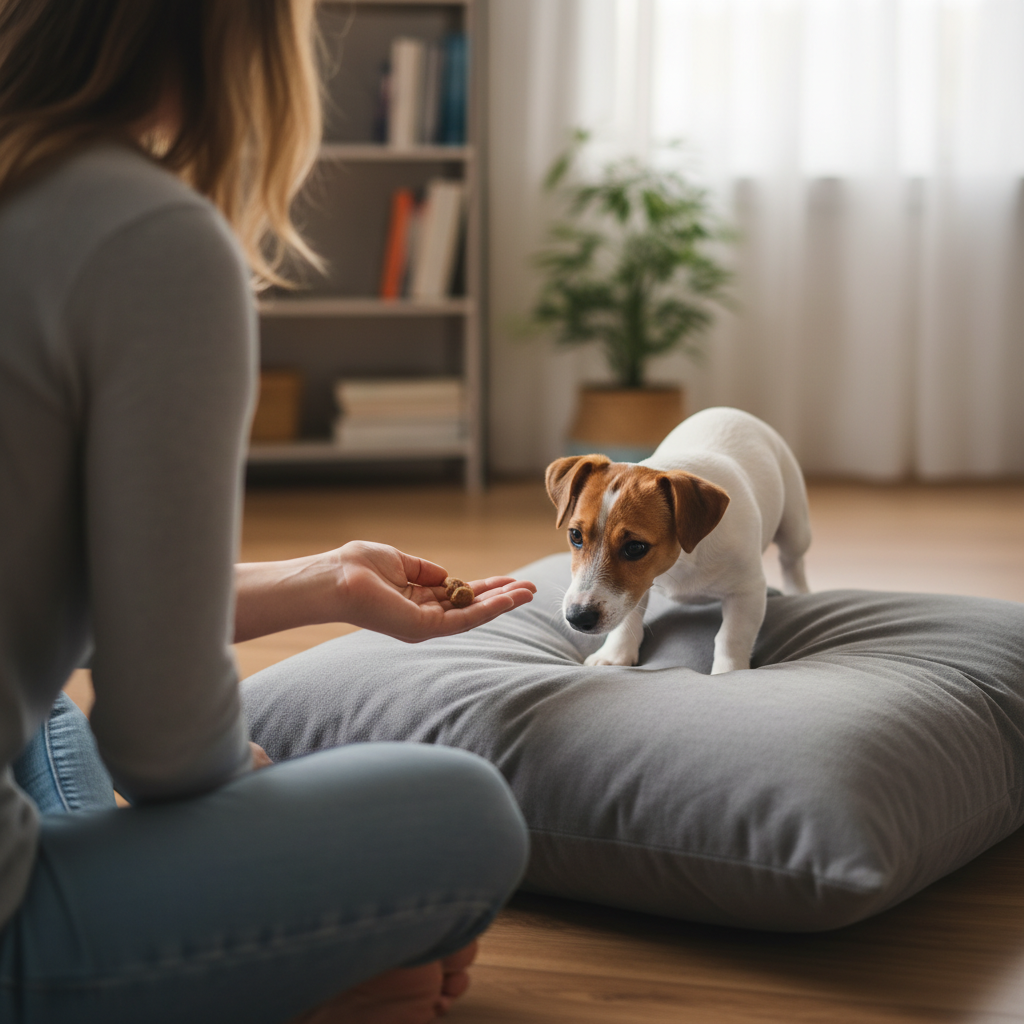
As you play these games, you’re not just a coach; you’re also a student. Your most important job is to learn your puppy’s language. Paying attention to their subtle signals will tell you if they’re feeling confident and engaged or stressed and overwhelmed. Knowing the difference is key to making this a positive experience.
Are They Having Fun or Freaking Out?
Watch for these signs to gauge how your puppy is feeling. A little hesitation is normal, but we want to avoid genuine fear.
| Confident & Engaged Puppy | Stressed or Overwhelmed Puppy |
|---|---|
| Loose, wiggly body; soft, looping tail wags | Stiff, tense body; low or tucked tail |
| Soft, relaxed eyes and ears | Wide ‘whale eyes’ (showing the whites); ears pinned back |
| Eagerly takes treats | Refuses treats they would normally love |
| May offer a play bow | Frequent lip licking, yawning, or panting (when not hot or tired) |
| Recovers quickly from a stumble | Tries to escape the area or avoid the objects entirely |
Common Hurdles and How to Clear Them
It’s not always smooth sailing, and that’s okay! Here’s how to handle a few common challenges:
- My puppy is scared of the object!
Don’t force it. Place the object on the floor and just scatter treats around it for a day or two. Let them approach and investigate on their own terms. Reward any sniffing or interaction. This is called desensitization, and it works wonders. - My puppy just wants to chew the equipment!
This is normal puppy behavior! It might mean your session is a little too long, or your pup has too much energy. Try a short walk or a game of fetch before your proprioception session. Keep the sessions super short (1-2 minutes) to maintain focus on the game, not on chewing the pillows. - I’m not seeing any improvement.
Patience and consistency are your secret weapons. A clumsy puppy won’t become an agility star overnight. The changes are happening in their brain, and they can be subtle at first. Celebrate the small victories—one confident step onto a pillow is a huge win! Keep at it, and you’ll gradually see a more coordinated, confident dog emerge.
Conclusion
And there you have it! You’re now equipped with the knowledge and the games to help your clumsy puppy find their footing—literally. Proprioception training isn’t about creating a perfectly graceful athlete; it’s about giving your puppy the gift of confidence, safety, and a deeper understanding of their own body. These simple exercises, woven into your daily routine, do more than just improve balance. They build trust, strengthen communication, and deepen the incredible bond you share.
So, the next time your puppy takes a comical tumble, don’t just chuckle. See it as an opportunity. Grab a few pillows, a handful of treats, and spend five minutes playing. You’re not just playing games; you’re building a healthier, happier, and more self-assured best friend, one wobbly, wonderful step at a time.