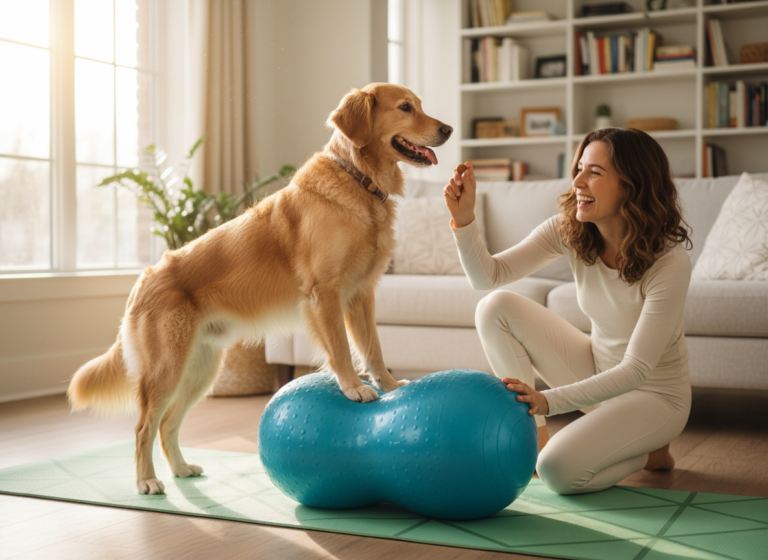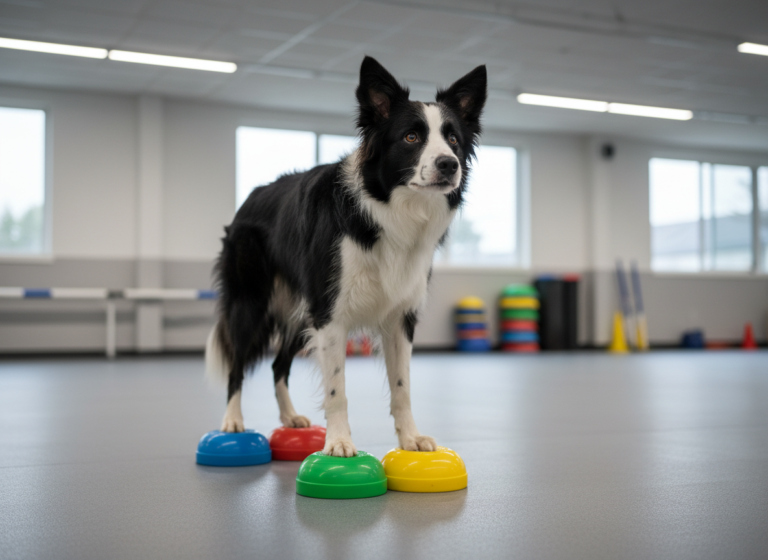
Have you ever seen your dog take a corner a little too fast and wipe out, or maybe they consistently misjudge the coffee table’s location? It’s a common, and often comical, sight. But what if I told you there’s a way to help your furry friend become more graceful, athletic, and even less prone to injury? It all comes down to a fascinating concept called proprioception, or as we like to call it in the dog world, rear end awareness.
Think of it as your dog’s internal GPS for their body. It’s the brain’s ability to sense the position and movement of its limbs without having to look at them. While front paws get all the attention—they’re used for shaking, pawing, and high-fiving—the back legs are the powerhouse. A dog that doesn’t know what its back end is doing is like a powerful rear-wheel-drive car with a driver who can’t feel the back tires. They might get where they’re going, but it won’t be efficient or particularly safe.
Improving this mind-body connection is a game-changer for any dog, from clumsy puppies learning their own feet to canine athletes needing to shave seconds off their agility runs, and even senior dogs who need help maintaining their stability. The great news is that you don’t need a fancy gym or expensive equipment. You just need a few minutes, some tasty treats, and a positive attitude. In this guide, we’ll walk you through three simple, fun, and incredibly effective exercises to help your dog master their movements from nose to tail.
The Secret to a Coordinated Canine: Understanding Rear End Awareness
Before we jump into the fun exercises, let’s dig a little deeper into what rear end awareness really is and why it’s so crucial for your dog’s well-being. The technical term, proprioception, is a constant stream of communication between sensors in your dog’s muscles and joints and their brain. This feedback loop tells them exactly how their body is positioned, how much force to use, and how to move fluidly without thinking about every single step.
When a dog has poor rear end awareness, you might notice they:
- Frequently knock things over with their hind end.
- Stumble or appear clumsy, especially on uneven ground.
- Sit in a lazy ‘puppy sit’ with their legs splayed out to the side.
- Have trouble backing up or moving sideways.
- Show hesitation on new surfaces or when climbing.
On the flip side, building strong proprioception offers a wealth of benefits that go far beyond just looking more graceful. It’s a cornerstone of your dog’s physical health.
Key Benefits of Improved Rear End Awareness:
- Injury Prevention: This is the big one. A dog that knows where its feet are is less likely to land awkwardly, twist a knee, or strain a muscle. Strong rear end awareness is directly linked to a stronger core, which stabilizes the spine and protects the joints during high-impact activities like running and jumping.
- Enhanced Athletic Performance: For dogs involved in sports like agility, flyball, or obedience, precise footwork is everything. The ability to collect their body for a tight turn, drive forward powerfully for a jump, or move backward in a straight line for heeling all depend on excellent rear end awareness.
- Increased Confidence: For a timid or insecure dog, feeling physically unstable can worsen their anxiety. By teaching them they can control their body and navigate challenges successfully, you build their overall confidence. They become more willing to try new things and explore new environments.
- Healthy Aging for Seniors: As dogs get older, they naturally lose muscle mass and their proprioceptive senses can dull. This is why many senior dogs become wobbly or hesitant. Gentle rear end awareness exercises are a fantastic, low-impact way to keep their mind-body connection sharp, maintain balance, and support their mobility for years to come.
Expert Tip: Think of these exercises as a form of active meditation for your dog. They require focus and concentration, making them a great way to burn mental energy on a rainy day when you can’t go for a long walk.
Exercise 1: The Pivot Bowl – Mastering the Turn
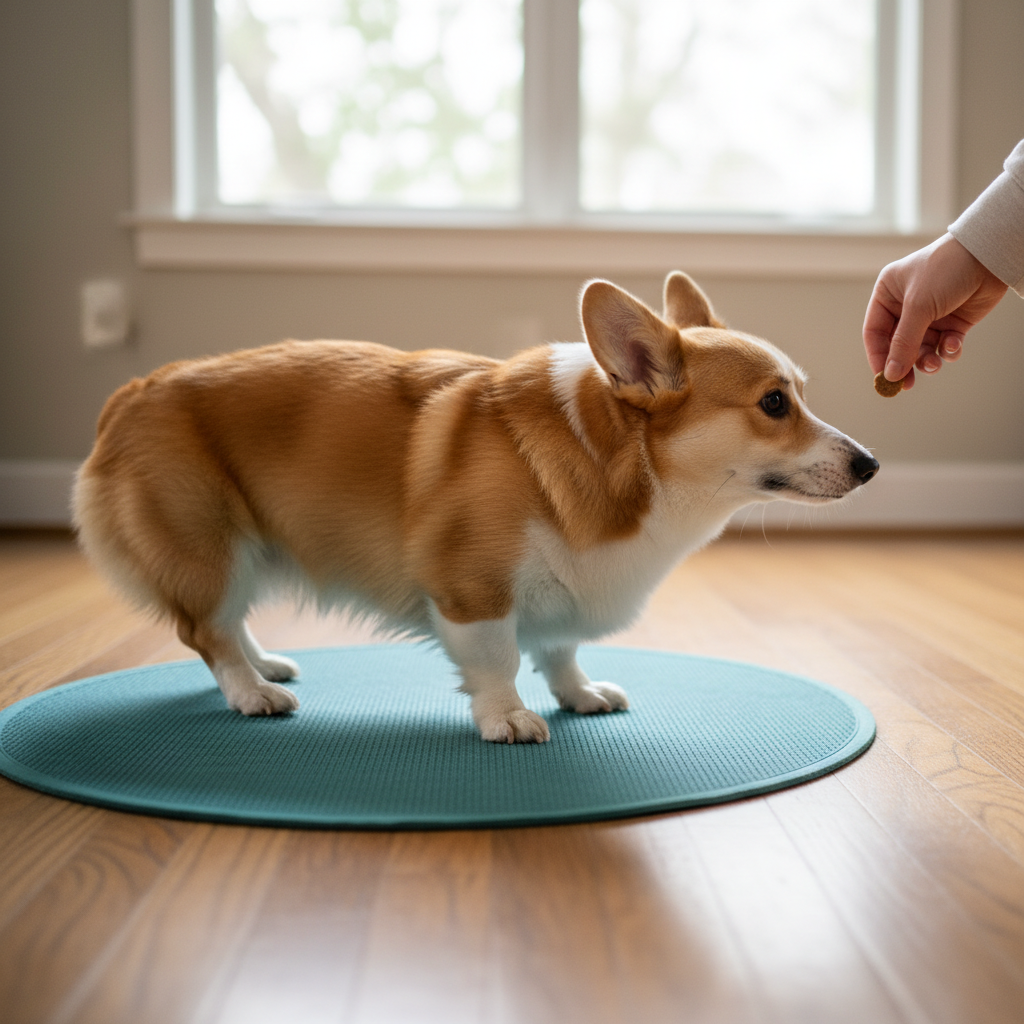
Our first exercise is a fantastic foundation for teaching your dog to move their hind legs independently of their front legs. The goal is simple: get your dog to keep their front paws in one spot while they swing their rear end around in an arc. It’s the canine equivalent of learning to dance!
What You’ll Need:
- A handful of small, high-value treats.
- A non-slip surface like a rug or yoga mat.
- A ‘pivot point’ object: a small, flat, stable item like a shallow food bowl (turned upside down), a thin book, or a pot lid.
Step-by-Step Instructions:
- Establish the Pivot Point: Place your pivot object on the floor. Lure your dog so that their front paws are standing on the object. The moment they put their paws on it, click (if you’re clicker training) and give them a treat. Repeat this a few times until they understand that putting their front paws on the object earns a reward.
- Introduce the Lure: With your dog’s front paws on the pivot point, hold a treat near their nose. Slowly move the treat in an arc towards their shoulder. This will cause them to turn their head to follow it.
- Capture the Step: As your dog’s head turns, their body will naturally want to follow. To reach the treat, they will have to shift their weight and take a small step sideways with one of their back feet. The instant you see that back foot lift and move, mark the behavior with a ‘Yes!’ or a click, and give them the treat.
- Keep it Small: In the beginning, reward even the tiniest weight shift or a single step. We want to build the dog’s understanding and confidence. Don’t ask for a full circle right away!
- Switch Directions: Once your dog is getting the hang of it in one direction, practice luring them the other way. Most dogs have a preferred direction, so one side might be trickier than the other. That’s perfectly normal!
- Gradually Increase the Steps: As they become more proficient, you can start asking for two or three steps before you reward them. The goal is to eventually have them pivot smoothly around the bowl for a full 180 or even 360 degrees.
Troubleshooting & Tips:
- My dog keeps moving their front feet! You’re likely luring too far, too fast. Make the arc of your lure smaller and slower. You can also use a slightly raised object as a pivot point to make it more obvious to your dog where their front feet should stay.
- My dog just backs up. Your lure might be too low or you might be putting too much forward pressure on them. Keep the lure right at their nose level and focus on the sideways motion.
- Keep sessions short and sweet! This is mentally taxing work. A few 1-2 minute sessions are far more effective than one long, frustrating one. Always end on a successful repetition!
Exercise 2: Back-Up Basics – Putting it in Reverse
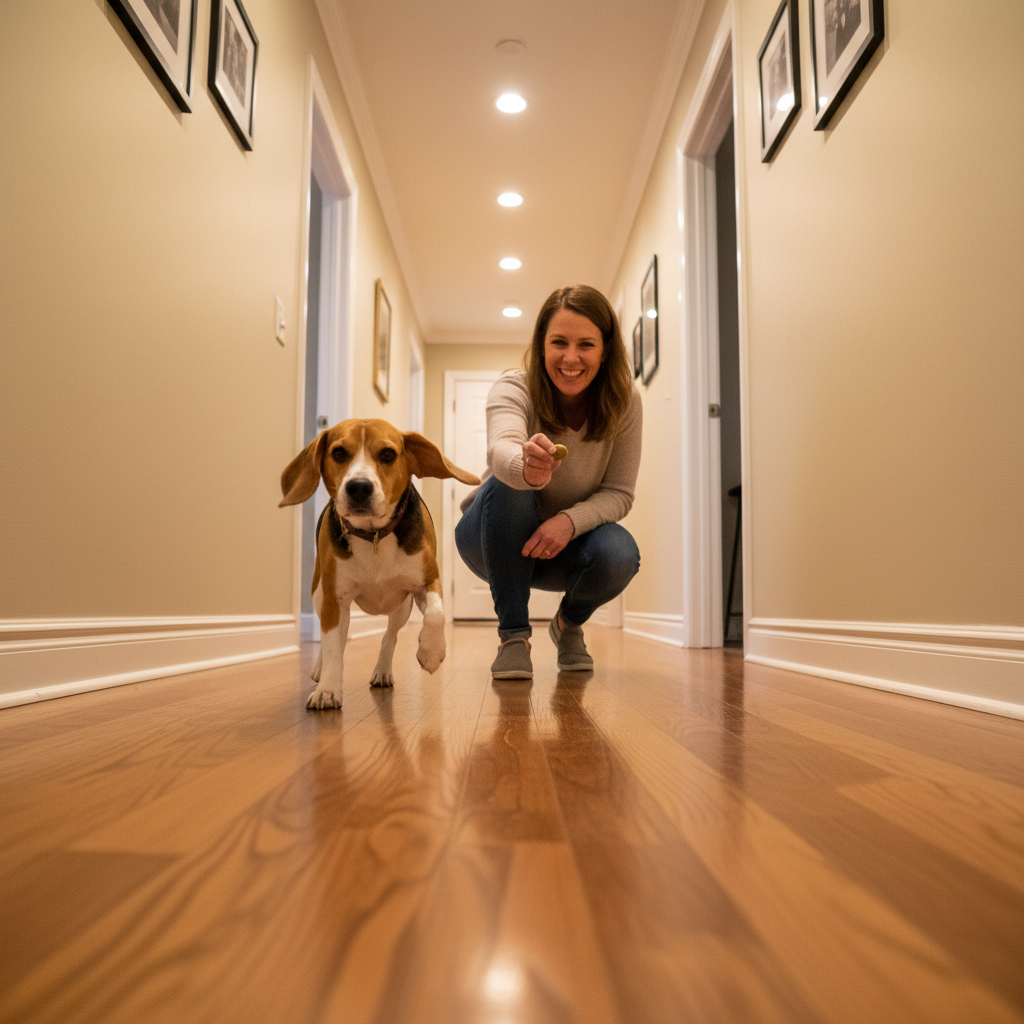
Teaching a dog to back up in a straight line is one of the best ways to build rear end awareness. They can’t see where they’re going, so they are forced to feel their way and understand where to place their back feet. It also helps build muscles in their hindquarters and core. Many dogs don’t naturally walk backward, so this can be a fun new challenge for them!
What You’ll Need:
- Tasty treats.
- A ‘chute’ or ‘channel’ to help guide your dog. A hallway is perfect. You can also create a channel by placing two rows of chairs or even couch cushions parallel to each other.
Step-by-Step Instructions:
- Set the Scene: Position your dog at one end of your hallway or channel, with you facing them. The narrow space will prevent their rear end from swinging out to the side, encouraging a straight-line movement.
- The Gentle ‘Pressure’ Method: With your dog standing, take one small, slow step directly into their space. Don’t bump them, just enter their bubble. This slight spatial pressure will often cause a dog to instinctively take a step back to re-establish their personal space. The moment a back foot moves backward, say ‘Yes!’, praise them enthusiastically, and give them a treat. Then, step back to release the pressure.
- The Lure Method: If the pressure method doesn’t work, try luring. Hold a treat in your hand, show it to your dog, and then lower it between their front paws towards their chest. To follow it, they will need to shift their weight back and take a step. Mark and reward the instant they do.
- Build on Success: Once they are reliably taking one step back, wait for two steps before rewarding. Then three. The goal is to build a smooth, continuous backward motion.
- Add a Cue: When your dog is starting to understand the game, you can add a verbal cue like ‘Back,’ ‘Reverse,’ or ‘Beep beep!’ Say the cue right before you initiate the movement.
- Fade the Channel: As your dog gets better and can back up straight for several feet within the channel, you can start practicing in a more open space. The muscle memory they built in the hallway will help them succeed.
Common Mistakes to Avoid:
- Rewarding a crooked backup: In the beginning, it’s fine. But as you progress, be sure you are only rewarding straight backward movement. The channel helps immensely with this.
- Moving too fast: If you step into your dog’s space too quickly, they may get nervous or just try to turn and walk away. Keep your movements slow and non-confrontational.
- Forcing the movement: Never push or pull your dog backward. This is about teaching them to control their own body. All movement should be voluntary and positively reinforced.
Exercise 3: The Box Step – Thinking Inside the Box
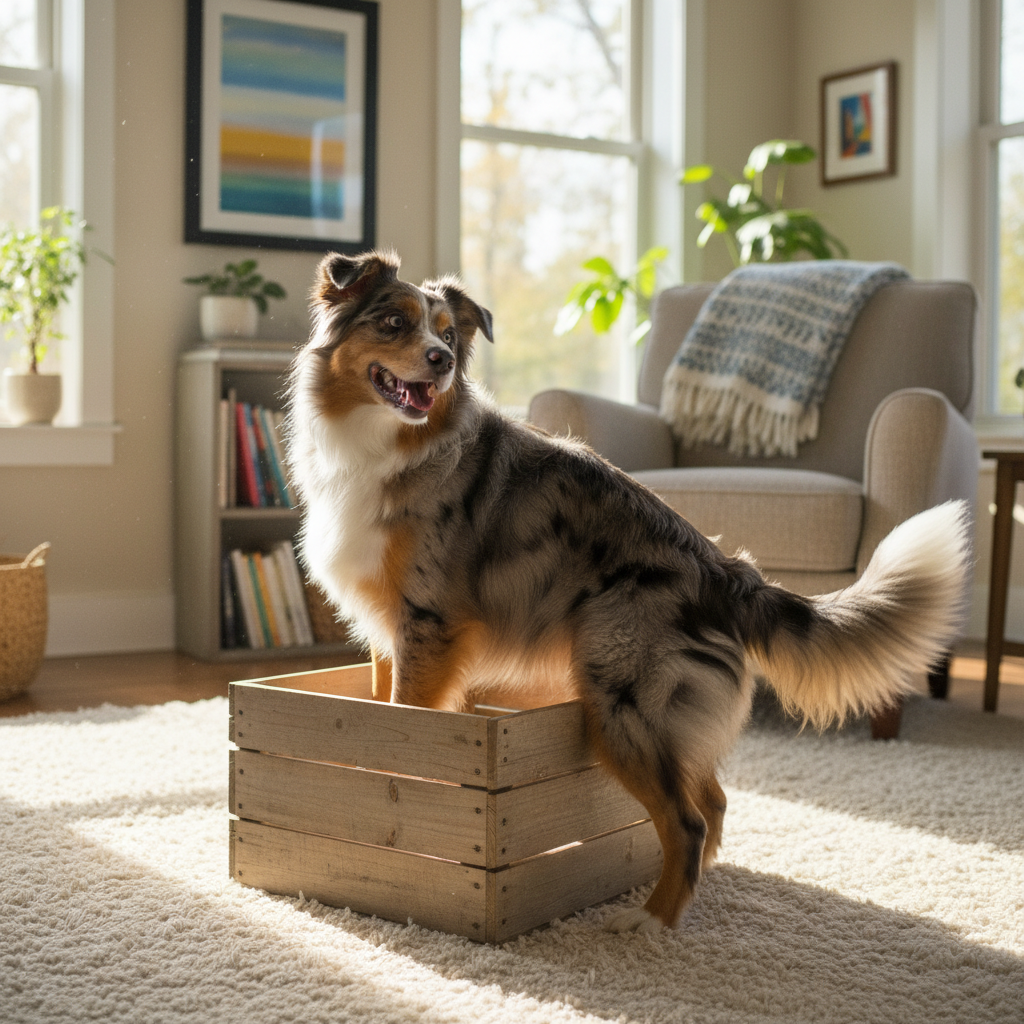
This exercise is a bit more advanced and is fantastic for teaching your dog to target a specific location with their back feet. It requires a lot of concentration and is a huge confidence builder. The goal is to have your dog intentionally step their back feet into a low box or onto a platform while their front feet remain on the floor.
What You’ll Need:
- Your trusty high-value treats.
- A low, wide, and stable object. A shallow cardboard box (like from a case of canned drinks), a firm cushion, a low footstool, or a canine fitness platform works well. Safety is key: make sure the object won’t slide or tip over.
Step-by-Step Instructions:
- Introduce the Object: Place the box on the floor and let your dog investigate it. Reward any interaction—sniffing it, touching it, or stepping on it. We want them to have a positive association with the box.
- Shape ‘Paws In’: The easiest way to start is by luring your dog to walk all the way through the box. As their back feet land inside the box, mark and reward! Do this several times.
- Stop in the Middle: Now, lure them forward again, but this time, stop the lure and deliver the treat while their back feet are still in the box and their front feet are out on the other side. This teaches them that the ‘paws in the box’ position is the sweet spot.
- Refine the Movement: From here, you can start shaping the behavior of them backing into the box. Stand with the box behind your dog. Lure them to take one step back towards the box. If a back foot even touches the box, have a party! Mark and reward.
- Build to Two Paws: Continue to reward any backward movement toward the box. Eventually, they will accidentally step one back foot in. Jackpot! Give them several treats. This is a huge breakthrough. Soon they will understand what you’re looking for and begin offering to put both back paws in the box.
Pro Tip: Using a clicker for this exercise is extremely helpful because it allows you to mark the exact moment a back foot makes contact with the box, making it very clear to your dog what behavior earned them the reward.
Safety First:
- The surface of your box or platform should be non-slip. If you’re using a plastic lid or a slick book, put a piece of yoga mat or rubber shelf liner on top.
- Ensure the height is appropriate for your dog. For a small dog or a beginner, it should be very low—no more than an inch or two high. You can gradually increase the height as their skills and confidence grow.
Building a Routine: How Often and How Long?
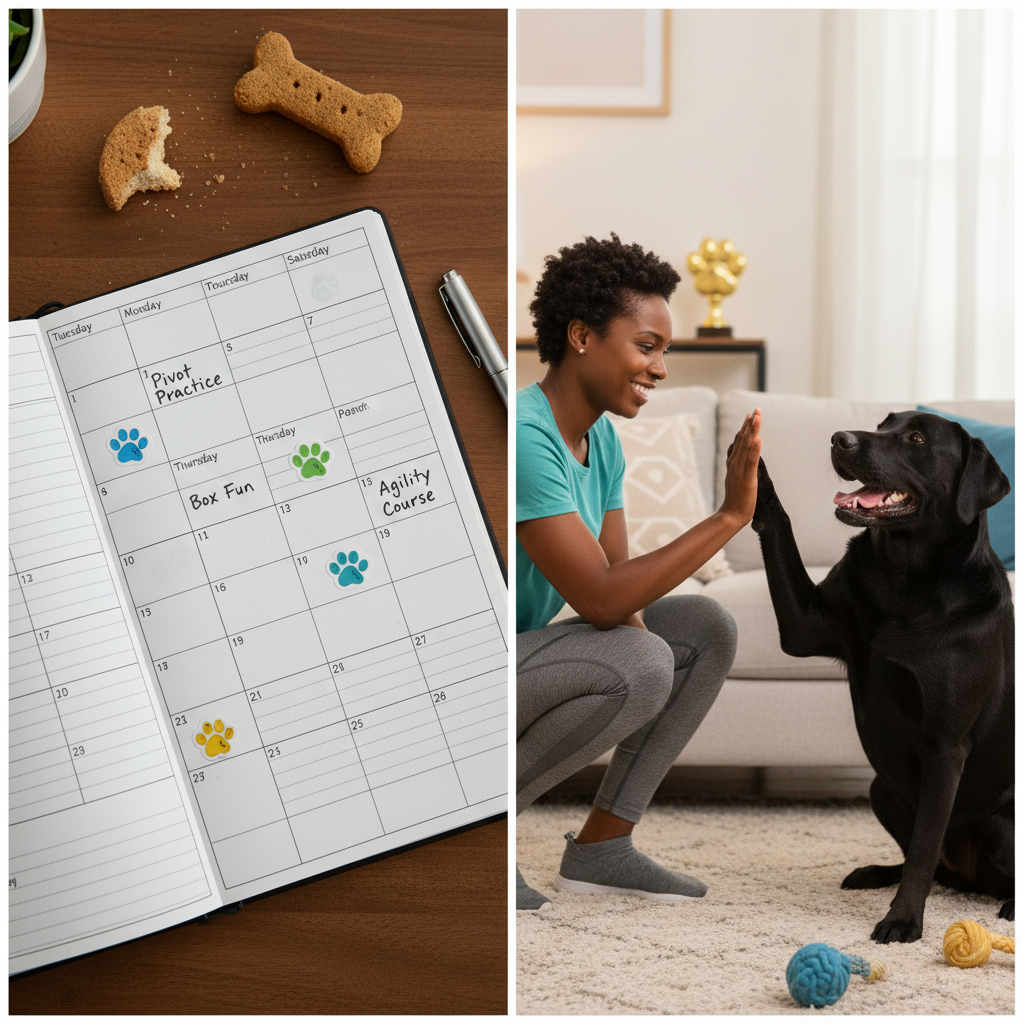
Consistency is more important than duration when it comes to these exercises. Because they require so much mental focus, it’s best to keep your training sessions short and integrate them into your daily life. Think of them as fun little brain games, not a strenuous workout.
Frequency and Duration:
- Aim for 2-3 short sessions per day.
- Keep each session between 1 to 5 minutes long. Seriously, that’s it!
- Always end on a high note. Finish the session after a successful repetition so your dog is left feeling confident and eager for the next session.
You can easily incorporate these into your day. Practice a few pivots while you’re waiting for the coffee to brew. Do some back-ups down the hallway before you head out for a walk. Use a commercial break during your favorite show to do a box step session.
Sample Weekly Training Plan:
This is just a sample to give you an idea. Feel free to mix and match exercises based on what your dog enjoys and excels at!
| Day | Morning Session (2 mins) | Evening Session (3 mins) |
|---|---|---|
| Monday | Pivot Bowl (Right side) | Back-Up Basics in hallway |
| Tuesday | Pivot Bowl (Left side) | Box Step (Introduction) |
| Wednesday | Back-Up Basics in hallway | Pivot Bowl (Both sides) |
| Thursday | Box Step (Refining) | Rest / Playtime |
| Friday | Pivot Bowl (Aim for more steps) | Back-Up Basics (Try in a more open space) |
| Saturday | Box Step (Putting it on cue) | A fun mix of all three! |
| Sunday | Rest / Cuddle Time | Rest / Cuddle Time |
Remember to watch your dog for signs of fatigue or frustration, like excessive yawning, sniffing the ground, or losing interest. If you see these, it’s time to end the session with one last easy success and try again later. The goal is for this to be a fun and rewarding experience for both of you!
Conclusion
Congratulations! You’re now equipped with three powerful, yet simple, exercises that go far beyond the basic ‘sit.’ By teaching your dog the Pivot Bowl, Back-Up Basics, and the Box Step, you’re not just teaching them fun new tricks. You’re giving them the incredible gift of body awareness. You’re helping them build a stronger core, improve their balance, and bulletproof their body against future injuries.
Remember, the journey to better coordination is a marathon, not a sprint. Be patient, stay positive, and celebrate the small victories along the way. Every tiny step, every slight weight shift, is a sign that your dog is learning and building that crucial mind-body connection. More than anything, this is a wonderful opportunity to strengthen your bond. The time you spend together, working as a team to solve these little physical puzzles, is priceless.
So grab some treats, find a clear space on the floor, and get ready to see your dog in a whole new light—as the confident, coordinated, and clever canine you always knew they were.