Have you ever settled in for a movie night, popcorn in hand, only to see your pup wander off, completely uninterested in the on-screen drama? What if you could teach them to tune in with you? Training your dog to focus on the TV isn’t just a quirky party trick; it’s a fantastic way to build their focus, provide mental stimulation, and create a unique bonding experience. It can be especially useful for reactive dogs, redirecting their attention, or simply giving them something interesting to do on a rainy day.
It might sound complicated, but with a little patience, a lot of praise, and some seriously tasty treats, you can turn your canine companion into a certified cinephile. This guide will walk you through everything you need, from the initial setup to the step-by-step commands and troubleshooting common hiccups. Get ready to share the remote—your dog’s favorite show is about to start!
Setting the Stage for Success: What You’ll Need
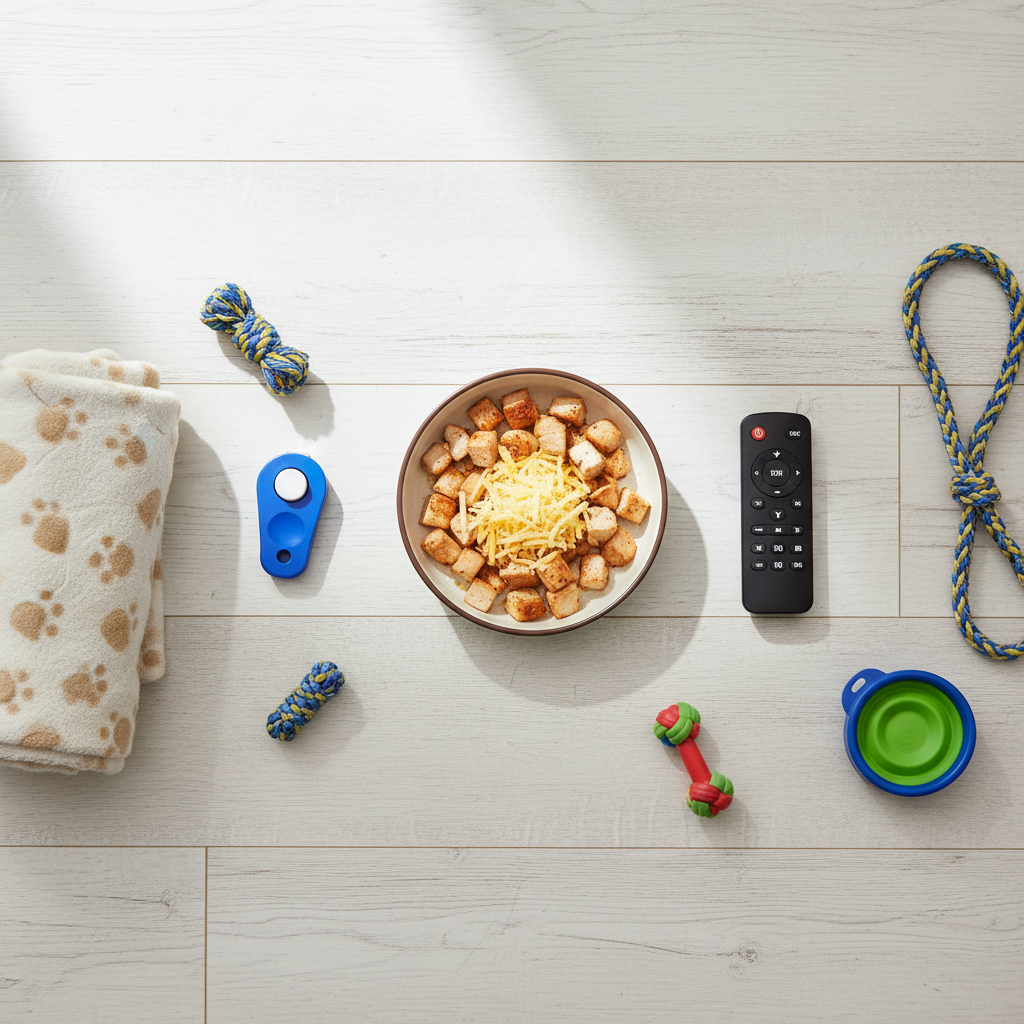
Before you start your training sessions, gathering a few key items will make the process smoother and more effective. Think of it as preparing your dog’s ‘movie-watching toolkit.’ Having everything ready means you can focus all your attention on your pup and their progress. Remember, the goal is to make this a fun and positive experience from the very beginning!
Your Training Toolkit:
- High-Value Treats: We’re not talking about their everyday kibble. You’ll need extra-special, super-tasty treats that your dog absolutely loves. Think small pieces of cooked chicken, cheese, or store-bought training treats that get their tail wagging instantly. The higher the value, the more motivated they’ll be to learn.
- A Clicker (Optional, but Recommended): A clicker is a powerful tool in positive reinforcement training. The ‘click’ marks the exact moment your dog does the right thing, followed immediately by a treat. This creates a clear signal and can speed up the learning process significantly. If you’re not using a clicker, you can use a consistent marker word like ‘Yes!’ in an upbeat tone.
- A Comfortable Spot: Designate a comfy spot for your dog to watch from, like their favorite bed or a soft blanket placed a safe distance from the TV. You want them to be relaxed and comfortable.
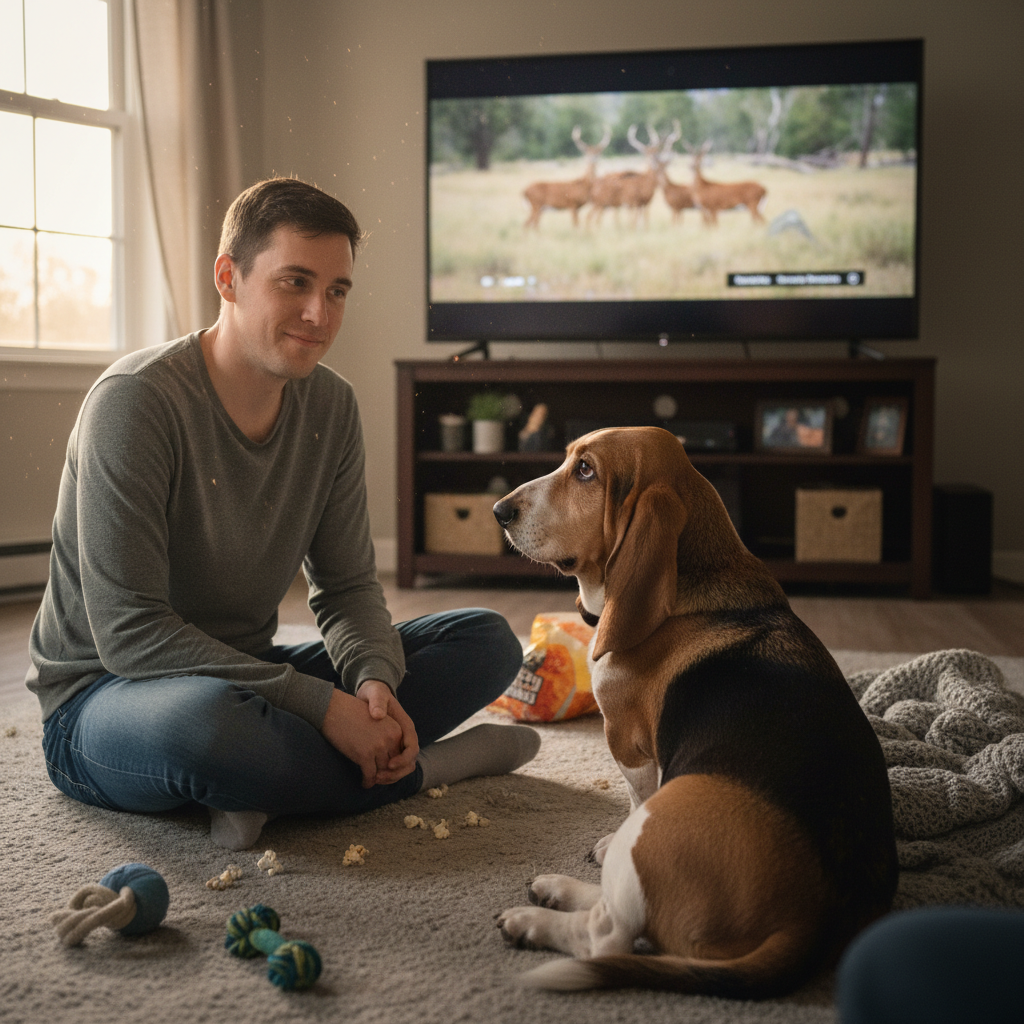
- Engaging TV Content: Not all shows are created equal in a dog’s eyes. Have some content ready that’s likely to grab their attention. We’ll dive deeper into this later, but think nature documentaries with lots of animal movement or programs specifically designed for dogs.
- Patience and a Positive Attitude: This is the most important tool of all! Every dog learns at a different pace. Keep sessions short (5-10 minutes max) and always end on a positive note. Your enthusiasm is contagious!
Expert Tip: Keep your training sessions short and sweet. A dog’s attention span, especially when learning something new, is limited. Two or three 5-minute sessions throughout the day are far more effective than one long, frustrating 30-minute session.
Step-by-Step: Teaching the ‘Watch TV’ Command
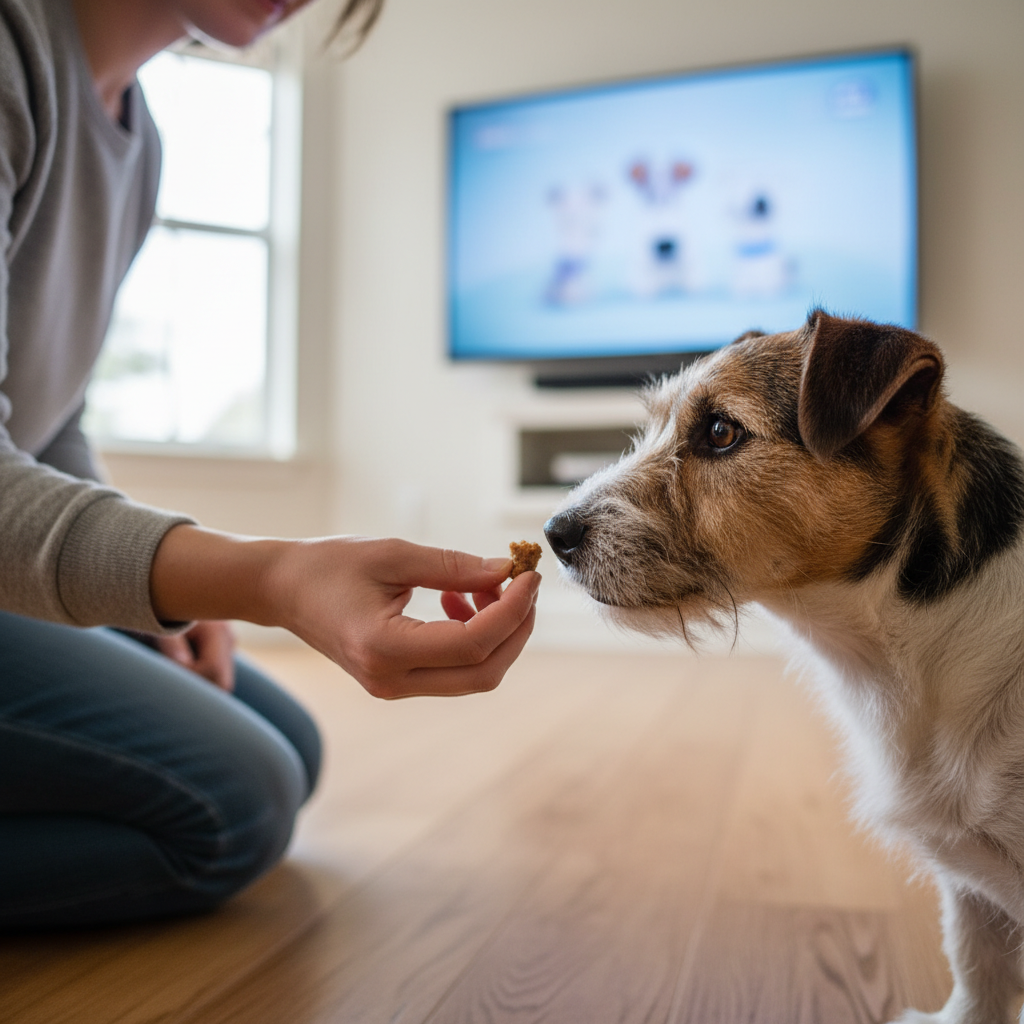
Alright, you’ve got your treats and your positive mindset—it’s showtime! This process is all about shaping your dog’s behavior, rewarding small steps toward the final goal. We’ll use a method called ‘luring’ to guide them and a marker (clicker or ‘Yes!’) to communicate exactly what we want. Let’s break it down.
- Step 1: Introduce the TV as a Good Thing. Sit with your dog in their comfy spot. Turn on the TV to your pre-selected, dog-friendly content. At this stage, you’re simply rewarding curiosity. The moment your dog even glances at the screen, click and give them a treat. Don’t say anything yet. Repeat this several times. The goal is to build an association: Looking at the screen makes good things (treats!) happen.
- Step 2: Lure Their Gaze. Hold a high-value treat near your dog’s nose and slowly move it towards the TV screen. As their head follows the treat and their eyes land on the screen, click and give them the treat. Practice this from different angles. You’re physically guiding their focus to where you want it to be.
- Step 3: Introduce the Verbal Cue. Once your dog is reliably following the lure to the screen, it’s time to name the behavior. Just before you start the lure, say your chosen cue in a clear, happy voice. Good cues are short and distinct, like ‘Watch TV!’, ‘Screen!’, or ‘Look!’. So, the sequence is: Say ‘Watch TV!’ -> Lure their gaze to the screen -> Click the instant they look -> Treat!
- Step 4: Build Duration. Now that they understand the cue, we want them to hold their gaze for longer than a split second. After they look at the screen, wait just one second before you click and treat. Gradually increase the time—two seconds, then three, and so on. If they look away, you’ve gone too fast. Just go back to the previous duration where they were successful. This teaches them that the reward comes for sustained focus.
- Step 5: Fade the Lure. The final step is to remove the hand lure. Say your cue, but this time, instead of using a treat to guide them, just point to the screen. When they look, click and treat (with a treat from your other hand). Over time, you can make the hand signal smaller and smaller until they respond to the verbal cue alone.
Remember to celebrate every success with praise and enthusiasm! This should feel like a fun game, not a chore.
What’s On? Picking TV Content Your Dog Will Love
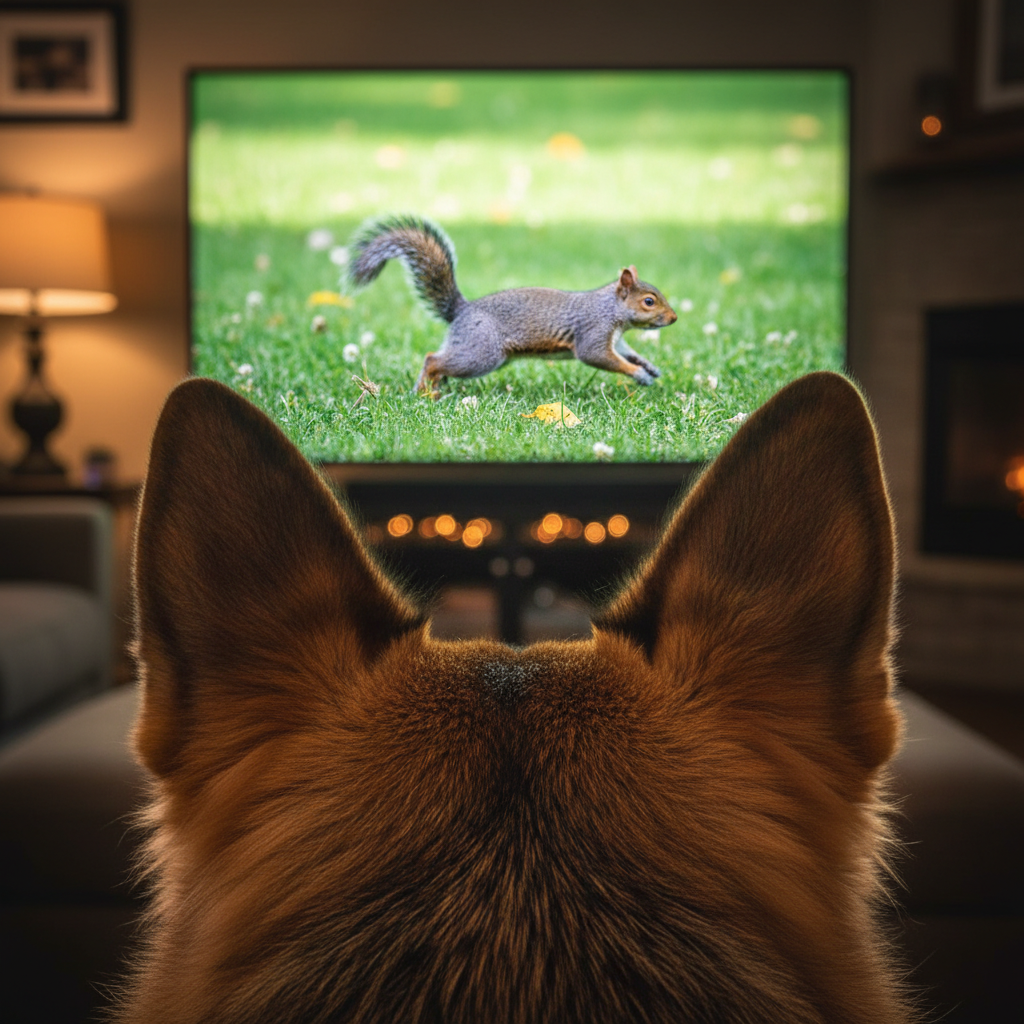
You wouldn’t want to watch a show you find boring, and neither does your dog! A dog’s vision and hearing are different from ours, so what they find engaging might surprise you. They see colors differently (mostly in blues and yellows) and are highly attuned to movement and specific sounds. Choosing the right content can be the difference between a focused pup and a bored one.
Content That Captivates Canines:
Generally, dogs respond best to content that features other animals, high-contrast moving objects, and familiar sounds like squeaks, chirps, and barks. Here’s a breakdown of good options to try:
| Content Type | Why It Works | Best For… |
|---|---|---|
| Nature Documentaries | Shows with lots of animal movement (birds, squirrels, other dogs) can be highly stimulating and tap into their natural prey drive in a safe way. | Dogs who are curious about wildlife and have good impulse control. |
| Dog-Specific Programming (e.g., DOGTV) | These channels use colors, sounds, and camera angles scientifically designed to appeal to dogs, often with calming or stimulating segments. | Almost all dogs! It’s a great starting point if you’re not sure what they’ll like. |
| Cartoons & Animation | The simple shapes, bright (often blue and yellow) colors, and exaggerated movements can be very eye-catching for some dogs. | Pups who aren’t interested in real-life animals but are attracted to motion. |
| Videos of Squeaky Toys | You can find long compilations on YouTube of squeaky toys being played with. The sound is a huge attention-grabber. | Training the initial ‘look at the screen’ response, as the sound is almost irresistible. |
Heads Up! Be mindful of content that might make your dog anxious or overly aroused. A documentary about lions hunting might be too intense, and a show with lots of doorbells or barking could trigger unwanted reactions. Always supervise your dog’s viewing and be ready to change the channel.
Hitting a Snag? Troubleshooting Common Training Challenges
Even with the best treats and the most exciting shows, you might run into a few training hurdles. Don’t worry—it’s completely normal! Every dog is an individual, and troubleshooting is just part of the process. Here are some common challenges and how to navigate them with a positive approach.
My dog isn’t interested in the TV at all.
Solution: First, up the ante on your treats! If your current treat isn’t working, find something they truly can’t resist. Second, try different content. A silent screen is boring. Find something with engaging sounds, like squeaky toys or birds chirping. Also, make sure the TV isn’t too loud or overwhelming. Start with low volume. Finally, make it a game! Get excited yourself and point at the screen with enthusiasm before luring them.
My dog gets too interested and barks or paws at the screen.
Solution: This is a sign of over-arousal. The goal is calm focus, not frantic excitement. If this happens, immediately end the session on a calm note. For the next session, increase the distance between your dog and the TV. Work on teaching a solid ‘settle’ or ‘place’ command separately. During TV training, reward them for looking at the screen calmly. If they start to get amped up, ask for a simple command they know, like ‘sit,’ to reset their brain before continuing.
My dog only looks when I have a treat in my hand.
Solution: This is a classic issue that means it’s time to work on fading the lure. Go back to Step 5 in our guide. Start by using an empty hand to point to the screen (a ‘ghost lure’). The moment they look, click and bring the treat out from your other hand or pocket. The reward should become a surprise that appears after they do the behavior, not the bribe that initiates it.
They learned it, but now they won’t do it.
Solution: Sometimes dogs don’t generalize commands well. They might think ‘Watch TV!’ only applies to that one specific spot, at that one time of day, when you’re wearing that one sweater. Practice in slightly different positions in the room. Also, make sure you haven’t asked for too much, too soon. Go back to an easier step (like a shorter duration) and get a few ‘wins’ before trying the harder version again. Keep it fun and rewarding!
Conclusion
Teaching your dog to watch TV on command is so much more than just a novelty trick. It’s a gateway to deeper communication, enhanced focus, and a wonderful shared activity that strengthens your bond. By following these steps with patience, positivity, and a pocketful of your pup’s favorite snacks, you’re not just training a behavior; you’re creating a new ritual you can both enjoy.
Remember to keep it light, celebrate the small victories, and pay attention to your dog’s unique personality and preferences. Some dogs may become avid documentary fans, while others might only tune in for a few minutes at a time—and that’s perfectly okay. The real prize is the time you spend together, learning and growing. So, grab the remote, call your furry friend over, and get ready to discover a whole new world of entertainment together. Happy viewing!