That familiar pitter-patter of rain begins, and you reach for your boots and raincoat. It’s time for a walk! But as you grab the umbrella, you see it: the ears go back, the tail tucks, and your brave companion suddenly looks like they’ve seen a ghost. If this scene is all too familiar, you’re not alone. For many dogs, the umbrella is a strange, unpredictable monster that appears without warning.
The sudden unfurling, the large new shape, the sound it makes—it can all be incredibly overwhelming for our four-legged friends. But what if you could change that? What if you could turn that fear into calm acceptance, or even indifference? You can! This guide is designed to help you do just that. We’re going to break down the process of desensitization and counter-conditioning into simple, manageable steps. Forget forcing the issue; we’re all about building positive associations and boosting your dog’s confidence, one treat at a time. Let’s get ready to conquer those rainy days together!
The Big Spooky Monster: Why Are Umbrellas So Scary for Dogs?

Before we dive into the ‘how,’ let’s take a moment to understand the ‘why.’ Seeing the world from your dog’s perspective is the first step toward effective and empathetic training. Umbrellas, from a canine point of view, are just plain weird and have several spooky characteristics.
Sudden Environmental Change
Dogs are creatures of habit and thrive on predictability. An umbrella is a compact stick one moment and a giant, flapping canopy the next. This rapid, dramatic change in shape and size can be startling. It’s an object that ‘grows’ and makes a ‘whoosh’ or ‘pop’ sound, which can trigger a dog’s startle reflex and neophobia (fear of new things).
A Threatening Silhouette
When open, an umbrella creates a large, dark shape that looms overhead. In the animal kingdom, a large object appearing suddenly above can signal a predator, like a bird of prey. This instinctual fear can make your dog feel threatened and vulnerable. They don’t understand it’s just to keep you dry; they see a potential danger.
Weird Noises
From the click-snap of it opening to the pitter-patter of rain hitting the fabric, umbrellas produce a range of unfamiliar sounds. A dog’s hearing is far more sensitive than ours, so these sounds can be much more intense and unsettling for them.
Blocked Vision & Owner Disappearance
When you hold an umbrella, your upper body and face can be obscured from your dog’s view. This can be disorienting and stressful for dogs who rely on reading our body language and facial expressions for cues and reassurance. To them, their trusted leader has suddenly vanished behind a strange shield.
Expert Tip: Understanding the root of the fear allows you to be more patient. Your dog isn’t being ‘silly’ or ‘stubborn’; they are genuinely reacting to something they perceive as a legitimate threat.
Gearing Up for Success: Tools for the Training Mission
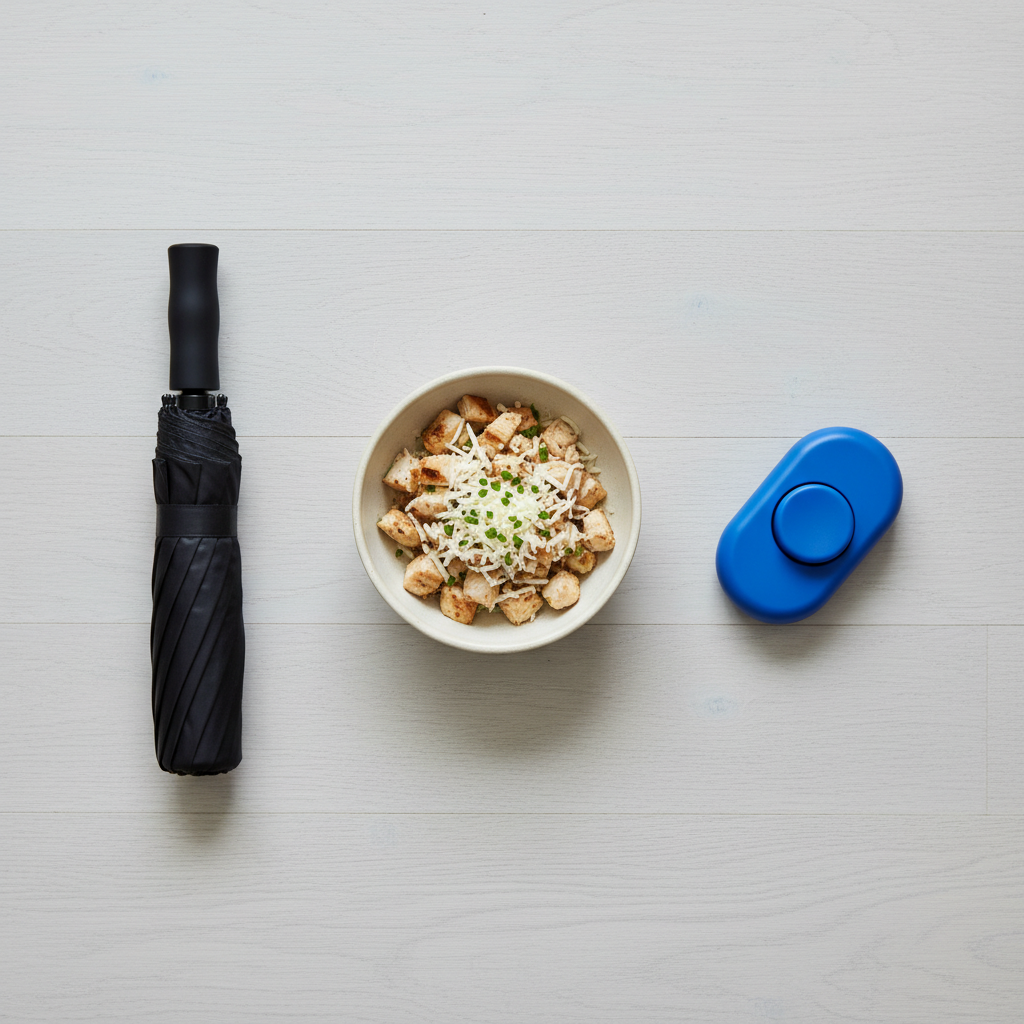
Great news! You don’t need a lot of fancy equipment for this training. The most important tools are patience and a positive attitude. However, having a few key items on hand will make the process smoother and more effective for both you and your pup.
Here’s a quick checklist of what you’ll need:
- The ‘Monster’ Itself (An Umbrella): Start with a simple, solid-colored, non-automatic umbrella if possible. The loud ‘spring’ of an automatic one can be extra startling, so it’s best to save that for later in the training process.
- High-Value Treats: We’re talking top-tier goodies here! Standard kibble probably won’t cut it. Think small, pea-sized pieces of boiled chicken, cheese, hot dogs, or their absolute favorite store-bought training treats. The goal is to make the reward more exciting than the scary object is scary.
- A Clicker (Optional but Recommended): A clicker is a fantastic tool for marking the exact moment your dog performs the desired behavior (like looking at the umbrella calmly). The ‘click’ is a clear signal that means ‘Yes, that’s it! A treat is coming!’ It can speed up the learning process significantly.
- A Quiet, Comfortable Space: Begin your training indoors in a familiar room where your dog feels safe and there are minimal distractions. The living room is often a great choice.
- Patience and a Positive Vibe: Your dog is an expert at reading your emotions. If you’re anxious or frustrated, they’ll pick up on it. Take deep breaths, stay relaxed, and be prepared for short, upbeat training sessions.
| Tool | Why It’s Important | Pro-Tip |
|---|---|---|
| Simple Umbrella | Less intimidating than large, patterned, or automatic models. | Choose a smaller, travel-sized one to begin with if your dog is particularly fearful. |
| High-Value Treats | Creates a strong positive association and keeps your dog motivated. | Cut treats into tiny pieces so you can reward frequently without overfeeding. |
| Clicker | Provides clear, precise communication to your dog. | If you’ve never used one, ‘charge’ it first by clicking and immediately treating 10-15 times in a row. |
The Step-by-Step Umbrella Desensitization Plan
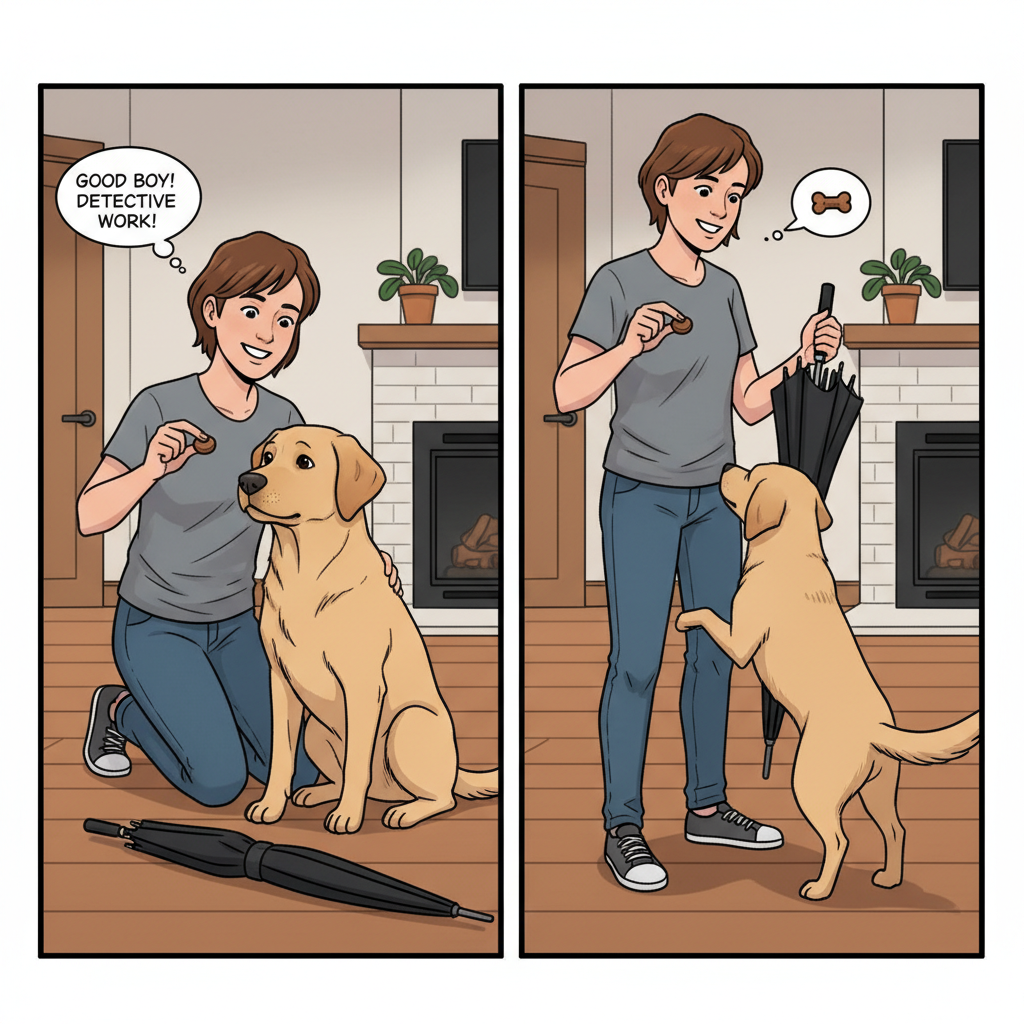
Alright, it’s training time! Remember, the golden rule is to go at your dog’s pace. This is not a race. The goal is to keep your dog ‘sub-threshold,’ meaning they are aware of the umbrella but not so stressed that they can’t think, take treats, or learn. Watch their body language closely—lip licking, yawning, and ‘whale eye’ (showing the whites of their eyes) are signs of stress. If you see them, you’ve moved too fast. Simply go back to the previous step where they were successful.
-
Step 1: The Neutral Object
Place the closed umbrella on the floor in the middle of the room. Don’t draw attention to it. Just let it be there. Walk around, and every time your dog looks at the umbrella, click (if using) and toss a high-value treat away from the umbrella. This teaches them that looking at the object makes good things happen, and moving away from it is also okay. Do this for a few minutes. End the session on a positive note.
-
Step 2: The Human Interaction
In the next session, sit on the floor near the umbrella (but not so close that your dog is worried). Ignore the umbrella yourself. Casually touch it or move it an inch or two. Any time your dog shows calm curiosity (sniffing, looking without stress), click and treat. The goal is for them to see you interacting with it calmly and realize it’s not a threat.
-
Step 3: Introducing Movement
Now, pick up the closed umbrella. Hold it in your hand. Click and treat for any calm behavior. Then, slowly move it around a little bit. Use it as a pretend walking stick. Tap it gently on the floor. With each new, small movement, click and treat your dog for remaining calm. Keep the movements slow and predictable at first.
-
Step 4: The Sound Check
This step tackles the noises. With the umbrella still closed, gently tap the fabric. Click and treat. Unfasten the Velcro or snap button. That little *rrrrrip* can be scary. Break it down: touch the strap, click/treat. Unfasten it slightly, click/treat. Unfasten it fully, click/treat. You are breaking down a single scary action into tiny, rewardable steps.
-
Step 5: The Big Reveal (Slowly!)
This is a crucial step. Do not fully open the umbrella yet. Push it open just an inch. Click and reward your dog for staying calm. Close it. Push it open two inches. Click and reward. Close it. Continue this process, opening it a tiny bit more each time over several sessions. If at any point your dog gets scared, you’ve gone too far. Go back to a smaller opening where they were comfortable and work from there. Eventually, you’ll be able to open it fully in a slow, controlled motion.
-
Step 6: The Open Umbrella
Once you can open the umbrella fully without a reaction, place the open umbrella on the floor. Let your dog investigate it at their own pace. Toss treats near it, then on it. Let them see it’s just a weirdly shaped object. You can even play a game of ‘find the treat’ around the stationary open umbrella to build a fun association.
-
Step 7: Taking It on the Road
Start by practicing walking with the closed umbrella indoors. Then, move to your backyard. Finally, take it on a real walk on a nice day (no rain yet!). Just carry it. Then, practice opening and closing it on a walk. Once your dog is totally comfortable with all these steps, you’ll be ready to use it on an actual rainy day. They’ll already have a solid foundation of positive experiences to draw from.
Help! My Dog Is Still Scared: Troubleshooting & Common Pitfalls
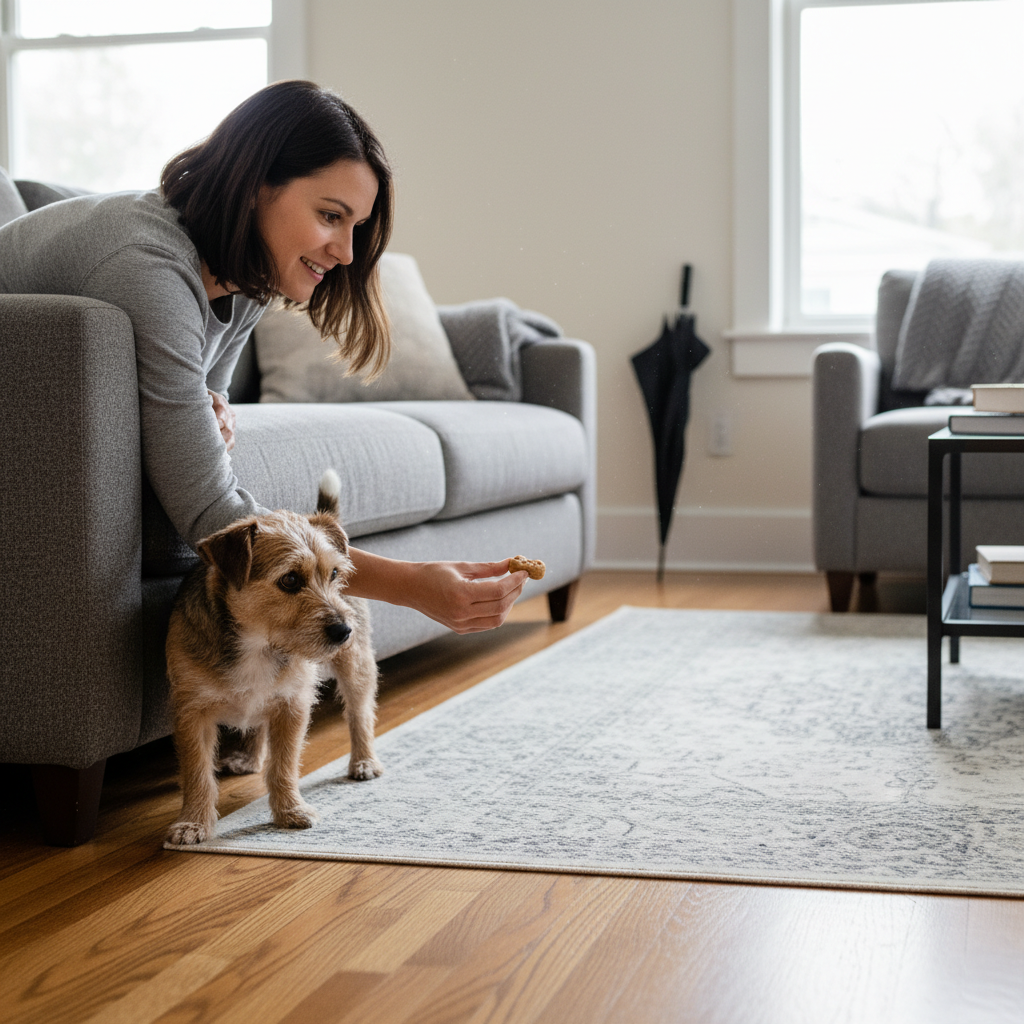
Sometimes, even with the best plan, you hit a snag. That’s completely normal! Every dog learns differently. If you’re feeling stuck, don’t despair. Let’s look at some common issues and how to navigate them.
Common Mistake: Going Too Fast
This is the number one reason training fails. We get excited by progress and try to jump from step 1 to step 5 in a single session. This is called ‘lumping’ and it overwhelms the dog.
The Fix: Be a ‘splitter,’ not a ‘lumper.’ Break every single step down into the smallest possible pieces. Is your dog scared of the ‘whoosh’ sound? Practice just moving the umbrella slowly without opening it. Is the Velcro strap the trigger? Practice just touching the strap. Think micro-steps!
Common Mistake: Flooding
Flooding is the practice of exposing a dog to a scary stimulus intensely and for a prolonged period, hoping they’ll ‘get over it.’ This is an outdated and cruel method that often backfires, creating more intense fear and potentially causing a dog to shut down or even become aggressive. Forcing your dog to stay near an open umbrella will not help them.
The Fix: Always give your dog the choice to retreat. If they move away, let them. Your job is to make the umbrella so rewarding and non-threatening that they choose to approach and interact with it.
Common Mistake: Accidental Reinforcement
When your dog gets scared, your first instinct might be to say, “It’s okay, good boy,” in a soothing voice. While well-intentioned, this can accidentally praise the fearful state of mind.
The Fix: Instead of coddling, project calm confidence. Use an upbeat, normal tone of voice. If they get scared, calmly increase the distance from the umbrella until they relax, and then reward that moment of relaxation. You’re rewarding the recovery, not the fear.
When to Call a Professional: If your dog’s fear is extreme, leading to panic, aggression, or an inability to go outside at all, it’s time to consult a certified professional dog trainer or a veterinary behaviorist. They can provide a customized plan and ensure the safety and well-being of both you and your dog.
Conclusion
Congratulations on taking the first step toward rainy day confidence! By reading this guide, you’ve already shown a deep commitment to your dog’s well-being. Remember that desensitization is a journey, not a destination. There will be good days and days where you might need to take a step back, and that is perfectly fine. The key is to celebrate the small victories, keep sessions short and fun, and always listen to what your dog’s body language is telling you.
By replacing fear with fun and positive experiences, you’re not just teaching your dog to tolerate an umbrella; you’re building a deeper bond of trust and communication. Soon enough, the sound of rain will be just another excuse for a wonderful walk with your best friend, come rain or shine. Happy training!