There’s a special kind of magic in the air when autumn arrives. The air gets crisp, the light turns golden, and the world is painted in brilliant shades of red, orange, and yellow. For us pet owners, it means glorious walks through crunchy leaves and cozy evenings with our furry companions. But what if you could make those walks even more engaging and fun? What if you could turn the beautiful falling foliage into an exciting game?
Welcome to the wonderful world of leaf-catching! Teaching your dog to catch falling leaves isn’t just an adorable trick to show off at the park; it’s a fantastic form of mental and physical enrichment. This simple game hones your dog’s focus, improves their coordination, and strengthens the incredible bond you share. It’s a game powered by nature, positive reinforcement, and a whole lot of tail wags. So, grab your comfiest sweater and some tasty treats, and let’s get ready to turn this autumn into an unforgettable season of fun for you and your best friend!
Setting the Scene: Prep Work for a Pawsitive Experience
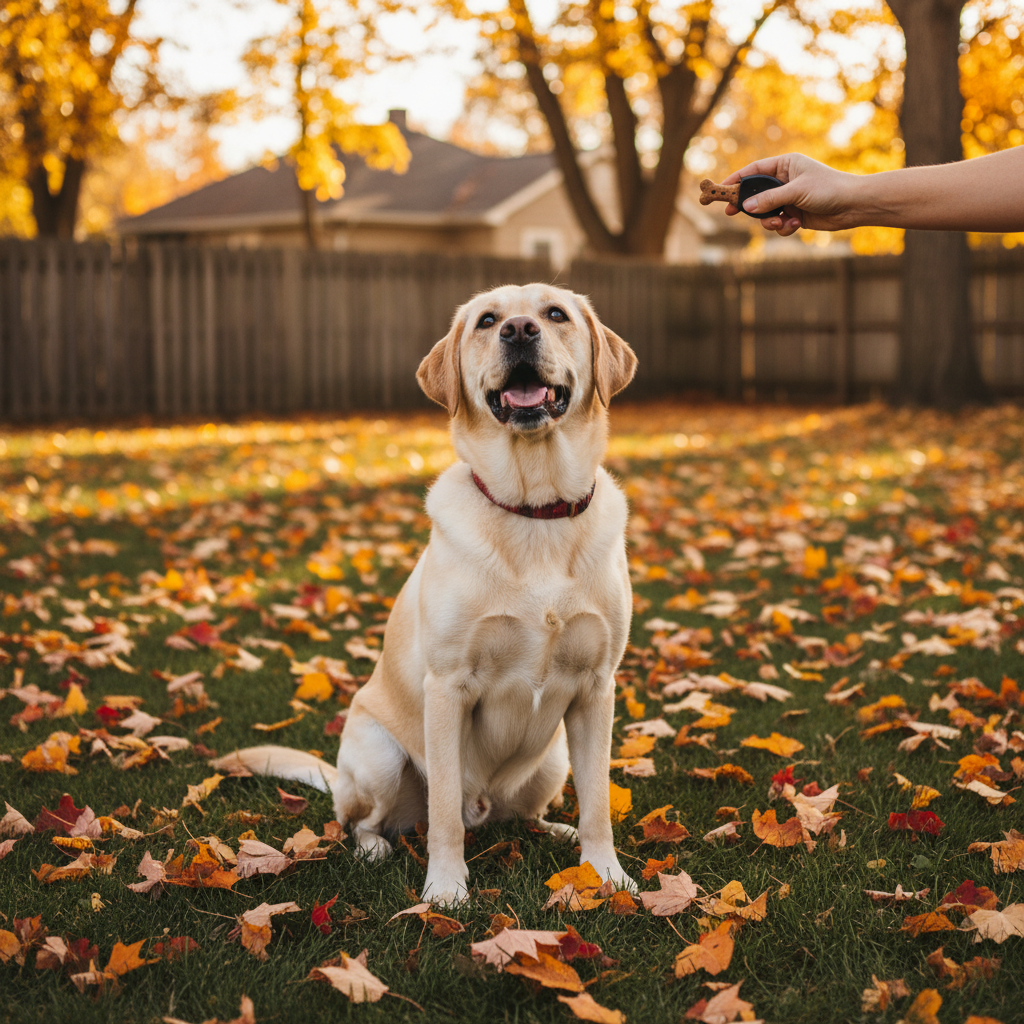
Before you and your pup can become a leaf-catching dream team, a little bit of prep work will go a long way. Think of this as setting the stage for a successful and, most importantly, fun training session. A great game starts with a great environment and the right mindset!
Finding the Perfect Leafy Arena
Location is everything! You’ll want to find a spot that’s both safe and full of leafy potential.
- Safety First: Choose an area away from busy roads or other hazards. A fenced-in backyard or a quiet corner of a familiar park is ideal.
- Leaf Supply: Look for deciduous trees (like maple, oak, or birch) that are actively dropping their leaves. A gentle breeze can be your best friend here, creating a steady supply of airborne targets.
- Comfort Underfoot: Soft grass is much better than hard pavement for any leaping your dog might do. Check the area for any sharp sticks, thorns, or other hidden objects that could hurt your pup’s paws.
Gathering Your Training Toolkit
You don’t need much for this game, but having the right supplies on hand will make the process smoother and more rewarding for your dog.
- High-Value Treats: This is key! Since you’re competing with all the exciting smells of the outdoors, you’ll need treats that are extra special. Think small, soft, smelly morsels like tiny pieces of chicken, cheese, or their favorite training treats.
- A Clicker (Optional): If your dog is already clicker-trained, a clicker is a fantastic tool for marking the exact moment they do something right—like snatching a leaf from the air! If not, a consistent verbal marker like a happy “Yes!” works just as well.
- A Positive Attitude: This is your most important tool! Your dog feeds off your energy. Stay patient, be encouraging, and remember that the goal is to have fun together. Keep sessions short and sweet, maybe 5-10 minutes at a time, to keep your dog engaged and eager for more.
Expert Tip: Before you start a training session, make sure your dog has had a chance to go potty and burn off any excess zoomie-energy. A dog that’s calm but alert is in the perfect headspace to learn something new.
The Leaf-Leaping Ladder: A Step-by-Step Training Guide
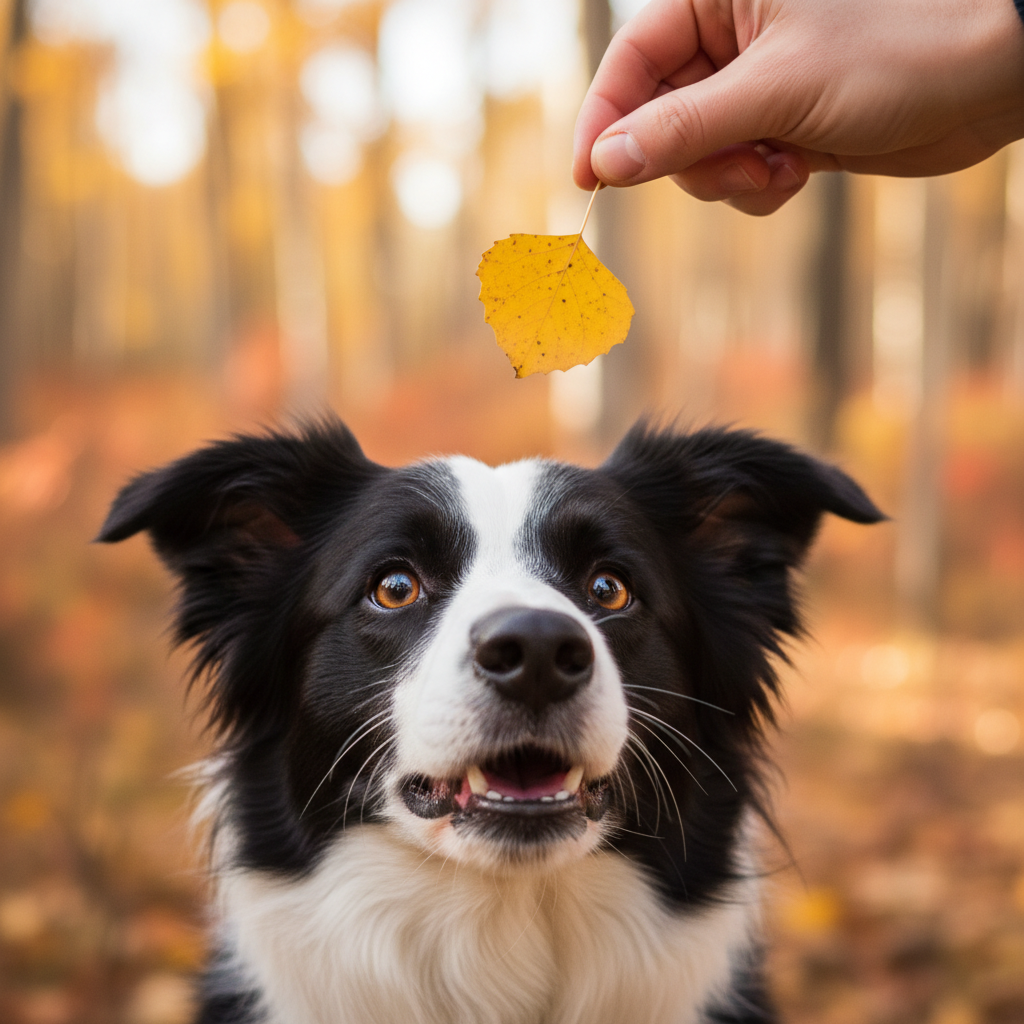
Alright, with our prep work done, it’s time for the main event! We’re going to teach this skill in small, easy-to-understand steps. This method, called ‘shaping,’ helps your dog build confidence and understand exactly what you’re asking of them. Remember to shower your pup with praise at every stage!
Step 1: Master the Treat Catch
Before we introduce the leaves, let’s make sure your dog understands the basic concept of catching something. If your dog is already a pro at this, you can do a quick refresher. If not, this is your starting point.
- Start in a quiet space with minimal distractions.
- Hold a high-value treat in front of your dog’s nose to get their attention.
- Gently toss the treat a very short distance upwards towards their mouth.
- The moment they catch it, say “Yes!” or click, and let them enjoy their reward.
- If they miss, that’s okay! Just let them eat the treat off the floor and try again. The goal is to make this a positive, no-pressure game. Practice until they are catching the treat reliably.
Step 2: Introducing the Leaf as a Good Thing
Now, we need to show your dog that leaves are not just random things on the ground, but objects of fun! We’ll use a process called ‘classical conditioning’ to build a positive association.
- Pick up a clean, dry leaf. Hold it in one hand and a treat in the other.
- Show your dog the leaf. The second they look at it or sniff it, say “Yes!” and give them the treat from your other hand.
- Repeat this several times until you see your dog’s eyes light up with anticipation whenever you present the leaf. They are learning: Leaf = Treat!
Step 3: The Gentle Drop
Here’s where we start adding a little bit of action.
- Hold the leaf a few inches above your dog’s nose and drop it.
- Mark and reward any interaction with the leaf as it falls or lands. This could be a sniff, a paw-tap, or an attempt to mouth it. We’re rewarding their interest and engagement.
- Keep this super positive! We want them to think, “Touching this falling thing is a great game!”
Step 4: Adding Height and a Cue Word
Once your dog is eagerly interacting with the dropped leaf, it’s time to increase the challenge slightly and give the trick a name.
- Start dropping the leaf from a little higher up—maybe from your shoulder height. This gives it more ‘air time’.
- As you drop the leaf, say your chosen cue word in a fun, upbeat tone. Good cues could be “Catch!”, “Leaf!”, or “Get it!”.
- The moment your dog’s mouth makes contact with the leaf in the air, have the biggest, happiest praise-party! This is the behavior we’ve been working towards. Follow up immediately with a jackpot of treats.
Step 5: Taking it to the Great Outdoors
You’ve built the foundation, and now it’s time to apply it to the real world. This is where the magic happens!
- Head to your chosen safe, leafy spot on a day when leaves are actively falling.
- When you see a leaf fluttering down near your dog, point to it excitedly and say your cue word (“Catch!”).
- Because you’ve built such a strong positive association, your dog should show interest. Praise and reward them enthusiastically for any attempt they make to catch a natural falling leaf.
- Don’t worry about perfection. At first, they might just pounce on it after it lands. That’s great! Celebrate it! Over time, with practice, their timing and coordination will improve, and one day, they’ll snatch one right out of the air.
Oops, a Daisy! Troubleshooting Common Leaf-Catching Conundrums
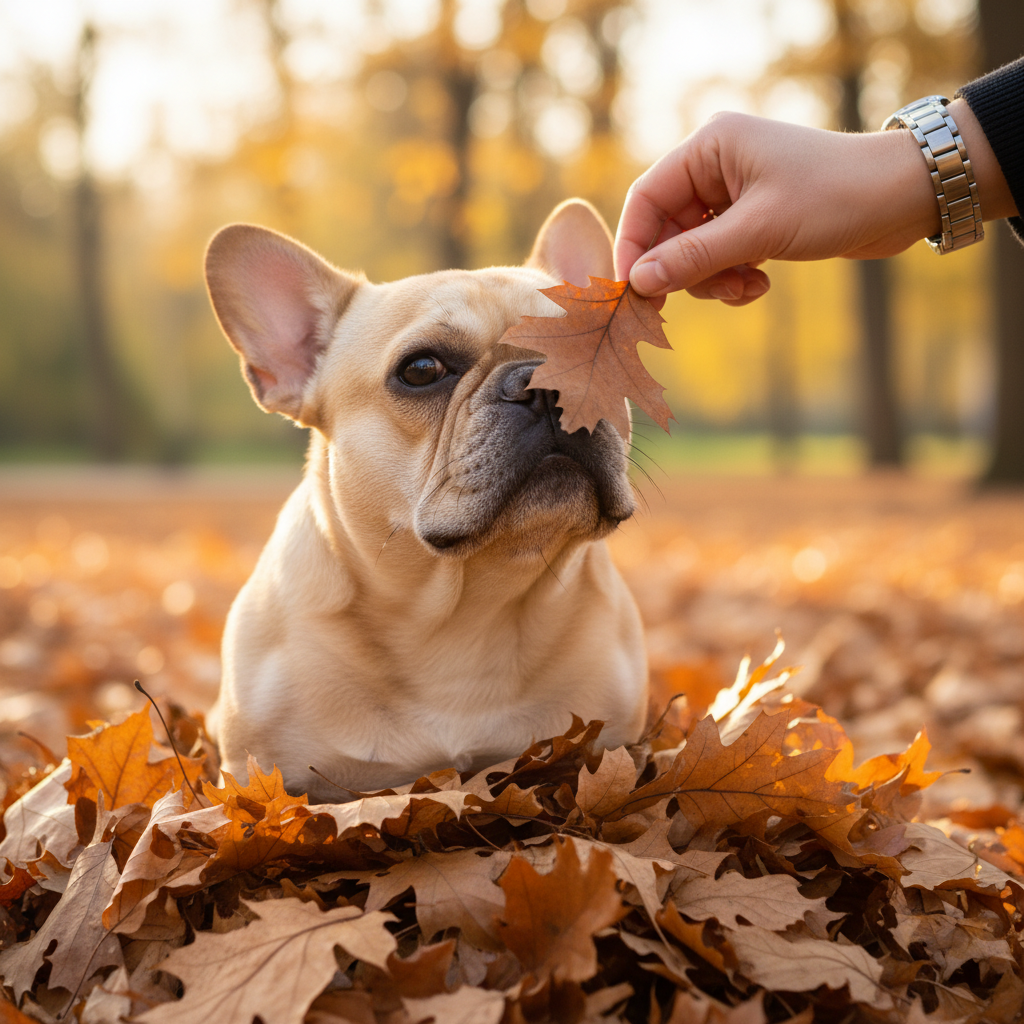
Even with the best plan, sometimes our canine students have their own ideas. Don’t get discouraged! Training is all about problem-solving and finding what works for your individual dog. Here are some common hiccups you might encounter and how to navigate them.
“My Dog Just Wants to Eat the Leaves!”
Some dogs, especially puppies, explore the world with their mouths, and crunchy leaves can seem like a tasty snack. While eating a few leaves is usually harmless, it’s not a habit we want to encourage.
- Solution: Work on a solid “Drop It” or “Leave It” command. Practice this separately from the catching game with toys or low-value items first. When playing the leaf game, if your dog catches a leaf and doesn’t want to let go, offer a super high-value treat in trade. They’ll quickly learn that giving you the leaf results in something even better.
“My Dog Isn’t Interested in Leaves at All.”
What if your dog gives the leaves a sniff and then looks at you as if to say, “And? What’s so great about this?”
- Solution: Up the ante! First, make sure your treats are irresistible. Second, make the game more exciting. Use an animated, playful tone of voice. Tap the leaf on the ground, flutter it around, and act like it’s the most fascinating toy in the world. Your enthusiasm is contagious! Keep sessions very short to avoid them getting bored.
“My Dog Seems Scared of the Falling Leaves.”
For some timid or noise-sensitive dogs, the rustling and unpredictable movement of falling leaves can be a bit spooky.
- Solution: Go back to basics and build a positive association from a distance. Sit with your dog on a park bench where you can watch leaves fall from afar. Every time a leaf falls, give your dog a tasty treat. Don’t pressure them to interact. The goal is to teach them that falling leaves predict good things (treats!). Slowly decrease the distance over several sessions as they become more comfortable.
“My Dog is an Enthusiastic but Clumsy Catcher.”
Is your dog all in, leaping and snapping, but missing the leaf every time?
- Solution: This is usually just a matter of practice! You can help them improve their coordination with other games. Tossing soft toys or pieces of popcorn (plain, air-popped, of course) can help them practice their tracking and catching skills in a slightly easier context. And remember to praise the effort, not just the successful catches!
Safety First: A Guide to Safe Autumn Play
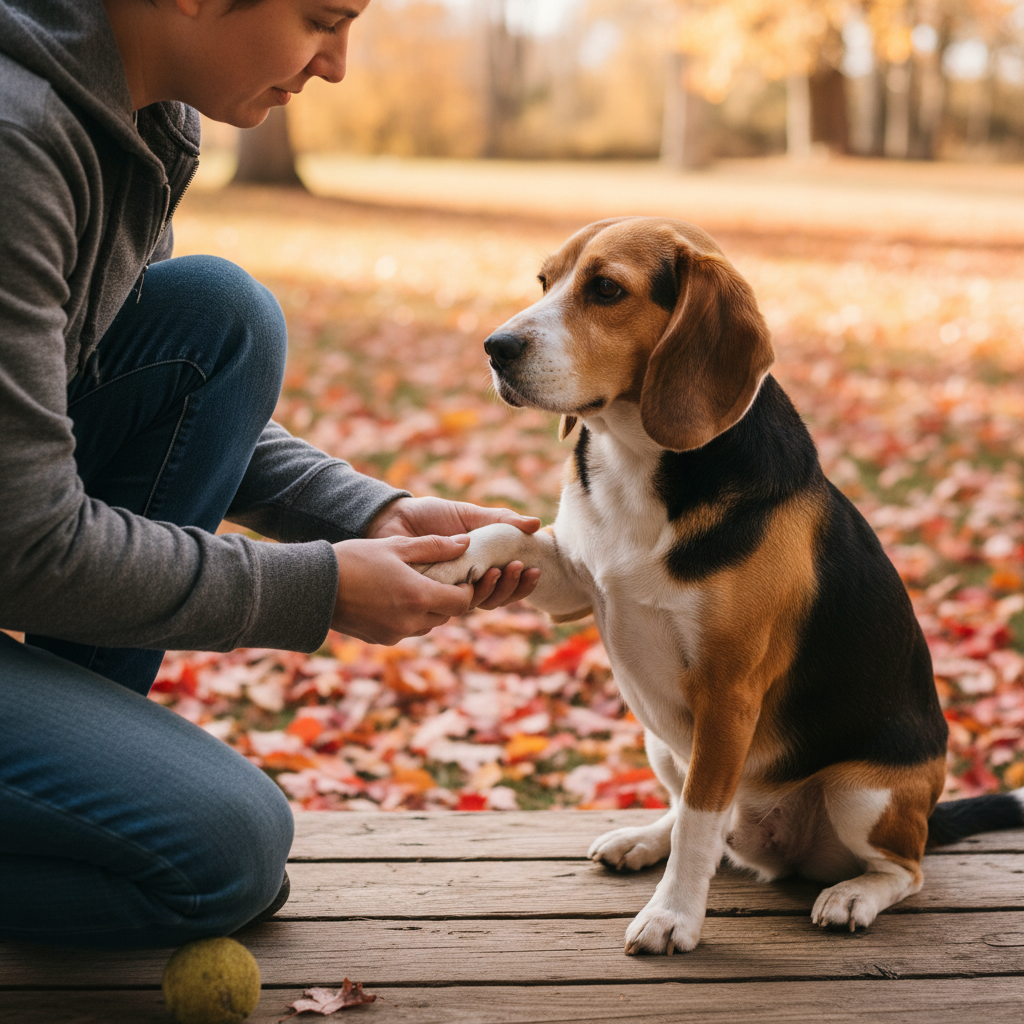
Autumn is beautiful, but it also has a few potential hazards for our curious canines. Keeping playtime safe is just as important as keeping it fun. Before you let your dog dive headfirst into a giant leaf pile, here’s a quick safety checklist to keep in mind.
Know Your Foliage
Not all leaves are created equal. While most common deciduous leaves are non-toxic in small amounts, some plants can be dangerous if ingested.
- Toxic Trees: Be aware of leaves from trees like Black Walnut, Cherry, and Red Maple (especially wilted leaves for horses, but caution is wise for dogs). While a dog would need to eat a large quantity to get sick, it’s best to steer clear if you can.
- Acorns and Conkers: Acorns from oak trees can cause stomach upset and, in large quantities, can lead to blockages or kidney issues. Horse chestnuts (‘conkers’) are also toxic. Teach your dog to leave these alone.
- Mushrooms: Leaf piles can be damp, creating a perfect environment for wild mushrooms to grow. Many are highly toxic to dogs, so always scan the area and prevent your dog from eating any fungi.
Beware of What Lies Beneath
A pile of leaves can look inviting, but you never know what’s hiding inside. Always check it out before letting your dog play.
- Sharp Objects: Piles, especially those raked to the curb, can hide sharp sticks, broken glass, or other yard waste.
- Pesticides and Chemicals: If you’re in a public park or a neighbor’s yard, you don’t know if the leaves have been treated with chemicals. It’s often safest to play in your own, untreated yard.
- Creepy Crawlies: Ticks love to hang out in leaf litter, waiting for a host. Additionally, leaf piles can be a cozy home for spiders, snakes, or other critters that might not appreciate being pounced on.
Post-Play Wellness Check
After a fun session of frolicking in the foliage, a quick check-over is a great habit.
- Tick Check: Run your hands all over your dog’s body, feeling for any small bumps. Pay close attention to their ears, neck, armpits, and between their toes.
- Paw Patrol: Check their paw pads for any cuts or scrapes and look for burrs or seeds caught in the fur between their toes.
- A Good Brushing: A quick brush-down can help remove any leaf debris, dirt, or hitchhiking bugs from their coat before they come inside.
Conclusion
And there you have it! More than just a cute trick, teaching your dog to catch leaves is a doorway to deeper communication, enhanced focus, and shared joy during one of the most beautiful times of the year. It’s about celebrating the little moments—the satisfying crunch of leaves underfoot, the happy look on your dog’s face as they leap, and the quiet pride you feel when they finally snatch that fluttering leaf from the air.
Remember, every dog learns at their own pace. The most important thing is the time you spend together, strengthening your bond and making memories. Whether your dog becomes a professional leaf-catcher or simply enjoys pouncing on them on the ground, you’ve successfully added a new layer of fun and enrichment to their life. So get out there, enjoy the crisp autumn air, and have a wonderful time playing in the leaves with your best friend.