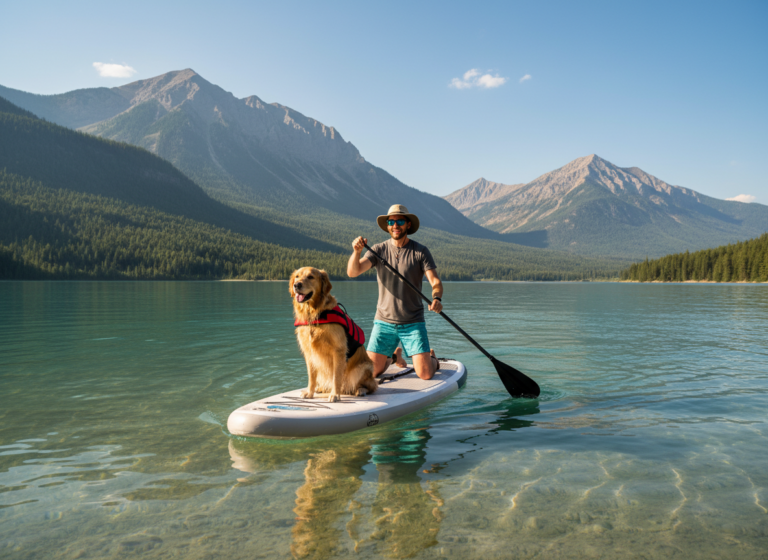
The sun is shining, the water is sparkling, and your best furry friend is right by your side, ready for a day of fun. Whether you’re planning a boat trip, a paddleboarding session, or just a splash at the local dog beach, the thought of sharing these moments with your dog is pure joy. But before the cannonballs and doggy paddles commence, we need to have a serious chat about safety. Just as we wouldn’t let a child near the water without supervision and proper safety gear, the same rule must apply to our dogs.
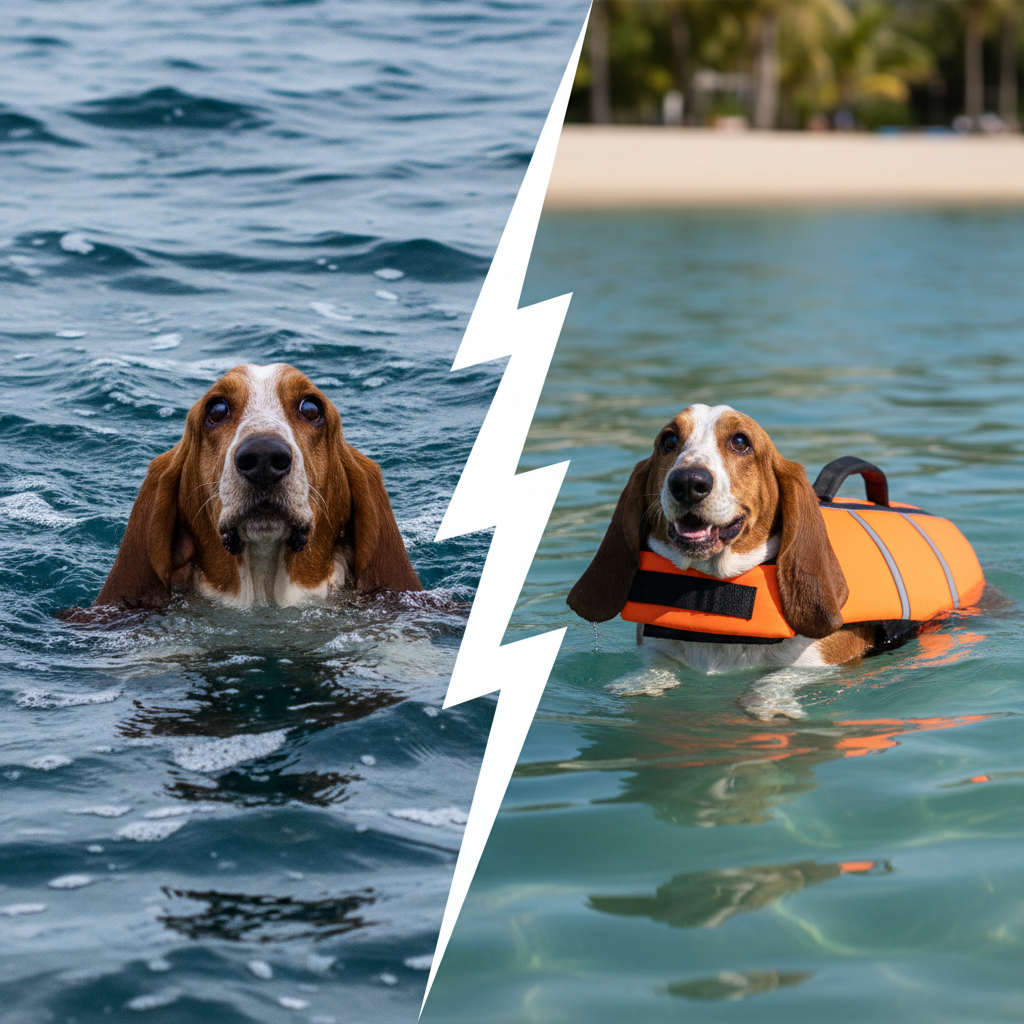
You might be thinking, ‘But my dog is a natural swimmer!’ While many dogs have an instinct to paddle, not all are built for the water. Breeds with short snouts, dense bodies, or short legs can tire easily. Even the strongest canine swimmers can face unexpected challenges like strong currents, sudden drop-offs, or simple exhaustion. A dog life jacket, or Canine Flotation Device (CFD), isn’t just an accessory; it’s a potential lifesaver. It provides buoyancy, visibility, and a crucial handle for you to grab in an emergency.
The real trick, however, isn’t just buying a life jacket—it’s getting your dog to love wearing it. A forced, stressful experience can create a negative association with the jacket and even the water itself. In this guide, we’ll dive into a simple, positive, and treat-filled training plan to make your dog’s life jacket their favorite piece of adventure gear. Let’s get started!
Why a Doggy Life Jacket is a Non-Negotiable for Water Adventures
Before we get into the ‘how,’ let’s solidify the ‘why.’ Understanding the vital role a life jacket plays can motivate you to stick with the training process, even if it takes a little patience. It’s about more than just peace of mind; it’s about proactive protection for a beloved family member.
Busting the ‘All Dogs Can Swim’ Myth
It’s a common misconception that all dogs are born with an innate ability to swim effortlessly. While many dogs will instinctively paddle if they find themselves in water, ‘paddling’ isn’t the same as ‘swimming safely.’ Several factors can make swimming difficult or dangerous for a dog:
- Breed Characteristics: Brachycephalic (short-nosed) breeds like Pugs and Bulldogs can struggle to keep their heads above water while breathing. Top-heavy breeds with dense muscle, like Boxers, can have trouble staying afloat. Dogs with short legs, like Dachshunds, may tire out very quickly.
- Exhaustion and Panic: Even a dog that loves the water can get tired. If they swim too far out or get caught in a current, exhaustion can set in rapidly. This can lead to panic, which makes it even harder for them to stay afloat and think clearly.
- Water Conditions: Calm, warm pool water is very different from a chilly, choppy lake or a river with a strong current. Cold water can sap a dog’s energy much faster, and currents can sweep them away in an instant.
The Three Pillars of Life Jacket Safety
A good CFD offers three critical safety benefits that go beyond simple flotation:
- Buoyancy: This is the most obvious benefit. The jacket helps keep your dog’s head above water, reducing the amount of energy they need to expend to stay afloat. This is crucial if they fall into the water unexpectedly or become too tired to swim back to safety.
- Visibility: Most dog life jackets come in bright, high-visibility colors like red, orange, or neon yellow. This makes your dog incredibly easy to spot in the water, whether you’re on a boat, on the shore, or in a crowded area. Many also include reflective strips for low-light conditions.
- Easy Retrieval: This is perhaps the most underrated feature. A quality life jacket will have a durable, well-stitched rescue handle on the back. This handle allows you to quickly and safely lift your dog out of the water and back onto a boat, dock, or paddleboard without causing them injury or panic. It’s an absolute game-changer in an emergency.
Think of a life jacket as a seatbelt in a car. You hope you’ll never need it to do its job, but you’re incredibly grateful it’s there if you do. It turns a potential crisis into a manageable situation.
Choosing the Perfect Canine Flotation Device (CFD)
Not all life jackets are created equal. Selecting the right one is the first step to ensuring both safety and comfort for your dog, which will make the training process much smoother. A poorly fitting or badly designed jacket can be uncomfortable, restrictive, or even dangerous.
Fit is Everything: How to Measure Your Dog
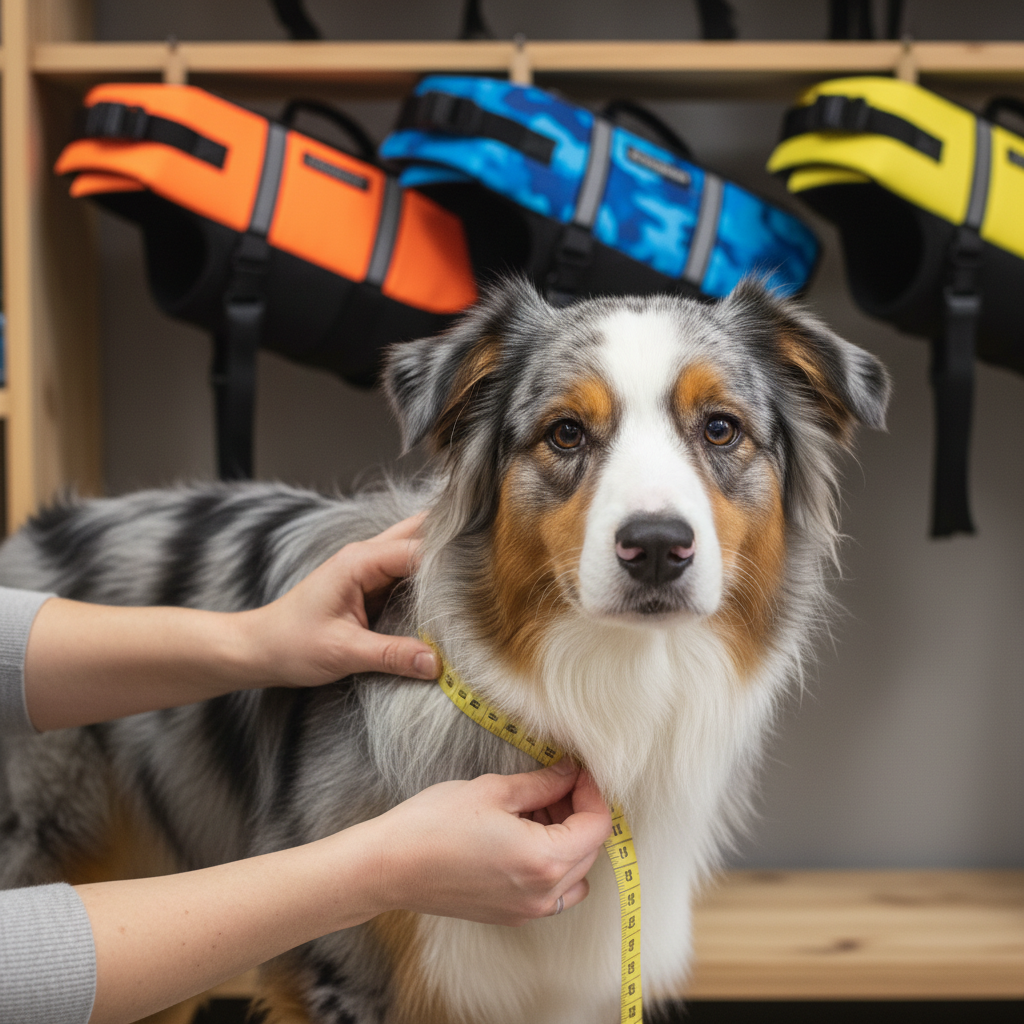
An improper fit is the number one reason dogs dislike their life jackets. Too loose, and they can slip out of it; too tight, and it can chafe, restrict breathing, and impede their natural swimming motion. Grab a soft measuring tape and get these three key measurements:
- Chest Girth: This is the most important measurement. Measure around the widest part of your dog’s ribcage, just behind their front legs.
- Neck Girth: Measure around the base of the neck where their collar would comfortably sit.
- Body Length: Measure from the base of the neck (between the shoulder blades) to the base of the tail. The jacket should not extend all the way to the tail, as this can interfere with their back legs while swimming.
Always compare your dog’s measurements to the manufacturer’s sizing chart. If your dog is between sizes, it’s often best to choose the larger size for chest girth and use the adjustable straps to create a snug fit.
Key Features to Look For
When you’re shopping, keep an eye out for these essential features:
- A Strong Rescue Handle: It should be securely stitched and easy to grab. Test it by giving it a good tug.
- Bright, Visible Colors: Opt for neon shades over muted ones. Visibility is safety.
- Reflective Trim: For those early morning or dusk adventures, reflective strips are a must.
- Secure, Adjustable Straps: Look for multiple straps (usually around the chest and under the belly) with sturdy buckles that are easy to clip and unclip.
- A Front Float Support: A good jacket will have extra flotation under the dog’s chin. This helps keep their head well above the water.
- D-Ring for Leash Attachment: This is a handy feature for walking your dog to and from the water.
| Feature | Why It Matters | What to Look For |
|---|---|---|
| Snug, Secure Fit | Prevents the dog from slipping out and ensures proper flotation. | Multiple adjustable straps, no large gaps around the neck or belly. |
| Rescue Handle | Allows for safe and quick retrieval from the water. | Double-stitched, reinforced handle that is easy to grab. |
| High-Visibility Color | Makes your dog easy to spot in any water condition. | Bright orange, neon yellow, red, or pink. |
| Neck/Chin Float | Helps keep the dog’s head above water, preventing them from inhaling water. | A padded floatation panel that rests under the dog’s chin. |
The Step-by-Step Guide to a Happy Life Jacket Introduction
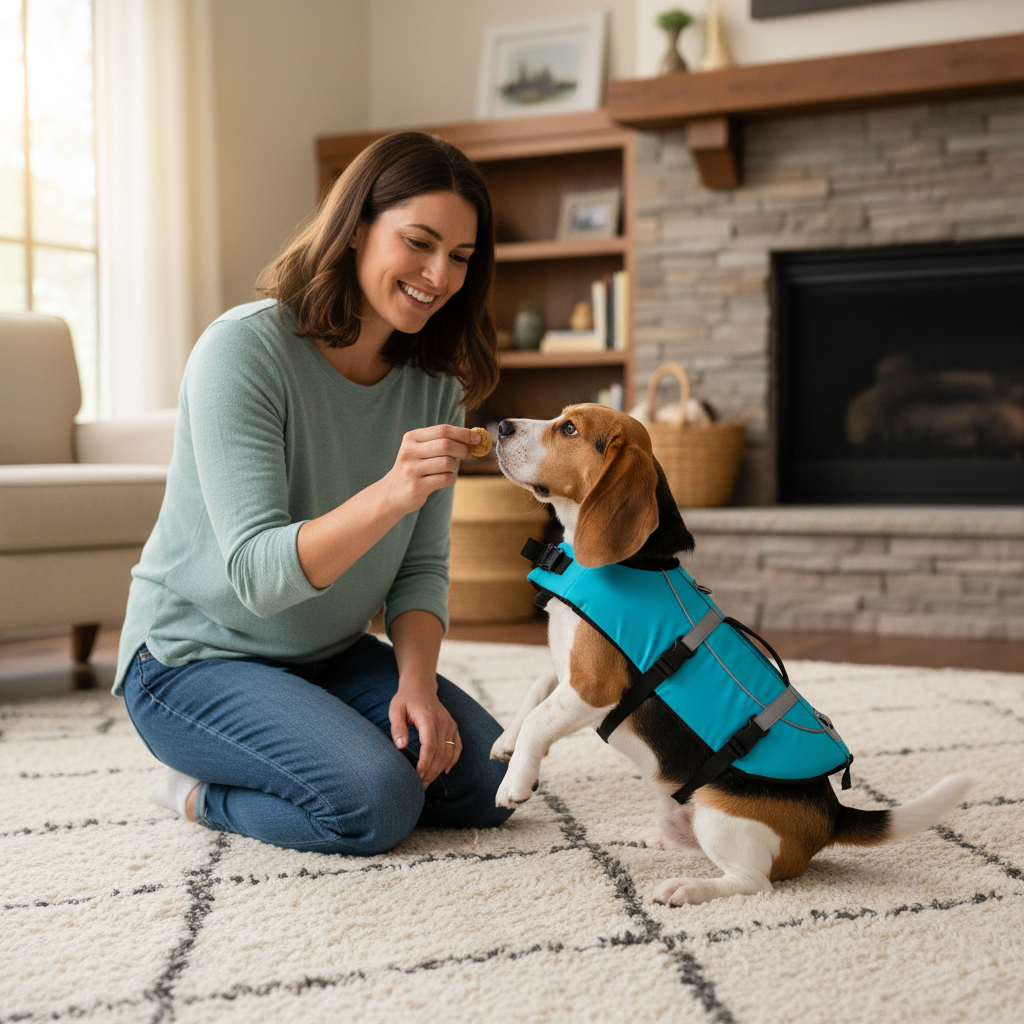
This is where the magic happens! The key to success is creating a powerful positive association with the life jacket. We want your dog to see the jacket and think, ‘Oh boy, something fun is about to happen!’ This process should be done over several short sessions, long before you’re actually heading to the water. All you need is the life jacket, some high-value treats (think tiny pieces of chicken, cheese, or hot dogs), and a little bit of patience.
- Step 1: The Introduction Ceremony. Place the new life jacket on the floor in a common area of your home. Let your dog approach it on their own terms. The moment they sniff, touch, or show any calm curiosity towards it, praise them enthusiastically and give them a treat. Don’t force them to interact. Let them discover that this new object makes amazing treats appear. Do this for a minute or two, then put the jacket away.
- Step 2: Touch and Treat. In your next session, hold the jacket in your hand. Gently touch the jacket to your dog’s back for just a second, then immediately give them a treat and lots of praise. Repeat this several times. You’re building the association that the jacket touching them is a wonderful thing.
- Step 3: Drape and Praise. Once your dog is comfortable with the ‘touch and treat’ game, gently drape the life jacket over their back without fastening any of the straps. Let it rest there for a couple of seconds while you feed them a steady stream of tiny treats. Then, remove the jacket and stop the treats. The goal is to make them wish the jacket would stay on longer because that’s when the good stuff happens!
- Step 4: The First Buckle. Now it’s time for the click. With the jacket draped on their back, calmly fasten one of the side buckles. *Click.* Immediately treat and praise, then unbuckle it. *Click.* Repeat a few times. Many dogs can be startled by the sound of a buckle, so we want to make that sound a predictor of delicious snacks. Gradually work up to fastening all the buckles for a few seconds at a time.
- Step 5: Full Dress Rehearsal (Indoors!). Once they are comfortable with all the buckles being fastened, put the jacket on properly. The very first time, immediately engage them in their favorite game. A quick game of tug-of-war or fetch in the living room for just 2-3 minutes is perfect. This distracts them from the sensation of wearing it and associates the jacket with playtime. Then, take it off and end the session on a high note.
- Step 6: Taking it Outside. Before you even think about the lake, have your dog wear the jacket for short periods in familiar, low-stakes environments. Put it on them for a walk around the block or while they play in the backyard. This helps them get used to moving around in it and normalizes the experience.
Expert Tip: Keep your training sessions short and sweet—no more than 5 minutes at a time. Always end on a positive note before your dog gets bored, frustrated, or stressed. Patience is your best friend in this process!
Troubleshooting Common Life Jacket Woes
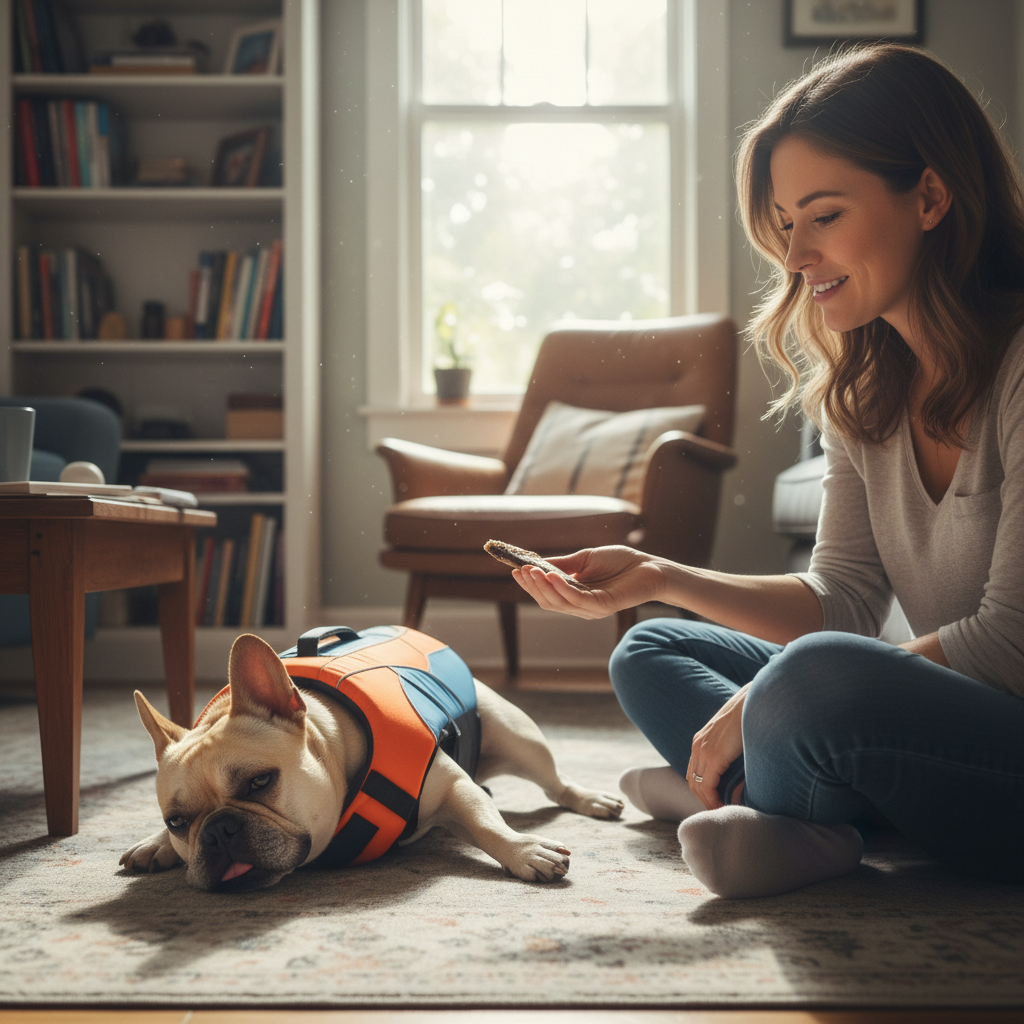
Even with the best training plan, you might hit a few snags. Don’t worry, this is completely normal! Most issues stem from the dog feeling unsure or uncomfortable. Here’s how to handle some of the most common reactions.
‘My Dog Freezes or Flops Over!’
This is a classic stress response often called ‘learned helplessness.’ The dog feels trapped or overwhelmed by the new sensation and simply shuts down. It might look funny, but it’s a sign that we’ve moved too fast.
- The Solution: Go back to the beginning. If your dog freezes when you buckle the straps, go back to just draping the jacket on their back for treats. Make the sessions even shorter and the treats even more valuable. The goal is to rebuild their confidence at a pace they are comfortable with. Don’t try to coax them to move; simply remove the jacket and end the session positively. Try again the next day, taking a smaller step.
‘My Dog Tries to Bite or Chew the Jacket!’
This is often a sign of irritation or a way for the dog to try and ‘remove’ the annoying thing on their back. It can also be a sign of a poor fit that is pinching or rubbing them the wrong way.
- The Solution: First, double-check the fit. Ensure no straps are twisted and that there are no pressure points. If the fit is good, the issue is behavioral. The best tool here is redirection. When the jacket is on, immediately give them something more interesting to put in their mouth, like a puzzle toy filled with peanut butter or a favorite chew toy. This teaches them to ignore the jacket and focus on something else. Never punish them for chewing the jacket; simply redirect their attention.
‘My Dog Seems Anxious or Keeps Scratching at it.’
Panting, yawning, or scratching can be signs of anxiety. Your dog is telling you they are not yet comfortable with this new piece of apparel.
- The Solution: Again, shorter sessions are key. Associate the jacket with calming activities. Put it on right before you give them their dinner, and take it off as soon as they finish eating. You can also try a ‘jacket on, fun time starts; jacket off, fun time stops’ approach. This helps them see the jacket as the key to unlocking all their favorite things. If chafing is the issue, you may need a different style of jacket or a thin rash guard worn underneath for sensitive-skinned dogs.
First Swim: Making the Maiden Voyage a Success
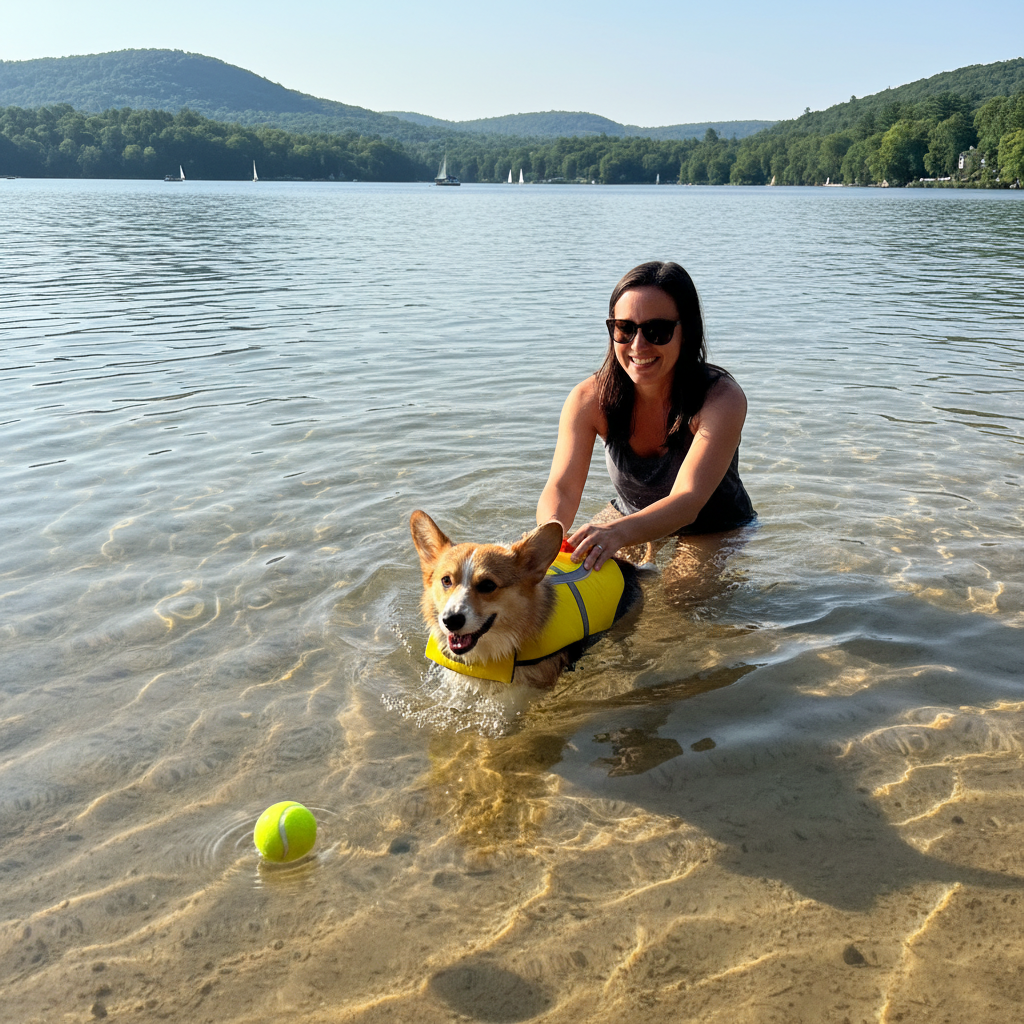
Congratulations, you’ve done the hard work on dry land! Now it’s time to put all that training to the test. The first time your dog swims with their life jacket on is a critical experience. A positive, confidence-building session will set the stage for years of happy water adventures.
Setting the Scene for Success
Choose your location wisely. The ideal spot for a first swim is a place with:
- Calm Water: Avoid strong currents or waves. A quiet lake shoreline, a calm bay, or a dog-friendly pool is perfect.
- Shallow Entry: Look for a spot where the water deepens gradually. This allows your dog to walk in at their own pace and get used to the feeling of the water and the jacket’s buoyancy.
- No Crowds: Fewer distractions mean your dog can focus on you and the new experience without feeling overwhelmed.
Your Step-by-Step First Swim Guide
- Leash Up: Keep your dog on a long, waterproof leash for the first few outings. This gives you control and prevents them from swimming too far out if they get spooked or overly excited.
- Lead by Example: Walk into the shallow water yourself. Act cheerful and confident. Your dog takes cues from you, so if you’re relaxed and happy, they’re more likely to be.
- Entice, Don’t Force: Never, ever throw or push your dog into the water. This is a surefire way to create fear. Instead, use a favorite floating toy or some treats to lure them in. Toss the toy just a few feet out and praise them like crazy when they go for it.
- Test the Handle: Once they are comfortably paddling, gently take hold of the rescue handle. Let them feel you supporting them. This gets them used to the sensation so it won’t be a shock if you ever need to use it in an emergency. You can even give them a little lift to show them how it works.
- Keep it Short and Sweet: The first swim should be brief—maybe only 5 to 10 minutes. The goal is to leave them wanting more. End the session while they are still having fun, not when they are exhausted.
- Rinse and Reward: After the swim, rinse both your dog and the life jacket with fresh water to remove any chlorine, salt, or bacteria. And of course, give them lots of praise and a special treat for being such a good water dog!
Conclusion
Water safety for our dogs is a responsibility we should all take seriously, and a well-fitting life jacket is the single most important tool in our arsenal. But as we’ve learned, safety gear is only effective if our dogs are comfortable and happy wearing it. By investing a little time and patience into positive reinforcement training, you can transform a life jacket from a strange, cumbersome object into a symbol of fun and adventure.
Remember the key takeaways: choose a jacket based on a proper fit and key safety features, introduce it slowly with lots of high-value rewards, and always keep the experience positive. Your dog’s comfort and confidence are the priority. Before you know it, seeing you grab the life jacket will be met with the same happy tail wags as when you pick up their leash or favorite toy.
Now you’re fully equipped with the knowledge to make every boat trip, paddle, and swim a safe one. Here’s to many years of happy and secure water adventures with your best friend by your side!