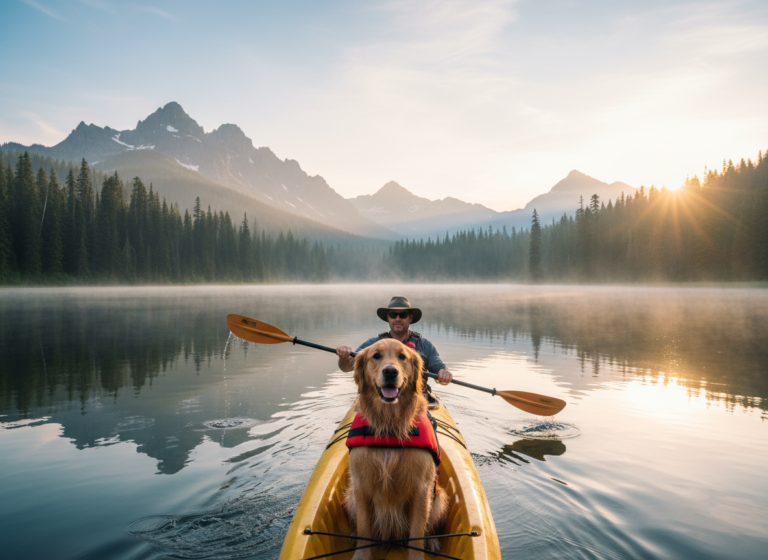
There’s nothing quite like the feeling of gliding across calm water on a stand-up paddleboard (SUP), with the sun on your face and the gentle lapping of waves as your soundtrack. Now, imagine that experience with your four-legged first mate along for the ride! Paddleboarding with your dog can be an incredible bonding activity, offering both of you a new way to explore and enjoy the great outdoors.
But before you and your pup can set off on your aquatic adventures, a little preparation is key. Just like any new skill, getting your dog comfortable and confident on a wobbly board takes patience, positive reinforcement, and a solid training plan. Rushing the process can lead to a fearful dog who wants nothing to do with the water, and we definitely don’t want that!
That’s where this guide comes in. We’re going to break down the entire process, from choosing the right gear to mastering commands on dry land before ever touching the water. By the end, you’ll have all the tools and steps you need to make SUP training a fun and successful experience, setting you both up for a summer filled with amazing memories. Let’s get started!
Gear Up! Essential Equipment for SUP Pups
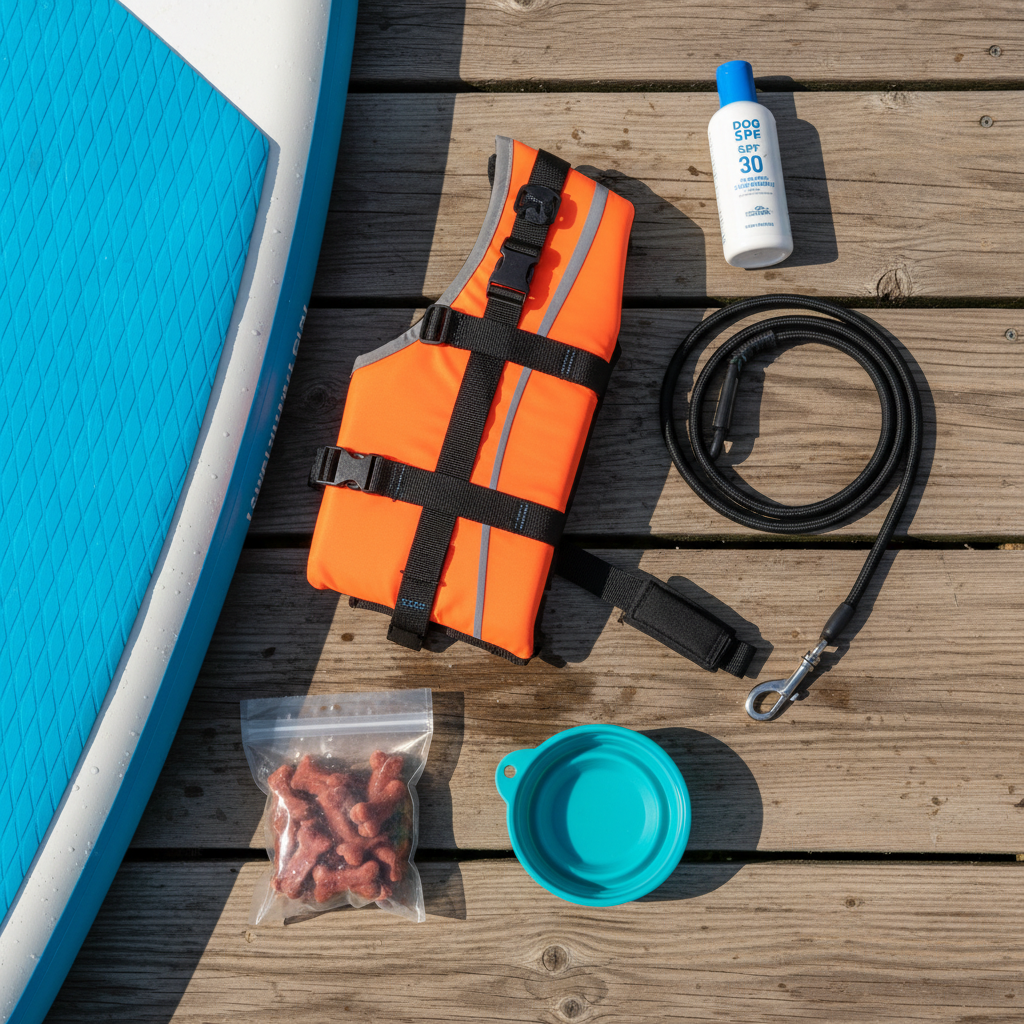
Gear Up! Essential Equipment for SUP Pups
Before you can start training, you need to make sure you have the right equipment for both safety and success. Having the proper gear will make your dog feel more secure and the entire learning process much smoother. Think of it as setting the stage for a great performance!
Must-Have Items:
- A Stable Paddleboard: This is your most important piece of equipment. For paddling with a pup, stability is king. Look for a wide, long board, often labeled as an ‘all-around’ or ‘touring’ model. Inflatable SUPs are often a fantastic choice as they are very stable and have a softer, more forgiving deck that’s easier on your dog’s paws.
- A Canine Personal Flotation Device (PFD): This is non-negotiable. Even if your dog is a champion swimmer, a PFD is a critical safety tool. It provides buoyancy if they get tired or fall in unexpectedly, and the handle on the back is invaluable for helping you lift your dog back onto the board. Make sure it fits snugly but comfortably.
- Non-Slip Deck Pad or Mat: While most boards have some grip, adding an extra layer can give your dog a huge confidence boost. A yoga mat, bath mat with suction cups, or a specialized dog deck pad can provide a secure place for your pup to sit or lie down without sliding around.
- High-Value Treats: You’re going to be doing a lot of positive reinforcement, so bring the good stuff! Small, tasty, and easy-to-swallow treats will keep your dog motivated and focused on the task at hand.
- Water and a Collapsible Bowl: Paddling is thirsty work! Always bring fresh water for your dog to prevent them from drinking lake or saltwater, which can make them sick.
- A Dog-Friendly Leash (for on-shore only): Use a regular leash for walking to and from the water, but never tether your dog to the paddleboard itself. This is a serious drowning hazard if the board flips.
Choosing the right board can feel overwhelming, so here’s a quick comparison to help you decide:
| Board Type | Pros for Dog Owners | Cons for Dog Owners |
|---|---|---|
| Inflatable SUP (iSUP) | Very stable, soft deck is comfortable and durable against claws, portable and easy to store. | Can take time to inflate, may feel slightly less rigid than a hard board. |
| Epoxy/Hard Board | Glides faster and more efficiently through the water, often more rigid. | Surface can be slippery without an extra pad, more susceptible to scratches from dog claws, harder to transport and store. |
| Touring SUP | Longer and wider, offering excellent stability for you and a medium-to-large dog. | Can be less maneuverable than shorter boards. |
Expert Tip: When choosing a PFD, look for one with a bright color for high visibility in the water and a sturdy, well-placed handle on the back. This handle is your ‘dog-overboard’ recovery tool!
Step-by-Step SUP Training on Dry Land
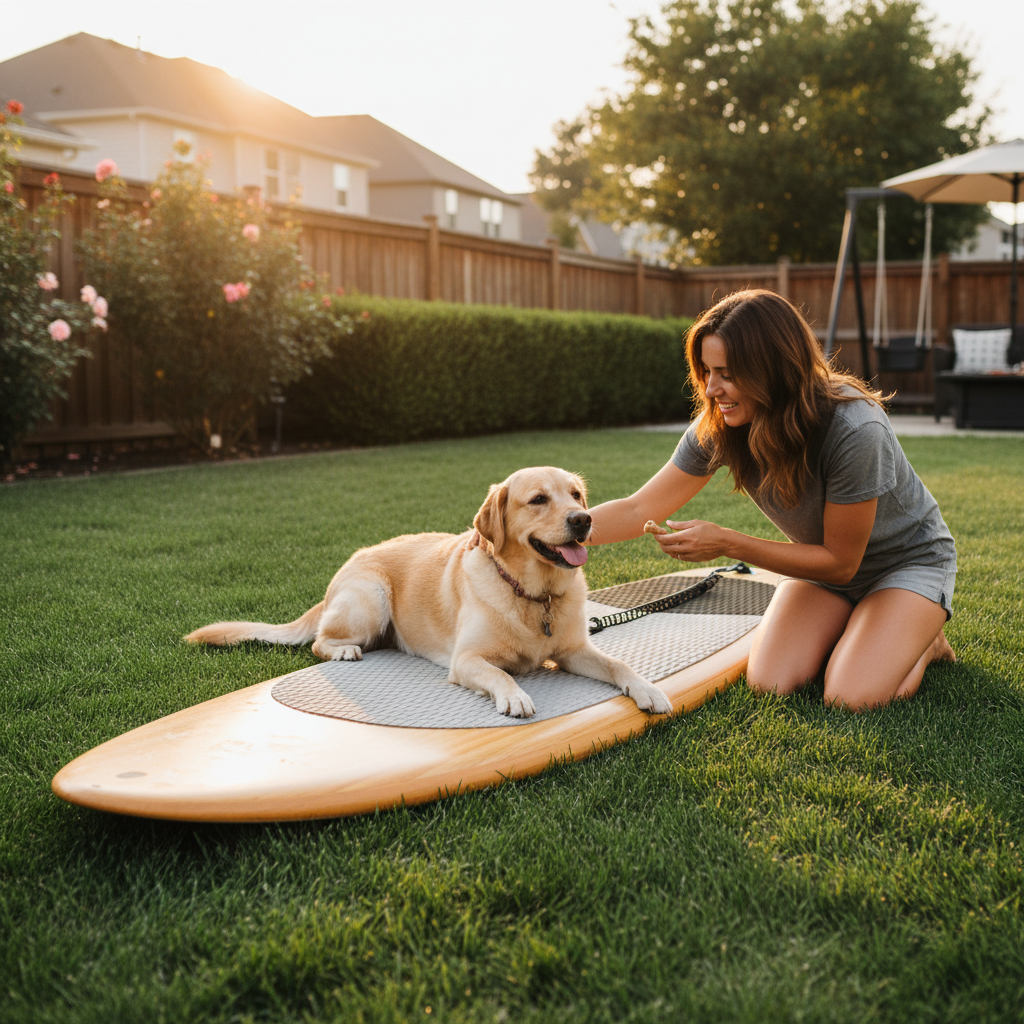
Step-by-Step SUP Training on Dry Land
The golden rule of SUP training is to start on solid ground. Your goal here is to create an overwhelmingly positive association with the paddleboard. You want your dog to think the board is the coolest, most rewarding place on Earth! This phase can take a few days or a few weeks, so be patient and let your dog set the pace.
Phase 1: Introducing the Board
Place the paddleboard in your backyard or living room—somewhere your dog feels safe. Let them investigate it on their own terms. Sniffing it, walking around it, whatever they want to do. Don’t force them onto it. Casually drop treats on and around the board to reward their curiosity. The goal is simple: Board = Awesome Things Happen Here.
Phase 2: The ‘Place’ Command on the Board
Once your dog is comfortable being near the board, it’s time to encourage them to get on it. This is where a solid ‘place’ or ‘on your bed’ command comes in handy.
- Lure and Reward: With a treat in hand, lure your dog to put one paw on the board. The moment they do, say “Yes!” and give them the treat. Repeat this, gradually luring them to put two paws, then all four paws on the board. Keep sessions short and fun—just a few minutes at a time.
- Introduce a Command: Once they are reliably getting on the board, add a verbal cue like “Load up” or “Board.” Say the cue right before you lure them on.
- Practice Sit and Down: After your dog is happily hopping onto the board, start practicing basic commands like ‘sit’ and ‘down’ while they are on it. The board will have a slight wobble even on grass, so this helps them get used to the feeling of instability in a controlled environment. Reward them generously for staying calm.
- Introduce the Paddle: While your dog is on the board, pick up your paddle and move it around. Let them sniff it. Simulate paddling motions next to the board. Reward them for staying calm and not reacting to the paddle’s movement.
Expert Tip: If your dog is hesitant, try sitting on the board yourself and inviting them to join you. Your calm presence can be very reassuring. Make it a fun hangout spot!
Making a Splash: Transitioning to the Water
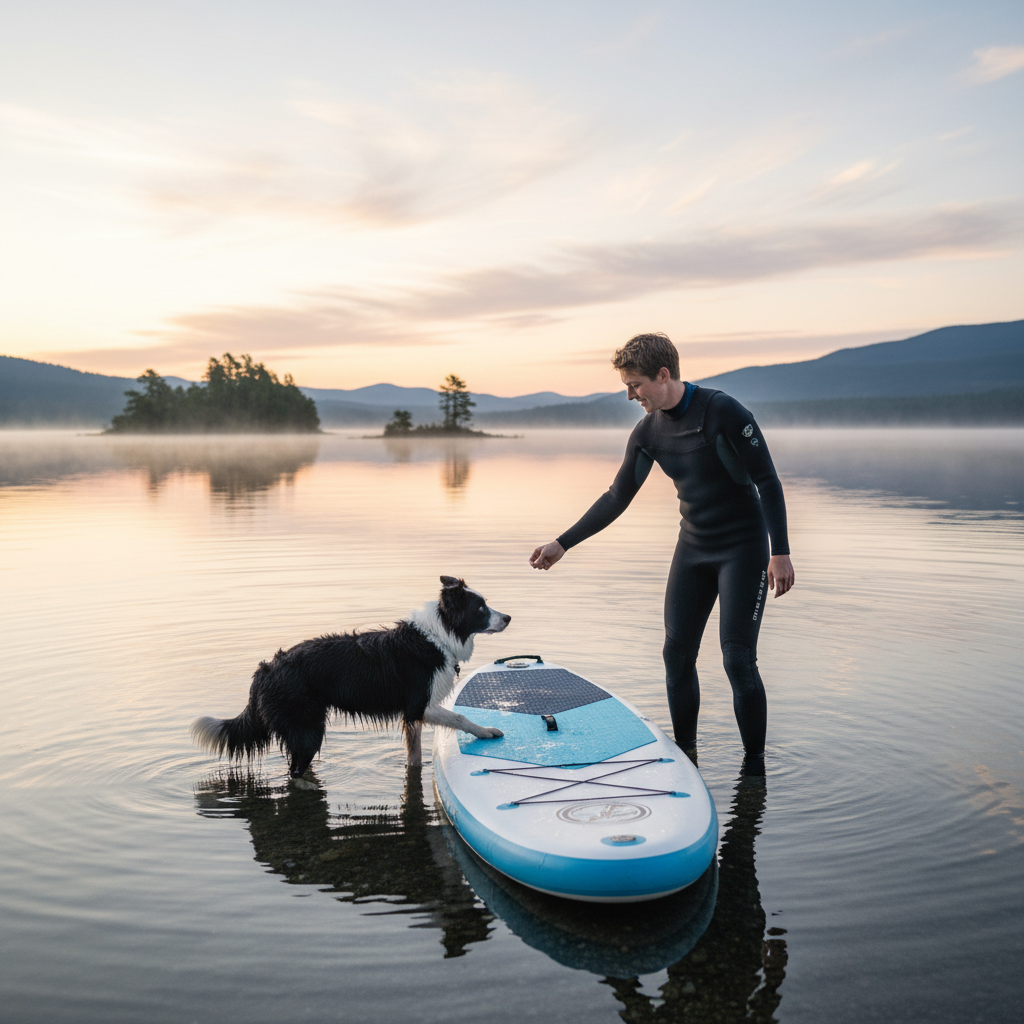
Making a Splash: Transitioning to the Water
Once your dog is a superstar on dry land—happily getting on the board, holding a ‘sit’ or ‘down’ for a minute or two, and unbothered by the paddle—it’s time to get your feet wet. Literally. This transition is a big step, so we’ll take it just as slowly and positively as the first phase.
Step 1: Choose Your Location Wisely
Your first water session should be at a location that is:
- Calm: Find a lake, pond, or very calm bay with no boat traffic or strong currents.
- Shallow: You want a spot with a gradual entry where you can place the board in just a few inches of water.
- Quiet: Pick a time and place with minimal distractions like other dogs or lots of people.
Step 2: Re-Introducing the Board at the Water’s Edge
Before you even put the board in the water, let your dog get acclimated to the new environment. Walk them around, let them sniff, maybe even go for a little swim if they enjoy it. Then, place the board on the sand or grass right at the water’s edge. Repeat the same training games you did at home. Ask for a ‘load up,’ reward them for getting on, and practice a ‘sit.’ The goal is to show them that this is the same fun board, just in a new, exciting place.
Step 3: The First Float
Now for the big moment! Put on your dog’s PFD. Wiggle the board into the water until it’s floating in a few inches of water but still touching the bottom, so it’s relatively stable. The water should be shallow enough for you to easily stand and manage both the board and your dog.
- Hold it Steady: Straddle the board or kneel beside it, holding it as steady as possible.
- Ask for ‘Load Up’: Use your familiar command to ask your dog to get on. Use a treat to lure them if needed. Be prepared to offer lots of praise and rewards the second they get on.
- Feel the Motion: The board will move a bit as they get on. This is a new sensation! Keep your hand on your dog, offering gentle pets and reassurance. Reward them for staying calm. Don’t worry about going anywhere yet. Just let them get used to the feeling of the board floating beneath them.
- Keep it Short: The first session might only last 30 seconds. As soon as you have a moment of calm, release your dog with a happy command like “Okay!” and let them get off. End on a high note!
Important Takeaway: Your job during this phase is to be the ‘rock.’ Hold the board steady, speak in a calm and happy voice, and be the source of all the good things (treats and praise). Your confidence will transfer to your dog.
Your First Official Voyage Together
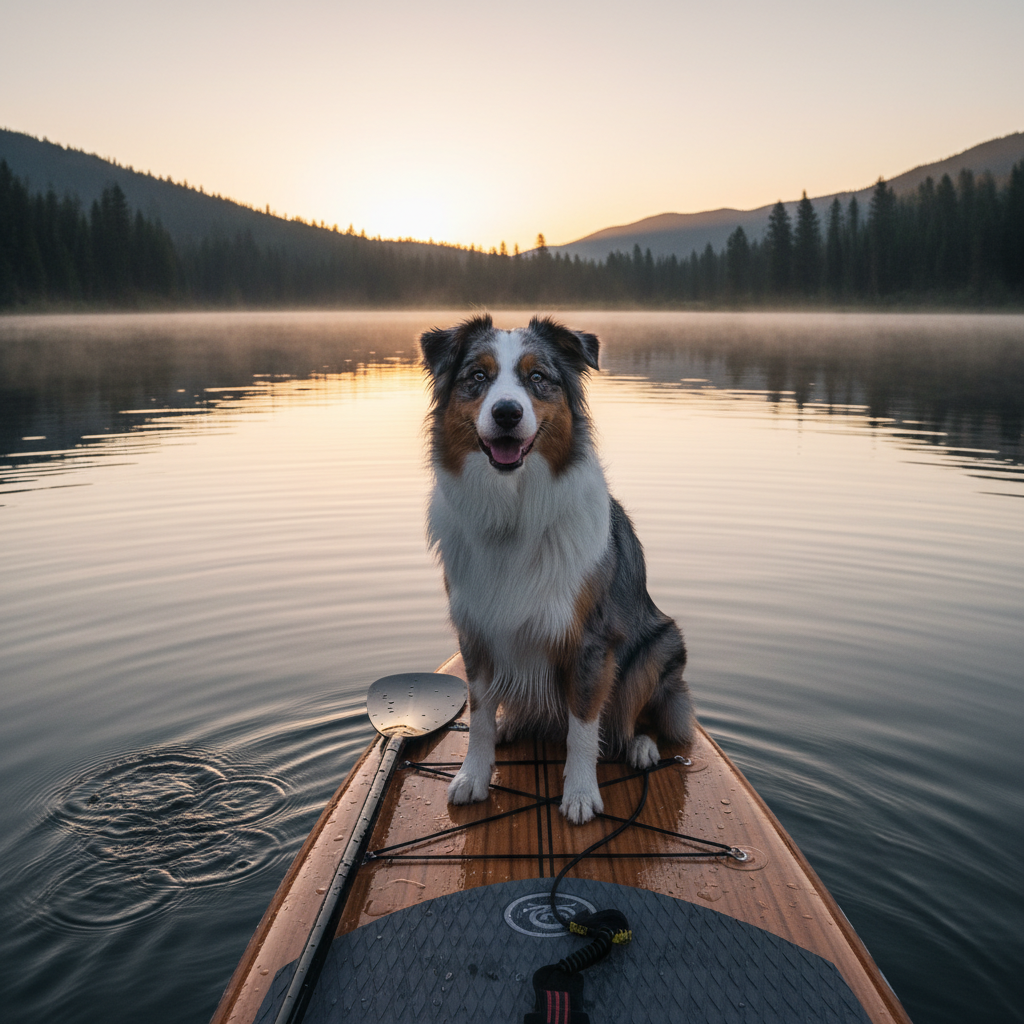
Your First Official Voyage Together
You’ve put in the work on land and in the shallows, and now it’s time for the payoff: your very first paddle together! This is an exciting milestone. The key to a successful first trip is to keep it short, simple, and positive.
Getting Launched
The launch is often the trickiest part. Here’s a smooth way to do it:
- You First: With the board in water deep enough to float freely (usually knee-deep), get on the board yourself first. Start on your knees, as this is the most stable position.
- Invite Your Pup: Once you’re stable, call your dog and give your ‘load up’ command. Guide them to their designated spot on the board, usually just in front of where you’ll be. Having a non-slip mat here is a huge help.
- Reward and Settle: The moment they are on and in position, give them a treat and praise. Ask them for a ‘down’ or ‘sit’ and reward them for settling.
The Maiden Voyage
Your first trip should be more of a ‘maiden float.’ Don’t plan on paddling miles down the shoreline.
- Start with Short Paddles: Begin by just taking a few gentle paddle strokes. Talk to your dog in a cheerful, reassuring tone. Paddle a short distance out from the shore—maybe 20-30 feet—and then just float for a minute. Let them take in the sights, sounds, and smells.
- Practice Gentle Turns: Make slow, wide turns. Sudden movements can unnerve a dog who is still getting their ‘sea legs.’
- Stay on Your Knees: For your first few trips, paddling from your knees is a great idea. It lowers your center of gravity, making the board much more stable for both of you. You can work your way up to standing once you both feel more confident.
- Keep it Brief: A 10-15 minute session is perfect for a first outing. The goal is to leave them wanting more, not to exhaust or overwhelm them.
Coming Ashore
Landing is just as important as launching. You want a controlled dismount.
As you approach the shore, have your dog hold their ‘stay.’ Once the board has gently touched the sand or you’re in very shallow water, give them a release cue like “Okay, off!” to let them know it’s safe to disembark. This prevents them from leaping off prematurely in deeper water. And of course, celebrate your successful voyage with lots of praise and a jackpot of treats!
Troubleshooting Common SUP Snags
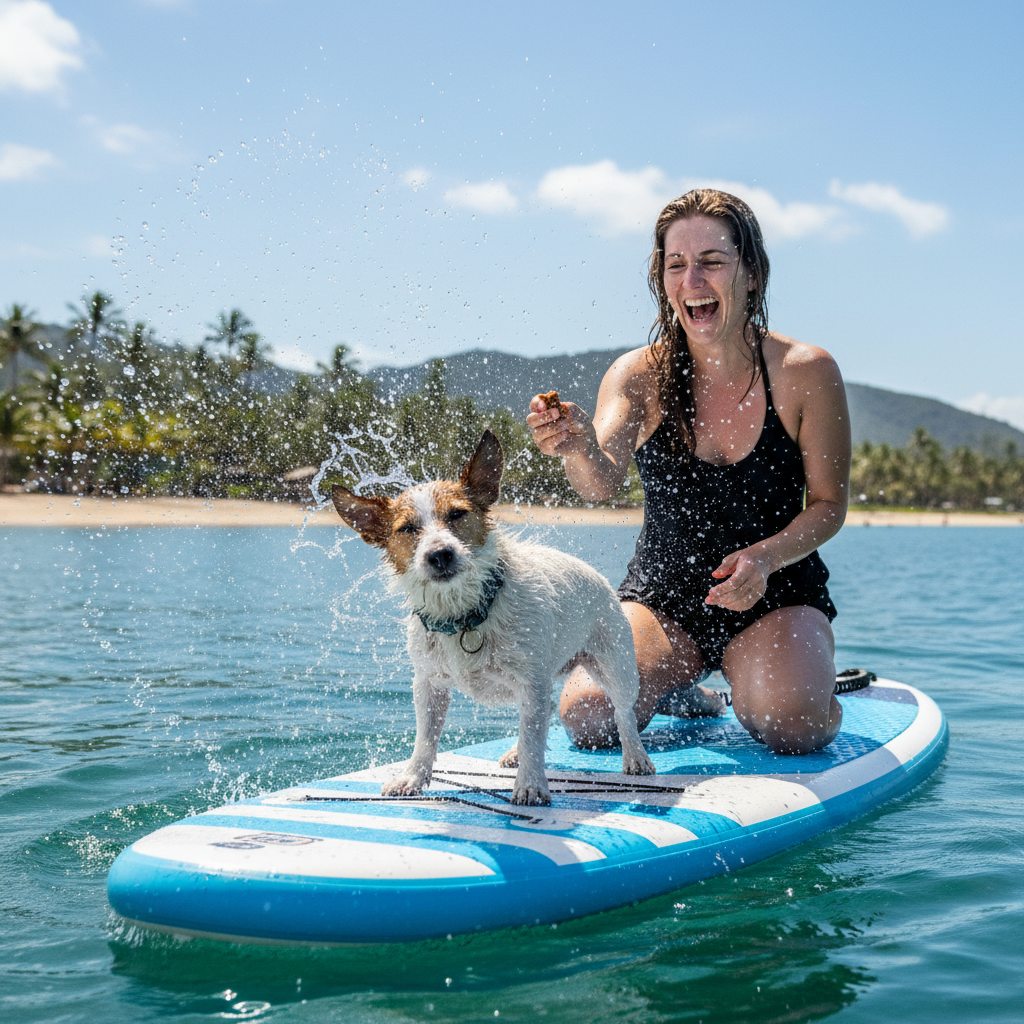
Troubleshooting Common SUP Snags
Even with the best training, you might run into a few bumps along the way. That’s totally normal! Here’s how to handle some of the most common challenges when paddleboarding with your pup.
Problem: My dog keeps jumping off the board!
Solution: This usually means one of two things: you’ve moved too fast in training, or your dog is just too excited. Go back a step. Shorten your sessions and work in the shallows where they can easily get back on. Use an extra-high rate of reinforcement (lots of treats!) for staying on the board. You can also practice a solid ‘down-stay’ on the board. If they jump off, calmly help them back on (using their PFD handle) and try again for just a few more seconds before ending on a positive note.
Problem: My dog won’t sit still and keeps moving around.
Solution: A wandering dog can easily unbalance the board. This is where that non-slip mat and a rock-solid ‘place’ or ‘down’ command are your best friends. Before you launch, remind them of their spot. If they start to move around while you’re paddling, stop paddling, have them go back to their spot, and reward them when they settle. Keep initial trips short so they learn that staying in their spot leads to a fun, short ride, not a long, boring one.
Problem: My dog seems scared or is shaking.
Solution: Fear is a clear sign to stop and reassess. Never force a scared dog. Go back to dry land training where they feel safe. Make the board a ‘cookie-dispensing machine’ again. When you do go back to the water, just hang out at the edge. Let your dog choose to interact with the board. Their comfort is the top priority, and building their confidence, even if it takes a whole season, is the only way to ensure they learn to love it.
Problem: My dog barks at everything—ducks, other boats, fish…
Solution: This is a classic case of overstimulation. Work on ‘leave it’ and ‘watch me’ commands on shore before you go out. On the water, when a distraction appears, get your dog’s attention before they react. Use a high-value treat to have them focus on you instead of the distraction. It’s all about managing their attention and rewarding them for their focus on you.
Remember the Golden Rule: Always end every training session on a positive note! Even if things didn’t go as planned, find one small success—like your dog putting one paw on the board—and celebrate it before calling it a day.
Safety First! SUP Safety Rules for You and Your Dog
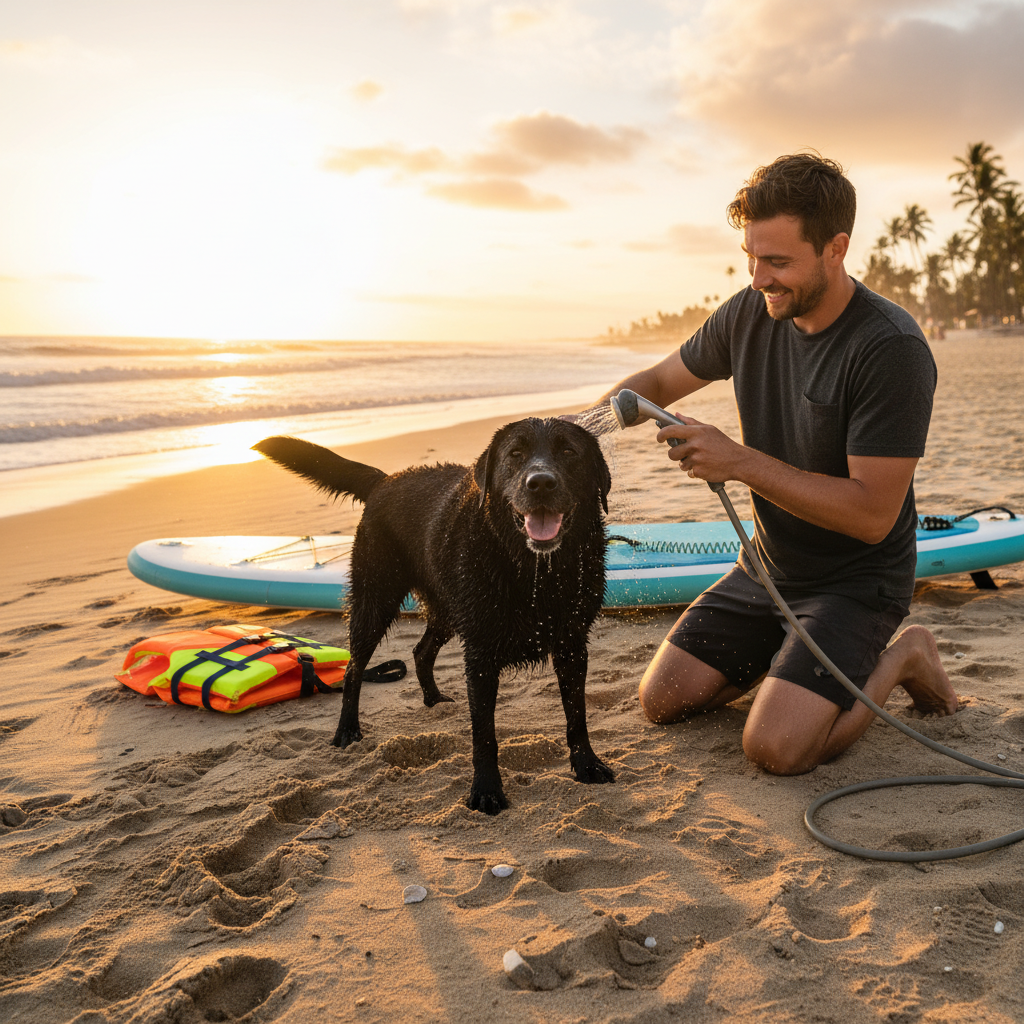
Safety First! SUP Safety Rules for You and Your Dog
Having fun is the goal, but safety is the foundation that makes it all possible. Keeping a few key safety principles in mind will ensure your paddleboarding adventures are memorable for all the right reasons.
Before You Go:
- Check the Weather and Water Conditions: Always check the forecast. Avoid windy days, as chop can make the board very unstable and scary for a dog. Be aware of water temperature and currents.
- Know the Rules: Check local regulations. Some bodies of water require PFDs for humans, and some may have specific rules about dogs.
- Trim Your Dog’s Nails: Long nails can scratch up your board and, more importantly, can reduce your dog’s grip. A fresh trim can help them feel more secure.
- Pack a Pet First-Aid Kit: It’s always wise to have a basic first-aid kit for any cuts or scrapes, for both you and your pup.
On the Water:
- Always Use a PFD for Your Dog: We mentioned it before, but it bears repeating. It is the single most important piece of safety gear for your dog.
- Never Leash Your Dog to the Board: This is a critical rule. If the board flips over, a tethered dog can get tangled and drown. Keep the leash for shore, but take it off on the water.
- Stay Hydrated: Offer your dog fresh water frequently. Don’t let them drink from the lake, river, or ocean.
- Watch for Sunburn: Dogs, especially those with short or light-colored fur and pink noses, can get sunburned. Consider a pet-safe sunscreen for exposed areas.
- Know How to Get Your Dog Back on the Board: Practice this in shallow water. Use the handle on their PFD to help lift their chest and torso first, then swing their back end up onto the board. It’s a bit of a workout!
After Your Paddle:
- Rinse Off: Always rinse your dog with fresh water after a paddle, especially after being in saltwater or potentially murky lake water, to protect their skin and coat.
- Check for Hotspots or Irritation: A wet PFD can sometimes cause chafing. Check your dog’s armpits and belly for any signs of irritation after you take it off.
- Ear Care: If your dog went for a swim, be sure to dry their ears thoroughly to help prevent ear infections.
By making safety a habit, you can relax and fully enjoy the incredible experience of exploring the world from the water with your best friend by your side.
Conclusion
Congratulations! You now have the complete playbook for turning your land-loving pup into a confident and enthusiastic paddleboarding partner. Remember that the journey is just as important as the destination. The time you spend training, building trust, and creating positive associations will strengthen your bond in ways you might not even expect.
The most important ingredients for success are patience, positivity, and plenty of treats. Let your dog set the pace, celebrate the small victories, and never be afraid to take a step back if they seem uncomfortable. Before you know it, you’ll be gliding across the water together, making memories that will last a lifetime.
So, grab that board, gear up your pup, and get ready for a summer filled with adventure. The water is calling!